The Bread of Life (John 6:22-29)

The thirst for God is present in every person on the face of the earth. The yearning for fulfillment beats in every human heart. The women and men in today’s Gospel had experienced being fed, completely satisfied, miraculously, in the presence of Jesus who had multiplied the bread and fish brought by a small boy. From a few loaves and fish, five thousand people had been more than amply provided for. This did not escape their notice.

When the people saw the sign he had done, they said, “This is truly the Prophet, the one who is to come into the world” (v. 14). Jesus, knowing what was in their hearts, fled because he knew they were coming to take him away and make him their king. These children of Israel, with their homeland occupied by the Romans, with all the humiliation and indignity that goes with being an oppressed people suddenly flickered with hope. They believed they had found a way out of their problems in the person of Jesus who had provided for them beyond their wildest imagining. If they could just keep him for themselves, like being able to make three wishes that would change the circumstances of their life forever. When they sought for Jesus the next day, he said as much to them.

“Jesus answered them and said, ‘Amen, amen, I say to you, you are looking for me not because you saw signs but because you ate the loaves and were filled. Do not work for food that perishes’” (v 26-27).

In order to live, we need to nourish ourselves, we need dignity and peace. The hearts of the people in this crowd were hoping against hope that things could change for them on a temporal level. They just didn’t realize that things had already changed. With the radical newness of the incarnation of the Son of God, everything had already become new. A greater hope of a more eternal promise was being fulfilled before their very eyes. Yet they could not recognize it. They were enamored still of the loaves of bread they had eaten. They were still looking for the food that perishes. Their imagination was too small.

In the document Verbum Domini, Benedict XVI writes:

What the Church proclaims to the world is the Logos of Hope (cf. 1 Pet 3:15); in order to be able to live fully each moment, men and women need “the great hope” which is “the God who possesses a human face and who ‘has loved us to the end’ (Jn 13:1)” (no. 91).

When we have found him, when we have let ourselves be seen by him, when we have allowed ourselves to be saved by him, we will no longer be absorbed by what we can get for ourselves, but in how we can tell others about Jesus.

Again, in the words of Benedict XVI:

We cannot keep to ourselves the words of eternal life given to us in our encounter with Jesus Christ: they are meant for everyone, for every man and woman. Everyone today, whether he or she knows it or not, needs this message. May the Lord himself…raise up in our midst a new hunger and thirst for the word of God (cf. Am 8:11) (no. 91).

Do not work for food that perishes,” Jesus admonishes the crowd, with an ardent desire to expand their hearts and deepen their hope. “Do not work for food that perishes but for the food that endures for eternal life, which the Son of Man will give you.”

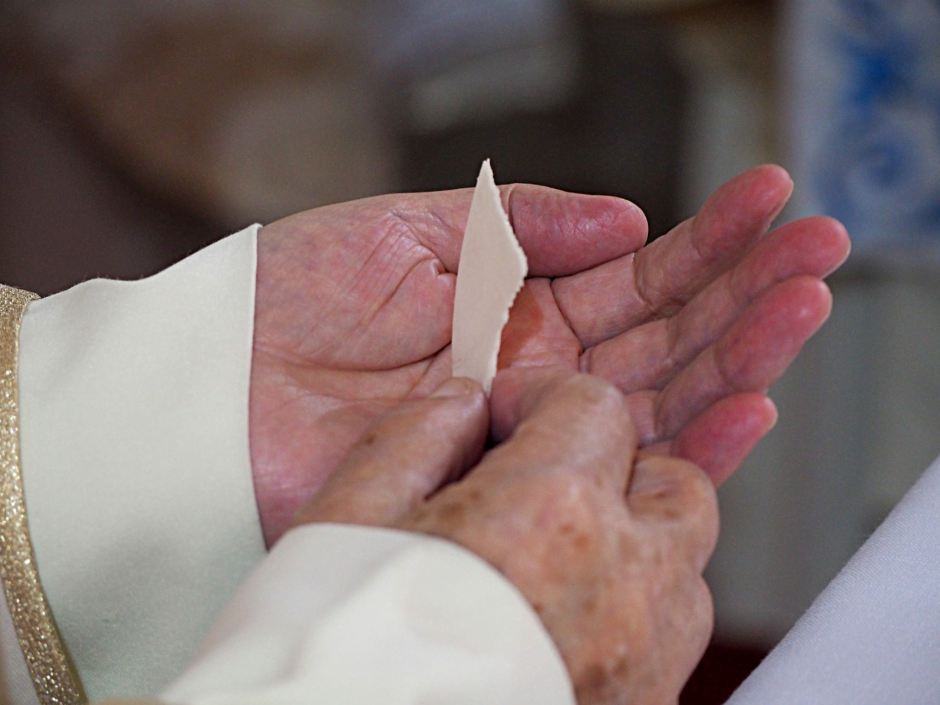
This food by which they will truly be fed is “the true bread from heaven. For the bread of God is that which comes down from heaven and gives life to the world” (v. 32-33). It is the food on which we ourselves, thousands of years later, are weekly and even daily nourished if we so desire. In the first line of Panis angelicus, the famous Eucharistic hymn written in the 13th century by St. Thomas Aquinas,we sing, Panis angelicus fit panis hominum. (“The bread of angels is made the bread of mortals.”) Then St. Thomas leads us to cry out in wonder: O res mirabilis! Manducat Dominum / Pauper, pauper, servus et humilis. (Oh, wonderful thing! The Lord becomes our food / poor, a servant, and humble.)

With as much intensity and effort as the crowd sought out the Lord who had multiplied the loaves and the fishes, satisfying their needs that day, may we seek out the Bread of Angels, the true bread from heaven, the Eucharist to be nourished on the body and blood of the Lord. And having been fed with the Bread from Heaven may we become Eucharistic missionaries to all those who feel no need, no urgency, no desire to be fed with the Bread of Angels that lasts unto eternal life. As Pope Benedict XVI has said: “It is our responsibility to pass on what, by God’s grace, we ourselves have received” (no. 91).

Praying with this passage of Scripture

Lectio Divina is a way of listening to God as he speaks in his Word. It is a practice of communicating with God through Scripture and attending to God’s presence and what he wishes to tell us. In this slow and prayerful reading of the Word of God, we allow ourselves to be transformed by the Spirit who forms us into the image of Christ.
There are four movement in Lectio Divina: Read (lectio), Meditate (meditation), Pray (oratio), Contemplate (contemplation).

Begin by finding a still space to pray. Breathe deeply and become quieter within. Abandon any agenda, worries or thoughts you bring to this prayer and entrust these things to the merciful care of God. Ask for the grace to be receptive to what God will speak to you through this Scripture reading. Grant me, Jesus Divine Master, to be able to know the mysteries of the kingdom of God and your unfathomable riches. Grant that your word penetrate my soul; guide my steps, and brighten my way till the day dawns and darkness dissipates, you who live and reign forever and ever Amen.

Read (lectio)
Begin by slowly and meditatively reading your Scripture passage out loud. Listen for a particular word or phrase that speaks to you at this moment and sit with it for a time.

The next day the crowd that had stayed on the opposite shore of the lake realized that only one boat had been there, and that Jesus had not entered it with his disciples, but that they had gone away alone. Then some boats from Tiberias landed near the place where the people had eaten the bread after the Lord had given thanks. Once the crowd realized that neither Jesus nor his disciples were there, they got into the boats and went to Capernaum in search of Jesus.

When they found him on the other side of the lake, they asked him, “Rabbi, when did you get here?”

Jesus answered, “Very truly I tell you, you are looking for me, not because you saw the signs I performed but because you ate the loaves and had your fill. Do not work for food that spoils, but for food that endures to eternal life, which the Son of Man will give you. For on him God the Father has placed his seal of approval.”

Then they asked him, “What must we do to do the works God requires?”

Jesus answered, “The work of God is this: to believe in the one he has sent.”


Meditate (meditatio)
Read the passage a second time. As you re-engage the text, let the word or phrase that stood out become your invitation to speak from your heart with God who wishes to share his heart with you. Allow this word or phrase to wash over you and permeate your thoughts and feelings. You may wish to repeat this phrase quietly and gently for a period of time.

Pray (oratio)
Read the text a third time. Listen for what God is saying to you. Speak heart to heart with God. Notice the feelings that this conversation with God raises up within you. Share with God what you notice about your response to this conversation. You may wish to return to repeating the phrase quietly and gently, allowing it to permeate you more and more deeply.

Contemplate (contemplatio)
Read the text a final time. Now be still and rest in God’s embrace. Ask God to give you a gift to take with you from this prayer. You might ask God if he is inviting you to do some action, for instance, make some change in your thoughts, attitudes or reactions, in the way you speak or how you treat others. Thank God for this gift and invitation as you conclude your prayer.

Photo Credit: Fr. Fernando via Cathopic

Do not be afraid (Luke 1:26-38)

“Do not be afraid, Mary.”

Through the centuries, the Annunciation has inspired many artists who have sought to capture in their paintings this most sacred and pivotal moment in the history of the world. My favorite is The Annunciation, painted in 1898 by the American artist Henry Ossawa Tanner. The artist seems to capture the intensity and fire of the angel Gabriel’s appearance to the young Mary. I can’t decide if Tanner is depicting Mary’s first startled awareness at what God was asking of her or her sinking under the weight of what this message would mean for her life. Her hands folded, she is already pondering, storing away in her heart what God was doing.

So many masterpieces of the Annunciation portray the young virgin Mary in a religious setting where all seems peaceful and simple. But Tanner, I believe, captures the words of the angel, “Do not be afraid, Mary.”

We cannot imagine that this girl barely a teenager would not have been concerned or apprehensive about the role that she was to carry out in salvation history. There were many unknowns that the angel didn’t clear up for her. Gabriel didn’t point out a way forward or explain to her how Joseph was going to find out about the child. What would her parents think? Her friends? Would she be able to share this with anyone? Would anyone be able to walk this way with her and show her the next steps she should take? The Messiah. The Son of the Most High. The one who would sit upon the throne of David and rule over the house of Jacob forever. The one whose kingdom would have no end.

It is hard to think that this young girl walked with ease and security into the rest of that Annunciation day with total confidence about what was happening to her. Throughout every day of her life, I can imagine her recalling the words as she heard them from the angel, “Do not be afraid, Mary.”

When she and Joseph realized Jesus was lost, “Do not be afraid, Mary.”

When Jesus left home to begin his public life, “Do not be afraid, Mary.”

When she saw the growing discontent and disapproval directed at Jesus by the religious leaders, “Do not be afraid, Mary.”

When she stood beneath the cross, “Do not be afraid, Mary.”

This beautiful account of what happened at the Annunciation, probably told to Luke by Mary herself, concludes with her yes, “Behold, I am the handmaid of the Lord. May it be done to me according to your word.” Then the passage transitions back into ordinary life with the almost ominous sentence, “Then the angel departed from her.” She was left alone.

We are told of no angel leading her back into Jerusalem to find her son. We read of no angels providing for her needs after Joseph had died and Jesus had left home to pursue his public ministry. The Gospel does not assure us that Mary had special revelations from further angels that everything was going to be okay as the religious leaders sought to put her son to death. We see no angels supporting her beneath the cross. Only John who stood in for you and me as Jesus gave his mother to be our mother. No. The angel departed from her.

There must have been not a few moments of wondering, worry, anxiety, sorrow alongside the strong faith, the determined surrender, and the rejoicing with which she continued to magnify the Lord. Somehow Mary was able to hold in her heart, to ponder and pray and believe and hope even as she wondered and worried in the uncertainty of all that was happening. As I look at Tanner’s Annunciation, this is the message I tuck away in my own heart. When I worry and wonder and doubt and fear I usually forget to ponder and pray and believe and hope. Mary was able to hold together the whole picture: the whole picture of what was happening in her own life, in the life of her Son, of her people, of history, of God’s work of salvation. She didn’t have a selective memory. She remembered everything and trusted everything and entrusted herself entirely into the unknown of the radical newness of what God was accomplishing in her for the sake of the world. I struggle to do this, and perhaps so do you. In whatever strained circumstances or difficult situations that cause you anxiety and doubt today, remember the angel’s words, “Do not be afraid.”

Praying with this passage of Scripture

Lectio Divina is a way of listening to God as he speaks in his Word. It is a practice of communicating with God through Scripture and attending to God’s presence and what he wishes to tell us. In this slow and prayerful reading of the Word of God, we allow ourselves to be transformed by the Spirit who forms us into the image of Christ.
There are four movement in Lectio Divina: Read (lectio), Meditate (meditation), Pray (oratio), Contemplate (contemplation).

Begin by finding a still space to pray. Breathe deeply and become quieter within. Abandon any agenda, worries or thoughts you bring to this prayer and entrust these things to the merciful care of God. Ask for the grace to be receptive to what God will speak to you through this Scripture reading. Grant me, Jesus Divine Master, to be able to know the mysteries of the kingdom of God and your unfathomable riches. Grant that your word penetrate my soul; guide my steps, and brighten my way till the day dawns and darkness dissipates, you who live and reign forever and ever Amen.

Read (lectio)
Begin by slowly and meditatively reading your Scripture passage out loud. Listen for a particular word or phrase that speaks to you at this moment and sit with it for a time.

In the sixth month of Elizabeth’s pregnancy, God sent the angel Gabriel to Nazareth, a town in Galilee, to a virgin pledged to be married to a man named Joseph, a descendant of David. The virgin’s name was Mary. The angel went to her and said, “Greetings, you who are highly favored! The Lord is with you.”

Mary was greatly troubled at his words and wondered what kind of greeting this might be. But the angel said to her, “Do not be afraid, Mary; you have found favor with God. You will conceive and give birth to a son, and you are to call him Jesus. He will be great and will be called the Son of the Most High. The Lord God will give him the throne of his father David, and he will reign over Jacob’s descendants forever; his kingdom will never end.”

“How will this be,” Mary asked the angel, “since I am a virgin?”

The angel answered, “The Holy Spirit will come on you, and the power of the Most High will overshadow you. So the holy one to be born will be called the Son of God. Even Elizabeth your relative is going to have a child in her old age, and she who was said to be unable to conceive is in her sixth month. For no word from God will ever fail.”

“I am the Lord’s servant,” Mary answered. “May your word to me be fulfilled.” Then the angel left her.


Meditate (meditatio) – Read the same passage a second time. As you re-engage the text, let the word or phrase that stood out become your invitation to speak from your heart with God who wishes to share his heart with you. Allow this word or phrase to wash over you and permeate your thoughts and feelings. You may wish to repeat this phrase quietly and gently for a period of time.

Pray (oratio) – Read the text a third time. Listen for what God is saying to you. Speak heart to heart with God. Notice the feelings that this conversation with God raises up within you. Share with God what you notice about your response to this conversation. You may wish to return to repeating the phrase quietly and gently, allowing it to permeate you more and more deeply.

Contemplate (contemplatio)
Read the text a final time. Now be still and rest in God’s embrace. Ask God to give you a gift to take with you from this prayer. You might ask God if he is inviting you to do some action, for instance, make some change in your thoughts, attitudes or reactions, in the way you speak or how you treat others. Thank God for this gift and invitation as you conclude your prayer.

Credit information: Henry Ossawa Tanner, Public domain, via Wikimedia Commons

Get up and follow Christ (Luke 5:27-32)

Leaving everything behind, Levi got up and followed him.

Jesus invites people individually and personally to follow him. Levi, despite the fact that he was truly an unlikely candidate, was one of these people so blessed. As a tax collector his friends were other tax collectors and sinners. He was not in good standing in the community. His obvious riches, from which he threw a “great” banquet for Jesus in his house, were amassed at the expense of the members of the community whom he had overtaxed. His relationships there were broken, bridges burned through greed and corruption.

Yet Jesus, going out and walking along, saw Levi sitting at the customs post and knew exactly who and what he was.Jesus specifically offered an invitation to Levi to be one of the group who would become the intimate Twelve who would abide with him, build relationships with him, and become with the others the foundation stones of the new Jerusalem.

There was no mistake. Jesus wanted Levi. Jesus chose Levi.

And Levi chose Jesus.

It was Jesus who first called Levi to follow him. Levi did not call himself. He was instead irresistibly drawn. He was encountered by the Savior of the world, the King of Kings and Prince of Peace, the Christ. It was the glorious person of Jesus Christ who exerted such an attraction on him, that Levi immediately got up without hesitation, walked away from his occupation that benefited the Roman occupiers and himself, and began to walk after Jesus.

To follow Jesus is to move. To get up. To leave something behind. To enter into a new and unknown life. To be drawn into relationships where the one inviting sets the terms. To be drawn into utter obedience and submission to the demands of the Gospel.

There is a decision to be made. It may or may not have been easy for Levi to leave behind his lucrative career, but in doing so, in following Jesus, he was walking into poverty. He was walking towards the cross. He was walking into the glorious power of the resurrection.

Leaving everything behind, Levi got up and followed him.

Where have you heard these words from the lips of the Master, “Follow me.” Was it long ago when you attended a retreat, during a sacred moment of Eucharistic adoration, at a decisive moment of your vocational journey?

To follow Jesus is the most important thing you can do with your life.

It doesn’t mean you must sign away your house, your finances, your career. Levi left his tax collector’s post with all the greedy practices by which he overtaxed his fellow Jews. Yet he shortly afterward threw a large and expensive party for Jesus and invited his friends to meet the one who had become such an important part of his new life. He put his considerable wealth, property, and relationships at the service of the Kingdom in one of the first and most astounding moments of evangelization on record. He knew he was following not a project but a Person, so parties and friendships were now a part of his call, his love, and his loyalty to Christ.

So, again, where are you hearing right now the invitation of Christ to follow him? He is walking by and he is choosing you. This, by itself, is astounding. He is worthy of your time, of your attention, of your creative response. He desires your presence at the Mass, for you are his friend. He waits for you in the chapel of Eucharistic adoration because he wants to be there for you in good times and in difficult times. He hopes that you will introduce him to your friends in a way that reflects your temperament and creativity.

Leaving everything behind today. Get up and follow Christ.

Praying with this passage of Scripture

Lectio Divina is a way of listening to God as he speaks in his Word. It is a practice of communicating with God through Scripture and attending to God’s presence and what he wishes to tell us. In this slow and prayerful reading of the Word of God, we allow ourselves to be transformed by the Spirit who forms us into the image of Christ.
There are four movement in Lectio Divina: Read (lectio), Meditate (meditation), Pray (oratio), Contemplate (contemplation).

Begin by finding a still space to pray. Breathe deeply and become quieter within. Abandon any agenda, worries or thoughts you bring to this prayer and entrust these things to the merciful care of God. Ask for the grace to be receptive to what God will speak to you through this Scripture reading. Grant me, Jesus Divine Master, to be able to know the mysteries of the kingdom of God and your unfathomable riches. Grant that your word penetrate my soul; guide my steps, and brighten my way till the day dawns and darkness dissipates, you who live and reign forever and ever Amen.

Read (lectio)
Begin by slowly and meditatively reading your Scripture passage out loud. Listen for a particular word or phrase that speaks to you at this moment and sit with it for a time.

After this, Jesus went out and saw a tax collector by the name of Levi sitting at his tax booth. “Follow me,” Jesus said to him, and Levi got up, left everything and followed him.

Then Levi held a great banquet for Jesus at his house, and a large crowd of tax collectors and others were eating with them. But the Pharisees and the teachers of the law who belonged to their sect complained to his disciples, “Why do you eat and drink with tax collectors and sinners?”

Jesus answered them, “It is not the healthy who need a doctor, but the sick. I have not come to call the righteous, but sinners to repentance.”


Meditate (meditatio) – Read the same passage a second time. As you re-engage the text, let the word or phrase that stood out become your invitation to speak from your heart with God who wishes to share his heart with you. Allow this word or phrase to wash over you and permeate your thoughts and feelings. You may wish to repeat this phrase quietly and gently for a period of time.

Pray (oratio) – Read the text a third time. Listen for what God is saying to you. Speak heart to heart with God. Notice the feelings that this conversation with God raises up within you. Share with God what you notice about your response to this conversation. You may wish to return to repeating the phrase quietly and gently, allowing it to permeate you more and more deeply.

Contemplate (contemplatio)
Read the text a final time. Now be still and rest in God’s embrace. Ask God to give you a gift to take with you from this prayer. You might ask God if he is inviting you to do some action, for instance, make some change in your thoughts, attitudes or reactions, in the way you speak or how you treat others. Thank God for this gift and invitation as you conclude your prayer.

Photo Credit: Giovanni Paolo Panini, Public domain, via Wikimedia Commons

We are loved to give love away to the world (Mark 16:15-18)

Today the Church celebrates the conversion of one of the greatest followers of Jesus: the apostle Saint Paul. When we first meet Paul in the Acts of the Apostles, he is clearly a young rabbi who had a hatred for the followers of Jesus. As St. Stephen was being stoned, those who took part in his martyrdom laid their cloaks at Paul’s feet. This zealot is described as entering house after house and dragging men and women out to hand them over for imprisonment (cf. Acts 8:3b).

As Paul approached Damascus with letters to bring back to Jerusalem any he found living as followers of the Way, Jesus met him. Surrounded by blinding light, Paul, who had been “breathing out murderous threats against the Lord’s disciples,” was humbled to the ground. Instead of speaking, he was made to listen. This heart that had been filled with such hatred for the followers of Jesus found, suddenly and immediately, a love beyond his comprehension from the very one he had been persecuting.

“I am Jesus, whom you are persecuting,” Jesus told him. “Now get up and go into the city, and you will be told what you must do” (v 5-6).

Paul’s call, his conversion, left him blind, and like a child, he was led into Damascus where he was baptized three days later by Ananias, a member of the community of disciples he had intended to round up and take back to Jerusalem for punishment.

Paul was called. Paul was converted, changed, transformed. Paul was baptized so that he would carry out the mission Jesus had chosen him for: to go into the whole world, far beyond the boundaries of Jerusalem, to proclaim the good news to every creature.

Paul’s call has become the paradigm of every Christian calling since. We are called not for ourselves, but for others. We are loved, not to hold that sense of God’s love for us close to our own hearts, but to give it away to as many people as possible. We are transformed so that we might radiate to the world what it is to be truly human, truly Christ-like, totally Christian. In other words, today’s feast is a window onto the most important task you and I have on this earth: “Go into the whole world and proclaim the gospel to every creature.”

After Paul regained his sight, he immediately began to preach to the Jews of Damascus about Jesus. He was met with disbelief and threats against his life. Paul had to learn that this mission to go to the very ends of the earth spurred on by the love of Christ, though a huge task, wasn’t going to be accomplished on his own terms. Eventually, he was sent away by the disciples to Tarsus. For three years he waited in study and prayer until Barnabas remembered him and thought he might be able to help out the community in Antioch.

The Church is given a great commission to proclaim the gospel to every creature, and yet in our experience, the best and the brightest and the most promising people are often sidelined or walk away. People don’t get along and it seems that perfect opportunities are missed. There is so much to do we want to get started right away, throwing ourselves into the project, and God tells us to wait and study and pray. We devise strategies and develop plans, and God undoes them all to bring about his own. Sometimes I feel that these are the signs that accompany those who believe. More than healing the sick and driving out demons, speaking new languages, and picking up serpents with our bare hands, God leaves us in confusion and humility as we wait upon his Word. What set-back or suffering are you bearing for the sake of the Gospel?

You and I are commissioned to share with every person on this earth the story of Christ’s life, death and resurrection. To whom is God sending you today to share the good news?

Praying with this passage of Scripture

Lectio Divina is a way of listening to God as he speaks in his Word. It is a practice of communicating with God through Scripture and attending to God’s presence and what he wishes to tell us. In this slow and prayerful reading of the Word of God, we allow ourselves to be transformed by the Spirit who forms us into the image of Christ.
There are four movement in Lectio Divina: Read (lectio), Meditate (meditation), Pray (oratio), Contemplate (contemplation).

Begin by finding a still space to pray. Breathe deeply and become quieter within. Abandon any agenda, worries or thoughts you bring to this prayer and entrust these things to the merciful care of God. Ask for the grace to be receptive to what God will speak to you through this Scripture reading. Grant me, Jesus Divine Master, to be able to know the mysteries of the kingdom of God and your unfathomable riches. Grant that your word penetrate my soul; guide my steps, and brighten my way till the day dawns and darkness dissipates, you who live and reign forever and ever Amen.

Read (lectio)
Begin by slowly and meditatively reading your Scripture passage out loud. Listen for a particular word or phrase that speaks to you at this moment and sit with it for a time.

Meanwhile, Saul was still breathing out murderous threats against the Lord’s disciples. He went to the high priest and asked him for letters to the synagogues in Damascus, so that if he found any there who belonged to the Way, whether men or women, he might take them as prisoners to Jerusalem. As he neared Damascus on his journey, suddenly a light from heaven flashed around him. He fell to the ground and heard a voice say to him, “Saul, Saul, why do you persecute me?”

“Who are you, Lord?” Saul asked.

“I am Jesus, whom you are persecuting,” he replied. “Now get up and go into the city, and you will be told what you must do.”

The men traveling with Saul stood there speechless; they heard the sound but did not see anyone. Saul got up from the ground, but when he opened his eyes he could see nothing. So they led him by the hand into Damascus. For three days he was blind, and did not eat or drink anything.

In Damascus there was a disciple named Ananias. The Lord called to him in a vision, “Ananias!”

“Yes, Lord,” he answered.

The Lord told him, “Go to the house of Judas on Straight Street and ask for a man from Tarsus named Saul, for he is praying. In a vision he has seen a man named Ananias come and place his hands on him to restore his sight.”

“Lord,” Ananias answered, “I have heard many reports about this man and all the harm he has done to your holy people in Jerusalem. And he has come here with authority from the chief priests to arrest all who call on your name.”

But the Lord said to Ananias, “Go! This man is my chosen instrument to proclaim my name to the Gentiles and their kings and to the people of Israel. I will show him how much he must suffer for my name.”

Then Ananias went to the house and entered it. Placing his hands on Saul, he said, “Brother Saul, the Lord—Jesus, who appeared to you on the road as you were coming here—has sent me so that you may see again and be filled with the Holy Spirit.” Immediately, something like scales fell from Saul’s eyes, and he could see again. He got up and was baptized, and after taking some food, he regained his strength.

Saul spent several days with the disciples in Damascus.

Meditate (meditatio) – Read the same passage a second time. As you re-engage the text, let the word or phrase that stood out become your invitation to speak from your heart with God who wishes to share his heart with you. Allow this word or phrase to wash over you and permeate your thoughts and feelings. You may wish to repeat this phrase quietly and gently for a period of time.

Pray (oratio) – Read the text a third time. Listen for what God is saying to you. Speak heart to heart with God. Notice the feelings that this conversation with God raises up within you. Share with God what you notice about your response to this conversation. You may wish to return to repeating the phrase quietly and gently, allowing it to permeate you more and more deeply.

Contemplate (contemplatio)
Read the text a final time. Now be still and rest in God’s embrace. Ask God to give you a gift to take with you from this prayer. You might ask God if he is inviting you to do some action, for instance, make some change in your thoughts, attitudes or reactions, in the way you speak or how you treat others. Thank God for this gift and invitation as you conclude your prayer.

Photo Credit: Rembrandt, Public domain, via Wikimedia Commons

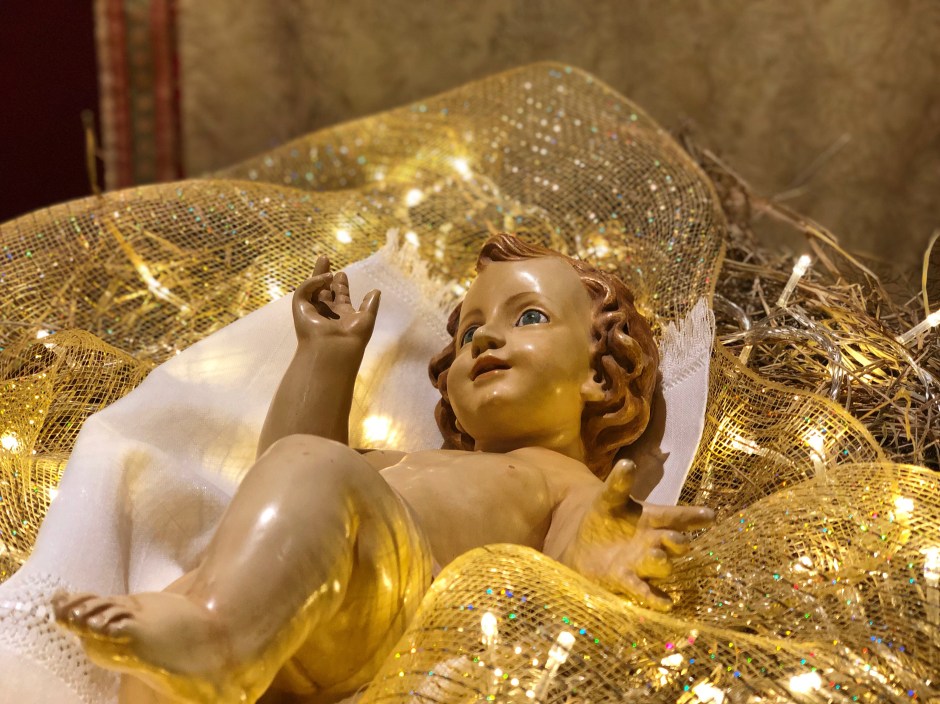
Christmas: a rehearsal for the coming year

But to those who did accept him
    he gave power to become children of God.

We are on the threshold of a new year yet still in the midst of the celebration of the birth of Our Lord, the Word made Flesh, God-with-us, Jesus, Prince of Peace and King of Kings.

These days around Christmas and New Years are often punctuated with more than the usual religious observance. Those who never come to Church except at Christmas have been flooded with the light of the Star and the radiance of the Child’s face, perhaps without even being aware that what they so deeply long for has been bestowed on them as a gift. Those of us who celebrate the Eucharist more often, or even weekly, have somehow had our hearts moved by the telling anew of the story that God so loved us that he chose to reach into our lives, to intervene in the history of humanity, in order to claim us as his children, to lift us to his very throne. At Mass we have lifted up our hands as beggars to receive the Bread of Life by which Jesus makes us “parkers of the divine nature.” It is Peter who says, “His divine power has granted to us all things that pertain to life and godliness, through the knowledge of him who called us to his own glory and excellence, by which he has granted to us his precious and very great promises, so that through them you may become partakers of the divine nature, having escaped from the corruption that is in the world because of sinful desire” (1 Pet. 1:3-4).

But to those who did accept him
    he gave power to become children of God.

To “accept him” implies that someone else has given us something—or Someone—and we have the choice of receiving this gift. Every Advent-Christmas Season we take time to ponder and wonder at how God has chosen us before we have chosen him. How foolish are we who act as though we possessed the higher authority to tell God whether he was acceptable to us or not! No. We who were completely unacceptable were received by God by a free act of his mercy. We would have no place in the house of God without the decision of God in our favor, a decision that was made without any merit of our own. St. Ignatius of Loyola in the Spiritual Exercises instructs the retreatant to imagine the Trinity looking out over the world and seeing the rampant corruption, sinfulness, vice, and rejection of the God on whom they depend for their very life. I imagine the Father speaking to the Son the pity in his heart: What can we do? What shall we do? How can we help them? And thus the Son comes willingly to this earth so that he might lift us up on his shoulders from the mire of our death-creating choices to be seated in glory on God’s throne.

But to those who did accept him
    he gave power to become children of God.

St. Paul says so wisely: “So then, if anyone is in Christ, he is a new creation; what is old has passed away—look, what is new has come!” (2 Cor 5:17 NET).

Christmas reminds us, as does the Prologue of John read at Mass today, that God’s love to us is completely unmerited, often unsought, sometimes not accepted. Yet God year after year reminds us of his free choice for us, his marvelous gift, his magnanimous generosity to shower upon us grace upon grace.

I like to think of Christmas as a rehearsal for our performance in the upcoming new year. At Christmas we rehearse in a sacred season what we shall live out in the more profane spaces of our life.

  • God chooses us and we learn to choose for others in love and self-sacrifice in the world.
  • God comes to us in the vulnerability and humility of a Babe, and we find the courage to proclaim and to live the beauty of virtues that have been rejected by the society around us.
  • God lifts us up and we find ourselves seeking ways to lift the world around us, the people, nature, media, so that others might one day receive, might accept, what we have been so extravagantly given, we who do not deserve such generosity.

And finally, with our eyes shining with the radiance of the Star and the beauty of the Child’s Face we proclaim that there is more to life than what we see around us, what impinges on our wellbeing, what threatens our futures. God cares. God is here. God gives himself to us that we might be saved even from our very selves. And that is why today we say both Blessed Christmas! and Happy New Year!

Image Credit: Fray Foto via Cathopic

Jesus will stand by you: Advent Message

Every Advent, the prophet John the Baptist, a figure larger than life, points us directly toward Jesus. “Behold the Lamb of God,” he told his two disciples, directing them to follow after his cousin whom he had baptized in the River Jordan. “Behold the one who takes away the sins of the world. I am not worthy to loosen the strap of his sandal.”

As Elizabeth and Zechariah’s son burst upon the religious scene around AD 28 or 29, the heart of the Jewish people was stirred. This ascetic man dressed in camel hair and eating locusts and honey called the people to repentance in preparation for the coming of the Messiah. With direct and forceful words he confronted those who came to listen to him with their need to change their life and to be washed in the waters of the Jordan with the baptism of repentance.

(All the people who listened, including the tax collectors,
who were baptized with the baptism of John,
acknowledged the righteousness of God;
but the Pharisees and scholars of the law,
who were not baptized by him,
rejected the plan of God for themselves.)

John was indeed a man sent by God. He had a large following, so large, in fact, that he was seen as a threat to Herod Antipas, Tetrarch of Galilee. John the Baptist played a central and very visible role in the immediate preparation for the Messiah, as the most popular and best-known preacher of the day.

He was blessed to see what every prophet of Israel had longed to see: the face of the Messiah.

He had looked into his eyes.

He had poured the water of the Jordan over him in baptism.

He had heard the voice of the Father: “This is my beloved Son. Listen to him.”

He who had the eyes of all Israel on himself directed all who would listen to fix their eyes on Jesus. “He must increase and I must decrease.”

I tell you,
among those born of women, no one is greater than John.

With these words, Jesus spoke of his cousin with gentleness. By this time, John was no longer the center of attention. He was imprisoned. Hidden. Alone. Forgotten by many. Left aside as Jesus gathered disciples and began to preach with authority in the villages of Galilee.

He was deserted. Friendless. Languishing because of the petty political machinations of Herod. The preacher condemned the king’s marriage to his wife, Herodias as illegal, because she had previously been married to his own brother, Philip. There was nothing in his future now but death.

Despite John’s reversal in fortune, Jesus stands by the Baptist. He affirms his character, his place in salvation history, his value as a person.

Like John the Baptist, we too may experience in our life a radical reversal in popularity, influence, or fortune. We could feel imprisoned by stands we have taken, decisions we have made, or because of the power others exercise over us. What things look like to us or to others doesn’t reflect the loyalty Jesus has in our regard. As he stood by his cousin, Jesus will stand by us. Even if he is the only friend we have, he is the only Friend who in the end ultimately and forever and ever will matter.

Jesus is the one who knows our hearts.

Jesus is the one who understands what is happening to us.

Jesus is the one who cares about us always.

Jesus will always defend us.

But I am not John the Baptist, you may say.

“I tell you,
among those born of women, no one is greater than John;
yet the least in the Kingdom of God is greater than he.”

The Baptizer washed in the Jordan River those who repented as they looked forward to the coming of the Messiah. In the sacrament of Baptism, we have received so much more. Louis Bouyer in his book Liturgical Piety describes the effects of the sacrament of Baptism as nothing short of dying and rising again. When the person to be baptized goes down into the water he or she disappears completely. When they emerge they are no longer the same person. The “dusty image of Adam” has been blotted out and now, washed from their sins, they are a new person in Christ. Christ lives in them. They are conformed now to the divine pattern revealed in Christ and now imprinted on them.

How blest are we, even if we are the least in the Kingdom of God. How blest!

As we prepare for the celebration of the birth of the Messiah, let us rejoice that Christ lives now in us, and that washed from our sins, we are a new person in Christ. This is indeed the good news!

Image by Thomas from Pixabay