Want a way to live in wonder at all God does? (Mark 4:26-34)

I will be the first to admit I don’t have a “green thumb.” My forays into gardening and planting are very limited. Perhaps for this very reason, I am still in awe when some green thing under my care actually flourishes. A few months ago I rescued two leaves which had been unceremoniously cut off from a plant so that it would have more room to grow. I place them in a small dish of water “just to see what would happen.” Maybe I can grow another plant, I thought. Then I promptly left on retreat for two weeks.

Imagine my excitement upon my return when I noticed that each leaf had the tiniest white almost transparent roots at their base! Clearly, I couldn’t take the glory for this gardening miracle. I hadn’t even been home. But there it was. The water almost evaporated in the dish that had become their home, and yet these leaves rescued from the garbage two weeks earlier were now beginning to become new plants in their own right.

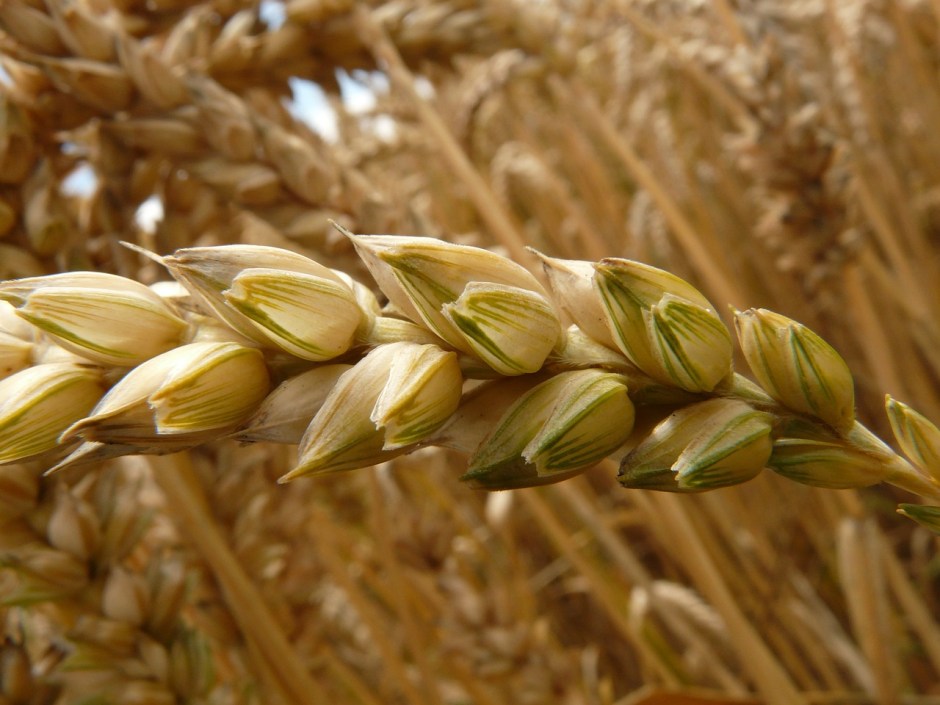
“This is how it is with the Kingdom of God; it is as if a man were to scatter seed on the land and would sleep and rise night and day and the seed would sprout and grow, he knows not how.”

The Kingdom of God begins in the quietest of ways, in a word of encouragement, an offer to pick up something at the grocery store for a housebound neighbor, a prayer for the world as it suffers the disharmony caused by war and falsehood, a decision to use the media responsibly. We might feel that in the face of the needs of others, our contribution is small. But isn’t that just the point? It is not our contribution at all, it is the Kingdom of God. We take the next good step in the important and more insignificant moments of our life, and God is the one who gives the growth. 

Timothy and Titus were disciples of the great apostle Paul. They learned from him the power of the Word, that it is not our actions and proclamations that make the difference, but the power of God in Christ who does all things. So have great courage that your work in the Lord’s field, whatever it may be, will bear God’s great fruit.

Praying with this Passage of Scripture

Lectio Divina is a way of listening to God as he speaks in his Word. It is a practice of communicating with God through Scripture and attending to God’s presence and what he wishes to tell us. In this slow and prayerful reading of the Word of God, we allow ourselves to be transformed by the Spirit who forms us into the image of Christ. There are four movements in Lectio Divina: Read (lectio), Meditate (meditation), Pray (oratio), Contemplate (contemplation).

Begin by finding a still space to pray. Breathe deeply and become quieter within. Abandon any agenda, worries or thoughts you bring to this prayer and entrust these things to the merciful care of God. Ask for the grace to be receptive to what God will speak to you through this Scripture reading. Grant me, Jesus Divine Master, to be able to know the mysteries of the kingdom of God and your unfathomable riches. Grant that your word penetrate my soul; guide my steps, and brighten my way till the day dawns and darkness dissipates, you who live and reign forever and ever Ame

Read (lectio)
Begin by slowly and meditatively reading your Scripture passage out loud. Listen for a particular word or phrase that speaks to you at this moment and sit with it for a time.

The Parable of the Growing Seed

He also said, “This is what the kingdom of God is like. A man scatters seed on the ground. Night and day, whether he sleeps or gets up, the seed sprouts and grows, though he does not know how. All by itself the soil produces grain—first the stalk, then the head, then the full kernel in the head. As soon as the grain is ripe, he puts the sickle to it, because the harvest has come.”

The Parable of the Mustard Seed

Again he said, “What shall we say the kingdom of God is like, or what parable shall we use to describe it? It is like a mustard seed, which is the smallest of all seeds on earth. Yet when planted, it grows and becomes the largest of all garden plants, with such big branches that the birds can perch in its shade.”

With many similar parables Jesus spoke the word to them, as much as they could understand. He did not say anything to them without using a parable. But when he was alone with his own disciples, he explained everything.
(Mark 4:26-34)

Meditate (meditatio)
Read the same passage a second time. As you re-engage the text, let the word or phrase that stood out become your invitation to speak from your heart with God who wishes to share his heart with you. Allow this word or phrase to wash over you and permeate your thoughts and feelings. You may wish to repeat this phrase quietly and gently for a period of time

Pray (oratio)
Read the text a third time. Listen for what God is saying to you. Speak heart to heart with God. Notice the feelings that this conversation with God raises up within you. Share with God what you notice about your response to this conversation. You may wish to return to repeating the phrase quietly and gently, allowing it to permeate you more and more deeply.

Contemplate (contemplatio)
Read the text a final time. Now be still and rest in God’s embrace. Ask God to give you a gift to take with you from this prayer. You might ask God if he is inviting you to do some action, for instance, make some change in your thoughts, attitudes or reactions, in the way you speak or how you treat others. Thank God for this gift and invitation as you conclude your prayer.

Image: Myriams-Fotos; pixabay.com

You have been made for a purpose greater than you can imagine (Acts 9)

Paul had no way of knowing when he awoke on the day he planned to descend on Damascus and take the followers of Jesus captive in order to put them into prison, that he himself stood on a threshold….

No way of knowing that he himself that day would be taken captive, that he would be captured and captivated by the One for whom he would live the rest of his life….

There in the dust on the outskirts of Damascus, radiant light all around him, his eyes in darkness, confusion swirling in his heart, he was uprooted from one life and planted in another. His response, “Lord, what would you have me do?” closed one era of his life and ushered in another.

Transition moments are rarely neat. They aren’t pretty. Sometimes they don’t even make sense. Paul’s conversion which we celebrate in the liturgy on January 25 appears quite dramatic and immensely important in hindsight. We’ve witnessed for 2000 years how the life and teaching of this greatest of apostles has transformed the Church and powerfully influenced the world.

I am sure, however, that as Paul reached out for help as he stumbled to stand up and as he was led by hand just like a child into the very city his arrival had been a day earlier such a cause for alarm, it was far from glorious. With every humiliating and faltering step into the city of Damascus, Paul was no doubt met with the comments and astonished jeers of bystanders.

When we are done with being captivated by our great plans and our stunning ideas and surrender to the Lord who takes us captive through similar not-so-pretty situations, we also are at a threshold in our lives. And this moment can seem equally inglorious. It can be difficult to cherish the hope that the closing of a door is offering the hope of a future ripe with new possibilities.

At these moments, remember this: You like Paul have been made for a purpose greater than anything you could think of. You like Paul have been made for something far more than this world. After that meeting with Jesus on his way to Damascus, Paul didn’t just change his behavior, or his goals, or his way of behaving, or what he was doing. Paul allowed God to pull him up into his own mighty mystery and unfolding selfless loving of the world.

After his “conversion” Paul belonged entirely to God, but he also finally belonged most truly to himself. He now knew deeply the reason for which he had been born. His joy grew from strength to strength, even in suffering and weakness, as he discovered every day how glorious it is to be remade in the image of Christ for the glory of God the Father. This is the promise held out to each of us as we celebrate this feast in the Church. 

Praying with this Passage of Scripture

Lectio Divina is a way of listening to God as he speaks in his Word. It is a practice of communicating with God through Scripture and attending to God’s presence and what he wishes to tell us. In this slow and prayerful reading of the Word of God, we allow ourselves to be transformed by the Spirit who forms us into the image of Christ. There are four movements in Lectio Divina: Read (lectio), Meditate (meditation), Pray (oratio), Contemplate (contemplation).

Begin by finding a still space to pray. Breathe deeply and become quieter within. Abandon any agenda, worries or thoughts you bring to this prayer and entrust these things to the merciful care of God. Ask for the grace to be receptive to what God will speak to you through this Scripture reading. Grant me, Jesus Divine Master, to be able to know the mysteries of the kingdom of God and your unfathomable riches. Grant that your word penetrate my soul; guide my steps, and brighten my way till the day dawns and darkness dissipates, you who live and reign forever and ever Ame

Read (lectio)
Begin by slowly and meditatively reading your Scripture passage out loud. Listen for a particular word or phrase that speaks to you at this moment and sit with it for a time.

Meanwhile, Saul was still breathing out murderous threats against the Lord’s disciples. He went to the high priest and asked him for letters to the synagogues in Damascus, so that if he found any there who belonged to the Way, whether men or women, he might take them as prisoners to Jerusalem. As he neared Damascus on his journey, suddenly a light from heaven flashed around him. He fell to the ground and heard a voice say to him, “Saul, Saul, why do you persecute me?”

“Who are you, Lord?” Saul asked.

“I am Jesus, whom you are persecuting,” he replied. “Now get up and go into the city, and you will be told what you must do.”

The men traveling with Saul stood there speechless; they heard the sound but did not see anyone. Saul got up from the ground, but when he opened his eyes he could see nothing. So they led him by the hand into Damascus. For three days he was blind, and did not eat or drink anything.
(Acts 9)

Meditate (meditatio)
Read the same passage a second time. As you re-engage the text, let the word or phrase that stood out become your invitation to speak from your heart with God who wishes to share his heart with you. Allow this word or phrase to wash over you and permeate your thoughts and feelings. You may wish to repeat this phrase quietly and gently for a period of time

Pray (oratio)
Read the text a third time. Listen for what God is saying to you. Speak heart to heart with God. Notice the feelings that this conversation with God raises up within you. Share with God what you notice about your response to this conversation. You may wish to return to repeating the phrase quietly and gently, allowing it to permeate you more and more deeply.

Contemplate (contemplatio)
Read the text a final time. Now be still and rest in God’s embrace. Ask God to give you a gift to take with you from this prayer. You might ask God if he is inviting you to do some action, for instance, make some change in your thoughts, attitudes or reactions, in the way you speak or how you treat others. Thank God for this gift and invitation as you conclude your prayer.

Image: Bartolomé Esteban Murillo, Public domain, via Wikimedia Commons

The Annunciation: “Let our adoration never cease!” (St. John Paul II)

I can remember cherished moments as a child turning the living room lights low on Christmas eve and sitting with a cup of hot chocolate before the nativity scene so carefully arranged on the logs in the fireplace. Tiny Christmas lights twinkled in the straw that surrounded the figurines: Mary and Joseph, shepherds and kings, sheep and donkeys and cattle. I loved singing Christmas carols on that blessed evening, uniting myself in spirit to the angels who announced the birth of Christ to the shepherds over 2000 years ago. It was a magical moment for a child.

Over fifty years later, magical moments of singing carols at our family’s creche at Christmas have been replaced with the deeply meaningful and mystical times spent in stillness before the burning presence of Our Lord in the Blessed Sacrament. Here is no figurine, no nativity display that once a year captivates our hearts and reminds us of the birth of Christ. In the Blessed Sacrament Jesus is truly present, body, blood, soul, and divinity. Jesus is real. Jesus is here. Right now. Today. A statue of the infant Jesus in a manger reminds us of something that happened 2000 years ago. The Eucharist lets us enter into that reality with our entire being right now, and participate in the salvation Jesus is bringing about on this earth today. We can bring Jesus our desires, tell him of our struggles and need for healing, beg him to teach us to pray as did the apostles, and commit ourselves body and soul to his service.

In the Gospel account of the Annunciation we learn three very important lessons from the Virgin of the Annunciation that model for us how to receive and adore Jesus in the Eucharist.

  1. God is living and real. God loves you. God speaks to you. God has something to say to you. God cares about what is happening to you and has a plan for your healing and salvation. Each of us has our own unique role to play in the mystery of salvation.
  2. The Father has sent his Son as Savior of the world. In the Nicene Creed we confess: “For us men and for our salvation he came down from heaven; by the power of the Holy Spirit, he became incarnate of the Virgin Mary, and was made man.” God sent his Son to save us by reconciling us with himself, taking away our sins. In this instant, the Eternal Word leapt down from heaven and he whom the whole world could not contain enclosed himself in the womb of his Virgin Mother. The Word became flesh in the womb of Mary that we might know God’s love and that he might make us “partakers of the divine nature” (2 Pt 1:4.)
  3. Mary models for us how to be still and silent before the presence of God. The Virgin of the Annunciation shows us how to listen and respond with obedient faith, committing to God, as she did, our whole being, body and soul. “Mary said, ‘Behold, I am the handmaid of the Lord. May it be done to me according to your word.” I often think of the moment right after the angel left Mary. It was the first instant of Jesus’ life within her womb. How she must have quietly loved him and adored him. What faith it must have required of her. She knew better than most the utter reality of God’s presence.

Mary, the Virgin of the Annunciation is also known under the title Our Lady of the Blessed Sacrament. The flesh of Jesus that was crucified, raised up in glory by the Father, the flesh that Jesus gave us at the Last Supper and continues to give us sacramentally in the Eucharist is the very flesh that he received from the Virgin Mary on the day she said her Fiat to the angel. In our reception of the Eucharist in holy Communion and in Eucharistic adoration, the Virgin of the Annunciation models for us faith, adoration, and loving surrender. As Jesus’ Mother she calls us to unite ourselves sacramentally to her Son as often as we can. As Jesus’ Mother she calls us to the silent and still presence of God that burns in our Eucharistic Chapels. This Christmas, as we are drawn into the wonder of Christ’s birth and our hearts are warmed by the figurines of our nativities, as well they should be, let us resolve to warm ourselves from now on at the fire of the Eucharist, Jesus truly present in our churches.

Mary was the first tabernacle of God. She adored him in her womb for the nine months before his birth, a secret prayer of loving worship. May the Virgin Mother of the Savior teach us how to become tabernacles of God. After receiving Jesus in Communion may we, as did Mary, carry him into the world. In the words of Saint John Paul II, “Let our adoration never cease.”

“O Mary, model of loving souls and fervent adorers, I ask you for three precious graces: to know the God hidden in the Tabernacle; to seek his presence, in holy intimacy; to live habitually with my heart turned to him. Amen” (Blessed James Alberione, SSP).

Praying with this Passage of Scripture

Lectio Divina is a way of listening to God as he speaks in his Word. It is a practice of communicating with God through Scripture and attending to God’s presence and what he wishes to tell us. In this slow and prayerful reading of the Word of God, we allow ourselves to be transformed by the Spirit who forms us into the image of Christ. There are four movements in Lectio Divina: Read (lectio), Meditate (meditation), Pray (oratio), Contemplate (contemplation).

Begin by finding a still space to pray. Breathe deeply and become quieter within. Abandon any agenda, worries or thoughts you bring to this prayer and entrust these things to the merciful care of God. Ask for the grace to be receptive to what God will speak to you through this Scripture reading. Grant me, Jesus Divine Master, to be able to know the mysteries of the kingdom of God and your unfathomable riches. Grant that your word penetrate my soul; guide my steps, and brighten my way till the day dawns and darkness dissipates, you who live and reign forever and ever Ame

Read (lectio)
Begin by slowly and meditatively reading your Scripture passage out loud. Listen for a particular word or phrase that speaks to you at this moment and sit with it for a time.

In the sixth month of Elizabeth’s pregnancy, God sent the angel Gabriel to Nazareth, a town in Galilee, to a virgin pledged to be married to a man named Joseph, a descendant of David. The virgin’s name was Mary. The angel went to her and said, “Greetings, you who are highly favored! The Lord is with you.”

Mary was greatly troubled at his words and wondered what kind of greeting this might be. But the angel said to her, “Do not be afraid, Mary; you have found favor with God. You will conceive and give birth to a son, and you are to call him Jesus. He will be great and will be called the Son of the Most High. The Lord God will give him the throne of his father David, and he will reign over Jacob’s descendants forever; his kingdom will never end.”

“How will this be,” Mary asked the angel, “since I am a virgin?”

The angel answered, “The Holy Spirit will come on you, and the power of the Most High will overshadow you. So the holy one to be born will be called the Son of God. Even Elizabeth your relative is going to have a child in her old age, and she who was said to be unable to conceive is in her sixth month. For no word from God will ever fail.”

“I am the Lord’s servant,” Mary answered. “May your word to me be fulfilled.” Then the angel left her.


Meditate (meditatio)
Read the same passage a second time. As you re-engage the text, let the word or phrase that stood out become your invitation to speak from your heart with God who wishes to share his heart with you. Allow this word or phrase to wash over you and permeate your thoughts and feelings. You may wish to repeat this phrase quietly and gently for a period of time

Pray (oratio)
Read the text a third time. Listen for what God is saying to you. Speak heart to heart with God. Notice the feelings that this conversation with God raises up within you. Share with God what you notice about your response to this conversation. You may wish to return to repeating the phrase quietly and gently, allowing it to permeate you more and more deeply.

Contemplate (contemplatio)
Read the text a final time. Now be still and rest in God’s embrace. Ask God to give you a gift to take with you from this prayer. You might ask God if he is inviting you to do some action, for instance, make some change in your thoughts, attitudes or reactions, in the way you speak or how you treat others. Thank God for this gift and invitation as you conclude your prayer.

Image by articgoneape from Pixabay 

Face into the headwinds of reality with courage

I have to admit that I definitely prefer the gospel passage where Jesus proclaims himself the Good Shepherd to this one read in today’s Mass which promises persecution and betrayal. The Good Shepherd who looks after his flock, keeping them safe from predators, rescuing them when they are lost, guiding them home, sleeping at the entrance to the sheepfold.

How could the same Jesus who promised me security and safety also tell me that I would be betrayed, persecuted, handed over, hated, and possibly lose my life?

For many years I pushed this passage to the back of my mind. There is certainly no bookmark in my Bible so that I could locate it quickly for meditation.  

Today’s Gospel passage is one that makes us cringe. Is what Jesus says going to happen to us? To me? Or was Jesus just talking about the Twelve?

A few short verses after this passage, Judas betrays Jesus, Jesus gives us his body and blood at the Last Supper, and he walks the road to Calvary, a condemned prisoner betrayed by one of his own followers, hated, persecuted, handed over. Then he was put to death on a cross between two thieves.

“You will be hated by all because of my name,
but not a hair on your head will be destroyed.”

While we may not be persecuted and put to death for the sake of Christ, every day comes with its own share of suffering. It is the courageous embracing of life’s struggles today that prepares us to embrace the cross in larger ways tomorrow that, yes, could even cost us our life.

The words of a therapist many years ago have stuck with me. In fact, they are the only words of his I remember: “Everything is okay. And even when they are not okay, they are still okay.” With time and the wisdom of years, I have learned that he was so right. No matter what has happened to me “not a hair on my head has been destroyed.” Yes, it is true that I have suffered loss of health, humiliation, pain, marginalization. Even as the tears cleansed and purged and healed, even as sadness ripped through my heart, I knew that somehow in God I was okay.

Jesus handed himself over to death because he was operating in the larger reality of divine and never-ending Love, and so it all had meaning. It all made sense. It was all okay. “Not a hair of his head was destroyed.”

When we pursue pleasure and fear pain, when we try to avoid death, when we are paralyzed by the idea of change that will cost us the perks and privileges of our lifestyle, the walls of human and spiritual destiny close in on us. Instead, when we face into the headwinds of reality with the courage that comes only through trust that we are indeed loved, when we choose to stand by the side of Jesus who alone is Truth, when we live by the beatitudes, when we bow before the Lord who calls us to walk the way to Calvary with him, our spirit expands and our soul is gradually overtaken by a supernatural joy beyond description.

On most days I probably would prefer to read the gospel of the Good Shepherd, but in reality, this is the gospel passage I most need to hear. To live in the world today with all its tempests and troubles one needs to be strong enough to trust in the always-greater reality of Love so that no matter what happens we can go forward knowing that “not a hair of our head will be destroyed.”

Praying with this Passage of Scripture

Lectio Divina is a way of listening to God as he speaks in his Word. It is a practice of communicating with God through Scripture and attending to God’s presence and what he wishes to tell us. In this slow and prayerful reading of the Word of God, we allow ourselves to be transformed by the Spirit who forms us into the image of Christ. There are four movements in Lectio Divina: Read (lectio), Meditate (meditation), Pray (oratio), Contemplate (contemplation).

Begin by finding a still space to pray. Breathe deeply and become quieter within. Abandon any agenda, worries or thoughts you bring to this prayer and entrust these things to the merciful care of God. Ask for the grace to be receptive to what God will speak to you through this Scripture reading. Grant me, Jesus Divine Master, to be able to know the mysteries of the kingdom of God and your unfathomable riches. Grant that your word penetrate my soul; guide my steps, and brighten my way till the day dawns and darkness dissipates, you who live and reign forever and ever Ame

Read (lectio)
Begin by slowly and meditatively reading your Scripture passage out loud. Listen for a particular word or phrase that speaks to you at this moment and sit with it for a time.

“But before all this, they will seize you and persecute you. They will hand you over to synagogues and put you in prison, and you will be brought before kings and governors, and all on account of my name. And so you will bear testimony to me. But make up your mind not to worry beforehand how you will defend yourselves. For I will give you words and wisdom that none of your adversaries will be able to resist or contradict. You will be betrayed even by parents, brothers and sisters, relatives and friends, and they will put some of you to death. Everyone will hate you because of me. But not a hair of your head will perish. Stand firm, and you will win life.

Meditate (meditatio)
Read the same passage a second time. As you re-engage the text, let the word or phrase that stood out become your invitation to speak from your heart with God who wishes to share his heart with you. Allow this word or phrase to wash over you and permeate your thoughts and feelings. You may wish to repeat this phrase quietly and gently for a period of time

Pray (oratio)
Read the text a third time. Listen for what God is saying to you. Speak heart to heart with God. Notice the feelings that this conversation with God raises up within you. Share with God what you notice about your response to this conversation. You may wish to return to repeating the phrase quietly and gently, allowing it to permeate you more and more deeply.

Contemplate (contemplatio)
Read the text a final time. Now be still and rest in God’s embrace. Ask God to give you a gift to take with you from this prayer. You might ask God if he is inviting you to do some action, for instance, make some change in your thoughts, attitudes or reactions, in the way you speak or how you treat others. Thank God for this gift and invitation as you conclude your prayer.

Image: Angie Menes via Cathopic

“How consoling it is to see a just person die!” (St Bernard) (Luke 12:39-48)

“Blessed is that servant whom his master on arrival finds doing [his master’s will].”

If there is one thing of which we are all certain regarding ourselves, it is that we will one day die. We don’t know the circumstances of that moment in which we will close our eyes to this earth and open them to eternity. We don’t know when that moment will come upon us. The certainty of our death, however, binds us all together as mortal beings. “You also must be prepared, for at an hour you do not expect, the Son of Man will come.”

Jesus tells us today how to prepare for that inevitable meeting with him in death. “Blessed is that servant whom his master on arrival finds doing [his master’s will].”

I often pray these lines of the Our Father: Thy kingdom come. Thy will be done on earth as it is in heaven. They are a quiet simple plea of the heart that every day, in everything, in every way I will be faithful with the fidelity of the angels and saints, the fidelity of Jesus the Lamb of God.

“Blessed is that servant whom his master on arrival finds doing [his master’s will].”

As St. Bernard of Clairvaux wrote: “How consoling it is to see a just man die! …From this bed of mourning, whereon he leaves a precious load of virtues, he goes to take possession of the true land of the living, Jesus acknowledges him as His brother and as His friend, for he has died to the world before closing his eyes from its dazzling light. Such is the death of the saints, a death very precious in the sight of God.”

Walking the narrow way of faithfulness to the master, St. Bernard says we find ourselves weighed down with the “precious load of virtues.” The word “narrow” conjures up images of restriction, being confined, stuffed into a path that has no room, no joy, no life. In this parable, Jesus tells us that the narrow way actually gives freedom and opens the door to the death of the saints of God, a death very precious in the sight of God. The narrow way, the faithful way of the servant who does his master’s will, is constituted by the day in and day out ordinary living of the virtues.

“Blessed is that servant whom his master on arrival finds doing [his master’s will].”

Most of us won’t be like the unfaithful servant who says to himself, “ ‘My master is delayed in coming,’ and begins to beat the menservants and the maidservants, to eat and drink and get drunk.” However, there are small and subtle ways in which we refuse our Lord the faithful service and obedient love that is his due. Take some time today to immerse yourself in the abundant life that this parable promises. Name three things you are grateful for and three ways God has unexpectedly blessed you. Arouse sentiments of gratitude and wonder at the way in which God has preserved you and provided for you all these years. Then very humbly, ask him to help you see one area in your life in which he is calling you to greater fidelity. Perhaps it is in a situation or relationship, or an attitude or way of speaking, the way you characterize certain groups of people or cling to possessions. Wait very quietly until you begin to understand in simple honesty what God is asking of you. Perhaps write in a journal some practical ways in which God is calling you to choose fidelity in the small everyday simple things of life. Rejoice, for in following God’s invitation you will find yourself weighed down with a “precious load of virtues,” prepared for the hour in which you will close your eyes to this earth and open them in eternity.

Praying with this passage of Scripture

Lectio Divina is a way of listening to God as he speaks in his Word. It is a practice of communicating with God through Scripture and attending to God’s presence and what he wishes to tell us. In this slow and prayerful reading of the Word of God, we allow ourselves to be transformed by the Spirit who forms us into the image of Christ.
There are four movement in Lectio Divina: Read (lectio), Meditate (meditation), Pray (oratio), Contemplate (contemplation).

Begin by finding a still space to pray. Breathe deeply and become quieter within. Abandon any agenda, worries or thoughts you bring to this prayer and entrust these things to the merciful care of God. Ask for the grace to be receptive to what God will speak to you through this Scripture reading. Grant me, Jesus Divine Master, to be able to know the mysteries of the kingdom of God and your unfathomable riches. Grant that your word penetrate my soul; guide my steps, and brighten my way till the day dawns and darkness dissipates, you who live and reign forever and ever Amen.

Read (lectio)
Begin by slowly and meditatively reading your Scripture passage out loud. Listen for a particular word or phrase that speaks to you at this moment and sit with it for a time.

But understand this: If the owner of the house had known at what hour the thief was coming, he would not have let his house be broken into. You also must be ready, because the Son of Man will come at an hour when you do not expect him.”

Peter asked, “Lord, are you telling this parable to us, or to everyone?”

The Lord answered, “Who then is the faithful and wise manager, whom the master puts in charge of his servants to give them their food allowance at the proper time? It will be good for that servant whom the master finds doing so when he returns. Truly I tell you, he will put him in charge of all his possessions. But suppose the servant says to himself, ‘My master is taking a long time in coming,’ and he then begins to beat the other servants, both men and women, and to eat and drink and get drunk. The master of that servant will come on a day when he does not expect him and at an hour he is not aware of. He will cut him to pieces and assign him a place with the unbelievers.

“The servant who knows the master’s will and does not get ready or does not do what the master wants will be beaten with many blows. But the one who does not know and does things deserving punishment will be beaten with few blows. From everyone who has been given much, much will be demanded; and from the one who has been entrusted with much, much more will be asked.


Meditate (meditatio) – Read the same passage a second time. As you re-engage the text, let the word or phrase that stood out become your invitation to speak from your heart with God who wishes to share his heart with you. Allow this word or phrase to wash over you and permeate your thoughts and feelings. You may wish to repeat this phrase quietly and gently for a period of time.

Pray (oratio) – Read the text a third time. Listen for what God is saying to you. Speak heart to heart with God. Notice the feelings that this conversation with God raises up within you. Share with God what you notice about your response to this conversation. You may wish to return to repeating the phrase quietly and gently, allowing it to permeate you more and more deeply.

Contemplate (contemplatio)
Read the text a final time. Now be still and rest in God’s embrace. Ask God to give you a gift to take with you from this prayer. You might ask God if he is inviting you to do some action, for instance, make some change in your thoughts, attitudes or reactions, in the way you speak or how you treat others. Thank God for this gift and invitation as you conclude your prayer.

Image by Image by Matthias Cooper from Pixabay 

We all receive more than we deserve (Matthew 20:1-16a)

The parable of the landowner and the laborers hired to work in his vineyard is, on one level, about abundance. The landowner had a large enough vineyard that he needed to hire laborers repeatedly throughout the day to get the work done. As evening approached and the men lined up for their pay, the landowner paid all of them a denarius each. A “denarius” was a silver Roman coin used as payment for a full day’s wage. The owner of the vineyard didn’t need to scrimp and save. “Are you envious because I am generous?” he asked those who complained that all had been treated with equal generosity.

The landowner’s actions depict the endlessly loving heart of the Father that poured itself out onto his undeserving creation with the incarnation of his Son, the Word-made-flesh, God-with us. Jesus Christ became our brother, our Savior, our Friend, the Lamb of God, our Eucharistic Lord, generosity without limits. As he one day multiplied the loaves and the fish for a crowd of 5000, Jesus abundantly multiplies the gift of his presence to us in the Eucharist all over the world until the end of history. Generous abundance is a hallmark of the Kingdom. Jesus said: “I came so that they might have life and have it more abundantly” (Jn 10:10).

Against the backdrop of this image of this extravagant magnanimity the parable paints the stinginess and selfish demands of the workers of the first hour. They assumed that they would get more than what had been agreed upon because the landowner was doling out a full day’s wage to those who had come at the last hour and who had clearly done far less than they. As these tired laborers watched I can imagine them muttering among themselves that these latecomers were absolutely unworthy to be treated the same as they. The unexpected reversal of the parable is this: no matter how much or little we work, we are all equal recipients of God’s generous abundance, of the gifts of his forgiveness, holiness, mercy, salvation, eternal life.

How many times have I thought that I deserved more than the others because I had given more of my time, energy, and love than they. I have fallen into the trap that the others deserved less because of how little they worked or how selfish they had been. This parable frees us from thinking we need to win God’s endless love. This love is abundant and freely given to us all according to God’s own generous determination. Let us not be upset that others receive what we have been given, but rejoice that others have been gifted, included, loved, blessed as have we, for we all receive more than we could ever deserve.

Jesus, you surprise me by your love for me and your love for others who I sometimes feel don’t deserve that love. I am amazed at how you keep me in existence through your bounteous mercies, even when my love is so small and stingy compared to yours. Take my heart, O Lord, and make it just like yours. Amen.

Praying with this passage of Scripture

Lectio Divina is a way of listening to God as he speaks in his Word. It is a practice of communicating with God through Scripture and attending to God’s presence and what he wishes to tell us. In this slow and prayerful reading of the Word of God, we allow ourselves to be transformed by the Spirit who forms us into the image of Christ.
There are four movement in Lectio Divina: Read (lectio), Meditate (meditation), Pray (oratio), Contemplate (contemplation).

Begin by finding a still space to pray. Breathe deeply and become quieter within. Abandon any agenda, worries or thoughts you bring to this prayer and entrust these things to the merciful care of God. Ask for the grace to be receptive to what God will speak to you through this Scripture reading. Grant me, Jesus Divine Master, to be able to know the mysteries of the kingdom of God and your unfathomable riches. Grant that your word penetrate my soul; guide my steps, and brighten my way till the day dawns and darkness dissipates, you who live and reign forever and ever Amen.

Read (lectio)
Begin by slowly and meditatively reading your Scripture passage out loud. Listen for a particular word or phrase that speaks to you at this moment and sit with it for a time.

“For the kingdom of heaven is like a landowner who went out early in the morning to hire workers for his vineyard. He agreed to pay them a denarius for the day and sent them into his vineyard.

“About nine in the morning he went out and saw others standing in the marketplace doing nothing. He told them, ‘You also go and work in my vineyard, and I will pay you whatever is right.’ So they went.

“He went out again about noon and about three in the afternoon and did the same thing. About five in the afternoon he went out and found still others standing around. He asked them, ‘Why have you been standing here all day long doing nothing?’

“‘Because no one has hired us,’ they answered.

“He said to them, ‘You also go and work in my vineyard.’

“When evening came, the owner of the vineyard said to his foreman, ‘Call the workers and pay them their wages, beginning with the last ones hired and going on to the first.’

“The workers who were hired about five in the afternoon came and each received a denarius. So when those came who were hired first, they expected to receive more. But each one of them also received a denarius. When they received it, they began to grumble against the landowner. ‘These who were hired last worked only one hour,’ they said, ‘and you have made them equal to us who have borne the burden of the work and the heat of the day.’

“But he answered one of them, ‘I am not being unfair to you, friend. Didn’t you agree to work for a denarius? Take your pay and go. I want to give the one who was hired last the same as I gave you. Don’t I have the right to do what I want with my own money? Or are you envious because I am generous?’

“So the last will be first, and the first will be last.”


Meditate (meditatio) – Read the same passage a second time. As you re-engage the text, let the word or phrase that stood out become your invitation to speak from your heart with God who wishes to share his heart with you. Allow this word or phrase to wash over you and permeate your thoughts and feelings. You may wish to repeat this phrase quietly and gently for a period of time.

Pray (oratio) – Read the text a third time. Listen for what God is saying to you. Speak heart to heart with God. Notice the feelings that this conversation with God raises up within you. Share with God what you notice about your response to this conversation. You may wish to return to repeating the phrase quietly and gently, allowing it to permeate you more and more deeply.

Contemplate (contemplatio)
Read the text a final time. Now be still and rest in God’s embrace. Ask God to give you a gift to take with you from this prayer. You might ask God if he is inviting you to do some action, for instance, make some change in your thoughts, attitudes or reactions, in the way you speak or how you treat others. Thank God for this gift and invitation as you conclude your prayer.

Image Credit: Photo by Cristina Gottardi on Unsplash