
“Truly I tell you, people will be forgiven for their sins and whatever blasphemies they utter; but whoever blasphemes against the Holy Spirit can never have forgiveness, but is guilty of an eternal sin”— for they… More
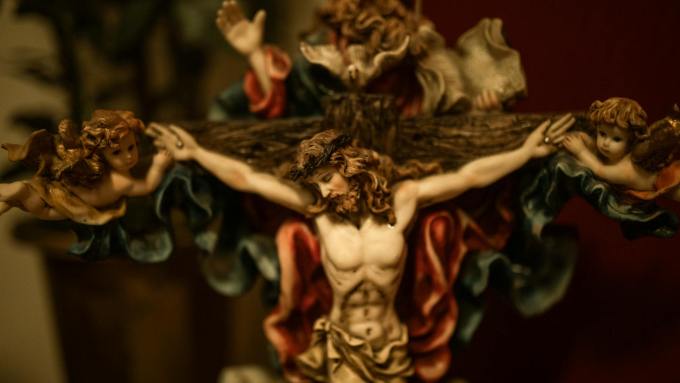
Because we all need to know we're LOVED.
“Truly I tell you, people will be forgiven for their sins and whatever blasphemies they utter; but whoever blasphemes against the Holy Spirit can never have forgiveness, but is guilty of an eternal sin”— for they… More
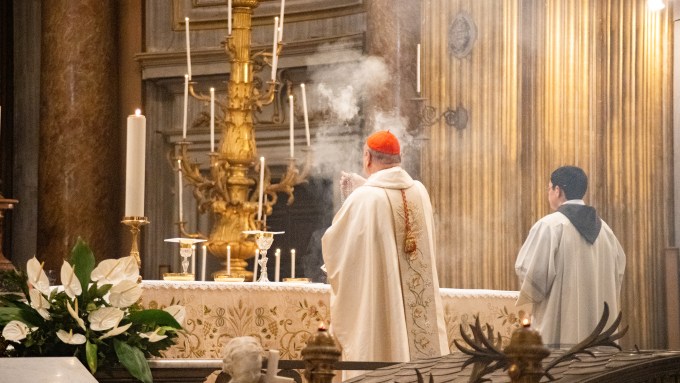
One of the most spiritually life-giving verses of the Bible for me comes from Paul’s letter to the Romans: “For you did not receive the spirit of slavery to fall back into fear, but you… More

One word has been devastating my spirit of late: “monster.” Too frequently this word is heard in civil discourse and political rhetoric as an identifier of human persons. Even when read off screen or paper,… More

There is something about the first month of the year. We’re tired. We’re transitioning into a new year. We’re facing everything that this might mean for us and our families. We’re told to make perfect resolutions for an outstanding new beginning.
What is true is this: we are in a liminal space between what has been and what will be. We might feel vulnerable, uncertain, excited but unsure.
The new year can be cherished and welcomed, when we know we’re safe in the love God has for us. That he sees us. That he knows what we tell no one else. That he cares for us as no one else ever could.
So if that’s you, join us online Saturday morning January 17 at 9:30 to 11:00. Prayer, reflection, entrusting, surrendering, interceding, and sharing with others your desires for 2026.
Click here for free registration and link.
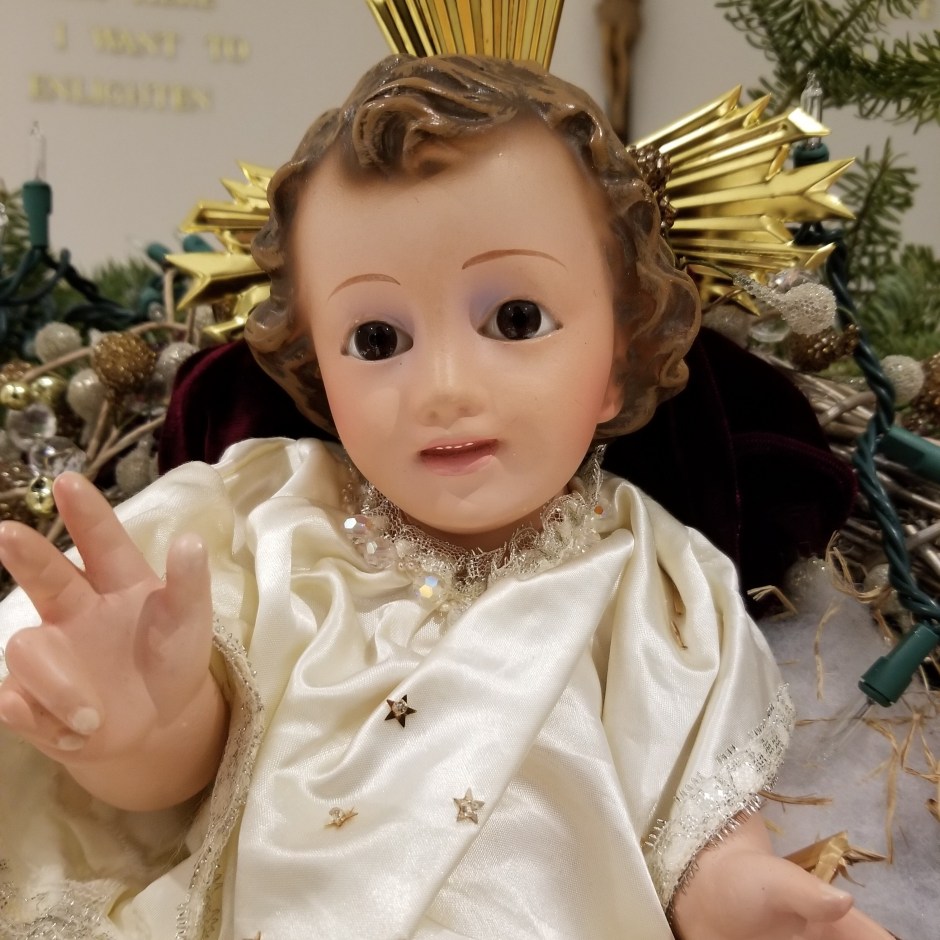
In the beginning was the Word, and the Word was with God, and the Word was God. He was in the beginning with God. All things came into being through him, and without him not one thing came into being. What has come into being in him was life, and the life was the light of all people. The light shines in the darkness, and the darkness did not overcome it.
There was a man sent from God, whose name was John. He came as a witness to testify to the light, so that all might believe through him. He himself was not the light, but he came to testify to the light. The true light, which enlightens everyone, was coming into the world.
He was in the world, and the world came into being through him; yet the world did not know him. He came to what was his own, and his own people did not accept him. But to all who received him, who believed in his name, he gave power to become children of God, who were born, not of blood or of the will of the flesh or of the will of man, but of God.
And the Word became flesh and lived among us, and we have seen his glory, the glory as of a father’s only son, full of grace and truth.
John 1:1-18
Jesus the Christ, the Light of the world, the true Light of the world that pushes back the powers of darkness, lives and reigns! Christmas is a once-a-year revival of the fires of love and belief that burn in our hearts that there is more than what we see.
There is more than what is on the surface.
There is more than what tears at the fabric of human decency and moral integrity.
There is God.
And God is here.
There is more to Christmas than the cultural debate about what to call these sacred days which are celebrated by many in sacred but, by many more, in secular ritual.
There is more to Christmas than the holiday sparkle and warmth and nostalgia of the music and worship and memories that form our Christian identity.
There is more to Christmas than celebrating the “birthday” of Jesus Christ.
To discover the “more,” we need to dive deep, to sink below the surface of controversy and outrage, and open up to the mystery of God-with-us-here-and-now.
The essence of Christ’s coming to earth was to remain on this earth, to be here-and-now with each person, until the end of the world. Christ Jesus is here in his Body and Bride the Church. He is here in his eucharistic presence—the very present representation of the Incarnation—in churches and chapels great and small that stand in most cities in every country, flooding the world with the grace flowing from the Holy Mass offered almost continuously across the globe.
Christ Jesus is here in you and me, who remain before the world as its conscience, reminding people here-and-now that there is a God who loves them and calls them to holiness and to live in justice and to show mercy.
Jesus is “the true light, which enlightens everyone. He was in the world, and the world came into being through him; yet the world did not know him.”
We should not be surprised then, if we are not recognized by the world as one of their own. Outrageous responses when culture and media blatantly counter our way of life with displays of morality that counter the Beatitudes proclaimed by Jesus, miss the mark. For we also are Christ here-and-now. We are also called to be the light that pushes back the powers of darkness and the presence of despair. We are given the role of offering our lives as Jesus on the cross. We are lifted up as a lantern to point the way, to proclaim the truth, to provide sustenance from our Eucharistic living for others who long to know their life can find meaning.

Lectio Divina is a way of listening to God as he speaks in his Word. It is a practice of communicating with God through Scripture and attending to God’s presence and what he wishes to tell us. In this slow and prayerful reading of the Word of God, we allow ourselves to be transformed by the Spirit who forms us into the image of Christ. There are four movements in Lectio Divina: Read (lectio), Meditate (meditation), Pray (oratio), Contemplate (contemplation).
Begin by finding a still space to pray. Breathe deeply and become quieter within. Abandon any agenda, worries or thoughts you bring to this prayer and entrust these things to the merciful care of God. Ask for the grace to be receptive to what God will speak to you through this Scripture reading. Grant me, Jesus Divine Master, to be able to know the mysteries of the kingdom of God and your unfathomable riches. Grant that your word penetrate my soul; guide my steps, and brighten my way till the day dawns and darkness dissipates, you who live and reign forever and ever Amen.
Read (lectio)
Begin by slowly and meditatively reading your Scripture passage out loud. Listen for a particular word or phrase that speaks to you at this moment and sit with it for a time.
Pray (oratio)
Read the text a third time. Listen for what God is saying to you. Speak heart to heart with God. Notice the feelings that this conversation with God raises up within you. Share with God what you notice about your response to this conversation. You may wish to return to repeating the phrase quietly and gently, allowing it to permeate you more and more deeply.
Contemplate (contemplatio)
Read the text a final time. Now be still and rest in God’s embrace. Ask God to give you a gift to take with you from this prayer. You might ask God if he is inviting you to do some action, for instance, make some change in your thoughts, attitudes or reactions, in the way you speak or how you treat others. Thank God for this gift and invitation as you conclude your prayer.
Image: Myriams-Fotos; pixabay.com
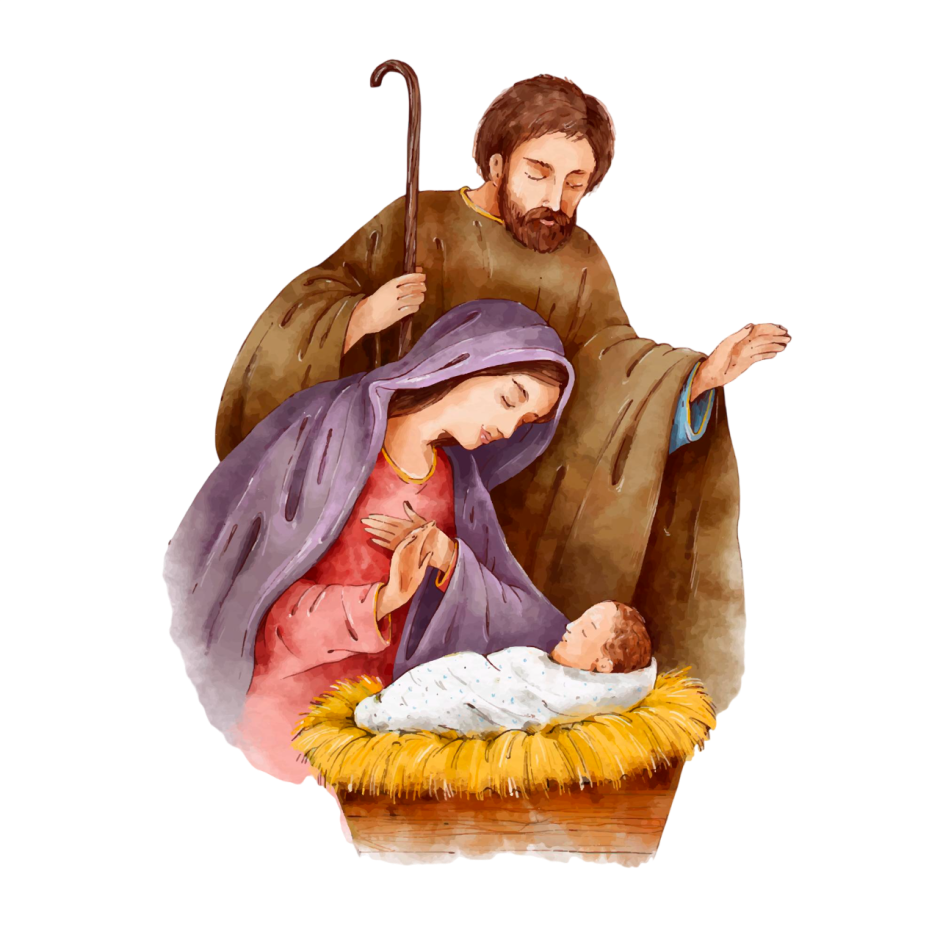
This Christmas, you might want to sit for a time alone, without plans and schedules and to do lists.
I invite you to let God meet you right there. That’s all. Not a big production. Just sit like Mary Joseph and ponder what is inexplicable or overwhelming in your own life right now. You have wrestled with it, trying to determine the “right” thing to do. Now just sit quietly. Tell God: “I need you now. Right here. I don’t understand. I can’t decide what to do. I want to do what’s best, but I don’t know what that is.” Tell God what you feel: angry, betrayed, sad, frightened, determined, controlling…
Then wait in spaces that are simple and unrushed, seeking the deeper love that is the foundation of everything real. Quietly say, “Yes. Just show me what you want here. And I will say yes.”
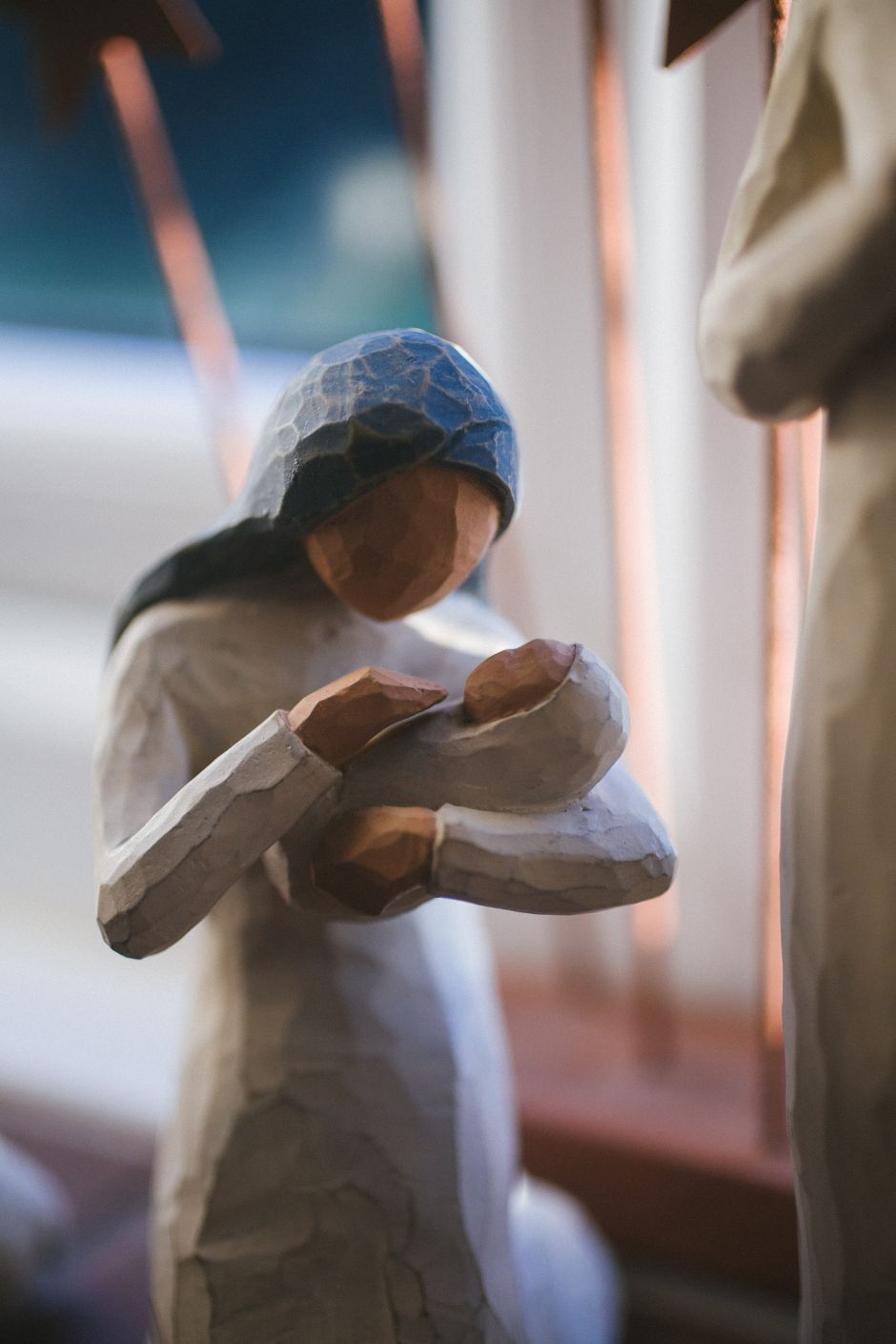
Advent is a season of both hurry and stillness. We long to give the right gift, and our spirits yearn for the gift of grace that the season celebrates in the Incarnation of the Son of God.
This Advent Meditation opens up the heart of Christmas, the promise of participating in God’s life through the life, death, and resurrection of Jesus, and the way in which this hope offers new horizons for living in difficult times.

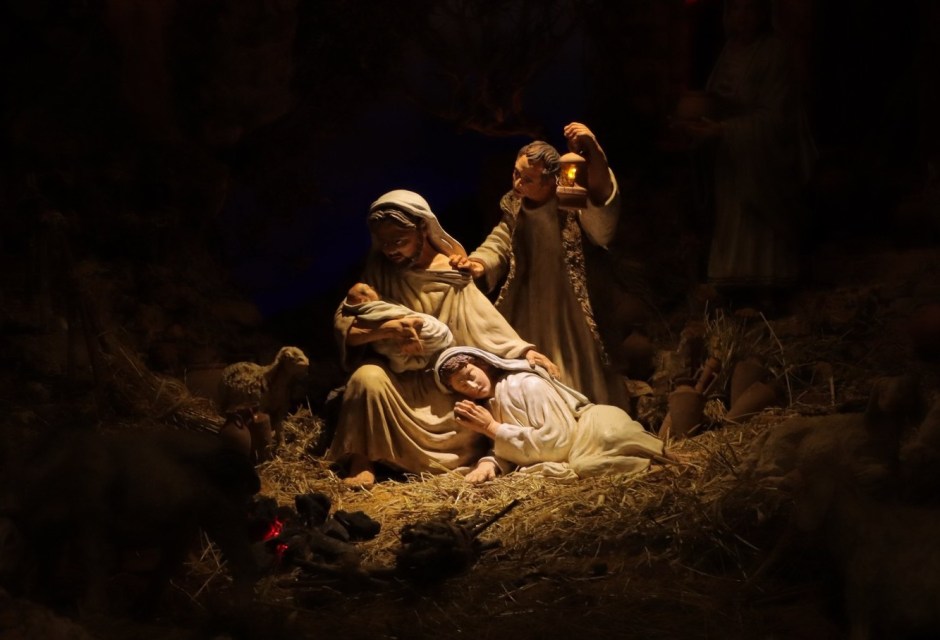
It was a moment that I knew He saw me. He knew me. He loved me.
It wasn’t in a chapel.
It wasn’t when I was praying.
It wasn’t when I was reading a spiritual book.
It was an unexpected moment that He found me and showed me His unconditional love in a way I could receive it and consciously make it mine.
Homework filled my days as I pursued graduate theological studies and I had volunteered to take care of the switchboard on a quiet Saturday afternoon. I was immersed in reading Augustine’s commentary on the Gospel of John.
This great disciple of Jesus, convert, and Doctor of the Church described his weakness. I suddenly knew mine. It was honest. It was raw. It was such a relief to finally name it and own it.
In a flash, I felt like there was someone else in the room. Looking up, I saw no one.
My eyes returned to the page and I continued reading. Once more the piercing sense of being seen with a gentle and compassionate gaze overwhelmed me. This time I knew the eyes, the presence, was deeply established within me, pouring out over my inner landscape.
And the words…
The voice…
“I don’t care if you ever beat this temptation. If you look at me and let me keep looking at you, that’s all I care about. I love you.”
Decades later I inserted this spiritually disruptive event—disruptive in a sacred and healing way—into a book I was writing. My editor still in her twenties or early thirties flagged it as “impossible” and “against Church teaching.” “We need to repent before we hear those words….”
Maybe so, I thought, but I can’t doubt—nothing could make me ever question—that I had heard His voice.
Today I found a similar story in a book I’m reading for Advent, Do Not Judge Anyone: Desert Wisdom for a Polarized World: Desert Wisdom for a Polarized World, by Isaac Slater, OCSO. In his chapter on Mercy he recounts how the Japanese poet Ryokan had been asked by his sister to give advice to his nephew who was squandering the family’s money. Ryokan went to his sister’s home and stayed three days and said nothing. On the day he left he stood on the porch, called for his nephew, and asked him to tie the strings of his straw sandals. His sister, standing behind the screen, thought that finally he was going to give her son some stern advice. But there were no words. No reproaches. No pleading. Instead, as his nephew bent to tie his sandals he felt something wet on his neck. Surprised, he looked up and saw Ryokan’s eyes full of tears. “At that moment he felt repentance for his wrongdoings. Ryokan stood up and left without a word” (page 13-14).
Slater reflects on the interplay between repentance and mercy:
“Sin can only be known in the moment it’s forgiven. Otherwise we could never bear to face it squarely. It’s the awareness of the full extent of our misery in the same moment that we realize we are loved, unconditionally, just as we are. Knowing we are loved just as we are, while seeing keenly and with fresh eyes the nature of our fault, is what prompts us to want to change, from within and freely. Only when we know that we don’t need to change in order to be loved do we want to change…not to earn what’s already been freely given but from gratitude” (Slater, page 14).
The other day I witnessed a conversation. As a woman told a humorous story, she made a side comment to a priest sitting next to her. It was something about confession or an excuse around the event she was relaying. The priest didn’t miss a beat. He shrugged and said simply,
“There is nothing that we can do to make God love us more. There is nothing we can do to make God love us less.”
At Christmas we remember and ponder how Love reached down to us, leaping down, reaching down into the deep waters to draw us out and set us free. In the Resurrection we learn that this divine Love is stronger than death and that nothing in the humble obscurity of our existence can put out the fire in the heart of the Trinity. Nothing we could do, even crucify the Lord of Glory, could overpower what stands as the meaning of the world: relationship. We were created by God in relationship with him, we were pursued, even after we rejected this communion, by the God who wanted us still as his own. The purpose of Jesus’ life and of his death and resurrection was to reveal the unswervability of God being for us and pitching his tent among us in order to fulfill God’s ultimate desire to bring us and the whole creation into God’s communion of forever and unending love.
The Christmas story is about much more than a memory or a re-telling. Once grasped it becomes our story, the history of a Love that forms our identity, establishes our purpose, points us to our destiny, and fills us with joy.
This unconditional love Is the only reason for our existence. Period.

“Be on guard so that your hearts are not weighed down with dissipation and drunkenness and the worries of this life, and that day does not catch you unexpectedly, like a trap. For it will come upon all who live on the face of the whole earth. Be alert at all times, praying that you may have the strength to escape all these things that will take place, and to stand before the Son of Man.”
Luke 21:34-36
A tender reading for the day before Advent. Be on guard. Don’t be lulled into sleep. Let not dissipation and worry take you captive. Hold carefully and warmly those places in your heart that break—the disappointments, the losses, the depressing burdens. Be alert. The Son of Man, the Child of Bethlehem comes. Cling to the light that Advent promises, to the stars that brighten the darkened skies.
It’s the eve of the glorious season of Advent.
The Gospel reminds us today to look around and take note of the need for Light, for Hope, for Mercy. A mother tells me her teenage daughter still hasn’t recovered from the isolation imposed in the Covid-19 lockdown. The tears almost capsize her. A grandpa worries his granddaughter will lose her way at college. A friend texts that her cousin has set a date for an abortion.
Be not weighed down by the worries of life, because God has entered into this life to be here with us as our very Life. Be not blinded by the darkness, because we begin from today to prepare for the birth of the Light of the world and the ultimate end of the night. Be not feeble of heart because Jesus conquers every death and restores joy.
Advent is about renewing the fires of joy and the eagerness of hope. It is for the child in us that needs innocence restored by the Child of Bethlehem.
Advent is about walking through the dark that surrounds us with eyes translucent with eagerness for the Kingdom.
Advent is about knowing that the victory of Christ is our victory, that God holds the power in love, and that nothing can wrest us out of his hand.
Image credit: Photo by Rebecca Peterson-Hall on Unsplash
Lectio Divina is a way of listening to God as he speaks in his Word. It is a practice of communicating with God through Scripture and attending to God’s presence and what he wishes to tell us. In this slow and prayerful reading of the Word of God, we allow ourselves to be transformed by the Spirit who forms us into the image of Christ. There are four movements in Lectio Divina: Read (lectio), Meditate (meditation), Pray (oratio), Contemplate (contemplation).
Begin by finding a still space to pray. Breathe deeply and become quieter within. Abandon any agenda, worries or thoughts you bring to this prayer and entrust these things to the merciful care of God. Ask for the grace to be receptive to what God will speak to you through this Scripture reading. Grant me, Jesus Divine Master, to be able to know the mysteries of the kingdom of God and your unfathomable riches. Grant that your word penetrate my soul; guide my steps, and brighten my way till the day dawns and darkness dissipates, you who live and reign forever and ever Amen.
Read (lectio)
Begin by slowly and meditatively reading your Scripture passage out loud. Listen for a particular word or phrase that speaks to you at this moment and sit with it for a time.
Pray (oratio)
Read the text a third time. Listen for what God is saying to you. Speak heart to heart with God. Notice the feelings that this conversation with God raises up within you. Share with God what you notice about your response to this conversation. You may wish to return to repeating the phrase quietly and gently, allowing it to permeate you more and more deeply.
Contemplate (contemplatio)
Read the text a final time. Now be still and rest in God’s embrace. Ask God to give you a gift to take with you from this prayer. You might ask God if he is inviting you to do some action, for instance, make some change in your thoughts, attitudes or reactions, in the way you speak or how you treat others. Thank God for this gift and invitation as you conclude your prayer.
Image: Myriams-Fotos; pixabay.com
 Touching the Sunrise