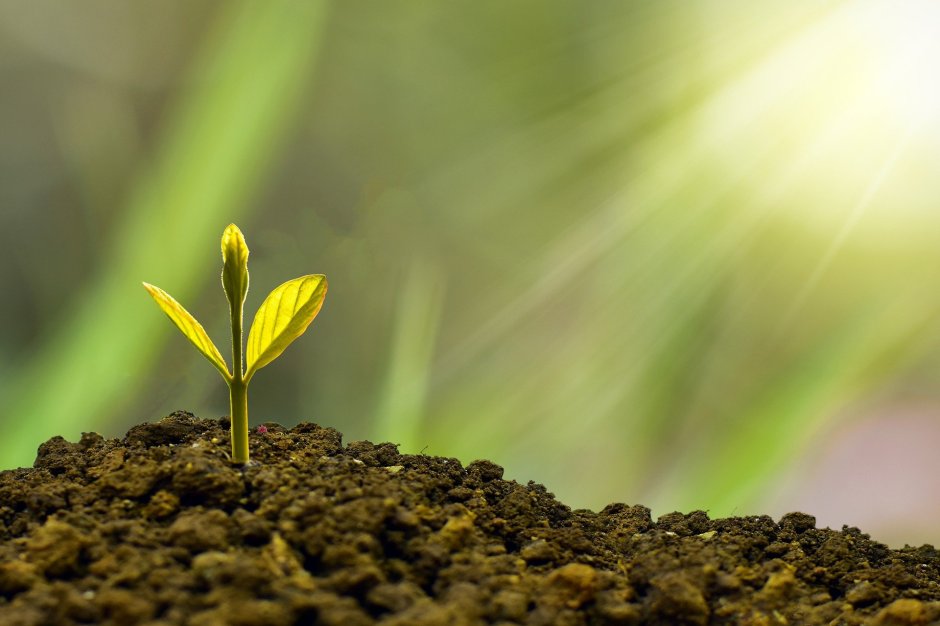
Every uncompassionate action is like planting a dead tree. A compassionate action is planting a living tree that grows endlessly and never dies. It always leaves behind a seed from which another tree grows.
Below is a dramatic reading from Henri Nouwen on Compassion:
What are you experiencing right now within your heart and your soul, emotions, reactions, provocations…. What “living trees” do you want to see grow around you? Within you? What future do you want to be a part of? Where and how can you bring new life?
Yesterday, for the first time in many months, I spent some time in my garden.
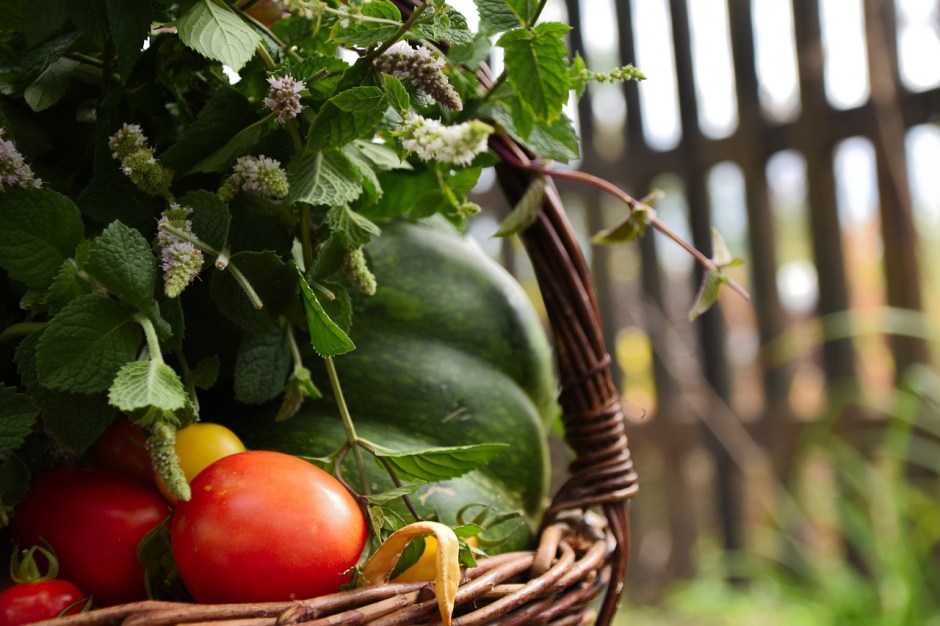
You have to understand: I’m not a gardener. I have a garden. There’s a difference. I cannot talk knowledgeably about this plant or that; I don’t have an instinctive feel for what seedlings will work best together. But last year the coronavirus challenged me to plant my very first vegetables—tomatoes and cucumbers and lettuce—and so I started taking my garden more seriously.
Yesterday I began cautiously (one might even say humbly) clearing out some of the winter’s debris and assessing what’s needed for the spring. And immediately some scenes from this past year sprang to my mind. The pandemic may have inspired me to become more self-sufficient, yet as a beginner, I had—for example—no idea how many tomato plants one needs, and so I planted… well, let’s just say, quite a few! I ended up spending much of the summer delivering tomatoes and cucumbers and herbs and flowers to other people—masked, with a furtive knock on their door followed by a quick exit so we wouldn’t be within six feet of each other.
I learned a lot about growing things in this pandemic year. About how to tend to living things. About the need for water; my area experienced a drought last summer on top of everything else. About others’ needs for fresh food when scarcities happen at grocery stores.
I also saw the joy something small and living can bring to lives starved for beauty. The smile on someone’s face when I dropped off some seeds or a small plant. I’m remembering that as I consider next month—May—marks the end of Pope Francis’ Laudato Si’ anniversary year, declared in the hope that this year and the ensuing decade would be a time of grace—for humanity, and for all God’s creatures. It feels in some ways as if the pandemic put everything else on the back burner for a while.
And so perhaps this season is one of finding our way back.
The pandemic didn’t eliminate our need for connection. Connection to each other. Connection to nature. And as we approach Earth Day 2021, I’m remembering everything is truly all related. The pandemic taught us we don’t need to clog our highways with fuel-burning vehicles to get the best out of life. My gardening experience taught me that we can start small, with just a few plants, just an offering that’s easily shared with others.
We don’t have to join Greenpeace or live entirely off the grid to make the world better. We can start with the very title of Pope Francis’ encyclical—Laudato si’: “Praise be to you!”
How can we praise God? What energizes me is knowing we can do it in the smallest ways as well as the sweeping ones. By planting one tree. By growing one garden. By visiting an elderly neighbor. By sharing whatever we have with others. By volunteering. By praying for God’s beautiful and fragile creation. By acknowledging the economic, climactic, and health inequities of the world, and finding ways we can take steps—even small ones—toward alleviating them.
As I stood in my garden, picking up paper and plastic the wind had blown in, I felt in a small way that I was, indeed, finding my way back. What about you? How can you find your way back, in this moment, in this day?
Pope Francis’ challenge remains relevant to us all today. Do we “dare to turn what is happening to the world into our own personal suffering and thus to discover what each of us can do about it”?
There are times when we have to deal with big questions. And then there are times when big questions sear deeply into our identity, shake our consciousness, tear our hearts with guilt. They toss us about with fear, doubt, and loneliness. The big questions seem to be dealing with us. We might stay up at night wondering where we fit in God’s plan. Questions haunt us: Who am I? What is the purpose of my life? How will I go on from here?
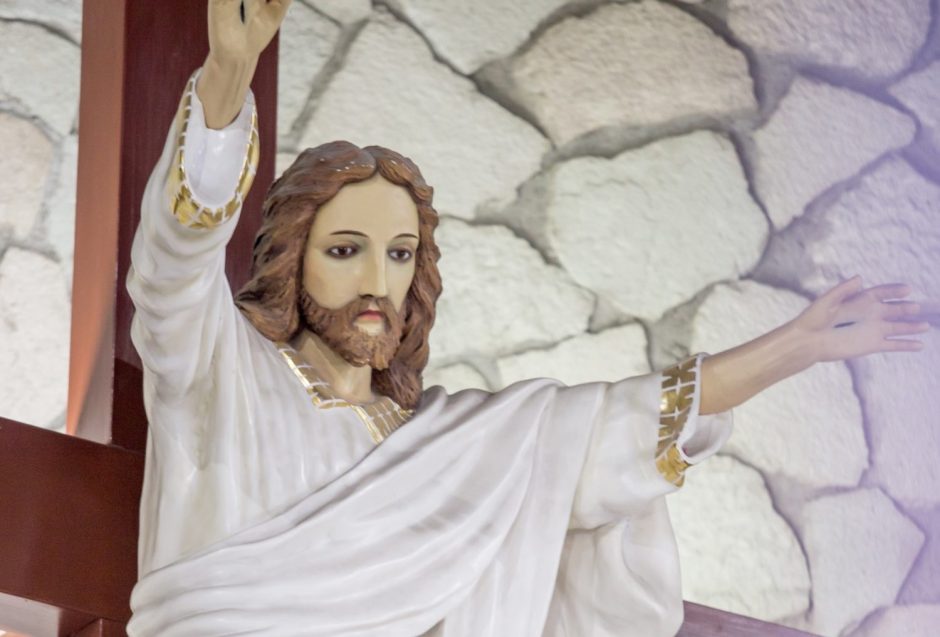
When we’re haunted by these big questions, we are like the apostles after Calvary’s sorrow and the collapse of their hope, when rumors suddenly swirled around that some of them had seen Jesus alive. How they must have longed to see once again the face of their Beloved Master, and yet also perhaps felt their hearts shrink in the uncertainty of what his eyes would say to them.
The forty days of Easter before the Ascension are like an educative process. After the resurrection, Jesus doesn’t engage the apostles on the level of emotion. He becomes their guide through the complexities of their hearts and the events that left them fearing what God’s plan might be. To them, Jesus asserts the authority and gentle power of his presence: Do not be afraid. It is I.
For many people, 2020 was a lost year. Many of us stayed in our homes, didn’t see our families, found new ways to work and attend school and keep our wheels turning, learned all there is to know about Zoom. Still more of us lost our jobs, suffered grave illness, grieved the death of family and friends, could not pay our rent or mortgage, succumbed to addiction, even became homeless.
2020 was also the year of Laudato Si’, and it’s easy to dismiss care and concern for the earth when so many other worries and events have taken over our lives. It’s been easy to lose sight of something that didn’t feel all that immediate.
And yet, as we approach the end of the Laudato Si’ year, if we look at all these things together, we can see there’s a connection running through them that is very real and very immediate indeed. “Nothing in this world,” writes Pope Francis, “is indifferent to us.” The connection between our care for the earth and our care for other people, as well as our care for our spiritual lives, is profound and irrefutable.
It is Pope Francis who draws our attention to the model of our sense of connectiveness:
I believe that Saint Francis is the example par excellence of care for the vulnerable and of an integral ecology lived out joyfully and authentically. He was particularly concerned for God’s creation and for the poor and outcast. He loved, and was deeply loved for his joy, his generous self-giving, his openheartedness. He was a mystic and a pilgrim who lived in simplicity and in wonderful harmony with God, with others, with nature and with himself. He shows us just how inseparable the bond is between concern for nature, justice for the poor, commitment to society, and interior peace.
Pope Francis has never lost sight of the interwovenness of God’s creation, and he calls us to remember where we came from and where we’re going. His is not a plea from on high, a homily of instruction and advice; this is someone who has lived precisely what he’s urging us to consider living.
And in a sense, one of the words that really leaps out is…friendship.
Before he was elected pope, Francis lived in a modest apartment in Buenos Aires, rather than in the archbishop’s mansion; he took public transportation rather than using a church limousine; he cooked his own food. Yes, these were symbolic gestures. But symbolism matters.
And it was more than symbolism that drove him to befriend the people he met on the streets, to listen to them, to touch them, emphasizing that the Gospel teaches charity, not hypocrisy, as he himself said, “giving to someone who cannot pay you back, serving without seeking a reward or something in exchange.” In order to truly find that peace, the pope said, each Christian must have at least one friend who is poor.
Think about that for a moment. We should all have at least one friend who is poor. Not someone we fling coins at in the street, not someone we serve at our soup kitchens… someone who is a friend. A person we consult, listen to, value.
“The poor are precious in the eyes of God,” Pope Francis says. “They remind us that that’s how you live the Gospel, like beggars before God.”
“So,” the pope continues, “instead of being annoyed when they knock on our doors, we can welcome their cry for help as a call to go out of ourselves, to welcome them with the same loving gaze God has for them. How beautiful it would be if the poor occupied the same place in our hearts that they have in God’s heart.”
How can we make that beauty reality? It begins with friendship, with doing what Sr. Thea Bowman used to describe as simply crossing to the other side of the room and engaging in the conversation there.
Once we see other people as friends, then we can start to see how all our decisions affect them, and we can start finding our way back to friendship and communion. We can start thinking of including others rather than excluding them.
It needs to be said that, generally speaking, there is little in the way of clear awareness of problems which especially affect the excluded. Yet they are the majority of the planet’s population, billions of people. These days, they are mentioned in international political and economic discussions, but one often has the impression that their problems are brought up as an afterthought, a question which gets added almost out of duty or in a tangential way, if not treated merely as collateral damage. Indeed, when all is said and done, they frequently remain at the bottom of the pile. This is due partly to the fact that many professionals, opinion makers, communications media and centres of power, being located in affluent urban areas, are far removed from the poor, with little direct contact with their problems. They live and reason from the comfortable position of a high level of development and a quality of life well beyond the reach of the majority of the world’s population.
The isolation we’ve experienced as part of the pandemic has allowed us to focus inward, to our own experiences, and not have to think about others who have less and are suffering more. Human beings can never be an afterthought. Everyone on earth was made in the image of God and is beloved by God. When we pollute other areas of the world, we’re telling God that the people who live in those regions are, in our opinion, of less value than we are. By saying we don’t care, we consign them to invisible lives filled with misery.
The most vulnerable around us are the ones most affected by a changing environment, cautions the pope:
Many of the poor live in areas particularly affected by phenomena related to warming, and their means of subsistence are largely dependent on natural reserves and ecosystemic services such as agriculture, fishing and forestry. They have no other financial activities or resources which can enable them to adapt to climate change or to face natural disasters, and their access to social services and protection is very limited.
Our world has a grave social debt towards the poor who lack access to drinking water, because they are denied the right to a life consistent with their inalienable dignity.
The warming caused by huge consumption on the part of some rich countries has repercussions on the poorest areas of the world, especially Africa, where a rise in temperature, together with drought, has proved devastating for farming.
It is clearly inconsistent to combat trafficking in endangered species while remaining completely indifferent to human trafficking, unconcerned about the poor, or undertaking to destroy another human being deemed unwanted.
Throughout his life, Pope Francis has extended a hand of friendship to everyone, from the most powerful to the most vulnerable. In finding our way back to friendship, we’re finding our way back to the Gospel, to the shores of Galilee when Jesus extended his own hand of friendship to all. In finding our way back to friendship, we’re claiming our inheritance as children of God, beloved of our Father, whose brothers and sisters encompass the world.
“Everything is connected,” writes Pope Francis. “Concern for the environment thus needs to be joined to a sincere love for our fellow human beings and an unwavering commitment to resolving the problems of society.”
We had to deal with the pandemic. We had to change our lives, grieve and bury our dead, and find a way out of it. But it is time now to once again hear “the cry of the earth and the cry of the poor.” We need to find our way back to what matters.
We need to find our way back to friendship.
by Jeannette de Beauvoir
Prayer for the People of the Earth
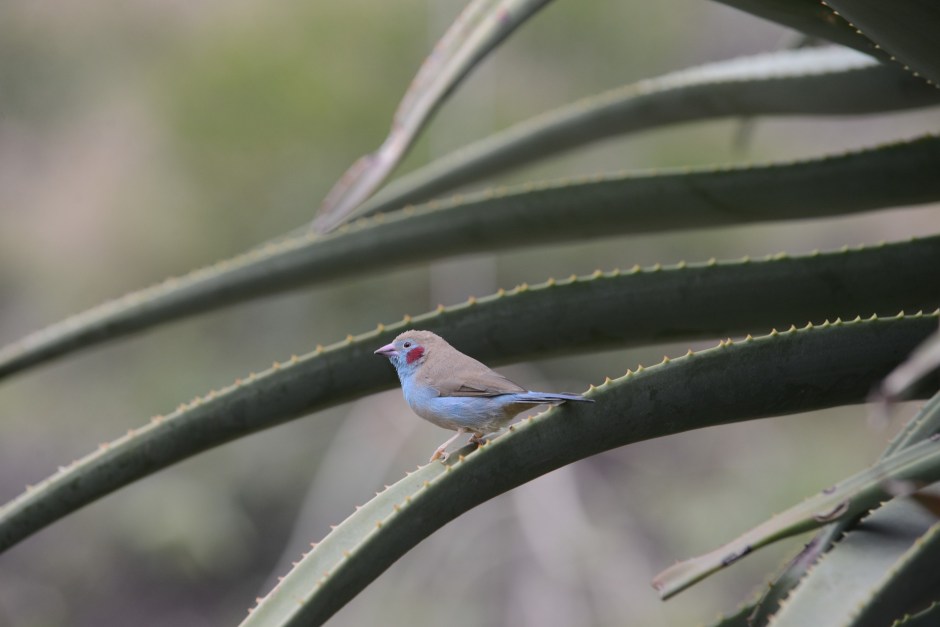
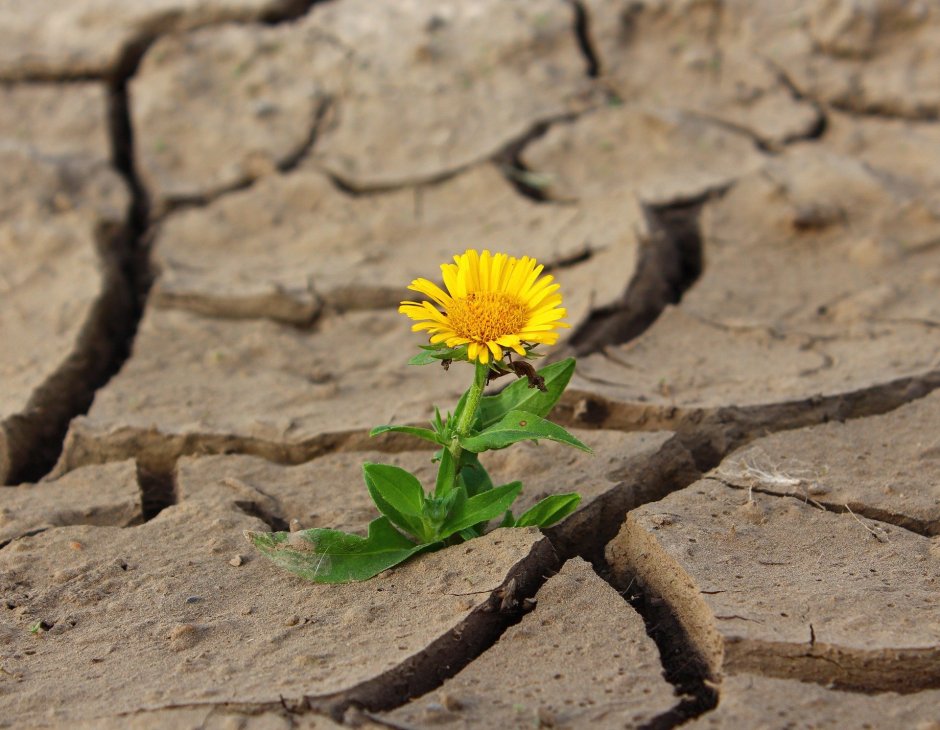
Blessed Lord, it seems that most often we encounter you in a church. which is good; we know you’re there. But… We sometimes forget you’re everywhere else, too. In the beauty of the earth you gave us (a gift we often have not taken care of) In the fragility of a flower In the song of a bird. You created the cosmos and the earth and gave us each a small part of the stars in our bodies and in our hearts.
And yet…
We have left a life sustained by interdependence. We now live in the era of the self.
We have created systems that foster innovation but promote competition and materialism. We see ourselves as separate beings, experiencing our human condition individually, separate from everyone else. Disasters that take place far away hold no meaning. We forget people who don’t have enough to eat when we plan our own healthy meals.
Lord, you know this well: when we feel disconnected, we lose our compassion and empathy for things not directly concerned with our advancement. We lose touch with the divine.
We all share the same human journey, we experience the same universal emotions, joy and grief, pain and surprise. We all call earth home. We breathe the same air, eat food grown in the same soil, drink water from the same oceans.
Some of us live well in solid homes with solid incomes go on vacations, buy anything we need. More of us live not so well in homes that can be devastated by storms by illnesses by poverty We don’t go on vacations. We don’t make purchases. Our children go to sleep hungry.
From your hand, our planet sustains us gives us a place to live and prosper. We treat it as though there were several other planets we could use when we’re done with this one.
Help us reconnect, O Lord. Help us rediscover our first loves love of the soil love of each other love of your creation in all its forms.
There are times when we have to deal with big questions. And then there are times when big questions sear deeply into our identity, shake our consciousness, tear our hearts with guilt. They toss us about with fear, doubt, and loneliness. The big questions seem to be dealing with us. We might stay up at night wondering where we fit in God’s plan. Questions haunt us: Who am I? What is the purpose of my life? How will I go on from here?
When we’re haunted by these big questions, we are like the apostles after Calvary’s sorrow and the collapse of their hope, when rumors suddenly swirled around that some of them had seen Jesus alive. How they must have longed to see once again the face of their Beloved Master, and yet also perhaps felt their hearts shrink in the uncertainty of what his eyes would say to them.
The forty days of Easter before the Ascension are like an educative process. After the resurrection, Jesus doesn’t engage the apostles on the level of emotion. He becomes their guide through the complexities of their hearts and the events that left them fearing what God’s plan might be. To them, Jesus asserts the authority and gentle power of his presence: Do not be afraid. It is I.
For forty days, Jesus engages his apostles and disciples who are astonished at God’s way of acting in Christ now risen. For forty days, Jesus leads them on an educative process in which they learn to mistrust themselves, their interpretation of events, and their own evaluation of who they are before God. Instead they become convinced of the reasons for their faith, a faith so strong they would give their every moment and their very lives, witnessing to others, telling them who this Jesus is and what he’s done for them.
The Easter season teaches us anew that, in our hearts, we also have already risen with Christ and experience something even now of the heavenly Kingdom. In Baptism we have died with Christ and have received an initial grace, which is the point of departure, of gradually intensifying experiences of grace through prayer and sacramental encounters with the risen Lord. Each time we receive the Eucharist we are fed at the heavenly banquet. It is true that this interior glory, which is still mostly hidden within us, will burst forth only in the eschaton.
These days, may we learn the Easter lesson to not rely on our own experience, to trust God as our guide, and to let our souls continue in communion with God—no matter what inner storms toss our hearts.

 Touching the Sunrise