Examen on Understanding

Place yourself in the presence of the Lord and pray for enlightenment. Relax. Breathe deeply. Run quickly over the past few hours or days, allowing your real feelings to surface about the events that have been part of your life, the feelings you’ve buried so that you could make it through the day.

Pay attention to the way in which the Lord has been present to you. Where have you felt drawn to the Lord or moved to understanding? Where have you met the Lord when you felt afraid … misunderstood … tempted … relieved … happy? Turn to the Lord with gratitude.

Choose one incident or reaction that stands out particularly for you at this time and which is still not settled for you. Recall to mind the details of the incident and its context, the people involved, and how you feel about it.

Read in the Bible James and John (Mark 10:35-45)

James and John, the sons of Zebedee, came forward to him and said to him, ‘Teacher, we want you to do for us whatever we ask of you.’ And he said to them, ‘What is it you want me to do for you?’ And they said to him, ‘Grant us to sit, one at your right hand and one at your left, in your glory.’ But Jesus said to them, ‘You do not know what you are asking. Are you able to drink the cup that I drink, or be baptized with the baptism that I am baptized with?’ They replied, ‘We are able.’ Then Jesus said to them, ‘The cup that I drink you will drink; and with the baptism with which I am baptized, you will be baptized; but to sit at my right hand or at my left is not mine to grant, but it is for those for whom it has been prepared.’

When the ten heard this, they began to be angry with James and John. So Jesus called them and said to them, ‘You know that among the Gentiles those whom they recognize as their rulers lord it over them, and their great ones are tyrants over them. But it is not so among you; but whoever wishes to become great among you must be your servant, and whoever wishes to be first among you must be slave of all. For the Son of Man came not to be served but to serve, and to give his life as a ransom for many.’ (Mark 10:35-45)


There are three different groups in this Gospel passage:

  1. James and John, who recognize Jesus’ identity as the Son of God and voice their desire to be next to him in heaven.
  2. The other ten apostles, who get frustrated with James and John because they think that the two brothers are being selfish by trying to claim the spots at Jesus’ side for themselves.
  3. Jesus, who understands his followers’ desire to be close to him and also wants to enable them to live out God’s plans for their lives.

Jesus understands those he loves. Notice that he does not chastise James and John for striving to have the highest place in heaven, nor does he chastise the other apostles when they become jealous of the two brothers. Instead, Jesus understands that James and John desire to be close to him in heaven which is a beautiful desire. Jesus also knows that they do not have enough information to know what their desire entails. Likewise, he understands that the other apostles are hurt at the possibility that they might not be closest to Jesus.

As you reflect again upon the incident or reaction you have chosen for your examen, pay attention to how Jesus encounters others with a loving understanding. The Lord sees the situation that you have chosen for your examen, and he understands it. He looks at you with love and invites you to grow closer to him. What is it that you want the Lord to understand in your life?

God sees the heart of each person and he loves them. God made all people good, but sometimes their goodness can be difficult to see without seeking to understand. How would approaching others with increased understanding strengthen your relationships?

God’s great love for you is made manifest in the experiences of your life. As you make this examen, the Lord is right now moving your heart toward understanding.

Spend some time talking over with the Lord what you are learning and experiencing. With simplicity express your sorrow for any lack of understanding in your life and your gratitude for any movements you sense toward greater understanding through God’s grace.

Identify one step toward becoming a more understanding person that you want to take going forward, a step that is actually possible for you. Pray for the grace to be a more understanding person.

Take a few moments to bring your thoughts or insights from this reflection to prayer.
Ask God for the grace to live what you have reflected on. Close your prayer time with the prayer below.
You may wish to carry this prayer through your day.

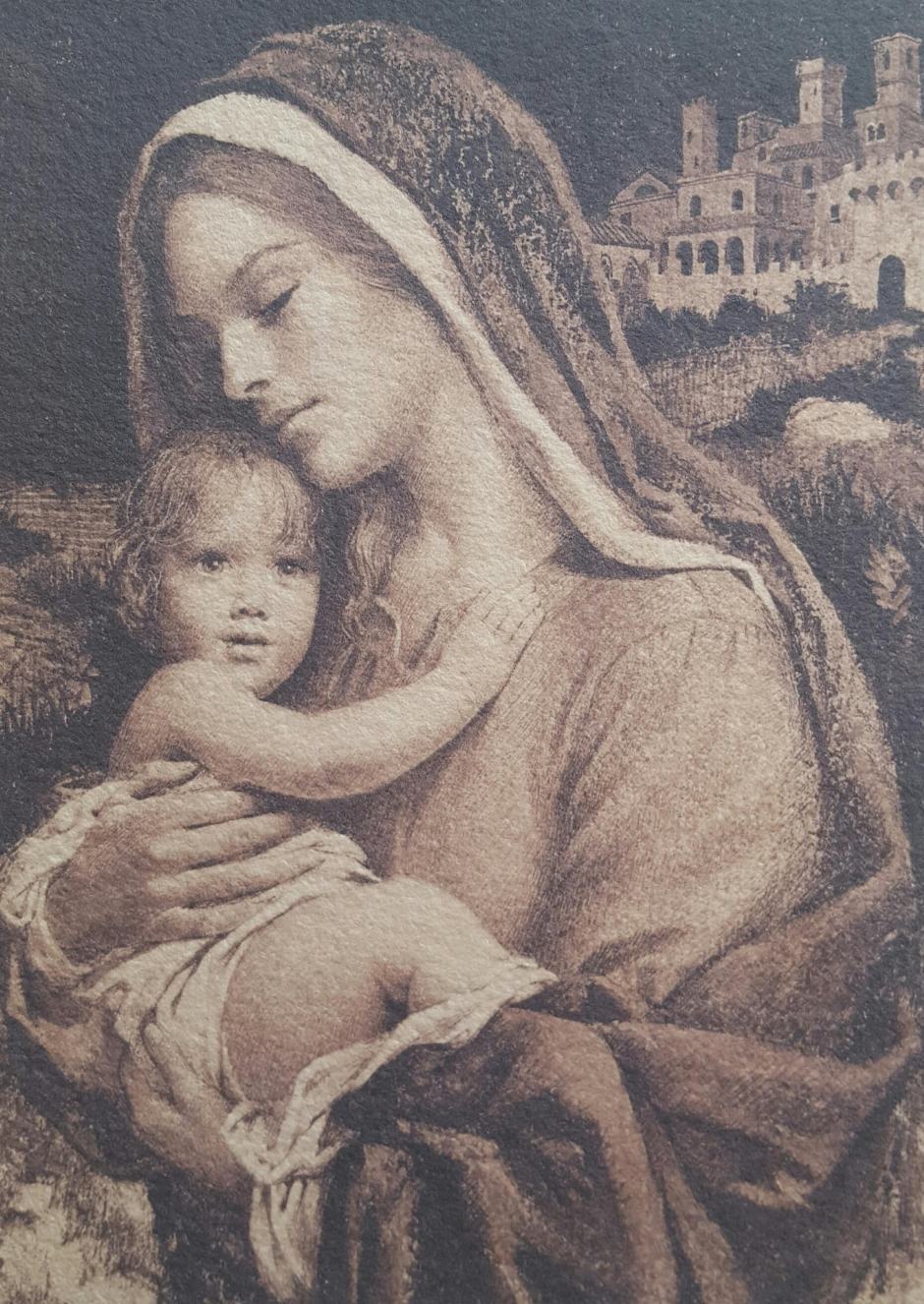
Image by marthaartess from Cathopic

The stillness of humility

Be still. Comforting words that we find in Psalm 46. “Be still and know that I am God.” 

For me, these words conjure up quiet moments in a sacred space or beautiful place in nature. To do “be still” I could imagine calming myself down and enjoying a heart at peace, a world at peace, relationships at peace… 

Which they are not. 

Our world is anything but in peace. Being a fallen human being not every one of my relationships is at peace. And when I try to be quiet my heart struggles to find inner rest, and my mind takes off like wild stallions. 

Why? 

At this point this article could take the expected turn toward mindful or contemplative practice or forgiveness or anger management, but today I want to turn down another path that was recently introduced to me… the humility of God. 

In his paper “Self-Love to Self-Emptying Love,” Francis George Pudhicherry, S.J. states that humility is what we learn from the Father, the Son, and the Spirit, from the way God takes the risk of limitation and rejection by the creatures God has created, saved, and continues at every moment to love and renew toward the ever-greater flourishing of holiness and abundant life.  

The humility of the Father consists in the risk God took in creating the human person free and vulnerable to the possibility of sin. The Father created us to be in relationship, a relationship that his creatures were free to turn away from when they decide to live in a manner which negates the Father or relegates God to the margin of their existence. When we abuse creation, when we abuse each other, we humiliate the Father. When we accuse God as if he were responsible for the problems we create for each other on this earth, we humiliate the Father. 

God’s respect for us in not controlling us is “a sign of humble love.”

That’s a big concept to wrap your heads and hearts around. This afternoon I watched one of those five-minute videos that show up on your Facebook feeds. The video was about bullying, but it was the relationship between the daughter and the father that caught my attention. The father had moved with his daughter to a small town in order to get her into a high school that would position her for college. Unable to pay for her tuition, he took a job as the janitor and her tuition was waived. Early in the video it is clear that his presence as a janitor becomes a source of humiliation for the girl as her two new friends make fun of her father as a failure for having such a lowly job, and begin to bully her online. The young girls who are her “friends,” knock over the bucket her father is using, spilling water all over the floor and calling him insulting names. In order to keep her friends, the daughter begins to hate her father who is causing her such embarrassment, as her “friends” harass her for having such a lowlife father. She even tells him to his face to go away and that she hates him. She contributes to the harassment of another girl just to keep her new-found friendship. 

A big breath here…. 

The father is heartbroken for what his daughter is suffering, tries to understand what is going on for her, and eventually decides he could try to find another job or two to pay for her tuition, to make things easier for his daughter in the new school. The last scene of the short video shows the daughter standing up to her friends for her father. That evening, after an embrace which manifests a love for his daughter that has never wavered, he explains why he took the job…for her. There was no angry outburst demanding that she at least be grateful for all that he had sacrificed for her. No, he only thought of loving her, waited patiently for her to grow through this experience of her life, and hopefully return to him. 

I understood the humiliation of this father. He ran up against limitations, the decisions of the two “friends” of his daughter who laughed at and insulted him, turning over his bucket, and humiliating his daughter. No matter how much he loved his daughter, or was willing to serve the school as janitor, the actions of others were out of his control. Yet he continued to be a loving person, respectful of his daughter’s freedom, patiently understanding her.  

God does that with every one of us. He didn’t create a bunch of robots that would go about keeping out of trouble, running the computer program “perfect” so God’s world would be just the way he wanted it to be. We are free. We are messy, we create messes, and often relegate God to the edges of our lives or blame him entirely for what we are going through. And yet he loves and loves and loves us even more. 

The Father then sent his Son in the fullness of time because he so loved the world, giving everything for our sake without asking any guarantee that we would reciprocate that love. He knew there was a genuine possibility that at least some of us would reject the gift he offered us in Christ, through his life, death, and resurrection, yet it is unconditionally offered. As we look at Christ on the cross, we can see the humiliation of the Father at having his own beloved Son, his most precious gift, unwanted and put to death.  

The Holy Spirit is the third Person of the Trinity and “the expression that divine love is inexhaustible and eternally new, that God’s capacity as absolute lover is ever greater, ever newer, and ever more fruitful.” The Holy Spirit is active in the world in history, silently sowing the seeds of holiness in God’s creatures, but again, we have the choice to take another path—as individuals, as members of the ecclesial community, in politics and government. The Spirit is this non-intrusive presence of God which honors the freedom he gave each of us. The Spirit’s ecstatic life-giving activity, we could say, “bumps up against” the limitations we put on the Spirit’s activity in our individual choices as well as through the unjust structures in society and in the weeds that are evident in the ecclesial community. 

5 things to help you be still

Be still. God is still. God accepts the limitations we put on his activity by our autonomous decisions and free actions, and the processes and movements of history. As the father in the video, but infinitely more so, God continues to unconditionally deal lovingly with us.  

Be still. Today at prayer I felt this intense desire to love God in return, like the daughter in the video who finally understood all that her father had sacrificed for her regardless of how she would—or would not—receive his love. 

Be still. I finally realized that whoever “puts limitations” on my plans, in their freedom, makes me one with the humiliation of God. In that space it is easier to forgive and harder to be angry. 

Be still. In eternity one day probably not too distant, I will gaze upon the Father and the Son totally united, bound together in an embrace of self-giving out-pouring ecstasy of love and complete total gratitude and obedience. I will never even vaguely comprehend the majesty of their giving themselves to each other, but I want to have lived my life at least a little from the shores of this limitless ocean of self-giving empathy and service of others in complete surrender and gratitude to God. Jesus came on earth to show me how this is done.  

Be still. Our hearts are rocked at times with reactive emotions and deep storms of fear and resentment. Our minds filled with useless, cynical, and angry thoughts that like gnats destroy our peace. I can hold my Father’s hand and bow to what I cannot change, determined nonetheless to care compassionately and see others with God’s eyes, confident that I need not prove, finish, or amount to anything to be his beloved daughter. 

Guest Post: Ice-cream with Chocolate Sprinkles: A Mother’s Day Reflection

Mother’s day is a special time of year that we can be grateful for our mothers living and deceased. We can thank God for both those who have naturally given us life as well as those who have nurtured us to being the people we are today.

I remember one phrase from my mom that pretty much has become a “philosophy of life” that I try to live by each day. “Let’s have ice-cream…with chocolate sprinkles when we can!” This is very much a reality for me as I live a missionary life. Basically, life is short and we only have a certain span of time to be with the ones we love and all those people who make up the tapestry of our lives. Don’t get lost in the trivialities. Keep the important things important.

I grew up in Kenya with a part-farm and part-city experience. Mom loves farming and along with that, she loves dogs, cats, chicken, cows, orchards, and gardens…and so we were blessed to have them growing up. Something about her love for nature and the care of God’s creatures and creation would, in time, grow on me. Everything is gift. We are stewards. The chores around the home would become my life lessons on responsibility (even if I didn’t like some of them). Even more precious were the lessons I learned about how to handle people over the handling of things. It was crystal clear that each person, no matter how they may be, needs to be loved and cared for, to be treated with respect, and to be given another chance. I learned from her to meet each person and accept them right where they are. I guess that’s why mom knows so many people!

A touch of the city life would bring with it an expansion of my childhood horizon of dreams. It was from mom that I would come to appreciate the love for life, dance, and good humor. She enjoys all kinds of music anywhere from vibrant tunes that we danced to with our jammies on Christmas morning as kids to an oldie goldie by the Bee Gees. Not to say that life was all rosy and smooth going. We have lived some hard times as a family and yet, even so, mom has challenged us to see beyond. In some of these dark times, it was the tender way in which she drew me out to pursue things that I would never have imagined. Perhaps a fine characteristic of the way that God works with each one of us is that he knows and sees our potential and constantly draws us out of ourselves so that we can be the best of who he created us to be.

I hope this Mother’s Day will be an opportunity to give thanks for the moments of joy or sorrow that we have encountered with the mothers in our lives. For all the lessons learned and experiences lived – blissful or challenging – may they remind us in a tangible way, that God works so tenderly for our good in our lives through theirs. So, don’t let the day pass by so quickly this year. Be sure to “enjoy some ice-cream…and some chocolate sprinkles if you can!” Be sure to say thank you mom and of course, thank you Lord. Everything is gift.

Sr. Jacqueline Jean-Marie Gitonga, FSP

Image by Ирина Александрова from Pixabay

How the stillness of God can help us be still….

https://www.podbean.com/media/share/pb-2wyzu-1029519

The stillness of humility

Be still. Comforting words that we find in Psalm 46. “Be still and know that I am God.” 

For me, these words conjure up quiet moments in a sacred space or beautiful place in nature. To do “be still” I could imagine calming myself down and enjoying a heart at peace, a world at peace, relationships at peace… 

Which they are not. 

Our world is anything but in peace. Being a fallen human being not every one of my relationships is at peace. And when I try to be quiet my heart struggles to find inner rest, and my mind takes off like wild stallions. 

Be still. Our hearts are rocked at times with reactive emotions and deep storms of fear and resentment. Our minds filled with useless, cynical, and angry thoughts that like gnats destroy our peace. I can hold my Father’s hand and bow to what I cannot change, determined nonetheless to care compassionately and see others with God’s eyes, confident that I need not prove, finish, or amount to anything to be his beloved daughter. 

When You Wonder How the Pieces Fit Together: A Midlife Reflection

https://www.podbean.com/media/share/pb-xzr8y-101f9be

In his unpublished manuscript The Wound of Existence, James Moran talks about the game we adults play, the game of “happy ever endings,” overcoming every challenge, “blasting” through every obstacle. We find our consolations in the crutches of ego, predictable order and reliable control, measurements, outcomes, neat and tidy boxes where we label everything to keep it safe.

We are all in this game that is stretched out on the surface of reality and only by remaining on the surface, contrary to every heart’s call to the deep, can we stay in the game.

But life’s purpose isn’t fulfilled by games of child’s play. It is that uncontrollable twist of our life’s story that brings shipwreck to the games, casts our hearts into the nothingness of a future that we cannot control, and ultimately puts us into the arms of God. These twists and turns of our life can be dramatic or simple, but they are there to free us from illusion and deepen our joy in life…..

Prescriptions from the Doctors of the Church: Saint Jerome (c. 347-419/20)

Saint Jerome is one of the thirty-six saints who are Doctors of the Church. The Doctors of the Church are renowned for their holiness and also for their important teachings. Using the doctor metaphor, we can say that in a sense each Doctor of the Church gives us a “prescription” for spiritual growth. Saint Jerome’s particular prescription for holiness can help us in our daily fidelity in doing God’s will.

Jerome was born in Dalmatia and later went to Rome for studies. He converted to Christianity at about the age of eighteen and was baptized by Pope Liberius. Attracted by the ascetical life, Jerome traveled widely and was ordained to the priesthood in Antioch. He also studied for about two years under Saint Gregory Nazianzen in Constantinople. Back in Rome, Jerome became a secretary to Pope Damasus. The pope supported him despite Jerome being an unpopular ascetic who stirred up opposition with his acerbic wit and criticisms of lax clergy. When the pope died, Jerome decided to travel to the Holy Land.

Eventually, around 386, Jerome took up residence in a cave in Bethlehem. There he focused on his writing and on Scripture studies. An expert linguist, he translated the Bible from the original Hebrew and Greek into Latin. This translation, known as the Vulgate, became standard in the Church for many centuries. Jerome wrote extensive commentaries on the Bible and answered biblical questions from the entire Catholic world. He also directed a group of women ascetics and helped those in need. But for the most part, this brilliant man lived out his last years in quiet solitude, meditating on and translating the word of God.

Jerome’s Prescription: Read the Bible!

While Jerome wrote widely on many topics, he is outstanding for his work on the Bible, which is where we learn what God has revealed to us over many centuries. Jerome taught that the Bible is the Word of God and was written under the inspiration of the Holy Spirit. The human authors wrote according to their natural talents, but were inspired by the Holy Spirit, so that what they wrote is truly the Word of God. Through this Word we come to know the saving truth that leads us to salvation.

No matter what you think is wrong with the world today, the Bible is the answer because it gives us the basic, foundational truth about humanity and God. If people read the Bible and put what they read into practice, many problems would disappear. Just think of the Ten Commandments, for instance. Take merely one commandment, “You shall not steal.” Imagine what the world would be like if we could feel assured that no one was going to steal what we own. No fraud, no stealing, no forgeries, etc. Not only would society be a much safer place, but people would also be able to trust each other more.

On a personal level, reading the Bible brings us into relationship with God and in particular with Jesus. Jerome famously wrote that “Ignorance of Scripture is ignorance of Christ.” (From the Prologue of a commentary on Isaiah). (See Alba House book p. 121)

 If we want to know Jesus better, we need to soak ourselves in Scripture, especially the four Gospels.

How to read the Bible

Get a good Catholic study Bible and start to read it. It may be easier to start with the New Testament, which is already somewhat familiar to Catholics who listen carefully to the Mass readings each Sunday. If you read three chapters a day and five on Sundays, you can finish the whole Bible in about a year.

If your parish has a Bible study group, join it! It’s always easier to learn something together with others. Catholic online resources can also help you learn to read and understand the Bible better. For example, check out the Saint Paul Center online: https://stpaulcenter.com/ It’s best to stick with Catholic resources so you can be sure that what you are learning is according to Catholic teaching.

Some practical things to do:

  • Learn about lectio divina, a time-honored way of praying with Scripture.
  • Buy a Bible if you don’t have one. Read it!
  • Read one Gospel in one month.

Prayer

Saint Jerome, you devoted many years to studying the Bible and giving the fruits of your study to others. Pray for us that like you we may have a deep devotion to the holy Scriptures and let them illumine our path through life.

Feast: September 30

Patron: archaeologists, librarians, students, translators, Bible scholars

Selection from Saint Jerome:

On the benefits of reading Sacred Scripture:

Tell me whether you know of anything more sacred than this sacred mystery, anything more delightful than the pleasure found herein? What food, what honey could be sweeter than to learn of God’s Providence, to enter into his shrine and look into the mind of the Creator, to listen to the Lord’s words at which the wise of this world laugh, but which really are full of spiritual teaching? Others may have their wealth, may drink out of jeweled cups, be clad in silks, enjoy popular applause, find it impossible to exhaust their wealth by dissipating it in pleasures of all kinds; but our delight is to meditate on the Law of the Lord day and night, to knock at his door when shut, to receive our food from the Trinity of Persons, and, under the guidance of the Lord, trample underfoot the swelling tumults of this world.

Letter to Paula, 30, 13 as quoted in Pope Benedict XV: On Saint Jerome (Spiritus Paraclitus), no. 59. https://www.catholicculture.org/culture/library/view.cfm?recnum=3865

by Sr Lorraine Trouvé, FSP

Image Credit: Caravaggio, Public domain, via Wikimedia Commons