Blessed are you who believed!

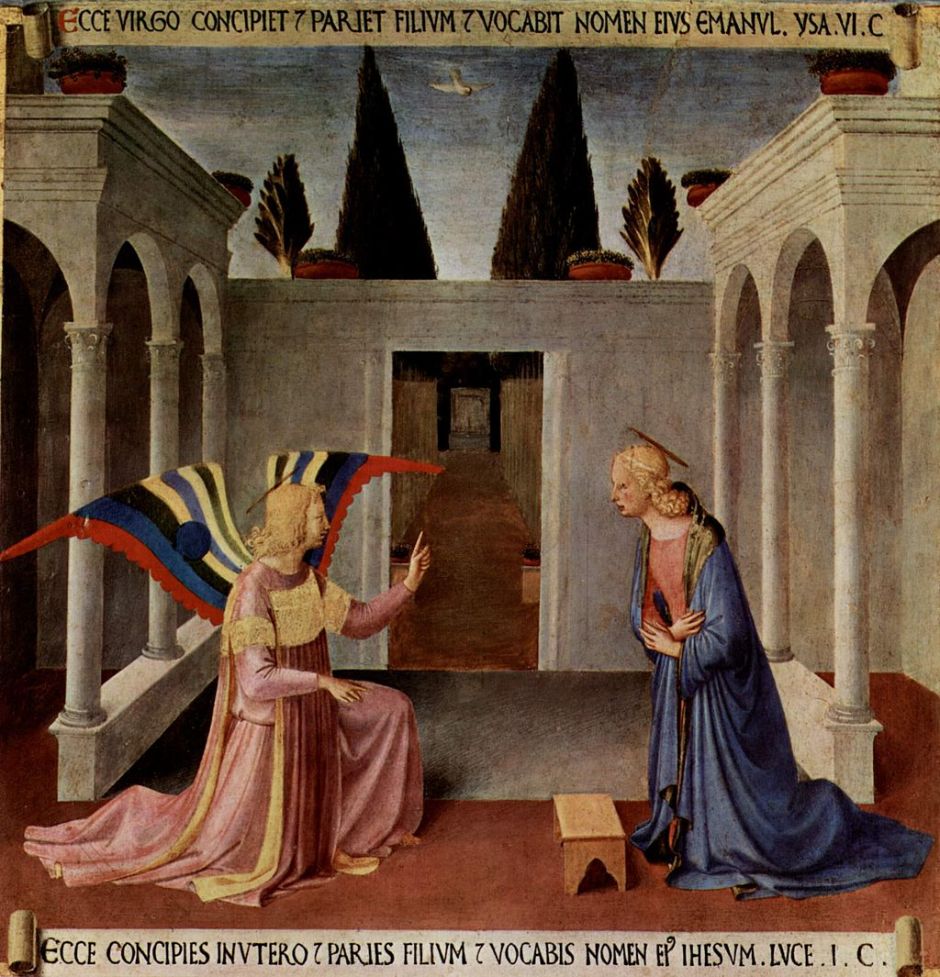
Promises! Elizabeth said to Mary, “Blessed are you for believing that what was promised to you would be fulfilled.”

Those words could be repeated to Mary at the foot of the cross as her son was dying, “Blessed are you, O Mary, for believing that what was promised to you would even now be fulfilled.”

They could be proclaimed at Pentecost, “Blessed are you who believed what was promised! It shall be fulfilled!”

They were sung at the moment of her assumption into heaven, “Blessed, most blessed among all earth’s women, are you, Mary, for you believed, you never wavered, even in suffering you were steadfast in the certainty that God would keep his promises to you.”

Life is hard enough at times, and I think too often we forget the promises God has made to us, words of power that will keep any storm from overwhelming our fragile boats.

Elizabeth and Mary were two women—one too old to bear a child and the other barely a child herself—who became the channel of God’s mercy poured out through his Son in the redemption of the world: Jesus Christ, fulfillment of the Promise.

Both Elizabeth and Mary may have felt that this vocation was beyond their personal capacity…but they believed that what God had begun in them he would bring to completion in his own way, in his own time, through his grace. They knew there were no guarantees, there was no way to control or manipulate the future. What was left to them was praise and joyful wonder at what God was doing in and through them.

In the Responsorial Psalm we hear their quiet joy and firm and solid hope:

God indeed is my savior;
    I am confident and unafraid.
My strength and my courage is the LORD,
    and he has been my savior….

Shout with exultation, O city of Zion,
    for great in your midst 
    is the Holy One of Israel.

What is God doing in you? Like Elizabeth and Mary take some time today to notice, to sing, to rejoice, to believe, to trust. “God indeed is my Savior, I am confident and unafraid.”

Image Credit: Fra Angelico, public domain, via Wikimedia Commons

The Inexhaustible Mystery of the Eucharist

A priest once shared with me when he really “got” the presence of Jesus in the Eucharist. After years of theology, celebrating hundreds of Masses, teaching religious education to thousands of kids, he was asked one day to give Communion to Mother Theresa who would be participating at a Eucharistic Liturgy. MOTHER THERESA, he thought. Probably just about the holiest person on the face of the earth! And he would be giving her Communion! He was amazed and awestruck and excited all wrapped in one until the moment when she stood before him….

It was at that moment that he was unexpectedly surprised with wonder. As he raised the host and began to say the words, “Body of Christ,” his attention was suddenly riveted…not on Mother Theresa…but on Jesus.

I am giving the BODY OF CHRIST to Mother Theresa, he reflected. Mother Theresa had receded into the background of his contemplative focus on the Eucharistic gift he held in his hands. He felt that it would be more appropriate for him to sink to the floor in adoration of the Lord Jesus who nourishes us with his body and blood.

This was an experience that would be impressed on his soul and remain a part of his Eucharistic devotion for all his life.

All of God’s saving activity through the ages from the Garden of Eden  to the Garden of the Resurrection finds its climax in the Eucharist we receive and adore. The threads of his story and ours combine in the glory of the Blessed Sacrament:

The Creator who promised hope to fallen Adam and Eve.
The God who rescued Noah through the flood.
The Lord who chose Abraham, making with him a covenant and promising he would be the father of many nations.
The Liberating God who freed his people from slavery in Egypt, carried them through the desert, revealed to them his law.
The God who through the prophets taught and exhorted his chosen people….

The Jesus who healed and made whole.
The Redeemer who forgave and incorporated sinners into his family.

The Master who invited us together into community around himself and through him with the Father.
The Lover of us all who taught us to love and to live according to God’s heart.
The Savior who knelt and washed our feet and called his friends.
The Lord who gave himself to us to be our nourishment and strength.
The King who died for us that we might have life in total, extravagant abundance.
The Son of God who sends us to the whole world to proclaim him and baptize everyone into God’s life.

O Eucharistic heart of Jesus,

In you I find hope and freedom, truth and belonging, forgiveness and healing, friendship and mercy and life!

In your Eucharistic heart, O Jesus Christ, I experience the greatest love. You make me worthy of love, you make me capable of loving others as you have loved me.

O Jesus, in the Eucharist you rescue me from despair by attaching me to yourself, the Source of all Life. Without you I can do nothing (John 15:5).

O Jesus, by receiving into myself your body and blood I take on the features of your face.

O Jesus, only-begotten Son of the Father, by receiving into myself your body and blood I take on the features of your face. I appear before the Father with your beauty. In me he sees you, his beloved Son. You set me free from slavery (Jn. 8:36) and make me a  child of God. You give me a share in everything that is yours. Jesus “makes us to share in his body, blood, spirit, and everything that is his. It is in this way that he both recreated us and set us free and deified us as he, the healthful, free, and true God mingled himself with us” (Nicholas Cabasilas).

Friend, Jesus wants you to know this:

From your every suffering he wants to heal you with his touch.
The God who in Christ has opened his heart to you can redeem your life.
All social ills find their healing in the Gospel that transforms life and the world from within.
Jesus is the only one who can tell you who you really are.
Jesus Christ himself is both the way and the truth and therefore he is also the life that you are seeking.
The Christ who has found you, seeks out every person to give them abundant life. He will use you as his hands, his voice, his heart, his touch.
Only Jesus knows how to show you the way to happiness.

All the good we desire, all the good we hope to achieve, all the truth we need to understand life, all the love we yearn for and the love we desire to give away to others—all of this we will find in the Eucharist. In the Blessed Sacrament is the inexhaustible mystery of how all creation and all of reality streams forth from the Father’s hands. He desires that we will live “in Christ” and be carried back to him in and through his Son and our Savior.

O sacred banquet!

When we receive the body and blood of our Savior there is sown in us a seed of immortality.

O sacrum convivium!
in quo Christus sumitur:
recolitur memoria passionis eius:
mens impletur gratia:
et futurae gloriae nobis pignus datur.
Alleluia!

O sacred banquet!
in which Christ is received,
the memory of his Passion is renewed,
the mind is filled with grace,
and a pledge of future glory is given to us
Alleluia!

In the words of St. Angela of Foligno let us cry out at every Mass: “O my soul, how can you refrain from plunging yourself ever deeper and deeper into the love of Christ, who did not forget you in life or in death, but who willed to give himself wholly to you, and to unite you to himself forever?”

By Sr Kathryn J. Hermes, FSP

Image credit: Cathopic; Exe Lobaiza

Jesus partook of our infirmity that we might partake of his divinity

The next day John again was standing with two of his disciples, and as he watched Jesus walk by, he exclaimed, “Look, here is the Lamb of God!”

The two disciples heard him say this, and they followed Jesus. When Jesus turned and saw them following, he said to them, “What are you looking for?” They said to him, “Rabbi” (which translated means Teacher), “where are you staying?” He said to them, “Come and see.” They came and saw where he was staying, and they remained with him that day. It was about four o’clock in the afternoon (Jn 1.35-39).

“They remained with him that day” (Jn 1.39). The narrative of the first two disciples following Jesus to see and know where he stayed, to present themselves and to discover if they would be accepted, is so simple, yet riddled with intense emotion. Excitement, fear, desire, tentative trust, hope that risked disappointment, curiosity, and a myriad other motivations were tangled up with the decision to walk after the man John the Baptist had called the Lamb of God. The intense emotions are juxtaposed with the yawning stretch of the afternoon they spent together. “It was about four in the afternoon” (Jn 1.39).

The gospel leaves no record of what occurred that afternoon. What did they discover when they found where Jesus lived? Was it a physical dwelling that Jesus showed them? Did he talk about himself, his dreams, his Father? Did he ask them questions about themselves?

The psychological intensity of the reader of the gospel is, like that of the two disciples, swallowed up in the measured response of the Master: Come and see. The effect of the gospel narrative is to focus the eyes of our soul inward, to a vast, unending, path that leads progressively deeper into the “yawning stretches” of our inner self. In a word, the effect of the narrative is to create a space in which to remain, to abide, an abiding which has less a sense of cohabitation as it does of inhabitation. Inhabitation, in the thought of Augustine, presumes the direct action of God upon the person, the raising of the human creature into a supra-human world. Inhabitation means incorporation into Jesus, being inhabited by the Holy Spirit.[1]

On this journey inward, we discover not ourselves, at least not at first, but the One we are following.

Jesus has vital information to give us about himself, and any self-identity without this revelation of Jesus would be ill founded.

How is this so? First, Augustine states again and again: Jesus was born of God that we might be made through him; he was born of a woman that we might be remade through him.[2] Jesus’ relationship to us is that of Creator and Savior, which defines us as “created” and “saved,” or at least in need of salvation. Jesus raises us and leads us to God.[3]   Our Lord God is the Lofty One, the Powerful One who made us, in Jesus God is the Humble One who has come to make us anew.[4] The chain of sin no longer has power over us because the temporal death of Jesus Christ has killed eternal death: this is grace and truth (cf. Jn 1.17).

Second, Jesus gave himself as the Vine to us the branches. Without him we have no life (Jn 15.5).[5] If Jesus is the cause of life, then without him we are dead. We are utterly dependent on him for everything, since the gift of life is the basic foundation upon which all other gifts are laid. Jesus had no need of us in order to work out our salvation. We, however, had infinite need of him for without him we can do nothing.[6]  In the 15th chapter of John, Jesus tells us not to separate ourselves from him, but this is only after he has shown us that he will not separate himself from us. He attached himself to us, and asks us not to separate ourselves from him who has grafted us into his life.

Third, Jesus was ready to be made low in order to come to us—to leave behind greatness and glory, to humble himself in order to come down to our level. So that pride would be cured, the Son of God came down and was made low.[7] Since the beginning, in the gift of the garden, we have sought to erase the distinction between ourselves and God (Gen. 3). Jesus instead has emphasized that distinction in lowering himself. The Son of God made himself the son of a creature that he might make creatures sons and daughters of God[8]  and in order to cure our pride (Phil 2.6-12).[9]  “I teach humility, none but the humble can come to me” (cf. Mt 11.29).[10]  In the end only those who are willing to hold fast to the lowliness of Jesus will remain with him.[11] Fourth, in Jesus who has sought us and saved us, we are safe from all judgment. Augustine states: Jesus will not cast us out, because we are his members, because he willed to be our Head by teaching us humility.  Even though the Father hated what we had done to ourselves and our relationship with him, he loves us inasmuch as we are members of his Son whom he loves.[12] He who loves his only-begotten Son certainly also loves the members of his Son’s Body[13] which are engrafted into him by adoption. God loves us because God loves what he has done in us. In fact, the divine love is not a reward for our good behavior in responding to Jesus’ work of redemption. There is no other reason necessary for the Father loving the members of Jesus’ Body than that the Father loves himself.[14] So entirely have we been mystically brought into the living circle of Trinitarian love.[15]

Photo Credit: Matías Medina 


[1] “If we contemplate most of our fellow-men, we have to agree that they seldom if ever take into account the direct action of God upon them, let alone that action as raising them to an altogether super-human plane. Even Catholics are apt to see themselves just as beings who are taught what to do and what not to do, though no doubt helped by God to do the former. But how very few attach a conscious habitual meaning to a phrase like: ‘incorporation into Christ’; ‘inhabitation of the Holy Spirit’! On this elevation of the human creature into a super-human world, Augustine without cease insists.” Przywara, vi.

[2] Tractate 2; Also: “Beautiful as a bridegroom, strong as a giant, lovable and terrible, severe and serene, beautiful to the good, harsh to the wicked, remaining in the bosom of the Father, he made pregnant the womb of the Mother.” Ser CXCV, 3. Quoted in Przywara, 180.

[3] “He who was God was made man, by taking what he was not, not by losing what he was: thus was God made man…. Let Christ, therefore, lift you up by that which is man, let him lead you by that which is God-man, let him guide you through to that which is God.” In Joan Evang. XXIII, 6. Quoted in Przywara, 196.

[4] Tractate 10.

[5] Tractate 84.

[6] Tractate 84; Also: “In order that we might receive that love whereby we should love, we were ourselves loved, while as yet we had it not….For we would not have had the wherewithal to love Him, unless we received it from him by his first loving us.” De grat. Christi xxvi, 27.  Quoted in Przywara, 345-346.

[7] Tractate 24.

[8] “He, being God, for this cause became man, that man might acknowledge himself to be but man… Being God he is made man; and man does not acknowledge himself to be man, that is, does not acknowledge himself to be mortal, does not acknowledge himself to be frail, does not acknowledge himself to be a sinner, does not acknowledge himself to be sick, that as sick he may at least seek a physician; and what is still more perilous, he fancies himself to be in good health.” Serm (de Script. NT) LXXVII, vii, 11. Quoted in Przywara, 187.

[9] Tractate 54.

[10] Tractate 24.

[11] “But the Teacher of humility, the partaker of our infirmity, giving us to partake of his own divinity, coming down for the purpose that he might teach the way and become the way (cf. John xiv, 6), deigned to recommend chiefly his own humility to us.” In Ps. LVIII, Serm. i, 7. Quoted in Przywara, 203.

[12] Tractate 110.

[13] Tractate 110.

[14] Tractate 110.

[15] “For it was not enough for God to give as his Son one who should show the way. He made him the Way, so that walking by him you might go under his governance.” In Ps. CIX, 2. Quoted in Przywara, 204.

Prayer for an outpouring of the Holy Spirit

Holy Spirit, Lord and Giver of life,
you, who came down upon the Apostles
in a mighty wind and with fire,
who filled the house where they were and
gave them the gift of tongues
to proclaim the wonders of God, come down now upon me also.
Fill me with yourself;
and make of me a temple wherein you dwell.
Open my lips to proclaim your praise,
to ask your guidance,
and to declare your love.
Holy Light, divine Fire, eternal Might,
enlighten my mind to know you,
inflame my heart to love you,
strengthen my will to seek and find you.
Be for me
the living and life-giving Breath of God,
the very air I breathe,
and the only sky in which my spirit soars.

This prayer is from the Holy Spirit Prayer Book by Pauline Books and Media. I heartily recommend this treasury of daily prayers and novenas to the Holy Spirit if you desire to surrender your life to the Spirit.

The stillness of humility

Be still. Comforting words that we find in Psalm 46. “Be still and know that I am God.” 

For me, these words conjure up quiet moments in a sacred space or beautiful place in nature. To do “be still” I could imagine calming myself down and enjoying a heart at peace, a world at peace, relationships at peace… 

Which they are not. 

Our world is anything but in peace. Being a fallen human being not every one of my relationships is at peace. And when I try to be quiet my heart struggles to find inner rest, and my mind takes off like wild stallions. 

Why? 

At this point this article could take the expected turn toward mindful or contemplative practice or forgiveness or anger management, but today I want to turn down another path that was recently introduced to me… the humility of God. 

In his paper “Self-Love to Self-Emptying Love,” Francis George Pudhicherry, S.J. states that humility is what we learn from the Father, the Son, and the Spirit, from the way God takes the risk of limitation and rejection by the creatures God has created, saved, and continues at every moment to love and renew toward the ever-greater flourishing of holiness and abundant life.  

The humility of the Father consists in the risk God took in creating the human person free and vulnerable to the possibility of sin. The Father created us to be in relationship, a relationship that his creatures were free to turn away from when they decide to live in a manner which negates the Father or relegates God to the margin of their existence. When we abuse creation, when we abuse each other, we humiliate the Father. When we accuse God as if he were responsible for the problems we create for each other on this earth, we humiliate the Father. 

God’s respect for us in not controlling us is “a sign of humble love.”

That’s a big concept to wrap your heads and hearts around. This afternoon I watched one of those five-minute videos that show up on your Facebook feeds. The video was about bullying, but it was the relationship between the daughter and the father that caught my attention. The father had moved with his daughter to a small town in order to get her into a high school that would position her for college. Unable to pay for her tuition, he took a job as the janitor and her tuition was waived. Early in the video it is clear that his presence as a janitor becomes a source of humiliation for the girl as her two new friends make fun of her father as a failure for having such a lowly job, and begin to bully her online. The young girls who are her “friends,” knock over the bucket her father is using, spilling water all over the floor and calling him insulting names. In order to keep her friends, the daughter begins to hate her father who is causing her such embarrassment, as her “friends” harass her for having such a lowlife father. She even tells him to his face to go away and that she hates him. She contributes to the harassment of another girl just to keep her new-found friendship. 

A big breath here…. 

The father is heartbroken for what his daughter is suffering, tries to understand what is going on for her, and eventually decides he could try to find another job or two to pay for her tuition, to make things easier for his daughter in the new school. The last scene of the short video shows the daughter standing up to her friends for her father. That evening, after an embrace which manifests a love for his daughter that has never wavered, he explains why he took the job…for her. There was no angry outburst demanding that she at least be grateful for all that he had sacrificed for her. No, he only thought of loving her, waited patiently for her to grow through this experience of her life, and hopefully return to him. 

I understood the humiliation of this father. He ran up against limitations, the decisions of the two “friends” of his daughter who laughed at and insulted him, turning over his bucket, and humiliating his daughter. No matter how much he loved his daughter, or was willing to serve the school as janitor, the actions of others were out of his control. Yet he continued to be a loving person, respectful of his daughter’s freedom, patiently understanding her.  

God does that with every one of us. He didn’t create a bunch of robots that would go about keeping out of trouble, running the computer program “perfect” so God’s world would be just the way he wanted it to be. We are free. We are messy, we create messes, and often relegate God to the edges of our lives or blame him entirely for what we are going through. And yet he loves and loves and loves us even more. 

The Father then sent his Son in the fullness of time because he so loved the world, giving everything for our sake without asking any guarantee that we would reciprocate that love. He knew there was a genuine possibility that at least some of us would reject the gift he offered us in Christ, through his life, death, and resurrection, yet it is unconditionally offered. As we look at Christ on the cross, we can see the humiliation of the Father at having his own beloved Son, his most precious gift, unwanted and put to death.  

The Holy Spirit is the third Person of the Trinity and “the expression that divine love is inexhaustible and eternally new, that God’s capacity as absolute lover is ever greater, ever newer, and ever more fruitful.” The Holy Spirit is active in the world in history, silently sowing the seeds of holiness in God’s creatures, but again, we have the choice to take another path—as individuals, as members of the ecclesial community, in politics and government. The Spirit is this non-intrusive presence of God which honors the freedom he gave each of us. The Spirit’s ecstatic life-giving activity, we could say, “bumps up against” the limitations we put on the Spirit’s activity in our individual choices as well as through the unjust structures in society and in the weeds that are evident in the ecclesial community. 

5 things to help you be still

Be still. God is still. God accepts the limitations we put on his activity by our autonomous decisions and free actions, and the processes and movements of history. As the father in the video, but infinitely more so, God continues to unconditionally deal lovingly with us.  

Be still. Today at prayer I felt this intense desire to love God in return, like the daughter in the video who finally understood all that her father had sacrificed for her regardless of how she would—or would not—receive his love. 

Be still. I finally realized that whoever “puts limitations” on my plans, in their freedom, makes me one with the humiliation of God. In that space it is easier to forgive and harder to be angry. 

Be still. In eternity one day probably not too distant, I will gaze upon the Father and the Son totally united, bound together in an embrace of self-giving out-pouring ecstasy of love and complete total gratitude and obedience. I will never even vaguely comprehend the majesty of their giving themselves to each other, but I want to have lived my life at least a little from the shores of this limitless ocean of self-giving empathy and service of others in complete surrender and gratitude to God. Jesus came on earth to show me how this is done.  

Be still. Our hearts are rocked at times with reactive emotions and deep storms of fear and resentment. Our minds filled with useless, cynical, and angry thoughts that like gnats destroy our peace. I can hold my Father’s hand and bow to what I cannot change, determined nonetheless to care compassionately and see others with God’s eyes, confident that I need not prove, finish, or amount to anything to be his beloved daughter.