The Motherhood of Mary – Entering into Gospel Contemplation (Horizons of the Heart 10)

Horizons of the Heart is an Ignatian retreat based on the Spiritual Exercises from my own 30 day retreat in 2022. See an index for the whole series.

Entering Prayer

Offer your prayer to God, desiring that in every way it will give him glory. I pour myself out in worship. You could use a few lines from the following Psalms if this helps you enter into prayer:

Psalm 100:1-5
Psalm 34:1-9
Psalm 111:1-5
Psalm 95:1-7
Psalm 92:1-8
Psalm 7:17

Ask of God what you think you need. (It could be later that God will show what you truly need and what should be asking for, but begin now where you are.)

Imagining Yourself Present

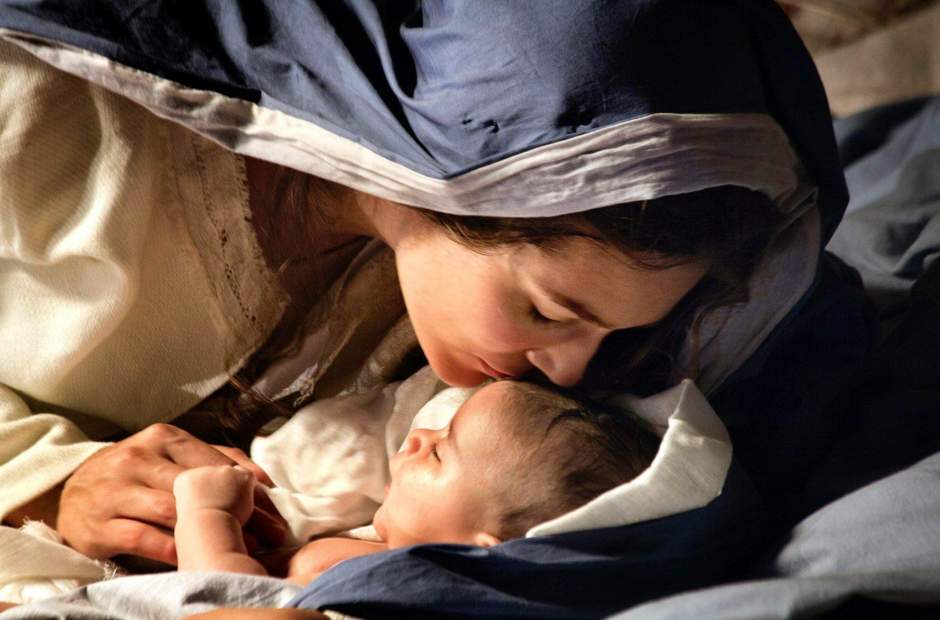
Over several periods of prayer, linger imaginatively over the events of the annunciation, the visitation to Elizabeth, the trip of Mary and Joseph to Bethlehem, and the birth of Jesus. Offer yourself to Mary and Jesus, imagining yourself present to these events of our salvation. Put yourself at the service of Mary, Joseph, and Jesus reflecting on what Mary is going through and how each of them is experiencing these events. Be present to them with “the whole affective power of your mind, with loving care, with lingering delight, thus laying aside all other worries and cares.”

Image Cathopic

The Annunciation: Luke 1:26-38
The Visitation: Luk1: 39-45
The Trip to Bethlehem and the Birth of Jesus: Luke 2:1-20

Note regarding praying with your imagination: Everyone can imaginatively be present somehow to a past event through memory in various ways. Imagining doesn’t necessary mean making images, that is, creating a little movie about the events we are contemplating. Some people imagine through their feelings, simply having a sense of what is happening, others visually through picturing, others through hearing. Entering imaginatively into these mysteries of our salvation will gradually give one an experiential and deeply felt understanding, rather than a notional knowledge.

Why is this important? This deep-felt knowledge implies an intimate caring, an attentive closeness that is aware of even the inner movements of thought and emotion in oneself and the other. We follow Jesus here and now through the work of the Spirit who weaves together our own history with salvation history. This happens through symbol and imagination. When we become part of the gospel story we allow our whole life to be affected by the Spirit. 

Image Cathopic

Imagining the Gospel events in the present

Re-read in the scriptures these events or simply reflect on them as though they were happening now. Bring them up to your mind’s eye with “lingering delight” as though they were occurring right in your neighborhood so to speak. Notice which aspects of these mysteries begin to involve you a little more deeply.

Notice: In Gospel Contemplation, Ignatius takes advantage of the way in which spiritual growth, like so many other aspects of maturing that we experience, takes place primarily when our affectivity is engaged. It is the shift in one’s deeper emotions and feelings that leads to a change in one’s behavior. We reach these deeper levels through metaphor, image, and symbol—the work of the imagination.

In Gospel contemplation you attempt to grasp something of Jesus’ human existence and as you do this, the Spirit begins to grasp you in your existence. This prayer gives us contact with Jesus, the risen Lord, who is present now, influencing my life now. The historical events of Jesus’ life, death and resurrection, his healing and his preaching, transcend time and place. The THEN of Jesus’ life becomes NOW. It is important to allow oneself to become part of the story-event.

Observing attractions and resistance

Observe the actions, words, emotions, sensitivities, attitudes of Mary, Joseph, and Jesus and to which of them you feel more attracted. Which of them arouse more negative feelings or resistance? Return to aspects of these meditations that seem more personally meaningful.

Notice: How are you entering the story? Are you your present age or another age? How are you taking part in the mystery? What are you noticing about your emotions as you interact with Mary, Joseph, and Jesus? What happens when you interact with the persons in the story? Are you just thinking about them or are you speaking with them? Are you watching or are you a participant? Are you allowing yourself to be moved, surprised, touched, even angered by what happens or are you keeping everything under control?

Entering the Mystery of the story

As you begin to enter the mystery of the story more deeply, you will begin to see or hear or touch. You will enter into the event and interact more deeply. Little by little you will become more present to the mystery and the mystery will be present to you.

Image Cathopic

Moving through deepening levels of stillness

As your contemplative prayer deepens, you will be open to being affected deeply by Jesus’ Spirit at both conscious and less-than-conscious levels of your being.

It may move you gradually through deepening levels to stillness. You may find yourself just there, totally involved—seeing, hearing, touching, smelling, tasting. It is almost as if the experience has gone into slow motion, and time passes as one is present to the Beloved and the Beloved to oneself. One is there; Jesus is there. The mystery is there. No words are necessary and no great thoughts need to surface. This is the experience of “O taste and see the goodness of the Lord.”

Desiring to follow Jesus

As I become more and more involved in the event of Jesus’ mystery that I am contemplating, my life and my choices are affected. I find myself changing and desiring to change. I begin to follow Jesus in a particular way.

As you contemplate more deeply, as you soak in these mysteries of Mary’s motherhood, where do you observe emotions or reactions like fear, guilt, resistance? Do any memories become more present to your awareness? How do you feel drawn toward something new? Speak to Mary, Joseph and Jesus about what you observe and experience. What do you begin to learn about your following of Jesus?

You may wish to journal about this.

Image: Cathopic

Conversing as with a friend

Continue in quiet—or even silent—intimate conversation with Mary, Joseph and Jesus. Ask them what is the grace that you should be praying for. Beg this grace of the Father. Then beg this grace of the Son, your Savior and Shepherd. Finally, beg for this grace from the Holy Spirit who is the source of all holiness.

If you wholly lived this grace that you are begging for, what would your life look like? Your relationships? Your prayer? The way you work? The way you love? The way you serve? What about you would make you the most happy?

Ask Mary, Joseph and Jesus to show you one specific gift they wish to give you. Receive it and remain in stillness and quietly relaxed presence under the influence of the Holy Spirit.

Reviewing the graces of prayer

When you finish praying, write down the main gifts and discoveries from this time of intimate contemplation. What is one concrete thing you can do to solidify these gifts in your life.

Image Credit: Cathopic
The people were hanging on Jesus’ every word

“Every day he was teaching…all the people were hanging on his words” (Luke 19: 47-48).

Jesus, the Word who became flesh and dwelt among us, is our Teacher and Master.  Every day we need to hear the Lord speaking. Every day we need the direction only Jesus can give. Every day society needs to be reorganized and renewed according to the words of life from the Lord of Life. Every. Day.

“Every day he was teaching…all the people were hanging on his words.”

Some days might seem to us to be too busy, too crazy, to take time to read God’s Word found in the Bible. But every day that Jesus was on this earth he taught us. God himself learned to speak in our faltering language about our very creaturely struggles, addressing our profound weakness and glaring needs for healing. He whom the angels praise with song and glory humbled himself to become a man in order to teach us, to save us, to reconcile us with the Father that we might live forever in heaven.

When Jesus ascended into heaven 2000 years ago, did his teaching end? Were we to hear his voice no more? That beloved voice that spoke to us the truth, that comforted and challenged, that proclaimed words of healing and forgiveness and courage? That voice that touched individual lives in ever so profound ways. Where can we encounter Jesus today in order to hear his voice as he speaks to us personally?

Pope Francis, in his document Desiderio Desideravi, wrote that every word, every gesture, every glance, every feeling of Jesus reaches us through the Eucharist, through the celebration of all the sacraments. It is in the Eucharist and the sacraments that we encounter Jesus. It is there that we hear him. It is there that we experience how he sees us, what he thinks about us, what he feels toward us (cf. n. 11).

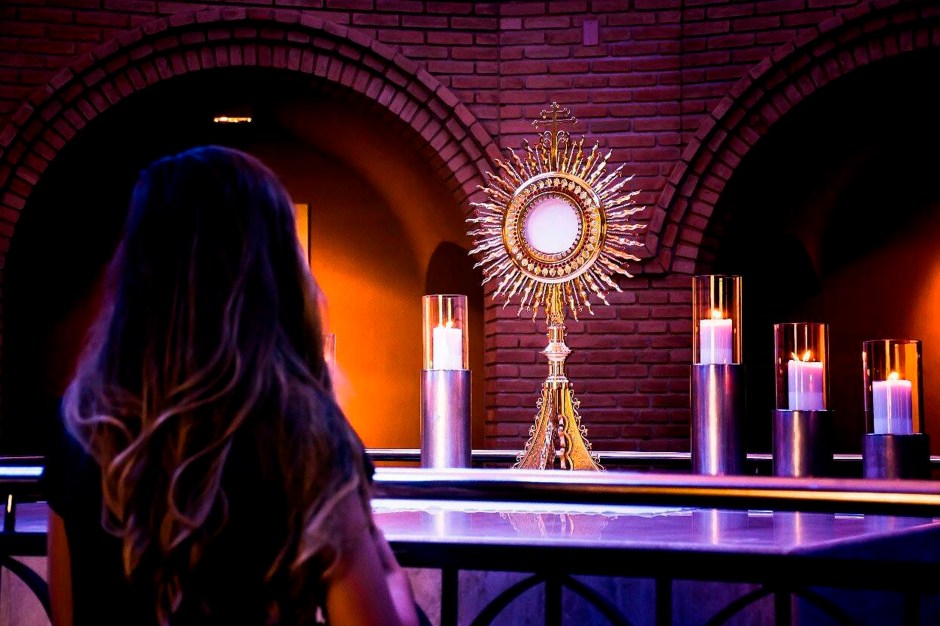
It is when we receive Jesus in Communion that the events narrated in the Gospel become present to us today. When we have received Jesus in the Eucharist, when we are before him in adoration, Pope Francis helps us understand how Jesus and his teaching become present. There in prayer in the real presence of Jesus, we can each say: “I am Nicodemus, the Samaritan woman at the well, the man possessed by demons at Capernaum, the paralytic in the house of Peter, the sinful woman pardoned, the woman afflicted by hemorrhages, the daughter of Jairus, the blind man of Jericho, Zacchaeus, Lazarus, the thief and Peter both pardoned. The Lord Jesus who dies no more, who lives forever with the signs of his Passion continues to pardon us, to heal us, to save us with the power of the sacraments. It is the concrete way, by means of his incarnation, that he loves us” (n. 11).

St Ephrem helps us reflect more deeply on this when he says: “O Lord, we cannot go to the pool of Siloam to which you sent the blind man. But we have the chalice of your Precious Blood, filled with life and light. The purer we are, the more we receive.”

“Every day he was teaching…all the people were hanging on his words.”

A friend once told me about her young nephew asking her why the people in the Church were processing to the altar. What was it all about? he wanted to know. She explained that they were receiving Jesus himself in the Eucharist. He thought about that for a few moments and then he asked her, “If that is really true, then why doesn’t everyone look happy?”

These words come back to me often. As a Daughter of St. Paul I have received holy Communion and made an hour of Eucharistic adoration every day for the past 49 years. There are times when I’m distracted, tired, preoccupied, or just “not present.” It is at these times that we can recall that the people of Judea were hanging on Jesus’ every word! And I, we, have the immense privilege to be able to receive the gift Jesus gave us at the Last Supper: himself. He wanted to stay with us always: to teach us every day, to love and forgive us, heal and transform us. The Eucharist is real, it is really the body and blood, soul and divinity of Jesus Christ. In receiving the Eucharist we receive from Jesus healing and health. He teaches us and heals our sins and our ills and feeds our body and our soul. The Eucharist is life. The Eucharist brings us eternal life.

Let us, therefore, hang on Jesus’ every word. Let us approach the altar with joy and thanksgiving. Let us reserve our hearts for him through a gentle asceticism which makes room for his glory in our lives. Let us keep Jesus company in the Eucharist whenever we are able. Even if we can’t pray in a Eucharistic chapel, in spirit we can always prostrate ourselves before Jesus in the Tabernacles of the world in adoration and thanksgiving, ready to hear what he desires to say to us.

Let us hang on Jesus’ every word.

Image Credit: Érica Viana via Cathopic

Will we risk being changed forever? (Luke 12:54-59)

In the seventh grade, I did my first large paper. The topic was how to predict the weather. To this day I can recall how to forecast the weather from simple observation. Before the days when we could switch on the Morning News to find out the weather or check a weather app, our ancestors used their senses. For example, the leaves of maple and oak trees react to the sudden increase in humidity prior to heavy rain and often turn upward. When the wind is switching back and forth, leading clouds to move in different directions across the sky, we can be sure that weather changes are on the way.

Of course, we all know the rhyme: “Red sky at night, sailor’s delight. Red sky in morning, sailor’s take warning.”

Despite the fact that we often bemoan how inaccurate the weather reports can be, we still check the weather regularly and make our decisions about travel and clothing accordingly.

In today’s Gospel, Jesus spoke some direct and challenging words to the crowds. “You know how to interpret the appearance of the earth and the sky, why do you not know how to interpret the present time?”

Was Jesus trying to shake up the crowd so they would learn more and think about things more clearly? Even though I remember some of that science paper from seventh grade, I am famous for going out ill prepared for the weather. I forget to bring an umbrella. I put on a sweater instead of a coat. You get the idea. Is this because I don’t have any idea how to look out the window, check an app, or find the 10-day weather forecast online? I know how to do all these things. I’m just scatter-brained when it comes to the weather.

Jesus, in the same way, didn’t diagnose the crowds as not understanding what was happening “in the present time.” It’s not that the people couldn’t figure out that Jesus was the Messiah, that all the prophesies pointed to him, that he spoke with an authority that even the religious leaders didn’t have. Instead, Jesus called them “hypocrites.” We call someone a hypocrite who knows what is right or true but lives in denial of what they know to be right and true. Jesus was saying to them that just as they could interpret the signs of the earth and sky and forecast the weather, they did understand that he had come from God (so much so that the leaders determined very quickly they needed to kill him). They understood, but they were not willing to acknowledge and to accept he had been sent by God. To accept Jesus as the Messiah, to sit at his feet as Mary, to follow him closely as the Twelve, to be personally transformed by his parables and teachings and invitations to conversion like Zacchaeus would change them forever. This they could not accept.

There is certainly not much damage that will happen from walking in the rain without an umbrella or getting chilly because I didn’t check in advance how cold it really was outside. More serious, however, is not living what I know, acting on what I believe, choosing what has been chosen by God for me. The rest of this Gospel reading clearly lays out the risk of hypocrisy, of being too lazy to care about living the Gospel, of being too absorbed with the things of this earth that the Lord takes second place in our interests and in our love.

I don’t believe Jesus spoke these words to the crowd with harshness or anger. The heart of the Master was too great, his love for them and for us is a love that led him eventually to the cross for our salvation. I hear in his words a determined effort to make them see what is right before their eyes. How many times Jesus has to shake us up, remind us of what we know, and then prod us  forward to accept what he is revealing to us that we might allow our life to be changed.

Jesus, I commit my entire self to you, every moment of my life, every breath, every thought, every desire, every word, every action. Break through my ignorance, my blindness, my unwillingness. Attract me so strongly to yourself that in a short time I will find myself renewed, created anew, transformed in surprising ways. Amen.


Praying with this passage of Scripture

Lectio Divina is a way of listening to God as he speaks in his Word. It is a practice of communicating with God through Scripture and attending to God’s presence and what he wishes to tell us. In this slow and prayerful reading of the Word of God, we allow ourselves to be transformed by the Spirit who forms us into the image of Christ.

There are four movement in Lectio Divina: Read (lectio), Meditate (meditation), Pray (oratio), Contemplate (contemplation).

Begin by finding a still space to pray. Breathe deeply and become quieter within. Abandon any agenda, worries or thoughts you bring to this prayer and entrust these things to the merciful care of God. Ask for the grace to be receptive to what God will speak to you through this Scripture reading. Grant me, Jesus Divine Master, to be able to know the mysteries of the kingdom of God and your unfathomable riches. Grant that your word penetrate my soul; guide my steps, and brighten my way till the day dawns and darkness dissipates, you who live and reign forever and ever Amen.

Read (lectio)
Begin by slowly and meditatively reading your Scripture passage out loud. Listen for a particular word or phrase that speaks to you at this moment and sit with it for a time.

He said to the crowd: “When you see a cloud rising in the west, immediately you say, ‘It’s going to rain,’ and it does. And when the south wind blows, you say, ‘It’s going to be hot,’ and it is. Hypocrites! You know how to interpret the appearance of the earth and the sky. How is it that you don’t know how to interpret this present time.

“Why don’t you judge for yourselves what is right? As you are going with your adversary to the magistrate, try hard to be reconciled on the way, or your adversary may drag you off to the judge, and the judge turn you over to the officer, and the officer throw you into prison. I tell you, you will not get out until you have paid the last penny.”


Meditate (meditatio) – Read the same passage a second time. As you re-engage the text, let the word or phrase that stood out become your invitation to speak from your heart with God who wishes to share his heart with you. Allow this word or phrase to wash over you and permeate your thoughts and feelings. You may wish to repeat this phrase quietly and gently for a period of time.

Pray (oratio) – Read the text a third time. Listen for what God is saying to you. Speak heart to heart with God. Notice the feelings that this conversation with God raises up within you. Share with God what you notice about your response to this conversation. You may wish to return to repeating the phrase quietly and gently, allowing it to permeate you more and more deeply.

Contemplate (contemplatio)
Read the text a final time. Now be still and rest in God’s embrace. Ask God to give you a gift to take with you from this prayer. You might ask God if he is inviting you to do some action, for instance, make some change in your thoughts, attitudes or reactions, in the way you speak or how you treat others. Thank God for this gift and invitation as you conclude your prayer.

Photo Credit: Pixabay

Do you think I have come to establish peace on the earth? (Luke 12:49-53)

Do you think that I have come to establish peace on the earth?

The angels sang at Jesus’ birth: “Glory to God in the highest and on earth peace to those on whom his favor rests” (Luke 2:14). When we celebrate the Feast of Christmas, the birth of the Incarnate Word, God-with-us, we depict it with beautiful nativity scenes, a lone star radiant in the peaceful night sky, simple shepherds worshipping the newborn King of kings and Prince of Peace laying in a manger. It is only those who participate at Mass on weekdays who immediately get plunged in division. Starting on December 26, the Mass celebrates a number of individuals who paid the price for their faith in Christ with their very life. Saint Stephen is martyred, the Holy Innocents are silent witnesses with their death to the birth of the Son of God, and Saint Thomas Becket who engaged in conflict with Henry II, King of England, over the rights and privileges of the Church is murdered in Canterbury Cathedral by followers of the king.

To be a disciple of Jesus is to be invited to martyrdom either through the giving of one’s life for one’s belief in Christ or through the living of one’s life out of one’s belief in Christ and adherence to his teaching.

Do you think that I have come to establish peace on the earth? No, I tell you, but rather division.

This word of the Savior is foreboding. This division sets people against one another. It certainly is easy to brush this aside as we hear the examples given by the Lord himself: father against son and son against father, mother against daughter and daughter against mother and so forth. Someone who has followed her faith at the cost of acceptance within her own family, however, will not read those lines so glibly. I’m thinking of Saint Elizabeth Ann Seton.

Elizabeth Ann Bayley was born in New York City to a prominent Episcopal family on August 28, 1774. After seven happy years of marriage to William Magee Seton, her husband became very ill with tuberculosis. She travelled with him to Italy hoping to find a cure, but he died there in 1803. While in Italy, Elizabeth discovered Catholicism through the kindness of friends who offered her comfort as she grieved her husband’s death, inviting her to Mass with them. A year later in New York, Elizabeth officially converted to Roman Catholicism. Her choice to convert resulted in three years of financial struggle and social discrimination. She opened a boarding house for boys, but when the students’ parents discovered that she was Catholic they removed their sons from her house. Two years later she was invited to move to Baltimore with her family and to open a school for girls. Women began to join her work and, after moving to Emmitsburg, Maryland, she founded the Sisters of Charity of St. Joseph, the first congregation of women religious in the United States.

Do you think that I have come to establish peace on the earth? No, I tell you, but rather division.

Each of us is called to this living martyrdom, for the Lord we follow died, out of amazing love for us, on the Cross. We are worth that much in God’s eyes that he calls us to a heroic living (and sometimes dying) in imitation of our Savior. This division to which Jesus calls us may be as simple as not contributing to slander or it may be as consequential as walking away from a potential financial windfall that is at the expense of some group “on the peripheries.” It could be quiet decisions made in private or could entail very public statements. I think of Saint Francis of Assisi who renounced his wealth and his inheritance to follow the call of God to rebuild his Church. Summoned by his father before the Bishop to account for bolts of cloth he had sold for the poor, Francis famously removed his garments and gave them to his father saying, “Until now I have called you my father on earth. But henceforth I can truly say: Our Father who art in heaven.”  Francis renounced the considerable wealth of his family to embrace the life of poverty and joy to which he was called.

Today you may wish to consider: Where does the division established by Christ cut through your career? Your relationships? Your life as a Christian?

Praying with this Passage of Scripture

Lectio Divina is a way of listening to God as he speaks in his Word. It is a practice of communicating with God through Scripture and attending to God’s presence and what he wishes to tell us. In this slow and prayerful reading of the Word of God, we allow ourselves to be transformed by the Spirit who forms us into the image of Christ. There are four movements in Lectio Divina: Read (lectio), Meditate (meditation), Pray (oratio), Contemplate (contemplation).

Begin by finding a still space to pray. Breathe deeply and become quieter within. Abandon any agenda, worries or thoughts you bring to this prayer and entrust these things to the merciful care of God. Ask for the grace to be receptive to what God will speak to you through this Scripture reading. Grant me, Jesus Divine Master, to be able to know the mysteries of the kingdom of God and your unfathomable riches. Grant that your word penetrate my soul; guide my steps, and brighten my way till the day dawns and darkness dissipates, you who live and reign forever and ever Ame

Read (lectio)
Begin by slowly and meditatively reading your Scripture passage out loud. Listen for a particular word or phrase that speaks to you at this moment and sit with it for a time.

“I have come to bring fire on the earth, and how I wish it were already kindled! But I have a baptism to undergo, and what constraint I am under until it is completed! Do you think I came to bring peace on earth? No, I tell you, but division. From now on there will be five in one family divided against each other, three against two and two against three. They will be divided, father against son and son against father, mother against daughter and daughter against mother, mother-in-law against daughter-in-law and daughter-in-law against mother-in-law.”

Meditate (meditatio) – Read the same passage a second time. As you re-engage the text, let the word or phrase that stood out become your invitation to speak from your heart with God who wishes to share his heart with you. Allow this word or phrase to wash over you and permeate your thoughts and feelings. You may wish to repeat this phrase quietly and gently for a period of time

Pray (oratio) – Read the text a third time. Listen for what God is saying to you. Speak heart to heart with God. Notice the feelings that this conversation with God raises up within you. Share with God what you notice about your response to this conversation. You may wish to return to repeating the phrase quietly and gently, allowing it to permeate you more and more deeply.

Contemplate (contemplatio)
Read the text a final time. Now be still and rest in God’s embrace. Ask God to give you a gift to take with you from this prayer. You might ask God if he is inviting you to do some action, for instance, make some change in your thoughts, attitudes or reactions, in the way you speak or how you treat others. Thank God for this gift and invitation as you conclude your prayer.

Photo Credit: Amorsanto via Cathopic

“To know the forest thaws” – Horizons of the Heart 9

Horizons of the Heart is a retreat-in-life inspired by the Spiritual Exercises of St Ignatius and my own notes from a thirty-day Ignatian retreat in 2022. See an index for the whole series.

The grace we are asking of God: a deep heartfelt knowledge of how God has chosen to fulfill his vision for all his creation through Jesus

In Chronicles of Transformation: A Spiritual Journey with C. S. Lewis I happily discovered the poem “On Knowing Him Here for a Little, A Poem in Seven Parts” by the poet Madeline Infantine. Each of the parts of her poem introduce one of the seven essays, one for each of the Narnian Chronicles. The first line of the poem immediately seized my attention. Like a magnet it brought into line my fragmented awareness:

“To know him here is to know the forest thaws.”

My inner world immediately stood at attention as these words pierced my heart. In a trice my imagination was activated, an intuitive response thawing my own inner world. Yes. When God meets me on the road of life, when he stares into my eyes to  catch my attention, my outer world crashes into silence…and my inner me thaws.

“To know him here is to know the forest thaws.”

To know.

To know him.

To know him here.

To know the forest.

To know the forest thaws.

Image by FrauLehrerin from Pixabay 

As I read these words for the first time the veil that covers the spiritual reality of the material world that I see with my senses was pulled aside for one very long expectant hush. And at that moment I knew. I touched what was beyond touch and saw what was beyond sight. For just a flash, this poem had touched my imagination and I knew with a felt experiential knowledge that could not be doubted.

St. Ignatius and Lewis both reverenced the imagination as the organ for deep meaning, the opening to the soul onto what is truly true. When the imagination is startled into silence, as mine was when I read this line of the poem, the eyes of the soul are lifted to the Really Real, as Lewis would say, to the land of the True North we are all seeking, our everlasting home.

In a similar way the Ignatian Exercises baptize our imagination by immersing it again and again into the Really Real. He guides the retreatant to contemplate the life of Jesus and the heart of the Father using their imagination, or more deeply, baptizing their imagination, blessing it, transforming it, redeeming it.

“To know him here is to know the forest thaws.”

The Annunciation, public domain via Wikipedia.

The angel quietly enters a humble house in Nazareth to announce that the world was about to thaw: she was to be the mother of the long-awaited Messiah, the Fire of the Father’s Love sent upon the earth to gather souls to salvation in the Kingdom.

Mary travelled to assist her elderly cousin Elizabeth. This elderly woman felt her child leap in her womb, as she proclaimed—the first human to do so—the Lord present on this earth, hidden now in the womb of the Virgin. She intimately knew that the frozen ground was beginning to thaw.

St Joseph, asleep when assured by an angel that he was needed as foster-father, protector, guide, provider. Bethlehem, a city packed with Israelites who were there for the census proclaimed by the Roman authorities… Even the forest thaws….

This “thaw” is God’s vision for the world.

There is a difference between reading and meditating, between pondering a mystery and entering into it, between being spiritually moved by religious truths and existentially changed by them.

In the second week of the Spiritual Exercises, Ignatius begins to lead the retreatant through a number of Gospel contemplations of the Incarnation. Beginning with the Annunciation, Ignatius invites us to enter into the Gospel stories surrounding the Incarnation of the Son of God and his birth and childhood. Why? Because “to know him here is to know the forest thaws.” Another line of Infantine’s first poem opens up the amazement of meditation: “where once was silence, only song.”

“God sent his Son, born of a woman, born in the fullness of time” (Gal 4:4). “God so loved the world that he sent his only Son that whoever believes in him might not perish but have life everlasting” (Jn 3:16). “For I am not ashamed of the gospel, for it is the power of God for salvation to everyone who believes” (Rom 1:16).

“For this is what the Lord has commanded us: ‘I have made you a light for the Gentiles, that you may bring salvation to the ends of the earth’” (Acts 13:47)

Image via Pixabay

During my Ignatian retreat, I found great healing as I prayed with the Gospel stories around the birth of Jesus. Very tenderly, Jesus touched me in ways that gave me new insight. He opened my heart to experiences of mercy I could never deserve. He wrapped up the broken places of my spirit and helped me stand again in his service.

These days I am praying through the Spiritual Exercises once more and find myself in a very different place. As I enter into these meditations my heart is being moved by the humility of God who lowered himself to come down on our level, to babble in our language, to walk our streets and take an interest in what concerns us. And why did he do this?

“To know him here is to know the forest thaws.”

To a world frozen over with idolatry, mediocrity, sin and death, Jesus came to bring a new warmth, a new hope, a new life.

As I pray now with these Gospel meditations I feel my heart thrill. I too want to give my life that others might live. I too want to lay down my life for the salvation of others. I too want to labor at the side of my humble Savior, to wash the feet of others that they might experience the radiant glory of his mercy.

Infantine invites us at the end of this first poem to come and to see, to witness, to behold, to ponder, to burst through frozen silence (where all has been subjugated to the powers of sin and death) into the praise that leads to adoration and contemplation. There, she says, we will discover life in the fire of his touch and the thaw of spring from the warmth of God’s breath.

In the next segments I will be offering Gospel meditations of Ignatius that make up the journey of the second week of the Exercises, that you might know anew that the forest thaws.

Featured image: by Ирина Кудрявцева from Pixabay