The image that has drawn me in my ministry is Touching the Sunrise. I believe each person, no matter where they are and what they have lived, is a temple of the Trinity and can, indeed, taste the presence of God within. You can find resources for healing and prayer and follow me at touchingthesunrise.com.
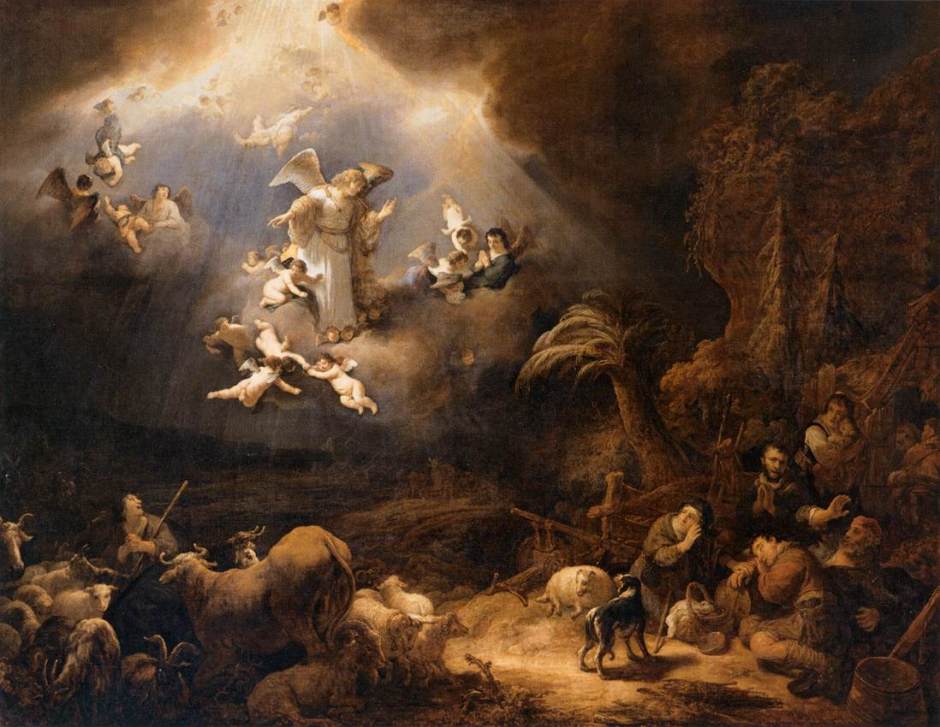
I find it very meaningful that the Lord was born in the night, that the angels announced to the shepherds the good news of the Savior’s birth while they were sleeping in the fields at night, and that the Kings followed a star visible in the night sky in order to find the newborn King. Jesus proclaimed himself the Light of the World and light is most clearly seen when it shines in the darkness.
We can be “lost in the dark,” personally and as a society. We are living through a particularly dark time in history. Sometimes it is hard to figure out what’s really true or really good… How am I fooling myself and how is society fooling itself… Where is evil promoted as good and good denigrated as an evil…. In the darkness we can feel drowsy, overwhelmed, distracted, frightened. It is when we are in the darkness that we can expect God to intervene in what seems to be impenetrable confusion or illusion with the light of truth which is always an announcement of how God is with us.
Contemplative Prayer Guide with the Masterpiece
Rest your gaze on the image. Let your gaze be the path that returns you to the center.
After a few moments of silence, close your eyes and become aware of your desire to be with God at this moment. Ask God to help you let go of whatever may distance you from his presence to you.
Now open your eyes and let your eyes rest on the image.
What do you notice about the people in the image? What are the emotions that seem to be expressed in the image? What meaning does the light and dark parts of the image have for you? How does the image touch you? What surprises you about the image? What do you not like about the image?
When distractions occur, return intentionally to gazing at the image.
Close your eyes and enter into the event depicted in the image.
“And there were shepherds living out in the fields nearby, keeping watch over their flocks at night. An angel of the Lord appeared to them, and the glory of the Lord shone around them, and they were terrified. But the angel said to them, ‘Do not be afraid. I bring you good news that will cause great joy for all the people. Today in the town of David a Savior has been born to you; he is the Messiah, the Lord. This will be a sign to you: You will find a baby wrapped in cloths and lying in a manger.’” (Luke 2)
Interact with the people in the story. Speak with them. Take part in their emotion, their faith, their courage…
Do you feel close to one of the people depicted in the image?
Does the image remind you of some event or some person in your own life?
Just sit and soak in the grace that arises from the image.
Ask Jesus: “What do you want me to take from this time of prayer as I return to my life?”
Image: Govert Flink Angels Announcing Jesus’ Birth to the Shepherds, public domain
This is part of an Advent series of Gospel contemplations in the spirit of the Ignatian Exercises. The introduction offers the format for Gospel Contemplation.See an index for the whole series.
This is an Ignatian Gospel meditation that extended over a week of quiet prayer. The last grace I felt Jesus was telling me I should be asking for was the gift of joy. So this is where I began this meditation on the birth of Jesus.
Entering Prayer
Psalm 99 (TPT)
Come on, everyone! Let’s sing for joy in the Lord! Let’s shout our loudest praises to our God who saved us. Everyone come meet his face with a thankful heart …make him great by your shouts of joy!
…Come and kneel before this Creator-God! …For we are the lovers he cares for and he is the God we worship.
…Your ancestors challenged me with their complaining even though I had convinced them of my power and love….
Jesus, how gently you teach me.
Joy is not a feeling. It is not a satisfaction with one’s own place in the divine plan. It is not “everything going my way.”
I rejoice, shouting praises because God has saved me. I exalt God. I meet him face-to-face and the meeting itself opens of a flood of eucharistic-worship. His Face. I love him!
Joy is the reward, the result of loving praise offered 24-7 by a grateful heart of one who has escaped utter devastation by God’s acts of power and love towards his lovers that he cares for. You have shown me your power (Baptism=death and resurrection) and your love (Communion).
Grace—self-forgetfulness: absorption in Jesus.
Imagining Yourself Present
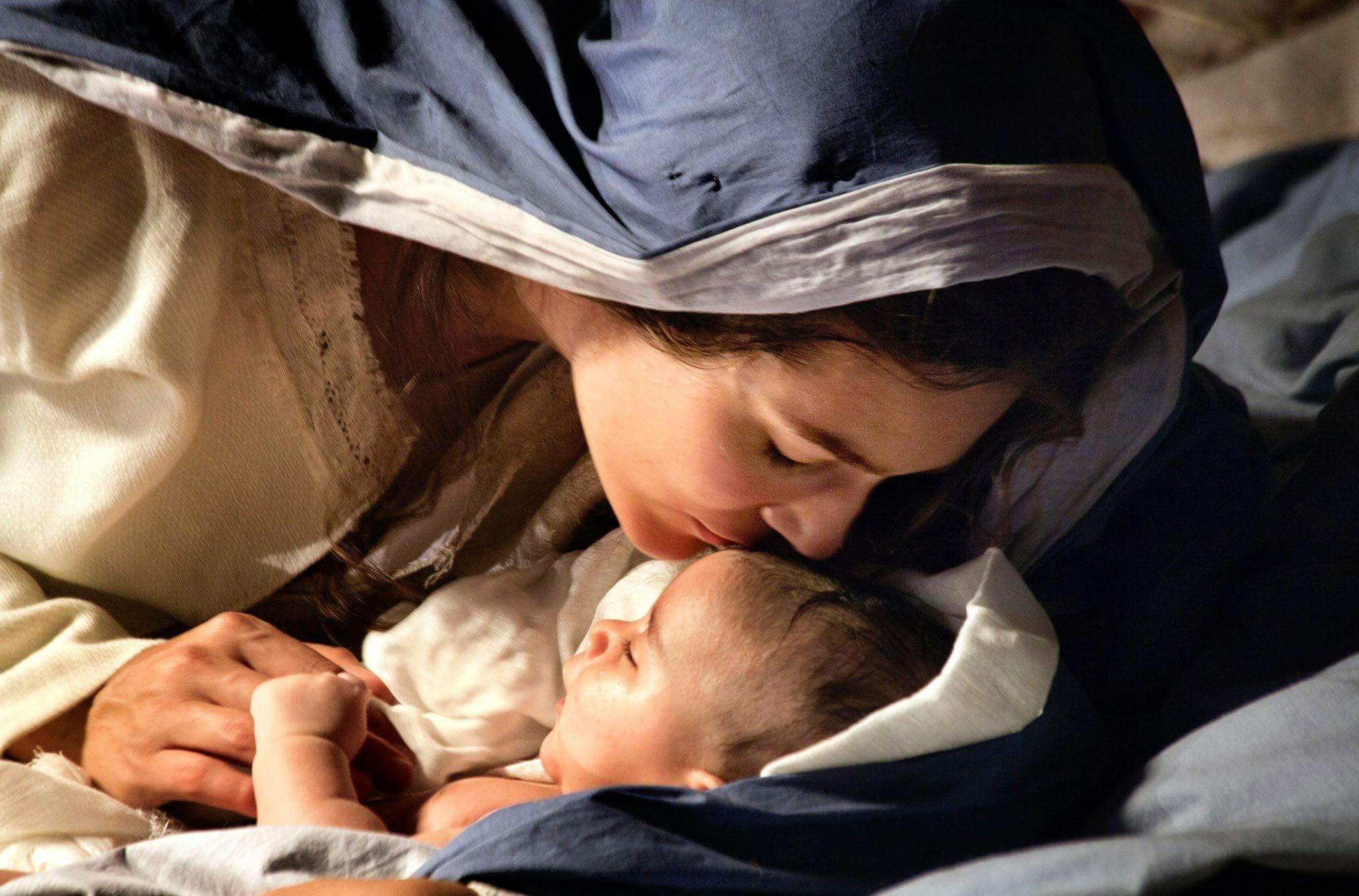
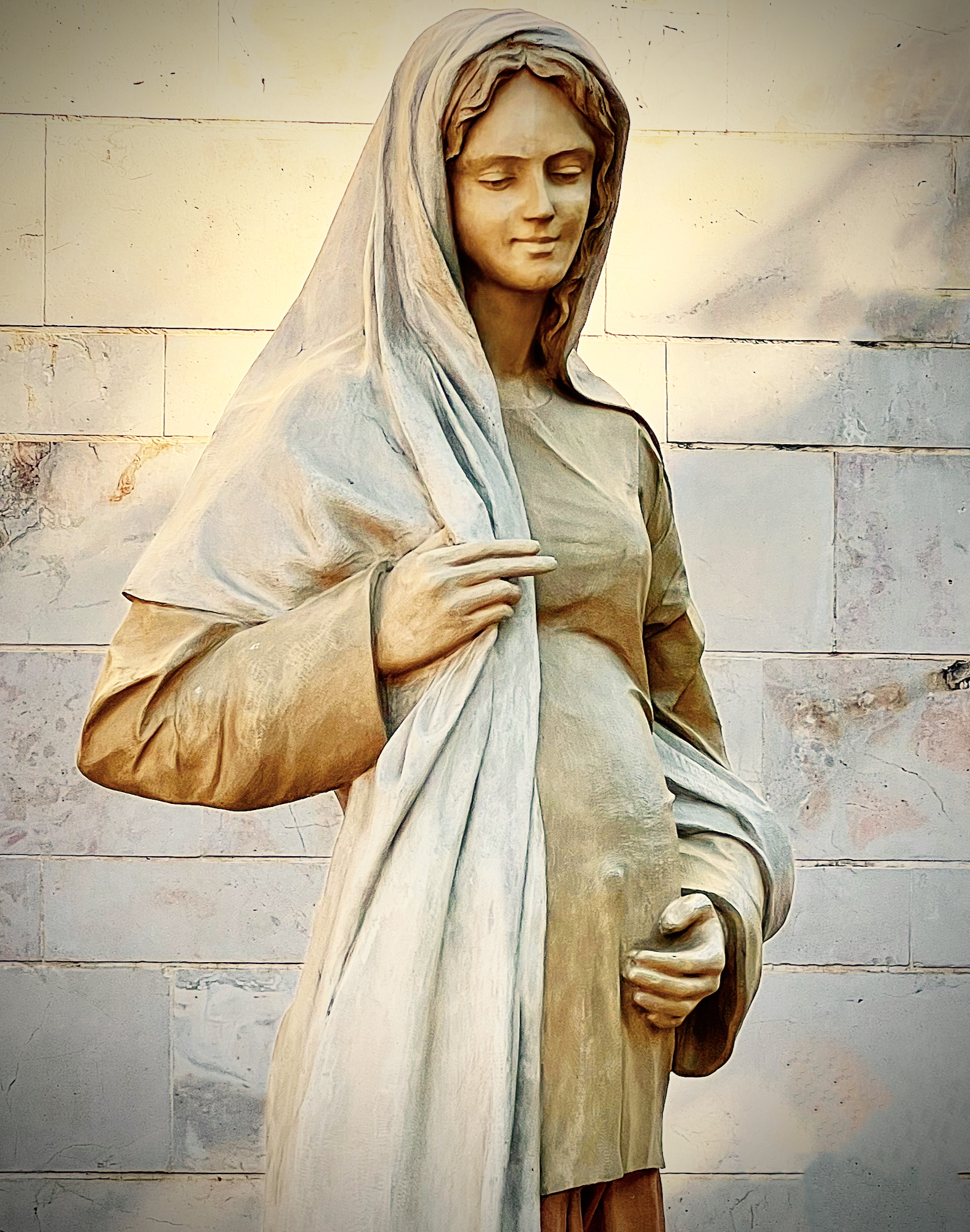
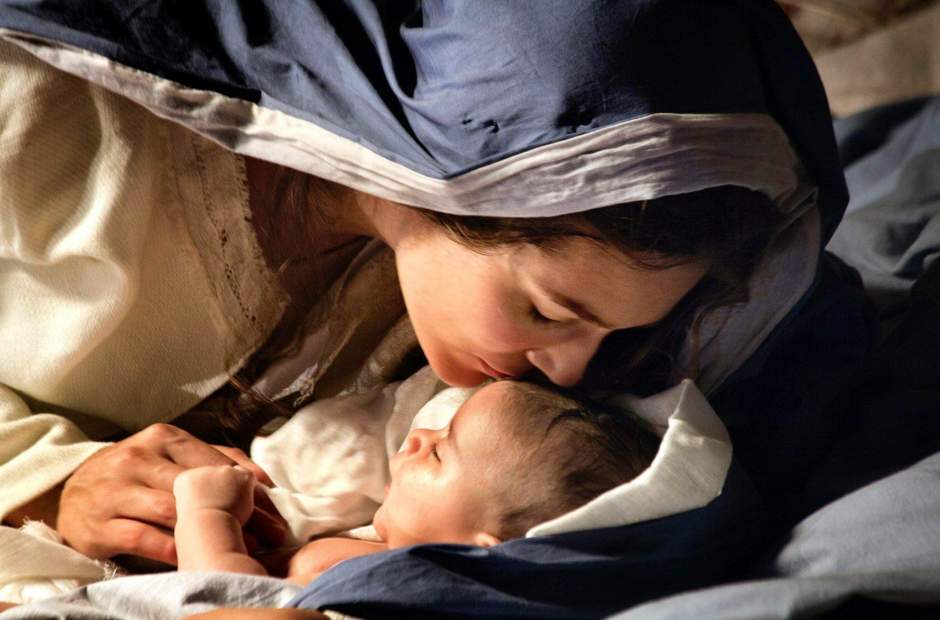
…A child, I am kneeling next to Mary at the side of the manger… My left hand on the rough wood, covered by hers, my right hand on Jesus’ head.
Angie Menes, Cathopic
The force of her adoration. Not a feeling but the reality of Jesus’ possession of her. She can’t tear herself away from his face.
Imagining the Gospel Events in the Present
My hand gently rubbing Jesus’ head as he lies in the manger, hours after birth. I am a young woman… Jesus, a baby, newly born. Flesh—the Word made Flesh.
I am touched deeply by his mercy, his smile, the outpouring of God’s love.. I pour myself out in worship.
Our faith is rooted in this very human experience, in real historical events, the tender touch of the everlasting Real…. About God becoming flesh and flesh being taken up by the Word made Flesh.
I rest here, touching the heart’s sunrise, the Dawn of our salvation. My own inner mental constructions I set aside. I bury them in the name of Jesus and return to the eye of heart. Jesus… Jesus… Jesus… I stay connected to my own humanity and to the humanity of Jesus Christ.
grateful praise… humble joy…
Observing Attractions and Resistance
Jesus (Phil 2:5ff)
he did not cling to equality with God
emptied himself
became man
died to rescue us the ungrateful…
Here, in the manger before me, Jesus is emptied of his divinity I need to empty myself of Self.
At death I will have wanted to have already let go of everything. Jesus let go of his Glory to be Servant.
What is this resistance within me?
What our minds select to focus on and ignore is regulated by our desires, absorbed by our egocentric preoccupations. As our desires are purified our perceptions are transformed… Jesus, help me…
Entering the Mystery of the Story
Jesus (Phil 2:5ff) Humility is the emptying of oneself for the sake of making room for otherness. The Father poured out his love in creation, making room for us, his creatures, all creation, who would be welcomed into the dance of humble giving and receiving, loving and surrendering, that is the Trinitarian life, the atmosphere of eternity. However, in the garden we chose not to obey, not to worship, not to wait, not to believe in God’s love and his designs…
The Son emptied himself for our salvation, to restore us to the glory for which we had been created.
The Spirit is poured out on the earth at Pentecost, through the sacraments, in prayer, in grace, in divine designs for the sanctification and deification of every person on this earth until the end of time when we will be all one in Christ and stand before the Father to his Glory.
I am a child again… playing…around the manger…. Nothing to grasp at… Nothing to show… We are asked by Jesus to be children, the only way to receive divine guidance is to be a child, without self-guidance, worry, fear, vanity. To plan our responses to possible future circumstances is to pile up useless worry and vain fears and vain alarms and vain hopes…
I am but a child playing beneath the manger, looking at all the adoring angels… Receiving the impressions God makes through subtle movements in my soul.
My Father is acting. I can play. The divine Heart of reality. Worry accomplishes nothing.
Stay present. Don’t plan for the future at the expense of the present childhood. Jesus lived the present of each moment, trusting all to his Father’s acting.
Rest here in the present, beneath the manger, surrounded by the angels. Stay here. Soak in whatever God is accomplishing and bringing about.
Desiring to follow Jesus
Jesus, what is the gift I should be praying for?
I immediately hear within myself the word “intimacy.” You should be praying for intimacy. Mary and Joseph were “children.” They lived in your hands where they were secure (not safe), led, cared for, protected, as you shepherded them through life, simple as doves.
I beg for the grace of intimacy…so that with adult responsibilities I may cling, like Mary and Joseph and Jesus, to you, Father, as a child to its mother. In this is true joy.
What would this look like? How would it play out in my relationships? In prayer? In service? In play?
Psalm 99 (TPT)
Come on, everyone! Let’s sing for joy in the Lord! Let’s shout our loudest praises to our God who saved us. Everyone come meet his face with a thankful heart …make him great by your shouts of joy!
…Come and kneel before this Creator-God! …For we are the lovers he cares for and he is the God we worship.
We are in the first year of the Eucharistic Revival here in the US and I am blessed to be able to be a small part of the great work that is being done. Reading about the Eucharist has become more than a study for me. It has become a leap for the heart! In the series Moments of Eucharistic Joy, I share just a moment of that heart’s leap with you that we all might find in the Eucharist the absolute joy of our lives.
“The Eucharist, according to the testimony of the holy Fathers, should be regarded as in a manner a continuation and extension of the Incarnation. For in and by it the substance of the incarnate Word is united with individual men” (Pope Leo XIII, Mirae Caritatis, no 7).
This Advent I am not spending my time as if I were waiting for Jesus to come this Christmas. He has come in his Incarnation, and in the Eucharist he abides with us and we in him!
I am not going to pretend that we are still walking in darkness. Christ is the Light of the World, and he has called us to be His Body, His hands, His feet, His voice in the world today!
I am not calling out to him as though he were far away, as distant as the stars. I will rejoice that he is near! He is here! He is within us! One with us! For in and by the Eucharist, the “the substance of the incarnate Word is united” with each of us who receive him.
I am not going to long for him before a nativity creche where the Babe has not yet been laid. I will pour myself out in worship before the Christ in the Eucharist, for the Eucharist is “the continuation and extension of the Incarnation.”
We celebrate in Advent and Christmas, the Incarnation—Christ assumed a human nature to His divine Person. In the Eucharist this same Christ gives himself to each one who receives the Eucharist as nourishment so that we are nourished by His Body, Blood, Soul and divinity. “The Eucharist is the divine means chosen…by which He who took on our humanity gives to us a mysterious share in His divinity, in His divine Life” (Dr. Lawrence Feingold, STD, Associate Professor of Theology and Philosophy Kenrick-Glennon Seminary, Archdiocese of St. Louis, Missouri).
This is part of an Advent series of Gospel contemplations in the spirit of the Ignatian Exercises. The introduction offers the format for Gospel Contemplation. See an index for the whole series.
The flour dusted us both as we laughed together. Mary and I, a neighbor, are enjoying ourselves in the late afternoon, as I teach her my recipe for bread.
A knock on the door. It is Joseph. “Mary,” he says quietly. “I have some news. Please come over here.” I watch from the kitchen as he gently leads Mary apart. So quiet, so calm, such resting peace in the soul of this saint.
The soldiers have announced the census and he and Mary must go to Bethlehem, the city of their ancestor David…. The city in which was to be born, according to the prophet Micah, the Messiah….
“But you, Bethlehem Ephrathah, though you are small among the clans of Judah, out of you will come for me one who will be ruler over Israel, whose origins are from of old, from ancient times” (Micah 5:2).
How quickly everything changes. How gently he tells her. I watch their silhouette in the next room as the sun falls. They motion to the baby things all ready…. Leave home, family, security, love, assistance in those first days of motherhood…. To strike out on their own at this most delicate part of Mary’s pregnancy….
…into the unknown where the unexpected is the norm….
How easily Mary lets it all go. She is handmaid not manager. She willingly assents to bring the Prince of Peace into the darkness of a long journey into a small village where he would meet the occupying force and the prince of darkness. Where light would begin to shine. Where glory would begin to trumpet out the coming of our God.
As a woman recently told me after she shared her story of struggles and sorrow, “There is always more going on than we know.”
Joseph Parrocel, Public domain, via Wikimedia Commons
Observing attractions and resistance
I, as an older neighbor, and as myself, felt within my heart movements to manage and control and plan and reassure. No. I have to let them live their own life and fight their own battles. I have to disappear from this story. It is theirs. I feel decentered, unseen, left behind.
Joseph and Mary dropped their plans, preparations, and preferences. They saw in the census the striking of God’s hour for they couldn’t have been ignorant of Micah’s prophecy that the Messiah would be born in Bethlehem. This political decision by the country’s occupying force was how God would have them go, now, at his bidding, to Bethlehem where Jesus was to be born. Joy. Praise. Yes.
How many others they met along the way may have been bitterly complaining, “It isn’t fair! I can’t wait to rid the country of the Romans! This is the worst time for us!” How many of their friends probably said, “It doesn’t make sense for you to go now!” “It’s too dangerous!”
For me, their neighbor, their journey to Bethlehem effectively takes the birth of the Child out of my control, for I would have been midwife and friend and companion.
I feel drawn—so drawn—to the simple freedom of Joseph and Mary. They were like feathers in the wind of the Spirit, their lives like pencils in the hand of the Most High writing the story of salvation.
You, God, lead the way, like a Pillar of Fire in the night. We have only to see, to trust, to obey and all will work out as you have planned for our coming to stand before you in your glory—all of us together—kings and beggars and prophets and virgins and saints and sinners—all.
Joseph and Mary were ready to walk into danger, darkness, uncertainty, making what seemed to be irrational decisions at your Word in your divine decrees.
I face what it is to stay behind, to let go of my plans and preparations and projects. They were young parents to be, I am older now. A life lived. Gratitude, yes, but also regrets.
Entering the Mystery of the Story
(From the first reading on Friday, the first week of Advent Isaiah 29:17ff.):
“But a very little while…
the thrill, the anticipation, the expectation of God SOON
…and Lebanon shall be changed into an orchard…
Lebanon had been stripped of its cedars by the Assyrian invader, so as to be the wilderness that Isaiah refers to in chapter 22, verse 15. Lebanon shall regain its glory, once more being as Carmel, or the “fruitful field…” An orchard—cultivated, fertile, fruitful, owned, protected, loved, useful according to the plan of God.
…the deaf shall hear… the eyes of the blind shall see… will ever find joy in the Lord….
a re-creation: Jesus, I need your recreating power in my life—the touch that brings something out of nothing, the breath that brings life out of death.
I cede my life-plan and purpose to the advent of your salvation.
“With the rising of the sun, we shall soon see the King of king and Lord of lords, coming forth from his bridal chamber…” (From the Liturgical Christmas Novena, Day Nine, Antiphon for the Magnificat).
The sky shall unfold Preparing His entrance The stars shall applaud Him With thunders of praise.
The sweet light in His eyes Shall enhance those awaiting And we shall behold Him Then face to face
…in all His Glory…. (Sandy Patty, Lyrics of “We Shall Behold Him”)
The sky shall unfold…
As Mary and Joseph were taken up with the coming of Jesus, so am I….
In ordinary things of life keep focused, as Mary, on the sweet light of His eyes and his coming “[in] but a very little while.”
Maranatha. O Lord, come. Create anew. Execute your plan of salvation. How beautiful you are. How lovely the sweet light in your eyes. I am but a handmaid, yet I behold you face to face. You always initiate the next step of salvation in history, and in my life, and in my today. Your Face, O Lord, I seek. Let me see Your Face and I shall be saved.
Conversing as with a friend
What is the grace I should be asking for? A simple question to Joseph and Mary.
Joy
Throwing yourself into the folding of God’s Joy on earth
With no more cares and personal projects
For the sake of God’s joy
Stillness. Silence. Resting. Tasting. Receiving.
Behold, I am the handmaid of the Lord.
What will it look like when I live out of this joy, embody this joy, share this joy as a way of being…at prayer, in relationships, in ministry, in community?
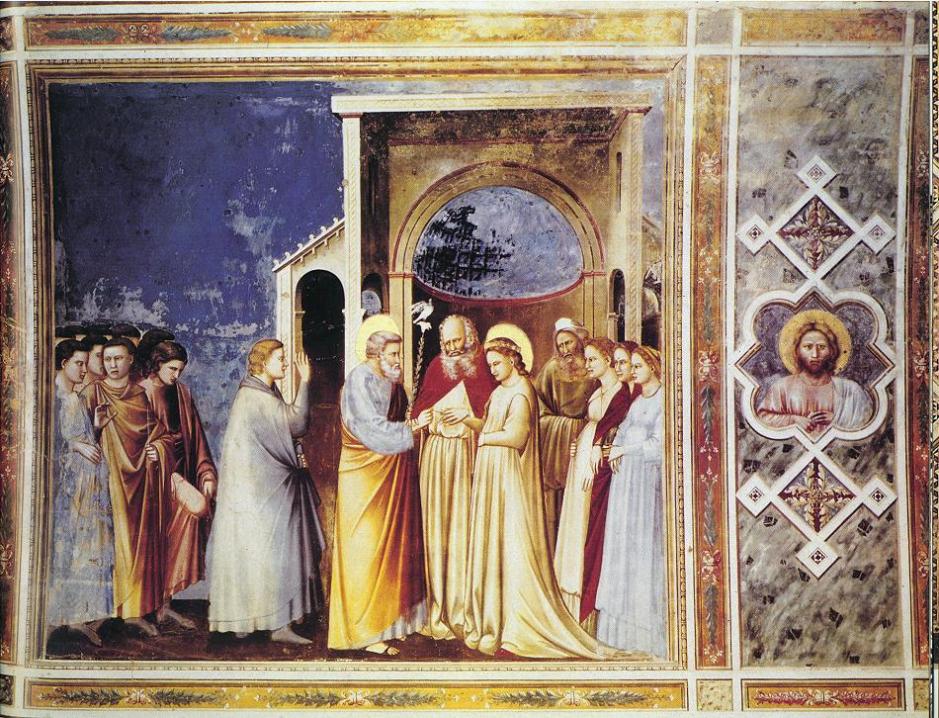
Featured Image:Giotto, Public domain, via Wikimedia Commons
In the liturgy on this third day of the Advent-Christmas season, the Church expands our hearts to take in the length and breadth and height and depth of God’s love in Christ. We are immediately reminded, as we pull out our nativities and advent wreaths and Christmas decorations, as we make our lists for Christmas gift-giving and party-throwing, that the birth of Christ brings eternity into time such that time now has meaning only in light of the Kingdom of Love that will last forever and ever. It is the Last Day of the Old Creation and the First Day of the New Creation. It is about the Day that we await with ardent hearts and fervent longing: the return of Christ.
On that day… the wolf shall be a guest of the lamb, and the leopard shall lie down with the kid.
We will see this gentle image on the Christmas cards we receive and send, but how much more do we long in our hearts for this Peace that we have not yet experienced. There is too much “harm and ruin” in the world, shattering our hearts and hopes and security and trust.
But there it is. Isaiah has foretold it. It shall be. On that day there shall be no harm or ruin on all my holy mountains; for the earth shall be filled with the knowledge of the Lord, as water covers the sea.
In today’s world, who can believe this? Who can believe that a tiny Child, the Son of God, who lived but thirty-three years two thousand years ago in a small and poor countryside could be about such a Kingdom, could bring about such a Peace.
Only a child.
We cannot stand with our hands at our sides waiting for this consummation beyond time of Isaiah’s joyful prophecy to be bestowed upon us. We have no reason to throw up our hands and cry out that things are getting worse and that the birth of God on earth has not brought about the kingdom of love that he preached.
The Gospel passage today follows immediately upon the return of the seventy disciples who had been sent out two by two to proclaim that the kingdom of God is at hand. Notice. They were not to proclaim that if people changed their lives and listened to them that the kingdom would come. They weren’t announcing that the kingdom would arrive as the result of a perfectly executed evangelization plan. No. It was a simple message. The kingdom is at hand. It is here. It is now.
So powerful was this message that Jesus told them that as a result of their preaching this message he had seen Satan fall like lightning from the sky.
At that moment, Jesus rejoiced in the Holy Spirit and said, “I give you praise, Father, Lord of heaven and earth, for although you have hidden these things from the wise and the learned you have revealed them to the childlike.”
It is only the childlike who can continue to announce the arrival of the kingdom of love in a world filled with insecurity, violence, and even hate. With even greater mystery than his sending the seventy-two disciples out to preach the kingdom, Christ continues in the Catholic Church to send out the “seventy-two” to preach the kingdom. He continues today to live and love and speak just as truly as when two thousand years ago he called to himself twelve apostles, preached throughout Galilee, and healed and reconciled and prayed and loved. Christ makes use of the Church so that the work he began in his lifetime might endure until the Second Coming. It is we today who are sent to announce that the kingdom is at hand.
Who can believe this?
Only a child.
If we try to make sense of it, we will not be able to. If we try to explain the existence of evil in the world in relation to Isaiah’s prophecy, it will not be possible.
God has hidden these things from the wise and the learned. If we want to believe we must receive the revelation that the Father wishes to give to us. To receive it, we must be childlike.
Saint John Paul II helps us see that being childlike is not being naïve. It is believing that the Word of God has the last word in history. He stated on the World Day of Prayer for Peace in 1978: “We find, in Christ, a hope. Setbacks cannot render vain the work of peace, even if the immediate results prove to be fragile, even if we are persecuted for our witness in favor of peace. Christ the Savior associates with his destiny all those who work with love for peace…. Do not be afraid to take a chance on peace, to teach peace. The aspiration for peace will not be disappointed for ever. Work for peace, inspired by charity which does not pass away, will produce its fruits. Peace will be the last word of History.”
Horizons of the Heart is an Ignatian retreat based on the Spiritual Exercises from my own 30 day retreat in 2022. See an index for the whole series.
Entering Prayer
Offer your prayer to God, desiring that in every way it will give him glory. I pour myself out in worship. You could use a few lines from the following Psalms if this helps you enter into prayer:
Ask of God what you think you need. (It could be later that God will show what you truly need and what should be asking for, but begin now where you are.)
Imagining Yourself Present
Over several periods of prayer, linger imaginatively over the events of the annunciation, the visitation to Elizabeth, the trip of Mary and Joseph to Bethlehem, and the birth of Jesus. Offer yourself to Mary and Jesus, imagining yourself present to these events of our salvation. Put yourself at the service of Mary, Joseph, and Jesus reflecting on what Mary is going through and how each of them is experiencing these events. Be present to them with “the whole affective power of your mind, with loving care, with lingering delight, thus laying aside all other worries and cares.”
Image Cathopic
The Annunciation: Luke 1:26-38 The Visitation: Luk1: 39-45 The Trip to Bethlehem and the Birth of Jesus: Luke 2:1-20
Note regarding praying with your imagination: Everyone can imaginatively be present somehow to a past event through memory in various ways. Imagining doesn’t necessary mean making images, that is, creating a little movie about the events we are contemplating. Some people imagine through their feelings, simply having a sense of what is happening, others visually through picturing, others through hearing. Entering imaginatively into these mysteries of our salvation will gradually give one an experiential and deeply felt understanding, rather than a notional knowledge.
Why is this important? This deep-felt knowledge implies an intimate caring, an attentive closeness that is aware of even the inner movements of thought and emotion in oneself and the other. We follow Jesus here and now through the work of the Spirit who weaves together our own history with salvation history. This happens through symbol and imagination. When we become part of the gospel story we allow our whole life to be affected by the Spirit.
Image Cathopic
Imagining the Gospel events in the present
Re-read in the scriptures these events or simply reflect on them as though they were happening now. Bring them up to your mind’s eye with “lingering delight” as though they were occurring right in your neighborhood so to speak. Notice which aspects of these mysteries begin to involve you a little more deeply.
Notice: In Gospel Contemplation, Ignatius takes advantage of the way in which spiritual growth, like so many other aspects of maturing that we experience, takes place primarily when our affectivity is engaged. It is the shift in one’s deeper emotions and feelings that leads to a change in one’s behavior. We reach these deeper levels through metaphor, image, and symbol—the work of the imagination.
In Gospel contemplation you attempt to grasp something of Jesus’ human existence and as you do this, the Spirit begins to grasp you in your existence. This prayer gives us contact with Jesus, the risen Lord, who is present now, influencing my life now. The historical events of Jesus’ life, death and resurrection, his healing and his preaching, transcend time and place. The THEN of Jesus’ life becomes NOW. It is important to allow oneself to become part of the story-event.
Observing attractions and resistance
Observe the actions, words, emotions, sensitivities, attitudes of Mary, Joseph, and Jesus and to which of them you feel more attracted. Which of them arouse more negative feelings or resistance? Return to aspects of these meditations that seem more personally meaningful.
Notice: How are you entering the story? Are you your present age or another age? How are you taking part in the mystery? What are you noticing about your emotions as you interact with Mary, Joseph, and Jesus? What happens when you interact with the persons in the story? Are you just thinking about them or are you speaking with them? Are you watching or are you a participant? Are you allowing yourself to be moved, surprised, touched, even angered by what happens or are you keeping everything under control?
Entering the Mystery of the story
As you begin to enter the mystery of the story more deeply, you will begin to see or hear or touch. You will enter into the event and interact more deeply. Little by little you will become more present to the mystery and the mystery will be present to you.
Image Cathopic
Moving through deepening levels of stillness
As your contemplative prayer deepens, you will be open to being affected deeply by Jesus’ Spirit at both conscious and less-than-conscious levels of your being.
It may move you gradually through deepening levels to stillness. You may find yourself just there, totally involved—seeing, hearing, touching, smelling, tasting. It is almost as if the experience has gone into slow motion, and time passes as one is present to the Beloved and the Beloved to oneself. One is there; Jesus is there. The mystery is there. No words are necessary and no great thoughts need to surface. This is the experience of “O taste and see the goodness of the Lord.”
Desiring to follow Jesus
As I become more and more involved in the event of Jesus’ mystery that I am contemplating, my life and my choices are affected. I find myself changing and desiring to change. I begin to follow Jesus in a particular way.
As you contemplate more deeply, as you soak in these mysteries of Mary’s motherhood, where do you observe emotions or reactions like fear, guilt, resistance? Do any memories become more present to your awareness? How do you feel drawn toward something new? Speak to Mary, Joseph and Jesus about what you observe and experience. What do you begin to learn about your following of Jesus?
You may wish to journal about this.
Image: Cathopic
Conversing as with a friend
Continue in quiet—or even silent—intimate conversation with Mary, Joseph and Jesus. Ask them what is the grace that you should be praying for. Beg this grace of the Father. Then beg this grace of the Son, your Savior and Shepherd. Finally, beg for this grace from the Holy Spirit who is the source of all holiness.
If you wholly lived this grace that you are begging for, what would your life look like? Your relationships? Your prayer? The way you work? The way you love? The way you serve? What about you would make you the most happy?
Ask Mary, Joseph and Jesus to show you one specific gift they wish to give you. Receive it and remain in stillness and quietly relaxed presence under the influence of the Holy Spirit.
Reviewing the graces of prayer
When you finish praying, write down the main gifts and discoveries from this time of intimate contemplation. What is one concrete thing you can do to solidify these gifts in your life.