
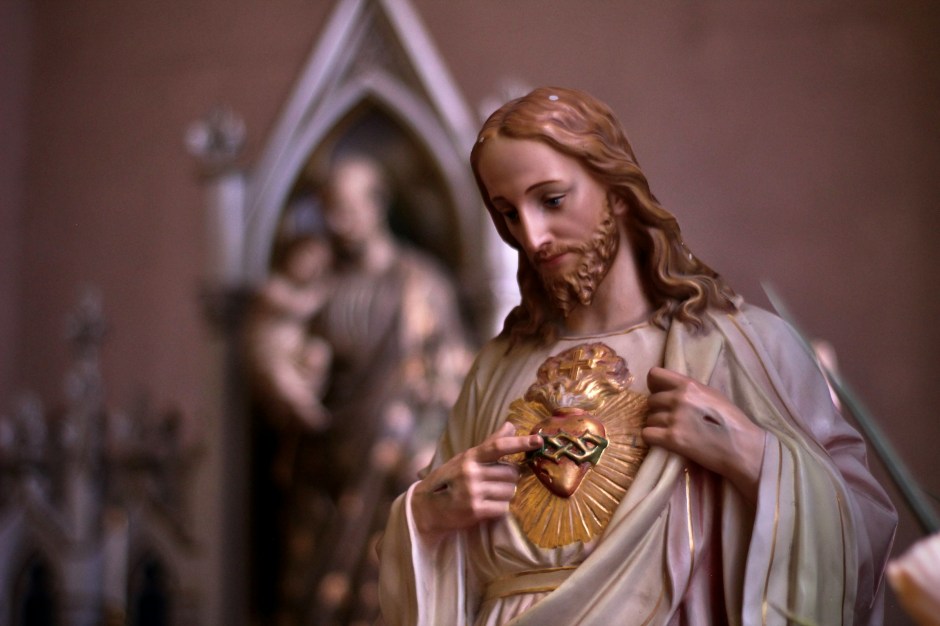
When Jesus saw Nathanael coming toward him, he said of him, “Here is truly an Israelite in whom there is no deceit!” Nathanael asked him, “Where did you get to know me?” Jesus answered, “I saw you under the fig tree before Philip called you.” Nathanael replied, “Rabbi, you are the Son of God! You are the King of Israel!” Jesus answered, “Do you believe because I told you that I saw you under the fig tree? You will see greater things than these.” And he said to him, “Very truly, I tell you, you will see heaven opened and the angels of God ascending and descending upon the Son of Man.” (Jn. 1:47-51)
Who are you for Jesus? Who is Jesus for you?
When Jesus sees you coming toward him, as he saw Nathanael, what does he call out or, more quietly, think in his heart?
Stop a moment and gently ponder the question, if possible. It is the most foundational question we could be asked, right up there with Jesus’ other question asked in another place later in his ministry: “Who do you say that I am?”
Who are you for Jesus? Who is Jesus for you?
These questions touch the deepest fibers of our being that carry burdens from our history, our masks, what we think we know about God, what our past experiences of religion have been, and what we think of ourselves.
Who are you for Jesus? Who is Jesus for you?
Just put the question gently out there and wait for whatever arises. Perhaps an image, a memory, an insight. You may feel places within yourself that come forward with great trust in Jesus and other places within you that are more insecure or fearful or uncertain, or even wounded. Just notice.
The beauty of this Gospel passage is that ultimately Jesus is telling us that there is only one real answer to these questions. Jesus is the ladder between heaven and earth, the Bridge, the one who is both up above and here below, the point of contact between heaven and earth.
The image that Jesus presents to Nathanael of himself as a ladder is a symbol of interpersonal love. In his Incarnation and Ascension, Jesus himself is the bridge over which flows agape or divine love descending into humanity and love and desire ascending from us toward God. Jesus himself truly unites heaven and earth. Christ makes heaven accessible to us today.
Who are you for Jesus? Who is Jesus for you?
Photo credit: Jonathan Dick, OSFS on Unsplash

Praying with this Passage of Scripture
Lectio Divina is a way of listening to God as he speaks in his Word. It is a practice of communicating with God through Scripture and attending to God’s presence and what he wishes to tell us. In this slow and prayerful reading of the Word of God, we allow ourselves to be transformed by the Spirit who forms us into the image of Christ. There are four movements in Lectio Divina: Read (lectio), Meditate (meditation), Pray (oratio), Contemplate (contemplation).
Begin by finding a still space to pray. Breathe deeply and become quieter within. Abandon any agenda, worries or thoughts you bring to this prayer and entrust these things to the merciful care of God. Ask for the grace to be receptive to what God will speak to you through this Scripture reading. Grant me, Jesus Divine Master, to be able to know the mysteries of the kingdom of God and your unfathomable riches. Grant that your word penetrate my soul; guide my steps, and brighten my way till the day dawns and darkness dissipates, you who live and reign forever and ever Amen.
Read (lectio)
Begin by slowly and meditatively reading your Scripture passage out loud. Listen for a particular word or phrase that speaks to you at this moment and sit with it for a time.
Pray (oratio)
Read the text a third time. Listen for what God is saying to you. Speak heart to heart with God. Notice the feelings that this conversation with God raises up within you. Share with God what you notice about your response to this conversation. You may wish to return to repeating the phrase quietly and gently, allowing it to permeate you more and more deeply.
Contemplate (contemplatio)
Read the text a final time. Now be still and rest in God’s embrace. Ask God to give you a gift to take with you from this prayer. You might ask God if he is inviting you to do some action, for instance, make some change in your thoughts, attitudes or reactions, in the way you speak or how you treat others. Thank God for this gift and invitation as you conclude your prayer.

