
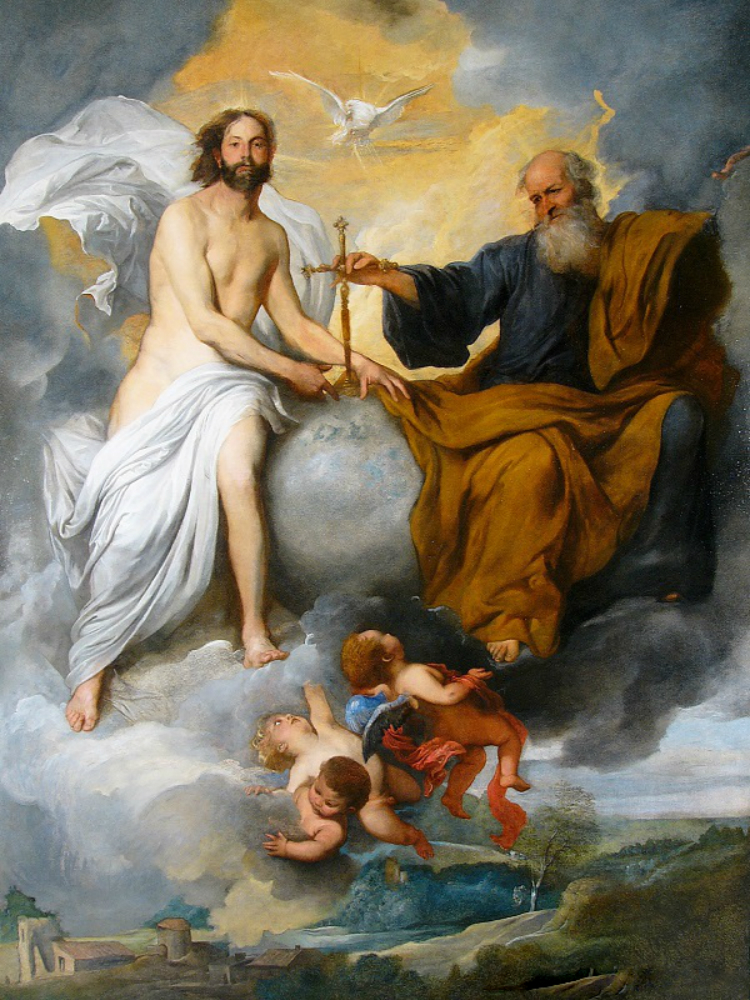
“For God so loved the world….” (Jn 3:16)
Love is the key to understanding God. And love is the key to becoming truly who we were created out of love to be.
On the Solemnity of the Most Holy Trinity, we speak about the deepest truth of God’s identity: a God who is Love (see 1 Jn 4:8), who, because of his great love for us, brought us to life in Christ (see Eph 2:4-5).
From the beginning, before the foundation of the world, the Father has loved us and chosen us (see Eph 1:4). He loves the world—the whole world, in all its brokenness—and moves toward it in mercy. The origin of our salvation is not human pleading, but divine initiative. Love begins with the Father.
Jesus gave his life for us that we might live (see 1 Jn 4:9-10). Jesus, the Word made flesh, enters our story not with condemnation but with compassion. In him we see what divine love looks like: it walks with the poor, heals the sick, forgives the sinner, and lays down its life. To believe in him is to trust that we are loved beyond measure. It is to allow ourselves to be drawn into the relationship he shares with the Father.
The Holy Spirit is love poured into our hearts, the bond between God and us (Rom 5:5). The Spirit is the hidden presence of God who awakens faith, convicts the heart, and dwells in those who believe. The Holy Spirit is the love between the Father and the Son poured out into our hearts, drawing us into their communion.
It is not easy for us to allow ourselves to be loved like this. On this earth you and I know only imperfect love. Indeed, we ourselves can give to others only a love that is broken. Love on this earth is confined and distorted and confused and manipulated. In the name of love people are used and treated as objects. The beauty of love is lost when it is traded for gain, prestige, advancement, and power.
And yet we long to love and to be loved and to give love. We yearn to live in the communion of love we see in the Triune God, in the perfect, eternal, self-giving communion of love that overflows and reaches out to us. Our thirsty souls stretch out to this everlasting well of life-giving water so that we might be the presence of the kingdom on this earth precisely through the way we love like God.
Draw us, most Holy Trinity, into Your divine communion,
God the Father and Source of Love, we praise you.
God the Son, Love made visible, we praise you.
God the Holy Spirit, Love poured into our hearts, we praise you.
Amen.
Image credit: Pietro Novelli, Public domain, via Wikimedia Commons

Praying with this Passage of Scripture
Lectio Divina is a way of listening to God as he speaks in his Word. It is a practice of communicating with God through Scripture and attending to God’s presence and what he wishes to tell us. In this slow and prayerful reading of the Word of God, we allow ourselves to be transformed by the Spirit who forms us into the image of Christ. There are four movements in Lectio Divina: Read (lectio), Meditate (meditation), Pray (oratio), Contemplate (contemplation).
Begin by finding a still space to pray. Breathe deeply and become quieter within. Abandon any agenda, worries or thoughts you bring to this prayer and entrust these things to the merciful care of God. Ask for the grace to be receptive to what God will speak to you through this Scripture reading. Grant me, Jesus Divine Master, to be able to know the mysteries of the kingdom of God and your unfathomable riches. Grant that your word penetrate my soul; guide my steps, and brighten my way till the day dawns and darkness dissipates, you who live and reign forever and ever Amen.
Read (lectio)
Begin by slowly and meditatively reading your Scripture passage out loud. Listen for a particular word or phrase that speaks to you at this moment and sit with it for a time.
Pray (oratio)
Read the text a third time. Listen for what God is saying to you. Speak heart to heart with God. Notice the feelings that this conversation with God raises up within you. Share with God what you notice about your response to this conversation. You may wish to return to repeating the phrase quietly and gently, allowing it to permeate you more and more deeply.
Contemplate (contemplatio)
Read the text a final time. Now be still and rest in God’s embrace. Ask God to give you a gift to take with you from this prayer. You might ask God if he is inviting you to do some action, for instance, make some change in your thoughts, attitudes or reactions, in the way you speak or how you treat others. Thank God for this gift and invitation as you conclude your prayer.

