When the earth shatters seeds grow

This past weekend we learned of a terrible event that happened back in late November, when Ethiopian Orthodox Christians gathered for a festival along with others seeking refuge from the ongoing fighting in the Tigray region. Eritrean soldiers arrived at the monastery and opened fire, killing over 70 people. Other recent news including the killing of 18 protesters in the military crackdown in Myanmar.

And then I read a third article, in which I learned that laboratories across Africa and Southeast Asia stand ready to manufacture vaccines to meet a global shortfall—but the patent holders are unwilling to share crucial information that could save hundreds of thousands of lives.

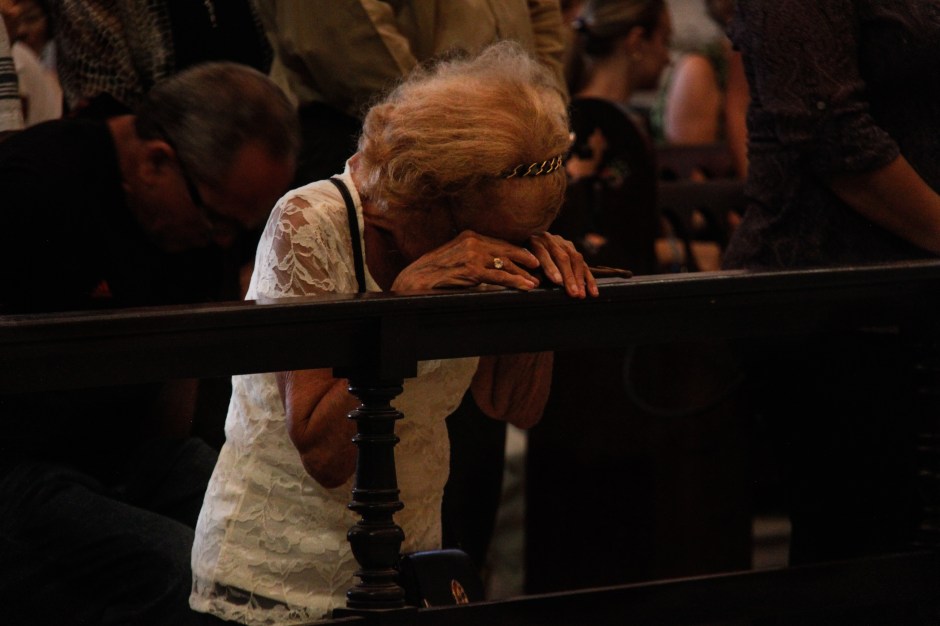
I have to tell you this, my friends: I read all these stories and my Lent just broke open. What can I think, or say, or even pray in the face of such pain?

I have to take refuge in the cross, in Jesus on the cross, at that execution place where this season is leading us. Jesus knew. Jesus knew what would be in the hearts of all these victims. Even more than that, he knew what would be in the hearts of all these perpetrators. And his heart went out—to all of them.

I’m not a gardener, but many of my sisters are. What I have learned from them is that when the earth shatters—a little bit—seeds can find soil in which to grow. When our humanity shatters, when our hearts shatter, then there is a place for God’s love to enter and take root and flourish. It’s difficult not to focus on the wound that shattered the heart, even the wounds that shattered Jesus’ body, but behind all the pain is God’s intentionality. We are wounded, we are suffering, we are victim and perpetrator, but we can all be redeemed. We can all enter the Kingdom. Jesus knew all humanity’s cruelty and selfishness—and died for us anyway.

That is where Lent is headed, where Lent has always been headed: to the cross. The world is just making it a major point, this week, to remind us of that.

Blessings,
Sr Kathryn

God at the Center: Guest Post

I want to talk about a journey, our journey to God. In some ways, that’s what Lent is: a journey through 40 days of anticipation to the cross and then through to the resurrection.

In the early Middle Ages Christians were encouraged to make a special journey, a pilgrimage to the Holy Land. One of the reasons for the Crusades was to protect pilgrims. But most people didn’t have the means or the ability to make such a difficult journey, and so a substitute had to be found.

That substitute was the labyrinth.

In 325 A.D. Christians placed a labyrinth on the floor of their church. Although Christians must have been using the labyrinth earlier, this is the first historical record we have of the Christian use of the labyrinth. Since that time labyrinths have been prayed, studied, danced, traced and drawn as Christians sought to use this spiritual tool to draw closer to God.

Using a labyrinth involves moving one’s body and opening one’s heart to Jesus. All you

have to do is follow the path and you will find the center. A “typical” labyrinth experience involves preparing oneself at the threshold, following the single path to the center, spending time in the center, following the same pathway out the threshold, and then responding to the experience.

Maze or Labyrinth?

We often use the words “maze” and “labyrinth” to mean the same thing, but they’re very different. A maze is a puzzle filled with dead ends, with the idea you’ll get lost a few times; a labyrinth has one circuitous path that brings you unerringly to the center.

A labyrinth is the ideal metaphor for our journey. It presents a long, sometimes frustrating path but if we stay on it, if we persevere, we reach the center. We reach God.

Why do it now? Just as on Monday we talked about incorporating fasting into our spiritual lives, so too can we incorporate labyrinth prayers into our prayer lives.

There are many ways to pray with a labyrinth. We’ll talk about them after the video.

Even if you don’t live near a full-sized labyrinth, you can still use one for prayer by simply printing it out on paper:

You probably can think of ways you can use this design in prayer. I’ll suggest a few more:

1)  Ask God a question as you enter the path. Then, as you walk slowly through the twists and turns, listen for an answer. Let your steps and your silence invite the presence and guidance of God.

2)  Start your journey to the center with confession (you may want to visualize your sins being left behind with every step you take). When you reach the center, journey out with affirmation (perhaps visualizing yourself picking things up or putting things on–like the righteousness of Christ, the smile of the Father, the purity of the Holy Spirit, etc.). Pause at the exit and give thanks for your cleansing journey.

3)  Recite a breath prayer as you navigate the labyrinth, perhaps praying a different prayer on each leg or quadrant of your journey. (Breath prayers are short phrases that lend themselves to repetition: Lord, have mercy. When I am afraid, I trust you. Not my will, but yours. Say the word. Lord Jesus Christ, Son of God, have mercy on me, a sinner. Holy Wisdom, guide me.)

4)  Lay down your burdens as you walk to the center of the labyrinth (perhaps marking your labyrinth with the symbols of what you’re letting go). In the center, pause to thank God for taking your burdens on himself. Then count your blessings and give thanks on the journey to the exit.

The word “labyrinth” isn’t anywhere in the Bible, but themes of following God’s way,

spiritual journeys, and enjoying God’s presence—all central to labyrinth experiences—are throughout Scripture. Two additional verses that can be used while praying the labyrinth are, “You show me the path of life. In your presence there is fullness of joy”

(Psalm 16:11), and Jesus’ words, “I am the way, the truth and the life…” (John 14:16).

Has anyone here ever had an experience with a labyrinth? Is it something you might like to try?

by Jeannette de Beauvoir

Image Credit: Bas Gerring at Pexels

Come to me all who are weary: A Caregiver’s Prayer

In a night’s vigil of adoration in the shadow of the Eucharist, a sixteen year old seminarian was drawn into the silence. Into the invitation of God. Face to face. Heart to heart. The humbled awe of being seen, of being small in a divine plan still shrouded in mystery. The gratefulness at being known. Being called.

On the eve of 1901, this Eucharistic vigil changed the young seminarian James Alberione forever and gave birth to consecrated lives of thousands of women and men in the Pauline Family who would hear through him what he received that night from the Lord: “Come to me.” It was not just a Bible verse, but the cry of Jesus who silently extends his hands and opens his heart to the whole world every day and every night from every Tabernacle of the world.

“Come to me all who are weary.” The century that followed that call from the Eucharistic heart to James Alberione would be exhausting, a century bathed in the blood of the fallen in two World Wars and confused by the cacophony of voices claiming that truth was on their side.

“Come to me all who are heavy burdened.” It is the call of Jesus from the tabernacle to us today in a pandemic-stricken world, strangely now one in its search for wholeness and relief.

It is Christ’s invitation from the sanctuaries where he silently sorrows that so many walk by or walk away.

“Come to me.” Feel within yourself the sadness of the Lord who longs to wash away what troubles us and cheer us with his kindness. This Lent his heart longs for us more than we long for him. He hears and knows and sees us, even when our attention is elsewhere.

This Lent, Jesus knows the burdens you carry, the way of the passion that you walk and he doesn’t want you to walk alone. He sees you. He invites you into his divine and mysterious plan.

“Come to me.” Whatever are the tears that run down your cheeks, or those perhaps held unshed in the secret of your heart, go to him. Jesus is calling you from the Tabernacle and from the inner sanctuary of your own heart.

“I am here. Come to me. Tell me what you need.”

We just celebrated National Caregivers’ Day. How many of us have become caregivers, a heart-giving ministry of love for months or years that slip by uncounted, measured only by the sighs, the renewed energy to be there for another, the sleepless nights, the worries across the miles, the tears, the passion, His passion.

This Lent, Jesus knows the burdens you carry, the way of the passion that you walk and he doesn’t want you to walk alone. He sees you.

This past year how many caregivers have not been able to be near loved ones in order to care for them! This isolation and surrender too is the way of the passion, our hearts burdened with love as is the heart of Jesus. “Come to me and I will give you rest.”

This Lent, may our care for others resemble the care Jesus longs to give each person. Let us invite others with open arms to come and find rest in our presence, that they may discover his presence. May they feel heard. May they know they are seen. May they know they never walk alone, that through our hearing and seeing and walking they may find true rest for their souls.

To all who give care, blessed be God in the gifts he has given you and that you share with others.

Sr. Kathryn J. Hermes, FSP - We just accompanied one of our sisters, as her caregiver in the last couple weeks of her life. This is the book that helps us sisters every time: Midwife for Souls, by Kathy Kalina. Caregiving can be easier when it comes to the practical things of what to do. We can learn those. But we often don't have a teacher for the spiritual wisdom that we want to be a part of this caregiving journey for both ourselves and the one we are caring for. Kathy offers years of qualified experience and spiritual wisdom that will inform and comfort caregivers and loved ones. This book provides insight, showing how the support of one s Catholic faith and the power of prayer can be a guide in ministering to a dying person. This book is essential reading for anyone who accompanies others to the edge of life and helps in their birthing to eternal life. 

When You Want to Shout at Jesus (Mt 15:21-28)

Jesus left that place and went away to the district of Tyre and Sidon. Just then a Canaanite woman from that region came out and started shouting, “Have mercy on me, Lord, Son of David; my daughter is tormented by a demon.” But he did not answer her at all. And his disciples came and urged him,…

When You Think About Your Life, Remember This

It all depends on how you look at things. That quiet, perhaps dark, place inside can seem frightening or lonely. A place to be avoided. Our guarded parts might scramble to keep us from going there. You know the drill: grab another cup of coffee. Check out the news. Scroll through our Instagram feed. Take…