What does your grieving heart need? “It is time…”

I keep asking: why so many doors?

It’s a strange thing. One door closes. My Mother passes into eternity. A relationship changed. Memories left to be sifted through. A love to reimagine and rediscover and re-embrace. It was one door that closed and certainly opened for her into eternity.

But why so many other doors clamor now for my attention?

Doors of loss. Doors of ungrieved sorrow. Doors that closed too soon and doors that closed too late.

When someone passes into eternity, we don’t go with them. Our love and friendship and future and shared dreams are no longer the same. What we had built together collapses in a great sigh. The memories that structured our day and our togetherness simply disappear, or we need to carry them forward on our own. The memories that once made us laugh, now bring up tears. Even their name, so beautiful, catches in our throat.

Why do so many doors these days haunt my dreams and fill my prayers?

Grief tends to open wounds that had been long forgotten and passed over, tucked away and wished away….

Grief shows us the many doors that hide deaths still not mourned, losses we’ve experienced along the way of life.

An illness that changed the direction of our life, a path taken that plunged us into unexpected sorrow, the sting of rejection and the pain of failure.

Losses that often had been bravely soldiered through. Now, in great tenderness, our heart hears the whisper, “It is time.”

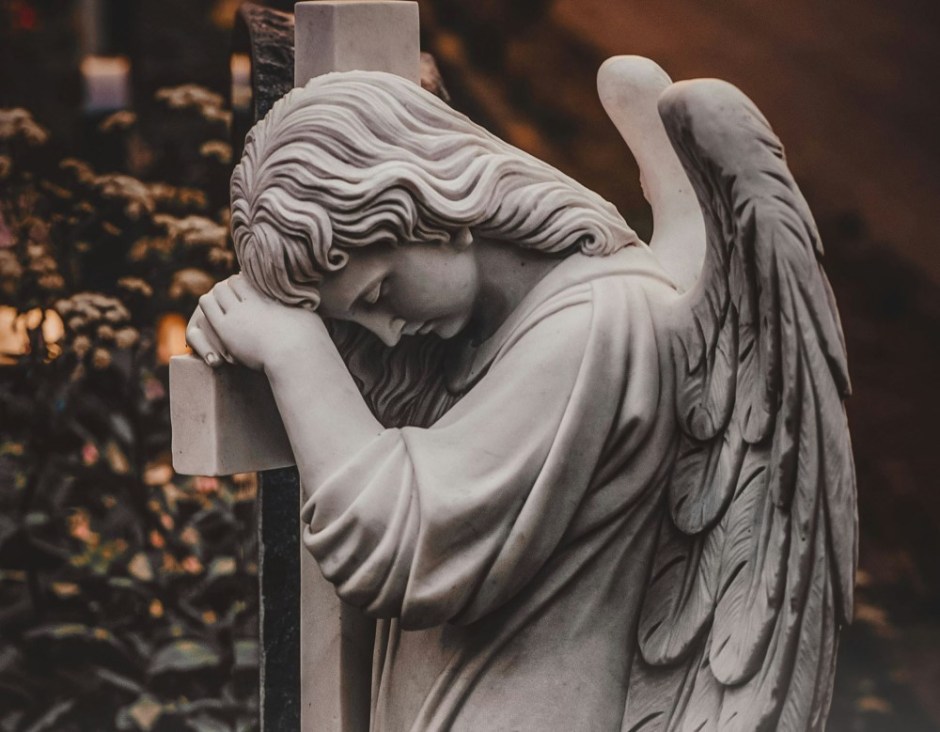
Photo by Alex Kulikov on Unsplash

The long empty hallways where something of ourselves had died… It is time to walk them. To listen to our steps… To hear our own breathing… To be led by wisdom and mercy down the labyrinths of broken dreams to reclaim our life. To meet ourselves now ready to live. To find the secret of inner harmony and integration and serene peace and an ever-living hope, a flame that does not die.

I prayed with this image one morning. The empty, sterile, too-tidied halls that represented the many losses of my life were quietly frightening. But with my hand in Jesus’ hand, we did not run from them. “Something in you died here, when you had your stroke at twenty-one.” He was kind and tender and gentle. He knew. He always knew. And now he was helping me to find again what had been taken from me by what happened.

“Something in you died there too….” Like an elderly wise one, a grandfather who had seen a thousand years, Jesus opened the doors one after another.

Let the sorrow pound the soul’s shores like the ocean’s tides.

As we walked, the empty halls began to fill up with furniture and flowers, and through the  windows the sun’s rays frolicked across the warm floor. And music and dancing and joy and laughter….

Image from Pixabay.

Death and loss steals away the carefree trust that life will bless me, that it will never hurt. Grieving, slow and gentle, closes the too many wounds that have been left in their wake with the promise that all is love and all is still loved.

The many doors I have explored, since my Mother walked through the eternal door that awaits us all, have brought me once more to touch the joy and the laughter that was once mine and is still there. In time grieving melts into a larger loving and a newly reclaimed and received sense of identity.

We do not grieve alone.  

Feature image credit: Photo by Julia Kadel on Unsplash

I Need a Mother. I Need Mary. (John 19:25-34)

Meanwhile, standing near the cross of Jesus were his mother, and his mother’s sister, Mary the wife of Clopas, and Mary Magdalene. When Jesus saw his mother and the disciple whom he loved standing beside her, he said to his mother, “Woman, here is your son.” Then he said to the disciple, “Here is your mother.” And from that hour the disciple took her into his own home.

John 19:25-34

The day after the Church celebrates the Feast of Pentecost and the coming of the Holy Spirit on the apostles gathered around Mary in the Cenacle, we are given this opportunity to take a step back and to prayerfully contemplate Mary as the Mother of the Church, Mother of the Redeemer and Mother of the Redeemed.

Mary brought Christ, His physical human body, into the world and thus gave birth in a mystical way to the Church, the Mystical Body of Christ. She stood with her Son in his passion and received his body in death as it was lowered from the cross and laid in a tomb. There is no way to fully appreciate the pain and intimacy of her heart, so pure and so holy, at this moment in which she receives from Jesus this motherhood of the redeemed, this charge to love and provide for his broken and wandering brothers and sisters for whom he offered his life.

I am one of these wandering disciples of Jesus. Sometimes I get lost. A lot of times I’m not able to withdraw my will from the aims and desires of the “old man.” Too often I hold on to this or that in aspects of my life where I haven’t the courage or strength to turn completely to Christ.

I need a mother.

I need Mary.

I need the Church,

Mary did not know any contagion of sin, as she was preserved whole and intact in her created nature from the first instant of her conception. In us holiness is found only in an imperfect way.

Mary, the Immaculate Conception, received, as a gratuitous gift, an original holiness, a holiness that she did not have to pursue throughout her life as the faithful do, who though “called to holiness” only arrive at a measure of holiness at the end of the journey. Mary alone is holy through original gift (Immaculate Conception) and through her own perfect conduct of life.

Mary is the icon of the holy Church. She encapsulates in herself all of the characteristics that the Church possesses. Christ gives holiness to his Mystical Body the Church, and then the Church, as a mother, brings forth children to God in the font of baptism, though we struggle with sin and concupiscence all our life.

Mary is Mother and icon of the Church. She is our Advocate, Mother, Teacher, and Queen.  Both Mary and the Church are the source of hope for us who are still on the way to our eternal home.

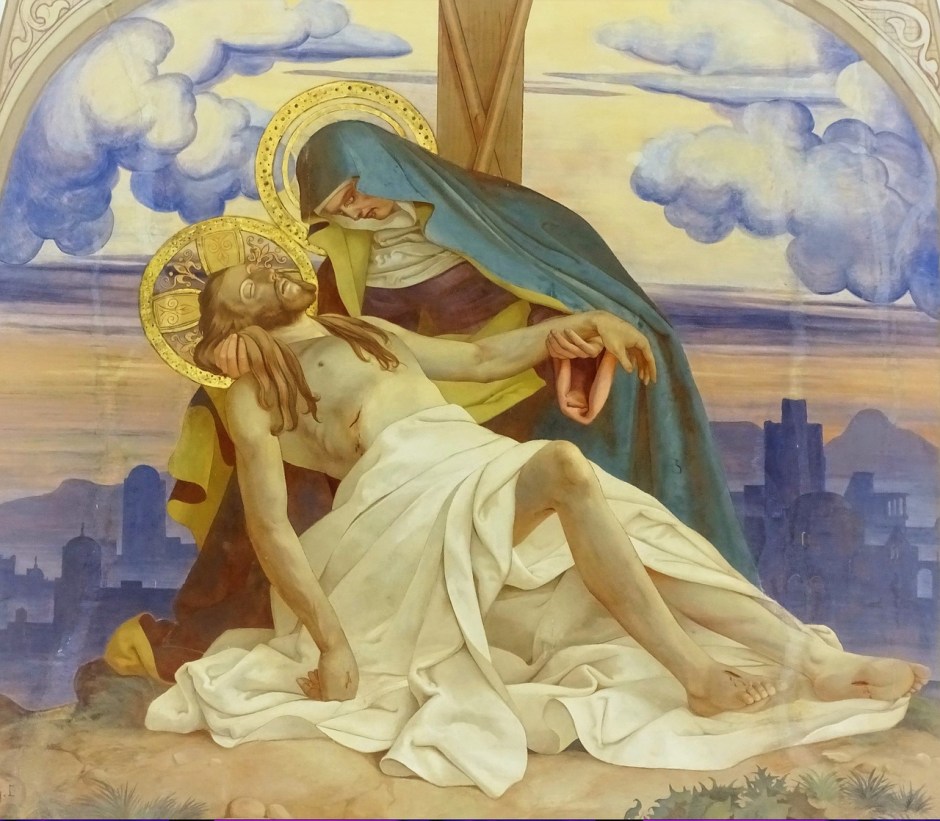
Image credit: Image by Sr. Maria-Magdalena R. SMCB from Pixabay

Praying with this Passage of Scripture

Lectio Divina is a way of listening to God as he speaks in his Word. It is a practice of communicating with God through Scripture and attending to God’s presence and what he wishes to tell us. In this slow and prayerful reading of the Word of God, we allow ourselves to be transformed by the Spirit who forms us into the image of Christ. There are four movements in Lectio Divina: Read (lectio), Meditate (meditation), Pray (oratio), Contemplate (contemplation).

Begin by finding a still space to pray. Breathe deeply and become quieter within. Abandon any agenda, worries or thoughts you bring to this prayer and entrust these things to the merciful care of God. Ask for the grace to be receptive to what God will speak to you through this Scripture reading. Grant me, Jesus Divine Master, to be able to know the mysteries of the kingdom of God and your unfathomable riches. Grant that your word penetrate my soul; guide my steps, and brighten my way till the day dawns and darkness dissipates, you who live and reign forever and ever Amen.

Read (lectio)
Begin by slowly and meditatively reading your Scripture passage out loud. Listen for a particular word or phrase that speaks to you at this moment and sit with it for a time.

Pray (oratio)
Read the text a third time. Listen for what God is saying to you. Speak heart to heart with God. Notice the feelings that this conversation with God raises up within you. Share with God what you notice about your response to this conversation. You may wish to return to repeating the phrase quietly and gently, allowing it to permeate you more and more deeply.

Contemplate (contemplatio)
Read the text a final time. Now be still and rest in God’s embrace. Ask God to give you a gift to take with you from this prayer. You might ask God if he is inviting you to do some action, for instance, make some change in your thoughts, attitudes or reactions, in the way you speak or how you treat others. Thank God for this gift and invitation as you conclude your prayer.

Image: Myriams-Fotos; pixabay.com

Invitation: Lectio Catolica on ZOOM

Has this ever happened to you? Those times when you feel uncertain, upset, or just a little bit unmoored or lonely as you try to understand what’s happening within you or in your life (or in the lives of those you love)?

When you reach out for something, Someone, who knows what it is all about, who knows the whole picture, who knows YOU?

Someone who was there the day you were born? Who has seen your every joy and every loss? Delighted in every smile and suffered with you in your tears?

And you wondered: how do I connect? How do I know? How do I get to the bottom of my questions or my pain? How do I let go…. How do I love myself?

Life’s questions tend to be profound teachers which lead us beyond what we can understand about ourselves to the very arms of Jesus. In our search for answers, we find a Face and a Love.

Lectio Catolica is all about discovering how Jesus evangelizes our hearts with his Word.

LECTIO CATOLICA: Sacred Reading for the Journey of Life is an online prayer gathering held on Zoom where we break open the journey of life in the light of the Scriptures and other spiritual writings.

LECTIO CATOLICA includes a Scripture reading, reflections by the Sisters on the theme of the month, guided prayer, small group sharing, and prayer together.

Would you join me and my sisters for our first online prayer gathering LECTIO CATOLICA?

June 16, 2025
8:00-8:45pm Eastern Time

Theme: Holiness in Unexpected Places: The Promises of God Will Hold You Secure

Find more details and register here.

Friends, I am so grateful that you have joined me on the journey here at touchingthesunrise.com. It would be an honor to gather together every now and then online.

Sr. Kathryn

We the Sheep Still Hear Jesus’ Voice Today (John 10:27-30)

My sheep hear my voice. I know them, and they follow me. I give them eternal life, and they will never perish. No one will snatch them out of my hand. What my Father has given me is greater than all else, and no one can snatch it out of the Father’s hand. The Father and I are one.”

John 10:27-30

“My sheep hear my voice. I know them, and they follow me.”

I have to admit for many years I had a certain idea of what Jesus’ voice sounded like. My assumptions came from the first verse of this Gospel. Sheep are pretty dumb animals and need a shepherd to protect them, make sure they are fed and healthy, and lead them to safe pasture. When I “heard” Jesus’ voice in my heart, it was always gentle, meek, caring, a “what can I do for you” type of voice.

When I made my thirty-day Ignatian retreat I heard another type of voice when Jesus spoke to my heart: it was clear, firm, and understanding. It was the voice of authority that wanted the very best, and only the best for me. Sometimes that meant I had to confront areas of my life that needed repentance and healing. Other times I needed to know that I was loved even in my poverty and weakness. Still other times Jesus needed me to realize that he was the one who does things, not me. It was the voice of the One who died that I might live forever in communion with God. It was a voice of urgency and patience.

Jesus’ voice in the Gospels has many of these characteristics. Think of his words to Mary Magdalen in the garden of the resurrection. Once I would have expected him to reach out to her, tell her that everything was going to be okay, express his sympathy with what she had suffered. Instead, he calls her by name, tells her not to cling to him, and to go and tell his brothers that he had risen. Clear, strong, real, amazing, urgent, the voice of authority, the voice of love.

Think of Zacchaeus, the Sermon on the Mount, his words to Peter at various times during the three years of the public ministry. Remember how Jesus spoke to the Syrian Phoenician Gentile woman, words that almost scandalize us as we read them today. His commanding words to the spirit that possessed the boy who was deaf and mute. What about the 5000 people scattered across the fields listening to Jesus’ preaching. “You feed them yourselves,” he said to his disciples. And his words to his apostles at the Last Supper, “This is my body. This is my blood.” And in his appearance to his apostles after the resurrection, “Peace be with you.”

There are a thousand different variations of tone and intent and desire and command and mercy in the voice of the Good Shepherd.

We, the sheep, still hear Jesus’ voice today. “I absolve you from your sins.” “Behold the Lamb of God who takes away the sins of the world.” We hear his voice as we read the Scriptures. Our soul may be illumined by a gesture that moves us deeply or by an unexpected kindness.

I remember on my Ignatian retreat being early one day for my meeting with my director. I walked over and started to look at the display of the writings and effects of Thérèse Couderc. I had been so engrossed in what I was learning about this sister’s life that I didn’t notice my director coming up behind me. She began to share experiences of suffering that Sister Couderc had endured throughout her religious life, experiences that she knew to a certain extent matched my own. As I listened to her, a fire was lit within my heart, a fire of meaning and hope and love for Jesus, a fire that transformed the depressing weight that had burdened my heart into a burst of generosity. How little it takes for Jesus to manifest himself with attractiveness and joy! How sweet and strong and true is the voice of the Shepherd!

Image Credit: Image by AstralEmber from Pixabay

Praying with this Passage of Scripture

Lectio Divina is a way of listening to God as he speaks in his Word. It is a practice of communicating with God through Scripture and attending to God’s presence and what he wishes to tell us. In this slow and prayerful reading of the Word of God, we allow ourselves to be transformed by the Spirit who forms us into the image of Christ. There are four movements in Lectio Divina: Read (lectio), Meditate (meditation), Pray (oratio), Contemplate (contemplation).

Begin by finding a still space to pray. Breathe deeply and become quieter within. Abandon any agenda, worries or thoughts you bring to this prayer and entrust these things to the merciful care of God. Ask for the grace to be receptive to what God will speak to you through this Scripture reading. Grant me, Jesus Divine Master, to be able to know the mysteries of the kingdom of God and your unfathomable riches. Grant that your word penetrate my soul; guide my steps, and brighten my way till the day dawns and darkness dissipates, you who live and reign forever and ever Amen.

Read (lectio)
Begin by slowly and meditatively reading your Scripture passage out loud. Listen for a particular word or phrase that speaks to you at this moment and sit with it for a time.

Pray (oratio)
Read the text a third time. Listen for what God is saying to you. Speak heart to heart with God. Notice the feelings that this conversation with God raises up within you. Share with God what you notice about your response to this conversation. You may wish to return to repeating the phrase quietly and gently, allowing it to permeate you more and more deeply.

Contemplate (contemplatio)
Read the text a final time. Now be still and rest in God’s embrace. Ask God to give you a gift to take with you from this prayer. You might ask God if he is inviting you to do some action, for instance, make some change in your thoughts, attitudes or reactions, in the way you speak or how you treat others. Thank God for this gift and invitation as you conclude your prayer.

Image: Myriams-Fotos; pixabay.com

Erik Varden: Conversation on the Conclave

The pope has a wonderful and joyful mission: to proclaim Christ to the world! But the head we await will be crowned with thorns in a variety of ways. Soberly, then, we can recite the prayer designated as a collect in Masses ‘For the Pope to Be Elected’ — and it is wonderful that we pray for him personally before we have the least idea of who he is:

God, as eternal Pastor you govern your flock with assiduous protection: grant your Church in your boundless kindness that pastor who will [best] please you by his holiness and be of [most] benefit to us through unsleeping solicitude.

Friends, this is from a superb interview from a Bishop that I always turn to for sage advice and profound insight when the news cycle and gossip chain are full of “experts” and their endless commentary.

Read the entire interview here. You can find the online version of this interview here And live in peace during these next few days.

Holy Saturday: From an Ancient Homily

The day I most cherish in this most holy of weeks is Saturday–Holy Saturday. It is a hinge between Good Friday and Easter, a sigh in the “great silence because the King sleeps,” a day of triumph because God “goes to seek out our first parent like a lost sheep; he wishes to visit those who sit in darkness and in the shadow of death. He goes to free the prisoner Adam and his fellow-prisoner Eve from their pains, he who is God, and Adam’s son.”

These quotations are from an ancient homily read every Holy Saturday in the Office of Readings titled “The Lord’s Descent Into the Realm of the Dead.” In this homily, Jesus calls out to those who slept in darkness:

‘Rise. I command you: Awake, sleeper, I have not made you to be held a prisoner in the underworld. Arise from the dead; I am the life of the dead. Arise, O man, work of my hands, arise, you who were fashioned in my image. Rise, let us go hence; for you in me and I in you, together we are one undivided person.’”