My friends who join me on the journey, Happy Easter. Christ has risen, and with him you and I have also risen. God exalted Christ who humbled himself even unto death. Not only did he raise Jesus from the dead, his whole plan is to raise up the whole of mankind through him from the death of sin.
We can be certain that the whole of God’s will, the entirety of God’s plan, his ultimate end toward which everything tends is to establish all things in Christ risen and exalted at his right hand. The picture above is of Christ leading the souls out of limbo after his death. He has burst open the doors of hell, to the consternation of Satan, and has brought joy to the first Adam and Eve and Moses and Elijah and Isaiah and all those who were being held captive waiting for him to free them.
Lent, and retreats, are a time when we look back over our lives. We might experience this captivity in our own experience. We wonder why things happened the way they did, or why things we so wanted didn’t happen. These things might seem to have trapped or imprisoned us. We look at where we are and where we’ve come from. We see the tiniest details of our lives and how they have affected us, and we mourn the great losses which we have borne.
Jesus, in his life and death, submitted himself entirely to the details of his life, trusting in the care of his dear Father, in the wisdom and purpose of his Father. He also mourned, wept, feared, felt deeply the pain of loss. The Father’s one purpose is to establish all things in Christ, and that is why we can ultimately let go of all we try to make happen and surrender to the merciful and magnificent plan which God is unfolding in us day by day, as he establishes us in Christ. We may still mourn and weep, but we believe.
This is such a grace to receive: this vision, this hope, this faith.
That even in the dark there is light, in the wandering there is purpose, in the fear there is courage, in the visible there is always the invisible working of grace, in the end always a beginning.
May you have a blessed Easter Season, all of these amazing days that lead up to Pentecost.
Thanks for joining me on the journey,
Sr Kathryn
The Liturgy of the magnificent Easter Vigil
Holy Saturday…
A day of quiet and calm. A day of intimacy and hope.
A day when all creation sighed in exhaustion after witnessing the sorrowful and tragic events of Calvary the day before.
A day when the earth trembled as it held the sacred Body of the Savior as it lay in the silent darkness.
A day of waiting….
The liturgy of Holy Saturday, the magnificent Easter Vigil, teaches us the divine art of waiting.
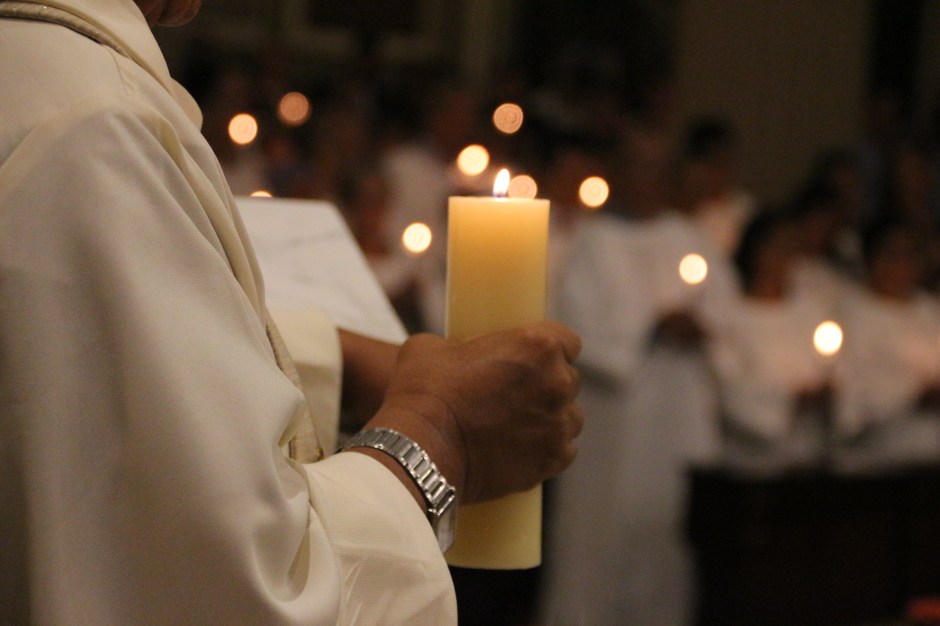
We wait in the dark around the Easter Fire, usually shivering in the early spring evening for the service to begin. We wait as the Paschal candle precedes us into a darkened church and our tiny candles gradually become a sea of lights punctuating the shadows. We wait for everyone to take their place before the lovely Exultet is proclaimed in song. And then finally we wait for the reading of the Gospel of the resurrection as the Liturgy of the Word “takes us by the hand” in the words of Benedict XVI and walks us through the whole trajectory of salvation history. If your parish proclaims all the readings for Holy Saturday Liturgy there will be seven Old Testament readings and one from the Epistles in the New Testament.
As these readings follow upon each other, one after another, I feel that in some way I take my place in the long centuries of creation waiting for redemption as I look through the “scrapbook” of memories and miracles, of suffering and assurance that is the heartbeat of the Liturgy of the Word of the Easter Vigil. Story after story is read from creation through the promise made to Abraham and the miraculous freeing of the Hebrew slaves as they raced across the path made by the Lord for them through the Red Sea, to the prophecies of how God has chosen Israel, making with them a covenant, inviting them to fidelity, through to God sorrowing over his unfaithful people to whom he promises a new heart and a new spirit.
Every baptized person stands in this arc of salvation, this mysterious longing of the Father’s heart for our return to him. We are baptized into Christ’s death and rise with him.
In the Easter Vigil, the readings assure us with the unmistakable echoes of a Father’s heart: “I love you. All of this was for love of you. I have always stood by my covenanted people and I will do so forever. I will stand by you. Even if you walk away. Even if you are weak and wobbly in your love for me, I will love you. You do not need to be afraid.”
And lastly, the community breaks out with joy as we celebrate the Baptisms of those who have waited many months of preparation. I always feel more complete as we welcome them among us, each of us holding them spiritually to our hearts.
If you have never been to an Easter Vigil, someday give yourself that gift. Don’t wait any longer!
Photo Credit: Cathopic, paulcamposraw
Palm Sunday (Audio Meditation)
Do not be afraid, I will fight for you: a meditation for calming anxiety
As Pharaoh drew near, the Israelites looked back, and there were the Egyptians advancing on them. In great fear the Israelites cried out to the LORD. They said to Moses, “Was it because there were no graves in Egypt that you have taken us away to die in the wilderness?” But Moses said to the people, “Do not be afraid, stand firm, and see the deliverance that the LORD will accomplish for you today.”
Then the LORD said to Moses, “Why do you cry out to me? Tell the Israelites to go forward. But you lift up your staff, and stretch out your hand over the sea and divide it, that the Israelites may go into the sea on dry ground.”
Exodus 14:10-11, 13-16
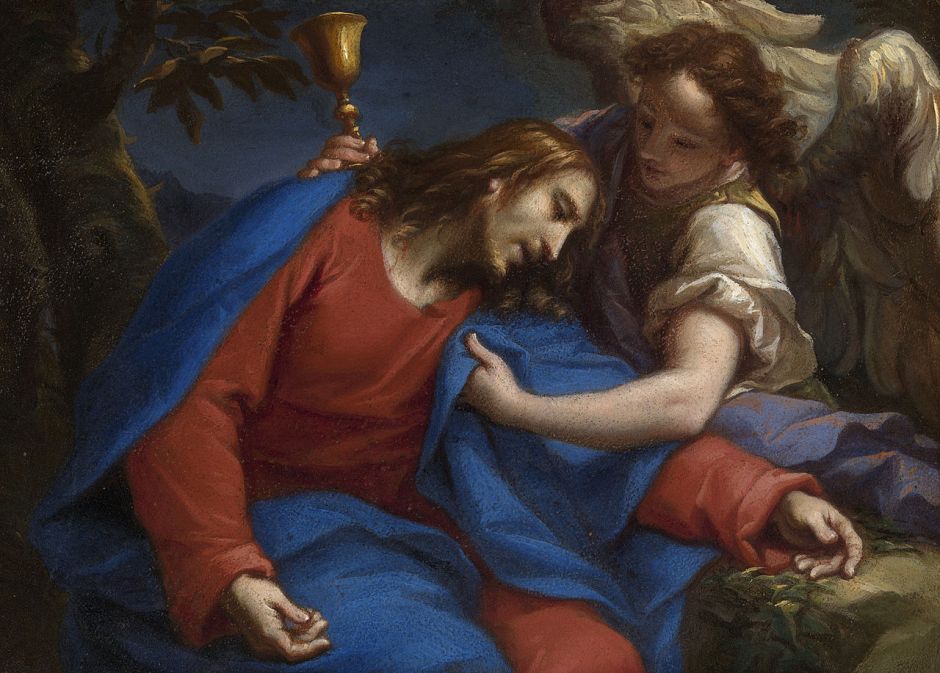
Jesus went with them to a place called Gethsemane; and he said to his disciples, “Sit here while I go over there and pray.” And going a little farther, he threw himself on the ground and prayed, “My Father, if it is possible, let this cup pass from me; yet not what I want but what you want.”
Matthew 26:36, 39
We live in a broken world in which bad things really do happen, and when they do, we feel trapped. We feel everything is beyond our control. There seems to be no way to save ourselves or provide for our loved ones. Think of the level of panic, the sleepless nights, the tears that are shed when there is not one dollar more to pay for groceries, or rent, or daycare.
Both the Israelites and Jesus in the garden of Gethsemane on the night before he died cried out in fear. It isn’t wrong to feel fearful and overwhelmed, especially in distressing circumstances. Feeling anxious is not wrong. The experience of being uncertain or anxious and stressed forces us to realize we aren’t in control. And thus we “cry out.”
Even though the Israelites cried out to Moses in anger that he had put them in this predicament, God stood firm in his promise to free them from Egypt. “The LORD will fight for you, and you have only to keep still.” And he did. When we are afraid, angry, and ready to blame someone for the predicament we are in. God is still faithful.
Jesus in Gethsemane shows us how to face our fear, to name it. He spoke directly to his Father about what he was most afraid of, and how he wanted out of the situation. But he also declared fear a liar when he said his Father would care for him, no matter what happened. Ultimately the Father didn’t save Jesus from crucifixion and death, but through it, Jesus killed death’s power, defeating it by dying himself, and then rising as victor over it. He conquered that which we most deeply fear: losing our lives. He did so to “deliver all those who through fear or death were subject to lifelong slavery”—you and me.
Jesus Lord, help me to face my fears, to name my fears, to bring you my fears. Just as you conquered death, help me to conquer all the things that keep me separated from you and your love. I hold to your promise of deliverance and know that even in my darkest moments you are there with me. Amen.
A reflective pause
Write or tell the story of a time in which you faced a distressing situation with anxiety and discovered that you became stronger or blessed through what you suffered.
To tuck in with you tonight
I am at peace, knowing your love is faithful.
by Sr Kathryn J. Hermes, FSP
Image: Francesco Trevisani, Public domain, via Wikimedia Commons
Fifth Sunday of Lent (Audio Meditation)
The anaphora of St Basil used in this meditation can be found in its entirety here: stelizabethorthodox.org/news/2020/3/2…sil-the-great
I will never ever forget you
In today’s first reading, the Servant of the Lord is announcing freedom to the Jewish exiles in Babylonia.
In a time of favor I answer you,
on the day of salvation I help you;
and I have kept you and given you as a covenant to the people….
There is no way to overstate the crisis the exile in Babylon was for God’s people. They had been deprived of homeland and had been stripped of everything that had given them their identity. There on the banks of the streams of Babylon they must have wondered how God could truly have been God if he had let the Babylonians defeat them, desecrate the temple, and force them to leave the land that had been promised to their ancestors Abraham, Isaac, and Jacob. Were they now forgotten by God? Would he ever remember them? Would he save them? Did God still love them? Could they ever trust the Lord again?
The conversations of the people of God in Babylon are similar to the conversations whispered in the homes where we’ve isolated far from our churches and from everything that had been “normal” about our life. We might have said with Zion: “The Lord has forsaken me, my Lord has forgotten me.”
Isn’t it too late now for God to show up, after loved ones have died, livelihoods lost, children affected by years of education interrupted? After millions across the globe have suffered indescribable loss.
The Jewish people in Babylon must have wondered also at this prophecy spoken by Isaiah:
Thus says the LORD:
In a time of favor I answer you,
on the day of salvation I help you;
and I have kept you and given you as a covenant to the people,
To restore the land
and allot the desolate heritages,
Saying to the prisoners: Come out!
To those in darkness: Show yourselves!
Along the ways they shall find pasture,
on every bare height shall their pastures be.
They shall not hunger or thirst,
nor shall the scorching wind or the sun strike them;
For he who pities them leads them
and guides them beside springs of water.
As we one by one continue to reshape our lives, we might wonder why the Lord didn’t “comfort his people and show mercy to his afflicted” by stopping the pandemic in its tracks before the damage across the globe had been done.
Our lament is as sorrow-filled and pitiful as the songs sung by the exiles who hung up their harps, refusing to sing the songs of Zion in a foreign land.
I hear such kindness in the final words of this first reading. God understands his people’s tears, their loss. He listens to the confusion and hurt of his people who, because of their infidelity to the Lord and their choices to align themselves with other nations instead of trusting in him, had been carried off into exile by these same nations. God doesn’t correct their theology with reminders about how good he is, how faithful, how he is ever present.
Instead, he evokes the image of tender love that is at the very foundation of every human life, an image that means warmth, safety, nourishment, a generous life poured out that a child might live.
But Zion said, “The LORD has forsaken me;
We say with them.
my Lord has forgotten me.”
Can a mother forget her infant,
be without tenderness for the child of her womb?
Even should she forget,
I will never forget you.
Take a deep breath, my friend, and allow yourself to share your true feelings and fears with God. Wail and rail if you must. Be honest with the Lord in every way. And then receive his arms that surround you with a mother’s love, this God who pours out his life and tenderness in absolute fidelity to us forever. Let these words wash over you again and again, “I will never forget you. Never. Ever. My child. I could never be without tenderness for you.”
Image Credit: Pixabay