The Gift of Fortitude – Maximilian Kolbe Martyr of Charity

In the last days of July in 1941 in Block 12 at Auschwitz, Germany, during World War II, a prisoner escaped. When he was not found after a thorough search, the other men of Block 12 were led out before commandment Karl Fritsch. The men trembled in fear. They knew the rule. If someone escaped, ten men would die as a consequence.

“The fugitive has not been found!” the commandant Karl Fritsch screamed. “You will all pay for this. Ten of you will be locked in the starvation bunker without food or water until they die.”

The ten were selected, including Franciszek Gajowniczek, who sobbed, “My poor wife! My poor children! What will they do?”

Quietly, a man with a long beard broke rank and stepped forward. He silently took off his cap and said, “I am a Catholic priest. Let me take his place. I am old. He has a wife and children.”

Astounded, the Nazi commandant asked, “What does this Polish pig want?”

Father Kolbe pointed with his hand to the condemned Franciszek Gajowniczek and repeated, “I am a Catholic priest from Poland; I would like to take his place, because he has a wife and children.” Amazingly, Fritsch granted Kolbe’s request. Franciszek Gajowniczek was returned to the ranks, and the priest took his place.

Gajowniczek later recalled: “I could only thank him with my eyes. I was stunned and could hardly grasp what was going on. The immensity of it: I, the condemned, am to live and someone else willingly and voluntarily offers his life for me – a stranger. Is this some dream?” (http://auschwitz.dk/Kolbe.htm)

Father Kolbe was thrown down the stairs of Building 13 along with the other victims and left there to starve. As the men grew weaker from starvation, Maximilian Kolbe encouraged them by saying prayers, singing psalms, and offering meditations on the Passion of Christ. After two weeks, the cell was needed for more victims, and the camp executioner, a criminal called Bock, came in and injected a lethal dose of carbolic acid into the left arm of each of the four dying men. Kolbe was the only one still fully conscious and with a prayer on his lips, he raised his arm for the executioner. On August 14, 1941 at the age of forty-seven years, Maximilian Kolbe died, a martyr of charity.

Maximilian Kolbe’s act of offering his own life was truly heroic, and certainly not a choice many would make. In the history of Auschwitz no one before Kolbe and no one after is known to have done the same. To offer one’s life for another is not the expression of a universally binding moral norm. Every man standing there that day was not obliged by any law to do what Maximilian did. However, Maximilian Kolbe felt the Holy Spirit at work within him, urging him to give his life for another as Jesus had. His action expressed who he was as a Catholic priest as well as who Christ was for him. By remaining safely in line that day, breathing a sigh of relief that he had not been chosen for the starvation bunker, Kolbe would have broken no commandment. Nevertheless, the Holy Spirit was asking him an extraordinary act of charity and Kolbe said yes.

The gift of fortitude is a special supernatural habit by which the Holy Spirit strengthens the soul for the practice of virtue, with the energy and confidence of overcoming all difficulties may arise. It is an instinctive interior impulse that proceeds directly from the Holy Spirit by which we practice virtue so that with perseverance these acts will spring from the soul with energy, promptness, and perseverance. I know how my energy and promptness in practicing at least some of the virtues comes and goes depending on who is asking and how I’m feeling that day and how much effort it’s going to take and what I’d rather be doing. For those who practice virtues continually with perfection, this perseverance requires the active operation of the gift of fortitude.

Pope Francis has said that for most of us the gift of fortitude will be exercised in our patient pursuit of holiness in the circumstances of our daily lives. It doesn’t take a lot of imagination to list the difficulties that plague people’s daily lives. I am forever in awe of people who have been dealt a difficult “deck of cards” and yet live with a joy and selflessness I can only hope one day to attain. Through the gift of fortitude we receive the strength to do God’s will in spite of our own natural weakness and limitations. The Holy Spirit through this gift helps us to overcome our weakness and confers an extraordinary readiness to undergo trials for love of God or in fulfillment of the divine will.

The gift of fortitude brings to those who have it a dauntless spirit of resolution, firmness of mind, and indomitable will to persevere with a quiet faith in God’s providence that overcomes all obstacles:

  • It makes us courageously willing to stand up for what is right in the sight of God even when we will face rejection, abuse, persecution, physical harm and death in doing so. Think of St Thomas More.
  • It gives us unusual courage in bearing difficulties even for many years. Think of St Gemma Galgani.
  • It gives us steadiness of mind and firmness of spirit in bringing arduous tasks to completion. Think of St John Paul II.
  • It helps us persevere in a lifetime of fidelity to our vocation despite heavy trials or disappointments sent by God. Think of St Theresa of Calcutta.
  • It also brings courage to persist in the practice of virtue despite trials, illness, persecution or external failure. Think of St Joan of Arc.

Here are two habits you can develop that will strengthen the gift of fortitude.

  • Daily throw yourself into your duties and difficulties with trust in God, perseverance, and a joyful determination to complete them with as much love as you can. When we practice fortitude on a daily level, we can be sure that the Holy Spirit will assist us when only the gift of fortitude will help us be faithful disciples of Jesus.
  • None of us escapes the cross. Sometimes it is lighter than at others. We also bear the burdens of others as they accept the crosses they carry in life. Our hearts can complain about these seeming obstacles to happiness and freedom. We can demand the cross be taken from us. Here the familiar saying comes to mind: Do not ask that the cross be removed from you but that you be given the strength to bear it. As we embrace the smaller crosses in our life, the Holy Spirit will give us the grace of the gift of fortitude, giving us the energy and joy to walk through life with perseverance and greatness of soul.

Prayer

O Holy Spirit! I too have been given a mission, a mission that unfolds each day in your requests for my courageous yes to all you ask of me, to all you give me. Make me faithful in the small things so that when the greater moments of decision come to me I will be ready to respond always, “Yes.”


God Knows What He is About

“God is in control and has a reason for everything, even if we don’t see it right now.”

I must confess this was at one time the way I made dealt with suffering in my life and it still is. How I made sense of life in my twenties and how I make sense of it in my sixties, however, is very different.

What has made that difference? I guess there have been many things, but the game changer has been, surprisingly, a tiny three-chapter book found in the Old Testament. The book of Ruth.

During a time of famine, Naomi and her husband Elimelek and her two sons left Bethlehem and went to live in Moab. There her two sons married the Moabite women Ruth and Orpah. Eventually Elimelek and her sons died. Hearing that there no longer was famine in Judah, Naomi determined to return to Bethlehem.

Naomi says these arresting words to Ruth and Orpah as she returns, “The Lord’s hand has turned against me!” (v 11) She acknowledges her bitterness and the dismal future that awaits her without any sons to care for her.

At the same time, earlier in her conversation she says to her daughters-in-law who were accompanying her back to Judah, “May the Lord show you kindness, as you have shown kindness to your dead husbands and to me. May the Lord grant that each of you will find rest in the home of another husband” (v 8, 9).

Naomi could acknowledge her bitterness, state exactly what she felt God was “doing to her,” and in the same breath call upon the Lord to bless others.

With all that Naomi had suffered and through all the hopelessness that awaited her she still thought of others and reached out to them in love.

With all that she had suffered and through all the hopelessness that awaited her she still thought of others and reached out to them in love. She was not swallowed up in bitterness.

Regardless of how she believed God was treating her, she still prayed.

Naomi isn’t one of the biblical heroes like Abraham or Moses or King David or Peter or Paul. She is just an ordinary woman with an ordinary life doing the next best thing. She lives simply in the delicate and beautiful web of salvation that is being spun through God’s providence in all the world. Everyday decisions are used by God as, unbeknownst to her, he accomplishes the mystery of salvation, and her tender story sets the stage for events of biblical proportions.

Here’s what I learned from Naomi:

  • God has a plan and nothing can stop that plan. God’s plan is much larger than our own individual lives, and yet our personal lives are of immense importance in the larger plan.
  • Sometimes it is nice to do a discernment about God’s will. But most of the time, we, like Naomi, only have the possibility of doing the next right thing, the next act of love for someone else. Each of those seemingly insignificant decisions are part of the unfolding of God’s providence for the coming of the Kingdom. Our life is of immense value.
  • Love is really important.
  • I don’t know the plan, but God does.
  • Keep praying. Keep believing. Keep talking. Keep loving.

Daily living is the theater of God’s glory. Though we don’t know the story line entirely, we do know that the Author of Salvation uses everything to bring the world to its final end, communion with God.

Naomi had no way of knowing that through all the micro-decisions of her life, the seeming failure, the bitterness and the determination, her daughter-in-law Ruth would end up being named in the genealogy of Jesus as the great-grandmother of King David (Mt. 1:5-6).

God knows what he is about and that is enough for me.

The Gift of Counsel – A new season of your life…

“Get ready, Kathryn. A new season of your life is about to begin….” I heard those words about five years ago when I took refuge in the chapel after a particularly difficult experience. Actually, it wasn’t the first time I had heard those words whispered in my heart by God or experienced a changing season of life.

Twenty years ago, to identify one of these transition periods, everything was going wrong in my work in the mission, everything blocked by another I was working with. For a year I seemed to be treading water…or more accurately I was sinking. However, I remember speaking with my spiritual director at the time saying to my surprise, that as useless and counterproductive as the experience was, I also had a sense that everything was exactly as it should be. I couldn’t explain it. It made no sense. But a part of me was crying out to God that he certainly would do much better in evangelizing the world if the situation were different. Another part of me sank beneath his mighty hand and blessed him for my undoing.

Remember a time when circumstances left you confused, deflated, angry, unsure of the best way forward? It takes a lot of prudence to reason out the best steps to take, which options to choose, the most effective words you could say…. Without realizing, we could make these decisions based on what is fair, or what we feel, or what we want for ourselves. When we are hurt we can strike out at another even as we think we are responding virtuously.

When we need more than our own devices to understand what is happening in particular events in our life or judgments we need to make, it is the Holy Spirit’s gift of counsel that comes to our assistance. The gift of counsel operates under the impulse of the Holy Spirit, not according to what makes the most sense or is the most comfortable or gives us the most pleasure. The Holy Spirit can lead us to do or say or desire things for which our reason could never explain. Thus, even though the surface of the situation would seem to warrant an angry response that would set things straight for the improvement of the mission, there was a voice within me that said, “Get ready, a new season of your life is about to begin.” A season of contradiction and newness and loss and surprising transformation. A good season….

Sometimes a judgment is required that is beyond us at the time. Perhaps we don’t know how to combine firmness with mercy or there seems no way for us to guard a secret and at the same time meet the obligation of telling the truth. We might be responsible for other people and it is often difficult to know what is best for them. At times we don’t have time for sufficient research or reflection before a decision must be made. It is at times such as these that we want our decision to be the result of the operation of the gift of counsel.

So what habits in daily life will help us grow in responsiveness to the voice of the Spirit who is the Guest of our soul? Incorporate these two qualities of heart and you will prepare your soul for the more intense activation of the gift of counsel in your life:

  • Develop the habit of speaking directly to the Holy Spirit, telling him that you don’t know what to do, which option is best, how to most effectively address another or a situation. And then beg the Holy Spirit for light and guidance. Begin to admit that despite every good intention and all our talents and gifts, in some circumstances only the Holy Spirit can bestow on us the wisdom we need to decide aright. We cannot snap our fingers for the Spirit’s guidance. We often will need to wait upon the Lord with patience and humility.
  • Observe your experience when you are attached to your own judgments. St. John of the Cross in his Spiritual Maxims advises us: “Renounce your desires and you shall find that which your heart desires. How do you know if what you desire is according to God?” Notice how you experience is different when you act under the impulse of the Spirit. What is different? What are signs that tip you off that you are following your own judgments, and signs that indicate that you are obeying the Holy Spirit, moved by the gift of counsel? These can help you correct your path mid-stream so that you more frequently are seeking to please the Spirit.

Prayer

O Holy Spirit, I adore you present in my soul. I need you. Guide me. Show me the way to please the Father. Counsel me. Give me a wisdom beyond what I can figure out on my own. I promise to obey you. Only let me understand your will. Amen.

Pin Pricks and Pet Peeves

https://www.podbean.com/media/share/pb-5rfq4-140edcd

We’ll be addressing the million-and-one pin pricks that we receive and give to others every day. Though these aren’t dramatic or traumatic in themselves, when not attended to they can lead to drama and trauma and to the need for forgiveness in order to restore peace in a relationship.

When minor annoyances are not addressed over time, they can have serious effects on a relationship. The way someone who lives or works close to us chews, or piles things on their desk, or hums while they work, or leaves the newspaper on the table, or insists on giving their opinion rather categorically about just about everything, can make us feel misunderstood, not appreciated, unimportant. And we so often do things that make others feel the same way or worse.

Here are some practices you can develop that will keep those pet peeves from ruining your day and your relationships.

I hope you stay in touch. Sign up for my newsletter here: https://touchingthesunrise.com/newsletter/


Surprised by the Kingdom of Heaven (Matthew 13:44-52)

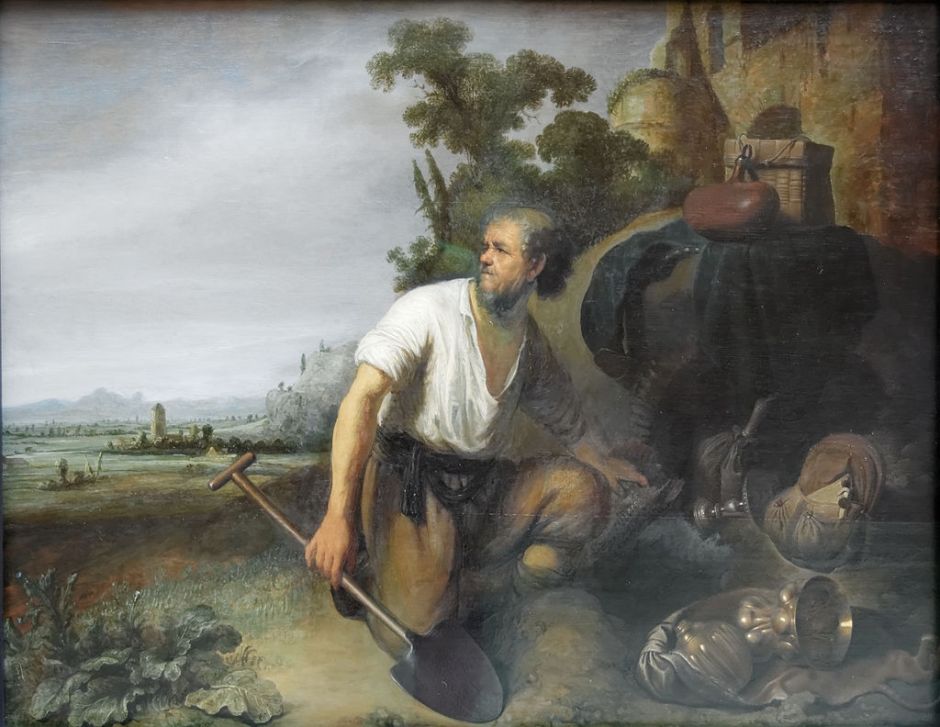
Every few years or so the discovery of lost treasure troves makes the news. As technology has improved it has become more common that gold coins, gemstones and priceless jewels worth millions of dollars are found in sunken ships that hundreds of years ago once sailed the seas. Using metal detectors people stumble upon hidden bags of coins, and buried religious artifacts and decorative items in fields, caves and excavations. Finding lost treasure requires a lot of persistence, technology, research, financial outlay, and luck.

In the Gospel, however, Jesus tells us that we don’t need special technology nor even a lot of planning and effort to find the Treasure of all treasures. We don’t need to dive to the bottom of the sea or scout out caves or investigate archaeological digs to find the kingdom of heaven.

“The kingdom of heaven,” Jesus said, “is like a treasure buried in a field.”

I remember the day almost 20 years ago when I first heard Jesus’ voice in my heart—not an inspiration, but a quiet voice. I was monitoring the front desk of our motherhouse and was taking advantage of the time to read for a paper I had been assigned on the Gospel of John in the homilies of St. Augustine. There were a couple hundred pages to wade through, but that day, in one moment, one particular line shone out like a treasure and caught my attention. Years of struggling with powerful temptations had deadened my heart to hope that I could ever be good enough for God to love me. Just as Augustine was converted by reading one verse of Scripture, in one sentence I felt that God saw me, just as I was. That he knew me through and through with nothing hidden from him. I felt like there was someone else in the room looking at me, so I looked up to see who else was in the room. There was no one there. As I continued reading I felt again that there was someone gazing at me but now from within my soul, eyes that pierced and loved at the same time. Then I heard the voice: “It doesn’t matter. It doesn’t matter if you ever fix yourself and become perfect with regard to this temptation. Just keep looking at me, and letting me look at you. If you just allow us to look at each other, continually, trustfully, always, I will take care of it for you.” We all know when we’ve heard a voice by which we seem to touch the kingdom of heaven. We are pierced by the truth and often are given the gift of tears. We become attentive. We are filled with joy. We want more of what we have received. We would give everything to possess this treasure of treasures always.

“The kingdom of heaven,” Jesus said, “is like a treasure buried in a field.” This statement would have been very familiar to Jesus’ audience. Since at that time there were no banks as we know them, people would keep their “treasure” safe by burying their valuable possessions in the ground.

To the people listening to this parable, walking through fields was something they did every day. It was such an ordinary event that there would have been nothing special about a field. It would be as if Jesus said  to us today: “The kingdom of heaven is a like finding a bag of a billion dollars accidentally along a sidewalk.”

I can imagine that Jesus sparked their attention with this parable and they would have had all kinds of questions: How do we know in which field the treasure has been stashed? What are the telltale signs that a treasure has been buried in a certain place? How can I be more attentive so I don’t miss the treasure? These questions turn the discovery of the kingdom into a plan.

Isn’t it true, however, that we often find the most precious things in life by accident? We stumble upon them, and they seize our imagination and steal our hearts!

The kingdom of heaven surprised me that day at the motherhouse when I heard his voice. The words of the Lord have become a touchstone in my life, a treasure by which I measure all other treasures.

“The kingdom of heaven is like a treasure buried in a field,
which a person finds and hides again,
and out of joy goes and sells all that he has and buys that field.”

In this parable, Jesus is telling us five things about the kingdom of heaven:

  • the kingdom of heaven is the most valuable of treasures, the treasure of treasures
  • the kingdom of heaven is hidden in our midst, we’ll find it in the ordinary places of our life where we often forget to look
  • the kingdom of heaven will surprise us as we go about our daily life—it is a gift
  • the kingdom of heaven is a treasure so wonderful that the joy of having discovered it makes every sacrifice to possess it well worth it
  • the kingdom of heaven costs everything because it radically changes our lives and our loves.

The kingdom of heaven is here, right in our midst, ready to surprise you. If you find it, sell all you have to possess it. You will not be sorry.

Praying with this passage of Scripture

Lectio Divina is a way of listening to God as he speaks in his Word. It is a practice of communicating with God through Scripture and attending to God’s presence and what he wishes to tell us. In this slow and prayerful reading of the Word of God, we allow ourselves to be transformed by the Spirit who forms us into the image of Christ.
There are four movement in Lectio Divina: Read (lectio), Meditate (meditation), Pray (oratio), Contemplate (contemplation).

Begin by finding a still space to pray. Breathe deeply and become quieter within. Abandon any agenda, worries or thoughts you bring to this prayer and entrust these things to the merciful care of God. Ask for the grace to be receptive to what God will speak to you through this Scripture reading. Grant me, Jesus Divine Master, to be able to know the mysteries of the kingdom of God and your unfathomable riches. Grant that your word penetrate my soul; guide my steps, and brighten my way till the day dawns and darkness dissipates, you who live and reign forever and ever Amen.

Read (lectio)
Begin by slowly and meditatively reading your Scripture passage out loud. Listen for a particular word or phrase that speaks to you at this moment and sit with it for a time.

“The kingdom of heaven is like treasure hidden in a field. When a man found it, he hid it again, and then in his joy went and sold all he had and bought that field.

“Again, the kingdom of heaven is like a merchant looking for fine pearls. When he found one of great value, he went away and sold everything he had and bought it.

“Once again, the kingdom of heaven is like a net that was let down into the lake and caught all kinds of fish. When it was full, the fishermen pulled it up on the shore. Then they sat down and collected the good fish in baskets, but threw the bad away. This is how it will be at the end of the age. The angels will come and separate the wicked from the righteous and throw them into the blazing furnace, where there will be weeping and gnashing of teeth.

“Have you understood all these things?” Jesus asked.

“Yes,” they replied.

He said to them, “Therefore every teacher of the law who has become a disciple in the kingdom of heaven is like the owner of a house who brings out of his storeroom new treasures as well as old.”


Meditate (meditatio) – Read the same passage a second time. As you re-engage the text, let the word or phrase that stood out become your invitation to speak from your heart with God who wishes to share his heart with you. Allow this word or phrase to wash over you and permeate your thoughts and feelings. You may wish to repeat this phrase quietly and gently for a period of time.

Pray (oratio) – Read the text a third time. Listen for what God is saying to you. Speak heart to heart with God. Notice the feelings that this conversation with God raises up within you. Share with God what you notice about your response to this conversation. You may wish to return to repeating the phrase quietly and gently, allowing it to permeate you more and more deeply.

Contemplate (contemplatio)
Read the text a final time. Now be still and rest in God’s embrace. Ask God to give you a gift to take with you from this prayer. You might ask God if he is inviting you to do some action, for instance, make some change in your thoughts, attitudes or reactions, in the way you speak or how you treat others. Thank God for this gift and invitation as you conclude your prayer.

Image Credit: Possibly Rembrandt, CC BY-SA 3.0, via Wikimedia Commons