You have been made for a purpose greater than you can imagine (Acts 9)

Paul had no way of knowing when he awoke on the day he planned to descend on Damascus and take the followers of Jesus captive in order to put them into prison, that he himself stood on a threshold….

No way of knowing that he himself that day would be taken captive, that he would be captured and captivated by the One for whom he would live the rest of his life….

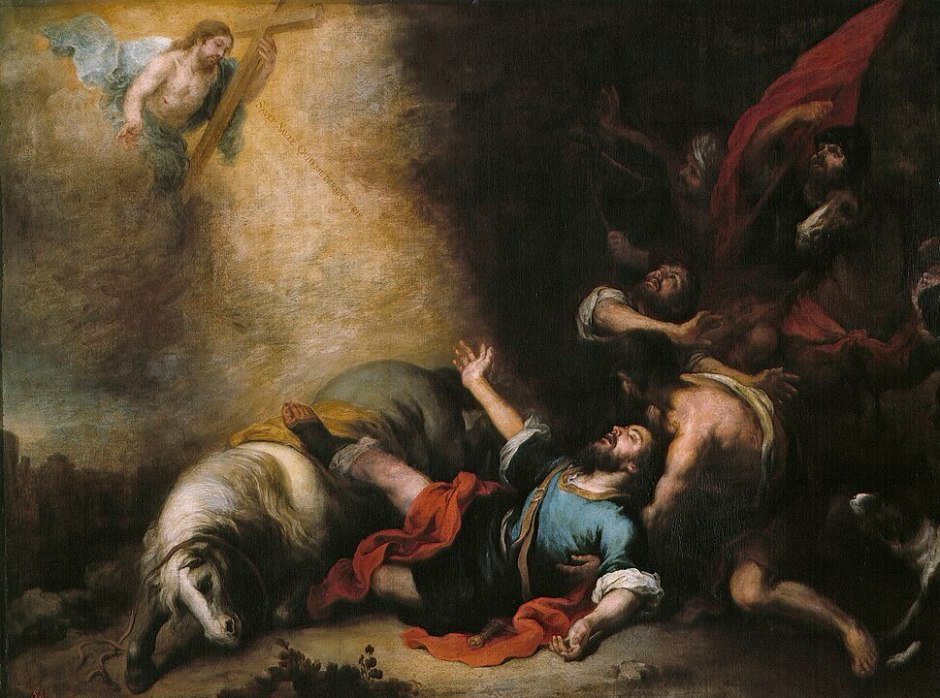
There in the dust on the outskirts of Damascus, radiant light all around him, his eyes in darkness, confusion swirling in his heart, he was uprooted from one life and planted in another. His response, “Lord, what would you have me do?” closed one era of his life and ushered in another.

Transition moments are rarely neat. They aren’t pretty. Sometimes they don’t even make sense. Paul’s conversion which we celebrate in the liturgy on January 25 appears quite dramatic and immensely important in hindsight. We’ve witnessed for 2000 years how the life and teaching of this greatest of apostles has transformed the Church and powerfully influenced the world.

I am sure, however, that as Paul reached out for help as he stumbled to stand up and as he was led by hand just like a child into the very city his arrival had been a day earlier such a cause for alarm, it was far from glorious. With every humiliating and faltering step into the city of Damascus, Paul was no doubt met with the comments and astonished jeers of bystanders.

When we are done with being captivated by our great plans and our stunning ideas and surrender to the Lord who takes us captive through similar not-so-pretty situations, we also are at a threshold in our lives. And this moment can seem equally inglorious. It can be difficult to cherish the hope that the closing of a door is offering the hope of a future ripe with new possibilities.

At these moments, remember this: You like Paul have been made for a purpose greater than anything you could think of. You like Paul have been made for something far more than this world. After that meeting with Jesus on his way to Damascus, Paul didn’t just change his behavior, or his goals, or his way of behaving, or what he was doing. Paul allowed God to pull him up into his own mighty mystery and unfolding selfless loving of the world.

After his “conversion” Paul belonged entirely to God, but he also finally belonged most truly to himself. He now knew deeply the reason for which he had been born. His joy grew from strength to strength, even in suffering and weakness, as he discovered every day how glorious it is to be remade in the image of Christ for the glory of God the Father. This is the promise held out to each of us as we celebrate this feast in the Church. 

Praying with this Passage of Scripture

Lectio Divina is a way of listening to God as he speaks in his Word. It is a practice of communicating with God through Scripture and attending to God’s presence and what he wishes to tell us. In this slow and prayerful reading of the Word of God, we allow ourselves to be transformed by the Spirit who forms us into the image of Christ. There are four movements in Lectio Divina: Read (lectio), Meditate (meditation), Pray (oratio), Contemplate (contemplation).

Begin by finding a still space to pray. Breathe deeply and become quieter within. Abandon any agenda, worries or thoughts you bring to this prayer and entrust these things to the merciful care of God. Ask for the grace to be receptive to what God will speak to you through this Scripture reading. Grant me, Jesus Divine Master, to be able to know the mysteries of the kingdom of God and your unfathomable riches. Grant that your word penetrate my soul; guide my steps, and brighten my way till the day dawns and darkness dissipates, you who live and reign forever and ever Ame

Read (lectio)
Begin by slowly and meditatively reading your Scripture passage out loud. Listen for a particular word or phrase that speaks to you at this moment and sit with it for a time.

Meanwhile, Saul was still breathing out murderous threats against the Lord’s disciples. He went to the high priest and asked him for letters to the synagogues in Damascus, so that if he found any there who belonged to the Way, whether men or women, he might take them as prisoners to Jerusalem. As he neared Damascus on his journey, suddenly a light from heaven flashed around him. He fell to the ground and heard a voice say to him, “Saul, Saul, why do you persecute me?”

“Who are you, Lord?” Saul asked.

“I am Jesus, whom you are persecuting,” he replied. “Now get up and go into the city, and you will be told what you must do.”

The men traveling with Saul stood there speechless; they heard the sound but did not see anyone. Saul got up from the ground, but when he opened his eyes he could see nothing. So they led him by the hand into Damascus. For three days he was blind, and did not eat or drink anything.
(Acts 9)

Meditate (meditatio)
Read the same passage a second time. As you re-engage the text, let the word or phrase that stood out become your invitation to speak from your heart with God who wishes to share his heart with you. Allow this word or phrase to wash over you and permeate your thoughts and feelings. You may wish to repeat this phrase quietly and gently for a period of time

Pray (oratio)
Read the text a third time. Listen for what God is saying to you. Speak heart to heart with God. Notice the feelings that this conversation with God raises up within you. Share with God what you notice about your response to this conversation. You may wish to return to repeating the phrase quietly and gently, allowing it to permeate you more and more deeply.

Contemplate (contemplatio)
Read the text a final time. Now be still and rest in God’s embrace. Ask God to give you a gift to take with you from this prayer. You might ask God if he is inviting you to do some action, for instance, make some change in your thoughts, attitudes or reactions, in the way you speak or how you treat others. Thank God for this gift and invitation as you conclude your prayer.

Image: Bartolomé Esteban Murillo, Public domain, via Wikimedia Commons

The Baptism of Jesus and The Kingdom Meditation (Horizons of the Heart 31)

The grace we are asking of God: to discover Jesus in my own personal story so that my personal myth may be transformed in Jesus, as was that of Ignatius, that I will be disposed to hear God’s call and follow it wholeheartedly

Horizons of the Heart is inspired by the Spiritual Exercises of St Ignatius and my own notes from my thirty-day Ignatian retreat in 2022. See an index for the whole series.

In the Kingdom Meditation found in the Spiritual Exercises at the beginning of the second week, we encounter Ignatius’ transformation, that is, we enter into the way the personal “this-world” myth of his life was transformed and purified and exalted by Jesus.

What do we mean by one’s personal myth? We each have a personal myth created by energies that give direction, potency and meaning to our lives. They are created from stories we listened to as children, role models who influenced us in powerful ways, songs we sang, images from movies, games we played, stories we read, historical events we lived through. All these coalesce in our psyches and imaginations into powerful imagery and archetypes that express the desires and dreams we have for our lives. The images and stories that express these dreams we can call a “myth.” So there are personal myths, but from this description we can easily see that there are also national myths, myths for the community we associate with, religious myths.

Ignatius of Loyola was born into a Spain on the verge of being united under one king. The nation was galvanized by the dream of finally experiencing itself under one flag, one king under God. The dream that the whole world would be Christian gave energy to explorers who would venture to new lands to claim them for Spain and for Christ. Ignatius of Loyola’s personal “this-world” myth was created from these experiences, stories, and images that galvanized him as a soldier. He embodied the culture of chivalry and fought with his liege lord to conquer lands for his king and God.

In the Kingdom Meditation, as it is presented in the Spiritual Exercises, Ignatius presents us with a soldier’s story or dream of “myth,” because that was what was an understandable way of envisioning one’s life at that time. It would be an outrage for a soldier to refuse to join a temporal king, to fight alongside him, eat what he eats, suffer what he suffers, and share in his triumph, for the sake of the country and of God. This was the myth that at the moment of Ignatius’ conversion was transformed and gave him energy to devote himself now to Jesus as the Eternal King whose dream was to conquer the world with love. This dream of Jesus conquered his heart and soul, so that no longer was he mesmerized by dreams of chivalry and military success, but was taken up by dreams and desires of doing great deeds for the Lord Jesus Christ in service of the Divine Majesty.

We each have a personal myth that Jesus desires to transform so that we too are drawn into his dream and desires for the loving salvation of the world. Myths are usually unconscious, yet they express a set of values, energies, dreams, meanings, insights that give energy and focus to our lives.

Ignatius’ myth rooted in the imagery of a soldier—or analogously a hero, or a queen, or a lover—may not speak to you and I, but it is a profound example of the powerful things that can happen in our life when we allow our own personal myth to be transformed by Jesus. The life and writings of Saint Ignatius of Loyola have influenced and led to the transformation of hundreds of thousands of lives. The meditation on the Baptism of Jesus can be that space in which we discover for ourselves how Jesus reveals God’s dream for the world and where we fit into that dream: “Behold my Son in whom I delight. Listen to him.” In other words, meditating on the Baptism of the Lord can help us raise to consciousness our own myth so that it can be transformed by Jesus. In the Baptism of Jesus we see Jesus revealing to us God’s dream for the world.

Exploring One’s Deepest Dreams

In this meditation we are going to take some prayerful time to explore our deepest dreams and hopes about ourselves in the form of an image or a story or an insight. You might begin by praying with these questions:

  • What images give me life? Are the images that have given me life up to this point in some way no longer sufficient or meaningful as I look at the future of my life as it is unfolding now?
  • When I think of what I want to be remembered for in life, what is the image or story that encapsulates this?
  • What dreams for myself capture what I wish I could be in the next decade of my life?
  • If I could take my deepest desire and vision for the world and draw a picture of it or express it in a quote or insight, what would it be?
  • When I look out at the world today what to me would be an absolutely wonderful change I’d like to see?

Personal Myths May Be Transformed Over Time

In times of transition in our life, such as a change of career, mid-life changes such as children leaving home or retirement, moving to a new location, or a shift in our personal values as we enter a new stage of life, our personal myth may undergo a transformation. So myths are flexible, open to the movement of the Holy Spirit and of grace. We could consider, for example, how the dreams of Mary and Joseph for the birth and early childhood years of Jesus had to be refashioned by the political situation in which they lived. Or how the image Jesus had of his life at Nazareth where it was just his mother and himself may have shifted at age thirty with his Baptism and the beginning of his public ministry. Jesus himself didn’t pivot to something new, but as he entered a new stage of his life and ministry as Savior and Redeemer, the images, dreams, and values shifted in a certain sense, giving him the impetus to enter into public ministry with all that this would entail. In what way has your sense of meaning, your dreams or myth shifted through the different eras of your life? Do you feel the Spirit prompting you to something new or to deepening something old?

Some examples: As I look out on the world today I have been inspired by this quote from Scripture: “”The banquet is ready. Go and tell everything that ALL IS READY” (see Mt. 22) Of course, this speaks to the ministry of a Daughter of St Paul, however while in my earlier years I lived my mission through the stance of teaching, now I live it through love. I stand, in an image given to me by our Founder, along the highways and byways of the world pointing out the way to heaven, where the banquet is ready, and the Eucharist, where the banquet can be tasted even now, while blocking the way to perdition with my whole being: through a contemplative way of life immersed in God, in dipping into the heart of Jesus the Savior the “pen” with which I write, living the urgency of love in my mission on my knees.

Others I know have found their myth embodied in the image of a sunflower which turns so that it constantly faces the sun, an image in the spiritual life of dependence on God and obedience to his will. Early on in religious life the focus could be on the virtue and vow of obedience. Later the emphasis may be on living prophetically and contemplatively God’s dream for the salvation of all.

Take some time to attend to your own personal myth.

Who Will Join Me?

Your myth, the image or story that will give energy and desire to your choices in life are a call to join Jesus, to be his companion for the sake of the world. At his Baptism in the Jordan, Jesus made holy the waters of all the baptismal fonts in every church till the end of time. He began at that moment in a particular way to reclaim us as the Father’s children, as his brothers and sisters and co-heirs. He began his journey that would culminate with his giving himself to us at the Last Supper in the Eucharist, his passion and death, and his resurrection and ascension. We too in Baptism would die and rise with him, would live in him and he in us.

Giotto Scrovegni Baptism of Christ, public domain.

Jesus stands at the Jordan, we could say, looking at each of us and asking, “Who will join me? Who will live as I live, struggle as I struggle, give as I give, love as I love, suffer as I suffer, and triumph as I triumph?”

Allow yourself to enter into the mystery of Jesus’ Baptism. What of the reflections in this article have touched you most deeply?

Jesus’ invitation is about helping you become more aware of the need for a great and generous spirit as he brings us into a mission that is greater than ourselves. Jesus is willing to sacrifice everything for the good of the people he loves and has come to save. He reaches out for others who will be willing to be with him in this mission. Jesus doesn’t ask if you are smart, if you are prepared, if you are holy. He simply asks: “Will you join me?”

This deeper contemplation of Jesus in the Gospels is an apprenticeship of our feelings and senses in which we are formed in such a way that we feel with Jesus, that our feelings becomes those of Jesus, and our spontaneous reactions of personal promotion and self-protection are gradually curbed and re-invented so that we spontaneously react as Jesus does.

Entering into the mystery of what we contemplate, we humbly allow Jesus to be our Master, to educate our senses and feelings according to the pattern of his own life and teachings. It is a matter of becoming saturated with Jesus’ own way of being and feeling. It is learning how to resonate with everything Jesus resonates with, as we gain this felt understanding through our contemplation, and of rejecting whatever Jesus rejects.

To stand with Jesus and to respond to his invitation to join him in will place a person squarely in the midst of the battle for the Kingdom of God against the forces of evil present in the history of the world. Suffering and struggle and hard labor will precede the fullness of God’s glory and Jesus’ triumph over all his enemies.

To follow Jesus is to take seriously his teaching, his example, and the powerful gift of his life and grace in us. Joining Jesus is a commitment to his plan for our own lives but also for the salvation of the world.

Talk with Jesus about this invitation and what you realize it will demand of you. Talk to him about what you are feeling, fearing, desiring.

Ignatius proposes an even deeper expression of commitment for those who feel a greater sense of identification with Jesus and wish to commit themselves even more in joining him. These are his words:

Those who wish to give greater proof of their love, and to distinguish themselves in whatever concerns the service of the eternal King and Lord of all, will not only offer themselves entirely for the work, but will act against their sensuality and carnal and worldly love, and make offerings of greater value and of more importance in words such as these:

Eternal Lord of all things, in the presence of your infinite goodness, and of your glorious mother, and of all the saints of your heavenly court, this is the offering which I make with your favor and help. I protest that it is my earnest desire and my deliberate choice, provided only that it is for your greater service and praise, to imitate you in bearing all wrongs and all abuse and all poverty, both actual and spiritual, should your most holy majesty deign to choose and admit me to such a state and way of life” (L.J. Puhl, The Spiritual Exercises of St. Ignatius (Chicago: Loyola University Press, 1951), Sections 97-98).

As you kneel before Jesus what is the commitment you wish to make to him at this time.

Reviewing the Graces of Prayer

When you finish praying, write down the main gifts and discoveries from this time of intimate contemplation. What is one concrete thing you can do to solidify these gifts in your life.

Featured image: ilragazzoconmoltafede-Apostolada de la Palabra from Cathopic

The Heart of Jesus we don’t yet know….

“In your life you have also given me birth. I am grateful to you for that.” Words heard in my heart during the Christmas Octave.

Me? Really? I asked. When? How? You? My Infant King?

Jesus’ words, his gaze, it was piercing, sweet, simple.

Is it true?

Imagine the angels bowing to you in gratitude for the way you extend Jesus’ Incarnation even now.

Name 3 moments in your life when you have loved, given, rescued, been a refuge for someone, or brought light that gave another freedom or relief or joy… Moments when you have shed on someone’s path light, hope, peace, delight….

Only Jesus knows what that gift of yours led to… how Jesus was born in someone’s soul because of the perhaps ever-so-small gesture of presence that you once offered another….

A smile through tears, a flash of hope, a first prayer, conversion, return to the practice of the Faith, a whispered prayer moments before meeting their Maker… We never know, but Jesus remembers how you have made him present to someone he was eager to encounter, how you gave him birth in the world today.

Receive now this gratitude of his Heart: “You also have given me birth on earth. I am grateful to you for that…” Taste the thoughts, movements of your heart, memories, desires… Hold them close to your own heart. Remember that in the heart of Jesus, this is how you are seen, this is how you are loved.

Image: rastellimelina from Cathopic.

Baptism of Jesus: Who Will Join Me? (Horizons of the Heart 30)

The grace we are asking of God: to discover Jesus in my own personal story so that my personal myth may be transformed in Jesus, as was that of Ignatius, that I will be disposed to hear God’s call and follow it wholeheartedly

Horizons of the Heart is inspired by the Spiritual Exercises of St Ignatius and my own notes from my thirty-day Ignatian retreat in 2022. See an index for the whole series.

It is through our senses that we feel the ‘touch’ within the heart (Exx 335), and then the heart expands in feelings of happiness, peace and serenity, and in a renewal of spiritual strength, along with desires to ‘move forward’ (Exx 315, 329) (Imitating Christ our Lord with the Senses: Sensing and Feeling in the Exercises: Antonio Guillen (The Way, 47/1-2 (Jan/April 2008), 225-241). St. Ignatius mentors retreatants in this form of prayer in his Spiritual Exercises.

Preparing for Prayer

Begin by relaxing. Take a deep breath, hold it, and then let it out with a sigh. As you do this several more times, intentionally relax the muscles in your face, your shoulders, your arms, your legs. Offer a quiet prayer of gratitude. Rest in your Father’s arms. 

Settling into Prayer

Ask Jesus that every aspect of this prayer will please him and will give glory to God.

In those days Jesus came from Nazareth of Galilee and was baptized by John in the Jordan (Mark 1:9).

Slowly read the passage for your meditation once. Leave some moments of silence and then read it again with the intention of entering into the story, of observing the details of what is happening. Take some time to set the stage and picture the environment in which the story takes place. I will share my own reflections simply as a prompt for you to enter into the contemplation more deeply yourself.

I notice as Jesus stands in line at the Jordan: just one of the crowd, talking, listening, waiting, being jostled by the large number of people around him. I enter deeply into how he is spiritually and intuitively sensing this experience, taking on his feelings as my own: his eagerness, his jubilation, his attentiveness, his childlikeness. He is simple, here and now, in the moment. His only delight is in the Father, waiting upon his Father.

Giotto Scrovegni, public domain.

“Jesus, I want to stand with you. I choose to stand in the Father’s delight.”

Let the story expand from the few verses that are recounted in Scripture to what that would have been like for Jesus or Mary, what they would have experienced or needed or felt, how they lived these events interiorly, how they expressed themselves. With your senses immerse yourself into the event. Is there any way you can be of help to them. If so, imagine yourself entering the story through these actions. Look around for a particular moment that seems to be of greater importance to you, to catch your attention.

Jesus stands in the Jordan River, the gentle waves pushing against his body as the sun shines down. Again his sense of joy, gratitude, quivering with joy, filling all things. His gratitude to the Father. There is no hurry to “get on” with the baptism. Remain with him here.

Ask for the grace “to know Jesus intimately, to love him more intensely, and so to follow him more closely.”

Entering into the Mystery

This deeper contemplation of Jesus in the Gospels is an apprenticeship of our feelings and senses in which we are formed in such a way that we feel with Jesus, that our feelings becomes those of Jesus, and our spontaneous reactions of personal promotion and self-protection are gradually curbed and re-invented so that we spontaneously react as Jesus does.

Entering into the mystery of what we contemplate, we humbly allow Jesus to be our Master, to educate our senses and feelings according to the pattern of his own life and teachings. It is a matter of becoming saturated with Jesus’ own way of being and feeling. It is learning how to resonate with everything Jesus resonates with, as we gain this felt understanding through our contemplation, and of rejecting whatever Jesus rejects.

John the Baptist approaches his cousin Jesus. Witness the moment when John, standing waist deep in the water, realizes that the Lord of All stands before him.

Two men: the Bridegroom, the Word made Flesh, and the Friend of the Bridegroom, the Best Man, the greatest of all the prophets. Two men whose every moment of life was stretched and shaped by utter fidelity to the Architect of love and our salvation. Two men who were eager to “run the race.” Two men who did as they were bidden by God and wasted no breath on what would or could lead them to deviate or dawdle along the way. Two men who sought nothing less than All.

Jesus, shape anew, bring order to the disorder in my will.

Entering still deeper into the mystery of Christ, allow your heart to taste, to smell, to touch the infinite gentleness and sweetness of Jesus. Allow your spirit to soak up what has been felt and known in this contemplative prayer.

As you do this your mind’s activity will fade into the background, and the mystery you are intuitively contemplating will begin to take over and engulf you, planting within your spirit an inner knowledge of the Lord.

You will at some point begin to intuitively sense the difference between the way Jesus spontaneously feels, speaks, and acts in a situation and the way you yourself feel, speak, and act in similar situations in your own life.

John recognized Jesus in awe. I sense Jesus feeling awe and gratitude that John had given all to prepare the Savior’s way: he did, knew, wanted nothing else.

The wise and foolish virgins: Stay away for you know not the hour when the Bridegroom will arrive.

The Father’s voice: “Behold my Son, listen to him.”

The humiliation of the Father that only a few in the history of the world would listen to his Christ. The love and humility that leaves people free.

Father, may I delight you.

Rest in that awareness as Jesus helps you to resonate with what he resonates with. As you enter into his feelings and the way he uses his senses, you will gradually lose interest in your own spontaneous reactions, defenses, and self-promotions. Jesus will bring you to his way by attraction, sweetness, and beauty. He will make you feel safety, belonging, and hope.

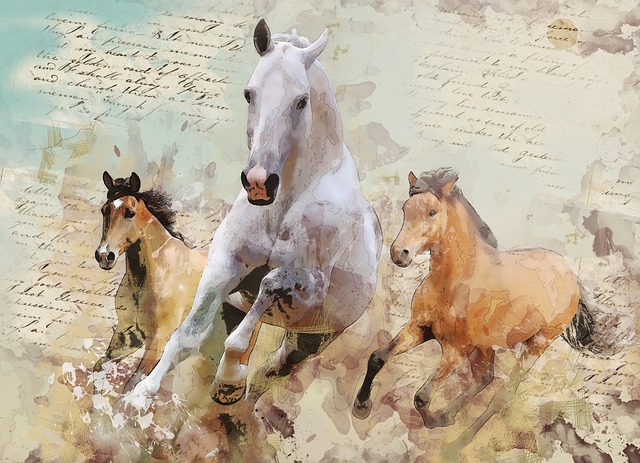
Image by Brigitte Werner from Pixabay

Colloquy

Allow an image or object that encapsulates all these experiences to form in your mind. Take some time to speak with God about the meaning or significance of this object.

As I prayed with Jesus at the Jordan, with how Jesus and John the Baptist were like horses, quivering to run the race, to return love for Love, to delight the Father who delighted in them, I held up my own life next to theirs and talked to them about those ways in which I was not ready to “run the race.” Not ready for Jesus to transform the myth under which I had lived my life so far.

I heard Jesus call out, “Who will join me? Who will live as I live, struggle as I struggle, give as I give, love as I love, suffer as I suffer, and triumph as I triumph?”

Ask Jesus to show you one specific gift he wishes to give you. Receive it and remain in stillness and quietly relaxed presence under the influence of the Holy Spirit.

Reviewing the Graces of Prayer

When you finish praying, write down the main gifts and discoveries from this time of intimate contemplation. What is one concrete thing you can do to solidify these gifts in your life.

Featured image: ilragazzoconmoltafede-Apostolada de la Palabra from Cathopic

The Annunciation: “Let our adoration never cease!” (St. John Paul II)

I can remember cherished moments as a child turning the living room lights low on Christmas eve and sitting with a cup of hot chocolate before the nativity scene so carefully arranged on the logs in the fireplace. Tiny Christmas lights twinkled in the straw that surrounded the figurines: Mary and Joseph, shepherds and kings, sheep and donkeys and cattle. I loved singing Christmas carols on that blessed evening, uniting myself in spirit to the angels who announced the birth of Christ to the shepherds over 2000 years ago. It was a magical moment for a child.

Over fifty years later, magical moments of singing carols at our family’s creche at Christmas have been replaced with the deeply meaningful and mystical times spent in stillness before the burning presence of Our Lord in the Blessed Sacrament. Here is no figurine, no nativity display that once a year captivates our hearts and reminds us of the birth of Christ. In the Blessed Sacrament Jesus is truly present, body, blood, soul, and divinity. Jesus is real. Jesus is here. Right now. Today. A statue of the infant Jesus in a manger reminds us of something that happened 2000 years ago. The Eucharist lets us enter into that reality with our entire being right now, and participate in the salvation Jesus is bringing about on this earth today. We can bring Jesus our desires, tell him of our struggles and need for healing, beg him to teach us to pray as did the apostles, and commit ourselves body and soul to his service.

In the Gospel account of the Annunciation we learn three very important lessons from the Virgin of the Annunciation that model for us how to receive and adore Jesus in the Eucharist.

  1. God is living and real. God loves you. God speaks to you. God has something to say to you. God cares about what is happening to you and has a plan for your healing and salvation. Each of us has our own unique role to play in the mystery of salvation.
  2. The Father has sent his Son as Savior of the world. In the Nicene Creed we confess: “For us men and for our salvation he came down from heaven; by the power of the Holy Spirit, he became incarnate of the Virgin Mary, and was made man.” God sent his Son to save us by reconciling us with himself, taking away our sins. In this instant, the Eternal Word leapt down from heaven and he whom the whole world could not contain enclosed himself in the womb of his Virgin Mother. The Word became flesh in the womb of Mary that we might know God’s love and that he might make us “partakers of the divine nature” (2 Pt 1:4.)
  3. Mary models for us how to be still and silent before the presence of God. The Virgin of the Annunciation shows us how to listen and respond with obedient faith, committing to God, as she did, our whole being, body and soul. “Mary said, ‘Behold, I am the handmaid of the Lord. May it be done to me according to your word.” I often think of the moment right after the angel left Mary. It was the first instant of Jesus’ life within her womb. How she must have quietly loved him and adored him. What faith it must have required of her. She knew better than most the utter reality of God’s presence.

Mary, the Virgin of the Annunciation is also known under the title Our Lady of the Blessed Sacrament. The flesh of Jesus that was crucified, raised up in glory by the Father, the flesh that Jesus gave us at the Last Supper and continues to give us sacramentally in the Eucharist is the very flesh that he received from the Virgin Mary on the day she said her Fiat to the angel. In our reception of the Eucharist in holy Communion and in Eucharistic adoration, the Virgin of the Annunciation models for us faith, adoration, and loving surrender. As Jesus’ Mother she calls us to unite ourselves sacramentally to her Son as often as we can. As Jesus’ Mother she calls us to the silent and still presence of God that burns in our Eucharistic Chapels. This Christmas, as we are drawn into the wonder of Christ’s birth and our hearts are warmed by the figurines of our nativities, as well they should be, let us resolve to warm ourselves from now on at the fire of the Eucharist, Jesus truly present in our churches.

Mary was the first tabernacle of God. She adored him in her womb for the nine months before his birth, a secret prayer of loving worship. May the Virgin Mother of the Savior teach us how to become tabernacles of God. After receiving Jesus in Communion may we, as did Mary, carry him into the world. In the words of Saint John Paul II, “Let our adoration never cease.”

“O Mary, model of loving souls and fervent adorers, I ask you for three precious graces: to know the God hidden in the Tabernacle; to seek his presence, in holy intimacy; to live habitually with my heart turned to him. Amen” (Blessed James Alberione, SSP).

Praying with this Passage of Scripture

Lectio Divina is a way of listening to God as he speaks in his Word. It is a practice of communicating with God through Scripture and attending to God’s presence and what he wishes to tell us. In this slow and prayerful reading of the Word of God, we allow ourselves to be transformed by the Spirit who forms us into the image of Christ. There are four movements in Lectio Divina: Read (lectio), Meditate (meditation), Pray (oratio), Contemplate (contemplation).

Begin by finding a still space to pray. Breathe deeply and become quieter within. Abandon any agenda, worries or thoughts you bring to this prayer and entrust these things to the merciful care of God. Ask for the grace to be receptive to what God will speak to you through this Scripture reading. Grant me, Jesus Divine Master, to be able to know the mysteries of the kingdom of God and your unfathomable riches. Grant that your word penetrate my soul; guide my steps, and brighten my way till the day dawns and darkness dissipates, you who live and reign forever and ever Ame

Read (lectio)
Begin by slowly and meditatively reading your Scripture passage out loud. Listen for a particular word or phrase that speaks to you at this moment and sit with it for a time.

In the sixth month of Elizabeth’s pregnancy, God sent the angel Gabriel to Nazareth, a town in Galilee, to a virgin pledged to be married to a man named Joseph, a descendant of David. The virgin’s name was Mary. The angel went to her and said, “Greetings, you who are highly favored! The Lord is with you.”

Mary was greatly troubled at his words and wondered what kind of greeting this might be. But the angel said to her, “Do not be afraid, Mary; you have found favor with God. You will conceive and give birth to a son, and you are to call him Jesus. He will be great and will be called the Son of the Most High. The Lord God will give him the throne of his father David, and he will reign over Jacob’s descendants forever; his kingdom will never end.”

“How will this be,” Mary asked the angel, “since I am a virgin?”

The angel answered, “The Holy Spirit will come on you, and the power of the Most High will overshadow you. So the holy one to be born will be called the Son of God. Even Elizabeth your relative is going to have a child in her old age, and she who was said to be unable to conceive is in her sixth month. For no word from God will ever fail.”

“I am the Lord’s servant,” Mary answered. “May your word to me be fulfilled.” Then the angel left her.


Meditate (meditatio)
Read the same passage a second time. As you re-engage the text, let the word or phrase that stood out become your invitation to speak from your heart with God who wishes to share his heart with you. Allow this word or phrase to wash over you and permeate your thoughts and feelings. You may wish to repeat this phrase quietly and gently for a period of time

Pray (oratio)
Read the text a third time. Listen for what God is saying to you. Speak heart to heart with God. Notice the feelings that this conversation with God raises up within you. Share with God what you notice about your response to this conversation. You may wish to return to repeating the phrase quietly and gently, allowing it to permeate you more and more deeply.

Contemplate (contemplatio)
Read the text a final time. Now be still and rest in God’s embrace. Ask God to give you a gift to take with you from this prayer. You might ask God if he is inviting you to do some action, for instance, make some change in your thoughts, attitudes or reactions, in the way you speak or how you treat others. Thank God for this gift and invitation as you conclude your prayer.

Image by articgoneape from Pixabay