Jesus Preaches in Nazareth – Spiritual Consolation (Horizons of the Heart 37)

The grace we are asking of God: to discover Jesus in my own personal story so that my personal myth may be transformed in Jesus, as was that of Ignatius, that I will be disposed to hear God’s call and follow it wholeheartedly

Horizons of the Heart is inspired by the Spiritual Exercises of St Ignatius and my own notes from my thirty-day Ignatian retreat in 2022. See an index for the whole series.

Begin by relaxing your body, your mind, letting go of anxieties and ambitions and expectations and plans… Lay all that you notice and all that you are bare and exposed before the Father who welcomes you with a gaze that is gently loving. Settle into the silence that runs deeper than emotional turbulence… Move beyond imagination where you wait upon the stirring of the soul and the movement of the heart. Return to Jesus to find the Rest he offers…to welcome the gift…to become a child held in safe arms….

Making Space for the Word

Ask Jesus that every aspect of this prayer will please him and will give glory to God.

“He has sent me … to proclaim the year of the Lord’s favor.”

Then Jesus rolled up the scroll, gave it back to the attendant and sat down. The eyes of everyone in the synagogue were fastened on him. He began by saying to them, “Today this scripture is fulfilled in your hearing.”

All spoke well of him and were amazed at the gracious words that came from his lips. “Isn’t this Joseph’s son?” they asked.

The last part of Jesus’ proclamation stated that he was sent to proclaim a year of the Lord’s favor or grace that had been announced by Isaiah. Luke uses this same phrase in the Acts of the Apostles as a reference to the gospel proclamation.

The Greek verb μαρτυρέω (martureo) translated often as “speak well of” means simply to “testify” or to “bear witness.”  Daniel Hoffman explains that translated literally, the statement reads like this: “And all were bearing witness about him and were marveling at the words of grace coming from his mouth; and they were saying, “Is this not the son of Joseph?”

“They were not impressed with his words, they were amazed (in the skeptical sense) that he was telling them that the time of the Lord’s favor was now. They doubted it, and their question confirms this—Asking ‘Is not this Joseph’s son?’ is not a compliment, but a scoff. “

They only became angrier as Jesus continued:

Jesus said to them, “Surely you will quote this proverb to me: ‘Physician, heal yourself!’ And you will tell me, ‘Do here in your hometown what we have heard that you did in Capernaum.’”

“Truly I tell you,” he continued, “no prophet is accepted in his hometown. I assure you that there were many widows in Israel in Elijah’s time, when the sky was shut for three and a half years and there was a severe famine throughout the land. Yet Elijah was not sent to any of them, but to a widow in Zarephath in the region of Sidon. And there were many in Israel with leprosy in the time of Elisha the prophet, yet not one of them was cleansed—only Naaman the Syrian.” (Luke 4:20-27)

Pause and enter into the drama of these words of Jesus and the consternation with which they must have been received…. Noticing the way in which the sunny skies of excitement and pride over Jesus were quickly turning to bafflement, confusion, and aggression.

Be present to the way Jesus “senses” the situation. As Gemma Simmonds reminds us, in Ignatian prayer, to “sense” includes mental thoughts, intuition, emotions, as well as bodily processes (our emotions often generate strong bodily reactions as when our cheeks become flushed when we are embarrassed or our fists clench when we are angry).

Be present to all the intensity in Jesus who has come as the ambassador of the Lord’s love and compassion and faithful loyalty to his people. And instead of welcoming and receiving that love, they respond by scoffing at him.

Entering still deeper into the mystery of Christ, allow your heart to taste, to smell, to touch the infinite gentleness and sweetness of Jesus. Allow your spirit to soak up what has been felt and known in this contemplative prayer.

As you do this your mind’s activity will fade into the background, and the mystery you are intuitively contemplating will begin to take over and engulf you, planting within your spirit an inner knowledge of the Lord.

You will at some point begin to intuitively sense the difference between the way Jesus spontaneously feels, speaks, and acts in a situation and the way you yourself feel, speak, and act in similar situations in your own life.

As you stay within Jesus, he will reveal to you how he is experiencing the rejection of his offer of love, freedom, good news, grace and salvation.

What is it that you notice?

What in Jesus is drawing you?

What in Jesus is speaking to your life’s story right now?

Let the mystery of Christ’s life become present to you. Take much time with this. Let your senses and his be tuned together by the action of the Holy Spirit. Let them play in harmony. Let Jesus’ interior life absorb your inner life so that you become “connatural” with him and your inner world is “taken over” at an intuitive level, being established firmly in the “inner knowledge of the Lord.”

This experience of feeling with Jesus, or enjoying this inner knowledge of the Lord, is a window into what Ignatius called “spiritual consolation.” Ignatius said consolation is when, “Some interior movement in the souls causes the soul to become inflamed with love of its Creator and Lord.” This prayer changes the way we perceive and experience reality. We learn how to be in Jesus and to imitate him in the way he experienced every aspect of human need and desire.

We reach greater understanding when we take quality time to feel with Jesus, as he reveals himself, looking and hearing, touching and tasting, in the Gospel Word. Contemplation of Jesus becomes the path to imitate Jesus.

Rest in that awareness as Jesus helps you to resonate with what he resonates with.

A gift to take with you

Allow an image or object that encapsulates all these experiences to form in your mind. Take some time to speak with God about the meaning or significance of this object.

Ask Mary, Joseph and Jesus to show you one specific gift they wish to give you. Receive it and remain in stillness and quietly relaxed presence under the influence of the Holy Spirit.

Reviewing the Graces of Prayer

When you finish praying, write down the main gifts and discoveries from this time of intimate contemplation. What is one concrete thing you can do to solidify these gifts in your life.

Jesus Preaches in Jerusalem – Entering Into the Mystery (Horizons of the Heart 36)

The grace we are asking of God: to discover Jesus in my own personal story so that my personal myth may be transformed in Jesus, as was that of Ignatius, that I will be disposed to hear God’s call and follow it wholeheartedly

Horizons of the Heart is inspired by the Spiritual Exercises of St Ignatius and my own notes from my thirty-day Ignatian retreat in 2022. See an index for the whole series.

Begin by relaxing your body, your mind, letting go of anxieties and ambitions and expectations and plans… Lay all that you notice and all that you are bare and exposed before the Father who welcomes you with a gaze that is gently loving. Settle into the silence that runs deeper than emotional turbulence… Move beyond imagination where you wait upon the stirring of the soul and the movement of the heart. Return to Jesus to find the Rest he offers…to welcome the gift…to become a child held in safe arms….

Making Space for the Word

Ask Jesus that every aspect of this prayer will please him and will give glory to God.

Then he rolled up the scroll, gave it back to the attendant and sat down. The eyes of everyone in the synagogue were fastened on him. He began by saying to them, “Today this scripture is fulfilled in your hearing.”

All spoke well of him and were amazed at the gracious words that came from his lips. “Isn’t this Joseph’s son?” they asked. (Luke 4)

Here you are entering into the Mystery

Notice the sounds of everyone sitting that day in the Synagogue. Everyone turning toward Jesus, the village boy of Nazareth that had grown up among them.

His words crack like thunder on a serene day: “Today this scripture is fulfilled in your hearing.”

The statement is met by silence then an uncomfortable clearing of throats and shifting of position. Some exchanged glances, alarmed and uncertain….

“Today this scripture is fulfill in your hearing.” As if Jesus were saying: You are used to listening to the reading of the prophets Sabbath after Sabbath, as a recounting of thoughts and events and ideas and prayers of people who populated history but who are now longer here. Now I am here. I am the fulfillment of the prophecies.

“The Spirit of the Lord is on me,
    because he has anointed me
    to proclaim good news to the poor.”

It was as if Jesus is trying to tell them: I want you to know that the heart of the Father who has described himself again and again as being full of hesed has now been broken open and is now at this very moment pouring out love upon you. Not loving words, or ideas, or promises, but the deed that is the sending of his Son because he has so loved the world.

Hesed is a Hebrew word that appears some 250 times in the Old Testament and is variously translated in the Scriptures as mercycompassionunfailing lovefaithful love, grace, and faithfulness. Hesed at its very core communicated faithfulness within God’s covenant with his people. It expresses God’s faithfulness to his people.

Jesus stated that day that God was giving them the gift of his love in faithfulness to the covenant he had made with them. Jesus, God’s gift, would free, give sight, forgive, offer salvation, heal, proclaim the year of the Lord’s favor in the gift of forgiveness and salvation in Christ.

“He has sent me to proclaim freedom for the prisoners
    and recovery of sight for the blind,
to set the oppressed free,
    to proclaim the year of the Lord’s favor.”

What was in Jesus’ heart as he looked into each face, saying “I am here. God is here. I am God-with-you. I am love. God is love. I am going to free you so that you may be lifted up into the love that is God.”

We know the end of the story, you know the part about the villagers trying to toss Jesus off the cliff. And that kind of spoils the rest of the story. We might think that Jesus showed up at the synagogue that day in a feisty mood, arrogant, resistant…. But just forget the ending of the story of the minute and listen to Jesus’ heart….

Listen! I hear my lover’s voice.
I know it’s him coming to me—
leaping with joy over mountains,
skipping in love over the hills that separate us,
to come to me (Song of Songs 2:8).

Jesus’ heart is filled with amazing grace for the people he loves. Those people in Nazareth that day…. Enter deeply into the mystery of that moment. See the love reflected in Jesus’ gaze. Re-read his words and let them be filled with a loving offer he is making to them.

Is there hope in his heart? Excitement? Joy at being able to bring his friends and fellow Nazareans along with him?

And how does he look at you? Let there be that same excitement, joy, faithful love. That loves doesn’t come from the behavior of the one loved. Hesed, steadfast love and compassion comes from the one who is offering the love to the other.

“Will you receive my love?” Can you hear Jesus ask you this?

This deeper contemplation of Jesus is an apprenticeship of your feelings and senses in which you are formed in such a way that you feel with Jesus, that your feelings becomes those of Jesus.

Entering into the mystery you humbly allow Jesus to be your Master, to educate your senses and feelings according to the pattern of his own life and teachings. It is a matter of becoming saturated with Jesus’ own way of being and feeling.

Allow your spirit to soak up what has been felt and known in this contemplative prayer.

Allow the offer of freedom, mercy, healing, joy to wash over you….

Where is there resistance to the gift of God’s love in Christ….

To this love story into which you and I are being drawn….

This place that may feel shadowy and messy God has always known, because it is a part of your life and your struggle. But at the core of who you are, what is most deeply human within you, responds with delight and pleasure to this being drawn into the proximity of loving relationship through which our humanity will be made whole again.

“He has sent me to proclaim freedom for the prisoners
    and recovery of sight for the blind,
to set the oppressed free,
    to proclaim the year of the Lord’s favor.”

This God who approaches us first, who shows us our beauty and our goodness when we are bathed in the light of his loving gaze…

It is from God’s love for us that we learn what love is… How beautiful the experience of God-like love is….

Entering still deeper into the mystery of Christ, allow your heart to taste, to smell, to touch the infinite gentleness and sweetness of Jesus. Allow your spirit to soak up what has been felt and known in this contemplative prayer.

As you do this your mind’s activity will fade into the background, and the mystery you are intuitively contemplating will begin to take over and engulf you, planting within your spirit an inner knowledge of the Lord.

A gift to take with you

Allow an image or object that encapsulates all these experiences to form in your mind. Take some time to speak with God about the meaning or significance of this object.

Ask Mary, Joseph and Jesus to show you one specific gift they wish to give you. Receive it and remain in stillness and quietly relaxed presence under the influence of the Holy Spirit.

Reviewing the Graces of Prayer

When you finish praying, write down the main gifts and discoveries from this time of intimate contemplation. What is one concrete thing you can do to solidify these gifts in your life.

Image Credit: Berthold Werner, Public domain, via Wikimedia Commons

The Words that Changed My Life (Matthew 5:33-37)

Jesus said to his disciples:
“You have heard that it was said to your ancestors,
Do not take a false oath,
but make good to the Lord all that you vow.

But I say to you, do not swear at all;
not by heaven, for it is God’s throne;
nor by the earth, for it is his footstool;
nor by Jerusalem, for it is the city of the great King.
Do not swear by your head,
for you cannot make a single hair white or black.
Let your ‘Yes’ mean ‘Yes,’ and your ‘No’ mean ‘No.’
Anything more is from the Evil One.”

Matthew 5:33-37

The single most important shift I have experienced in my relationship with God, the deepest transformation I have received in my prayer is connected to today’s Gospel passage…

I am not the Center of the universe. I do not and cannot ever understand what life is all about. Relying on my powers of understanding has led me repeatedly down a dead-end street.

And God said to me on one quiet day of retreat, “I know. Only I know.”

Those words have changed my life.

Someone who swears something on oath is basically exhibiting their  reliance on their own personal power of making sense of the world. One who swears an oath manipulates words to convince others of their own version of what is real, true, or good. Perhaps their version does correspond to what is real, but most of us have to admit we have only a slight comprehension of the total picture of anything that concerns us or the world. In an almost idolatrous way, the one who swears an oath proclaims, “I know. Only I know.”

In this passage Jesus says that the vast reaches of the cosmos should give a person pause. The wonder that the universe should spark in our heart should humble us to realize our own impotence and dependence on the Creator.

God knows all things. Only God knows what is true, what is really happening. God alone can see how everything is connected and how all things participate in a mysterious way in the overflowing of his loving wisdom that guides all things. We can simply and sincerely only attempt to understand all that is unfolding.

Before the glory of heavens and the beauty of earth, therefore, I can only humbly bow. I can leave God free. I can leave others free. I can entrust myself to him, holding nothing back. I am secure enough to let things be.

Because of this transformation, I can examine my words. Are they manipulative? Are they pressured? Are they self-oriented? Am I inwardly disturbed?

Or are my words simple? Are they free? Are they trusting? Am I at peace?

Image: Noel Bauza via Pixabay

Praying with this Passage of Scripture

Lectio Divina is a way of listening to God as he speaks in his Word. It is a practice of communicating with God through Scripture and attending to God’s presence and what he wishes to tell us. In this slow and prayerful reading of the Word of God, we allow ourselves to be transformed by the Spirit who forms us into the image of Christ. There are four movements in Lectio Divina: Read (lectio), Meditate (meditation), Pray (oratio), Contemplate (contemplation).

Begin by finding a still space to pray. Breathe deeply and become quieter within. Abandon any agenda, worries or thoughts you bring to this prayer and entrust these things to the merciful care of God. Ask for the grace to be receptive to what God will speak to you through this Scripture reading. Grant me, Jesus Divine Master, to be able to know the mysteries of the kingdom of God and your unfathomable riches. Grant that your word penetrate my soul; guide my steps, and brighten my way till the day dawns and darkness dissipates, you who live and reign forever and ever Amen.

Read (lectio)
Begin by slowly and meditatively reading your Scripture passage out loud. Listen for a particular word or phrase that speaks to you at this moment and sit with it for a time.

Pray (oratio)
Read the text a third time. Listen for what God is saying to you. Speak heart to heart with God. Notice the feelings that this conversation with God raises up within you. Share with God what you notice about your response to this conversation. You may wish to return to repeating the phrase quietly and gently, allowing it to permeate you more and more deeply.

Contemplate (contemplatio)
Read the text a final time. Now be still and rest in God’s embrace. Ask God to give you a gift to take with you from this prayer. You might ask God if he is inviting you to do some action, for instance, make some change in your thoughts, attitudes or reactions, in the way you speak or how you treat others. Thank God for this gift and invitation as you conclude your prayer.

Image: Myriams-Fotos; pixabay.com

A Bold Prayer (Mark 9:41-50)

“If your hand causes you to sin, cut it off.
It is better for you to enter into life maimed
than with two hands to go into Gehenna,
into the unquenchable fire.
And if your foot causes you to sin, cut if off.
It is better for you to enter into life crippled
than with two feet to be thrown into Gehenna.
And if your eye causes you to sin, pluck it out.
Better for you to enter into the Kingdom of God with one eye
than with two eyes to be thrown into Gehenna,
where their worm does not die, and the fire is not quenched.”

Mark 9:41-50

How would you live differently if you knew the full glory that awaits you in heaven? I think we really need to stop and sit with that question, more so perhaps than our ancestors in the faith. In a world where the here and now, the immediate satisfaction, the hard work required to just survive leaves us exhausted and burnt out, we have little spiritual energy to think about the beyond.

What is heaven? Pope Francis described it this way: “Paradise is not a fairy tale, nor is it an enchanted garden. Paradise is an embrace with God, (who is) infinite Love, and we enter thanks to Jesus, who died on the cross for us” (Wednesday General Audience, October 25, 2017).

On another occasion Pope Francis reflected: “‘So what’s heaven?’ some ask. There we begin to be unsure in our response. We don’t know how best to explain heaven. Often we picture an abstract and distant heaven… And some think: ‘But won’t it be boring there for all eternity?’ No! That is not heaven. We are on the path towards an encounter: the final meeting with Jesus. Heaven is the encounter with Jesus. Heaven will be this encounter, this meeting with the Lord who went ahead to prepare a place for each of us” (April 27, 2018).

In heaven we will have an unimaginable capacity for joy, a joy that will ever increase, a joy that will never entirely be satisfied because God will never come to the end of giving himself to us to be our everlasting happiness.

When our heart is lit with the anticipation of God’s glory and the immense happiness the Lord will have in satisfying our deepest human longings with his life and love, it is easy to understand why Jesus says, “If something gets in the way of the this, throw it off and keep running to your ultimate destination. Say, ‘Good riddance,’ and surround yourself instead with people and things and activities and ways of being and living and loving that fulfill your dignity as a child of God and a citizen of the Kingdom.”

Pope Benedict leads us to pray, “Come, Holy Spirit! Enkindle in us the fire of your love! We know that this is a bold prayer, with which we ask to be touched by God’s flame; but above all we know that this flame and it alone has the power to save us. We do not want, in defending our life, to lose eternal life that God wants to give us. We need the fire of the Holy Spirit, because only Love redeems. Amen” (Feast of Pentecost, May 23, 2010).

Image: Laura Tapias via Cathopic

Praying with this Passage of Scripture

Lectio Divina is a way of listening to God as he speaks in his Word. It is a practice of communicating with God through Scripture and attending to God’s presence and what he wishes to tell us. In this slow and prayerful reading of the Word of God, we allow ourselves to be transformed by the Spirit who forms us into the image of Christ. There are four movements in Lectio Divina: Read (lectio), Meditate (meditation), Pray (oratio), Contemplate (contemplation).

Begin by finding a still space to pray. Breathe deeply and become quieter within. Abandon any agenda, worries or thoughts you bring to this prayer and entrust these things to the merciful care of God. Ask for the grace to be receptive to what God will speak to you through this Scripture reading. Grant me, Jesus Divine Master, to be able to know the mysteries of the kingdom of God and your unfathomable riches. Grant that your word penetrate my soul; guide my steps, and brighten my way till the day dawns and darkness dissipates, you who live and reign forever and ever Amen.

Read (lectio)
Begin by slowly and meditatively reading your Scripture passage out loud. Listen for a particular word or phrase that speaks to you at this moment and sit with it for a time.

Pray (oratio)
Read the text a third time. Listen for what God is saying to you. Speak heart to heart with God. Notice the feelings that this conversation with God raises up within you. Share with God what you notice about your response to this conversation. You may wish to return to repeating the phrase quietly and gently, allowing it to permeate you more and more deeply.

Contemplate (contemplatio)
Read the text a final time. Now be still and rest in God’s embrace. Ask God to give you a gift to take with you from this prayer. You might ask God if he is inviting you to do some action, for instance, make some change in your thoughts, attitudes or reactions, in the way you speak or how you treat others. Thank God for this gift and invitation as you conclude your prayer.

Image: Myriams-Fotos; pixabay.com

A Marian Feast You Might Be Missing

There is a lovely, little-known Memorial of the Blessed Virgin Mary under the title of Mary, Mother of the Church. It was established by Pope Francis in 2018 and is celebrated on the Monday after Pentecost.

On this Memorial, I find myself praying with the way that the Holy Spirit descended upon Mary, overshadowing her at the Annunciation. The Gospel says clearly that the Word becomes incarnate by the work of the Holy Spirit in the virginal womb of Mary (see Mt 1:18, Lk 1:35). I marvel at the way the Holy Spirit permeated Mary’s life for the rest of her life, giving life and hope to those who were around her. When she greeted Elizabeth, for instance, her elderly cousin who was shortly to give birth to John the Baptist, this humble woman exclaimed at Mary’s arrival, and was “filled with the Holy Spirit” (Lk 1:41). The Spirit brought Simeon to the Temple to hold in his arms, to see with his very eyes, the infant Jesus who had been brought in Mary’s arms to be presented in that holy place (see Lk 2:25-27).

Finally, the apostles had gathered around the Mother of Jesus after he had ascended into heaven, waiting with her for the outpouring of the Holy Spirit. Mary knew well the presence, almost the “feel”—spiritually speaking—of being inhabited, of being a Temple, of the Spirit of Jesus. She had profound spiritual sensitivity and was no stranger to the movement of the Spirit, through whom the Son of God took flesh within her.

At the Annunciation she became the Mother of Jesus, the Mother of the Son of God, and at that moment, in some mysterious way, the Mother of us, all of us who are the Mystical Body of Jesus Christ.

In the Cenacle, as the Spirit was poured out on all Jesus’ disciples praying there, Mary is manifested as a type of the Church who, as a mother herself, will give birth to children of God at the baptismal fonts of every country and every time through the grace poured out by the Spirit. This grace is a gift given on the initiative of God, purifying and elevating our nature without suppressing or changing it in its very being.

At the Annunciation Mary became the Mother of Jesus, the Mother of the Son of God, and at that moment, in some mysterious way, the Mother of us, all of us who are the Mystical Body of Jesus Christ.

Mary, Mother of the Church—our Mother, yes. But we, as a member of the Church, participate in this Motherhood by bringing others to the Church, to baptism, to the sacraments, to grace, to prayer, to communion with the other members of the Body of Christ. Mary shows us how to be a mother, solicitous and simple in the way we care about the salvation of those with whom we journey on the road of life.

The apostles went forth from the Cenacle, now powerfully sensitive to the movement of the Spirit who was sending them into the world with the mission of Jesus:

“Go into all the world and preach the gospel to the whole creation. He who believes and is baptized will be saved.” ( Mk 16:15-16)

They preached and then they baptized that day over 5000 persons. From that humble Cenacle where the disciples of Jesus received the divine gift of the Spirit, the Church has spread out, lifting people up to Jesus, as new citizens of the kingdom of glory.  

Mary, Mother of the Church, teach me how to be a mother to people who have fallen away from the Church. Inspire me how to enter into the troubled moments of others’ lives with a quiet invitation to accompany me to the Eucharist or adoration, there to meet your Son. Encourage me to say a gentle word of faith at a time when their heart is ready to receive it. Mary, Mother of the Church, pray for me.

Jesus Preaches in Nazareth – Making Space for the Word (Horizons of the Heart 35)

The grace we are asking of God: to discover Jesus in my own personal story so that my personal myth may be transformed in Jesus, as was that of Ignatius, that I will be disposed to hear God’s call and follow it wholeheartedly

Horizons of the Heart is inspired by the Spiritual Exercises of St Ignatius and my own notes from my thirty-day Ignatian retreat in 2022. See an index for the whole series.

Begin by relaxing your body, your mind, letting go of anxieties and ambitions and expectations and plans… Lay all that you notice and all that you are bare and exposed before the Father who welcomes you with a gaze that is gently loving. Settle into the silence that runs deeper than emotional turbulence… Move beyond imagination where you wait upon the stirring of the soul and the movement of the heart. Return to Jesus to find the Rest he offers…to welcome the gift…to become a child held in safe arms….

Making Space for the Word

Ask Jesus that every aspect of this prayer will please him and will give glory to God.

Jesus returned to Galilee in the power of the Spirit, and news about him spread through the whole countryside. He was teaching in their synagogues, and everyone praised him.

He went to Nazareth, where he had been brought up, and on the Sabbath day he went into the synagogue, as was his custom. He stood up to read, and the scroll of the prophet Isaiah was handed to him. Unrolling it, he found the place where it is written:

“The Spirit of the Lord is on me,
    because he has anointed me
    to proclaim good news to the poor.
He has sent me to proclaim freedom for the prisoners
    and recovery of sight for the blind,
to set the oppressed free,
    to proclaim the year of the Lord’s favor.”

Then he rolled up the scroll, gave it back to the attendant and sat down. The eyes of everyone in the synagogue were fastened on him. He began by saying to them, “Today this scripture is fulfilled in your hearing.” (Luke 4:14-21 NIV)

Slowly read the passage for your meditation once. Leave some moments of silence and then read it again with the intention of entering into the story, of observing the details of what is happening. Take some time to set the stage and picture the environment in which the story takes place.Use one of your five senses that is most helpful in entering into an experience. For some it is sight—visualizing what is happening, for others it is hearing—noticing sounds like the swoosh of a robe, a voice, the people sitting down, the sounds of nature or feet as they walk…

I invite you to zoom out and see this event within the larger arc of Jesus’ life and mission. This passage, which we’ve heard so many times, is really the beginning of a love story. It is the entrance of the lover who has come to woo his bride Israel and all humanity. You may wish to read through the passage a third time looking for hints of this story of love.

The way this passage is set up is similar to another biblical account of the entrance of a Lover. This one is found in the Old Testament book Song of Songs:

Listen! I hear my lover’s voice.
I know it’s him coming to me—
leaping with joy over mountains,
skipping in love over the hills that separate us,
to come to me (Song of Songs 2:8).

Notice your response to this passage. What occurs to you? What surprises you? What moves within you? What is your emotional response: hope? Excitement? Relief? Uncertainty? Fear? Joy?

Entering more deeply into the Love-Story of the Word Made Flesh

The Lover comes. He chooses his bride.

Jesus returned to Galilee in the power of the Spirit, and news about him spread through the whole countryside. He was teaching in their synagogues, and everyone praised him. He went to Nazareth, where he had been brought up…

Listen! I hear my lover’s voice.
I know it’s him coming to me— (Sg 2:8)

The Lover enters…

…and on the Sabbath day he went into the synagogue, as was his custom.

leaping with joy over mountains,
skipping in love over the hills that separate us… (v. 8)

The Lover stands…

He stood up to read, and the scroll of the prophet Isaiah was handed to him.

Now he comes closer,
even to the places where I hide.
He gazes into my soul,
peering through the portal
as he blossoms within my heart. (v. 9)

The Lover speaks…

Unrolling it, he found the place where it is written:

“The Spirit of the Lord is on me,
    because he has anointed me
    to proclaim good news to the poor.
He has sent me to proclaim freedom for the prisoners
    and recovery of sight for the blind,
to set the oppressed free,
    to proclaim the year of the Lord’s favor.”

Then he rolled up the scroll, gave it back to the attendant and sat down. The eyes of everyone in the synagogue were fastened on him. He began by saying to them, “Today this scripture is fulfilled in your hearing.” (Luke 4:14-21 NIV)

The one I love calls to me:
Arise, my dearest. Hurry, my darling.
Come away with me!
I have come as you have asked
to draw you to my heart and lead you out.
For now is the time, my beautiful one.
The season has changed,
the bondage of your barren winter has ended,
and the season of hiding is over and gone.
The rains have soaked the earth
and left it bright with blossoming flowers.
The season for singing and pruning the vines has arrived.
I hear the cooing of doves in our land,
filling the air with songs to awaken you
and guide you forth.
Can you not discern this new day of destiny
breaking forth around you? (v. 10-13)

Ask for the grace “to know Jesus intimately, to love him more intensely, and so to follow him more closely.”

Here you are entering into the Mystery

This deeper contemplation of Jesus is an apprenticeship of your feelings and senses in which you are formed in such a way that you feel with Jesus, that your feelings become those of Jesus.

Entering into the mystery you humbly allow Jesus to be your Master, to educate your senses and feelings according to the pattern of his own life and teachings. It is a matter of becoming saturated with Jesus’ own way of being and feeling.

As you re-read the passage from Luke one more time, allow yourself to enter into the feelings of Jesus. In the thought of Ignatius, to sense what Jesus is experiencing includes mental, intuitive, emotional feelings, and bodily responses. Enter into the sense of a Lover who experienced such love for the people in Nazareth, seeing them with the eyes of God their Creator, with the heart of a Father who had been following his people for thousands of years, preparing them for the arrival of his Son who would convey to them in word and deed the treasures of his heart.

Jesus hadn’t arrived at the village of Nazareth just before the synagogue service (since walking for any great distance was forbidden on the Sabbath), so he would have walked through the city, greeted neighbors and friends, picked up the children who came to see him as he approached Mary’s house, listened to stories and sorrows, and spent at least a couple nights with Mary in the home in which he had grown up in. With your inspired imagination enter into Jesus’ arrival in Nazareth and the morning of the Sabbath where he joined the men in the synagogue. Allow these sense images to surface in your consciousness without trying to control or interpret them. Experience in Jesus and yourself any sense responses on the level of thoughts, affectivity, physical sensations, intuition and emotions. Allow yourself to gradually be overtaken by the was Jesus experienced loving, being a Lover—both for the people of Nazareth… and for you… Gently soak in these meaningful impressions.

What is the grace or spiritual gift you desire….

A gift to take with you

Allow an image or object that encapsulates all these experiences to form in your mind. Take some time to speak with God about the meaning or significance of this object.

Ask Mary, Joseph and Jesus to show you one specific gift they wish to give you. Receive it and remain in stillness and quietly relaxed presence under the influence of the Holy Spirit.

Reviewing the Graces of Prayer

When you finish praying, write down the main gifts and discoveries from this time of intimate contemplation. What is one concrete thing you can do to solidify these gifts in your life.
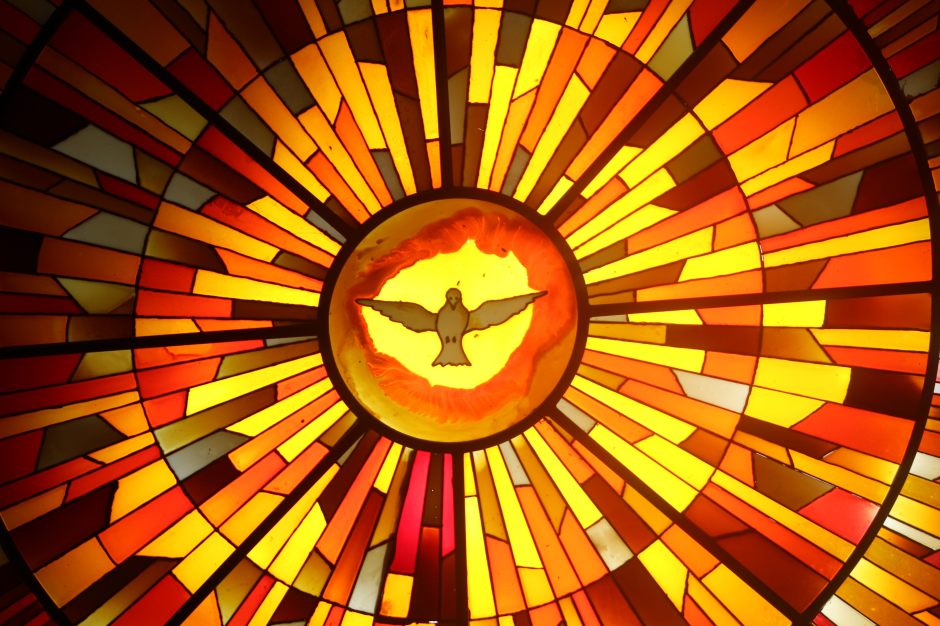
Image Credit: Mouse23 via Pixabay.