Have I blasphemed against the Holy Spirit? (Mark 3:28-30)

Before we reflect on this passageLet’s pause for just a moment. Not to get something right, but to arrive.

Wherever you are right now—tired, distracted, open, resistant—just notice.
This is where God is meeting you…. You don’t have to fix or improve it.

Scripture doesn’t speak to an ideal version of us. It speaks to us right where we are….

So as you read the Scripture passage, see if you can let the words land not in your mind first, but in your heart… in the place where you actually live.



“Truly I tell you, people will be forgiven for their sins and whatever blasphemies they utter; but whoever blasphemes against the Holy Spirit can never have forgiveness, but is guilty of an eternal sin”— for they had said, “He has an unclean spirit.”
Mark 3:28-30

“I’m afraid I’ve committed blasphemy against the Holy Spirit and I’m going to hell.” With trembling heart, very good Catholics have confided this fear quietly to me. For whatever reason—and there could be many—their minds have zeroed in on this phrase of the Gospel and it has taken over the spiritual horizon of their hearts.

Maybe… Maybe I’ve done it, and I don’t know… I’m afraid there is no place for me in heaven…

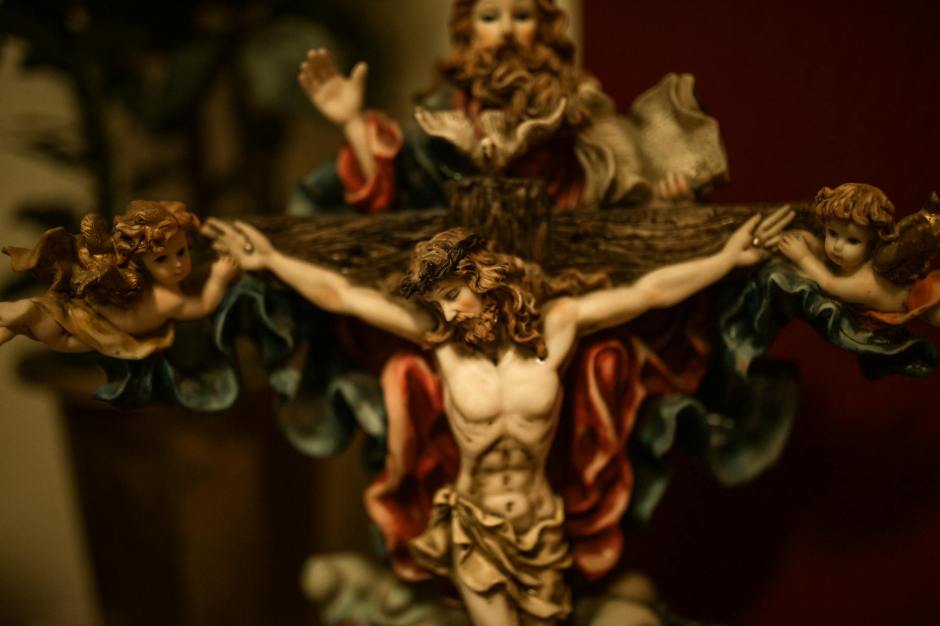
The image accompanying this Gospel reflection is an image of Jesus’ most sacred, most gentle, most loving Heart. We cannot look upon the wounded heart of Jesus without encountering a love that is so completely human and entirely divine.

The fear, though, of accidentally saying something that irredeemably erases the chance of eternal salvation frightens away any confidence of this love.

  • So, what do these words of Jesus really mean?
  • What is one way you can know for sure you have not committed blasphemy against the Spirit?
  • How do you live with the knowledge that you are loved and are a beloved child of God who will never let you go?

I’d suggest that the answer is simple and profound: truth.

First, we must define what is blasphemy against the Holy Spirit. The Catechism states:

“Therefore I tell you, every sin and blasphemy will be forgiven men, but the blasphemy against the Spirit will not be forgiven.” There are no limits to the mercy of God, but anyone who deliberately refuses to accept his mercy by repenting, rejects the forgiveness of his sins and the salvation offered by the Holy Spirit. Such hardness of heart can lead to final impenitence and eternal loss (CCC 1864).

Blasphemy against the Holy Spirit is to refuse God’s mercy. It is a refusal to repent of sin. God does not bring anyone into his kingdom against his/her will.

This would indicate that Jesus was not talking about stray comments that might have been made by accident. He is not talking about speech at all. Blasphemy against the Spirit is a deliberate choice to reject God and to refuse to repent of this.

As St. John Paul II explained in his 1986 encyclical letter Dominum et Vivificantem: “‘Blasphemy’ does not properly consist in offending against the Holy Spirit in words; it consists rather in the refusal to accept the salvation which God offers to man through the Holy Spirit, working through the power of the cross” (no. 46).

It is impossible to do this by accident and without knowing it. In fact, if you are concerned about it, that itself is a sure sign that you haven’t rejected God!

People can feel they haven’t been forgiven by God and their minds can grab on to this statement of Jesus for any number of reasons: emotional, psychological, poor catechetical or spiritual formation being a few of these. These can be causes for not feeling God’s love, but we already know that much of the time our feelings don’t tell us the truth. It could be that speaking with someone who can help us navigate some of these personal realities on a human level can open us to a greater experience of God’s love for us.

We can be absolutely certain that Jesus has forgiven us by the Blood of his cross. In Christ we find the infinite and eternal God who has loved us so much that he offers us a share in his Triune life. He has “loved us to death,” truly, in every sense of that word! Could a love like that be unwilling to forgive us when we are repentant?

We can grow in confidence in this love by encountering Jesus in the sacraments, in prayer and meditation, by nourishing our mind and heart on really good spiritual books, and through helpful and clarifying conversation with others.

Image credit: Photo by RDNE Stock project

I invite you into this space that is very vulnerable. A place in our hearts that is longing for belonging and love, but maybe has learned, somewhere along the way, that belonging and safety had to be secured by getting everything right. Or perhaps was wounded when it encountered a wall instead of an open door of hospitality and acceptance. So it watches, worries, and clings to certainty.

Many of us carry inside a frightened, vigilant part that is always scanning for danger—Have I done something wrong? Have I gone too far? Am I still safe? For some, that part fixates on Jesus’ words about blasphemy against the Holy Spirit and turns them into a looming threat rather than a revelation of mercy.

If you notice this place within you, do not fight it or try to change it. Treat it as you would a frightened child. Compassion. Presence. Mercy.

We can say, I see you how afraid you are. That you’re desperately trying to keep things perfect so that I will be safe.

Now just sit quietly. Tell God: “I need you now. Right here. I don’t understand. I want to trust you with my heart, but I’m afraid of what I’ve done or who I’ve been.” Tell God what you feel: longing, uncertainty, shame, threatened, vulnerable….

Begin to make room for a deeper truth to be heard: you are already being sought, already being held, already being forgiven.
“I Will Go Unto the Altar of God”

One of the most spiritually life-giving verses of the Bible for me comes from Paul’s letter to the Romans: “For you did not receive the spirit of slavery to fall back into fear, but you have received the Spirit of adoption, by whom we cry, ‘Abba! Father!'” (8:15)

Slavery. Fear. Adoption. Abba!

Slavery—powerlessness, punishment, constriction, working for another, having nothing of one’s own—not even one’s own body…

Fear—to “fall back into fear” is to face the acknowledgement that there is no future, there is no hope, there is no belonging, only loss and despair…

Adoption—the “Spirit of adoption”: “For all who are led by the Spirit of God are sons of God” (8:14). “So you are no longer a slave, but a son, and if a son, then an heir through God”  (Galatians 4:7).

Abba! Father!—The cry of the soul that has touched the utter loving reality of God’s being toward her, for her…. The exclamation at being saved and hidden now with Christ in God…. The song that issues from a heart that desires—at all times and in all things—to bend low in trusting worship.

Dietrich von Hildebrand turns our eyes to the Liturgy where we learn this loving reverence through immersion: “The Liturgy is penetrated more than anything else by the spirit of true reverence. It is deeply permeated by the fear of God, by the cum timore et tremore (with fear and trembling), and at the same time by the consciousness that we are sons of God, in which we cry out ‘Abba, Father!’ It is full of the spirit of servire Domino in laetitia, of serving God in joy.”

In the Liturgy of the Hours, the Church prays a psalm at the beginning of each day which vividly “presents before our mind our own nothingness before God’s majesty, our absolute dependence on Him, [as well as] the fact that we belong to Him.”

The Lord is God, the mighty God,
the great king over all the gods.
He holds in his hands the depths of the earth
and the highest mountains as well
He made the sea; it belongs to him,
the dry land, too, for it was formed by his hands.

Come, then, let us bow down and worship,
bending the knee before the Lord, our maker,
For he is our God and we are his people,
the flock he shepherds. (Psalm 95)

The Mass is also pervaded with this reverence.

The Mass is pervaded with this consciousness of “his absolute dominion, and the acknowledgment that we receive all from Him.”

Glory to God in the highest,
and on earth peace to people of good will.
We praise you, we bless you,
we adore you,we glorify you,
we give you thanks for your great glory
.”

“It is truly right and just, our duty and our salvation,
always and everywhere to give you thanks,
Lord, holy Father, almighty and eternal God,
through Christ our Lord” (Preface I of Sundays of Ordinary Time).

“Holy, holy, holy, Lord God of hosts. Heaven and earth are full of your glory. Hosanna in the highest.”

“When these words are sung, how especially are we enveloped in the deepest reverence before God and drawn in to the true situation of the creature in relation to God.”

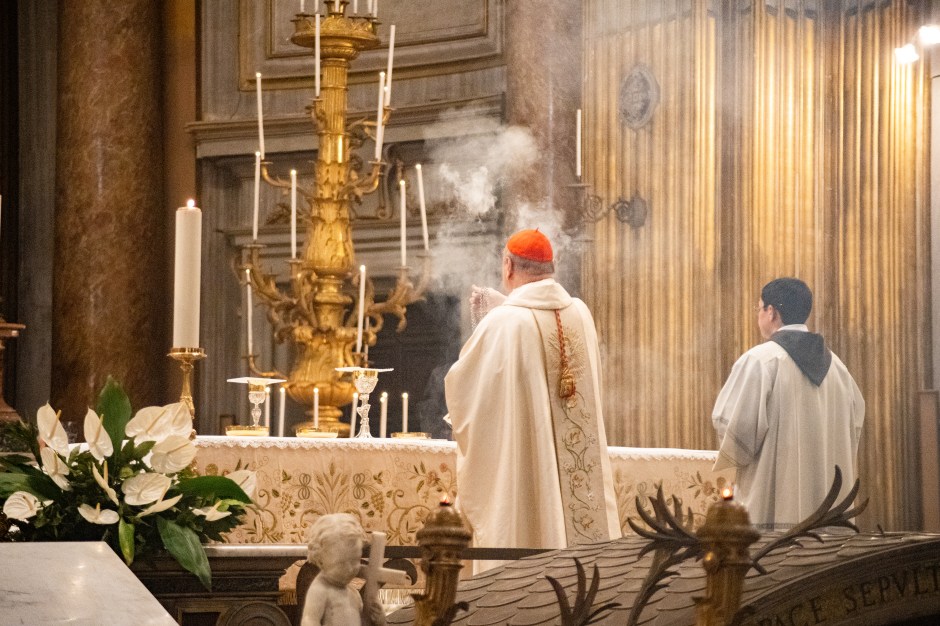
Its spirit is that of the “Introibo ad altare Dei, ad Deum, qui laetificat juventutem meam” (I will go in unto the altar of God, unto God, who giveth joy to my youth). This attitude is one which finds its expression in the “Quoniam in aeternum misericordia ejus” (For His mercy endureth forever), the “Gustate et videte quam suavis est Dominus” (Taste and see how sweet is the Lord), the “Misericordias Domini cantabo in aeternum” (I shall sing through all eternity the mercies of the Lord). Let us recall the upward glance which marks the beginning of each day, the “Deus in adjutorium meum intende, Domine ad adjuvandum me festina” (O God, come to my assistance, O Lord make haste to help me).

How much more our hearts would be nourished in the Mass if we were to step through the door of repeated words into the larger theme of reverence which pervades every prayer and posture and gesture of the Liturgy. If we were to become reverence, in a trusting worship of our Father.

Quotations from Dietrich von Hildebrand, Liturgy and Personality, Chapter Five.

Featured image: by Lupe Belmonte


INVITE: New Year Mini-Morning of Reflection

There is something about the first month of the year. We’re tired. We’re transitioning into a new year. We’re facing everything that this might mean for us and our families. We’re told to make perfect resolutions for an outstanding new beginning.

What is true is this: we are in a liminal space between what has been and what will be. We might feel vulnerable, uncertain, excited  but unsure.

  • To welcome the new, we need to say good-bye to the past with peace.
  • To welcome the new, we need to let go of the pressure to conform, to be perfect, to succeed.
  • To find our way in 2026 we can relax into a rhythm of entrustment and surrender and trust.

The new year can be cherished and welcomed, when we know we’re safe in the love God has for us. That he sees us. That he knows what we tell no one else. That he cares for us as no one else ever could.

So if that’s you, join us online Saturday morning January 17 at 9:30 to 11:00. Prayer, reflection, entrusting, surrendering, interceding, and sharing with others your desires for 2026.

Click here for free registration and link.

A Christmas Invitation…

This Christmas, you might want to sit for a time alone, without plans and schedules and to do lists.

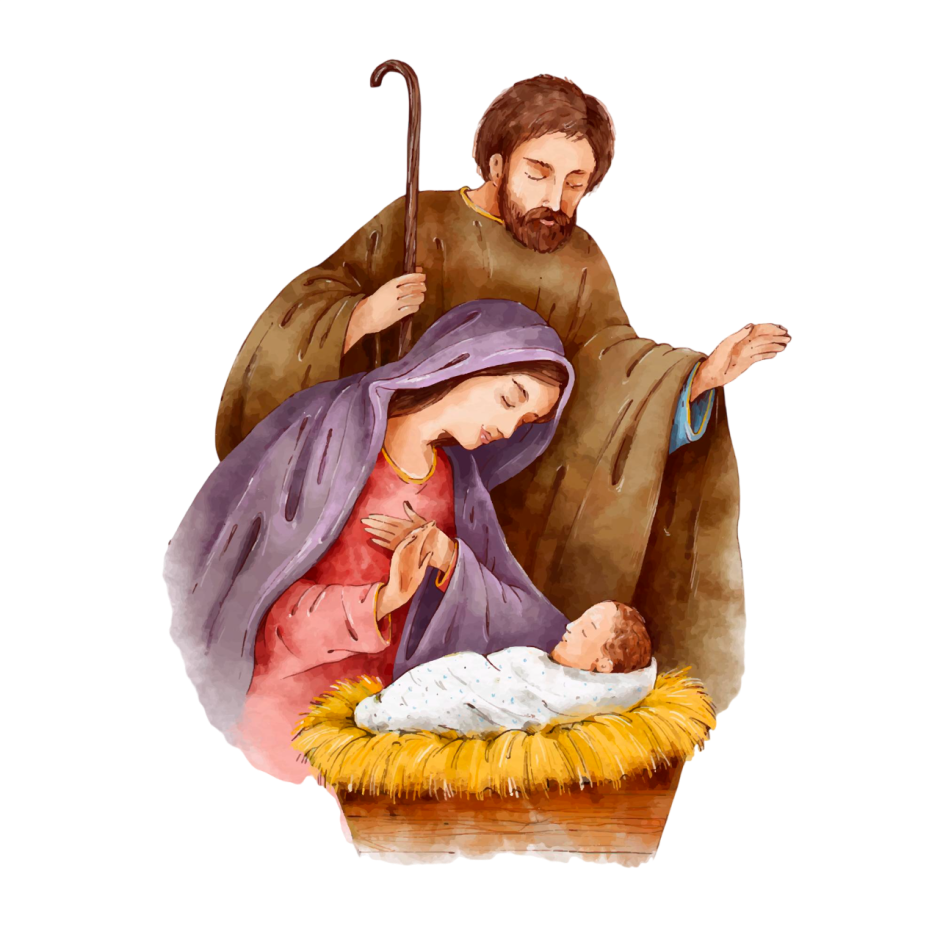
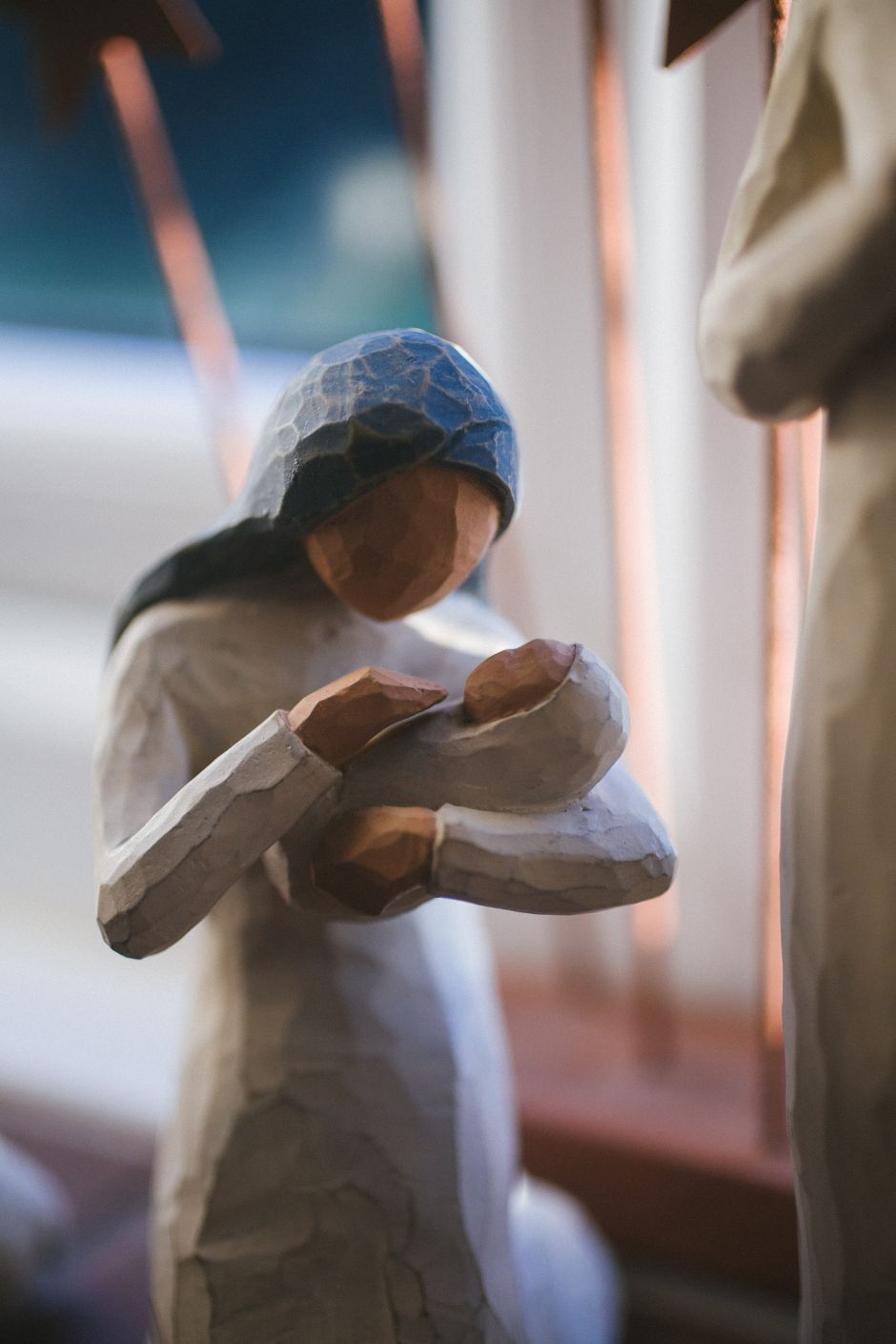
I invite you to let God meet you right there. That’s all. Not a big production. Just sit like Mary Joseph and ponder what is inexplicable or overwhelming in your own life right now. You have wrestled with it, trying to determine the “right” thing to do. Now just sit quietly. Tell God: “I need you now. Right here. I don’t understand. I can’t decide what to do. I want to do what’s best, but I don’t know what that is.” Tell God what you feel: angry, betrayed, sad, frightened, determined, controlling…

Then wait in spaces that are simple and unrushed, seeking the deeper love that is the foundation of everything real. Quietly say, “Yes. Just show me what you want here. And I will say yes.”

Mary’s Heart: The Ladder God Descended into Our Human Frailty – A Prayer Guide

An Advent Meditation on the Way God Steps into Our Unfinished Places

Advent is a season of both hurry and stillness. We long to give the right gift, and our spirits yearn for the gift of grace that the season celebrates in the Incarnation of the Son of God.

This Advent Meditation opens up the heart of Christmas, the promise of participating in God’s life through the life, death, and resurrection of Jesus, and the way in which this hope offers new horizons for living in difficult times.

Letting Jesus Reach Down

The moment when God chose a quiet heart as His dwelling place

Mary: Scala Caelestis, the “ladder of heaven”

Run to the Eucharist

Roadmap to Contentment: Don’t Measure Your Life by What You See Today

In a dream or vision, Jesus assured our Founder, Blessed James Alberione, in a time of crisis,

Do not be afraid
I am with you.
From here I will cast light.
Be sorry for sin (or as this is sometimes translated: Live in continual conversion).

In this article, I reflect on the third line of this message, in the context of life, rooted in the heart of God and his love for his people: “From here I will cast light.”

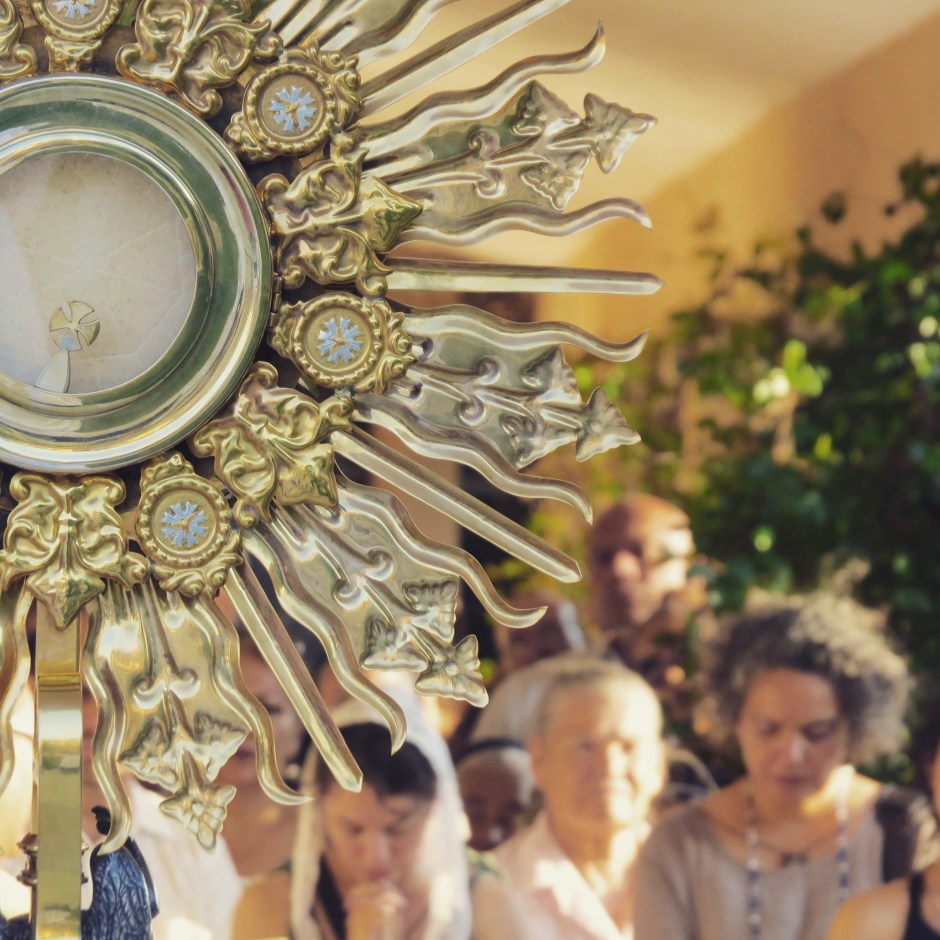
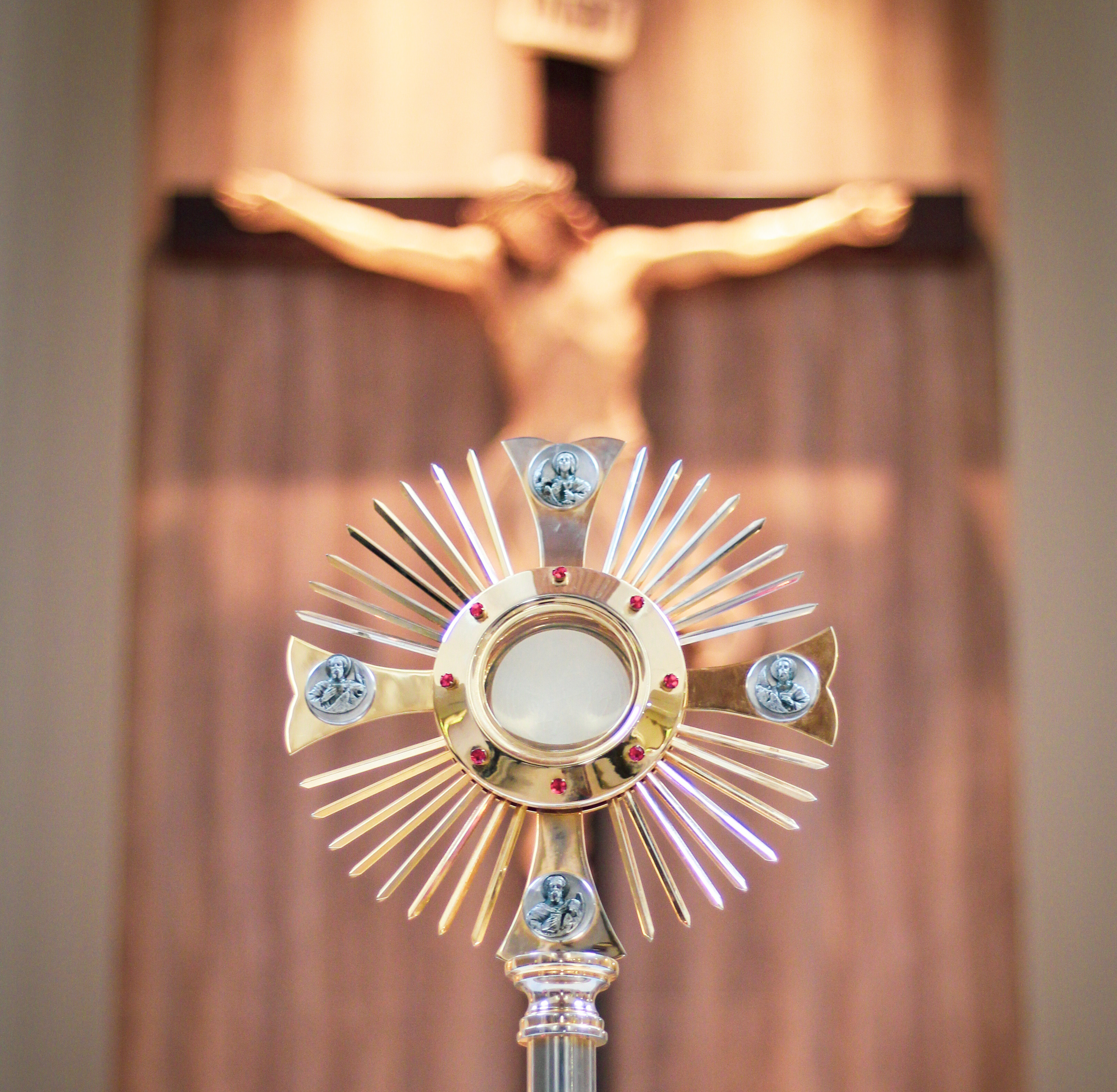
It was clear to Alberione that Jesus was pointing to the Tabernacle to illustrate where FROM HERE was referring to.

From here I will cast light.
From the Eucharist.
From the seed buried in darkness, from which sprouts new life.
From the Eucharist, seed of immortality, where we are assured that death has no more power over us!
From the quiet Center from whom love and light radiate out to the world.
From the silent Word before whom every other word is silenced by this Truth that doesn’t need military might or marketing plans to be effective.
From the Word, the Son hidden in the Father’s embrace, the Child who relies for everything on the providence of his Abba, and present ever on our altars as God-with-us, Emmanuel.

From the One who entrusted himself at the Last Supper to a string of untrustworthy followers until the end of the world…because he knows we need him and our hearts long for him.

From the Bread broken for the life of the world, where the idea of a Utopia is not entertained, but the humble, firm, feet-on-the-ground confidence in the reliability of reality.

From the Eucharistic Heart of Jesus who assures us that the way we are loved and cared for is more beautiful, more amazing, than we could ever imagine.

In the presence of the One who remains with us, among the weeds and the wheat, patient, waiting, loving, responding if and when we turn our gaze on him.

In the presence of the most pure heart of Jesus, who identified himself with his creatures who were mired in mud so thick we could not raise ourselves.

In the presence of the One who did not run away from his Father’s will, and who calls his friends those of us who so often flee this Love.

In the presence of the Lover who still begs for someone to love him wholly, even unto death.

In the school of the One who took up his cross, knowing that most of us would run from ours.

From this place, Jesus, the Lover of us all, casts light into the shadows of our souls and the confusion and darkness in the world.

Scrolling through Substack, I came across this prayer: “Shatter me, Lord. For that’s where I know you best.” (W. Tyler Allen) That’s where I know you as Love, triumphant Love. When I am in a moment of crisis, confusion, or chaos, I cry out from the bottom of my heart, that it is here that I find you, in broken dreams and shattered expectations, that let me climb Calvary and shelter there in the wound in your side.

As St. Claude de Colombiere preached:

Yes, Christians, everything that happens to us in this life happens by the order or permission of a God who always has loved us, and who loves us still more than we love ourselves. He regards us as his creatures, as his children, as his heirs, as his reflections. The benefits that we have received from him have surpassed all our desires; they surpass even our imaginings, and those [benefits] that we receive from him every day are without measure and without number. He has drawn us out of the void, and he is constantly dedicated to save our being and life. He has washed us in the blood of his own Son, and he feeds us today with the flesh of his only Son. Could a heart so tender and so loving resolve to do us the slightest evil; could it even allow that it be done to us, being able to stop it, as he can?

The light I need is this: to know that I am loved by the Father with the same love he has for his own Son.

The light I need is this: to know that even in the confusing bits of my life, of which there are many, Jesus Master is still loving and living and saving and teaching and remolding and remaking and renewing and resurrecting me. I may resist and run from his hands, but I can never escape his Heart.

The light I need is this: to know that taking up the cross is not loss, but gain.

The light I need is this: to know that when I cannot see the way forward, he grabs my hand and carries me into the future.

The light I need is this: to know that I don’t need to have it all figured out and fixed and analyzed. That unknowing and being undone is the way he remakes the one he loves.

The light I need is this: to trust in the glory of the sunset years, making myself both eucharist and lover in Jesus’ hands, for the sake of the world.

We need the light of Jesus in the Eucharist because we get caught in what we see today, as if that is all there is. The present moment can, like a hurricane, whip into fury our thoughts and feelings and imagination. Jesus is the calm in the storm who urges us: Come. From HERE I will cast light.

These days I have been sitting in front of the Blessed Sacrament before Mass, listening to the Surrender Novena, soaking in the words of Jesus to another holy person, Fr. Dolindo.

“Why do you confuse yourselves by worrying? Leave the care of your affairs to me and everything will be peaceful. I say to you in truth that every act of true, blind, complete surrender to me produces the effect that you desire and resolves all difficult situations.

…Pray as I taught you in the Our Father: “Hallowed be thy Name,” that is, be glorified in my need. “Thy kingdom come,” that is, let all that is in us and in the world be in accord with your kingdom. “Thy will be done on Earth as it is in Heaven,” that is, in our need, decide as you see fit for our temporal and eternal life. If you say to me truly: “Thy will be done,” which is the same as saying: “You take care of it,” I will intervene with all my omnipotence, and I will resolve the most difficult situations.

…And when I must lead you on a path different from the one you see, I will prepare you; I will carry you in my arms; I will let you find yourself, like children who have fallen asleep in their mother’s arms, on the other bank of the river. What troubles you and hurts you immensely are your reason, your thoughts and worry, and your desire at all costs to deal with what afflicts you.

…Close your eyes and let yourself be carried away on the flowing current of my grace; close your eyes and do not think of the present, turning your thoughts away from the future just as you would from temptation. Repose in me, believing in my goodness, and I promise you by my love that if you say, “You take care of it,” I will take care of it all; I will console you, liberate you and guide you.”

What new insights into the Eucharist has this article introduced you to?

Is there a place in your life where you need to experience God’s love and compassion? Do you treat yourself with love and compassion in that area of your life?

What would be different if you prayed the Surrender Novena?