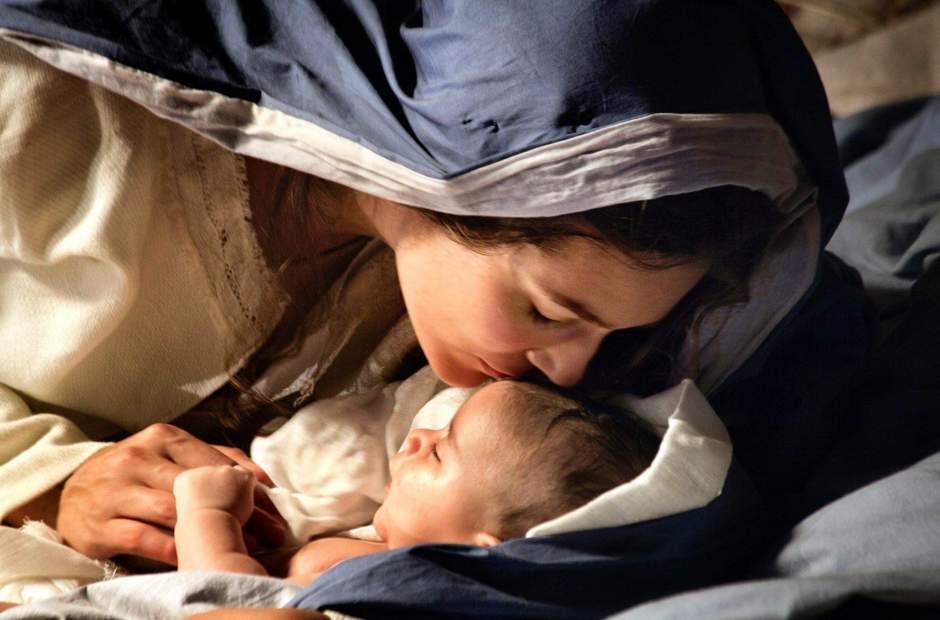
Tabernacle of the Heart: It is time…

“Your inward life is now sprouting, bringing forth fruit” (Sgs 4;13)

It is time.
It is time to forgive yourself…
It is time to forgive yourself for what you didn’t see.
What you didn’t understand…
What you couldn’t feel…

It is time to forgive yourself…
For the people you didn’t save…
What you didn’t become…
Who you didn’t save…
What you didn’t change…

It is time to discover the beauty of falling leaves…
Letting go…
Trusting transition…
Blessing the winter…
Hoping the spring…

It is time to rest…
In the silent spaces of sorrow and silence…
In the hurt and pain of wounds and shame…
In the broken and fragmented and lost…

It is time to believe…
In the inward spring…
The new life sprouting…
The blossoming and growing and ripening…

I find transitions challenging. Leaving the familiar behind puts me back in the fragile place where I wonder if I’m good enough… If I’ll make it… If anyone cares…

I’m sure no one can see the swirl of emotions and thoughts and general confusion that reigns within, sweeping away the secure self-image that just weeks before had been mine.

Transitions are difficult times of immense grace, severe gifts of mercy, gentle or drastic pruning that makes way for new blossoms that unexpectedly surprise us with new futures and joy.

I often will put myself “forehead to forehead” with Jesus in prayer—an image from the lay mystic Gabrielle Bossis in her popular spiritual classic He and I. Praying in this quiet, unreflective way that suspends all thought and straining opens my heart.

And during transitions, I need to open my heart. To believe that my Beloved One is at work within me. So one day recently I asked Jesus what he had to say to me regarding a transition I was in.

He said, “You silly willy….”

That absolutely got my attention!

“You silly willy. Your heart has been longing for more. You’ve been aching under the strain of all that has been your daily life. Here I am helping you out. So just go with the flow….”

The lightness of Jesus’ touch was exactly what I needed.

“Your inward life is now sprouting, bringing forth fruit.
What a beautiful paradise unfolds within you.
When I’m near you, I smell aromas of the finest spice,
For many clusters of my exquisite fruit
Now grow within your inner garden” (Sgs 4:13-14 TPT).

Transitions can be initiated by yourself or others. By your decisions for change and growth. By others’ decisions which may not take into account your needs. They can seem positive or negative. Hope-filled or disastrous. Be the beginning of something new or the disastrous end of something gratefully over. Tactfully orchestrated or bluntly dropped on you.

In the transition, in the threshold between what was and what will be, God is at work for you and within you. Outside my window the wind is caressing the trees. The leaves are almost singing as they rustle against one another. Those leaves did nothing to bring themselves into life. They are the fruit of the living tree. They sprouted from the ends of the twigs in the early spring, emerged into maturity, and are now getting ready to be released, to become the lovely shades of fall colors that are pushed along by the cold winds of the late autumn.

Friends, in whatever part of the cycle we find ourselves, we can be sure that we are part of the living Tree, the living Vine.

We receive…
Loved into being…
Nurtured into maturity…
Gently moved into the freedom of trusting the winter…

Bearing within us the cycle of hope…
of gentle winter and determined spring…
of releasing death and innocently new life…
of Calvary and the Garden of the Resurrection…

Live within the Tabernacle of your Heart where Jesus is always living… loving… giving… blessing….

Throw Yourself upon the Resources of God

https://www.podbean.com/media/share/pb-68vh8-eb7ff5

When we nourish ourselves on the Word of God we gradually are able to see an unexpected, unearned future: new life, a new heart, a new future, a new relationship with God. The word of the Lord became a part of Ezekiel’s being when the prophet was told at his calling, “Eat the Scroll,” and it can become a part of our being as well. When we regularly digest God’s word, options become available to us that we couldn’t anticipate.

Credit: Photo by Aaron Burden on Unsplash

The Tabernacle of the Heart; To Dwell in the Glory of God

The Power of the Father, compelled by His love,
Descended and dwelt in a virgin womb.
St Ephrem

“And the Word was made flesh, and dwelt among us.” (John 1:14)

Dwelt… Dwelt in a virgin womb. Dwelt among us.

Various words are used to describe the way God dwelt among us. It has been rendered: God tabernacled among us. God pitched his tent among us. The Revised English version translates this verse more literally this way: “And the word became flesh and pitched his tent among us, and we gazed at his glory; glory as of the only begotten from the Father, full of grace and truth.”

The first time God pitched his tent among us is recorded in the book of Exodus. God had accompanied his people as they fled Egypt, dwelling among them in a pillar of cloud by day and in a pillar of fire by night. For the Israelites who had spent 400 years in Egypt, culminating in the whole bitter fate of slavery, this new visible appearance of the presence of God to them must have been amazing. They had cried out for freedom and God had responded. And even more they hadn’t escaped Egypt like criminals breaking out of jail and on the run. No, the Lord was coming with them on the journey to the Promised Land.

In the wandering years as the Israelites made their way through the desert, Moses built at the Lord’s instruction a meeting tent outside the community. The tent-tabernacle-place of God’s dwelling was the center of the worship of Yahweh by the people of Israel from shortly after the exodus until it was replaced by Solomon’s temple around 960 BC. The tabernacle was filled with the glory of God. That glory was so radiant that when Moses left the meeting tent after having spoken with God, his face shone so brightly it had to be covered with a veil. Joshua, Moses’ assistant, remained in the tent.

Wouldn’t that be neat? To dwell in a space that was filled with the glory of God? To just stay there… Stay. Abide. Dwell.

God’s dwelling with the Israelites gave them a chance to dwell with him if they wanted. He was there. He was waiting.

When Solomon dedicated the Temple he had built, the glory of God filled it. “When Solomon finished praying, fire flashed down from heaven and burned up the burnt offerings and sacrifices, and the glorious presence of the LORD filled the Temple” (2 Chronicles 7:1).

However, right before the exile into Babylon about 400 years, Ezekiel saw in a vision the glory of the Lord leaving his place above the cherubim of the ark in the Holy of Holies and exiting the temple. The Lord was leaving Jerusalem, opening it up to the invasion of its enemies.

As the faithful remnant was taken into exile in Babylon, God went with them to protect them. He was with Daniel, Ezekiel, Esther and the other believing exiles wherever they were in foreign lands. God dwelt with them, pitched his tent, so to speak, wherever they were to protect them, never leaving them utterly abandoned.

600 years later, John writes that the glory of God has come back, has pitched his tent among us once again in the body of the Lord Jesus Christ. Ephrem’s image is powerful: God was compelled by his love for us—his love for us was so great that he couldn’t resist the power of what his love wanted to do…. To descend and dwell in a virgin’s womb. The word became flesh and pitched his tent among us.

When Jesus returned to heaven he left his glory on earth in the tabernacles of our Churches, where he continues to dwell. God had told Moses to fill a lamp with pure oil to burn perpetually in the Tabernacle or Meeting Tent to signify God’s presence. Today a sanctuary lamp continues to burn to signify that the Blessed Sacrament is presence, God’s glorious presence, the glory of God on earth.

God pitches his tent with you and me, wherever we are, wherever we need him. Longing to meet us, he hopes that we desire to meet him.

Teresa of Avila, reflecting on the state of her heart, this place where the Lord had pitched his tent, once prayed, “O my Lord, since it seems you have determined to save me, I beseech Your Majesty…don’t you think it would be good…if the inn where you have to dwell continually would not get so dirty?” Her famous book on mysticism The Interior Castle describes the lifelong spiritual journey by which we enter into seven mansions (also called dwelling places) which are stages to getting closer to God.

My heart wants to grow in hospitality toward this divine Loving Leader who wants to pitch his tent and abide with me. He who will go with me even in the humiliating and messy times of desert wandering and exile, who will speak with me and listen to me, who will pitch his tent in the tabernacle of my heart and fill me with the Spirit and the glory of God.

I want to be a Joshua who stays in the tent, surrounded with the glory of God, soaking in his presence, being transformed by it, loved and mentored and forgiven and recreated by it. And it is for this reason that I and so many seek out the Eucharist in the Mass and in adoration.

You are entirely a source of amazement,
From whatever side we may seek You:
You are close at hand, yet distant—
Who shall reach you?
St Ephrem, Faith 4:11

You are God’s precious child. Don’t let the Evil One convince you otherwise

One morning last week I noticed the last patch of daisies growing in the garden in the center of our backyard. While other flowers were drooping, the daisies were bravely hanging on to their vibrancy as the temperature began to drop. I grabbed my cellphone, snapped a picture, and sent it to my cousin with a few words, “I’m thinking of you.” It is a new ritual. As pink flamingos remind us even now of her older sister who died of pancreatic cancer several years ago, daisies are the secret connection that pulls up the smiling face of my cousin in my heart. Daisies are my “feel-good” flower that connect me to a dear person in my life.

There are other things that happen during the day to bring up memories that don’t lead to me “feeling good.” I live in a large community. When I walk into the cafeteria for dinner and the only place left to sit is to at a new table by myself, feelings of loneliness and rejection flood me, memories of grade-school experiences. I don’t know why those feelings are suddenly there again, but there they are.

No matter how many times I sit down at a new table and a sister jumps up to join me so I won’t be alone, something in me still trembles as I make my way to the empty table. Probably I’ll carry this fear of no one wanting to be with me all my life, and the simple act of sitting down at a meal, so easy for others, will always have a bit of this tension. Most days I can deal with it, but when the stakes are higher, at special celebratory meals with guests for instance, the anxiety is more acute.

Every life contains experiences that leave scars on us.

Some are small bruises like the one I just described, and some are tragic life-draining experiences that alter our lives in huge ways. Many times, we can deal with them, push them aside and carry on. But other times, like these pandemic days, it can just get to be too much.

So, as COVID-19 hangs on with the probability of a second wave, we sisters are thinking of any of you whose memories of the past threaten to derail your life-possibilities today.

When sights, and smells, and lockdowns, and losses, and life changes brought on by the pandemic and isolation are making you feel alone with the ghosts of your past.

When hearts are heavy because there is no one to walk with as you carry the pain of a memory of a miscarriage, or abortion, or divorce, or a loved one’s death, or sexual abuse.

When you feel lost and depressed and scared of the future.

I think the Evil One right now is having a heyday convincing us that no one cares, no one notices.

That we are alone with no one to help.

That we are crying and no one hears.

The courage to listen to your own heart and then to reach out for God is the first step to reclaiming your life.

When I walk into a full cafeteria I want to turn around, run, and hide. Yet when I read the books that have become my life-companions that calm my fear, and when I experience the kindness of someone who chooses to sit with me, the fear evaporates.

By constantly replacing my inward fearful stories with the words of Jesus, by listening to the wisdom of authors who show me again and again through their writing how God is holding me in my labyrinth of fear, I have the courage to believe I am God’s precious child, loved, wanted, dear to him. I have the courage to offer my love to others, instead of waiting to see if others want me around.

In this pandemic year 2020, our sorrows and life’s broken places become bigger, scarier, more present because of the uncertainty of what is going to happen to us. There is no way to turn the calendar back to 2019. 2020 won’t repeat itself, but 2021 is still a mystery for everyone. We keep expecting COVID-19 to end soon, so there is still that little hope that we don’t have to permanently modify our lives. The future, however, will in some way be different. And that “difference” will eventually become normal for us.

These weeks in the midst of the waiting and hoping for a vaccine, as we contemplate the mystery of what is to be, this time in which we are thinking of what our Christmas holidays will be like, is the time to reach out for help, to strengthen connections that will make the sorrows lighter and the memories less powerful, to find healing through courage and the tenacity of hope.

We have specially chosen a number of books on a variety of topics by quality authors who can walk with you on the way and point out to you the ways in which God is present in the sacred spaces of your pain. No matter what has happened in your life, you need to hear this message from God whispered in your heart:

“You are my precious child. You are loved. You matter. Nothing and no one can change my love for you. You deserve healing. Do not listen to the voices that say you are alone, no one cares, no one understands. People are there. Just reach out. A way through the darkness has been prepared for you. Begin to read, to pray, and to walk on that way. I love you. I love you. I love you. I can’t say it enough. I love you.”

Image credit: pixabay – S. Hermann & F. Richter

September 11 – Always Remember

This September 11 my Facebook is inundated with photos and stories and the determination that we “Never Forget”…

Never forget the terror attacks that took nearly 3,000 lives.

Never forget the lives we lost.

Never forget the courage of first responders who risked—and sacrificed—their lives to save those fleeing burning buildings.

Never forget the images that have burned themselves into our memories of that early September morning in 2001 when so much changed for our country.

This year as we celebrate Patriots Day we are also still reeling from the trauma of 2020 with no clear end in sight to everything tearing at the heart of our country. I feel God asking me to open my heart even further, to hold in the stillness of prayerful silence the darkness and pain so many are suffering in these months. To embrace in the refuge of my heart the never ending flow of people he wishes to direct to my spiritual hospitality.

How will we ever be able to forget 2020? Some of us are more directly suffering greater loss than others. Others are carrying the added burden of depression and anxiety which are become a mental health pandemic of their own.

We probably all wish we could close our eyes and pretend these things never happened. If only, magically, life could return to the way it was….

Instead, my Friends, let us walk forward, steadfastly, deeply grounded in God’s presence.

Here is a prayer from the book The Celtic Vision which helps me remember that God shields me with his all-encompassing love. His love is like a blanket that keeps me warm, safe, and close to him:

The compassing of God and His right hand
Be upon my form and upon my frame;
The compassing of the High King and the grace of the Trinity
Be upon me abiding ever eternally,
Be upon me abiding ever eternally.
May the compassing of the Three shield me in my means,
The compassing of the Three shield me this day,
The compassing of the Three shield me this night
From hate, from harm, from act, from ill,
From hate, from harm, from act, from ill.

Never forget…. And my heart cries out, “And always remember!”

Always remember that God is faithful.
Always remember that people are good.
Always remember that we can make a difference.
Always remember that a new day will come.

So today, let us pray:

Lord Jesus, Prince of peace,
we see our chaotic world today
with its anguish and fear.
We feel ourselves vulnerable
because we, too, are prisoners of the uncertainties
and difficulties of our history.
We raise our hands to you,
in this darkest of nights,
and entrust all humanity to you.
We are threatened by the storms of war,
but we want to remain unshaken
in the certainty that a new day will come;
because you, Lord, are always at work,
even when all is cold and dark around us.
Help us to think of peace, to hope in peace,
to live as persons of peace, and to build peace around us;
to promote a hospitable and welcoming culture,
and justice for the entire world.
Be with all those throughout the world
who suffer persecution for your name.
Give them courage in their adversities and strength to persevere in faith.
Enable us to nurture reconciliation and forgiveness,
so that peace may penetrate our thoughts and feelings,
making us credible signs of understanding and communion.
Lord, you conquered violence and death that we may live.
Help us become living icons of your love,
so that peace may truly be the home for all.

Amen

Prayer from Live Christ! Give Christ!

Tabernacle of the Heart III: “You are like a lily growing in the valley”

“I’m overshadowed by his love,
growing in the valley!”
“Yes, you are my darling companion.
You stand out from all the rest.
For though the curse of sin surrounds you,
still you remain as pure as a lily,
even more than all the others.” (Song of Songs 2:1-2 TPT)

The valley, in this passage, is that dark and sorrowed place where the curse of sin has run rampant as weeds taking over a garden.

I have had valleys in my life.

Valleys of illness. Valleys of weakness and limitation. Valleys of disappointment. Valleys of sin.

The Lover whispers to his Beloved in the Song of Songs:

“For though the curse of sin surrounds you,
still you remain as pure as a lily…
growing in the valley.”

In the deepest valleys of our life we remain united to Jesus, tabernacles of God’s abiding on earth. Even in the valleys of our failure and our sorrow, we are beautiful to him. Lilies.

Lilies are white, symbols of purity.

I wondered for years how I could be a lily when I knew I was no longer perfectly clean as on the day of my Baptism. Jesus knows that we will journey into the valley where we will be scratched by thorns, confused, lost, manipulated. We’ll make detours. Mistake weeds for flowers. Be bitten by insects. Fall in the heat of the valley.

We all carry within us the virus of the Fall.

We begin immature and self-centered as any child, and any neophyte in the spiritual life. As lilies of the valley we are small flowers, often hidden in the midst of the weeds of the valley. But not hidden to our Lover.

He can see us. He overshadows us with his love.
He knows our hearts.
He knows every part of the journey we’ve been on, and everything to come.
He knows that we depend on his love. That we can’t achieve anything on our own.
He reaches into the thorns to find us, his lilies, his companions.

The cross is the symbol of the valley, his arms outstretched and nailed to the wood show us the extent he will go to find and save us and claim us for himself.

He arrays us in beauty: “Observe how the lilies of the field grow” (Mt. 6:28).

Catherine Doherty, the founder of Madonna House Apostolate, is an example of living as the lily in the valley of failure and deep rejection. Catherine Kolyschkine was born in Nizhny-Novgorod, Russia, on August 15, 1896 to wealthy and deeply Christian parents. Raised in a devout aristocratic family, she grew up knowing that Christ lives in the poor, and that ordinary life is meant to be holy. Her father’s work enabled the family to travel extensively in Catherine’s youth. At the age of 15, she married her cousin, Boris de Hueck. Soon, the turmoil of World War I sent them both to the Russian front: Boris as an engineer, Catherine as a nurse.

The Russian Revolution destroyed the world as they knew it. Catherine and Boris became refugees, fleeing first to England, and then in 1921, to Canada, where their son George was born. In the following years she experienced grinding poverty as she laboured to support her ailing husband and child. After years of painful struggle, her marriage to Boris fell apart; later her marriage was annulled by the Church.

Catherine’s talent as a speaker was discovered by an agent from a lecture bureau. She began travelling across North America, and became a successful lecturer. Once again she became wealthy—but she was not at peace. The words of Christ pursued her relentlessly: “Sell all you possess, and come, follow Me.” On October 15, 1930 Catherine renewed a promise she had made to God during her ordeal in the revolution, and gave her life to Him. She marked this as the day of the beginning of her Apostolate. With the blessing of Archbishop Neil McNeil of Toronto, Catherine sold all her possessions and provided for her son, George. In the early 1930’s she went to live a hidden life in the slums of Toronto, desiring to console her beloved Lord as a lay apostle by being one with his poor.

As she implemented this radical Gospel way of life, young men and women came to join her. They called themselves Friendship House, and lived the spirituality of St. Francis of Assisi. In the midst of the Great Depression of the 1930’s, the members of Friendship House responded to the needs of the time.

Misunderstanding and calumny plagued Catherine all of her life. False but persistent rumours about her and the working of Friendship House forced its closing in 1936. Catherine left Toronto, feeling her work had failed. Through the seeming failure and great disappointments, she heard the voice of Christ beckoning her to share His suffering.

Soon after she left Toronto, Father John LaFarge, S.J., a well-known Civil Rights Movement leader in the U.S., invited Catherine to open a Friendship House in Harlem. In February, 1938, she accepted his request, and soon the Harlem Friendship House was bursting with activity. Catherine saw the beauty of the Black people and was horrified by the injustices being done to them. She travelled the country decrying racial discrimination against Blacks.

In the midst of widespread rejection and persecution, she found support from Cardinal Patrick Hayes and Cardinal Francis Spellman of New York. In Harlem, a small community formed around her, but again, her work ended in failure. Divisions developed among the staff of Friendship House and in January, 1947, they out-voted Catherine on points she considered essential to the apostolate. Seeing this as a rejection of her vision of Friendship House, she stepped down as Director General.

On May 17, 1947, Catherine came to Combermere, Ontario, Canada, with her second husband, American journalist Eddie Doherty, whom she had married in 1943. Catherine was shattered by the rejection of Friendship House and thought she had come to Ontario to retire. Instead, the most fruitful and lasting phase of her apostolic life was about to begin. As she was recovering from the trauma, Catherine began to serve those in need in the Combermere area, first as a nurse and then through neighbourly services. She and Eddie also established a newspaper, Restoration, and eventually began a training centre for the Catholic lay apostolate.

At a summer school of Catholic Action that Catherine organized in 1950, Fr. John Callahan came to teach. He was to become Catherine and Eddie’s spiritual director and the first priest member of Madonna House. Under his guidance, in February 1951, they made an act of consecration to Jesus through Mary, according to St. Louis de Montfort. Mary, Mother of the Church, became guide to their lives and to their apostolate.

Catherine’s lifelong passion to console Christ in others propelled her forward. Again young men and women asked to join her. Graces abounded. In October 1951, Catherine attended the first Lay Congress in Rome. The Papal Secretary, Msgr. Montini (later to become Pope Paul VI) encouraged Catherine and her followers to consider making a permanent commitment.

On April 7, 1954, those living in Combermere voted to embrace a permanent vocation with promises of poverty, chastity and obedience, and the community of Madonna House was established. The following year, Catherine and Eddie took a promise of chastity and lived celibate lives thereafter. From these offerings, an explosion of life took place and Madonna House grew. On June 8, 1960, Bishop William Smith of Pembroke offered the Church’s approval to the fledgling community at the blessing of the statue of Our Lady of Combermere.

Catherine had a faith vision for the restoration of the Church and our modern culture at a time when the de-Christianization of the Western world was already well advanced. She brought the spiritual intuitions of the Christian East to North America. Lay men and women as well as priests came to Madonna House to live the life of a Christian family: the life of Nazareth. They begged for what they needed and gave the rest away. At the invitation of bishops, they opened houses in rural areas and cities in North and South America, Europe, Russia, Africa, and the West Indies.

I found this prayer of hers, doubtless written during a sleepless night, moving:

The night was dark. I lay awake. Does anyone understand the horror of dark nights, when all is quiet as if it were dead? I faced the past and shuddered; the future and shrank. Seventeen long years of pain and suffering, seventeen years of hell, and nobody knows! Indeed, I am a failure in all things—in married life, in motherhood, in any work for humanity.

Lord, as I think of all these failures, I wonder if by any chance it would be possible to find anyone who has made a bigger mess of life than I. I am sure not! Jesus, Master of all things, how do you stand such as I?

Oh, I am not complaining about my fate. How could I? For all that has come to me is well-deserved because I am such a sinner. My sins are always with me and before me, as are the graces I have lost. I often think of these graces. Are they lying there, crying, because I haven’t made use of them? Or have they been picked up by chance? Who will know the end of this mystery? Death alone will solve it.
— April 25, 1937

Brian Simmons in his book The Sacred Journey states that we are to be lilies not merely in a vase, but lilies among thorns: “when the curse of sin surrounds you.” Although we may not have experienced the type of failure that Catherine Doherty lived during her life, all of us have met rejection and felt we’ve made a mess of something in our life. We may cry out, “But, Lord, I am hurt as I walk among the thorns.”

The mystery of your heart will only reveal itself in time as your give yourself over to, as your align yourself with, the Divine Designs for your life that unfold even among the thorns. The lily of the field remains small and pure, simple and simply at the service of the One who knows and cares about its destiny and the way he will use her to be love in a world so desperately in need of his love.

Photo by Océane George on Unsplash