This week is National Marriage Week. The storms of the pandemic have stretched and frayed—and sometimes weakened—relationships between husbands and wives. The storms of having to work from home, homeschool children, and even just be together in new ways have overwhelmed the tiny boats of already fragile marriages and families tossed about in today’s society.
This morning in prayer, I imagined myself sitting at a table made by St Joseph in the tiny home of the Holy Family. I shared with Mary and Joseph what was capsizing my little boat, and soaked in the compassion of the three most beautiful people who ever lived. I imagined St. Joseph putting his hands on my shoulders, sharing his strength and stability that came from witnessing how the providence of Abba saved them, even as they found no room in Bethlehem for the Savior to be born, or as they had to flee from Herod for their lives. I felt Mary at my side, who as Mother par excellence knew the broken heart of one who could not save her child from humiliation and death, receiving him into her arms and sorrowing heart, and worshipping him as the King as he rose and ascended into heaven. I let Jesus comfort me as a child would. How delicate his kindness as he confirmed that life is indeed hard and sometimes filled with tears!
As I directed my vision and imagination to the images of Jesus, Mary, and Joseph, as I chose with St. Joseph to hold onto Limitless Love’s providential care for me, as I opened my heart in prayer instead of complaint, I felt my little boat was tied to the pier of the Kingdom of Love. I knew that even though the boat will still rock and be tossed about on the storms of life, it will remain safely tied to the Heart of Love by my desire to be of the Kingdom, and the King’s holding me safe in his arms.
Friends, I invite you to fill your imaginations and hearts with images of the Holy Family strengthening you with their wisdom, experience, and witness. Feel Mary reaching out to you to dry your tears, St. Joseph bracing you against the troubles of life, and Jesus holding your gaze with his eyes that say, “I have you. I won’t let you go. Hold on to me. Hold on to me.”
There is a line that frequently appears on social media when people post about their need and struggle. “You’ve got this!” people comment somewhat reassuringly. Instead, I invite you to remember that, even when your boat rocks in the storm (which it will), God has this. God has you. Hold on to him. Hear him whisper, “I have you. I won’t let you go. Hold on to me. Hold on to me.”
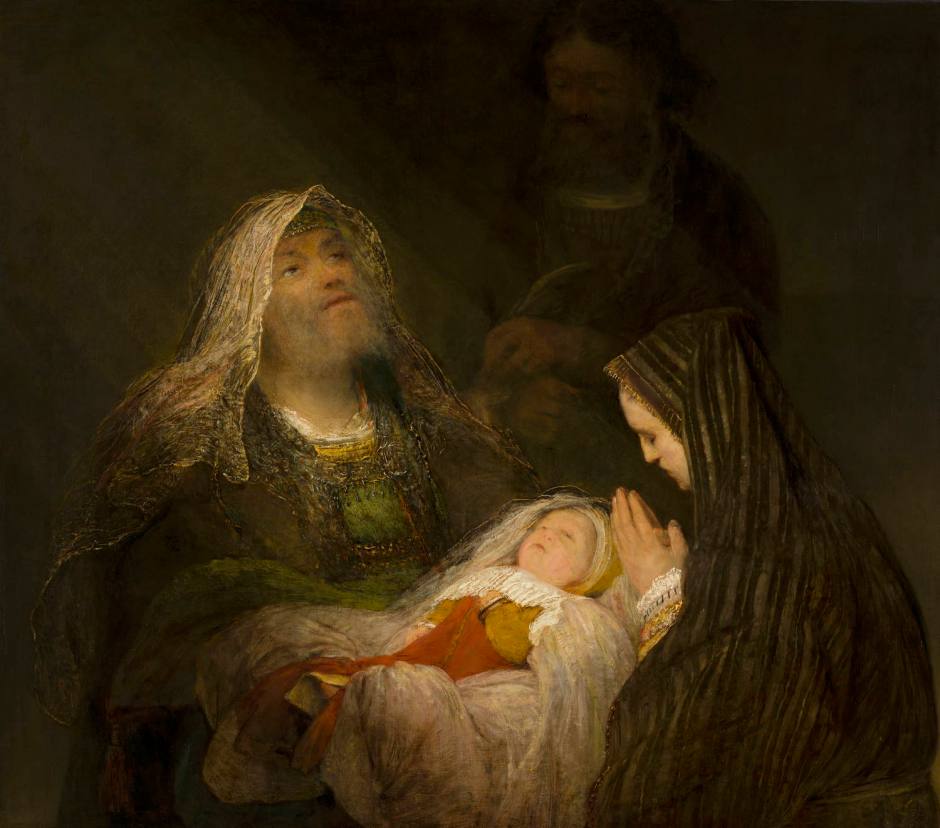
Today is the 25th anniversary of the day of prayer for women and men in consecrated life, instituted in 1997 by Pope Saint John Paul II. The Feast of the Presentation of the Lord is a beautiful day to celebrate the gift of consecrated life in the Church. In the liturgy for the Feast of the Presentation, candles are blessed symbolizing Christ who is the light of the world, and those who have consecrated their lives to God are called to reflect the light of Christ to the world. (The observance of World Day of Consecrated Life in the US has been transferred to the following Sunday.)
One of the key figures who appears in the Gospel today is Simeon. Of all the people in the Temple that day when Mary and Joseph brought Jesus there to present him to the Lord, only Simeon and Anna recognized the baby as the longed-for Messiah. Luke states three times that Simeon was a man immersed in the power of the Holy Spirit. “The Holy Spirit was upon him,” he knew that he wouldn’t see death before he had seen the Christ of the Lord “because it had been revealed to him by the Holy Spirit.” And finally, that day, “he came in the Spirit to the temple.”
Simeon lived under the guidance and impulse of the Spirit so he could see things that others could not. He could see and proclaim what God was doing. He could see how grace was at work. “My eyes have seen your salvation,” he cried out. Can you imagine the joy of this old man that the mystery he had waited for decades to touch was now held in his arms.
Last year, on this day, Pope Francis reflected upon Simeon’s words at a Mass celebrated for religious. I want to use them as the basis for my thoughts here with you. In the dark and chaotic situation in our world today, all of us need to be able to see salvation, to see in our life God’s faithful gift, to witness God’s love at work in the world.
My eyes have seen your salvation! God’s gift even in moments of darkness and powerlessness. It is the tempter that tries to keep us focused on what hasn’t been, what we’ve lost, what we’ve been unjustly deprived of.
My eyes have seen your salvation! God’s gift in fragility and weakness. It is the tempter who hides the light and whispers to us: “You are no good. God can’t love you. Look at how little you love God. What have you done for him?”
Pope Francis described what happens to us, “We no longer see the Lord in everything, but only the dynamics of the world, and our hearts grow numb. Then we become creatures of habit, pragmatic, while inside us sadness and distrust grow, that turn into resignation.”
To see correctly, to see in truth, we need to be like Simeon, we need to be able to perceive God’s grace for us. We need to see salvation, to look at what God is doing.
Instead of focusing on thoughts and feelings about what is happening in our lives and within our hearts, thoughts and feelings that disorient us, Simeon shows us how to be led by the Spirit, inspired by the Spirit, filled with the Spirit. It takes a lot of courage to turn our eyes away from ourselves, to turn our attention away from the tempter and to lift them instead to the Lord. It takes courage to believe that God is at work even when everything we see around us seems to be falling apart.
On this Feast of the Presentation, even if you can’t get to the Church for Mass, light a candle, be warmed by the flame, be filled with the light that burns bravely in the darkness and braves event the wind…. May this candle remind you to see the Lord, the Light of the World, in everything. May it remind you that your life is happiest when it revolves around God’s grace. Courageously hold up the candle to a window, in front of the newspaper or your Twitter account or Facebook page and proclaim, “My eyes have seen, O Lord, your salvation!”
Photo credit: Arent de Gelder, Public domain, via Wikimedia Commons
O Lord, my heart is not lifted up, my eyes are not raised too high; I do not occupy myself with things too great and too marvelous for me. 2 But I have calmed and quieted my soul, like a weaned child with its mother; my soul is like the weaned child that is with me.[a]
3 O Israel, hope in the Lord from this time on and forevermore.
This is Psalm 131. It is titled in my Bible as A Song of Ascents.
Ascents.
These past two weeks I have spent from 3 to 5 hours most evenings or early mornings sitting beside a dear sister-friend who was making her last great ascent. That final walk. The ultimate journey. The loving return.
Each breath of hers was precious and on that last night before she died God helped me to realize that in the end, really, that is all we have…our breath…our current breath. We are not promised our next breath. We already have kissed the last breath goodbye. We cannot cling to it, as we cannot hold onto the past.
And even that breath is a gift. A gift of total gratuitously glorious love from a divine Lover who is supporting us in his arms even as we breath.
On that last ascent, it will not matter what we have created or achieved or known or acquired. The fact that I have written a book, or started a company, or sold an astounding number of widgets, or even loved will not be mine as a monument to me..
I will have only this breath that is a gift to me right now at this moment.
Only this breath.
It is freeing, isn’t it?
What is important to you right now? What worries or angers or burdens you? What frightens you? What dreams are you clinging to?
Listen again to this psalm 131 as it breathes through your soul…
1 O Lord, my heart is not lifted up, my eyes are not raised too high; I do not occupy myself with things too great and too marvelous for me. 2 But I have calmed and quieted my soul, like a weaned child with its mother; my soul is like the weaned child that is with me.[a]
3 O Israel, hope in the Lord from this time on and forevermore.
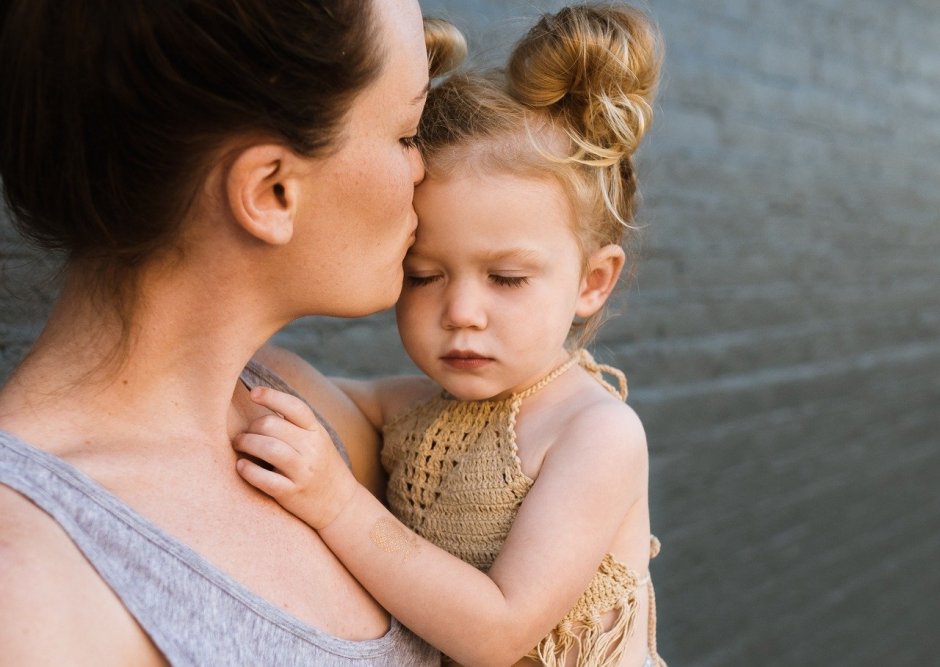
A child on its mother’s lap has no past built up to which it looks with pride or holds onto as a burden. Jesus called us to be these little children who breathe our past into the heart of God and wait with quiet heart for the future to unfold from his hands. As we cannot hold onto our breath, we actually cannot hold onto our past. It IS gone, and nothing can bring it back. If it seems to be present, it is because we keep it so in our mind to the detriment of our heart. The thought-memories that reiterate, return to, recreate what has hurt us in earlier moments and years end up destroying our joy and peace of heart. They are processed through filters created over years and years of judgments and assumptions, suffering and injustice, desires and disappointment, to name just a few of the factors that determine the way we sift through the information we receive through our sense perceptions. Of course, it certainly isn’t as simple as that because we know that our bodies themselves store past trauma. However, when we are mentally trapped in what has happened in the past, particularly when we don’t realize the truth of how it imprisons us, the whole of us can’t heal.
If a child is quietly at peace with its mother, curiously looking around and trying to figure out what others are doing will only lead to its squirming to break free from its mother’s care or fearfully hiding behind its mother’s protective presence. As adults, when we take our eyes off God and look around at what is happening around us and to us, trying to figure it out on our own reasoning powers, we end up breaking free of the nourishing and creative reality of the One who is our ultimate Refuge. We end up in aggressivity, anxiety, and bitterness.
We can learn from this image presented to us in the Psalm to “see,” instead, with the eye of the heart, to perceive with the faculty of the heart. It is a noetic stance before reality. Instead of attempting to understand what is presenting itself to us through reason alone, it is the “faculty of the heart that is able to comprehend natural and spiritual realities through direct experience” (“Pray Thou Thyself in Me,” Molly Calliger, page 3). The eye of the heart is cleansed through the prayer of the heart, the “practice of interior silence and continual prayer.”
“Hesychia: stillness, quiet, tranquility. This is the central consideration in the prayer of the desert Fathers… on a deeper level it is not merely separation from noise and speaking with other people, but the possession of interior quiet and peace” (Ward 1975, p. xvi.).
Let me end with the Morning Prayer of Metropolitan Philaret of Moscow, a prayer that represents the adult living as a child interior quiet and peace:
O Lord, grant that I may meet the coming day in peace. Help me in all things to rely upon Thy Holy Will. In every hour of the day, reveal Thy will to me. Bless my dealings with all who surround me. Teach me to treat all that comes to me throughout the day with peace of soul, and with the firm conviction that Thy will governs all. In all my deeds and words, guide my thoughts and feelings. In unforeseen events, let me not forget that all are sent by Thee. Teach me to act firmly and wisely, without embittering and embarrassing others. Give me the strength to bear the fatigue of the coming day with all that it shall bring. Direct my will. Teach me to pray. Pray Thou Thyself in me. Amen. (“Pray Thou Thyself in Me,” Molly Calliger, page 1).
One of my favorite images of the Conversion of St Paul is found in the Apostolic Palace and is pictured here. It was painted by Michelangelo between 1542 and 1546. January 25 is a big deal for us Daughters of St Paul. St Paul’s conversion is the only conversion celebrated liturgically and it is such a powerful day for us who try to live the experience of St Paul in intimate prayer and courageous evangelization. For this mystery of holiness to happen in our own lives, we too need to go through a Damascus event as did Paul.
At the center of our spirituality is Christ, and his desire to possess us entirely. Every thought pattern and attitude and tendency of our personality. Every desire, preference, behavior…. Everything without exception. This is quite different from making new year’s resolutions at the beginning of January! In the Conversion of St Paul it is Christ who comes to meet Paul where he is, in his frailty (although Paul thought he was someone important doing something significant).
There are several aspects of this painting of St Paul’s conversion by Michelangelo which attract me very deeply. At the top of the image, which doesn’t appear here, is the person of Christ reaching down to Paul through a column of light. There are many people milling around in this image, but Paul is clearly the one who is addressed by Jesus. And Paul is the one who must take responsibility, take the risk, and answer. Isn’t it that way with us, in our unique call from the Lord?
Another aspect of this image which attracts me is the way Paul is almost held by one of the characters in the image. The circular image that is created by the arms of the person reaching down to him, as well as the position of Paul’s body, is almost soft, receptive, intimate. This is not Caravaggio’s strong blinded Paul fallen from his horse. This is a Paul who is being drawn into the mystery of God’s plan for his life and the way God will use Paul to announce the Gospel to the world. It was absolutely moving for me to pray in front of this painting in the Apostolic Palace in the Vatican a couple of years ago, and to see on the other side of the chapel the depiction of the crucifixion of St Peter. Two men who were flawed and frail and human who allowed God to do with them all that he desired.
This is what God desires for you and me. We too have our Damascus event. They aren’t as stunning as what we call the conversion of St Paul, but they can be nonetheless life-changing. I include here a prayer of our community which reflects on the challenge of our own Damascus events.
Light and darkness, sight and blindness, power and weakness, control and surrender. The “Damascus event” in Paul’s life is often played out in my own, though in a less dramatic manner. Lord Jesus, I meet you in so many ways: sometimes in silence and prayer, or by stumbling to the ground of my existence. As I journey through the days of my life, stop me, call out my name, send me your dazzling light, and take hold of me as you took hold of Paul. Even when I kick against the goad, even when I lack courage or when fatigue overtakes me, even when I fall again or lose my way— in all these moments I trust that you are with me and that your grace is sufficient for me. Like Paul, let me know how to be companioned by others, allowing myself to be led by those who can point out the way to you. Help me to be willing to listen to what you are saying to me through them. As you sent Paul on mission, I ask that you send me forth, to those persons with whom I am to share your Gospel. Give me, like you gave Paul, the words and gestures that will reveal your mercy to me, and the love you bear for every person you have redeemed.
Photo Credit: Michelangelo, Public domain, via Wikimedia Commons
Eucharistic Adoration for the Conversion of St Paul
The years of midlife. Transitions. Endings. Wanderings. Grieving.
But also new beginnings. Surprises. Unexpected redirection. Unsuspected rewrites to your accepted narrative for the “you” that you’ve grown comfortable with.
What do you think about yourself?
Let’s ask a few questions, perhaps open a few doors. What are the stereotypes you have of yourself? What’s the narrative you’ve accepted as you, probably the you that will live out the rest of your days? The you that probably won’t ever be much different. Maybe a little tweak, a bit of unexpected happiness to fill a day here or there, but not enough to redirect you entirely into…
…into the reason you were born…
…into the purpose everything has had to this point…
…into what everything you’ve lived and suffered has prepared you for…
So on the day I’m writing this blog post, my personal stereotypical adjectives would be: old, tired, hidden, last. I’m in the midst of yet another transition, so you can pardon the tired colors that make up the mosaic of me on January 24.
Take a moment and jot down some adjectives that describe you deep down. Your humanness. Your vulnerability. The poverty of where you are in life, in career, in relationships. Are they words that weigh heavily on the soul or are they signposts to a new spring where life is worn lightly and the horizons seem bright?
A simple exercise. It is like taking your temperature. It’s good to know what’s going on inside…
When angels appear to us
The Gospel of Luke opens with an invitation into the lives of a couple who were blameless in the sight of God. They were childless, and they were very old.
When Zechariah was chosen by lot to serve as a priest before God in the temple of the Lord, he most likely felt himself to be old, perhaps tired, almost finished. Gratefully he took advantage of this opportunity to serve as a priest in the temple, a privilege that was determined by lot. Most likely, he didn’t expect his life to be steered in a new direction toward becoming the father of John the Baptizer, the one who would make ready a people prepared for the Lord.
The adjectives he may have used that morning for his wife Elizabeth and himself may have been contented, sad, settled, grey. “How can I be sure of this? I am an old man and my wife is well along in years.” When he emerged from the temple of the Lord, after having seen the angel who announced to him this good news, he may have felt bewildered, uncertain. He an old man with no children was now to be the father of the greatest of prophets who would prepare the way for the Messiah.
Becoming a father at twenty or thirty is life-changing enough. But as an old man to discover at last your purpose in life as a father, this prospect marked a monumental shift in identity.
It doesn’t matter how old we are, whether we are in our 40s or 70s or even 90s. The angel of the Lord will appear also to us in order to rearrange our lives, to restart our lives, to cause our self-narratives built up on our own terms to slip away at the dawning of a fresh beginnings on God’s terms. These become our “middle” years. Middle years mark a threshold from a life lived in some fashion “apart from God” to a live lived “in God.”
The noise The seeking striving holding grieving
the throes of a dying ego… that longs to surrender, yet needs to build itself up again…
LORD, free me from myself. From Kathryn-apart-from-God.
In this place where I control my life, where I build my future, where I construct monuments to myself, I live deeply devoid of charity. The kingdom of God is a kingdom of love. While Zechariah and Elizabeth were righteous before the Lord and kept his law blamelessly, I have to admit that there is so much of “me, myself, and I” wrapped up even in my best moments and my most giving actions.
“Rollo May notes that without love, willpower is often little more than a twisted, self-centered demonstration of one’s own character. It points toward itself. It does not serve the higher purposes of connecting us to others and to life. And that which does not lead to life leads to death. There is no middle ground.” (Desiring God’s Will, David Brenner, page 47)
The secret of surrender
Angels come into our life in many disguises. They may come as events, invitations, announcements, unexpected surprises, changes in one’s health, financial or career status, or opportunities. Only when we are willing to recognize that we do not control life can we truly offer our consent to the inflow of Grace in the changes announced to us. Only in surrender do they truly become “good news.”
Without love, willpower is often little more than a twisted, self-centered demonstration of one’s own character.
Rollo May
Instead of surrender, however, Zechariah tried to retain control by requesting the angel to tell him how he could be sure that what he was being told was really going to happen. “How can I be sure of this? I am an old man and my wife is well along in years.”
The angel said to him, “I am Gabriel. I stand in the presence of God, and I have been sent to speak to you and to tell you this good news. And now you will be silent and not able to speak until the day this happens, because you did not believe my words, which will come true at their appointed time.”
The angel Gabriel shifted Zechariah, in a sense, into a liminal period of silence, a transition period from what-was to what-would-be, a threshold space between old and new, between resignation to lost dreams of a fatherhood that had not been his to obedience to a fatherhood that fit with perfect precision into the unfolding of salvation history, as his wife conceived the prophet of the Most High, the rising sun, the dawn from on high.
The “angels” God sends to us to make us not just a little different, but to restart us on new paths, can be quite jarring, as this angelic appearance was for Zechariah.
There is an open secret to the spiritual life, and it’s called surrender.
We can try our best to get assurances about ourselves, our future, our position with regard to God. We can hope forever that our troubling thoughts and feelings will subside so we’ll finally be at peace.
But until we surrender, the fulfillment of our life’s vocation that we so long for will elude us.
There is an open secret to the spiritual life, and it’s called surrender.
What do we need to surrender?
Personal needs and desires
Attachment to the narrative we’ve spun about ourselves and our life’s meaning
Attachment to things being familiar and known
The need to know
The need to understand
The need to control
Surrender everything that makes up your personal identity, and where are you? Who are you? When we surrender, we find ourself in a liminal space.
We’re empty, willing, and totally receptive to accept the gift of God. Here we find:
Not emptiness but Being
Not darkness but light
Not nothing but All
Not silence but the beating of divine Heart
Zechariah and Elizabeth simply needed to let themselves be taken down the river of God’s plan for them, of how he would work through them for the sake of all.
Your middle-year shift is toward this restart of a vocation, the ultimate yes to God’s design for your life.
So what are the opposites of the stereotypes about yourself and your life that you identified a few moments ago? My opposite adjectives are: new, refreshed, beginning again, success, belonging.
And yours? Imagining, cherishing the opposite of the burdens of the past, is one secret for recognizing the transition of the middle years not as loss and ending, but as blessing and gift.
I am hidden, yes: “For you died, and your life is now hidden with Christ in God” (Col 3:3)
I am last, yes: “So the last will be first, and the first will be last.” (Mt 20:16)
I am old, yes: “I have fought the good fight, I have finished the race, I have kept the faith. From now on there is reserved for me the crown of righteousness, which the Lord, the righteous judge, will give me on that day, and not only to me but also to all who have longed for his appearing.” (2 Tm 4:7-8)
I am finished, yes: “It is finished” (Jn 19:30) “Into your hands I commend my spirit.” (Lk 23:46)
It was Zechariah’s sorrow over having no children that was the place of God’s activity that directed Zechariah’s life anew. Don’t run away. Don’t change things on your own. Go deeper in your middle years and find precisely in your loss, the place of good news.
The making of New Year’s resolutions is about 4,000 years old. The ancient Babylonians were the first to hold recorded celebrations for the new year (which for them was in mid-March when the crops were planted). Besides the twelve-day religious festival, they crowned a new king at the beginning of the new year or reaffirmed loyalty to their reigning king, and made promises to their gods to pay their debts and return anything they had borrowed from others. The Babylonians believed if they kept their word they would be favored by the gods. Julius Caesar established January 1 as the beginning of the new year circa 46 B.C. The calendar month January was named for Janus, a two-faced god who looked backwards into the past year and forwards into the future. The Romans offered sacrifices to the deity and made promises of good conduct the year to come.
Our popular New Year’s resolutions aren’t far removed from these ancient practices. I don’t know about you, but the practice of New Year’s resolutions is not that helpful for me, and judging by the abundant blog posts that come out at this time of year, it doesn’t seem that constructive a practice for a lot of people.
So this year I turned to the three kings who followed a star to the crib of the King of kings for advice on how to step into the new year 2021. The magi are identified as Melchior who hailed from Persia, Gaspar (also called “Caspar” or “Jaspar”) from India, and Balthazar from Arabia. The three kings were religious scholars, revered Babylonian astronomers and astrologists. They studied the stars and planets, interpreting the meaning behind cosmic events. The appearance of the “star”—or the alignment of the planets in the heavens as we experienced on December 21— must have been rare and visually spectacular, and it would have been a clear message for the Magi. These things could certainly lead our magus to conclude that a Jewish king had been born. So off they went to speak with Herod.
We could say that these “wise men from the east,” entered into a new chapter of their lives when they observed the astronomical event in the heavens that has been called the Christmas star.
As they watched the heavenly bodies align in so striking a manner, they knew that they were called not just to observe the heavens, but be aroused to action, to follow, to be changed by what would be their part in salvation’s story centered around the newborn King of kings.
These three wise men had to “resolve” to pay attention to this new sign in the heavens.
They had to decide to take a long journey which meant leaving behind comfort, control, their plans, their companions and servants, their work, life as they knew it.
They had to choose to de-center their life from themselves in order to re-center it on this newborn King who was seeking them. (We popularly speak of them seeking the Christ Child, and in some ways they were, but the presence of the Christmas star was indication that the Christ wanted them to be there at his birth. He was seeking them first.)
They had to acknowledge they didn’t entirely know the meaning of this star and where they would find this newborn King, and they stopped in at Herod’s palace for help finding the way. How careful must we be whom we ask for help in understanding and responding to God’s invitations in our life.
They had to choose to de-center their life from themselves in order to re-center it on this newborn King who was seeking them.
This journey without directions and clear destination seems to be the way God works. In the Bible (and in my own life), God seems to relish sending people on journeys without saying exactly where they were going or how to get there or what they would find when they arrived or what they should be doing when they reached their destination or what would happen after the journey. Think Abraham, Moses, Isaiah, Jeremiah, Paul…
When I think “star in the heavens,” I picture one of those Hollywood biblical extravaganzas. After all this was a great astrological event that had been foretold in the Scriptures…. But the Star led to something, Someone very small. It led to a tiny family who didn’t even have a decent place to stay. A group of shepherds showed up for the event of this birth. “In Christ’s day, shepherds stood on the bottom rung of the Palestinian social ladder. They shared the same unenviable status as tax collectors and dung sweepers.” Hardly did it match the prophecy of the Messiah’s birth:
‘And you, O Bethlehem in the land of Judah, are not least among the ruling cities[c] of Judah, for a ruler will come from you who will be the shepherd for my people Israel.’
This year, as I think about the days and months to come, as I think about the next stage of my life’s journey I don’t want it to be my journey, a journey that emerges from the center that is “me, myself, and I.” O Lord, decenter me I pray.
Here are five things I am taking from the story of the Magi from the East as I make my “resolutions” for the New Year.
First, don’t make resolutions. The three kings from the east didn’t decide that they were tired of their life and it might be a great idea to seek for God in some new way by following a star. No. They were sought out by the Star, invited to submit to God’s plan for them.
Second, keep your eyes open. The Star, the messenger of how God is seeking you, is already on the horizon. Like the three kings, you need to be watching the heavens for signs of the Star that will take you anew, on your knees, to bow before the Infant King.
Third, welcome obscurity, chaos, darkness, confusion, uncertainty, not knowing. It sounds like the pandemic all over again. However, these are elements of the spiritual life that we can’t get away from. In our younger years we take control and establish ourselves in careers, dreams, families, spiritual goals. We know. And all this is right for that age. In our middle years, however, God gently undoes all of this to draw us away from what we’ve built up in order to find him in the small village of Bethlehem. Then we learn that we do not know. And how blessed is this not knowing.
Fourth, believe that the star will lead you to God. No matter what we think we find at the end of our journey, God leads us to himself. The three kings brought with them gold, frankincense and myrrh, costly gifts for someone who was King, God, and Priest. At the end of their journey they found a baby in a poor village. And yet they worshipped. We too will see with our eyes things and people and events that are poor, not-good-enough, broken, vulnerable. Disguises of the Almighty, of Infinite Love. It is precisely here that God makes himself known. Allow yourself to be led deeper into Mystery. Into the Sacred.
The end of our journey of sanctification is to become like God through grace, what some ancients have called “deification.” How much more rewarding.
Fifth, expect clues for your new life to be given you along the way. The wise men were warned in a dream not to return to Herod but to go home by another route. Once our hearts have been re-centered on God, our lives will be lived from another divine Source. This shift is more important than the flexing of our moral muscles in resolutions to become a better person. The end of our journey of sanctification is to become like God through grace, what some ancients have called “deification.” How much more rewarding.
I would like to close with the second verse of one of my favorite Christmas carols: Sleep on, Little King. It is an English translation of an Italian carol with the tune Ninna,Nanna. Since we are a congregation with Italian roots, the song was probably translated by our sisters many years ago, so you most likely haven’t heard this carol. So here is the second verse:
Wonder of wonders, Myst’ry of mysteries, Upon the heart of the young Virgin Mother Rests the Maker of all the world. God’s eternal Word Reunites man with the Father; His love is revealed— The hills rejoice, all nature sing, The angels’ “glory” rings forth.
Shepherds called to the side of the manger Kneel in adoration and wonder. Kingly gifts by the nations are brought; The world surround His throne— O come let us adore.
You have come to love and to save, Come to lead us all in Your way. Sleep on, my Jesus, sleep on, my Lord.
Image credit:
Matthias Stom: Konungarnas tillbedjan. NM 1792; public domain





 Touching the Sunrise