God’s living message is very close to you

“God’s living message is very close to you, as close as your own heart beating in your chest” (Rom 10:8, TPT).

These are the words of Moses quoted by St Paul in his letter to the Romans. We could read them today in this way: “You may feel alone. You may be scared about the future. You may be worried for your children. You may wonder if God will do something to protect you. What I want you to know is that God’s living message of salvation is very close to you. His revelation of faith for salvation is truly the news that is good, that makes your heart skip a beat when you realize how near to you is the One who speaks and is the true promise and guarantee of your being loved forever and ever. Nothing can shake that love. In my hands you are safe.”

The ongoing media discussion about the nation’s crises in these early days of September 2021 will never satisfy your heart. It isn’t the “good news” that God knows your heart needs to sing and flourish. It isn’t the “good news” that will guide you into all truth. The constant commentary is like piling up stones and bricks and wood and paint and cement…a pile that never becomes a building of any sort. The arguments don’t hold together. The words don’t become wisdom.

For “In HIM, in Christ,” Paul states, “all things hold together.” This is because “He is before all else that is” (Col. 1:17). Jesus Christ is the Cornerstone of all that exists. Apart from Him we can “do nothing” (Jn 15:5). A Cornerstone “is the first stone set in the construction of a masonry foundation. All other stones will be set in reference to this stone, thus determining the position of the entire structure.”

Nothing in our life or in the history of the world “hangs together” if it is without reference to Jesus Christ.

Nothing in our life or in the history of the world “hangs together” if it is without reference to Jesus Christ. “All before or after Jesus is meaningless without experiential contact with him” (Philip Krill, More Than Conquerors). As you listen to or read social and news commentary on the truly critical issues of our day, ask yourself, “Where is the Cornerstone? Where is Jesus? What is the “glue” holding together this person’s ideas?”

Jesus recapitulates in himself all of humanity and all of the entire creation. It is because of our Bridegroom, the Lion of Judah and the Lamb without stain, beautiful Jesus, Savior of the world, that we can have the expectation that no matter what the sufferings of this present time, the glory of God is to be revealed in us (1 Cor. 2:9).

Paul could be so absolutely certain of this glory because he had been given a foretaste of it on the road to Damascus when he was thrown to the ground before the manifestation of the glory of the resurrected Jesus who called him by name, who knew everything about him, and who had chosen him to tell the world about the mystery of salvation.

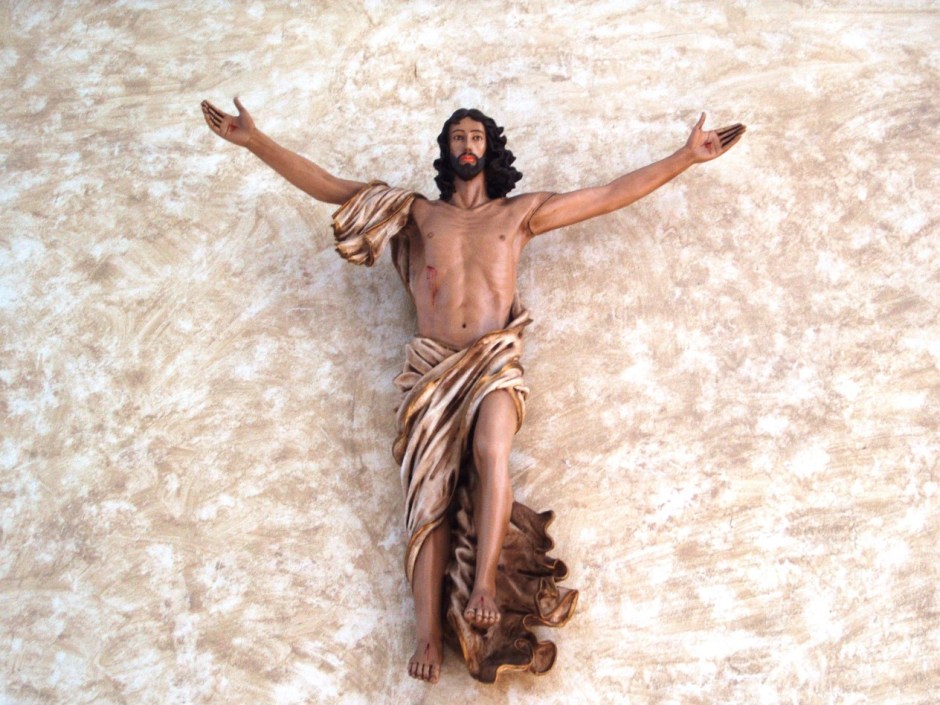
Friends, when I see the terror on the face of Afghan women, try to understand the complex situation regarding the crisis at our border, look at so many cities that are now after Hurricane Ida no longer livable in Louisiana and Mississippi, consider the thousands still attempting to escape the Taliban, I too throw myself down at the feet of Jesus, the “one who holds the seven stars firmly in his right hand” (Rev. 2:1). Through the victory of his resurrection he now holds the keys of life and death.

“Don’t yield to fear. I am the Beginning and I am the End, the Living One! I was dead, but now look–I am alive forever and ever. And I hold the keys that unlock death and the unseen world” (Rev 1:18).

To seven churches, the apostle John was directed to write seven letters (Rev 2–3). In these letters to Christians who were suffering persecution and martyrdom for their belief in Jesus, the risen One calls the churches to account: return to the passionate love you had for Christ at the beginning! Do not become discouraged! Do not yield to fear in the face of suffering! Repent of believing the words of men and listen to the Spirit! Flee immorality for I search your mind and heart! Remember all the things you’ve received and heard, turn back to God and obey him! Cling tightly to what you have so that no one may seize your crown of victory! Jesus wants his Bride the Church to burn brightly, bringing light and illumination to the world as a witness of God’s glory.

In the face of the barrage of the words of men–analysis, anger, manipulation, fear–I need help sometimes to cling to the Word of God–to Jesus the Cornerstone, the Bridegroom of the Church whom he has made the Light to the nations. If Jesus called and missioned Paul to announce Jesus to the world, he has called and missioned the Church, and you, and me, in the same way. Each of us has our own unique corner of the world in which we shine, certainly, but we each were created to manifest God’s glory to this world. It doesn’t help any of those suffering so tremendously in today’s political climate if I neglect to be and do that for which God has sent me. It is the glory of God that in mysterious ways more powerfully sways nations and rulers and the powers of nature than any human plan or political agenda.

So let us take as our rule of life these directives to the seven churches: Return to the passionate love you had for Christ at the beginning! Do not become discouraged! Do not yield to fear in the face of suffering! Repent of believing the words of men and listen to the Spirit! Flee immorality for I search your mind and heart! Remember all the things you’ve received and heard, turn back to God and obey him! Cling tightly to what you have so that no one may seize your crown of victory!

Read them morning and night. Remind yourself of them during the day. Post them where you can see them often. Read them after receiving Jesus in Holy Communion. Examine yourself on them as you prepare for confession.

Hold onto faith, preserve your expectation. John Howard Yoder stated when we say, “I hope so,” it is most often a polite way of saying, “it probably won’t happen.” Christian hope, instead, is an absolute unquestioned confident expectation that what we have already experienced in Jesus Christ will give us the courage to put away the fearful questions that haunt our uncertain dreams with the proclamation from the depths of our hearts that Jesus, and only Jesus, “makes all things new” (Rom. 21:5).

If the Church doesn’t hold out this hope for the world, then who will? This is the hope that has saved the world. You and I can be the hope the world needs today.

Image credit: Cathopic, Angie Menes

Throw Open Your Heart

The road to communion is beautiful. So open your heart to the world. We are meant to be one. We are one. We come forth—each and all of us—from the creative word of the same Father and Creator: “Let us make mankind in Our image, after Our likeness….” (Gn. 1:26).

Throw open the doors and windows of your heart to brothers and sisters looking for someone whose heart is filled with the wind of the Spirit…

Throw out the furniture to make more room, for only a heart that is poor and waiting can receive the other…

Throw down the welcome mat and refuse to no one access to your charity and compassion and care…

Let them come, my friends, these others who are your brothers and sisters. Let them come from wherever they are now, from whatever country, political persuasion, faith, poor or rich, healthy or suffering in any way, and together let us build a new way of living in communion.

What would it look like to live together knowing our total dependence on God for everything?

To wait upon the Lord…

To let gentleness live within us and among us…

To claim nothing as our own, but to share all things as one family…

To be single-hearted and pure of spirit…

To be makers of peace, to wish well-being to all…

To work that no one might suffer…

The road to communion is beautiful. The possibility of living the way of the beatitudes proclaimed by Jesus attracts us. When I was younger, I had great hopes for a heart characterized by this charity. At 57 I realize that I cannot change my own heart in so radical a way, much less transform others and the world. The terrors and pain that wound my brothers and sisters in the world frighten and overwhelm me. Sometimes they seem to steal my voice and paralyze my own hope.

At 57 I realize that the beauty of this path is created by the eagerness of the continued journey, and the willingness to let God wreck my idealism about myself and the world. So know, my friend, that deep inside your heart lies the seed of God’s own power to build communion. The gift of unity and shared respect grows like the mustard seed and in our tentative, gradual and often faltering steps this broken yet gifted world is transformed into the Kingdom. 

So allow others into your life and heart. They are God’s messengers to break you out of your own frozen places and constricted ideas and opinions about what is true, good, and beautiful. Even the ugly can teach you beauty. Even the harsh can call forth your tenderness. Even the proponent of ideologies you do not share can push you to kneel before the One alone who is Truth, Way, and Life.

Ask Jesus for the grace to know who you may need to forgive or where bitterness and resentment are keeping you apart from this oneness for which you are made. May these days be a time of healing, a calling to the center, a uniting into one family, a restoring of what has been lost, a re-membering of what has been forgotten. May these days be filled with graces beyond your wildest dreams.

Never stop running for the goal!

In this spring and summer we are almost holding our collective breath as the pandemic seems to be slowly winding down here in the US. We wonder what normal will look like after having “worshipped” via Zoom for so long.

The Spirit is actively creating something new in this transition and return to the celebration of the Eucharist with our brothers and sisters, together, as a community in Christ, as Christ’s body. Those who have been waiting for Baptism can now receive that most important sacrament by which, as St Paul tells us, we die with Christ and rise with him.

Through the sacraments of baptism and the receiving of the risen Christ in the Eucharist at Mass, a deep and radical change takes place within us. In the words of Nicholas Cabasilas (a 15th-century Greek theologian): “O wonder of wonders! It is God himself we touch in the Eucharist and God becomes one with us in the closest union.” And again, of the sacrament of baptism, “When we come up from the water we bear the Savior upon our souls, on our heads, on our eyes, on all our members…. We have been stamped with Christ.”

These days can be a renewed experience for all of us of the life we receive only through Christ, in Christ, and in the sacramental life of the Church. This was a favorite topic of St. Paul, so I reached out to Sr. Margaret Kerry for some thoughts on this theme. She has such a rich experience of speaking with people both about the faith and about St. Paul to help us deepen this topic. For years she has been writing reflections on Paul’s letters for our lay Paulines (Pauline Cooperators) as an ongoing study. Her focus is on baptism, the sacrament that opens the door for all of the sacraments as we join the family of God. The following material is from Sr. Margaret.


Thank you so much for inviting me to explore the sacraments with you in the spirit of St Paul. I would first like to put this in context by recalling Paul’s words, quoted loosely, “Never stop running for the goal!” St. Gregory the Great wrote, “Jesus became incarnate so that he may be seen by us. And Jesus wants to be seen so that we may imitate him.” In relation to this, Blessed James Alberione exclaims, “How sublime this is! All baptized Christians are called to become one personality in Christ, to graft ourselves to Christ, so that truly Christ lives in us.”

St. Paul explained this imitation of Christ, this goal of becoming Christ, in terms of living in Christ when he said, “I have been crucified with Christ; yet I live, no longer I, but Christ lives in me; insofar as I now live in the flesh, I live by faith in the Son of God who has loved me and given himself up for me” (Gal 2:19-20). St. Paul imitated Christ so brilliantly that he could exhort others, “Imitate me as I imitate Christ” (1 Cor 11:1).

Through our baptism, this conformity with Christ is already a reality in us. We enter a covenant with God. On our part, we pray that the “grace of God will bear fruit” so that this conformity with Christ will attain fullness. We have been given the first fruits of the Spirit who helps us in our weakness. “With Christ in us we are a new creation!” (see 2 Cor 5:17).

Saint Paul, you lived in deep intimacy with Jesus and spent your life proclaiming him to all God’s people. Teach us to do the same.

By virtue of our baptism, we live in Christ; in him “we live and move and have our being” (Acts 17:28). We are members of his Body, his dwelling place. Show us what it means to live out of this amazing reality: that, having encountered the love of God in Jesus, we are called to share it as his missionary disciples.

Baptism admits us into a mysterious and permanent communion with Christ. In the ancient church, baptism was also called “illumination,” because the sacrament gives light; it truly makes us see. This is clear from the Acts of the Apostles, which recounts Paul’s encounter with Jesus, his “conversion.” He had traveled to Damascus prepared to take any followers of the Way into custody to Jerusalem. Instead, Jesus appeared to him outside Damascus, calling out, “Saul, Saul, why do you persecute me?” When Paul asked Jesus who he was, he was told to get up and go into Damascus where he would be told what to do. Paul waited three days in Damascus, unable to see anything. The darkness gave way to light when Ananias, sent by the Lord, baptized him so that he might be filled with the Holy Spirit.

Paul was transformed by the irresistible presence of the Risen One. Once blind, he was now able to see. The illumination that Paul received on the road to Damascus is what happens for every Christian at their own baptism. Baptism admits us into mysterious and permanent communion with Christ. “For God who said, ‘Let light shine out of darkness,’ has shone in our hearts to bring to light the knowledge of the glory of God on the face of [Jesus] Christ” (2 Cor 4:5-6).

Lord, illumine us, grant us an encounter with your presence in our world, open our eyes, grant us a lively faith, an open heart, and great love for all, love capable of renewing the world.

Even after such a tremendous grace as was this encounter with the risen Christ, Paul writes again and again in his letters about an ongoing “conversion.” In his letter to the Romans, he famously writes about his struggle: “I do not understand what I do. For what I want to do I do not do, but what I hate I do. For I have the desire to do what is good, but I cannot carry it out. For I do not do the good I want to do, but the evil I do not want to do—this I keep on doing” (Rom 7:15, 18-19).

The verb Paul uses for conversion is an active verb signifying “ongoing transformation.” Paul admitted that he was always on the road to conversion. “I strain forward to what lies ahead, pressing on toward the goal for the prize of the upward call of God in Christ Jesus” (Phil 3:14). He depicts the ongoing struggle we all experience in our call to live fully our Baptismal commitment. “Creation waits in eager expectation for us to be revealed as new” (Rom 8:19).

Yet Paul also assures us that, through our baptism and our ongoing transformation, we are being transformed from glory to glory. “All of us, gazing with unveiled face on the glory of the Lord, are being transformed into the same image from glory to glory, as from the Lord who is the Spirit” (2 Cor 3:18).

Lord, grant us freedom in your Spirit so that, from this inner abundance filling our earthen vessel, we can say “it is no longer I who live, Christ lives in me” (Gal 2:20)

Ultimately, our transformation takes place, not through our own power, but through the power of the Risen One. Paul invites us to glory in our weakness as the power of Christ is manifested in us. When Paul experienced what he called a “thorn in the flesh,” he begged God to take it from him. But Paul said that the Lord refused to take this suffering from him. “My grace is sufficient for you, for power is made perfect in weakness.” Paul then glories in his infirmities, because the power of God is made manifest through them: “So I will rather boast most gladly of my weaknesses, in order that the power of Christ may dwell with me” (see 2 Cor 12:9).

Through our baptism, Christ confirms a permanent dwelling in us, the beginning of new life. “He will change our lowly body to conform to his glorified body” (Phil 3:12). Paul speaks of this permanent dwelling, this conformation to the glorified body of Christ, as living “in Christ.” In fact, Paul uses the word “in” over 164 times when he refers to life in Christ! By living in Christ through the graces of our baptism, by deepening our union with Christ through the Eucharist, Jesus restores us to the fullness of life in the Triune God in whose image we are created. In turn, we are sent as Christ for others.

God, in your mercy, transform us into your likeness so that we become way, truth and life for our families, our neighbors, our Church and for those who have not yet encountered you. Amen.

Jesus, I want what you have!

Keeping the commandments. It is something that children wrestle with as they prepare for their First Penance. Do you remember that first time you had to examine your conscience? Later this tension to fidelity to God’s Word and the Ten Words of Law becomes “second nature,” spiritually speaking, or else rebellion to the invitation to holiness found in the commandments becomes ingrained in thoughts, words, and habits, ultimately manifesting in a life of pain and sorrow. According to the words of Jesus there is no middle road: “Whoever breaks one of the of the least of the commandments…whoever obeys and teaches these commandments…”

St Silouan the Athonite said that the apostle John says that the commandments of God are not difficult to keep (1 John 5:3). For the one who loves, they are easy to keep. They are difficult only for the one who does not love.

Keeping the commandments is a matter of the heart. Recently I was resting in prayer, silently contemplating Jesus who had climbed a mountain for time alone with his Father. It was night. I imagined myself quietly watching from a short distance, my elbows on a large boulder, holding my face in my hands, as I observed Jesus standing a few yards away. I could just see the silhouette of Jesus as he stood looking up into the star-lit night sky in this place to which he had retired to be with his Father. The intensity of love that I sensed between him and his Father, the energy of their wordless communion, the giving and receiving, the loving and responding, the gift and obedience…. Even though I was not a part of their unspoken communication, Jesus’ bond with his Father was unmistakable and strong. When Jesus’ had finished praying he turned and noticed me watching. He walked quietly toward me and sat down. My heart full, I said simply, “I want what you have.” And he said to me, “I want you to have it too.”

I want the love that Jesus experiences to take hold in the deepest recesses of my heart. I want my sole desire to be to surrender my life entirely to that love, to desire to speak, think, and do only what the Father has given me to do. In other words, I want to be true to the Father’s love for me and for others in the totality of the way I live. But when I examine myself I see that I am not like Jesus who could say, “I say only what I hear from the Father.” My love is only a distortion of divine love.

I want the love that Jesus experiences to take hold in the deepest recesses of my heart. I want my sole desire to be to surrender my life entirely to that love, to desire to speak, think, and do only what the Father has given me to do.

The law of God helps us recognize our poverty and our utter dependence on God. It floods us with God’s mercy which renews us, as we realize we cannot keep the commandments unless God himself remakes our hearts. And he will do so, if we open our heart to him. As Jesus said to me, “I want this for you too!” What generous kindness that will not fail to be brought about through Jesus’ action on my poor heart.

Pope Francis said that the commandments help people face the disarray of our hearts in order to stop living selfishly and become authentic children of God, redeemed by the Son and taught and guided by the Holy Spirit.

The commandments are a gift. They save us, as Saint John Paul II reminded us in his speech on Mount Sinai, from the “destructive force of egoism, hatred and falsehood. They point out all the false gods that draw [us] into slavery: the love of self to the exclusion of God, the greed for power and pleasure that overturns the order of justice and grades our human dignity and that of our neighbor.”

To keep the commandments is paradoxically to know that we can’t keep them without the power of God at work within us, without the Spirit remaking our hearts and minds, without the blood of Jesus washing us clean and transfiguring our entire being in himself.

Image credit: Il Ragazzo via Cathopic

Guest Post: The Hearts of Jesus and Mary

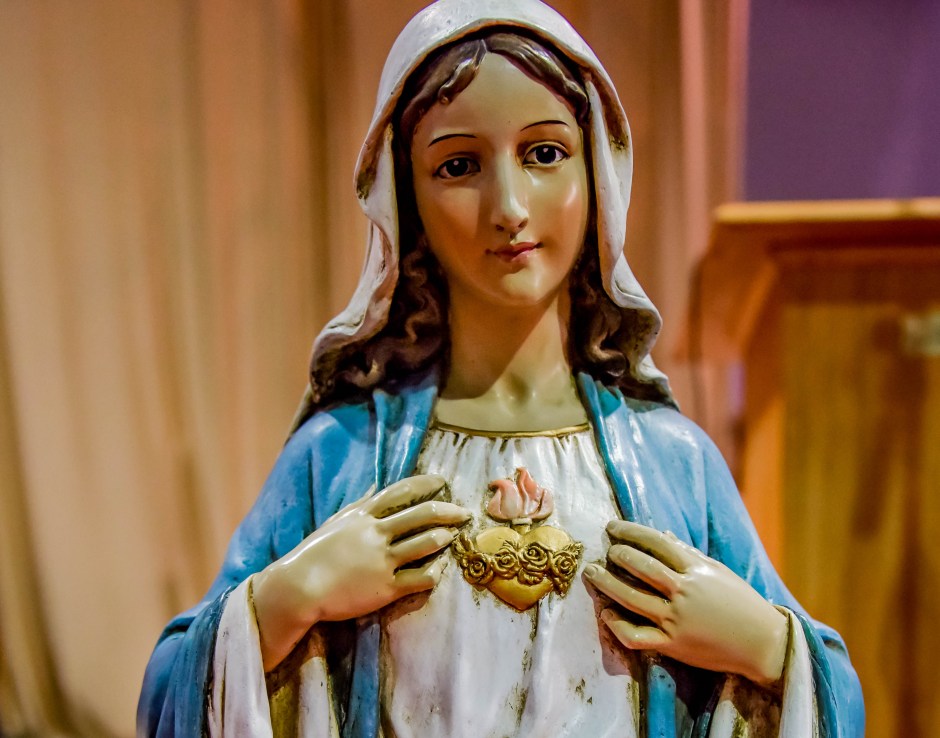
June is the month of the Sacred Heart, and this year the feast of the Sacred Heart falls on Friday, June 11. In this feast Jesus pours out the love of his heart on us. But Jesus always comes with Mary. The next day, June 12, is the feast of the Immaculate Heart of Mary. In the union of these two hearts we are completely enveloped in divine and human love.

The heart is the symbol of love, one that’s even used widely in our secular culture (as in Saint Valentine’s Day). It’s a universal symbol most people can relate to easily. From his heart, Jesus pours forth the ocean of his love, and Mary does the same from her own tender maternal heart. They both have an unconditional love for us. That doesn’t mean they don’t care if we sin, but rather that they still love us despite our sins. Jesus in his Sacred Heart and Mary in her Immaculate Heart want to pour out their love on us. If we stray, they call us back.

Mary can transform hearts. In Paris in 1836, a holy priest, Monsignor Charles Desgenettes, was assigned to Our Lady of Victories parish. Spiritually the parish was dying. Only a faithful few old people still went to Mass. Determined to bring about a spiritual revival, the priest consecrated himself and the parish to Mary’s Immaculate Heart. He announced that he was going to call a meeting about being consecrated to Mary. To his astonishment, the church was packed for the meeting! In time a complete spiritual revival took place—and devotion to Mary’s Immaculate Heart was the driving force.

If we need renewal in our life, whether as a church or as an individual, devotion to Mary is a great place to start. She will draw us closer to her son, Jesus, and together the two hearts of Jesus and Mary will help our own hearts burn with love of God and neighbor.

By Sr Marianne Lorraine Trouvé, FSP

Image Credit: Tacho Dimas via Cathopic

The Heart of a World in Pain: Meditation for Corpus Christi

I spent a couple of hours this morning before Mass meditating on Alexander Schmemann’s profound articulation of the mystery of the Eucharist…. a gift to myself on this most beautiful of liturgical feast days. The vast horizons of this Orthodox priest and writer’s soul seem to peer into eternity as he contemplates the liturgy of the Eucharist:

The Liturgy is the journey of the Church into the dimension of the Kingdom…. Our sacramental entrance into the risen life of Christ. The liturgy of the Eucharist is where individuals of every culture, socio-economic bracket, and way of life come together in one place to bring their lives with them in order to be more than what they were: a new community with a new life. In the liturgy we are immersed in the new life of the Kingdom… (cf. Alexander Schmemann, For the Life of the World, page 28-32).

This morning my heart is also shadowed by conflicting emotions, sorrow, a desire to make things right if I could, to erase wrongs, to supply for what is now lacking, to heal the ones who are broken…. On this day I am mindful of very difficult stories that have been in the news and are on all of our minds and hearts lately: the discovery of the mass grave with the bodies of 215 children at the site of the former Kamloops Residential School in British Colombia, Canada; the 100th anniversary of the Tulsa Race Massacre; the one year anniversary of the death of George Floyd; the ongoing violence on our streets and in our homes.

The inexcusable and horrific stories of how we creatures of the same God and Father of us all can harm each other, taking from each other life, hope, future overwhelm our hearts. They are so incomprehensible that our minds and hearts recoil from even learning about them, facing them, putting things right. Let’s take a step back, again letting Schmemann be our guide, as we ask ourselves from where this evil among us comes, this evil we first encounter in the story of Cain turning on his brother Abel, these two sons of Adam and Eve who had chosen to eat from the Tree of the Knowledge of Good and Evil in the Garden of Eden at the serpent’s suggestion:

Man ate the forbidden fruit. The fruit of that one tree, whatever else it may signify, was unlike every other fruit in the Garden: it was not offered as a gift to man. Not given, not blessed by God, it was food whose eating was condemned to be communion with itself alone, and not with God. It is the image of the world loved for itself, and eating it is the image of life understood as an end in itself.

To love is not easy, and mankind has chosen not to return God’s love. Man has loved the world, but as an end in itself and not as transparent to God. He has done it so consistently that it has become something that is “in the air.”

It seems natural for man to experience the world as opaque, and not shot through with the presence of God. It seems natural not to live a life of thanksgiving for God’s gift of a world. It seems natural not to be eucharistic.

The world is a fallen world because it has fallen away from the awareness that God is all in all. The accumulation of this disregard for God is the original sin that blights the world.

On this Feast of Corpus Christi I’ve been thinking about how all of life is meant to be eucharistic, a life of thanksgiving to the God on whom we depend for everything. Life lived in a eucharistic key is a journey of love and adoration toward God. We lost this eucharistic life in Adam and Eve. In Christ, the new Adam, this eucharistic life is restored to us. Contrary to the first Adam, Christ offered himself to the Father in perfect obedience, love and thanksgiving. Christ did not reach for his own glory, did not consider equality with God something to be used to his own advantage. Christ’s life was a symphony in the key of Gift and Gratitude. He made himself nothing by taking the very nature of a servant for our salvation, becoming obedient to death, even death on a cross! As Gift he received from God the highest place, and to him every knee must bow to the glory of God the Father (cf. Phil. 2:5ff).

For “the wages of sin is death.” The life man chose was only the appearance of life. God showed him that he himself had decided to eat bread in a way that would simply return him to the ground from which both he and the bread had been taken: “For dust thou art and into dust shalt thou return.” Man lost the eucharistic life, he lost the life of life itself, the power to transform it into Life. He ceased to be the priest of the world and became its slave.

In the story of the Garden this took place in the cool of the day: that is, at night. And Adam, when he left the Garden where life was to have been eucharistic—an offering of the world in thanksgiving to God—Adam led the whole world, as it were, into darkness. In one of the beautiful pieces of Byzantine hymnology Adam is pictured sitting outside, facing Paradise, weeping. It is the figure of man himself (Alexander Schmemann, For the Life of the World, page 17-18).

In the Mass Christ himself takes all of us and the totality of our life to God. “I am the true vine, and my Father is the vinedresser. Every branch in me that does not bear fruit, he takes away: and every branch that bears fruit, he prunes, that it may bear more fruit. Already you are clean because of the word I have spoken unto you. Remain in me, and I in you. As the branch cannot bear fruit of itself, unless it remains in the vine; so neither can you, unless you remain in me. I am the vine, you are the branches: He who remains in me, and I in him, the same bears much fruit: for away from me you can do nothing. If a man does not remain in me, he is thrown away as a branch, and is withered; and they gather them, and throw them into the fire, and they are burned. If you remain in me, and my words remain in you, ask whatsoever you will, and it shall be done unto you” (John 15:1-7).

In the light of the Eucharist we see that Christ is indeed the life and light of all that exists, and the glory that fills heaven and earth….

He became man and lived in this world. He ate and drank, and this means that the world of which he partook, the very food of our world became His body, His life. But His life was totally, absolutely eucharistic—all of it was transformed into communion with God and all of it ascended into heaven. And now He shares this glorified life with us. “What I have done alone—give it now to you: take, eat. … (page 43).

Each time we celebrate the Eucharist we experience the very joy of the Kingdom because we realize that even as the joys of earth will one day come to an end, there is now through Christ a seed of eternal joy planted in our world that will grow into the Kingdom. And so we pray for the world, we beg God that we might love the world as Jesus loves the world. That we might love the world with the very love of Christ. That we might see the world in Christ, as it really is, and not from our own limited points of view. We intercede for those who are victims, for those who perpetrators, for our are brothers and sisters.

I’ve been wrestling with these shadows of sorrow even as I stand at the messianic banquet and receive into my heart the Life of the world. It is this way with all of us. It will always be this way in this world.

I’ve decided today that what matters for me is where I stand. In what dimension I live. With whose gaze I look upon the world. With whose heart I feel.

I am, we are, one in Jesus, the Vine, our Life, the one who holds us all together as one and brings us with him into the Kingdom of his Father. The image of the Vine and the Branches offers me a way to live through these sad and disconcerting times:

  1. Jesus said that the branches must bear fruit. He commands it actually eight times in John chapter 15. The present tense here points to bearing more than one fruit or one season of fruitfulness. It indicates a sustained productivity. Yet I know by myself I cannot bear fruit. I cannot reach up and grasp for fruitfulness. I need to remain attached to the Vine through the Eucharist in order to be fruitful. I am mindful of the too many branches that have been weakened and have even given up on the Vine because of the activity of some of those who are Christians and Catholics, themselves branches on the Vine. I remember those who have chosen to behave toward others in ways that have separated themselves in some way from the full Life of Christ the Vine. I remember all those who have suffered grievously at the hands of other branches on the one Vine. In every Eucharist I can pray with the heart of Jesus for all those for whom Christ died for he is now the only one who makes things right, who brings shalom, that is, wholeness, completeness, soundness, health, safety and peace with God and reconciliation.
  2. Every branch that does not bear fruit will be taken away by the Gardener. The prayer often on my lips in times like these is: “Thy kingdom come! Thy kingdom come! Thy will be done on earth as it is in heaven.” God is at work clearing away what needs to be cleared away so that the voices of his children who have been marginalized and suffered devastating losses can be heard. We need to have the courage to enter into the stories of those who have suffered at the hands of others. I must admit, about some of these situations I knew nothing until I started reading, inquiring, listening. Even a 30 minute tour around the internet can help us hear their voices. Thy kingdom come means that we stand up to hear all these voices and allow the kingdom which is beyond the smallness of our hearts to break open the hold that evil has on us.
  3. We are invited to remain in Jesus as he desires to remain in us. To abide, to be joined to him. To have a sustained union, a steadfast and enduring communion with the Vine. For those who abide in Christ as branches on the Vine there is the promise that they can ask what they will and it will be done for them. I believe this is because the branches that are receiving nourishment from the Vine are of one heart and mind with Jesus. What they ask for the world comes from the heart and interests and desires of Jesus that all be saved, that all be healed, that all be made whole, that all be one.

Through the Liturgy the broken life of this world is brought, in Christ and by Christ, into the dimension of the Kingdom of God. The Mass is the Heart of a world in pain, the seed of Joy, the manifestation of the mystery of God’s presence and action. It is in the offering of the Eucharistic sacrifice that the world as it isdivided, torn, broken apart with anger and shadowed in fearis brought to God. For it was for this world that God’s Son, his only Son, gave his life. And so will I.

Image Credit: Dulce Maria via Cathopic