Face into the headwinds of reality with courage

I have to admit that I definitely prefer the gospel passage where Jesus proclaims himself the Good Shepherd to this one read in today’s Mass which promises persecution and betrayal. The Good Shepherd who looks after his flock, keeping them safe from predators, rescuing them when they are lost, guiding them home, sleeping at the entrance to the sheepfold.

How could the same Jesus who promised me security and safety also tell me that I would be betrayed, persecuted, handed over, hated, and possibly lose my life?

For many years I pushed this passage to the back of my mind. There is certainly no bookmark in my Bible so that I could locate it quickly for meditation.  

Today’s Gospel passage is one that makes us cringe. Is what Jesus says going to happen to us? To me? Or was Jesus just talking about the Twelve?

A few short verses after this passage, Judas betrays Jesus, Jesus gives us his body and blood at the Last Supper, and he walks the road to Calvary, a condemned prisoner betrayed by one of his own followers, hated, persecuted, handed over. Then he was put to death on a cross between two thieves.

“You will be hated by all because of my name,
but not a hair on your head will be destroyed.”

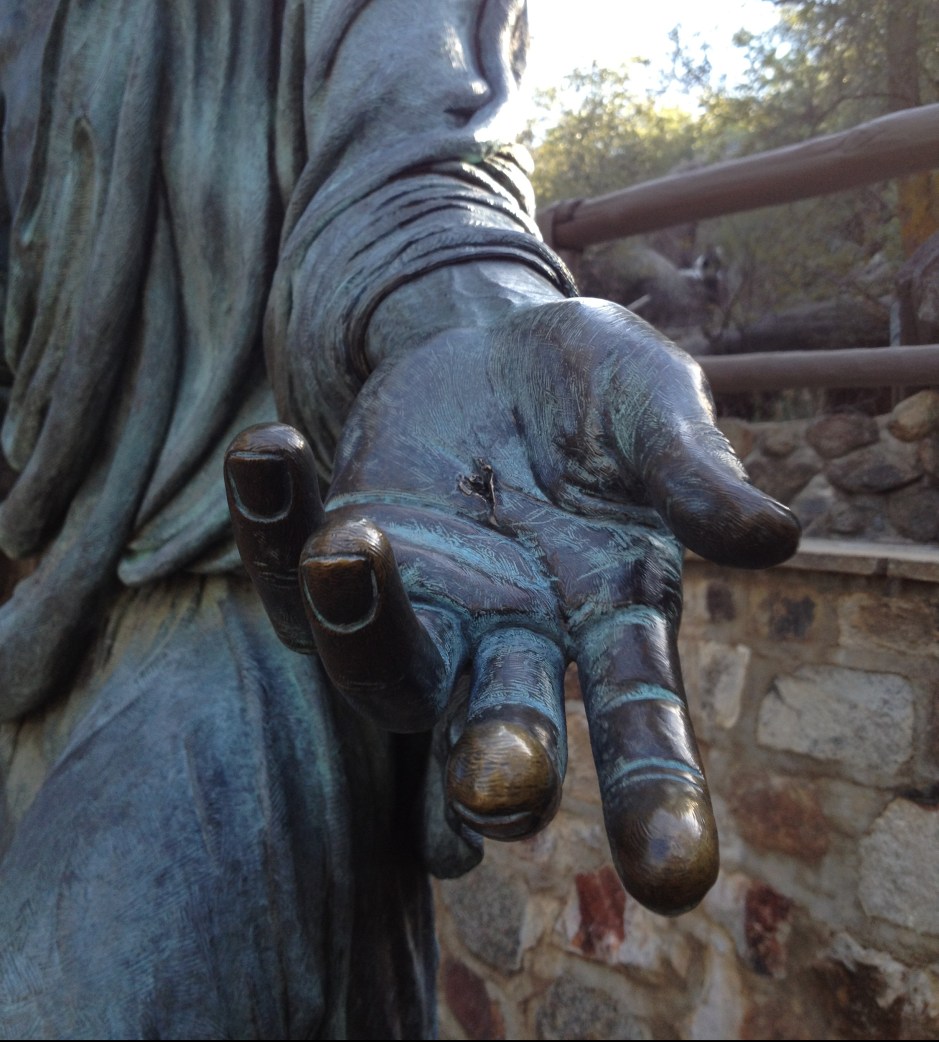
While we may not be persecuted and put to death for the sake of Christ, every day comes with its own share of suffering. It is the courageous embracing of life’s struggles today that prepares us to embrace the cross in larger ways tomorrow that, yes, could even cost us our life.

The words of a therapist many years ago have stuck with me. In fact, they are the only words of his I remember: “Everything is okay. And even when they are not okay, they are still okay.” With time and the wisdom of years, I have learned that he was so right. No matter what has happened to me “not a hair on my head has been destroyed.” Yes, it is true that I have suffered loss of health, humiliation, pain, marginalization. Even as the tears cleansed and purged and healed, even as sadness ripped through my heart, I knew that somehow in God I was okay.

Jesus handed himself over to death because he was operating in the larger reality of divine and never-ending Love, and so it all had meaning. It all made sense. It was all okay. “Not a hair of his head was destroyed.”

When we pursue pleasure and fear pain, when we try to avoid death, when we are paralyzed by the idea of change that will cost us the perks and privileges of our lifestyle, the walls of human and spiritual destiny close in on us. Instead, when we face into the headwinds of reality with the courage that comes only through trust that we are indeed loved, when we choose to stand by the side of Jesus who alone is Truth, when we live by the beatitudes, when we bow before the Lord who calls us to walk the way to Calvary with him, our spirit expands and our soul is gradually overtaken by a supernatural joy beyond description.

On most days I probably would prefer to read the gospel of the Good Shepherd, but in reality, this is the gospel passage I most need to hear. To live in the world today with all its tempests and troubles one needs to be strong enough to trust in the always-greater reality of Love so that no matter what happens we can go forward knowing that “not a hair of our head will be destroyed.”

Praying with this Passage of Scripture

Lectio Divina is a way of listening to God as he speaks in his Word. It is a practice of communicating with God through Scripture and attending to God’s presence and what he wishes to tell us. In this slow and prayerful reading of the Word of God, we allow ourselves to be transformed by the Spirit who forms us into the image of Christ. There are four movements in Lectio Divina: Read (lectio), Meditate (meditation), Pray (oratio), Contemplate (contemplation).

Begin by finding a still space to pray. Breathe deeply and become quieter within. Abandon any agenda, worries or thoughts you bring to this prayer and entrust these things to the merciful care of God. Ask for the grace to be receptive to what God will speak to you through this Scripture reading. Grant me, Jesus Divine Master, to be able to know the mysteries of the kingdom of God and your unfathomable riches. Grant that your word penetrate my soul; guide my steps, and brighten my way till the day dawns and darkness dissipates, you who live and reign forever and ever Ame

Read (lectio)
Begin by slowly and meditatively reading your Scripture passage out loud. Listen for a particular word or phrase that speaks to you at this moment and sit with it for a time.

“But before all this, they will seize you and persecute you. They will hand you over to synagogues and put you in prison, and you will be brought before kings and governors, and all on account of my name. And so you will bear testimony to me. But make up your mind not to worry beforehand how you will defend yourselves. For I will give you words and wisdom that none of your adversaries will be able to resist or contradict. You will be betrayed even by parents, brothers and sisters, relatives and friends, and they will put some of you to death. Everyone will hate you because of me. But not a hair of your head will perish. Stand firm, and you will win life.

Meditate (meditatio)
Read the same passage a second time. As you re-engage the text, let the word or phrase that stood out become your invitation to speak from your heart with God who wishes to share his heart with you. Allow this word or phrase to wash over you and permeate your thoughts and feelings. You may wish to repeat this phrase quietly and gently for a period of time

Pray (oratio)
Read the text a third time. Listen for what God is saying to you. Speak heart to heart with God. Notice the feelings that this conversation with God raises up within you. Share with God what you notice about your response to this conversation. You may wish to return to repeating the phrase quietly and gently, allowing it to permeate you more and more deeply.

Contemplate (contemplatio)
Read the text a final time. Now be still and rest in God’s embrace. Ask God to give you a gift to take with you from this prayer. You might ask God if he is inviting you to do some action, for instance, make some change in your thoughts, attitudes or reactions, in the way you speak or how you treat others. Thank God for this gift and invitation as you conclude your prayer.

Image: Angie Menes via Cathopic

“How consoling it is to see a just person die!” (St Bernard) (Luke 12:39-48)

“Blessed is that servant whom his master on arrival finds doing [his master’s will].”

If there is one thing of which we are all certain regarding ourselves, it is that we will one day die. We don’t know the circumstances of that moment in which we will close our eyes to this earth and open them to eternity. We don’t know when that moment will come upon us. The certainty of our death, however, binds us all together as mortal beings. “You also must be prepared, for at an hour you do not expect, the Son of Man will come.”

Jesus tells us today how to prepare for that inevitable meeting with him in death. “Blessed is that servant whom his master on arrival finds doing [his master’s will].”

I often pray these lines of the Our Father: Thy kingdom come. Thy will be done on earth as it is in heaven. They are a quiet simple plea of the heart that every day, in everything, in every way I will be faithful with the fidelity of the angels and saints, the fidelity of Jesus the Lamb of God.

“Blessed is that servant whom his master on arrival finds doing [his master’s will].”

As St. Bernard of Clairvaux wrote: “How consoling it is to see a just man die! …From this bed of mourning, whereon he leaves a precious load of virtues, he goes to take possession of the true land of the living, Jesus acknowledges him as His brother and as His friend, for he has died to the world before closing his eyes from its dazzling light. Such is the death of the saints, a death very precious in the sight of God.”

Walking the narrow way of faithfulness to the master, St. Bernard says we find ourselves weighed down with the “precious load of virtues.” The word “narrow” conjures up images of restriction, being confined, stuffed into a path that has no room, no joy, no life. In this parable, Jesus tells us that the narrow way actually gives freedom and opens the door to the death of the saints of God, a death very precious in the sight of God. The narrow way, the faithful way of the servant who does his master’s will, is constituted by the day in and day out ordinary living of the virtues.

“Blessed is that servant whom his master on arrival finds doing [his master’s will].”

Most of us won’t be like the unfaithful servant who says to himself, “ ‘My master is delayed in coming,’ and begins to beat the menservants and the maidservants, to eat and drink and get drunk.” However, there are small and subtle ways in which we refuse our Lord the faithful service and obedient love that is his due. Take some time today to immerse yourself in the abundant life that this parable promises. Name three things you are grateful for and three ways God has unexpectedly blessed you. Arouse sentiments of gratitude and wonder at the way in which God has preserved you and provided for you all these years. Then very humbly, ask him to help you see one area in your life in which he is calling you to greater fidelity. Perhaps it is in a situation or relationship, or an attitude or way of speaking, the way you characterize certain groups of people or cling to possessions. Wait very quietly until you begin to understand in simple honesty what God is asking of you. Perhaps write in a journal some practical ways in which God is calling you to choose fidelity in the small everyday simple things of life. Rejoice, for in following God’s invitation you will find yourself weighed down with a “precious load of virtues,” prepared for the hour in which you will close your eyes to this earth and open them in eternity.

Praying with this passage of Scripture

Lectio Divina is a way of listening to God as he speaks in his Word. It is a practice of communicating with God through Scripture and attending to God’s presence and what he wishes to tell us. In this slow and prayerful reading of the Word of God, we allow ourselves to be transformed by the Spirit who forms us into the image of Christ.
There are four movement in Lectio Divina: Read (lectio), Meditate (meditation), Pray (oratio), Contemplate (contemplation).

Begin by finding a still space to pray. Breathe deeply and become quieter within. Abandon any agenda, worries or thoughts you bring to this prayer and entrust these things to the merciful care of God. Ask for the grace to be receptive to what God will speak to you through this Scripture reading. Grant me, Jesus Divine Master, to be able to know the mysteries of the kingdom of God and your unfathomable riches. Grant that your word penetrate my soul; guide my steps, and brighten my way till the day dawns and darkness dissipates, you who live and reign forever and ever Amen.

Read (lectio)
Begin by slowly and meditatively reading your Scripture passage out loud. Listen for a particular word or phrase that speaks to you at this moment and sit with it for a time.

But understand this: If the owner of the house had known at what hour the thief was coming, he would not have let his house be broken into. You also must be ready, because the Son of Man will come at an hour when you do not expect him.”

Peter asked, “Lord, are you telling this parable to us, or to everyone?”

The Lord answered, “Who then is the faithful and wise manager, whom the master puts in charge of his servants to give them their food allowance at the proper time? It will be good for that servant whom the master finds doing so when he returns. Truly I tell you, he will put him in charge of all his possessions. But suppose the servant says to himself, ‘My master is taking a long time in coming,’ and he then begins to beat the other servants, both men and women, and to eat and drink and get drunk. The master of that servant will come on a day when he does not expect him and at an hour he is not aware of. He will cut him to pieces and assign him a place with the unbelievers.

“The servant who knows the master’s will and does not get ready or does not do what the master wants will be beaten with many blows. But the one who does not know and does things deserving punishment will be beaten with few blows. From everyone who has been given much, much will be demanded; and from the one who has been entrusted with much, much more will be asked.


Meditate (meditatio) – Read the same passage a second time. As you re-engage the text, let the word or phrase that stood out become your invitation to speak from your heart with God who wishes to share his heart with you. Allow this word or phrase to wash over you and permeate your thoughts and feelings. You may wish to repeat this phrase quietly and gently for a period of time.

Pray (oratio) – Read the text a third time. Listen for what God is saying to you. Speak heart to heart with God. Notice the feelings that this conversation with God raises up within you. Share with God what you notice about your response to this conversation. You may wish to return to repeating the phrase quietly and gently, allowing it to permeate you more and more deeply.

Contemplate (contemplatio)
Read the text a final time. Now be still and rest in God’s embrace. Ask God to give you a gift to take with you from this prayer. You might ask God if he is inviting you to do some action, for instance, make some change in your thoughts, attitudes or reactions, in the way you speak or how you treat others. Thank God for this gift and invitation as you conclude your prayer.

Image by Image by Matthias Cooper from Pixabay 

We all receive more than we deserve (Matthew 20:1-16a)

The parable of the landowner and the laborers hired to work in his vineyard is, on one level, about abundance. The landowner had a large enough vineyard that he needed to hire laborers repeatedly throughout the day to get the work done. As evening approached and the men lined up for their pay, the landowner paid all of them a denarius each. A “denarius” was a silver Roman coin used as payment for a full day’s wage. The owner of the vineyard didn’t need to scrimp and save. “Are you envious because I am generous?” he asked those who complained that all had been treated with equal generosity.

The landowner’s actions depict the endlessly loving heart of the Father that poured itself out onto his undeserving creation with the incarnation of his Son, the Word-made-flesh, God-with us. Jesus Christ became our brother, our Savior, our Friend, the Lamb of God, our Eucharistic Lord, generosity without limits. As he one day multiplied the loaves and the fish for a crowd of 5000, Jesus abundantly multiplies the gift of his presence to us in the Eucharist all over the world until the end of history. Generous abundance is a hallmark of the Kingdom. Jesus said: “I came so that they might have life and have it more abundantly” (Jn 10:10).

Against the backdrop of this image of this extravagant magnanimity the parable paints the stinginess and selfish demands of the workers of the first hour. They assumed that they would get more than what had been agreed upon because the landowner was doling out a full day’s wage to those who had come at the last hour and who had clearly done far less than they. As these tired laborers watched I can imagine them muttering among themselves that these latecomers were absolutely unworthy to be treated the same as they. The unexpected reversal of the parable is this: no matter how much or little we work, we are all equal recipients of God’s generous abundance, of the gifts of his forgiveness, holiness, mercy, salvation, eternal life.

How many times have I thought that I deserved more than the others because I had given more of my time, energy, and love than they. I have fallen into the trap that the others deserved less because of how little they worked or how selfish they had been. This parable frees us from thinking we need to win God’s endless love. This love is abundant and freely given to us all according to God’s own generous determination. Let us not be upset that others receive what we have been given, but rejoice that others have been gifted, included, loved, blessed as have we, for we all receive more than we could ever deserve.

Jesus, you surprise me by your love for me and your love for others who I sometimes feel don’t deserve that love. I am amazed at how you keep me in existence through your bounteous mercies, even when my love is so small and stingy compared to yours. Take my heart, O Lord, and make it just like yours. Amen.

Praying with this passage of Scripture

Lectio Divina is a way of listening to God as he speaks in his Word. It is a practice of communicating with God through Scripture and attending to God’s presence and what he wishes to tell us. In this slow and prayerful reading of the Word of God, we allow ourselves to be transformed by the Spirit who forms us into the image of Christ.
There are four movement in Lectio Divina: Read (lectio), Meditate (meditation), Pray (oratio), Contemplate (contemplation).

Begin by finding a still space to pray. Breathe deeply and become quieter within. Abandon any agenda, worries or thoughts you bring to this prayer and entrust these things to the merciful care of God. Ask for the grace to be receptive to what God will speak to you through this Scripture reading. Grant me, Jesus Divine Master, to be able to know the mysteries of the kingdom of God and your unfathomable riches. Grant that your word penetrate my soul; guide my steps, and brighten my way till the day dawns and darkness dissipates, you who live and reign forever and ever Amen.

Read (lectio)
Begin by slowly and meditatively reading your Scripture passage out loud. Listen for a particular word or phrase that speaks to you at this moment and sit with it for a time.

“For the kingdom of heaven is like a landowner who went out early in the morning to hire workers for his vineyard. He agreed to pay them a denarius for the day and sent them into his vineyard.

“About nine in the morning he went out and saw others standing in the marketplace doing nothing. He told them, ‘You also go and work in my vineyard, and I will pay you whatever is right.’ So they went.

“He went out again about noon and about three in the afternoon and did the same thing. About five in the afternoon he went out and found still others standing around. He asked them, ‘Why have you been standing here all day long doing nothing?’

“‘Because no one has hired us,’ they answered.

“He said to them, ‘You also go and work in my vineyard.’

“When evening came, the owner of the vineyard said to his foreman, ‘Call the workers and pay them their wages, beginning with the last ones hired and going on to the first.’

“The workers who were hired about five in the afternoon came and each received a denarius. So when those came who were hired first, they expected to receive more. But each one of them also received a denarius. When they received it, they began to grumble against the landowner. ‘These who were hired last worked only one hour,’ they said, ‘and you have made them equal to us who have borne the burden of the work and the heat of the day.’

“But he answered one of them, ‘I am not being unfair to you, friend. Didn’t you agree to work for a denarius? Take your pay and go. I want to give the one who was hired last the same as I gave you. Don’t I have the right to do what I want with my own money? Or are you envious because I am generous?’

“So the last will be first, and the first will be last.”


Meditate (meditatio) – Read the same passage a second time. As you re-engage the text, let the word or phrase that stood out become your invitation to speak from your heart with God who wishes to share his heart with you. Allow this word or phrase to wash over you and permeate your thoughts and feelings. You may wish to repeat this phrase quietly and gently for a period of time.

Pray (oratio) – Read the text a third time. Listen for what God is saying to you. Speak heart to heart with God. Notice the feelings that this conversation with God raises up within you. Share with God what you notice about your response to this conversation. You may wish to return to repeating the phrase quietly and gently, allowing it to permeate you more and more deeply.

Contemplate (contemplatio)
Read the text a final time. Now be still and rest in God’s embrace. Ask God to give you a gift to take with you from this prayer. You might ask God if he is inviting you to do some action, for instance, make some change in your thoughts, attitudes or reactions, in the way you speak or how you treat others. Thank God for this gift and invitation as you conclude your prayer.

Image Credit: Photo by Cristina Gottardi on Unsplash

To be Jesus’ disciple is an immeasurable privilege (Matthew 23:1-12)

Then Jesus spoke to the crowds and to his disciples, saying, “The scribes and the Pharisees have taken their seat on the chair of Moses. Therefore, do and observe all things whatsoever they tell you, but do not follow their example. For they preach but they do not practice. They tie up heavy burdens [hard to carry] and lay them on people’s shoulders, but they will not lift a finger to move them. All their works are performed to be seen. They widen their phylacteries and lengthen their tassels. They love places of honor at banquets, seats of honor in synagogues, greetings in marketplaces, and the salutation ‘Rabbi.’ As for you, do not be called ‘Rabbi.’ You have but one teacher, and you are all brothers. Call no one on earth your father; you have but one Father in heaven. Do not be called ‘Master’; you have but one master, the Messiah. The greatest among you must be your servant. Whoever exalts himself will be humbled; but whoever humbles himself will be exalted (Matthew 23:1-12).

In this Gospel, Jesus sets up two different models of religious observance, that of the Pharisees and that of the disciple of Christ.

The Pharisees were an ancient Jewish group of laymen and scribes concerned with the purity of the Jewish people and a clear Jewish identity in everyday life. They were interpreters of the Law, teachers, masters, and mentors of the spiritual life. They had something to say, to teach, to enforce. Those who followed the Pharisees were required to carry out the commands of the law according to the Pharisees’ interpretation. Hence Jesus’ words in today’s Gospel reading: “They tie up heavy burdens hard to carry and lay them on people’s shoulders.”

Jesus’ group of disciples, on the other hand, were invited by him to receive the revelation of the Father’s love and will. They were to esteem themselves blessed when their lives bore the wounds of Christ: rejection, the cross, poverty, persecution, martyrdom. They were invited to love each other and to give their lives for one another, and even to give their lives for their enemies, as Christ did for us. The disciple was not the master because it was only Jesus who taught. “I speak only what I hear from my Father” (cf John 12:49).

In today’s Gospel, Jesus draws clear distinctions between the Pharisees and those who would be his disciples:

  1. The Pharisees were a privileged group in Israel and are depicted here acting in isolation as teachers, seeking honors and deference from others, visibility, and prominence. Jesus addresses his disciples as members of a community. “There is only one master, the Christ.” They were all brothers and sisters.
  2. The Pharisees tried to attract disciples by stressing how they had attained a greater purity than the rest of the Israelites. Jesus attracted followers by being with those who were considered impure and not worthy: sinners, tax collectors, women.
  3. As the Pharisees sought honors the disciples of Jesus were to seek to be servants, last, humble.
  4. The interpretation of the Torah imposed on others by the Pharisees was hard to carry. Jesus calls it a “heavy burden” laid on people’s shoulders. The followers of Jesus are yoked with Jesus and take up his teaching which is an easy load to bear.
  5. As a Pharisee, one could attain status and honor. To be called Jesus’ disciple is an immeasurable privilege one could never merit.

Jesus told his disciples to observe what the Pharisees told them to do but not to follow their example. Jesus, as a true Master, taught his own followers both by word and example. The Son of God himself was servant before he asked his disciples to serve one another. As St. Paul wrote to the Philippians:

In your relationships with one another, have the same mindset as Christ Jesus:

Who, being in very nature God,
    did not consider equality with God something to be used to his own advantage;
rather, he made himself nothing
    by taking the very nature of a servant,
    being made in human likeness.
And being found in appearance as a man,
    he humbled himself
    by becoming obedient to death—
        even death on a cross! (Phil 2:5-8)

Friends, brothers and sisters, fellow disciples, there is only one Master, the Christ. Let us follow him, learn from him, take up his teaching which is an easy load to bear, and find rest in him.

“Come to me, all you who are weary and burdened, and I will give you rest. Take my yoke upon you and learn from me, for I am gentle and humble in heart, and you will find rest for your souls. For my yoke is easy and my burden is light” (Mt. 11:28-30).

Praying with this passage of Scripture

Lectio Divina is a way of listening to God as he speaks in his Word. It is a practice of communicating with God through Scripture and attending to God’s presence and what he wishes to tell us. In this slow and prayerful reading of the Word of God, we allow ourselves to be transformed by the Spirit who forms us into the image of Christ.
There are four movement in Lectio Divina: Read (lectio), Meditate (meditation), Pray (oratio), Contemplate (contemplation).

Begin by finding a still space to pray. Breathe deeply and become quieter within. Abandon any agenda, worries or thoughts you bring to this prayer and entrust these things to the merciful care of God. Ask for the grace to be receptive to what God will speak to you through this Scripture reading. Grant me, Jesus Divine Master, to be able to know the mysteries of the kingdom of God and your unfathomable riches. Grant that your word penetrate my soul; guide my steps, and brighten my way till the day dawns and darkness dissipates, you who live and reign forever and ever Amen.

Read (lectio)
Begin by slowly and meditatively reading your Scripture passage out loud. Listen for a particular word or phrase that speaks to you at this moment and sit with it for a time.

Then Jesus said to the crowds and to his disciples: “The teachers of the law and the Pharisees sit in Moses’ seat. So you must be careful to do everything they tell you. But do not do what they do, for they do not practice what they preach. They tie up heavy, cumbersome loads and put them on other people’s shoulders, but they themselves are not willing to lift a finger to move them.

“Everything they do is done for people to see: They make their phylacteries wide and the tassels on their garments long; they love the place of honor at banquets and the most important seats in the synagogues; they love to be greeted with respect in the marketplaces and to be called ‘Rabbi’ by others.

“But you are not to be called ‘Rabbi,’ for you have one Teacher, and you are all brothers. And do not call anyone on earth ‘father,’ for you have one Father, and he is in heaven. Nor are you to be called instructors, for you have one Instructor, the Messiah. The greatest among you will be your servant. For those who exalt themselves will be humbled, and those who humble themselves will be exalted.

Meditate (meditatio) – Read the same passage a second time. As you re-engage the text, let the word or phrase that stood out become your invitation to speak from your heart with God who wishes to share his heart with you. Allow this word or phrase to wash over you and permeate your thoughts and feelings. You may wish to repeat this phrase quietly and gently for a period of time.

Pray (oratio) – Read the text a third time. Listen for what God is saying to you. Speak heart to heart with God. Notice the feelings that this conversation with God raises up within you. Share with God what you notice about your response to this conversation. You may wish to return to repeating the phrase quietly and gently, allowing it to permeate you more and more deeply.

Contemplate (contemplatio)
Read the text a final time. Now be still and rest in God’s embrace. Ask God to give you a gift to take with you from this prayer. You might ask God if he is inviting you to do some action, for instance, make some change in your thoughts, attitudes or reactions, in the way you speak or how you treat others. Thank God for this gift and invitation as you conclude your prayer.

Surprised by the Kingdom of Heaven (Matthew 13:44-52)

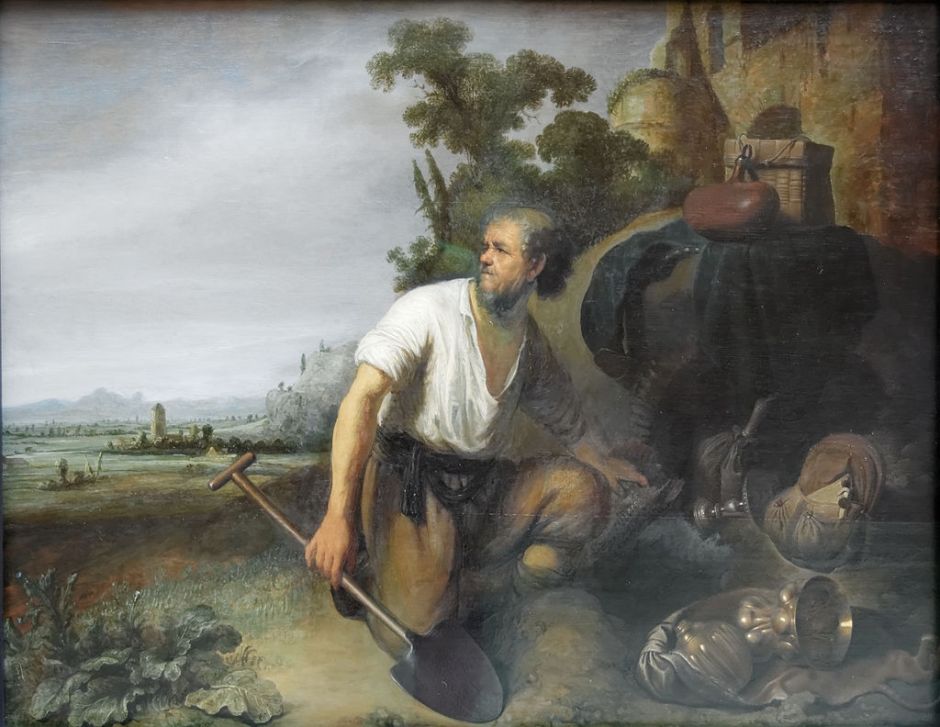
Every few years or so the discovery of lost treasure troves makes the news. As technology has improved it has become more common that gold coins, gemstones and priceless jewels worth millions of dollars are found in sunken ships that hundreds of years ago once sailed the seas. Using metal detectors people stumble upon hidden bags of coins, and buried religious artifacts and decorative items in fields, caves and excavations. Finding lost treasure requires a lot of persistence, technology, research, financial outlay, and luck.

In the Gospel, however, Jesus tells us that we don’t need special technology nor even a lot of planning and effort to find the Treasure of all treasures. We don’t need to dive to the bottom of the sea or scout out caves or investigate archaeological digs to find the kingdom of heaven.

“The kingdom of heaven,” Jesus said, “is like a treasure buried in a field.”

I remember the day almost 20 years ago when I first heard Jesus’ voice in my heart—not an inspiration, but a quiet voice. I was monitoring the front desk of our motherhouse and was taking advantage of the time to read for a paper I had been assigned on the Gospel of John in the homilies of St. Augustine. There were a couple hundred pages to wade through, but that day, in one moment, one particular line shone out like a treasure and caught my attention. Years of struggling with powerful temptations had deadened my heart to hope that I could ever be good enough for God to love me. Just as Augustine was converted by reading one verse of Scripture, in one sentence I felt that God saw me, just as I was. That he knew me through and through with nothing hidden from him. I felt like there was someone else in the room looking at me, so I looked up to see who else was in the room. There was no one there. As I continued reading I felt again that there was someone gazing at me but now from within my soul, eyes that pierced and loved at the same time. Then I heard the voice: “It doesn’t matter. It doesn’t matter if you ever fix yourself and become perfect with regard to this temptation. Just keep looking at me, and letting me look at you. If you just allow us to look at each other, continually, trustfully, always, I will take care of it for you.” We all know when we’ve heard a voice by which we seem to touch the kingdom of heaven. We are pierced by the truth and often are given the gift of tears. We become attentive. We are filled with joy. We want more of what we have received. We would give everything to possess this treasure of treasures always.

“The kingdom of heaven,” Jesus said, “is like a treasure buried in a field.” This statement would have been very familiar to Jesus’ audience. Since at that time there were no banks as we know them, people would keep their “treasure” safe by burying their valuable possessions in the ground.

To the people listening to this parable, walking through fields was something they did every day. It was such an ordinary event that there would have been nothing special about a field. It would be as if Jesus said  to us today: “The kingdom of heaven is a like finding a bag of a billion dollars accidentally along a sidewalk.”

I can imagine that Jesus sparked their attention with this parable and they would have had all kinds of questions: How do we know in which field the treasure has been stashed? What are the telltale signs that a treasure has been buried in a certain place? How can I be more attentive so I don’t miss the treasure? These questions turn the discovery of the kingdom into a plan.

Isn’t it true, however, that we often find the most precious things in life by accident? We stumble upon them, and they seize our imagination and steal our hearts!

The kingdom of heaven surprised me that day at the motherhouse when I heard his voice. The words of the Lord have become a touchstone in my life, a treasure by which I measure all other treasures.

“The kingdom of heaven is like a treasure buried in a field,
which a person finds and hides again,
and out of joy goes and sells all that he has and buys that field.”

In this parable, Jesus is telling us five things about the kingdom of heaven:

  • the kingdom of heaven is the most valuable of treasures, the treasure of treasures
  • the kingdom of heaven is hidden in our midst, we’ll find it in the ordinary places of our life where we often forget to look
  • the kingdom of heaven will surprise us as we go about our daily life—it is a gift
  • the kingdom of heaven is a treasure so wonderful that the joy of having discovered it makes every sacrifice to possess it well worth it
  • the kingdom of heaven costs everything because it radically changes our lives and our loves.

The kingdom of heaven is here, right in our midst, ready to surprise you. If you find it, sell all you have to possess it. You will not be sorry.

Praying with this passage of Scripture

Lectio Divina is a way of listening to God as he speaks in his Word. It is a practice of communicating with God through Scripture and attending to God’s presence and what he wishes to tell us. In this slow and prayerful reading of the Word of God, we allow ourselves to be transformed by the Spirit who forms us into the image of Christ.
There are four movement in Lectio Divina: Read (lectio), Meditate (meditation), Pray (oratio), Contemplate (contemplation).

Begin by finding a still space to pray. Breathe deeply and become quieter within. Abandon any agenda, worries or thoughts you bring to this prayer and entrust these things to the merciful care of God. Ask for the grace to be receptive to what God will speak to you through this Scripture reading. Grant me, Jesus Divine Master, to be able to know the mysteries of the kingdom of God and your unfathomable riches. Grant that your word penetrate my soul; guide my steps, and brighten my way till the day dawns and darkness dissipates, you who live and reign forever and ever Amen.

Read (lectio)
Begin by slowly and meditatively reading your Scripture passage out loud. Listen for a particular word or phrase that speaks to you at this moment and sit with it for a time.

“The kingdom of heaven is like treasure hidden in a field. When a man found it, he hid it again, and then in his joy went and sold all he had and bought that field.

“Again, the kingdom of heaven is like a merchant looking for fine pearls. When he found one of great value, he went away and sold everything he had and bought it.

“Once again, the kingdom of heaven is like a net that was let down into the lake and caught all kinds of fish. When it was full, the fishermen pulled it up on the shore. Then they sat down and collected the good fish in baskets, but threw the bad away. This is how it will be at the end of the age. The angels will come and separate the wicked from the righteous and throw them into the blazing furnace, where there will be weeping and gnashing of teeth.

“Have you understood all these things?” Jesus asked.

“Yes,” they replied.

He said to them, “Therefore every teacher of the law who has become a disciple in the kingdom of heaven is like the owner of a house who brings out of his storeroom new treasures as well as old.”


Meditate (meditatio) – Read the same passage a second time. As you re-engage the text, let the word or phrase that stood out become your invitation to speak from your heart with God who wishes to share his heart with you. Allow this word or phrase to wash over you and permeate your thoughts and feelings. You may wish to repeat this phrase quietly and gently for a period of time.

Pray (oratio) – Read the text a third time. Listen for what God is saying to you. Speak heart to heart with God. Notice the feelings that this conversation with God raises up within you. Share with God what you notice about your response to this conversation. You may wish to return to repeating the phrase quietly and gently, allowing it to permeate you more and more deeply.

Contemplate (contemplatio)
Read the text a final time. Now be still and rest in God’s embrace. Ask God to give you a gift to take with you from this prayer. You might ask God if he is inviting you to do some action, for instance, make some change in your thoughts, attitudes or reactions, in the way you speak or how you treat others. Thank God for this gift and invitation as you conclude your prayer.

Image Credit: Possibly Rembrandt, CC BY-SA 3.0, via Wikimedia Commons

God loves me, we each can say it (John 17:10-26)

God loves you. But I don’t feel God’s love.

God loves you. But how could God love me when I’ve messed up?

God loves you. But how can I know God loves me? Really know for certain?

God loves you. But how could God say he loves me when he didn’t help me when I most needed him?

Sound familiar?

God loves us and yet we are so fearful. So insecure. We insist God needs to prove his love to us beyond a shadow of a doubt.

For many years, many more than I’d care to admit, I doubted God could love me. Why did he let me have a stroke at twenty-one? What about this weakness and that disordered attachment? How could he love me when I’m not all that I should be? How could God love me when I can’t even love myself?

I’ve also listened to the hearts of others whispering their secret fear that they were ultimately unlovable or unloved by their Father in heaven.

When I was praying with today’s Gospel passage, I was overwhelmed with how Jesus loves us. Loves me.

Pause right now and read this passage from the Gospel of John, replacing every “them” with your name. Read it slowly. Read it several times. As you eavesdrop on Jesus’ prayer to his Father, listen to what he thinks about you. What he desires for you. What he feels for you. “I pray not only for Sr Kathryn, but also for those who will believe in me through her word…. And I have given her the glory you gave me, so that she may be one [with us], as we are one, I in Sr Kathryn and you in me,…that the world may know that you sent me, and that you loved her even as you loved me. Father, she is your gift to me….

God loves me, we each can say it. We may not feel his love because our emotions are caught up and “bent out of shape” by the turmoil of our inner world and the situations in which we live. The Father’s love is deeper. He loves you so much he has made of you a gift to his Son Jesus.

God loves me, we each can say it. In this passage from the Gospel of John, Jesus is praying about his apostles who had certainly messed up many times during their three years with him and were about to fail miserably as Jesus was arrested, put on trial, and crucified. Jesus knew these dear friends of his through and through. Yet Jesus prays to his Father with confidence that even as the Father loves his Son, so the Father loves them. He doesn’t say the Father loves them a little bit. Be certain that the Father loves you as he loves his own Son.

God loves me, we each can say it. You are the Father’s gift to Jesus, his beloved Son. Anyone on earth who professes love for another can be trusted more or less. Some more. Some persons less. We all know the countless reasons why we may decide that we can’t trust someone who tells us they love us. And at times we may have good reason to be wary of entrusting ourselves to them. God, however, is not a creature. He does not love us to get something from us for himself. He created, saved, and sanctifies us so that we may be one, as the Father and Jesus are one, that we may be brought to perfection as one.

God loves me, we each can say it. God’s love is not diminished when unfortunate or tragic things happen. After many years and many sorrows it is clear to me that these are the times when God’s love is multiplied and overflows in a tender compassion that far exceeds what even the most loving of mothers could show. God is so good, so great, so beautiful, so true that he can take any and every tragic moment in our life and use it to advance our ultimate glory: that the love with which the Father loved Jesus may be in you and Jesus in you.”

This may be a bit of a stretch in reading this passage of John in this way, for it is clearly addressed to all the apostles and all Jesus’ followers throughout the ages together. I can imagine, however, that each of those who heard these words from the Master’s lips heard them spoken to himself personally and to all of them together as they became a community, as they became one, immersed in the love the Father and the Son had for each other, in the confidence of their mutual love. They knew God’s love not because they felt it, deserved it, could prove it, or had evidence of it. They knew this dynamic and living love because Jesus said it was so. And so it is.

This love of God for us exists, and in that, we can put our trust more than in anything else in the world. In his extravagant forever love, Jesus has given you the glory the Father has given him from the foundation of the world.

Praying with this passage of Scripture

Lectio Divina is a way of listening to God as he speaks in his Word. It is a practice of communicating with God through Scripture and attending to God’s presence and what he wishes to tell us. In this slow and prayerful reading of the Word of God, we allow ourselves to be transformed by the Spirit who forms us into the image of Christ.
There are four movement in Lectio Divina: Read (lectio), Meditate (meditation), Pray (oratio), Contemplate (contemplation).

Begin by finding a still space to pray. Breathe deeply and become quieter within. Abandon any agenda, worries or thoughts you bring to this prayer and entrust these things to the merciful care of God. Ask for the grace to be receptive to what God will speak to you through this Scripture reading. Grant me, Jesus Divine Master, to be able to know the mysteries of the kingdom of God and your unfathomable riches. Grant that your word penetrate my soul; guide my steps, and brighten my way till the day dawns and darkness dissipates, you who live and reign forever and ever Amen.

Read (lectio)
Begin by slowly and meditatively reading your Scripture passage out loud. Listen for a particular word or phrase that speaks to you at this moment and sit with it for a time.

All I have is yours, and all you have is mine. And glory has come to me through them. I will remain in the world no longer, but they are still in the world, and I am coming to you. Holy Father, protect them by the power of your name, the name you gave me, so that they may be one as we are one. While I was with them, I protected them and kept them safe by that name you gave me. None has been lost except the one doomed to destruction so that Scripture would be fulfilled.

“I am coming to you now, but I say these things while I am still in the world, so that they may have the full measure of my joy within them. I have given them your word and the world has hated them, for they are not of the world any more than I am of the world. My prayer is not that you take them out of the world but that you protect them from the evil one. They are not of the world, even as I am not of it. Sanctify them by the truth; your word is truth. As you sent me into the world, I have sent them into the world. For them I sanctify myself, that they too may be truly sanctified.

“My prayer is not for them alone. I pray also for those who will believe in me through their message, that all of them may be one, Father, just as you are in me and I am in you. May they also be in us so that the world may believe that you have sent me. I have given them the glory that you gave me, that they may be one as we are one— I in them and you in me—so that they may be brought to complete unity. Then the world will know that you sent me and have loved them even as you have loved me.

“Father, I want those you have given me to be with me where I am, and to see my glory, the glory you have given me because you loved me before the creation of the world.

“Righteous Father, though the world does not know you, I know you, and they know that you have sent me. I have made you known to them, and will continue to make you known in order that the love you have for me may be in them and that I myself may be in them.”


Meditate (meditatio)
Read the passage a second time. As you re-engage the text, let the word or phrase that stood out become your invitation to speak from your heart with God who wishes to share his heart with you. Allow this word or phrase to wash over you and permeate your thoughts and feelings. You may wish to repeat this phrase quietly and gently for a period of time.

Pray (oratio)
Read the text a third time. Listen for what God is saying to you. Speak heart to heart with God. Notice the feelings that this conversation with God raises up within you. Share with God what you notice about your response to this conversation. You may wish to return to repeating the phrase quietly and gently, allowing it to permeate you more and more deeply.

Contemplate (contemplatio)
Read the text a final time. Now be still and rest in God’s embrace. Ask God to give you a gift to take with you from this prayer. You might ask God if he is inviting you to do some action, for instance, make some change in your thoughts, attitudes or reactions, in the way you speak or how you treat others. Thank God for this gift and invitation as you conclude your prayer.

Photo by Earth Minister Coke’lat “Brown” Commander via Pexels