The Words that Changed My Life (Matthew 5:33-37)

Jesus said to his disciples:
“You have heard that it was said to your ancestors,
Do not take a false oath,
but make good to the Lord all that you vow.

But I say to you, do not swear at all;
not by heaven, for it is God’s throne;
nor by the earth, for it is his footstool;
nor by Jerusalem, for it is the city of the great King.
Do not swear by your head,
for you cannot make a single hair white or black.
Let your ‘Yes’ mean ‘Yes,’ and your ‘No’ mean ‘No.’
Anything more is from the Evil One.”

Matthew 5:33-37

The single most important shift I have experienced in my relationship with God, the deepest transformation I have received in my prayer is connected to today’s Gospel passage…

I am not the Center of the universe. I do not and cannot ever understand what life is all about. Relying on my powers of understanding has led me repeatedly down a dead-end street.

And God said to me on one quiet day of retreat, “I know. Only I know.”

Those words have changed my life.

Someone who swears something on oath is basically exhibiting their  reliance on their own personal power of making sense of the world. One who swears an oath manipulates words to convince others of their own version of what is real, true, or good. Perhaps their version does correspond to what is real, but most of us have to admit we have only a slight comprehension of the total picture of anything that concerns us or the world. In an almost idolatrous way, the one who swears an oath proclaims, “I know. Only I know.”

In this passage Jesus says that the vast reaches of the cosmos should give a person pause. The wonder that the universe should spark in our heart should humble us to realize our own impotence and dependence on the Creator.

God knows all things. Only God knows what is true, what is really happening. God alone can see how everything is connected and how all things participate in a mysterious way in the overflowing of his loving wisdom that guides all things. We can simply and sincerely only attempt to understand all that is unfolding.

Before the glory of heavens and the beauty of earth, therefore, I can only humbly bow. I can leave God free. I can leave others free. I can entrust myself to him, holding nothing back. I am secure enough to let things be.

Because of this transformation, I can examine my words. Are they manipulative? Are they pressured? Are they self-oriented? Am I inwardly disturbed?

Or are my words simple? Are they free? Are they trusting? Am I at peace?

Image: Noel Bauza via Pixabay

Praying with this Passage of Scripture

Lectio Divina is a way of listening to God as he speaks in his Word. It is a practice of communicating with God through Scripture and attending to God’s presence and what he wishes to tell us. In this slow and prayerful reading of the Word of God, we allow ourselves to be transformed by the Spirit who forms us into the image of Christ. There are four movements in Lectio Divina: Read (lectio), Meditate (meditation), Pray (oratio), Contemplate (contemplation).

Begin by finding a still space to pray. Breathe deeply and become quieter within. Abandon any agenda, worries or thoughts you bring to this prayer and entrust these things to the merciful care of God. Ask for the grace to be receptive to what God will speak to you through this Scripture reading. Grant me, Jesus Divine Master, to be able to know the mysteries of the kingdom of God and your unfathomable riches. Grant that your word penetrate my soul; guide my steps, and brighten my way till the day dawns and darkness dissipates, you who live and reign forever and ever Amen.

Read (lectio)
Begin by slowly and meditatively reading your Scripture passage out loud. Listen for a particular word or phrase that speaks to you at this moment and sit with it for a time.

Pray (oratio)
Read the text a third time. Listen for what God is saying to you. Speak heart to heart with God. Notice the feelings that this conversation with God raises up within you. Share with God what you notice about your response to this conversation. You may wish to return to repeating the phrase quietly and gently, allowing it to permeate you more and more deeply.

Contemplate (contemplatio)
Read the text a final time. Now be still and rest in God’s embrace. Ask God to give you a gift to take with you from this prayer. You might ask God if he is inviting you to do some action, for instance, make some change in your thoughts, attitudes or reactions, in the way you speak or how you treat others. Thank God for this gift and invitation as you conclude your prayer.

Image: Myriams-Fotos; pixabay.com

A Bold Prayer (Mark 9:41-50)

“If your hand causes you to sin, cut it off.
It is better for you to enter into life maimed
than with two hands to go into Gehenna,
into the unquenchable fire.
And if your foot causes you to sin, cut if off.
It is better for you to enter into life crippled
than with two feet to be thrown into Gehenna.
And if your eye causes you to sin, pluck it out.
Better for you to enter into the Kingdom of God with one eye
than with two eyes to be thrown into Gehenna,
where their worm does not die, and the fire is not quenched.”

Mark 9:41-50

How would you live differently if you knew the full glory that awaits you in heaven? I think we really need to stop and sit with that question, more so perhaps than our ancestors in the faith. In a world where the here and now, the immediate satisfaction, the hard work required to just survive leaves us exhausted and burnt out, we have little spiritual energy to think about the beyond.

What is heaven? Pope Francis described it this way: “Paradise is not a fairy tale, nor is it an enchanted garden. Paradise is an embrace with God, (who is) infinite Love, and we enter thanks to Jesus, who died on the cross for us” (Wednesday General Audience, October 25, 2017).

On another occasion Pope Francis reflected: “‘So what’s heaven?’ some ask. There we begin to be unsure in our response. We don’t know how best to explain heaven. Often we picture an abstract and distant heaven… And some think: ‘But won’t it be boring there for all eternity?’ No! That is not heaven. We are on the path towards an encounter: the final meeting with Jesus. Heaven is the encounter with Jesus. Heaven will be this encounter, this meeting with the Lord who went ahead to prepare a place for each of us” (April 27, 2018).

In heaven we will have an unimaginable capacity for joy, a joy that will ever increase, a joy that will never entirely be satisfied because God will never come to the end of giving himself to us to be our everlasting happiness.

When our heart is lit with the anticipation of God’s glory and the immense happiness the Lord will have in satisfying our deepest human longings with his life and love, it is easy to understand why Jesus says, “If something gets in the way of the this, throw it off and keep running to your ultimate destination. Say, ‘Good riddance,’ and surround yourself instead with people and things and activities and ways of being and living and loving that fulfill your dignity as a child of God and a citizen of the Kingdom.”

Pope Benedict leads us to pray, “Come, Holy Spirit! Enkindle in us the fire of your love! We know that this is a bold prayer, with which we ask to be touched by God’s flame; but above all we know that this flame and it alone has the power to save us. We do not want, in defending our life, to lose eternal life that God wants to give us. We need the fire of the Holy Spirit, because only Love redeems. Amen” (Feast of Pentecost, May 23, 2010).

Image: Laura Tapias via Cathopic

Praying with this Passage of Scripture

Lectio Divina is a way of listening to God as he speaks in his Word. It is a practice of communicating with God through Scripture and attending to God’s presence and what he wishes to tell us. In this slow and prayerful reading of the Word of God, we allow ourselves to be transformed by the Spirit who forms us into the image of Christ. There are four movements in Lectio Divina: Read (lectio), Meditate (meditation), Pray (oratio), Contemplate (contemplation).

Begin by finding a still space to pray. Breathe deeply and become quieter within. Abandon any agenda, worries or thoughts you bring to this prayer and entrust these things to the merciful care of God. Ask for the grace to be receptive to what God will speak to you through this Scripture reading. Grant me, Jesus Divine Master, to be able to know the mysteries of the kingdom of God and your unfathomable riches. Grant that your word penetrate my soul; guide my steps, and brighten my way till the day dawns and darkness dissipates, you who live and reign forever and ever Amen.

Read (lectio)
Begin by slowly and meditatively reading your Scripture passage out loud. Listen for a particular word or phrase that speaks to you at this moment and sit with it for a time.

Pray (oratio)
Read the text a third time. Listen for what God is saying to you. Speak heart to heart with God. Notice the feelings that this conversation with God raises up within you. Share with God what you notice about your response to this conversation. You may wish to return to repeating the phrase quietly and gently, allowing it to permeate you more and more deeply.

Contemplate (contemplatio)
Read the text a final time. Now be still and rest in God’s embrace. Ask God to give you a gift to take with you from this prayer. You might ask God if he is inviting you to do some action, for instance, make some change in your thoughts, attitudes or reactions, in the way you speak or how you treat others. Thank God for this gift and invitation as you conclude your prayer.

Image: Myriams-Fotos; pixabay.com
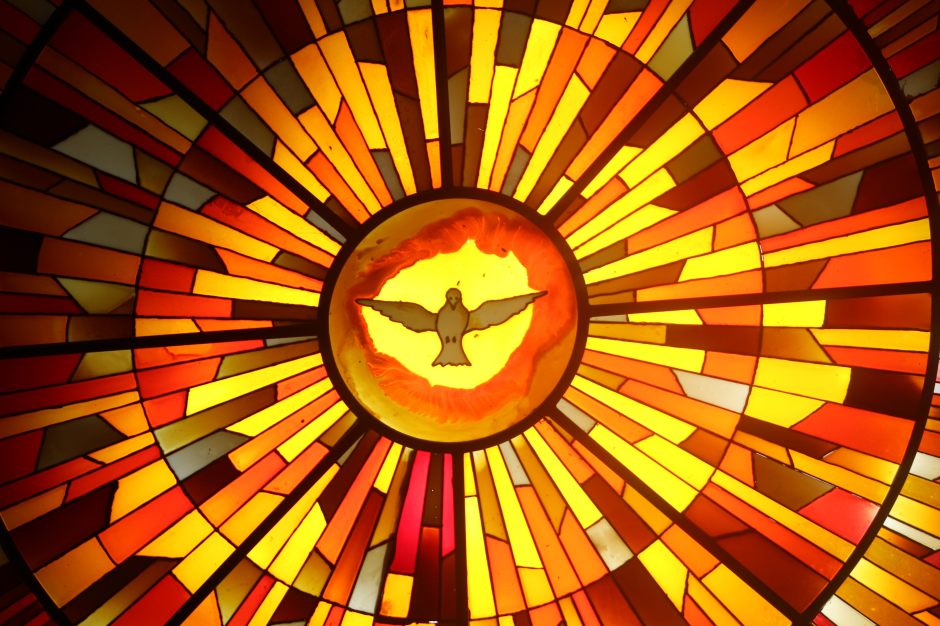
The Power of Love (John 15:9-17)

“I have told you this so that my joy may be in you
and your joy might be complete.
This is my commandment: love one another as I love you.
No one has greater love than this,
to lay down one’s life for one’s friends.
You are my friends if you do what I command you.”

John 15:9-17

Why is it that we are “commanded” to love? Wouldn’t it be better if we were invited to love others? Isn’t it true that no one can make us love another person? And if we love out of duty are we really loving at all?

There have been any number of people in my life that I personally have not liked to be around. Over the years, however, I have discovered that my life is about more than getting along, or obtaining what I want, or experiencing pleasant circumstances.

As a Christian, my life is no longer my own. I have been given the grace to experience the absolute love of God poured out on me in the sacrament of baptism and the only response to that overwhelming and limitless gift of God’s love and grace is to return love for love in as complete a manner as possible. As I put on the Lord Jesus, and I actualize his utter selfless loving here and now in whatever situation I find myself in through my own faltering attempts to love another, I keep the one command I have been given by Jesus at the Last Supper: “This is my commandment: love one another as I love you.” No, it is not a suggestion, if I feel like it, if it works out, or if it is to my benefit. That is not the way Jesus loved us and is not the way he commands that we love one another.

I will love you, I can say even as I wrestle within a relationship, but I may not agree with you.

I will love you, even though I don’t really prefer being around you.

I will love you, even though I will take steps to protect myself from your behaviors.

I will love you because Jesus has loved me and because Jesus loves you.

Love gives meaning to all the other commandments.

Love gives meaning to every suffering.

The power of love alone can give ultimate direction even to the hard realism of economics and politics and social strife and issues of social injustice and disparity. Love alone can break these open so they serve the world in charity.

Just before his death, Jesus talked about love, unity, friendship, glory, and joy, that the love the Father has for Jesus may be in us and that Jesus may be in us. If we focus on love, all else will follow. Love will lead us to unity and glory and joy, as Jesus is in us and we in him so that we may be brought to complete unity.

This love is the bedrock of our Christian life. If we miss this we have missed everything. The “command” should make it really stand out to us so that we keep this front and center in our journey to becoming and loving like Christ.

Image: Christian R. Rodríguez via Cathopic

Praying with this Passage of Scripture

Lectio Divina is a way of listening to God as he speaks in his Word. It is a practice of communicating with God through Scripture and attending to God’s presence and what he wishes to tell us. In this slow and prayerful reading of the Word of God, we allow ourselves to be transformed by the Spirit who forms us into the image of Christ. There are four movements in Lectio Divina: Read (lectio), Meditate (meditation), Pray (oratio), Contemplate (contemplation).

Begin by finding a still space to pray. Breathe deeply and become quieter within. Abandon any agenda, worries or thoughts you bring to this prayer and entrust these things to the merciful care of God. Ask for the grace to be receptive to what God will speak to you through this Scripture reading. Grant me, Jesus Divine Master, to be able to know the mysteries of the kingdom of God and your unfathomable riches. Grant that your word penetrate my soul; guide my steps, and brighten my way till the day dawns and darkness dissipates, you who live and reign forever and ever Amen.

Read (lectio)
Begin by slowly and meditatively reading your Scripture passage out loud. Listen for a particular word or phrase that speaks to you at this moment and sit with it for a time.

Pray (oratio)
Read the text a third time. Listen for what God is saying to you. Speak heart to heart with God. Notice the feelings that this conversation with God raises up within you. Share with God what you notice about your response to this conversation. You may wish to return to repeating the phrase quietly and gently, allowing it to permeate you more and more deeply.

Contemplate (contemplatio)
Read the text a final time. Now be still and rest in God’s embrace. Ask God to give you a gift to take with you from this prayer. You might ask God if he is inviting you to do some action, for instance, make some change in your thoughts, attitudes or reactions, in the way you speak or how you treat others. Thank God for this gift and invitation as you conclude your prayer.

Image: Myriams-Fotos; pixabay.com

Do you recognize Jesus when he calls your name? (John 10:22-30)

“My sheep hear my voice;
I know them, and they follow me.
I give them eternal life, and they shall never perish.
No one can take them out of my hand.
My Father, who has given them to me, is greater than all,
and no one can take them out of the Father’s hand.
The Father and I are one.”

John 10:22-30

My sheep hear my voice; I know them, and they follow me. I give them eternal life, and they shall never perish.

In the time of Jesus, the families of a village often kept their herds of sheep together in a common pen. In the morning the shepherds would come and call their own sheep by name. The shepherd had such an intimate knowledge of his sheep and a genuine love for them, that he would call them individually to follow him to green pastures and streams of running water.

Following the shepherd, then, is a matter of love and being cared for. It is a relationship of trust and belonging. When Jesus speaks of his followers he refers often to shepherding, because he wants us to know how much he longs for us to willingly adhere to him with all our being and to trust him to provide for us. Sheep know they belong to a shepherd. They are named, known, and counted at the end of every single day before being settled down for the night.

There are two ways a shepherd would lead his flock. Most often we see the shepherd walking in front of the sheep. There the shepherd can recognize danger and lead the sheep in the safest path. The shepherds lead by showing the sheep the best path to take.

At other times, the shepherd leads his flock from behind. In this case the shepherd is driving the sheep toward the destination and making sure that they don’t dilly-dally along the way, wandering off after some distraction or other.

In what area of your life is Jesus desiring to shepherd you more closely? Is there a destination or goal on the horizon to which he is drawing your heart? Have you found patterns of distraction in your life which keep you dilly-dallying along the way? Can you hear your Shepherd’s voice? Do you recognize when he calls your name?

Image: Gerd Altmann; Pixabay.

Praying with this Passage of Scripture

Lectio Divina is a way of listening to God as he speaks in his Word. It is a practice of communicating with God through Scripture and attending to God’s presence and what he wishes to tell us. In this slow and prayerful reading of the Word of God, we allow ourselves to be transformed by the Spirit who forms us into the image of Christ. There are four movements in Lectio Divina: Read (lectio), Meditate (meditation), Pray (oratio), Contemplate (contemplation).

Begin by finding a still space to pray. Breathe deeply and become quieter within. Abandon any agenda, worries or thoughts you bring to this prayer and entrust these things to the merciful care of God. Ask for the grace to be receptive to what God will speak to you through this Scripture reading. Grant me, Jesus Divine Master, to be able to know the mysteries of the kingdom of God and your unfathomable riches. Grant that your word penetrate my soul; guide my steps, and brighten my way till the day dawns and darkness dissipates, you who live and reign forever and ever Amen.

Read (lectio)
Begin by slowly and meditatively reading your Scripture passage out loud. Listen for a particular word or phrase that speaks to you at this moment and sit with it for a time.

Pray (oratio)
Read the text a third time. Listen for what God is saying to you. Speak heart to heart with God. Notice the feelings that this conversation with God raises up within you. Share with God what you notice about your response to this conversation. You may wish to return to repeating the phrase quietly and gently, allowing it to permeate you more and more deeply.

Contemplate (contemplatio)
Read the text a final time. Now be still and rest in God’s embrace. Ask God to give you a gift to take with you from this prayer. You might ask God if he is inviting you to do some action, for instance, make some change in your thoughts, attitudes or reactions, in the way you speak or how you treat others. Thank God for this gift and invitation as you conclude your prayer.

Image: Myriams-Fotos; pixabay.com

More than to be heard, we need to be Loved (Luke 24:13-35)

That very day, the first day of the week,
two of Jesus’ disciples were going
to a village seven miles from Jerusalem called Emmaus,
and they were conversing about all the things that had occurred.
And it happened that while they were conversing and debating,
Jesus himself drew near and walked with them,
but their eyes were prevented from recognizing him….
As they approached the village to which they were going,
he gave the impression that he was going on farther.
But they urged him, “Stay with us,
for it is nearly evening and the day is almost over.”
So he went in to stay with them.
And it happened that, while he was with them at table,
he took bread, said the blessing,
broke it, and gave it to them.
With that their eyes were opened and they recognized him….

Luke 24:13-35

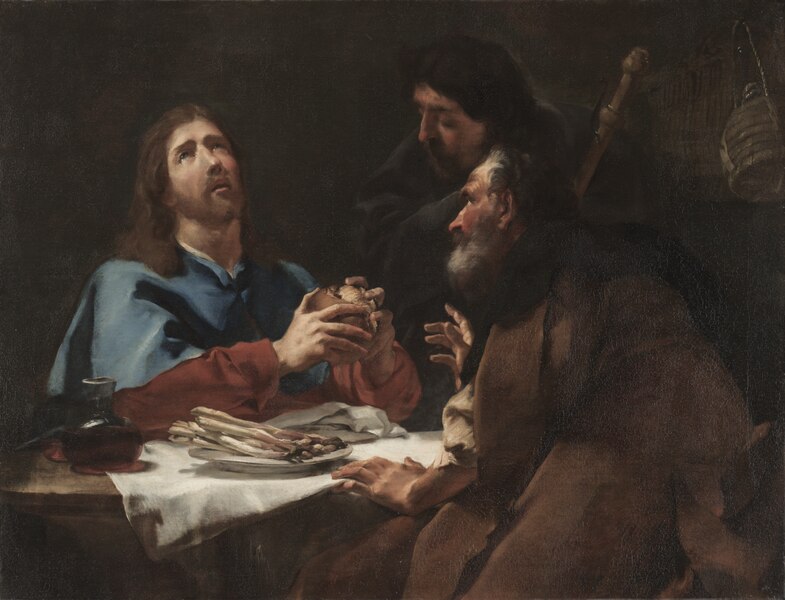
“‘Stay with us, for it is nearly evening and the day is almost over.’ So [Jesus] went in to stay with them. And it happened that, while he was with them at table, he took bread, said the blessing, broke it, and gave it to them.”

I wonder what Jesus felt when he was invited to stay with these two disciples making their away from all that had transpired in Jerusalem to the village of Emmaus. Certainly, Jesus had met these two disciples on the road. He had listened to their discouragement and disillusionment. He had even spent quite a bit of time teaching them, “Then beginning with Moses and all the prophets, he interpreted to them what referred to him in all the scriptures.” With all of that, however, Jesus was hoping for more. We need more than to be heard and understood and have our minds and hearts refreshed with an encounter with Truth. Deep down, the human heart yearns for intimacy and so does the heart of Jesus.

I can imagine Jesus, as he was clearly “giving the impression” that he was intending to go on his way, feeling overwhelmed with joy when the disciples invited him into the intimacy of their home. Jesus never forces his presence and his love on anyone. We can imagine them scouring about making sure there was a bed prepared and thinking about their evening meal.

When we invite Jesus into our hearts with this great hope of satisfying the longing for intimacy that both Jesus and we have, we often scurry about preparing things for his stay, telling him things, saying prayers, asking for what we need, tidying up our hearts as best we can. Jesus enters where he is invited in order to give himself entirely to us. And so when they sat down for their evening meal there is no mention of what the disciples had prepared. Instead, there is recounted the meal Jesus provided them. “And it happened that, while he was with them at table, he took bread, said the blessing, broke it, and gave it to them. With that their eyes were opened and they recognized him.”

Today, Jesus is “hanging around,” to use a somewhat colloquial phrase, hoping that you will invite him to stay with you. Invite Jesus in. Don’t be too worried about what your heart looks like or how you will make him feel welcome. Instead, for this time, just watch him. Experience his joy at being invited to your house, to your heart. Let him be the giver and you the receiver. Allow him to share his joy with you.

Image: Giovanni Battista Piazzetta, Public domain, via Wikimedia Commons

Praying with this Passage of Scripture

Lectio Divina is a way of listening to God as he speaks in his Word. It is a practice of communicating with God through Scripture and attending to God’s presence and what he wishes to tell us. In this slow and prayerful reading of the Word of God, we allow ourselves to be transformed by the Spirit who forms us into the image of Christ. There are four movements in Lectio Divina: Read (lectio), Meditate (meditation), Pray (oratio), Contemplate (contemplation).

Begin by finding a still space to pray. Breathe deeply and become quieter within. Abandon any agenda, worries or thoughts you bring to this prayer and entrust these things to the merciful care of God. Ask for the grace to be receptive to what God will speak to you through this Scripture reading. Grant me, Jesus Divine Master, to be able to know the mysteries of the kingdom of God and your unfathomable riches. Grant that your word penetrate my soul; guide my steps, and brighten my way till the day dawns and darkness dissipates, you who live and reign forever and ever Amen.

Read (lectio)
Begin by slowly and meditatively reading your Scripture passage out loud. Listen for a particular word or phrase that speaks to you at this moment and sit with it for a time.

Pray (oratio)
Read the text a third time. Listen for what God is saying to you. Speak heart to heart with God. Notice the feelings that this conversation with God raises up within you. Share with God what you notice about your response to this conversation. You may wish to return to repeating the phrase quietly and gently, allowing it to permeate you more and more deeply.

Contemplate (contemplatio)
Read the text a final time. Now be still and rest in God’s embrace. Ask God to give you a gift to take with you from this prayer. You might ask God if he is inviting you to do some action, for instance, make some change in your thoughts, attitudes or reactions, in the way you speak or how you treat others. Thank God for this gift and invitation as you conclude your prayer.

Image: Myriams-Fotos; pixabay.com
The Dynamic of the Grain of Wheat (John 12:20-33)

Amen, amen, I say to you, 
unless a grain of wheat falls to the ground and dies, 
it remains just a grain of wheat; 
but if it dies, it produces much fruit.
Whoever loves his life loses it,
and whoever hates his life in this world
will preserve it for eternal life.

John 12:20-33

Have you ever noticed how the Scriptures are filled with people just like ourselves whose lives take unexpected turns and then blossom in ways that can only be described as flourishing in and for the Kingdom of God.

Take Jacob. His “before” was manipulating his father’s blessing from his brother Esau and then serving his uncle Laban for many years, eventually marrying his daughters Leah and Rachel. His “after” was as the patriarch of the twelve tribes of Israel who escaped from Egypt, received the Law, and were chosen by God to be his covenant people. And even to this day, we read in Revelation 21 that on the twelve gates that belong to the New Jerusalem are written the names of the twelve tribes of Israel. The New Jerusalem itself sits on twelve foundations representing the twelve apostles who would reign over the twelve tribes of Israel.

Take Moses. His “before” was the life of Pharoah’s daughter’s adopted son in Egypt. We all know the story. His “after” was the fulfillment of God’s call to be the leader of his people to the Promised Land. And even to this day, the Christian understanding of the Paschal Mystery is rooted in the Exodus narrative.

Between the “before” and the “after” of each of these biblical figures there is a point of struggle and epiphany.

When Jesus says that the grain of wheat must fall to the ground and die if it is to be more than just a single grain, if it is to bear fruit, Jesus is talking about just this dynamic which plays out also in our own lives. Who we think we are, who we discover ourselves to be as we grow up and mature and try to figure out life, all this eventually needs to give way to the fullness of the way God lifts our lives up into his mighty and eternal plan. We each have a role to play in God’s Kingdom. We each have a mission in life. We each were created for a purpose. It is in those “hinge” seasons of our life between the “before” and “after” in which we feel the weight and sorrow of the grain of wheat dying. If you are in one of those “hinge” moments, know that this too is a way in which God raises you up to fulfill more completely the fullness of your life and his glory.

Praying with this Passage of Scripture

Lectio Divina is a way of listening to God as he speaks in his Word. It is a practice of communicating with God through Scripture and attending to God’s presence and what he wishes to tell us. In this slow and prayerful reading of the Word of God, we allow ourselves to be transformed by the Spirit who forms us into the image of Christ. There are four movements in Lectio Divina: Read (lectio), Meditate (meditation), Pray (oratio), Contemplate (contemplation).

Begin by finding a still space to pray. Breathe deeply and become quieter within. Abandon any agenda, worries or thoughts you bring to this prayer and entrust these things to the merciful care of God. Ask for the grace to be receptive to what God will speak to you through this Scripture reading. Grant me, Jesus Divine Master, to be able to know the mysteries of the kingdom of God and your unfathomable riches. Grant that your word penetrate my soul; guide my steps, and brighten my way till the day dawns and darkness dissipates, you who live and reign forever and ever Ame

Read (lectio)
Begin by slowly and meditatively reading your Scripture passage out loud. Listen for a particular word or phrase that speaks to you at this moment and sit with it for a time.

Meditate (meditatio)
Read the same passage a second time. As you re-engage the text, let the word or phrase that stood out become your invitation to speak from your heart with God who wishes to share his heart with you. Allow this word or phrase to wash over you and permeate your thoughts and feelings. You may wish to repeat this phrase quietly and gently for a period of time

Pray (oratio)
Read the text a third time. Listen for what God is saying to you. Speak heart to heart with God. Notice the feelings that this conversation with God raises up within you. Share with God what you notice about your response to this conversation. You may wish to return to repeating the phrase quietly and gently, allowing it to permeate you more and more deeply.

Contemplate (contemplatio)
Read the text a final time. Now be still and rest in God’s embrace. Ask God to give you a gift to take with you from this prayer. You might ask God if he is inviting you to do some action, for instance, make some change in your thoughts, attitudes or reactions, in the way you speak or how you treat others. Thank God for this gift and invitation as you conclude your prayer.

Image by Hans via Pixabay