The Divine World of Risk (Matthew 9:9-13)

As Jesus passed by,
he saw a man named Matthew sitting at the customs post.
He said to him, “Follow me.”
And he got up and followed him.
While he was at table in his house,
many tax collectors and sinners came
and sat with Jesus and his disciples.
The Pharisees saw this and said to his disciples,
“Why does your teacher eat with tax collectors and sinners?”
He heard this and said,
“Those who are well do not need a physician, but the sick do.
Go and learn the meaning of the words,
I desire mercy, not sacrifice.
I did not come to call the righteous but sinners.”

Matthew 9:9-13

Matthew was a finance guy. Not only did he extort money from his neighbors while collecting taxes, he also wrapped his whole life around the security money can bring.

How many advertisements have you seen lately geared toward people considering retirement: Do you have enough money to survive after you retire? Maybe you need to invest? Buy gold or silver? Take out insurance?

Commercials and posts of this nature lead to a stabbing fear. All the what ifs begin to play on our imagination.

If there is anything we humans cling to it is security. We clutch at anything that seems dependable. We stock up on what promises to sustain us in the crises of our lives. We pour over the stock reports to see how much we have lost. We accumulate what we hope will keep us safe until we die.

How much power do I need to protect my future? What will happen to me if I don’t have extra money to squirrel away? What do I need to ensure my comfort?

Jesus invited Matthew to step out of the security he had been creating for himself into the divine world of risk. He brought him out of the tomb of self-protection into the sunlight of abandonment to divine providence.

Hear these words from the heart of Jesus said to Matthew as said to yourself and do not be afraid: “Leave everything, Matthew, and come. Come follow me. I have no money to offer you. No absolute security to promise for your future. I have nothing but my immense love for you and for the world. I have nothing but my dream for your future in my Kingdom which I have secured for you. I have known you since before the foundation of the world. Matthew [and here say your own name], I will be enough for you. Enough forever. Come. Come follow me.”

Image: Bernardo Strozzi, Public domain, via Wikimedia Commons

Praying with this Passage of Scripture

Lectio Divina is a way of listening to God as he speaks in his Word. It is a practice of communicating with God through Scripture and attending to God’s presence and what he wishes to tell us. In this slow and prayerful reading of the Word of God, we allow ourselves to be transformed by the Spirit who forms us into the image of Christ. There are four movements in Lectio Divina: Read (lectio), Meditate (meditation), Pray (oratio), Contemplate (contemplation).

Begin by finding a still space to pray. Breathe deeply and become quieter within. Abandon any agenda, worries or thoughts you bring to this prayer and entrust these things to the merciful care of God. Ask for the grace to be receptive to what God will speak to you through this Scripture reading. Grant me, Jesus Divine Master, to be able to know the mysteries of the kingdom of God and your unfathomable riches. Grant that your word penetrate my soul; guide my steps, and brighten my way till the day dawns and darkness dissipates, you who live and reign forever and ever Amen.

Read (lectio)
Begin by slowly and meditatively reading your Scripture passage out loud. Listen for a particular word or phrase that speaks to you at this moment and sit with it for a time.

Pray (oratio)
Read the text a third time. Listen for what God is saying to you. Speak heart to heart with God. Notice the feelings that this conversation with God raises up within you. Share with God what you notice about your response to this conversation. You may wish to return to repeating the phrase quietly and gently, allowing it to permeate you more and more deeply.

Contemplate (contemplatio)
Read the text a final time. Now be still and rest in God’s embrace. Ask God to give you a gift to take with you from this prayer. You might ask God if he is inviting you to do some action, for instance, make some change in your thoughts, attitudes or reactions, in the way you speak or how you treat others. Thank God for this gift and invitation as you conclude your prayer.

Image: Myriams-Fotos; pixabay.com

Blessed are the pure of heart (Mark 7)

Jesus summoned the crowd again and said to them,
“Hear me, all of you, and understand.
Nothing that enters one from outside can defile that person;
but the things that come out from within are what defile.

“From within people, from their hearts,
come evil thoughts, unchastity, theft, murder,
adultery, greed, malice, deceit,
licentiousness, envy, blasphemy, arrogance, folly.
All these evils come from within and they defile.”

Mark 7

In this passage Jesus defines purity of heart by telling us what it is not. A pure heart is not a heart from which come thoughts and actions, attitudes and desires for “unchastity, theft, murder, adultery, greed, malice, deceit, licentiousness, envy, blasphemy, arrogance, and folly.”

The heart according to the Catechism of the Catholic Church is “the depths of one’s being, where the person decides for or against God” (CCC 368).

The human heart is wracked by the distortions of concupiscence making it difficult at times to decide for God. Every one of us can testify to the struggles we undergo to be “pure of heart.” How difficult it is to keep our hearts clean when we are standing knee deep in available options for satisfying our lower instincts. Certainly, we could think of the person struggling with an addiction to pornography or lust, but there is also the uncleanness of anger, of greed, of deceit, of envy, of arrogance. Who among us can boast never to have wrestled with these?

Here are some points of spiritual advice when our hearts struggle to put on the mind and heart of Christ:

  • Refuse to let into your mind ideas, memories, and images that lead you to thoughts and behaviors that are angry, lustful, envious, deceitful, and so on. Fill your mind and heart with what is true, good and beautiful through a careful choice of the media you use, how much time you spend on social media, and what you read and decide to look at.
  • Look for patterns and discover the one or two main ways in which you struggle with temptation. Focus your prayer and watchfulness on these.
  • Become intimately aware of the movements of your heart so you can meet an evil thought with a short prayer, for example, Lord Jesus, I love you… Jesus, mercy… Jesus.
  • Increase your love for Jesus through prayer, spiritual reading, and above all the sacraments.

Once after St. Catherine of Siena had been beset with temptations against purity and had struggled for several days without a sense of Jesus being there to help her, she complained to him, “Lord, where were you when my heart was so tormented?” Jesus responded, “I was in the center of your heart.”

In this gospel passage Jesus rejects the legalistic reduction of the virtue of purity to exterior cleansing and focuses on our heart because it is within us that the Trinity abides. “Whoever loves me will keep my word, and my Father will love him, and we will come to him and make our dwelling with him” (Jn 14:23).

Image: Manuel Darío Fuentes Hernández from Pixabay.

Praying with this Passage of Scripture

Lectio Divina is a way of listening to God as he speaks in his Word. It is a practice of communicating with God through Scripture and attending to God’s presence and what he wishes to tell us. In this slow and prayerful reading of the Word of God, we allow ourselves to be transformed by the Spirit who forms us into the image of Christ. There are four movements in Lectio Divina: Read (lectio), Meditate (meditation), Pray (oratio), Contemplate (contemplation).

Begin by finding a still space to pray. Breathe deeply and become quieter within. Abandon any agenda, worries or thoughts you bring to this prayer and entrust these things to the merciful care of God. Ask for the grace to be receptive to what God will speak to you through this Scripture reading. Grant me, Jesus Divine Master, to be able to know the mysteries of the kingdom of God and your unfathomable riches. Grant that your word penetrate my soul; guide my steps, and brighten my way till the day dawns and darkness dissipates, you who live and reign forever and ever Amen.

Read (lectio)
Begin by slowly and meditatively reading your Scripture passage out loud. Listen for a particular word or phrase that speaks to you at this moment and sit with it for a time.

Pray (oratio)
Read the text a third time. Listen for what God is saying to you. Speak heart to heart with God. Notice the feelings that this conversation with God raises up within you. Share with God what you notice about your response to this conversation. You may wish to return to repeating the phrase quietly and gently, allowing it to permeate you more and more deeply.

Contemplate (contemplatio)
Read the text a final time. Now be still and rest in God’s embrace. Ask God to give you a gift to take with you from this prayer. You might ask God if he is inviting you to do some action, for instance, make some change in your thoughts, attitudes or reactions, in the way you speak or how you treat others. Thank God for this gift and invitation as you conclude your prayer.

Image: Myriams-Fotos; pixabay.com
We belong to each other (Matthew 18:15-20)

“Again, amen, I say to you, if two of you agree on earth
about anything for which they are to pray,
it shall be granted to them by my heavenly Father.
For where two or three are gathered together in my name,
there am I in the midst of them.”

Matthew 18:15-20

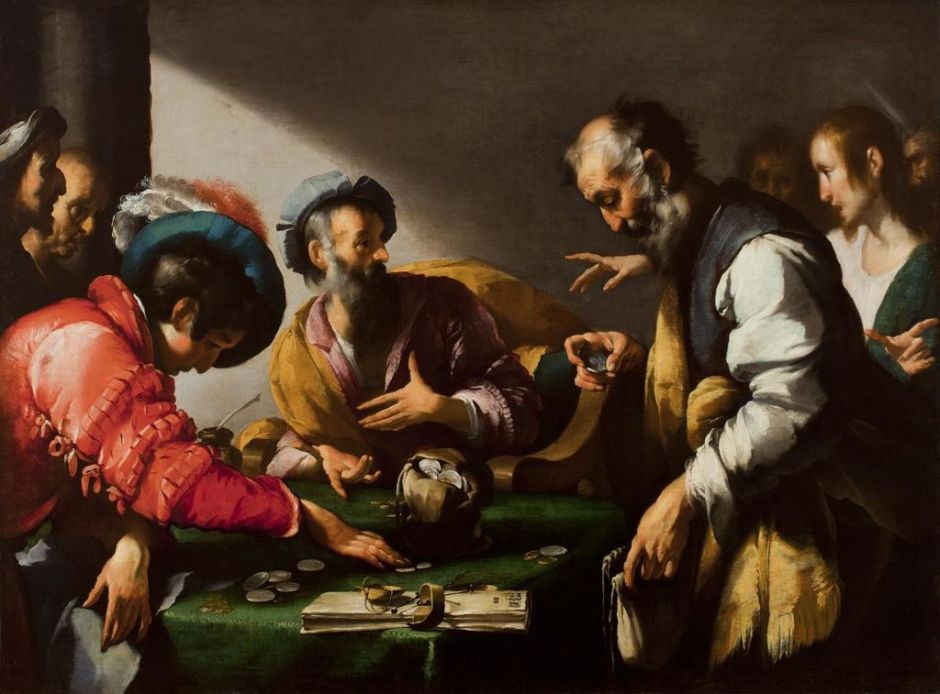
Every time I watch the altar server carrying the cross and leading the procession to the altar while the entrance hymn is sung, I feel slightly overwhelmed. We are being gathered together by Christ himself. It is something that is happening to us, given to us, being done through us. We are entering into the presence of Christ as into a new “dimension” which allows us to see the ultimate reality of life.

We are not gathering together like we gather at a meeting or a club house or a restaurant.

We are doing something more than going to this or that Mass in one parish or other at a time most convenient to us.

We are answering a call to do what is most natural to the human creature: to adore. We are answering an invitation to keep our hearts lifted high. We are plunging in liturgy and sacrament into the new life of the Kingdom. We are approaching the altar which is a sign that we have been given access to the heavenly sanctuary.

“Where two or three are gathered together in my name,
there am I in the midst of them.”

In the Mass celebrated Sunday after Sunday, day after day, Jesus brings our personal reality into harmony with his own heart, his own truth, his own will. In the assembly, our voices and even our lives are more and more harmoniously united, as we become more and more like Jesus himself. That is why Jesus makes clear that we are responsible for each other, that we are “brother and sister” to each other. If one member of the communion gathered in Christ is having difficulty, or straying, or offending in some significant way, indifference or tolerance is not an acceptable response, since Jesus himself outlines in this passage a process for winning back our brother or sister to live more deeply their new life in Christ.

In the end, we do not belong to ourselves. We belong to Christ. We belong to each other. When we have answered to the initiative of Christ who gathers us together, we grow more completely into one harmonious voice with him and with each other as we offer praise to the Father and intercede for the world.

Image: Felipe Balduino via Pexels

Praying with this Passage of Scripture

Lectio Divina is a way of listening to God as he speaks in his Word. It is a practice of communicating with God through Scripture and attending to God’s presence and what he wishes to tell us. In this slow and prayerful reading of the Word of God, we allow ourselves to be transformed by the Spirit who forms us into the image of Christ. There are four movements in Lectio Divina: Read (lectio), Meditate (meditation), Pray (oratio), Contemplate (contemplation).

Begin by finding a still space to pray. Breathe deeply and become quieter within. Abandon any agenda, worries or thoughts you bring to this prayer and entrust these things to the merciful care of God. Ask for the grace to be receptive to what God will speak to you through this Scripture reading. Grant me, Jesus Divine Master, to be able to know the mysteries of the kingdom of God and your unfathomable riches. Grant that your word penetrate my soul; guide my steps, and brighten my way till the day dawns and darkness dissipates, you who live and reign forever and ever Amen.

Read (lectio)
Begin by slowly and meditatively reading your Scripture passage out loud. Listen for a particular word or phrase that speaks to you at this moment and sit with it for a time.

Pray (oratio)
Read the text a third time. Listen for what God is saying to you. Speak heart to heart with God. Notice the feelings that this conversation with God raises up within you. Share with God what you notice about your response to this conversation. You may wish to return to repeating the phrase quietly and gently, allowing it to permeate you more and more deeply.

Contemplate (contemplatio)
Read the text a final time. Now be still and rest in God’s embrace. Ask God to give you a gift to take with you from this prayer. You might ask God if he is inviting you to do some action, for instance, make some change in your thoughts, attitudes or reactions, in the way you speak or how you treat others. Thank God for this gift and invitation as you conclude your prayer.

Image: Myriams-Fotos; pixabay.com

Jesus Son of Mary Is the Glory of the Human Race (Matthew 13:54-58)

Jesus came to his native place and taught the people in their synagogue.
They were astonished and said,
“Where did this man get such wisdom and mighty deeds?
Is he not the carpenter’s son?
Is not his mother named Mary
and his brothers James, Joseph, Simon, and Judas?
Are not his sisters all with us?
Where did this man get all this?”
And they took offense at him.
But Jesus said to them,
“A prophet is not without honor except in his native place
and in his own house.”
And he did not work many mighty deeds there
because of their lack of faith.

Matthew 13:54-58

When you reach a certain age you worry about things like your legacy, what you have done with your life and what would have happened if you had made different choices. There is something in us that even unconsciously compares the outcomes of our life achievements with those of others. Physically, financially, spiritually we wonder why we are deficient. Why our life hasn’t been marked with “more”: more beauty, more strength, more wealth, more success, more holiness…. Always more.

Hollywood and social media tickle this very human desire to be and to have more. It’s difficult to settle for being ordinary, unknown, insignificant, not a major player around whom everything revolves and on whom everything depends. As the years pass and we reach our senior years, this begins to feel a little desperate. We know instinctively that we are running out of time and opportunities to make “more” happen.

The people in Nazareth, the neighbors of Jesus’ mother who still remembered Joseph the carpenter every time they used something he had made for them, wanted more stardom in a prophet. Who does he think he is? We rub elbows with his mother at the village well. We know his family. They are just our  neighbors. Just like us. They are no better than us. Who does this Jesus think he is?

Unknowingly, however, they were proclaiming the glory of the human race. God’s Son was born of a virgin, protected and raised by a foster-father who had a normal, everyday job. The Son of God is Emmanuel, God-with-us, God-in-our-midst, God who took flesh from a member of the human race, Mary, and who became a familiar presence as he grew up around the town of Nazareth. God who is our brother and who would one day call his followers his friends, God rooted in our human reality, God who would feed us with his own Body and Blood.

This Gospel passage proclaims the humble origins of the Messiah and the way in which he has “woven” himself, if we could say it that way, into our very humble human reality. We can be sure that as Jesus stands before his Father in heaven, interceding for us, he knows. He knows from the inside out our reality. He understands every bit of our sorrows and the full extent of our joys. He lifts us up into communion with God where we make our forever-home in the Trinity, where we will be eternally “of God” and “in God.” This is what Jesus was inviting his neighbors to join him in, but they wanted more they wanted something else.

Jesus will seem to stumble into your very humble days. In ways that are far from magnificent, he will take up his home in you. As he does this, every day, listen to what he has to say. Let him tease your heart away from the earthly importance you seek, whatever it is, so that he can incorporate you into the glory of the divine life he wishes to share with you for all eternity.

Image: jlmajano via Cathopic

Praying with this Passage of Scripture

Lectio Divina is a way of listening to God as he speaks in his Word. It is a practice of communicating with God through Scripture and attending to God’s presence and what he wishes to tell us. In this slow and prayerful reading of the Word of God, we allow ourselves to be transformed by the Spirit who forms us into the image of Christ. There are four movements in Lectio Divina: Read (lectio), Meditate (meditation), Pray (oratio), Contemplate (contemplation).

Begin by finding a still space to pray. Breathe deeply and become quieter within. Abandon any agenda, worries or thoughts you bring to this prayer and entrust these things to the merciful care of God. Ask for the grace to be receptive to what God will speak to you through this Scripture reading. Grant me, Jesus Divine Master, to be able to know the mysteries of the kingdom of God and your unfathomable riches. Grant that your word penetrate my soul; guide my steps, and brighten my way till the day dawns and darkness dissipates, you who live and reign forever and ever Amen.

Read (lectio)
Begin by slowly and meditatively reading your Scripture passage out loud. Listen for a particular word or phrase that speaks to you at this moment and sit with it for a time.

Pray (oratio)
Read the text a third time. Listen for what God is saying to you. Speak heart to heart with God. Notice the feelings that this conversation with God raises up within you. Share with God what you notice about your response to this conversation. You may wish to return to repeating the phrase quietly and gently, allowing it to permeate you more and more deeply.

Contemplate (contemplatio)
Read the text a final time. Now be still and rest in God’s embrace. Ask God to give you a gift to take with you from this prayer. You might ask God if he is inviting you to do some action, for instance, make some change in your thoughts, attitudes or reactions, in the way you speak or how you treat others. Thank God for this gift and invitation as you conclude your prayer.

Image: Myriams-Fotos; pixabay.com
How to Be Good Soil (Matthew 13:18-23)

Jesus said to his disciples:
“Hear the parable of the sower.
The seed sown on the path is the one who hears the word of the Kingdom
without understanding it,
and the Evil One comes and steals away
what was sown in his heart.
The seed sown on rocky ground
is the one who hears the word and receives it at once with joy.
But he has no root and lasts only for a time.
When some tribulation or persecution comes because of the word,
he immediately falls away.
The seed sown among thorns is the one who hears the word,
but then worldly anxiety and the lure of riches choke the word
and it bears no fruit.
But the seed sown on rich soil
is the one who hears the word and understands it,
who indeed bears fruit and yields a hundred or sixty or thirtyfold.”

Matthew 13:18-23

Jesus is the divine Sower who sows the seed of his word in the community of followers he is calling apart from the world. It is in hearing the word of God that the seed takes root in us.

To hear, to really hear, to absolutely hear the voice of God and not the myriad other distracting voices that call out for our attention, we must do something that is very difficult. We must cultivate silence.

Most retreatants discover on the first day or so of a retreat, in the quiet of the retreat house with nothing to do except listen to God’s voice, that a thousand other voices—strident and loud—all of a sudden appear, clamoring for attention. Listening to their stories and letting them go can be an essential first step to creating the silent soil that can receive God’s word.

We don’t need to be on a retreat to enter into this ambient of silent recollection. It is possible to spend a short period every day as a mini-retreat to cultivate the soil of our heart. We can start by disconnecting from social media and our phones.

At first it may seem frightening to be cut off from the torrent of words and images that flood our media-saturated consciousness. We might feel nervous as we wait in silence for the work of the divine Sower. Our soul may feel fragmented and untilled and unprepared for the seed. In patience we will acquire the stillness that longs to receive the fullness of God’s word.

It is a spiritual art and discipline to be able to distinguish the harmony of God’s voice from the discord of worries, temptations, desires, and ambitions. This discernment comes precisely from the experience of entering into silence.

Pope Benedict XVI said, “‘Only in silence can the word of God find a home in us, as it did in Mary, woman of the word and, inseparably, woman of silence’ (Verbum Domini, n. 66). This principle — that without silence one does not hear, does not listen, does not receive a word — applies especially to personal prayer as well as to our liturgies: to facilitate authentic listening, they must also be rich in moments of silence and of non-verbal reception” (General Audience, March 7, 2012).

How does God desire you to open wide your heart in silence? Ask the Lord what practical steps he desires you to take to recover this contemplative dimension of life.

Image: ThePixelman via Pixabay.

Praying with this Passage of Scripture

Lectio Divina is a way of listening to God as he speaks in his Word. It is a practice of communicating with God through Scripture and attending to God’s presence and what he wishes to tell us. In this slow and prayerful reading of the Word of God, we allow ourselves to be transformed by the Spirit who forms us into the image of Christ. There are four movements in Lectio Divina: Read (lectio), Meditate (meditation), Pray (oratio), Contemplate (contemplation).

Begin by finding a still space to pray. Breathe deeply and become quieter within. Abandon any agenda, worries or thoughts you bring to this prayer and entrust these things to the merciful care of God. Ask for the grace to be receptive to what God will speak to you through this Scripture reading. Grant me, Jesus Divine Master, to be able to know the mysteries of the kingdom of God and your unfathomable riches. Grant that your word penetrate my soul; guide my steps, and brighten my way till the day dawns and darkness dissipates, you who live and reign forever and ever Amen.

Read (lectio)
Begin by slowly and meditatively reading your Scripture passage out loud. Listen for a particular word or phrase that speaks to you at this moment and sit with it for a time.

Pray (oratio)
Read the text a third time. Listen for what God is saying to you. Speak heart to heart with God. Notice the feelings that this conversation with God raises up within you. Share with God what you notice about your response to this conversation. You may wish to return to repeating the phrase quietly and gently, allowing it to permeate you more and more deeply.

Contemplate (contemplatio)
Read the text a final time. Now be still and rest in God’s embrace. Ask God to give you a gift to take with you from this prayer. You might ask God if he is inviting you to do some action, for instance, make some change in your thoughts, attitudes or reactions, in the way you speak or how you treat others. Thank God for this gift and invitation as you conclude your prayer.

Image: Myriams-Fotos; pixabay.com

Jesus asks, “Will you come to me?” (Matthew 11:28-30)

Jesus said:
“Come to me, all you who labor and are burdened,
and I will give you rest.
Take my yoke upon you and learn from me,
for I am meek and humble of heart;
and you will find rest for yourselves.
For my yoke is easy, and my burden light.”

Matthew 11:28-30

“Come to me.” The words of a lover. Powerless words. Vulnerable words. The one who says these words must wait upon the response of the one to whom they are addressed.

“Will you come to me?”

The loved one must answer yes or no.

If he or she answers “Yes,” than this love of Jesus has triumphed, and Jesus can open his heart completely to pour out on the loved one that fullness of the life he shares with the Father. If the answer is “No,” a love refused, then the gift of love has met with a tragic end.

Ultimately, the invitation of the Father and the Son to the world, inviting  each person into their eternal loving and living and giving is, in fact, limited only by human refusal.

As soon as we say our “Yes” to Jesus, we discover that the pressures that weigh upon us from both the world and our own selves begin to fade away. We are let in on the “secret,” so to speak, of the mystery Jesus came to reveal to us.

We begin to see how we receive all from the Father, every last thing that we are and have and accomplish. In Jesus we see the way to live in relation to the Father: in blessing and thanksgiving, wasting our time in worship and wonder. We make the astounding discovery that in truth the world has no power over us when we make our home in God.

Jesus asks you today and every day, in situations of joy and in pain, in laughter and in tears, in circumstances that demand outstanding courage and those that require a humble peace, “Come to me!”

Jesus stands at the door of our hearts as a beggar, but—oh!—how much joy fills his heart when we reach out our hand to take his that we might go with him wherever he leads. Image: Leiloeira São Domingos, Public domain, via Wikimedia Commons

Praying with this Passage of Scripture

Lectio Divina is a way of listening to God as he speaks in his Word. It is a practice of communicating with God through Scripture and attending to God’s presence and what he wishes to tell us. In this slow and prayerful reading of the Word of God, we allow ourselves to be transformed by the Spirit who forms us into the image of Christ. There are four movements in Lectio Divina: Read (lectio), Meditate (meditation), Pray (oratio), Contemplate (contemplation).

Begin by finding a still space to pray. Breathe deeply and become quieter within. Abandon any agenda, worries or thoughts you bring to this prayer and entrust these things to the merciful care of God. Ask for the grace to be receptive to what God will speak to you through this Scripture reading. Grant me, Jesus Divine Master, to be able to know the mysteries of the kingdom of God and your unfathomable riches. Grant that your word penetrate my soul; guide my steps, and brighten my way till the day dawns and darkness dissipates, you who live and reign forever and ever Amen.

Read (lectio)
Begin by slowly and meditatively reading your Scripture passage out loud. Listen for a particular word or phrase that speaks to you at this moment and sit with it for a time.

Pray (oratio)
Read the text a third time. Listen for what God is saying to you. Speak heart to heart with God. Notice the feelings that this conversation with God raises up within you. Share with God what you notice about your response to this conversation. You may wish to return to repeating the phrase quietly and gently, allowing it to permeate you more and more deeply.

Contemplate (contemplatio)
Read the text a final time. Now be still and rest in God’s embrace. Ask God to give you a gift to take with you from this prayer. You might ask God if he is inviting you to do some action, for instance, make some change in your thoughts, attitudes or reactions, in the way you speak or how you treat others. Thank God for this gift and invitation as you conclude your prayer.

Image: Myriams-Fotos; pixabay.com