I Need a Mother. I Need Mary. (John 19:25-34)

Meanwhile, standing near the cross of Jesus were his mother, and his mother’s sister, Mary the wife of Clopas, and Mary Magdalene. When Jesus saw his mother and the disciple whom he loved standing beside her, he said to his mother, “Woman, here is your son.” Then he said to the disciple, “Here is your mother.” And from that hour the disciple took her into his own home.

John 19:25-34

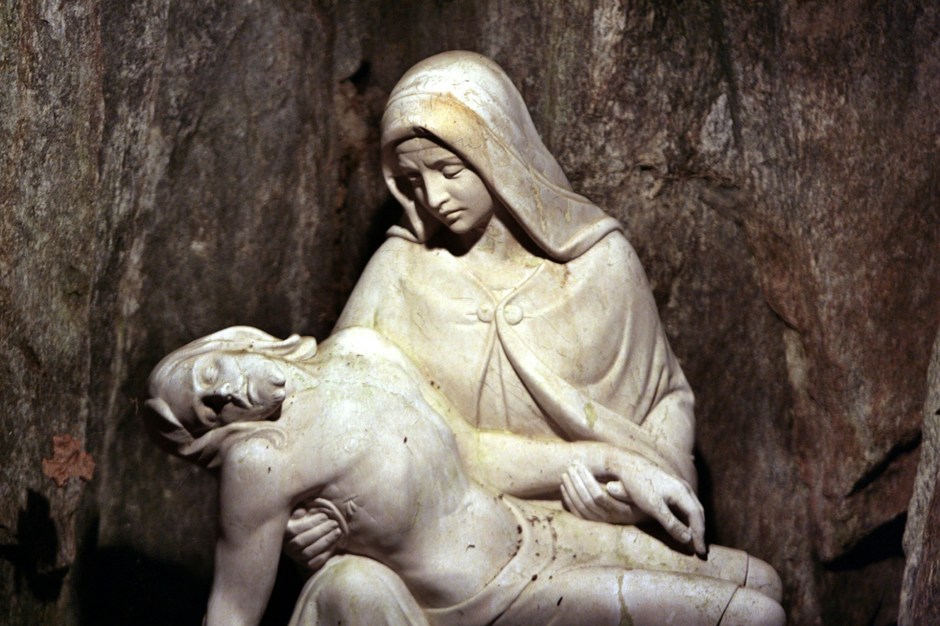
The day after the Church celebrates the Feast of Pentecost and the coming of the Holy Spirit on the apostles gathered around Mary in the Cenacle, we are given this opportunity to take a step back and to prayerfully contemplate Mary as the Mother of the Church, Mother of the Redeemer and Mother of the Redeemed.

Mary brought Christ, His physical human body, into the world and thus gave birth in a mystical way to the Church, the Mystical Body of Christ. She stood with her Son in his passion and received his body in death as it was lowered from the cross and laid in a tomb. There is no way to fully appreciate the pain and intimacy of her heart, so pure and so holy, at this moment in which she receives from Jesus this motherhood of the redeemed, this charge to love and provide for his broken and wandering brothers and sisters for whom he offered his life.

I am one of these wandering disciples of Jesus. Sometimes I get lost. A lot of times I’m not able to withdraw my will from the aims and desires of the “old man.” Too often I hold on to this or that in aspects of my life where I haven’t the courage or strength to turn completely to Christ.

I need a mother.

I need Mary.

I need the Church,

Mary did not know any contagion of sin, as she was preserved whole and intact in her created nature from the first instant of her conception. In us holiness is found only in an imperfect way.

Mary, the Immaculate Conception, received, as a gratuitous gift, an original holiness, a holiness that she did not have to pursue throughout her life as the faithful do, who though “called to holiness” only arrive at a measure of holiness at the end of the journey. Mary alone is holy through original gift (Immaculate Conception) and through her own perfect conduct of life.

Mary is the icon of the holy Church. She encapsulates in herself all of the characteristics that the Church possesses. Christ gives holiness to his Mystical Body the Church, and then the Church, as a mother, brings forth children to God in the font of baptism, though we struggle with sin and concupiscence all our life.

Mary is Mother and icon of the Church. She is our Advocate, Mother, Teacher, and Queen.  Both Mary and the Church are the source of hope for us who are still on the way to our eternal home.

Image credit: Image by Sr. Maria-Magdalena R. SMCB from Pixabay

Praying with this Passage of Scripture

Lectio Divina is a way of listening to God as he speaks in his Word. It is a practice of communicating with God through Scripture and attending to God’s presence and what he wishes to tell us. In this slow and prayerful reading of the Word of God, we allow ourselves to be transformed by the Spirit who forms us into the image of Christ. There are four movements in Lectio Divina: Read (lectio), Meditate (meditation), Pray (oratio), Contemplate (contemplation).

Begin by finding a still space to pray. Breathe deeply and become quieter within. Abandon any agenda, worries or thoughts you bring to this prayer and entrust these things to the merciful care of God. Ask for the grace to be receptive to what God will speak to you through this Scripture reading. Grant me, Jesus Divine Master, to be able to know the mysteries of the kingdom of God and your unfathomable riches. Grant that your word penetrate my soul; guide my steps, and brighten my way till the day dawns and darkness dissipates, you who live and reign forever and ever Amen.

Read (lectio)
Begin by slowly and meditatively reading your Scripture passage out loud. Listen for a particular word or phrase that speaks to you at this moment and sit with it for a time.

Pray (oratio)
Read the text a third time. Listen for what God is saying to you. Speak heart to heart with God. Notice the feelings that this conversation with God raises up within you. Share with God what you notice about your response to this conversation. You may wish to return to repeating the phrase quietly and gently, allowing it to permeate you more and more deeply.

Contemplate (contemplatio)
Read the text a final time. Now be still and rest in God’s embrace. Ask God to give you a gift to take with you from this prayer. You might ask God if he is inviting you to do some action, for instance, make some change in your thoughts, attitudes or reactions, in the way you speak or how you treat others. Thank God for this gift and invitation as you conclude your prayer.

Image: Myriams-Fotos; pixabay.com

We the Sheep Still Hear Jesus’ Voice Today (John 10:27-30)

My sheep hear my voice. I know them, and they follow me. I give them eternal life, and they will never perish. No one will snatch them out of my hand. What my Father has given me is greater than all else, and no one can snatch it out of the Father’s hand. The Father and I are one.”

John 10:27-30

“My sheep hear my voice. I know them, and they follow me.”

I have to admit for many years I had a certain idea of what Jesus’ voice sounded like. My assumptions came from the first verse of this Gospel. Sheep are pretty dumb animals and need a shepherd to protect them, make sure they are fed and healthy, and lead them to safe pasture. When I “heard” Jesus’ voice in my heart, it was always gentle, meek, caring, a “what can I do for you” type of voice.

When I made my thirty-day Ignatian retreat I heard another type of voice when Jesus spoke to my heart: it was clear, firm, and understanding. It was the voice of authority that wanted the very best, and only the best for me. Sometimes that meant I had to confront areas of my life that needed repentance and healing. Other times I needed to know that I was loved even in my poverty and weakness. Still other times Jesus needed me to realize that he was the one who does things, not me. It was the voice of the One who died that I might live forever in communion with God. It was a voice of urgency and patience.

Jesus’ voice in the Gospels has many of these characteristics. Think of his words to Mary Magdalen in the garden of the resurrection. Once I would have expected him to reach out to her, tell her that everything was going to be okay, express his sympathy with what she had suffered. Instead, he calls her by name, tells her not to cling to him, and to go and tell his brothers that he had risen. Clear, strong, real, amazing, urgent, the voice of authority, the voice of love.

Think of Zacchaeus, the Sermon on the Mount, his words to Peter at various times during the three years of the public ministry. Remember how Jesus spoke to the Syrian Phoenician Gentile woman, words that almost scandalize us as we read them today. His commanding words to the spirit that possessed the boy who was deaf and mute. What about the 5000 people scattered across the fields listening to Jesus’ preaching. “You feed them yourselves,” he said to his disciples. And his words to his apostles at the Last Supper, “This is my body. This is my blood.” And in his appearance to his apostles after the resurrection, “Peace be with you.”

There are a thousand different variations of tone and intent and desire and command and mercy in the voice of the Good Shepherd.

We, the sheep, still hear Jesus’ voice today. “I absolve you from your sins.” “Behold the Lamb of God who takes away the sins of the world.” We hear his voice as we read the Scriptures. Our soul may be illumined by a gesture that moves us deeply or by an unexpected kindness.

I remember on my Ignatian retreat being early one day for my meeting with my director. I walked over and started to look at the display of the writings and effects of Thérèse Couderc. I had been so engrossed in what I was learning about this sister’s life that I didn’t notice my director coming up behind me. She began to share experiences of suffering that Sister Couderc had endured throughout her religious life, experiences that she knew to a certain extent matched my own. As I listened to her, a fire was lit within my heart, a fire of meaning and hope and love for Jesus, a fire that transformed the depressing weight that had burdened my heart into a burst of generosity. How little it takes for Jesus to manifest himself with attractiveness and joy! How sweet and strong and true is the voice of the Shepherd!

Image Credit: Image by AstralEmber from Pixabay

Praying with this Passage of Scripture

Lectio Divina is a way of listening to God as he speaks in his Word. It is a practice of communicating with God through Scripture and attending to God’s presence and what he wishes to tell us. In this slow and prayerful reading of the Word of God, we allow ourselves to be transformed by the Spirit who forms us into the image of Christ. There are four movements in Lectio Divina: Read (lectio), Meditate (meditation), Pray (oratio), Contemplate (contemplation).

Begin by finding a still space to pray. Breathe deeply and become quieter within. Abandon any agenda, worries or thoughts you bring to this prayer and entrust these things to the merciful care of God. Ask for the grace to be receptive to what God will speak to you through this Scripture reading. Grant me, Jesus Divine Master, to be able to know the mysteries of the kingdom of God and your unfathomable riches. Grant that your word penetrate my soul; guide my steps, and brighten my way till the day dawns and darkness dissipates, you who live and reign forever and ever Amen.

Read (lectio)
Begin by slowly and meditatively reading your Scripture passage out loud. Listen for a particular word or phrase that speaks to you at this moment and sit with it for a time.

Pray (oratio)
Read the text a third time. Listen for what God is saying to you. Speak heart to heart with God. Notice the feelings that this conversation with God raises up within you. Share with God what you notice about your response to this conversation. You may wish to return to repeating the phrase quietly and gently, allowing it to permeate you more and more deeply.

Contemplate (contemplatio)
Read the text a final time. Now be still and rest in God’s embrace. Ask God to give you a gift to take with you from this prayer. You might ask God if he is inviting you to do some action, for instance, make some change in your thoughts, attitudes or reactions, in the way you speak or how you treat others. Thank God for this gift and invitation as you conclude your prayer.

Image: Myriams-Fotos; pixabay.com

Turn Your Gaze to Jesus as You Enter Holy Week (John 12:1-11)

Six days before the Passover Jesus came to Bethany, the home of Lazarus, whom he had raised from the dead. There they gave a dinner for him. Martha served, and Lazarus was one of those at the table with him. Mary took a pound of costly perfume made of pure nard, anointed Jesus’ feet, and wiped them with her hair. The house was filled with the fragrance of the perfume. But Judas Iscariot, one of his disciples (the one who was about to betray him), said, “Why was this perfume not sold for three hundred denarii and the money given to the poor?” (He said this not because he cared about the poor, but because he was a thief; he kept the common purse and used to steal what was put into it.) Jesus said, “Leave her alone. She bought it so that she might keep it for the day of my burial. You always have the poor with you, but you do not always have me.”

John 121-11

For 40 days of the sacred season of Lent, we have been renewing and purifying our hearts, practicing self-denial and imitating God in his kindness by sharing with those who are in need, practicing virtue and fasting, overturning what the Preface for the First Sunday of Lent calls, “all the snares of the ancient serpent.”

Today, as we step over the threshold into the holiest of weeks, we encounter Mary of Bethany, her sister Martha, and their brother Lazarus. The Church puts the breaks on our preparation so that we may turn our gaze to Jesus, so that we may learn to serve him, and love him, and console him, and surrender to him.

There is a silence and calm inside this little home of Martha, Mary, and Lazarus. Outside the crowds are milling about and the rumbling of trouble is growing louder because of the raising of Lazarus. Around the family table, instead, there is an emotional connection only found among friends. Step into Holy Week by stopping in the house of Bethany.

Martha is quietly providing for Jesus and his band of apostles. Unruffled by the demands placed on her as hostess, and also quietly confident in Jesus as the Resurrection and the Life, she finds a prayerful peace within her loving service of the Friend who has meant so much to her.

Mary breaks a jar of costly nard and anoints the feet of Jesus. She had purchased the perfume with all the resources she had. Drying her Lord’s feet, not with a towel, but with her hair, she gave to him all she was. Nard is a powerful fragrance used in preparation for burial. When applied to the skin or hair, its scent would fill an entire house and the aroma would remain for weeks. In a few days time, Jesus would be arrested, brought before the Sanhedrin, mocked and scourged and crowned with thorns, condemned by Pilate and crucified on Calvary. With every breath Jesus took, the fragrance of Mary’s anointing reminded him of her love for him. When he was alone in prison, when he sat on a mock throne and received the jeering of the guards who robed him in purple as they pressed thorns into his head, as he struggled and stumbled to Calvary, the scent of Mary’s loving gift of pure nard remained with him as a comfort. He knew he was not alone. Even as he died, he knew that she loved him, and that countless souls through history would, like Mary, seek to love and console him.  

Lazarus, called out from the tomb four days after his death, sat beside Jesus. He knew that many were believing in Jesus now because of this miracle, and he realized that others wanted Jesus dead because of him. Perhaps he felt confused about what he should feel. Nevertheless, Lazarus remained at table with Jesus, staying near him, supporting him in any way he could.

So as you begin this Holy Week and you turn your gaze to Jesus, take a moment of peaceful prayer. Are you like Martha with her quiet service? Like Mary with her extravagant love? Like Lazarus, remaining near him? Or is there another way in which you are with Jesus this year as you enter Holy Week?

Photo by David Trinks on Unsplash

Praying with this Passage of Scripture

Lectio Divina is a way of listening to God as he speaks in his Word. It is a practice of communicating with God through Scripture and attending to God’s presence and what he wishes to tell us. In this slow and prayerful reading of the Word of God, we allow ourselves to be transformed by the Spirit who forms us into the image of Christ. There are four movements in Lectio Divina: Read (lectio), Meditate (meditation), Pray (oratio), Contemplate (contemplation).

Begin by finding a still space to pray. Breathe deeply and become quieter within. Abandon any agenda, worries or thoughts you bring to this prayer and entrust these things to the merciful care of God. Ask for the grace to be receptive to what God will speak to you through this Scripture reading. Grant me, Jesus Divine Master, to be able to know the mysteries of the kingdom of God and your unfathomable riches. Grant that your word penetrate my soul; guide my steps, and brighten my way till the day dawns and darkness dissipates, you who live and reign forever and ever Amen.

Read (lectio)
Begin by slowly and meditatively reading your Scripture passage out loud. Listen for a particular word or phrase that speaks to you at this moment and sit with it for a time.

Pray (oratio)
Read the text a third time. Listen for what God is saying to you. Speak heart to heart with God. Notice the feelings that this conversation with God raises up within you. Share with God what you notice about your response to this conversation. You may wish to return to repeating the phrase quietly and gently, allowing it to permeate you more and more deeply.

Contemplate (contemplatio)
Read the text a final time. Now be still and rest in God’s embrace. Ask God to give you a gift to take with you from this prayer. You might ask God if he is inviting you to do some action, for instance, make some change in your thoughts, attitudes or reactions, in the way you speak or how you treat others. Thank God for this gift and invitation as you conclude your prayer.

Image: Myriams-Fotos; pixabay.com

Saint Joseph Teaches Us the Next Best Step (Matthew 1)

Now the birth of Jesus the Messiah took place in this way. When his mother Mary had been engaged to Joseph, but before they lived together, she was found to be with child from the Holy Spirit. Her husband Joseph, being a righteous man and unwilling to expose her to public disgrace, planned to dismiss her quietly. But just when he had resolved to do this, an angel of the Lord appeared to him in a dream and said, “Joseph, son of David, do not be afraid to take Mary as your wife, for the child conceived in her is from the Holy Spirit. She will bear a son, and you are to name him Jesus, for he will save his people from their sins.” All this took place to fulfill what had been spoken by the Lord through the prophet:

“Look, the virgin shall conceive and bear a son,
    and they shall name him Emmanuel,”

which means, “God is with us.” When Joseph awoke from sleep, he did as the angel of the Lord commanded him; he took her as his wife.

Mt. 1:16, 18-21, 24a

Mary and Joseph, two different “annunciations” from the angel, two different tasks in the mystery of salvation, two different paths to holiness, united in one love to hand themselves over to the work of the redemption being accomplished by God in Christ Jesus, Son of God and Son of the virgin Mary.

Joseph struggled when he discovered Mary was with child. Whether his anguish flowed from his feelings of unworthiness or from incomprehension of what was happening, the result was the same: he planned to dismiss Mary quietly. It was only the annunciation of the angel that put his heart at ease. Immediately upon awaking, he did as the angel of the Lord commanded him and took Mary as his wife.

In our families and communities, each of us has a different role in the mystery of salvation. We are different personalities. We each follow the Spirit’s invitation, yet the full horizon of this call remains a secret to ourselves as much as it is an unknown to others. The way our place in the drama of salvation unfolds is gradual and often shrouded in mystery.

When I’m not quite getting someone I live with, I’d love for an angel to show up, even in a dream, and let me in on the details! How much easier it would be to respect people who are clashing with me if I could see the plan God was accomplishing through them. Actually Joseph, though he had an angelic visitation to resolve his doubts, was just told the next step God required of him and no more. For the rest he had trust the Providence of God and he needed to trust Mary.

Joseph teaches me how to take the next best step and to trust that God is working out something far beyond my wildest imagination. There are many “angels,” sometimes they show up as inspirations, a word from Scripture, a thoughtful comment from a friend, a combination of events that make the next step so abundantly clear it can’t be doubted. Trust, on the threshold of mystery, is always a risk and a choice. It is a determined turning away from the doubts and rationalizations of the past toward the possibilities and promises of a future rich with God’s presence.  

Image Credit: Toros Roslin, Public domain, via Wikimedia Commons

Praying with this Passage of Scripture

Lectio Divina is a way of listening to God as he speaks in his Word. It is a practice of communicating with God through Scripture and attending to God’s presence and what he wishes to tell us. In this slow and prayerful reading of the Word of God, we allow ourselves to be transformed by the Spirit who forms us into the image of Christ. There are four movements in Lectio Divina: Read (lectio), Meditate (meditation), Pray (oratio), Contemplate (contemplation).

Begin by finding a still space to pray. Breathe deeply and become quieter within. Abandon any agenda, worries or thoughts you bring to this prayer and entrust these things to the merciful care of God. Ask for the grace to be receptive to what God will speak to you through this Scripture reading. Grant me, Jesus Divine Master, to be able to know the mysteries of the kingdom of God and your unfathomable riches. Grant that your word penetrate my soul; guide my steps, and brighten my way till the day dawns and darkness dissipates, you who live and reign forever and ever Amen.

Read (lectio)
Begin by slowly and meditatively reading your Scripture passage out loud. Listen for a particular word or phrase that speaks to you at this moment and sit with it for a time.

Pray (oratio)
Read the text a third time. Listen for what God is saying to you. Speak heart to heart with God. Notice the feelings that this conversation with God raises up within you. Share with God what you notice about your response to this conversation. You may wish to return to repeating the phrase quietly and gently, allowing it to permeate you more and more deeply.

Contemplate (contemplatio)
Read the text a final time. Now be still and rest in God’s embrace. Ask God to give you a gift to take with you from this prayer. You might ask God if he is inviting you to do some action, for instance, make some change in your thoughts, attitudes or reactions, in the way you speak or how you treat others. Thank God for this gift and invitation as you conclude your prayer.

Image: Myriams-Fotos; pixabay.com
How Jesus Intervenes in Our Not-So-Super Days (Luke 5:1-11)

He got into one of the boats, the one belonging to Simon, and asked him to put out a little way from the shore. Then he sat down and taught the crowds from the boat. When he had finished speaking, he said to Simon, “Put out into the deep water and let down your nets for a catch.” Simon answered, “Master, we have worked all night long but have caught nothing. Yet if you say so, I will let down the nets.” When they had done this, they caught so many fish that their nets were beginning to break. So they signaled their partners in the other boat to come and help them. And they came and filled both boats, so that they began to sink. But when Simon Peter saw it, he fell down at Jesus’ knees, saying, “Go away from me, Lord, for I am a sinful man!” For he and all who were with him were amazed at the catch of fish that they had taken; and so also were James and John, sons of Zebedee, who were partners with Simon. Then Jesus said to Simon, “Do not be afraid; from now on you will be catching people.” When they had brought their boats to shore, they left everything and followed him.

Luke 5:1-11

Has your life—at least here and there—been so hectic that you couldn’t even think straight? We try to be intentional about reflectively moving through our day, but…sometimes…life happens.

In the scattered moments, in the topsy-turvy schedules, in the frustration at not being able to be in three places at once, grace happens.

That’s what today’s gospel is about. Most of the time we focus on Peter’s experience when we hear this story. Jesus, however, is showing us all how he intervenes in our not-so-super days and calls us to something deeper.

When things aren’t going as well as we’d want… (Peter fished all night and had nothing to show for all his work.)

Jesus shows up and asks if he can slip into our life precisely in the area that isn’t going well. (Jesus got into Peter’s boat and started teaching the crowds along the shore. I’m sure Peter was tired and perhaps wasn’t exactly delighted that he couldn’t finish cleaning the nets and go home to sleep.)

Then Jesus asks us to do something that we can’t do on our own… (In the fishing industry in Biblical times, fishing nets were made of flax or linen. Most fishing was done at night so that fish would not see and swim around the nets. Peter knew very well that fishing in the day wasn’t going to work since the fish would see the nets.)

We surrender to Jesus and set aside what we know or desire and do as we are asked…. (“Master, we have worked all night long but have caught nothing. Yet if you say so, I will let down the nets.”)

Jesus shows us that he is the one who brings about fruitfulness in ministry. We are only co-workers. He is the one in charge. He knows what he is doing. We can trust him. (When they had done this, they caught so many fish that their nets were beginning to break.)

Amazement at what is clearly not our doing, leads to humility and trust… (They filled both boats, so that they began to sink. But when Simon Peter saw it, he fell down at Jesus’ knees, saying, “Go away from me, Lord, for I am a sinful man!”)

Jesus takes us deeper, opening up a call to more amazing things if we throw our lot in with him… (Then Jesus said to Simon, “Do not be afraid; from now on you will be catching people.” When they had brought their boats to shore, they left everything and followed him.)

This pattern is repeated throughout the Gospels. He tells his apostles to feed the crowd of 5000 themselves, the disciples are unable to heal the boy possessed by a demon, the apostles run away when the soldiers and Judas enter the Garden of Olives, Peter betrays Jesus….

This pattern is a beautiful lens through which to understand the way in which Jesus enters into the difficult passages of your life and shows you the amazing things that he wants to do with you.

We can admit we need help and ask for it. And trust. And be at peace.

Image Credit Raphael, Public domain, via Wikimedia Commons

Praying with this Passage of Scripture

Lectio Divina is a way of listening to God as he speaks in his Word. It is a practice of communicating with God through Scripture and attending to God’s presence and what he wishes to tell us. In this slow and prayerful reading of the Word of God, we allow ourselves to be transformed by the Spirit who forms us into the image of Christ. There are four movements in Lectio Divina: Read (lectio), Meditate (meditation), Pray (oratio), Contemplate (contemplation).

Begin by finding a still space to pray. Breathe deeply and become quieter within. Abandon any agenda, worries or thoughts you bring to this prayer and entrust these things to the merciful care of God. Ask for the grace to be receptive to what God will speak to you through this Scripture reading. Grant me, Jesus Divine Master, to be able to know the mysteries of the kingdom of God and your unfathomable riches. Grant that your word penetrate my soul; guide my steps, and brighten my way till the day dawns and darkness dissipates, you who live and reign forever and ever Amen.

Read (lectio)
Begin by slowly and meditatively reading your Scripture passage out loud. Listen for a particular word or phrase that speaks to you at this moment and sit with it for a time.

Pray (oratio)
Read the text a third time. Listen for what God is saying to you. Speak heart to heart with God. Notice the feelings that this conversation with God raises up within you. Share with God what you notice about your response to this conversation. You may wish to return to repeating the phrase quietly and gently, allowing it to permeate you more and more deeply.

Contemplate (contemplatio)
Read the text a final time. Now be still and rest in God’s embrace. Ask God to give you a gift to take with you from this prayer. You might ask God if he is inviting you to do some action, for instance, make some change in your thoughts, attitudes or reactions, in the way you speak or how you treat others. Thank God for this gift and invitation as you conclude your prayer.

Image: Myriams-Fotos; pixabay.com
God Loves All of Our Story (Mark 4:1-20)

He began to teach them many things in parables, and in his teaching he said to them: “Listen! A sower went out to sow. And as he sowed, some seed fell on the path, and the birds came and ate it up. Other seed fell on rocky ground, where it did not have much soil, and it sprang up quickly, since it had no depth of soil. And when the sun rose, it was scorched; and since it had no root, it withered away. Other seed fell among thorns, and the thorns grew up and choked it, and it yielded no grain. Other seed fell into good soil and brought forth grain, growing up and increasing and yielding thirty and sixty and a hundredfold.” And he said, “Let anyone with ears to hear listen!”

Mark 4:1-20

When I was newer to the pilgrimage of the spiritual life, I heard mainly one verse of this passage: the good soil. I wanted to be good soil and I wanted the seed to bring forth a hundredfold! Or more!

Now in my midlife, I realize that all these various “soils” make up my soul. There are parts of my heart and my mind that I know very well. I have to admit, also, that there are other parts that are completely unknown to me. And in between there are vast expanses of my self-knowledge that are a confusing mixture of openness and resistance, longing and fear, clarity and confusion.

God loves all of my story with all of its glory and all of its messiness.

The spiritual life, it could be said, is the work of grace by which God turns the unknown resistant parts of our soul into known, open, and vulnerable spaces that we offer to him, the interior world where the Word can take root and transform us from the inside out. We are this moving frontier between what we know of ourselves and what we shall become, through the lifting up and purification of what is still unknown.

These days, I am most grateful for the ways in which Jesus reveals to me the hardness of the rocks that prevent his Word from taking root and thriving for his glory. I am relieved when he shows me the attitudes and behaviors that choke off the possibilities of living in the life of the Trinity in its fullness. I am sorry that I have kept the Lord waiting so long as I chased after things that I thought would fill my soul, or at least my time. My heart longs to create a new solitude to keep my soul off the rocky pathway and sheltered in his Shepherd’s arms.

The hope that we can achieve complete self-knowledge once and for all, and be completely available to God’s grace, now and forever, is a fiction. Everyday we are growing and changing and responding to what is developing around us. Where one day we are open, on the next, if a wound has been touched, we may close down defensively. All we can do is entrust ourselves to Jesus, desiring to be good soil that is responsive to the gift of his Word as best we can, and work gently to remove the stones and thorns and to shelter ourselves in his love.

He will do all the rest.

Image credit: Image by Plnatbest from Pixabay

Praying with this Passage of Scripture

Lectio Divina is a way of listening to God as he speaks in his Word. It is a practice of communicating with God through Scripture and attending to God’s presence and what he wishes to tell us. In this slow and prayerful reading of the Word of God, we allow ourselves to be transformed by the Spirit who forms us into the image of Christ. There are four movements in Lectio Divina: Read (lectio), Meditate (meditation), Pray (oratio), Contemplate (contemplation).

Begin by finding a still space to pray. Breathe deeply and become quieter within. Abandon any agenda, worries or thoughts you bring to this prayer and entrust these things to the merciful care of God. Ask for the grace to be receptive to what God will speak to you through this Scripture reading. Grant me, Jesus Divine Master, to be able to know the mysteries of the kingdom of God and your unfathomable riches. Grant that your word penetrate my soul; guide my steps, and brighten my way till the day dawns and darkness dissipates, you who live and reign forever and ever Amen.

Read (lectio)
Begin by slowly and meditatively reading your Scripture passage out loud. Listen for a particular word or phrase that speaks to you at this moment and sit with it for a time.

Pray (oratio)
Read the text a third time. Listen for what God is saying to you. Speak heart to heart with God. Notice the feelings that this conversation with God raises up within you. Share with God what you notice about your response to this conversation. You may wish to return to repeating the phrase quietly and gently, allowing it to permeate you more and more deeply.

Contemplate (contemplatio)
Read the text a final time. Now be still and rest in God’s embrace. Ask God to give you a gift to take with you from this prayer. You might ask God if he is inviting you to do some action, for instance, make some change in your thoughts, attitudes or reactions, in the way you speak or how you treat others. Thank God for this gift and invitation as you conclude your prayer.

Image: Myriams-Fotos; pixabay.com