Be Not Weighed Down by the Worries of Life (Luke 21:34-36)

“Be on guard so that your hearts are not weighed down with dissipation and drunkenness and the worries of this life, and that day does not catch you unexpectedly, like a trap. For it will come upon all who live on the face of the whole earth. Be alert at all times, praying that you may have the strength to escape all these things that will take place, and to stand before the Son of Man.”

Luke 21:34-36

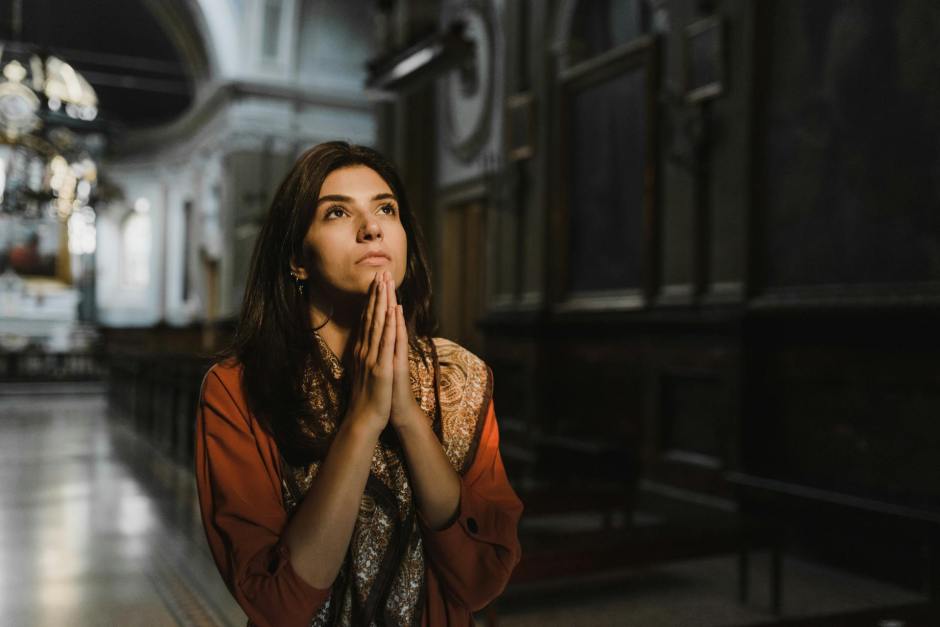
A tender reading for the day before Advent. Be on guard. Don’t be lulled into sleep. Let not  dissipation and worry take you captive. Hold carefully and warmly those places in your heart that break—the disappointments, the losses, the depressing burdens. Be alert. The Son of Man, the Child of Bethlehem comes. Cling to the light that Advent promises, to the stars that brighten the darkened skies.  

It’s the eve of the glorious season of Advent.

The Gospel reminds us today to look around and take note of the need for Light, for Hope, for Mercy. A mother tells me her teenage daughter still hasn’t recovered from the isolation imposed in the Covid-19 lockdown. The tears almost capsize her. A grandpa worries his granddaughter will lose her way at college. A friend texts that her cousin has set a date for an abortion.

Be not weighed down by the worries of life, because God has entered into this life to be here with us as our very Life. Be not blinded by the darkness, because we begin from today to prepare for the birth of the Light of the world and the ultimate end of the night. Be not feeble of heart because Jesus conquers every death and restores joy.

Advent is about renewing the fires of joy and the eagerness of hope. It is for the child in us that needs innocence restored by the Child of Bethlehem.

Advent is about walking through the dark that surrounds us with eyes translucent with eagerness for the Kingdom.

Advent is about knowing that the victory of Christ is our victory, that God holds the power in love, and that nothing can wrest us out of his hand.

Image credit: Photo by Rebecca Peterson-Hall on Unsplash

Praying with this Passage of Scripture

Lectio Divina is a way of listening to God as he speaks in his Word. It is a practice of communicating with God through Scripture and attending to God’s presence and what he wishes to tell us. In this slow and prayerful reading of the Word of God, we allow ourselves to be transformed by the Spirit who forms us into the image of Christ. There are four movements in Lectio Divina: Read (lectio), Meditate (meditation), Pray (oratio), Contemplate (contemplation).

Begin by finding a still space to pray. Breathe deeply and become quieter within. Abandon any agenda, worries or thoughts you bring to this prayer and entrust these things to the merciful care of God. Ask for the grace to be receptive to what God will speak to you through this Scripture reading. Grant me, Jesus Divine Master, to be able to know the mysteries of the kingdom of God and your unfathomable riches. Grant that your word penetrate my soul; guide my steps, and brighten my way till the day dawns and darkness dissipates, you who live and reign forever and ever Amen.

Read (lectio)
Begin by slowly and meditatively reading your Scripture passage out loud. Listen for a particular word or phrase that speaks to you at this moment and sit with it for a time.

Pray (oratio)
Read the text a third time. Listen for what God is saying to you. Speak heart to heart with God. Notice the feelings that this conversation with God raises up within you. Share with God what you notice about your response to this conversation. You may wish to return to repeating the phrase quietly and gently, allowing it to permeate you more and more deeply.

Contemplate (contemplatio)
Read the text a final time. Now be still and rest in God’s embrace. Ask God to give you a gift to take with you from this prayer. You might ask God if he is inviting you to do some action, for instance, make some change in your thoughts, attitudes or reactions, in the way you speak or how you treat others. Thank God for this gift and invitation as you conclude your prayer.
Image: Myriams-Fotos; pixabay.com

When Jesus Calls You Out of the Tree (Luke 19:1-9)

Jesus entered Jericho and was passing through it. A man was there named Zacchaeus; he was a chief tax collector and was rich. He was trying to see who Jesus was, but on account of the crowd he could not, because he was short in stature. So he ran ahead and climbed a sycamore tree to see him, because he was going to pass that way. When Jesus came to the place, he looked up and said to him, “Zacchaeus, hurry and come down; for I must stay at your house today.” So he hurried down and was happy to welcome him. All who saw it began to grumble and said, “He has gone to be the guest of one who is a sinner.” Zacchaeus stood there and said to the Lord, “Look, half of my possessions, Lord, I will give to the poor; and if I have defrauded anyone of anything, I will pay back four times as much.” Then Jesus said to him, “Today salvation has come to this house, because he too is a son of Abraham.

Luke 19:1-9

It was, it is true, a simple out-patient procedure: metatarsal surgery. It was simple, that is, until I had a stroke the evening of the surgery. Eleven days later I was still in the hospital—struggling to walk, to eat, to talk. That was forty years ago, and I can say that “most” of my life has been lived post-stroke. The confusion of those first weeks and months opened up into the quiet desperation of years of rehabilitation…, flowing into a mighty struggle to uncover my fear of God’s power over my life…, surrendering into the trust that this was and still is a moment of a grace for me through which God gathered the direction of my life toward himself forever.

With the stroke, God took me from the outside to the inside, from the surface to the deep, from the visible to the invisible, from ambition to powerlessness, from earth to heaven, from complacency to a wrestling with him, from healing to more healing to more brokenness to even deeper healing. It is kind of like Zacchaeus. Let me explain.

The little man we call Zacchaeus had his life all figured out. He knew who he thought he was. He knew what he was about. He knew what he wanted, what he had, what he could get when he needed it. On the surface, in what was visible, he was settled in a complacency that isolated him from the others in the village charged that day with the electric excitement of the arrival of Jesus.

Around the passing of Jesus through their town swirled stories of people freed from demonic possession, the lame and the blind and the mute and the deaf and the lepers suddenly released from the captivity of illness, sinners casting themselves down before him in sorrow and repentance and love only to become one of his traveling companions. There was something more to Jesus than the ordinary roving teacher who passed through their village of Jericho now and then. But Zacchaeus didn’t need any of that. He was fine the way he was. But he was just a little bit, just the tiniest bit, curious. And that curiosity sent him up the tree to stake out a spot as an observer, and an observer only.

That was me. No, I’m not short and I certainly don’t climb trees. But I thought, at twenty-one, I had my life all figured out, the externals of my vocation mastered. I didn’t know that I needed healing, that I needed Jesus to make an intervention so decisive in my life that it would bring me face to face with him, that I needed my expectations and strategies upended and the rug ripped out from under me, as Jesus so mercifully did for Zacchaeus.

“I mean to come to your house for dinner today.”

Friends, when Jesus calls you out of the tree, when he moves you from the efficiency of life-all-planed-out, when he intervenes in your plans with a graced but often painful stroke of mercy, climb out of that tree with Zacchaeus. Stand with your head held high. Commit yourself to this new and deepening relationship that Jesus is initiating, and bring the Master within to the areas of your life that are the most broken, and let him change you forever.

Saint Paul points to the truth of these “Zacchaeus moments” in this way: “So we do not lose heart. Even though our outer nature is wasting away, our inner nature is being renewed day by day. For this slight momentary affliction is preparing us for an eternal weight of glory beyond all measure” (2 Cor 4:16-17 NRSVCE).

Image credit: James Tissot, Public domain, via Wikimedia Commons

Praying with this Passage of Scripture

Lectio Divina is a way of listening to God as he speaks in his Word. It is a practice of communicating with God through Scripture and attending to God’s presence and what he wishes to tell us. In this slow and prayerful reading of the Word of God, we allow ourselves to be transformed by the Spirit who forms us into the image of Christ. There are four movements in Lectio Divina: Read (lectio), Meditate (meditation), Pray (oratio), Contemplate (contemplation).

Begin by finding a still space to pray. Breathe deeply and become quieter within. Abandon any agenda, worries or thoughts you bring to this prayer and entrust these things to the merciful care of God. Ask for the grace to be receptive to what God will speak to you through this Scripture reading. Grant me, Jesus Divine Master, to be able to know the mysteries of the kingdom of God and your unfathomable riches. Grant that your word penetrate my soul; guide my steps, and brighten my way till the day dawns and darkness dissipates, you who live and reign forever and ever Amen.

Read (lectio)
Begin by slowly and meditatively reading your Scripture passage out loud. Listen for a particular word or phrase that speaks to you at this moment and sit with it for a time.

Pray (oratio)
Read the text a third time. Listen for what God is saying to you. Speak heart to heart with God. Notice the feelings that this conversation with God raises up within you. Share with God what you notice about your response to this conversation. You may wish to return to repeating the phrase quietly and gently, allowing it to permeate you more and more deeply.

Contemplate (contemplatio)
Read the text a final time. Now be still and rest in God’s embrace. Ask God to give you a gift to take with you from this prayer. You might ask God if he is inviting you to do some action, for instance, make some change in your thoughts, attitudes or reactions, in the way you speak or how you treat others. Thank God for this gift and invitation as you conclude your prayer.

Image: Myriams-Fotos; pixabay.com

The Kingdom of God Takes Root in the Darkness (Luke 9:7-9)

Now Herod the ruler heard about all that had taken place, and he was perplexed, because it was said by some that John had been raised from the dead, by some that Elijah had appeared, and by others that one of the ancient prophets had arisen. Herod said, “John I beheaded; but who is this about whom I hear such things?” And he tried to see him.

Luke 9:7-9

I would love to have been a fly on the wall of the inner rooms of Herod’s palace as he tried to make sense of the coming of the Kingdom and the joy it was bringing to the people whom he ruled. Directly before this passage, Luke describes the apostles being sent by Jesus with power and authority to drive out demons and cure diseases and heal the sick. In the days following this sending out of Jesus’ followers, reports began streaming in from all parts of Herod’s jurisdiction that people are being healed, devils are being driven out, joy is reaching fever-pitch as the people recognize the presence of the Kingdom of God dethroning the powers that held the world in their grasp.

The good news was changing the culture right under Herod’s nose, and he knew nothing about what was going on. “What’s going on? Who are these people?”

This, friends, is what the Church is in today’s society. As the Israel of biblical times, we in these times between the first and the second coming of Christ suffer oppression, marginalization, misunderstanding. Unbelief is in the very air we breathe. We experience the virulence of a non-Christian religious environment that leaves God entirely out of the picture. We carry the weight and the burden of accusations that our beliefs and values are useless at best and destructive at worst.

Jesus did not send his apostles out to overthrow Herod or to start covert operations against the tax collectors oppressing the people or to begin a political movement. Jesus has a different strategy here. He sent his disciples then and he charges us today to go and announce the good news of Christ has come as a light into the darkness of a fallen world.

When we are faithful we, like the disciples, see God at work in our own lives and we know the joy of seeing fellow captives set free. We have the privilege to gather others into the heavenly society of God’s Church through baptism which will open to them the door through the sacraments to the eternal banquet of heaven. As we spiritually accompany people into the Kingdom, one by one, we see on their faces the joy of finally knowing the ecstasy of realizing they are seen and loved by Jesus who has given his life for them and who feeds them in the Eucharist.

The disciples did their “job” so well, that the news made it to Herod’s palace and made him nervous. Someone was satisfying the hearts of the people in his jurisdiction and setting them free, despite his oppressive policies. He no longer had power over them. He had no idea of who it was that was at the bottom of all this truly “subversive” activity, but something about it made him curious to know who it might be.

As we proclaim the good news to others, as we heal the sick of heart and uplift the sorrowful, as we bring people to the Eucharist and help them find the mercy of Jesus, their will be a growing fever-pitch of joy in society. As others see the radiance on the faces of those we have awakened with the good news, they too will want to see who is at the root of this truly “subversive” activity, as the Kingdom of God takes root directly within the darkness of those who, often without knowing it, are still yearning for communion with the God who made them.

Image Credit: Daderot., Public domain, via Wikimedia Commons

Praying with this Passage of Scripture

Lectio Divina is a way of listening to God as he speaks in his Word. It is a practice of communicating with God through Scripture and attending to God’s presence and what he wishes to tell us. In this slow and prayerful reading of the Word of God, we allow ourselves to be transformed by the Spirit who forms us into the image of Christ. There are four movements in Lectio Divina: Read (lectio), Meditate (meditation), Pray (oratio), Contemplate (contemplation).

Begin by finding a still space to pray. Breathe deeply and become quieter within. Abandon any agenda, worries or thoughts you bring to this prayer and entrust these things to the merciful care of God. Ask for the grace to be receptive to what God will speak to you through this Scripture reading. Grant me, Jesus Divine Master, to be able to know the mysteries of the kingdom of God and your unfathomable riches. Grant that your word penetrate my soul; guide my steps, and brighten my way till the day dawns and darkness dissipates, you who live and reign forever and ever Amen.

Read (lectio)
Begin by slowly and meditatively reading your Scripture passage out loud. Listen for a particular word or phrase that speaks to you at this moment and sit with it for a time.

Pray (oratio)
Read the text a third time. Listen for what God is saying to you. Speak heart to heart with God. Notice the feelings that this conversation with God raises up within you. Share with God what you notice about your response to this conversation. You may wish to return to repeating the phrase quietly and gently, allowing it to permeate you more and more deeply.

Contemplate (contemplatio)
Read the text a final time. Now be still and rest in God’s embrace. Ask God to give you a gift to take with you from this prayer. You might ask God if he is inviting you to do some action, for instance, make some change in your thoughts, attitudes or reactions, in the way you speak or how you treat others. Thank God for this gift and invitation as you conclude your prayer.
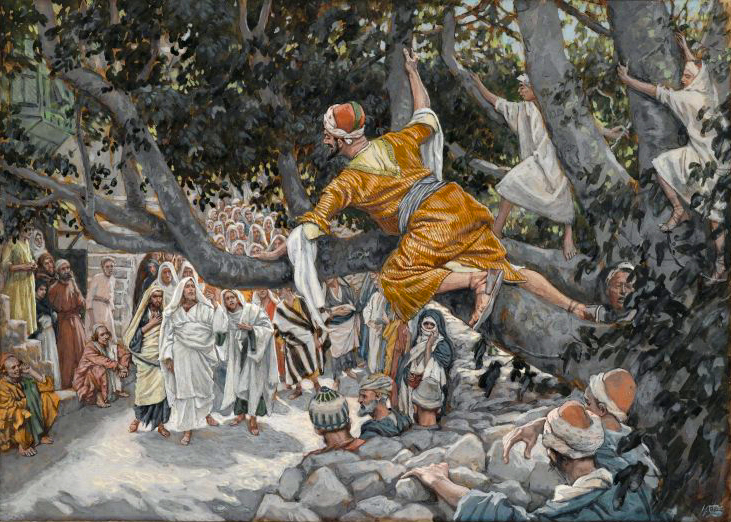
Image: Myriams-Fotos; pixabay.com

We Are Being Transformed from Glory to Glory (Lke 9:28b-36)

Now about eight days after these sayings Jesus took with him Peter and John and James, and went up on the mountain to pray. And while he was praying, the appearance of his face changed, and his clothes became dazzling white. Suddenly they saw two men, Moses and Elijah, talking to him. They appeared in glory and were speaking of his departure, which he was about to accomplish at Jerusalem. Now Peter and his companions were weighed down with sleep; but since they had stayed awake, they saw his glory and the two men who stood with him. Just as they were leaving him, Peter said to Jesus, “Master, it is good for us to be here; let us make three dwellings, one for you, one for Moses, and one for Elijah”—not knowing what he said. While he was saying this, a cloud came and overshadowed them; and they were terrified as they entered the cloud. Then from the cloud came a voice that said, “This is my Son, my Chosen; listen to him!” When the voice had spoken, Jesus was found alone. And they kept silent and in those days told no one any of the things they had seen.

Luke 9:28b-36

The nearest experience I have had of “transfiguration” was the first evening at the Eucharistic Congress last year in Indianapolis, Indiana in the US. I was one of the last ones to arrive at Lucas Oil Stadium and slipped into a seat on an upper level just as exposition of the Blessed Sacrament was beginning. The entire stadium was in darkness, and silence had settled on the minds and hearts of everyone as we turned our gaze to the altar. The only lights in the stadium were directed to the center of the stadium where Jesus was exposed in the Blessed Sacrament. 50,000 voices quietly began to sing reverently, O Salutaris Hostia.

All of us that night felt surrounded by the hosts of heaven as we adored the King of kings and the Lord of the universe. On our knees, like Peter, James, and John, we were overwhelmed by God’s glory. (Although I certainly had no inclination to build a tent there in the Stadium!)

That night I was given just the tiniest of glimpses of the potential for the restoration and transfiguration of the entire world in Christ. I can’t remember that evening, or re-live it by watching it on YouTube, or re-enter it as I receive Holy Communion at Mass on any given day without tears of joy.

In the Transfiguration on Mount Tabor, we see Christ’s human nature filled with splendor. What has happened to the human nature in Christ can happen also to our human nature as his followers. The glory that shown on the face of Christ shows us the glory which, by God’s grace, will transform our fallen human nature, restoring its original glory. As Christ’s disciples, we have the potential of participating in the glory of Christ’s Transfiguration.

Each time we participate in the Mass, we enter into the dimension of glory. Each sacramental encounter continues the mystery of the Transfiguration. Through the sacraments we venture into eternity. We discover ourselves and our world transformed by the gift of Jesus’ love and mercy. Through baptism we are radically transformed into a new creation. Through the sacrament of Reconciliation we are restored to life when we have been wounded by sin. Through the Eucharist we are united to Christ, take our place at the banquet of the Lamb, and get a glimpse of what awaits us in the life to come.

Every day, as we behold the Transfigured Christ in prayer and sacrament, we are gradually transformed, as Saint Paul said, “All of us, gazing with unveiled face on the glory of the Lord, are being transformed into the same image from glory to glory” (2 Cor 3:18).

Image Credit: Titian, Public domain, via Wikimedia Commons

Praying with this Passage of Scripture

Lectio Divina is a way of listening to God as he speaks in his Word. It is a practice of communicating with God through Scripture and attending to God’s presence and what he wishes to tell us. In this slow and prayerful reading of the Word of God, we allow ourselves to be transformed by the Spirit who forms us into the image of Christ. There are four movements in Lectio Divina: Read (lectio), Meditate (meditation), Pray (oratio), Contemplate (contemplation).

Begin by finding a still space to pray. Breathe deeply and become quieter within. Abandon any agenda, worries or thoughts you bring to this prayer and entrust these things to the merciful care of God. Ask for the grace to be receptive to what God will speak to you through this Scripture reading. Grant me, Jesus Divine Master, to be able to know the mysteries of the kingdom of God and your unfathomable riches. Grant that your word penetrate my soul; guide my steps, and brighten my way till the day dawns and darkness dissipates, you who live and reign forever and ever Amen.

Read (lectio)
Begin by slowly and meditatively reading your Scripture passage out loud. Listen for a particular word or phrase that speaks to you at this moment and sit with it for a time.

Pray (oratio)
Read the text a third time. Listen for what God is saying to you. Speak heart to heart with God. Notice the feelings that this conversation with God raises up within you. Share with God what you notice about your response to this conversation. You may wish to return to repeating the phrase quietly and gently, allowing it to permeate you more and more deeply.

Contemplate (contemplatio)
Read the text a final time. Now be still and rest in God’s embrace. Ask God to give you a gift to take with you from this prayer. You might ask God if he is inviting you to do some action, for instance, make some change in your thoughts, attitudes or reactions, in the way you speak or how you treat others. Thank God for this gift and invitation as you conclude your prayer.
Image: Myriams-Fotos; pixabay.com

Jesus, I Am Coming to You (Matthew 11:28-30)

“Come to me, all you that are weary and are carrying heavy burdens, and I will give you rest. Take my yoke upon you, and learn from me; for I am gentle and humble in heart, and you will find rest for your souls. For my yoke is easy, and my burden is light.”

Matthew 11:28-30

Not so long ago a woman approached me while I was exiting a church and asked me to pray with her. When I asked her what she would like me to lift up in prayer with her, she started to cry. Just days before the only daughter of a dear friend of hers, a deacon serving in her parish, had taken her life. She was in shock. Her heart was broken. She was still grappling with the reality of what had happened. That woman’s heart was simply crushed at the news, knowing how much her friend was suffering the loss of their daughter.

She came with her heavy heart for prayer. She came with a burden that was too much for her to carry to ask Jesus for his rest and his peace.

Sometimes the burdens we carry are so heavy we fear they will overwhelm us. They can be physical burdens of health, financial struggles, devastating ruptures in relationships or losses from which we fear we will never recover.

We can grieve under the weight of spiritual obstacles and moral dilemmas.

Jesus calls us to himself. He calls us away from anxiety and the way it keeps us fixated on things we can’t control.

Jesus calls us to himself as the only certainty in life that we can absolutely trust. Worries shake our confidence in what we know to be true of God.

Jesus calls our mind to himself and away from the fearful imaginations of worst-case scenarios that paralyze and defeat.

Jesus calls us to himself to rest, far from the stress of the to do lists and endless tasks to remember and complete.

When we feel the weight of the world on our shoulders, Jesus calls us to himself because he wants to give us a clear mind and a peaceful heart from the assurance that he has overcome the world (John 16:33).

So when conflicts rock a relationship, remember Jesus is calling you to himself so he can carry you in his arms.

When hearts are broken and you have no real way to make things right, remember Jesus is calling you to himself, and he will calm your heart.

When you are lost in the darkness of what-ifs and defeat, remember Jesus is waiting with open arms for you to lay down your head on his heart.

Going to Jesus can be our first response instead of what we do when nothing else seems to be working. One of the most powerful prayers you can say is simply this, Jesus, I am coming to you. Help me!

Image Credit: Leiloeira São Domingos, Public domain, via Wikimedia Commons

Praying with this Passage of Scripture

Lectio Divina is a way of listening to God as he speaks in his Word. It is a practice of communicating with God through Scripture and attending to God’s presence and what he wishes to tell us. In this slow and prayerful reading of the Word of God, we allow ourselves to be transformed by the Spirit who forms us into the image of Christ. There are four movements in Lectio Divina: Read (lectio), Meditate (meditation), Pray (oratio), Contemplate (contemplation).

Begin by finding a still space to pray. Breathe deeply and become quieter within. Abandon any agenda, worries or thoughts you bring to this prayer and entrust these things to the merciful care of God. Ask for the grace to be receptive to what God will speak to you through this Scripture reading. Grant me, Jesus Divine Master, to be able to know the mysteries of the kingdom of God and your unfathomable riches. Grant that your word penetrate my soul; guide my steps, and brighten my way till the day dawns and darkness dissipates, you who live and reign forever and ever Amen.

Read (lectio)
Begin by slowly and meditatively reading your Scripture passage out loud. Listen for a particular word or phrase that speaks to you at this moment and sit with it for a time.

Pray (oratio)
Read the text a third time. Listen for what God is saying to you. Speak heart to heart with God. Notice the feelings that this conversation with God raises up within you. Share with God what you notice about your response to this conversation. You may wish to return to repeating the phrase quietly and gently, allowing it to permeate you more and more deeply.

Contemplate (contemplatio)
Read the text a final time. Now be still and rest in God’s embrace. Ask God to give you a gift to take with you from this prayer. You might ask God if he is inviting you to do some action, for instance, make some change in your thoughts, attitudes or reactions, in the way you speak or how you treat others. Thank God for this gift and invitation as you conclude your prayer.

Image: Myriams-Fotos; pixabay.com

I Need a Mother. I Need Mary. (John 19:25-34)

Meanwhile, standing near the cross of Jesus were his mother, and his mother’s sister, Mary the wife of Clopas, and Mary Magdalene. When Jesus saw his mother and the disciple whom he loved standing beside her, he said to his mother, “Woman, here is your son.” Then he said to the disciple, “Here is your mother.” And from that hour the disciple took her into his own home.

John 19:25-34

The day after the Church celebrates the Feast of Pentecost and the coming of the Holy Spirit on the apostles gathered around Mary in the Cenacle, we are given this opportunity to take a step back and to prayerfully contemplate Mary as the Mother of the Church, Mother of the Redeemer and Mother of the Redeemed.

Mary brought Christ, His physical human body, into the world and thus gave birth in a mystical way to the Church, the Mystical Body of Christ. She stood with her Son in his passion and received his body in death as it was lowered from the cross and laid in a tomb. There is no way to fully appreciate the pain and intimacy of her heart, so pure and so holy, at this moment in which she receives from Jesus this motherhood of the redeemed, this charge to love and provide for his broken and wandering brothers and sisters for whom he offered his life.

I am one of these wandering disciples of Jesus. Sometimes I get lost. A lot of times I’m not able to withdraw my will from the aims and desires of the “old man.” Too often I hold on to this or that in aspects of my life where I haven’t the courage or strength to turn completely to Christ.

I need a mother.

I need Mary.

I need the Church,

Mary did not know any contagion of sin, as she was preserved whole and intact in her created nature from the first instant of her conception. In us holiness is found only in an imperfect way.

Mary, the Immaculate Conception, received, as a gratuitous gift, an original holiness, a holiness that she did not have to pursue throughout her life as the faithful do, who though “called to holiness” only arrive at a measure of holiness at the end of the journey. Mary alone is holy through original gift (Immaculate Conception) and through her own perfect conduct of life.

Mary is the icon of the holy Church. She encapsulates in herself all of the characteristics that the Church possesses. Christ gives holiness to his Mystical Body the Church, and then the Church, as a mother, brings forth children to God in the font of baptism, though we struggle with sin and concupiscence all our life.

Mary is Mother and icon of the Church. She is our Advocate, Mother, Teacher, and Queen.  Both Mary and the Church are the source of hope for us who are still on the way to our eternal home.

Image credit: Image by Sr. Maria-Magdalena R. SMCB from Pixabay

Praying with this Passage of Scripture

Lectio Divina is a way of listening to God as he speaks in his Word. It is a practice of communicating with God through Scripture and attending to God’s presence and what he wishes to tell us. In this slow and prayerful reading of the Word of God, we allow ourselves to be transformed by the Spirit who forms us into the image of Christ. There are four movements in Lectio Divina: Read (lectio), Meditate (meditation), Pray (oratio), Contemplate (contemplation).

Begin by finding a still space to pray. Breathe deeply and become quieter within. Abandon any agenda, worries or thoughts you bring to this prayer and entrust these things to the merciful care of God. Ask for the grace to be receptive to what God will speak to you through this Scripture reading. Grant me, Jesus Divine Master, to be able to know the mysteries of the kingdom of God and your unfathomable riches. Grant that your word penetrate my soul; guide my steps, and brighten my way till the day dawns and darkness dissipates, you who live and reign forever and ever Amen.

Read (lectio)
Begin by slowly and meditatively reading your Scripture passage out loud. Listen for a particular word or phrase that speaks to you at this moment and sit with it for a time.

Pray (oratio)
Read the text a third time. Listen for what God is saying to you. Speak heart to heart with God. Notice the feelings that this conversation with God raises up within you. Share with God what you notice about your response to this conversation. You may wish to return to repeating the phrase quietly and gently, allowing it to permeate you more and more deeply.

Contemplate (contemplatio)
Read the text a final time. Now be still and rest in God’s embrace. Ask God to give you a gift to take with you from this prayer. You might ask God if he is inviting you to do some action, for instance, make some change in your thoughts, attitudes or reactions, in the way you speak or how you treat others. Thank God for this gift and invitation as you conclude your prayer.

Image: Myriams-Fotos; pixabay.com