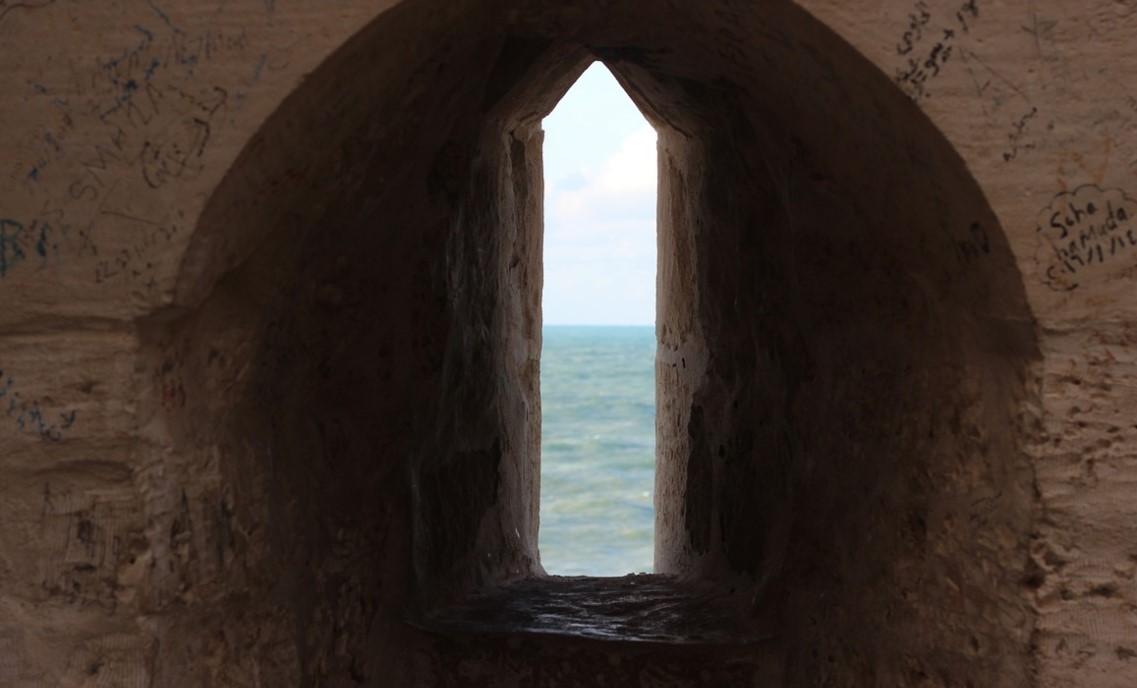
The GIFT Jesus wants to give you (Horizons of the Heart 5)

Horizons of the Heart: Horizons of the Heart is a weekly retreat-in-life inspired by the Spiritual Exercises of St Ignatius from my thirty-day Ignatian retreat in 2022. See an index for the whole series.

The grace we are asking of God: To have the courage to trust in God entirely for this life and the next, to become a child and to receive his blessing.    

In the opening days of any retreat, I feel that God is shaking me loose from all that binds me to the earth. I see this spiritual dynamic in the story of the rich young man who approached Jesus, a potential disciple. “Good master,” he asked, “what must I do to inherit eternal life?”

Probably we all have the same question. “How do I get to heaven?” “How do I know I will be saved?” “What do I need to do in my life to be a saint?” These are some of the questions we bring with us to a retreat experience.

Before exploring Jesus’ response to the young man, however, I’d like to contemplate with you the passage that appears in the Gospel of Mark immediately prior to the account of the rich young man. In Mark 10, beginning with verse 13, we read the account of Jesus and the children.

People were bringing little children to him in order that he might touch them; and the disciples spoke sternly to them. But when Jesus saw this, he was indignant and said to them, ‘Let the little children come to me; do not stop them; for it is to such as these that the kingdom of God belongs. Truly I tell you, whoever does not receive the kingdom of God as a little child will never enter it.’ And he took them up in his arms, laid his hands on them, and blessed them. (NRSV)

I’ve read this passage a thousand times, as no doubt have you. It was only when I read these verses in the Passion Translation that I began to wonder what it was to be a child. The juxtaposition of this story of Jesus and the children with Jesus and the story of Jesus and the rich young man helped me to begin to reflect more deeply.

What does it mean to become a child?

In the Passion Translation, verse 15 reads like this: “Listen to the truth I speak: Whoever does not open their arms to receive God’s kingdom like a teachable child will never enter it.”

Listen to the truth I speak. Jesus is teaching us something important. Truly I tell you. Listen up. Amidst all of the voices attempting to teach us with their opinions and agendas and emotional reactions, Jesus says quietly, “Listen to the truth that I speak.”

Receive. Children are not in the position to earn their own keep. They receive everything from those who care for them. They even received their very life (as all of us have). In the innocence, fragility, and dependence of a child, our own absolute creaturely dependence, connection, and relationship to God for our very existence become apparent to us. We are all children before God, for we are all created by his very hands.

What are we receiving as a child? God’s Kingdom. The kingdom of God is a gift that God desires to give us, is ready to give us.

What does receiving this gift depend on? The Passion Translation interestingly adds the word teachable as an attribute of a child. A child needs to learn everything through experience and through the teaching of others who are older and wiser than they. They have no real knowledge and experience of their own. In fact their every reaction is based on their sensitivity and emotions, rather than on principle.

This is where I began to get a little uncomfortable. Teachable.

Pause. What makes me teachable? First, I would need to know I need to learn something that I can’t figure out myself, receive something I can’t give myself. Second, I would need to want to learn or receive this gift of wisdom. Third, I would need to place myself in the position of a learner, in humble submission of mind, will, sensibilities, affections, desires, and imagination. Fourth, I would need to know how to listen and have the patience to grow in knowledge and experience through the work of a teacher who would be the one to determine the times and the seasons for my growth. Fifth, I would need to practice and persevere in this practice. Finally, I would need to remain ever grateful to my teacher, not appropriating to myself what I had received or falsifying it to flatter my own pride and self-love.

Jesus lays his hand on each child and blessed each one. GIFT.
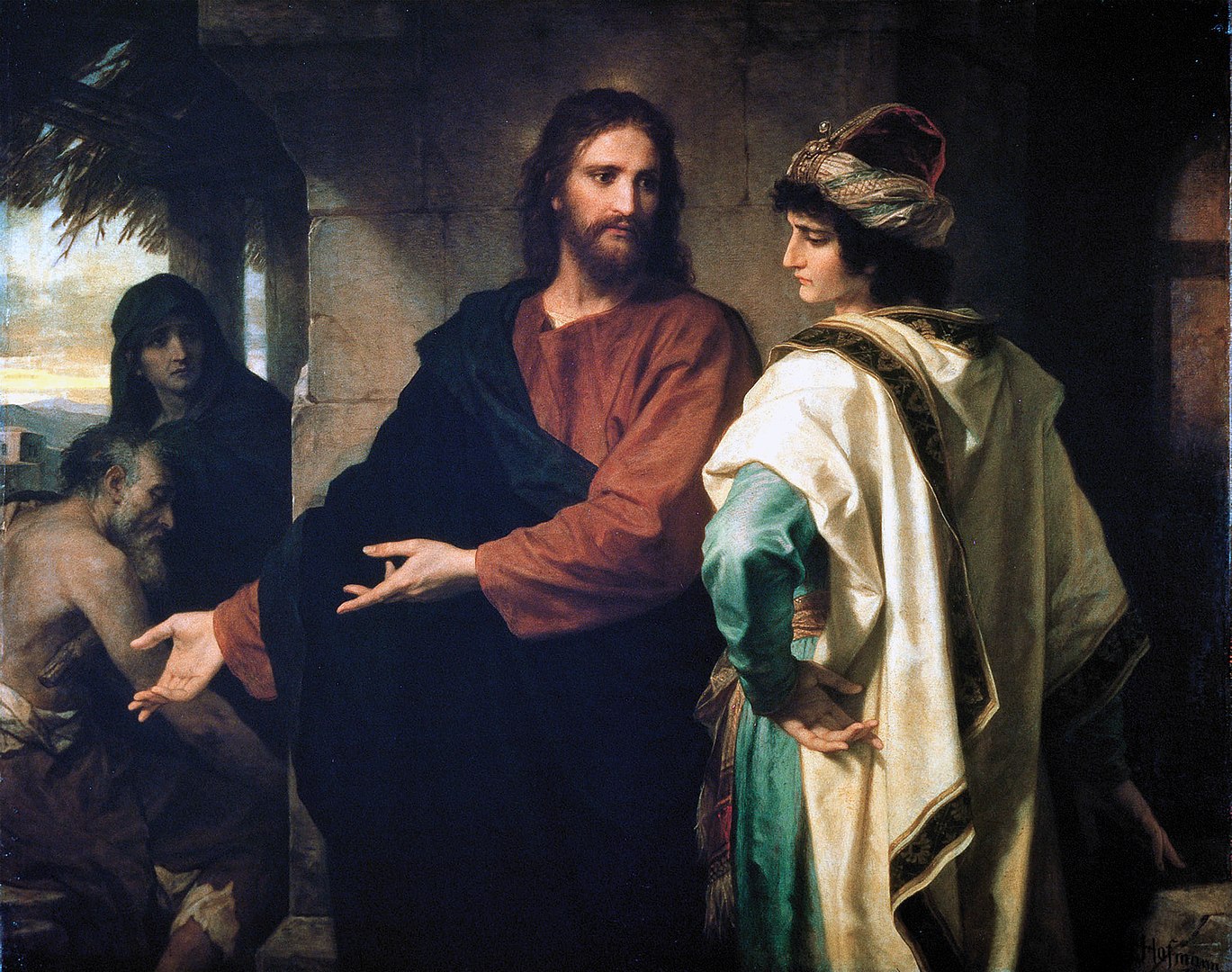
The young-man-in-a-hurry

The story of the rich young man is a perfect foil to the narrative of Jesus blessing the children.

As he was setting out on a journey, a man ran up and knelt before him, and asked him, “Good Teacher, what must I do to inherit eternal life?” Jesus said to him, “Why do you call me good? No one is good but God alone. You know the commandments: ‘You shall not murder; You shall not commit adultery; You shall not steal; You shall not bear false witness; You shall not defraud; Honor your father and mother.’” He said to him, “Teacher, I have kept all these since my youth.” Jesus, looking at him, loved him and said, “You lack one thing; go, sell what you own, and give the money to the poor, and you will have treasure in heaven; then come, follow me.” When he heard this, he was shocked and went away grieving, for he had many possessions. (Mk 10:17-23 NRSV)

After the almost pastoral vision of Jesus with the children, this man punctuates the Scriptures with his haste. As Jesus begins a journey, he runs up, casts himself on his knees before Jesus, and blurts out, “Good Teacher, what must I do to inherit eternal life.” I am made almost uncomfortable by the urgency with which the young man made a display of himself.

Close your eyes and picture this scene…. What does it make you feel? Uneasy? Does its very unpredictability create uncertainty in you? Contrast this with the sense you have from being with the children who are at play.

This young-man-in-a-hurry calls Jesus a Teacher. “Good Teacher, what must I do to inherit eternal life?” 

Having contemplated Jesus’ praise of the teachable child, this address of Jesus as a Teacher is the key that can help us unlock the complexities in this eager youth’s soul.

Is he as “teachable” as a child? He certainly realizes there is something he doesn’t know that he is hoping Jesus can tell him so he can achieve his goal. “What must I do to inherit eternal life.”

What one thing. The young man is looking for just one thing that will open up the whole treasure house to him. We might think also of Mary at Jesus’ feet: “Only one thing is necessary….”

Am I required to do. There must be one more thing that he hasn’t done because he realizes he hasn’t captured his prize! I. Required. To do. These are not the words of Gift. They are not the attitudes and aptitudes of a child. Of a teachable child. Of someone who realizes his complete dependence on God for everything.

These are not the words of blessing, as Jesus blessed the children before he left. He did not require anything of them to receive this blessing. Holiness was not something for them to do, but to receive.

The young man, although he was asking Jesus for the key to eternal life, was assuming it was something he had to do through his own power. Eternal life, he assumed, would depend on how well he did it.

To gain. Eternal life, for this young man, was another thing to gain, to conquer, to achieve, to accumulate perhaps for his own benefit.

In a footnote for verse 22 in the Passion Translation, the Greek word that identifies this man as very wealthy implies that he was a landowner.

Having land or property, a house or mansion, gives one a sense of stability, security and status. Being a “landowner,” particularly a very wealthy one, would give a person significant independence and autonomy, prestige and power in the community. Often what a rich person builds on land they own or how they develop their property becomes a monument to themselves and makes a public statement since it becomes clear to others that they can afford this extravagance.

A child has none of this security. A child plays.

Jesus says to this very rich landowner with love, “Sell it all. Give it away to those who can’t thank you. Like a child, toss it all to the wind. Then come back to me and become my follower. Be someone who needs to receive as I receive everything from the Father, to be taught as I receive everything I say from my Father, who has given up status as I gave up mine when I was born on this earth, is homeless as I who have nowhere to lay my head. Become a child as I am a Child, Son of my Father.”

To become a child is to become like Jesus

Jesus shows us himself how to become a child. How to receive. How to let go and give up and sell all and lose everything for the sake of the Kingdom. Paul paints a picture of Jesus as our model for becoming a child in his letter to the Philippians:

“Do nothing from selfish ambition or conceit, but in humility regard others as better than yourselves. Let each of you look not to your own interests, but to the interests of others. Let the same mind be in you that was in Christ Jesus,

who, though he was in the form of God,
    did not regard equality with God
    as something to be exploited,
but emptied himself,
    taking the form of a slave,
    being born in human likeness.
And being found in human form,
    he humbled himself
    and became obedient to the point of death—
    even death on a cross.

Therefore God also highly exalted him
    and gave him the name
    that is above every name,
so that at the name of Jesus
    every knee should bend,
    in heaven and on earth and under the earth,
and every tongue should confess
    that Jesus Christ is Lord,
    to the glory of God the Father” (Phil. 2:3-11 NRSV).

Indeed, unless we become as children, Jesus has told us, unless we become like him in every way, we will not enter into eternal life. Jesus was giving the rich young man the key for which he was looking.

Pause. Is there a place in your life in which Jesus is asking you if you will say YES to having no stability, no security, no status, no independence, no ability to create self-made monuments…. A place where he is calling you to become a child. To trust. To play. To depend. No doubt these opportunities for becoming a child may seem small, somewhat trivial. Yet, at the same time, we may feel them deeply. This is what makes it so hard to say this YES even if we know that God loves us and that we are secure in handing ourselves over to his care like a child. When God comes close to us, he lets us see more clearly that everything else is paltry beside his glory.

Saint Mary of Jesus Crucified was born in Galilee in 1846. Little Mariam felt the attraction of God’s love for her, particularly when she spent time in the beauty of the nature that was all around her. One day she heard within her spirit God’s promise to her: “Behold everything fades away, but if you want to give me your heart, I shall remain with you always.”

Behold, everything fades away. All that we build for ourselves fades away. All that we accumulate. All that we achieve. All. Everything. Only God remains. Only God remains with us always.

Let us allow Saint Elizabeth of the Trinity to guide us in prayer in this journey to becoming more and more a teachable child.

Saint Elizabeth of the Trinity, Discalced Carmelite in Dijon France canonized October 16, 2016, shares a spirituality that is remarkably similar to her contemporary Saint Thérèse of Lisieux. She is most known for her Prayer to the Trinity. One of the paragraphs of this prayer can become the source of deeper contemplation this week:

O Eternal Word, Word of my God, I want to spend my life in listening to You, to become wholly teachable that I may learn all from You. Then, through all nights, all voids, all helplessness, I want to gaze on You always and remain in Your great light. O my beloved Star, so fascinate me that I may not withdraw from Your radiance.

Come before Jesus as a child, asking for his blessing, the one thing you are required to do. Ask for the gift of YES in those areas of your life in which you find it most difficult to turn everything over to him. Instead of seeking that last one key to your holiness, tell Jesus instead, “Jesus, you take care of it. I trust you. Have your way with my life even in this. I love you.”

Photo Credit: Photo by Sachin C Nair: https://www.pexels.com/photo/waterfalls-during-sunset-954929/; Jesus Blessed the Children: Howe, Henry, 1816-1893, publisher; Howe, Henry, 1816-1893, copyright claimant; Middleton, Elijah C., publisher; Middleton, Elijah C., copyright claimant, Public domain, via Wikimedia Commons; Jesus and the Rich Young Man: Heinrich Hofmann, Public domain, via Wikimedia Commons; Jesus is Worth Everything: Photo by Emma Shappley on Unsplash

Jesus says: “I am the one you are looking for” (Horizons of the Heart 4)

The grace we are asking of God: To have confidence in the way God accepts us even in our sin, to believe in his path for us that weaves its way through forgiveness and mercy, and to have the courage to turn to the One who alone can give us all we need instead of trying to fix ourselves.   

Horizons of the Heart: Horizons of the Heart is a weekly retreat-in-life inspired by the Spiritual Exercises of St Ignatius from my thirty-day Ignatian retreat in 2022. See an index for the whole series.

There is a mysterious passage in the book of Jeremiah:

“My people have committed two sins:
They have forsaken me,
    the spring of living water,
and have dug their own cisterns,
    broken cisterns that cannot hold water” (2:13).

Jesus, the spring of Living Water, watches us as we so often dig our own cisterns, our own wells, from which we hope to draw water that will satisfy our thirst, make us happy, give us life, at least a tolerable life on this earth. In the Gospel of John, we meet the woman in Samaria who was just such a woman. To tell you the truth, so am I.

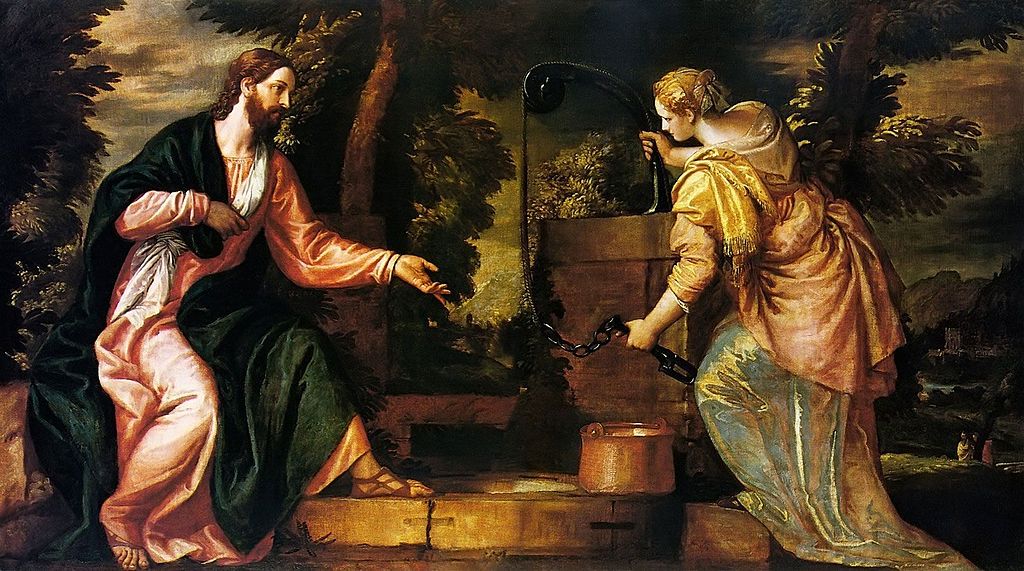
Paolo Veronese (1528–1588) via wikimedia

The Samaritan woman is the woman of the tryst with Jesus. A tryst is defined as “a private romantic rendezvous between lovers.” The story of Jesus’ meeting with this woman is just such a story of love, of romance in the highest degree. Her story is the story of the romance of the heart of God: “Yes, she has forsaken me, yes, she has dug her own cisterns, yes, her attempt at managing things to create happiness out of her broken cistern has failed, yes she is unhappy, and a thousand times YES, I the Living Water am thirsting for her love.”

Before her rendezvous with Jesus how many things had this woman tried to get her life right, she the woman of five husbands, of failed love, of broken marriages? That is the way of us humans. We think we have to find our own water, dig our own wells, and provide for all our own needs.

Then in a flash. In an epiphany. When she saw herself through the eyes of God. When she knew herself suddenly to be truly valued and eternally infinitely unconditionally loved by this man sitting on  the side of the well, this man who knew her whole story and loved her anyway.

I prayed Psalm 103 as the Samaritan woman may have prayed it after this life-changing tryst with the Lord.

From the depths of my being I will praise him. I will never ever forget his acts of kindness to me. He forgave me, cured me, redeemed me from the abyss. He crowned me with his faithful love and contented me with good things. He made me young again!

Jesus was eager to forgive me. He sought me out. He was waiting for me in my shame.

The Lord is tenderness, pity, rich in faithful love and slow to anger. He didn’t treat me as my sins deserve nor repay me as befitted my offense. He is a faithful lover. He treated me with the tenderness of a good father for his beloved child. He threw my faults away so I could see them no more. He remembered I was made of dust.

Though I bloom today and as soon as the wind blows I am gone, Jesus’ faithful love is from eternity and for ever! (cf. Psalm 103)

Juan Pablo Arias via Cathopic

Jesus, the one who sought out this woman whose heart was broken by forsaken lovers, this Jesus who sought her out, seeks out you and me.

The Samaritan woman no doubt had tried to get her life straightened out, at least enough to make a respectable presentation in the village. Wouldn’t you? I would. I do!

Self-improvement can be truly helpful, but it is love that heals. It is a Lover who knows all we can become if we but take some time for this romantic rendezvous with him. It is not just his teaching, his words. It is the look of the Lover, the look of Jesus, that unsettles us.

The grace is in the present moment of tryst with Jesus. Jesus sees us and wants us to return his gaze with love. Even with all the fumbling in that long conversation in the fourth chapter of John, the Samaritan woman teaches us the attitude to have before Jesus who is asking also for a drink:

Listen to him
Enter into conversation with him
Allow yourself to be moved by his presence.

Jesus is sitting at the well of your daily life. He says to you also, “I am thirsty. Give me a drink.” Where is he? you might be thinking. I assure you, just as Jesus planned that meeting with the suffering woman of Samaria, probably for days ahead of that meeting organizing things to be there for her at just the right time when she would arrive, Jesus is doing the same for you.

So expect him.

Tell Jesus you are expecting him and ask him to clearly show himself to you this day.

Pay attention to the ways you are internally moved unexpectedly. Perhaps it is the conversation with a friend, something you hear on the radio or see around you, a passage you read in Scripture, or the sense of how you feel touched with God’s presence in Eucharistic adoration…

Stay with these moments and allow yourself to be unsettled by Jesus’ presence, by his gaze as it rests on you.

Allow Jesus to touch you deeply, to draw you out of yourself and away from the poison of your past and the delusion of your broken wells. Jesus knows your story so be honest with him about it. Talk to him about all you have experienced. Jesus loves you so much. He desires you to know how much his Father loves you.

Believe he has a path for you still.

Most importantly, receive the moment of revelation. Epiphany. Not a message of how much better you are or will be. No. The revelation he gave to the Samaritan woman is what your heart longs for: “The one you are looking for? I am he.”  The one you are seeking for. The one who will satisfy you completely. The one who will fill your heart in every way. This one whom you are looking for. I. Am. He.”

Underneath all the things you long for, all the ways you wish were different, underneath all your plans for the future, there is a greater desire and more urgent longing that will truly satisfy you.

“I am he. I am the one you are looking for. I am the one who saves, redeems, forgives, and makes new. I am he.”

Francisco Xavier via Cathopic

Look into his eyes as did the Samaritan woman. To those who met Jesus, his eyes conveyed immediately that he could be trusted. You too can trust Jesus with yourself, your past, your present, your future. You can trust him because he loves you. He plans these trysts with you each day so that you will know just how much he loves you.

Pray Psalm 103 as an act of faith, a prayer for gratitude.

The Gospel of John tells us little about the Samaritan woman after this tryst with Jesus except that she rushed back to her village and told her neighbors to come with her to meet this man who told her everything she had ever done:

Then, leaving her water jar, the woman went back to the town and said to the people, “Come, see a man who told me everything I ever did. Could this be the Messiah?” They came out of the town and made their way toward him.

…Many of the Samaritans from that town believed in him because of the woman’s testimony, “He told me everything I ever did.” So when the Samaritans came to him, they urged him to stay with them, and he stayed two days. And because of his words many more became believers.

They said to the woman, “We no longer believe just because of what you said; now we have heard for ourselves, and we know that this man really is the Savior of the world.”

This woman of Samaria evangelized the people of her village on the basis of her great joy in what he had done for her. After Jesus ascended into heaven, tradition holds that she evangelized in Carthage and Rome and died as a martyr in the first persecution under Nero. Tradition also gives us her name: Photina which means Enlightened. In the Preface for the Third Sunday of Lent, the Sunday on which the Gospel of the Samaritan woman is read, the Church refers to light as fire, a fire that burned, a fire Jesus kindled in her which was so great she was propelled to share it:

“For when he asked the Samaritan woman for water to drink,
he had already created the gift of faith within her
and so ardently did he thirst for her faith,
that he kindled in her the fire of divine love.”

ahgomaaz via Pixabay

The Samaritan woman found herself that day on the threshold between her past and her future, both of which Jesus knew all about. Both of which Jesus cared about. All of which Jesus provided for.

Each meeting, each tryst we have with Jesus is a moment of grace. These trysts are thresholds or frontiers that divide two different stages of life, rhythms, atmospheres, dreams for who we are and could be.

There are some important questions we can ask ourselves here on this threshold with Jesus. I take these from John O’Donohue, Irish poet and author, in his book To Bless the Space Between Us. “At any time you can ask yourself: At which threshold am I now standing? At this time in my life, what am I leaving? Where am I about to enter? What is preventing me from crossing my next threshold? What gift would enable me to do it?”  

To what new frontier in your life does Jesus bring you? Wonderful questions we can reflect on. Where am I standing today between the past and the future? What am I leaving behind? What is Jesus calling me to leave behind? What is he giving me the grace to leave behind? How is he freeing me? What frontier, what new horizon am I about to enter? Where is he calling me to? What gift is he giving me?

As I stand on this threshold between the past and the future, I might feel resistance. I might feel discouragement.  I might feel weakness. I might feel “I don’t want to!”

What is preventing me from crossing this next threshold of my life? As we see in this Gospel of the Samaritan woman, when Jesus calls us to a threshold, he calls us to something wonderful. As humans we see the tragedy, the difficulty, of what we must leave behind. Jesus sees what he wants to give us, where he is calling us. It is always beautiful.

We can ask Jesus, “What gift do I need? What gift do you want to give me that would enable me to cross this threshold this day?” This is a great question to reflect on in these next few days. To what new threshold is God bringing  you to at this stage of your life?

O’Donohue continues: “It is wise in your own life to be able to recognize and acknowledge the key thresholds: to take your time; to feel all the varieties of presence that accrue there; to listen inward with complete attention until you hear the inner voice calling you forward. The time has come to cross.”

The time has come to cross your next threshold. Jesus is there. He is waiting for you there. And he is waiting for you in the future he has planned for your life.

God’s Love is forever (Horizons of the Heart 3)

The grace we are asking of God: A deep confidence and a consistent trust in God’s care for us and his nearness to us in every moment, even in the events of our life that are our undoing.

Horizons of the Heart: Horizons of the Heart is a weekly retreat-in-life inspired by the Spiritual Exercises of St Ignatius from my thirty-day Ignatian retreat in 2022. See an index for the whole series.

I love to pray Psalm 103, particularly with the translation of the New Jerusalem Bible:

Bless Yahweh, my soul,
from the depths of my being, his holy name;
bless Yahweh, my soul,
never forget all his acts of kindness.
….Yahweh is tenderness and pity,
slow to anger and rich in faithful love;
his indignation does not last for ever,
nor his resentment remain for all time;
he does not treat us as our sins deserve,
nor repay us as befits our offences.
As the height of heaven above earth,
so strong is his faithful love for those who fear him.
…As tenderly as a father treats his children,
so Yahweh treats those who fear him;
he knows of what we are made,
he remembers that we are dust” (vv. 1-2, 6-11, 13-14).

The day I meditated on this passage of Scripture at the beginning of my retreat, my soul was bleeding to know, truly know, that God cared for me, loved me, was near to me.

Did you ever ask yourself: What would it look like if God were caring for me? How can I know for sure?

It is a mystery for sure, but even more than that, it is mystical. The Lord then led me to another passage: Isaiah 49.

Sing for joy, O heavens!
    Rejoice, O earth!
    Burst into song, O mountains!
For the Lord has comforted his people
    and will have compassion on them in their suffering.

Yet Jerusalem says, “The Lord has deserted us;
    the Lord has forgotten us.”

Pause: have you ever thought that the Lord had deserted you? That he had forgotten you? What was happening? What was the final straw that brought you to this conclusion? What does being “deserted” and “forgotten” feel like? What does it make you think about yourself? About God?

God responds to Jerusalem:

Never! Can a mother forget her nursing child?
    Can she feel no love for the child she has borne?
But even if that were possible,
    I would not forget you!
See, I have written your name on the palms of my hands (vv.13-16).

Photo by Kyle Nieber on Unsplash

“See, Kathryn,” the Lord helped me to understand. “I carry you in the womb as does a mother.” A baby in the womb receives everything from its mother: life, form, food, growth, blood, development. Receives is the key word here. A pre-born baby is wholly receptive. To be held in the “womb of God,” is to receive from God, to become and come-to-be through the nurturance, love, and fidelity of the God who creates, sustains, and keep us in existence at every moment of our life.  

Inherent in motherhood is the desire to protect her children. A couple of weeks ago I listened to an interview of a mother who was first at the scene when an active shooter was reported at Robbs Elementary in Uvalde and ran immediately into the school to find her two children. Nothing could stop that mother from running toward danger to rescue her children. To save their child, a parent will race into a fire, risk their life in gunfire, throw a child to safety at the cost of their own life….

It is the same with God. His love is forever, surrounding us with walls of care. He sent his beloved Son Jesus to offer himself for our salvation, at the cost of his life. God, in a sense, ran toward us in our sin to save us, not considering the loss he would himself incur. The image of the father of the prodigal son in the Gospel of Luke is also an image of our heavenly Father. He ran toward his returning and repentant son who was returning after having squandered his inheritance, probably nearly half his father’s estate. Yet how his father loved him with that forever love that is the hallmark of God’s heart.

To be honest, however, we each suffer at the hands of others, some in lesser ways, others in greater. God’s love for us doesn’t necessarily magically preserve us from all pain, suffering and sorrow.

A mother and father who have truly grown wise through the sufferings of their own life, know that the moments of suffering, injustice, and challenge that their child faces may also be their most defining moments.

Anyone who saw the 2012 film For Greater Glory will recall the story of the teenager José Luis Sánchez del Río, the 14-year-old martyr who died defending the Faith when the Catholic Church in Mexico was being bitterly persecuted in the early 1900s.  He was canonized on October16, 2016 in Rome.

The Vatican website has this for Blessed José’s biography: 

José Sánchez del Río was born on March 28, 1913, in Sahuayo, Michoacán, Mexico. Wanting to defend the faith and rights of Catholics, he followed in the footsteps of his two older brothers and asked his mother for permission to join the Cristeros. She objected, telling him he was too young. “Mama,” he replied, “do not let me lose the opportunity to gain heaven so easily and so soon.”

On February 5, 1928, the young boy was captured during a battle and imprisoned in the church sacristy.

In order to terrorize him, soldiers made him watch the hanging of one of the other captured Cristeros. But José encouraged the man, saying, “You will be in heaven before me. Prepare a place for me. Tell Christ the King I shall be with him soon.”

In prison, he prayed the Rosary and sang songs of faith. He wrote a beautiful letter to his mother, telling her that he was resigned to doing God’s will. José’s father attempted to ransom his son but was unable to raise the money in time.

On February 10, 1928, the teenager was brutally tortured and the skin of the soles of his feet was sheered off; he was then forced to walk on salt, followed by walking through the town to the cemetery. The young boy screamed in pain but would not give in.

At times the soldiers stopped him and said, “If you shout, ‘Death to Christ the King,’ we will spare your life.” But he answered: “Long live Christ the King! Long live Our Lady of Guadalupe!”

Once he arrived at the cemetery, José was asked once more if he would deny his faith. The 14-year-old shouted out: “Long live Christ the King!” and was summarily shot.

Photo by Tom Barrett on Unsplash

Again and again, in the Scriptures, it is in the darkest and most dreaded moments that glory shines. Think of Israel on the banks of the Red Sea with the Egyptian army barreling down behind them. The parting of the Red Sea in the Exodus became the image for all time of how God himself saves his people not from their difficulties but through them. It is through death that we come to life.

Think of Judith and Esther and Peter in his betrayal of the Lord. Consider the persecution of the early Church, the martyrs, and the countless women and men who in every walk of life have bravely been carried by the power of God through the midst of the flames and have not been burnt. They have walked through the floods and not drowned. Their most painful moments became their glory through God’s power.

We may not be in a situation where we fear for our lives or are called to stand up for our Faith at the cost of martyrdom. At least not yet! What most brings us into the darkness and dreaded loss that threatens to break us apart are situations where we are “undone.”

We call these moments, the “carrying of the cross.” Jesus told us that to follow him we would need to take up our cross and follow him. To live with him in glory, we will need to die with him on the cross. How much we may want to avoid the cross: the consequences of failure, mistakes, being helpless before the injustice of others, having our plans or dreams unraveled by unexpected illness, job loss, financial burden…or pandemic, chain supply issues, or war in some other part of the globe.

Jesus says to us, “If you want to follow me disown your life, surrender to my ways.” I have been quite taken by the simple prayer of the humble Canadian religious Blessed Dina Bélanger: “Jesus, I love you. Have your way with my life.”

Photo by Christopher Sardegna on Unsplash

In the face of the myriad paths I could take in life, it is God who decides which alternative is of value to me and my life in the world. “Jesus, I love you, have your way with my life.” God is the one who knows whether a possible choice will make me more selfish or more selfless. “Jesus, I love you, have your way with my life.” God knows what things will lead me more to him and to become my authentic self. “Jesus, I love you, have your way with my life.”

I have to admit I have often bemoaned the losses of my life. Despite praying the Our Father countless times, it has taken me a long time to whisper to God, “Thy Kingdom come. My kingdom go.” I have focused on the clouds, on the cross, on the tears…surviving them, understanding them, growing from them. So patiently has the Lord waited for me to turn my eyes and heart to him. “Your Kingdom is all I want.”

I pray in trust to the One who knows and loves me more than I could ever know or love myself:

“…I have not immersed myself deeply in your glory. Forgive me. I have stayed on the surface where it is safe, where I can protect myself and manage my future. Now, my Father, I plunge myself into all your glory.

Take me in.
Take me deeper.
Assume me into you.”

“Thy Kingdom come. Thy will be done on earth as it is in heaven.”

Featured image: Photo by frank mckenna on Unsplash

The amazing promise of new beginnings (Horizons of the Heart 2)

The grace we are asking of God: A deep confidence and a consistent trust in God’s care for us and his nearness to us in every moment, even in the events of our life that are our undoing.

Horizons of the Heart: Horizons of the Heart is a weekly retreat-in-life inspired by the Spiritual Exercises of St Ignatius, Donec Formetus by Blessed James Alberione, and my own notes from my thirty-day Ignatian retreat in 2022. See an index for the whole series.

Beginnings are more important than endings. In fact, beginnings are already woven into every ending. The ending of the life the caterpillar has always known is already integrated into the process of the butterfly’s new beginning. The seeming ending of the Master’s life on Calvary was mysteriously taken up, and gently, in the Father’s hands, it became the stage for the mystery of resurrection beginnings that would be lived again and again and again in Jesus’ disciples’ lives.

“Why would you look for the living One in a tomb?” said the angels in white, angels of the resurrection whose radiance washed away the black sorrow of the ending of the Lord’s life on Calvary (Luke 24:5 TPT). The women who had come to seek the Lord buried in the tomb, locked behind a giant stone, dead, whom they feared they would see no more, these women faced the darkness of the sepulcher now lit with almost blinding brilliance. “He is not here. He is risen.”

“There’s no reason to be afraid” (Mt. 28:5). Pause a moment and think of an ending in your life that was particularly sudden, seemingly absolute. Or an ending you are living through now: termination, loss, failure. Any ending. One as great as the breaking of a relationship or losing a pet, or moving, or retiring. Or one as beautiful as the wedding of a child or the turning of a new leaf in life. Any ending.

Don’t endings bring on feelings of fear?

“There’s no reason to be afraid,” said the angel to the women. I’m not so sure that the command to not be afraid actually shifted their fear into trust. Nevertheless, it is helpful to remember that amid all our dread, struggle, the anticipation of an uncertain future, the uncertainty about what is happening, there is something permanent that is the reason why we needn’t fear…needn’t fear deep down, needn’t believe the absolute worst, needn’t believe that the ending is, well, an absolute and final and irrevocable end.

“I know you’re here looking for Jesus, who was crucified. He isn’t here—he has risen victoriously, just as he said! Come inside the tomb and see the place where our Lord was lying” (Matthew 28:5-6 TPT).

Proof! That’s what we need to really believe the end is not the final ending. Come inside and see where the Lord was lying and that he is not here anymore.

Come inside. We interiorly flee our endings. We can’t take the shame. The sorrow. The worry about the future. It is all too much. The apostles fled and they didn’t turn back. They forgot that the Master at whose side they had lived had words of eternal life. They couldn’t remember that just three days earlier he had said it was good that he goes and that he would come back. It escaped their memories entirely that he had prophesied that he would die on the cross and three days after rise again. The women, on the other hand, sorrowing and loving and deeply yearning for the touch of their Lord’s presence and the sight of his face once more did return. They returned to the tomb. To the place of what they believed to be the utter ending.

We need to return to the places of our endings if we are to discover the brilliant process and amazing promise of new beginning.

There is, however, the message of a different type of beginning that the women are entrusted with. They are given the mission to run to their devastated and hiding brethren and tell them this message: “I am going ahead of you in Galilee and you will see me there” (Mt 28:7). Galilee… The place where it all began. By the sea of Galilee, he had called Peter and Andrew, James and John to leave their boats and follow him. The sea of Galilee had been his first pulpit, and had seen his first conversion. (“Leave me Lord,” Peter had said, “I am a sinful man.”) Galilee was the place of the beginning of their relationship with him. A relationship now grown old and sagging from the sorrow of betrayal and the worn thin by the confusion of the last days. The ending.

Everything of those three years and the colossal failure of the arrest and death of Jesus was still there…
for them
for him.

…return to Galilee
to the beginning
to the call
to the promise

…return to the beginning to learn afresh to be LOVED and to LOVE.

I distinctly heard his voice in my heart on the first day of my retreat, “Come back with me, Kathryn, to the beginning.

To your call
To the promises I made to you at your baptism, at your profession

I am faithful to promises through endings and into new beginnings. You can’t see the new beginning as you bend and peer into what appears to be the tomb of your life. Just as the women at the tomb had to believe the angels of promise who proclaimed that the world had been made new by something that had never happened before, that someone had risen from the dead, you too must believe without seeing that I have a new beginning for you. Come back with me to the early days, the first love, the first profession of trust in me as I called you, the first experiences of my love for you, Kathryn. That love still stands, always stands, will forever stand unshaken.”

He is not there. You may not know where he is right now. You may not know what he has in store for your life. You may not know if you believe in new beginnings or even want any new beginning that you can’t see and be certain of and in control of so that you won’t be hurt anew. Because let’s be real….endings hurt.

The paradigm of Jesus, however, holds true in us. Whatever it is that robs us of what we had is not greater than the Father who has us in his hands. And our Father is the God of life who brings victory out of failure and life out of death. In our very endings, or what to us seems to be an ending, is already the beginning of the new life. All is shrouded in mystery except for the very clear promise: “I will meet you in Galilee.”

We will not see Jesus where we expect to find him, if we are certain that our relationship with God stands in shambles because of the endings that have left our lives so torn… If we are certain that Jesus looks at our lives the way we look at them…. Lives of endings and tombs and hopelessly no beginnings.

What is your ending?

Where do you see the beginning of something possibly, tentatively new living already within you?

Where is your Galilee? Where did you experience the Lord’s love for you? His call? His promise? His trust? Where did you see his eyes looking on you and hear his voice calling you his beloved? Return to that place. Return with him. Patiently. The Lord is unravelling the endings of your life and with the very colors and threads of the past will weave the new that will be your unending joy.

He promises that to you. So weep if you must. Tears heal and are so good for us to shed. But then bend down to look into the tomb, hear the promise, and follow Jesus back to the beginning where you will meet the Weaver of the indescribable beauty of all that is new.

Say a strong YES to your existence (Horizons of the Heart 1)

The grace we are asking of God: A deep confidence and a consistent trust in God’s care for us and his nearness to us in every moment.

Horizons of the Heart is inspired by the Spiritual Exercises of St Ignatius, the retreat guide Until Christ Be Formed in You by Blessed James Alberione, and my own notes from my thirty-day Ignatian retreat in 2022. See an index for the whole series.

The most difficult thing about being a follower of Jesus Christ is not climbing mountains of virtue or even walking through the valleys of incomprehensible sorrow. No. As difficult as these things may be, there is one thing more difficult still. Strangely, it is something even a child can do. Something we were created to do. Yet we, caught in the complex web of adulthood, we, more sophisticated Christians so far from the simple childlike faith that pleases so much the heart of God, we find this one thing, I dare say, almost impossible. We can talk about it, pray about it, preach about it, encourage others to do it. However, to totally and completely do this ourselves is the most difficult. Though it is the deepest desire of the most Sacred Heart of Jesus to see this in us, we’d rather do everything else but this.

The first thing to which we are invited—nay rather pushed to risk everything we have in order to do—is this: to trust.

To trust that God knows my name. That God cares about me. That Jesus is speaking the truth when he says, “I love a single soul as much as I love all souls together.” To trust that God reveals himself to me daily, even in each moment, in every situation without exception. That I am loved as I am. This love that flows to us from God’s heart is the most basic and secure fact of my life.

Wrestling with trust like Job

At the beginning of my retreat, I wrestled with this one thing. I read the book of Job, chapters 38 to 40. After having suffered a number of serious injuries to life and livelihood, Job struggled with trust. He becomes impatient with his friends who frustrate him with their long speeches in which they attempt to explain to him why he was being punished. He cries out at the beginning of the book, “May the day of my birth perish…” (Job 3:3a), and makes his demand of God near the end: “I sign now my defense—let the Almighty answer me!” (Job 31:35a).

Then in chapters 38 to 40, God does answer Job from the whirlwind. Having entered upon retreat with a bit of a Job-like experience just behind me, I spent several hours meditating upon God’s words to his servant Job.

If you haven’t read these three chapters recently, I highly encourage you to do so. Reading them in one sitting is like being surrounded by a whirlwind of God’s power and activity, God’s attentiveness to the details, every last detail of his creation. Here are a few verses:

39 “Do you know when the mountain goats give birth?
    Do you watch when the doe bears her fawn?
Do you count the months till they bear?
    Do you know the time they give birth?
They crouch down and bring forth their young;
    their labor pains are ended.
Their young thrive and grow strong in the wilds;
    they leave and do not return….

13  “The wings of the ostrich flap joyfully,
    though they cannot compare
    with the wings and feathers of the stork.
14 She lays her eggs on the ground
    and lets them warm in the sand,
15 unmindful that a foot may crush them,
    that some wild animal may trample them.
16 She treats her young harshly, as if they were not hers;
    she cares not that her labor was in vain,
17 for God did not endow her with wisdom
    or give her a share of good sense.
18 Yet when she spreads her feathers to run,
    she laughs at horse and rider.

“Kathryn,” God said to me as I walked along Tampa Bay later that day. “Kathryn, do you see the details that I take care of for each creature I have made. I count the months till the mountain goats give birth. I see when their labor pains have ended. I know the day on which their young leave and do not return. I made the ostrich and see how she lays her eggs on the ground, for she was not endowed with wisdom. Yet I gave her great speed. When she spreads her feathers to run, she laughs at horse and rider who even as they race fall far behind her. A whole world of creatures and I know every detail of each one of them. I care for every detail of their existence. I do all these things every day. I can certainly take care of your life, Kathryn.”

O God of the details. A myriad of details. Endless details. It is in the details that subtle beauty is found, amazing uniqueness.

I asked God, “What is my detail?”

“You, Kathryn, are my compassion.” It is my unique way in which I mirror and manifest God’s love in the world. God has given me to be his compassion. Compassion is the detail of God’s own heart that he has given to me. It is to be the calling card of my personality, of my discipleship.

What is your detail?

Read Job 38 to 40. Notice the details God has planned into the lives of his creatures, the details he knows about, cares about, the details that make each unique. Then very simply, very tenderly, ask God to reveal to you the specific and special detail that he has planted in you. The unique way in which you manifest God’s love to the world.

You can trust God because he knows and concerns himself with every detail of your life. In a certain way, we each manifest to others some detail of God. He has entrusted this detail to us, he develops it in us, he rejoices to see it in us.

Say a strong yes to your existence. Say yes to the detail of God’s character you bear inscribed on your heart and display through your actions.

Grieve and worship even if you can’t yet trust

At the end of the book of Job, we find a beautiful verse (42:5).

My ears had heard of you before,
    but now my eyes have seen you.

Remarkably it doesn’t say that now Job “trusted” God in spite of all his sufferings. It says that Job in his grief, now recognizes God and worships him. Job says:

“I know that you can do all things
    and that no plan of yours can be ruined….

 I will change my heart and life.
    I will sit in the dust and ashes” (Job 42:2, 5).

Job can grieve and worship at the same time. If you cannot yet trust, truly trust, with a “deep down nothing can shake me” trust, if pain and loss and confusion sear your soul with sorrow so that you are afraid to trust again, do as Job: grieve and worship. As you take as your own, develop and become the detail of God that he has given you and you alone, you will find that slowly, ever so slowly, the solid heart of God will wrap itself around your shaky soul and shore up trust within you.

I promise.

Image credits: Manolo Franco from Pixabay, ivabalk from Pixabay, Iuliia Bondarenko from Pixabay