Guest Post: Set out to find the fountain of eternal joy

In the beginning, the Spirit hovered over the waters waiting for the creative Word of God to vivify the earth. The same Spirit waited for Mary’s Fiat before covering her with the shadow of the Most High to bring to the world its Savior.

Today, through the death and resurrection of our Lord Jesus Christ, the Spirit dwells in us.

St. Paul’s words echo through the centuries: “Don’t you know that you yourselves are God’s temple and that God’s Spirit dwells in your midst? (1 Corinthians 3:16) The Spirit dwells in us, and it’s also in us that he awaits our openness to the will of God to come into our life and vivify us.

The Spirit generates in you new life

When we open ourselves to the action of the Spirit we open ourselves to a movement that generates life. It is like a soil prepared to be cultivated: in the movement of the land that has to be stirred, in the movement of planting the seed, and even in the movement of the very plant that grows. And it’s always the Spirit that initiates this movement in us as an invitation to let ourselves to be guided by him, to let ourselves to be guided to participate and to live in the love of the Trinity. But all invitations wait for a response.  The Spirit is powerful, but he cannot make us bear fruit if we don’t allow him to plant and work in us.

But when we open ourselves to the action of the Spirit, the life he vivifies in us bears the mark of the divine, because its fruits are divine. But they are also human. And it is in this balance—so difficult for us to understand and live—that the fruit can sometimes lose its flavor or even languish.

Scripture tells us that one of these fruits is joy: “But the fruit of the Spirit is love, joy, peace, forbearance, kindness, goodness, faithfulness, gentleness and self-control. Against such things there is no law” (Gal 5, 22-23).

In some moments of our life, for many different reasons for each one of us, the sources of joy dry up, and we’re faced with the fact that what makes us happy isn’t eternal. Then we cannot avoid feeling a void, one that ultimately makes us live in thirst.

How to find true joy

Being thirsty reminds me of Saint-Exupéry’s story The Little Prince, at the moment where the boy finds a seller of pills that he says will quench your thirst. This seller explains to the Little Prince that by taking just one of those pills a week, he would no longer need to drink water—thus saving a lot of time (to be more precise, fifty-three minutes) that could be spent doing whatever he wanted. But the Little Prince saw things in a different way: “If I had fifty-three minutes to spend, I would use it to go very quietly looking for a fountain…”

This story makes me wonder: how am I quenching my thirst? The Little Prince very wisely realized that his thirst would remain if he didn’t undertake a journey to find what could truly quench his thirst, rather than just postponing it. Do I want something that will stop my thirst, or will I start walking and look for a fountain?

Do I want something that temporarily takes away my thirst for joy, or do I set out to find the fountain of eternal joy?

In the Bible, the word joy is not a goal in itself; it’s a consequence of God’s presence among his people, a consequence of his fidelity to his promises, a consequence of his eternal love. And for us to feel this love, Jesus asks the Father to send us his Spirit to guide us in the truth and always be with us: “I will not leave you as orphans; I will come to you” (John 14:18).  We can rejoice because even before our hearts feel abandoned, God is already there with us!

In the Bible, the word joy is not a goal in itself; it’s a consequence of God’s presence among his people, a consequence of his fidelity to his promises

Tomáš Halík, a priest from the Czech Republic, wrote a book whose title touches me deeply: My God is a Wounded God. In our fragilities and suffering, in our attempts to start living again, we have a God who can truly say: I understand. A God who, at those times when we want to rip our hearts out because suffering is so unbearable, can truly say to us: I understand, and I am here.

And it is in his word and in his presence that the source of life is contained which has the power to germinate in us the fruits of his Spirit—and thus also joy. And because the Spirit dwells in us, we should not let fear, doubts, limitation, fragilities, or suffering occupy the place in our hearts that belongs to God, the place that belongs to love. In his love we can rejoice always. 

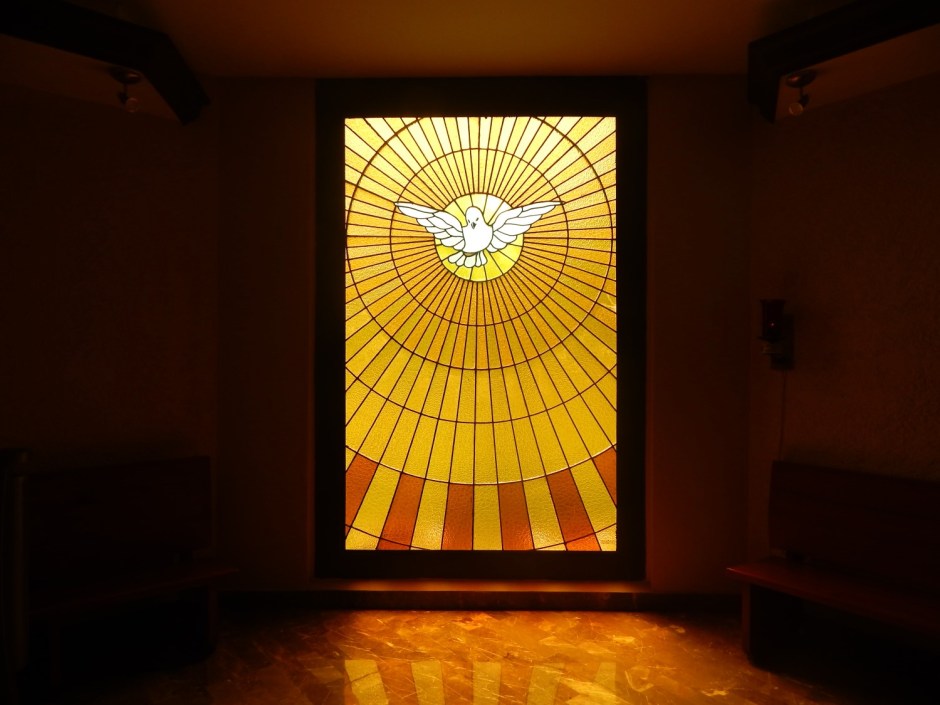
May this Pentecost be our time to begin a journey guided by the Spirit toward the fountain of Eternal Life!

The first step is to find the joy that comes from the presence of the Lord with us in every step of the way. We don’t need to run, we can go quietly like the Little Prince, we can go at the pace our heart can manage in this moment, at this time.

God understands.

God walks with us, and when we arrive, he will be there waiting for us. 

by Sr Marta Gaspar

Photo by Gabriel Peter from Pexels
Guest Post: The Holy Spirit is a very polite guest

About ten years ago I was going through a rough time, the kind of struggle when you’re not sure what to do, who to ask for advice, if the problems will ever end, if you have the strength or virtue or courage to take that next best step. I remember the day I sat in chapel thinking, “You know what I need? What I REALLY need? Wisdom. I need some good counsel and the knowledge of what is right. And I need courage in spades right now.”

Midway through my rather impassioned prayer for these extraordinary graces, I stopped. I suddenly realized I was asking for what I already had. I was asking for gifts that had been given to me years ago: the Gifts of the Holy Spirit.

I felt a bit foolish, but it was also for me one of those life-changing Aha! moments. God wants me to have these gifts and he made sure they were already there for me. So why did I think they weren’t there? Why did I believe I was missing these vital gifts that would help me through life’s rough times?

Well, to put it simply, it is because the Holy Spirit is a very polite Guest and I hadn’t been a very good hostess. I had quite ignored the Spirit to my own detriment. I had spent years working hard and trying my best. Yet I always, always felt disappointingly inadequate. I wasn’t the strong woman I had set out to be or the apostle on fire I had dreamt of becoming. And now, in a moment of crisis, I found my hands empty.

If I felt like I had missed the fire of Pentecost and those lavish gifts of the Holy Spirit, it was my own fault because I had been given all of the gifts I was praying for. I received all seven when I received the Sacrament of Confirmation. Right? That’s what we learned in catechism class. So what happened?

What if you are given seeds of rare and beautiful flowers, but then don’t bother to water them? If you are given the crown jewels but then don’t bother to wear them? If you are given the most exquisite bridal gown, but then insist on wearing your work clothes to the wedding? The seeds will dry up, someone else will inherit the jewels, and well…you won’t be the bride, will you?

So I decided to start by being the persistent widow in the Gospel and find a way to ask for an increase in the Gifts of the Holy Spirit. True, it was more out of desperation, but it counts! I made myself a chaplet to pray for each of the gifts three times. And I prayed it over and over again. It was like tilling the soil of my own heart, but it worked. Or rather, I should say the Holy Spirit worked!

Now I know that what I need, even in the most desperate moments, will always be there. I don’t wait for the Novena of Pentecost to pray to the Holy Spirit. I bother him all day long. I am absolutely certain that the Holy Spirit doesn’t mind. He knows I need these gifts to strengthen me for the long haul. It just took that really hard time in my life that couldn’t be avoided to finally open my eyes to the Helper, the Consoler, the Counselor who actually lived right in the Temple of my own Heart. The Sweet Guest who was just waiting to be asked.

I added a Marian flavor to the chaplet by ending it with the Angelus. A reminder of Our Lady’s open and willing heart, and a call for me, by every choice I make, to be like her, right here, right now: pure capacity for God, absolute YES to the direction of his Holy Spirit.

Sr Julia Mary Darrenkamp, FSP

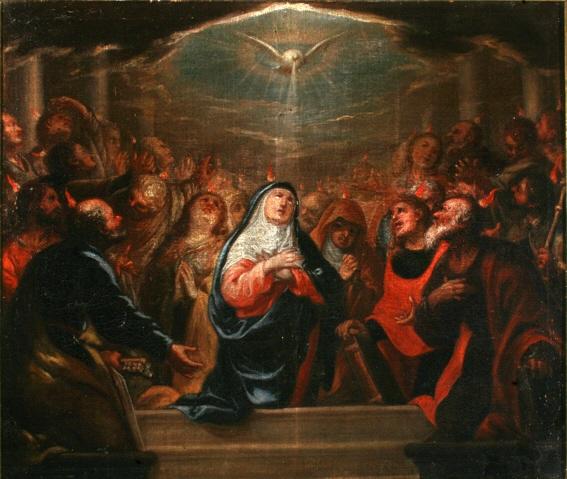
Guest Post: The Entire World at my Door – A Pentecost Meditation

I can’t help but reflect on Pentecost this year in relation to the historical moment we are living as we slowly begin to emerge from a pandemic we’ve been experiencing for over a year.

The pandemic has left its marks, to a greater or lesser degree, on all of us. Like it or not, this year has changed us as people. Despite all the advice on how to live this extraordinarily difficult time in the best way, we realize now as we start to open the doors and emerge from our places of isolation that we have been affected physically, psychologically, and spiritually. And not only we ourselves, but our world and our churches.

The question arises: how are we called to respond to this situation?

In a similar way, after Jesus ascended into heaven, we could say the apostles were huddled all together behind closed doors. Under one roof were the memories of three years of intense discipleship in the company of Jesus, tainted by the memory of betrayal. Sadness and mourning illuminated by a resurrection they have not yet fully understood. The fear of what they might find on the other side of the door that for a while protected them from the outside undermined the hope of the promise of the Spirit’s coming.

But heaven never forgets its promises. On that first Pentecost, the Spirit came and filled the whole house where the apostles were and rested on each one of them. And they were filled with the Holy Spirit. The gift of the Spirit manifested itself publicly in the ability to speak different languages, and the apostles opened the door and emerged from where they had been hiding.

When the day of Pentecost came, they were all together in one place. Suddenly a sound like the blowing of a violent wind came from heaven and filled the whole house where they were sitting. They saw what seemed to be tongues of fire that separated and came to rest on each of them. All of them were filled with the Holy Spirit and began to speak in other tongues as the Spirit enabled them.

Now there were staying in Jerusalem God-fearing Jews from every nation under heaven. When they heard this sound, a crowd came together in bewilderment, because each one heard their own language being spoken. Utterly amazed, they asked: “Aren’t all these who are speaking Galileans? Then how is it that each of us hears them in our native language?”

In fact, Scripture does not mention that the apostles opened the door and went out into the street; the Word just tells us the people of Jerusalem could hear them speaking in their own language. But as extraordinary as the gift of tongues may be, perhaps opening the door and leaving was the first act of courage, the first of many, on the part of the apostles. This is important because the gift always comes from God, but the gift becomes sterile if we don’t open something in ourselves so it can come out.

The bestowing of the gift of the Spirit could have happened in a remote place, in a small town, but it happened in Jerusalem, which at that time was full of Jews “from every nation under heaven.” Unbeknownst to the apostles, the whole world was at their doors. The crowds guided by the same Spirit were concentrated beside them and when the apostles emerged from behind closed doors and went outside, every nation under the heaven was able to hear the wonders of God in its own language! Why is this important? Because the purpose of all the gifts we receive is to make the wonders of God known to the world.

Parthians, Medes and Elamites; residents of Mesopotamia, Judea and Cappadocia, Pontus and Asia, Phrygia and Pamphylia, Egypt and the parts of Libya near Cyrene; visitors from Rome (both Jews and converts to Judaism); Cretans and Arabs—we hear them declaring the wonders of God in our own tongues!” Amazed and perplexed, they asked one another, “What does this mean?”

 I ask myself if I live with this awareness, knowing that I too have the entire world at my door. I wonder if my heart can open this wide, wide enough to embrace the world. Because this is the measure of the heart of God, the entire world! But can the entire world fit in our hearts?

Something very beautiful about living in community is the opportunity to know the heart of God through my sisters. Letting my sisters enlarge my heart. It is on their faces that I see mirrored so many realities that I do not know, that I have never experienced, that are unknown to me. The Lord touches each of our hearts in a unique way, empowering us to speak a specific language for the benefit of someone, whether in the family, in the community, or in the world. That person is always there on the other side of the door of our heart.

The apostles were also empowered by the Spirit to speak in different languages, to go to different peoples. God wants to reach everyone, and he speaks each person’s language. What a difference it makes when someone speaks our language! I understand this better now that I am in the United States. Even though I have no problems understanding and speaking English, when I really want to say something important, I feel an urgency to speak my native language, Portuguese. Whenever a particular chaplain celebrates Mass in our chapel, at the moment of the distribution of Communion, he says to me in Portuguese: “O corpo de Cristo. The Body of Christ.” This always moves me. Certainly I would understand if he spoke in English, but at that moment it is not the Portuguese that I hear but God saying that he loves me.

Let us not doubt that our openness to the Spirit makes things happen in our lives and—through us—in the life of the world.

It isn’t so much about hearing our own language the Scripture passage describing that first Pentecost is speaking about. It is above all to let every gift we receive become this language of Love. It is to discover that the other, who is different from me, speaks the same “language,” and that I am called to share with that person something about God himself.

Let us not doubt that our openness to the Spirit makes things happen in our lives and—through us—in the life of the world, even things that seem impossible. It doesn’t matter if these things are big or small, what matters is that they contain eternity. Every gift we receive and have the courage to share resounds for eternity.

Today, whether we are aware of it or not, the world is also at our door. It is in our neighbor, in our co-worker, in the stranger we come across in the streets of our city, it is on the screen of our phone or it pops up on our social networks. How many of these people speak the same “language” as us?

At this Pentecost, let us ask the Lord to help us recognize the gift that has been given to us by his Spirit, the language that has been entrusted to us. Every time we have the courage to open the door of our heart and go outside, we will find the entire world waiting for us, a world waiting to hear the wonders of God in its own “language.”

Sr Marta Gaspar

Photo Credit: Mateo Cerezo, Public domain, via Wikimedia Commons

Guest Post: Ice-cream with Chocolate Sprinkles: A Mother’s Day Reflection

Mother’s day is a special time of year that we can be grateful for our mothers living and deceased. We can thank God for both those who have naturally given us life as well as those who have nurtured us to being the people we are today.

I remember one phrase from my mom that pretty much has become a “philosophy of life” that I try to live by each day. “Let’s have ice-cream…with chocolate sprinkles when we can!” This is very much a reality for me as I live a missionary life. Basically, life is short and we only have a certain span of time to be with the ones we love and all those people who make up the tapestry of our lives. Don’t get lost in the trivialities. Keep the important things important.

I grew up in Kenya with a part-farm and part-city experience. Mom loves farming and along with that, she loves dogs, cats, chicken, cows, orchards, and gardens…and so we were blessed to have them growing up. Something about her love for nature and the care of God’s creatures and creation would, in time, grow on me. Everything is gift. We are stewards. The chores around the home would become my life lessons on responsibility (even if I didn’t like some of them). Even more precious were the lessons I learned about how to handle people over the handling of things. It was crystal clear that each person, no matter how they may be, needs to be loved and cared for, to be treated with respect, and to be given another chance. I learned from her to meet each person and accept them right where they are. I guess that’s why mom knows so many people!

A touch of the city life would bring with it an expansion of my childhood horizon of dreams. It was from mom that I would come to appreciate the love for life, dance, and good humor. She enjoys all kinds of music anywhere from vibrant tunes that we danced to with our jammies on Christmas morning as kids to an oldie goldie by the Bee Gees. Not to say that life was all rosy and smooth going. We have lived some hard times as a family and yet, even so, mom has challenged us to see beyond. In some of these dark times, it was the tender way in which she drew me out to pursue things that I would never have imagined. Perhaps a fine characteristic of the way that God works with each one of us is that he knows and sees our potential and constantly draws us out of ourselves so that we can be the best of who he created us to be.

I hope this Mother’s Day will be an opportunity to give thanks for the moments of joy or sorrow that we have encountered with the mothers in our lives. For all the lessons learned and experiences lived – blissful or challenging – may they remind us in a tangible way, that God works so tenderly for our good in our lives through theirs. So, don’t let the day pass by so quickly this year. Be sure to “enjoy some ice-cream…and some chocolate sprinkles if you can!” Be sure to say thank you mom and of course, thank you Lord. Everything is gift.

Sr. Jacqueline Jean-Marie Gitonga, FSP

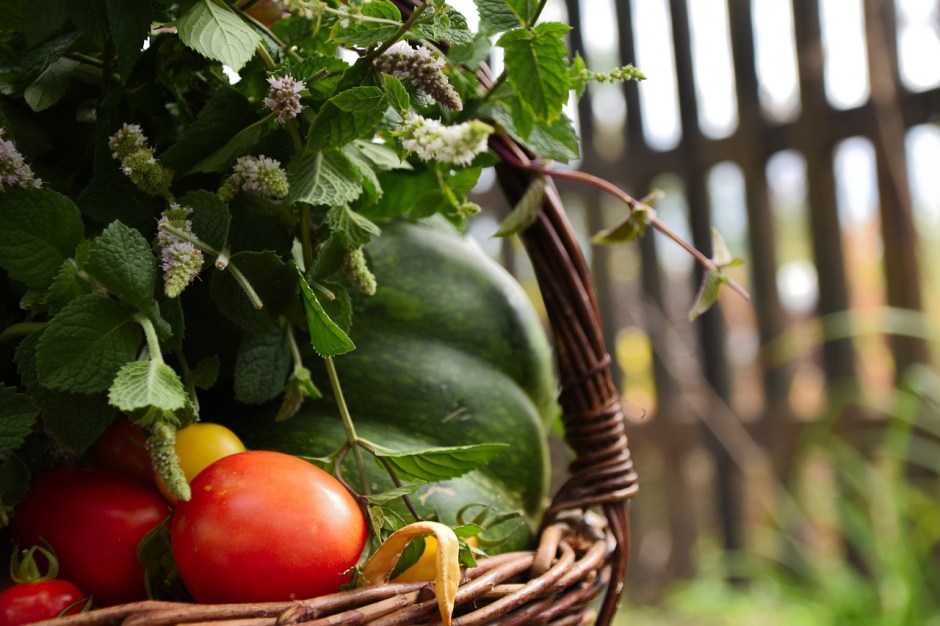
Image by Ирина Александрова from Pixabay

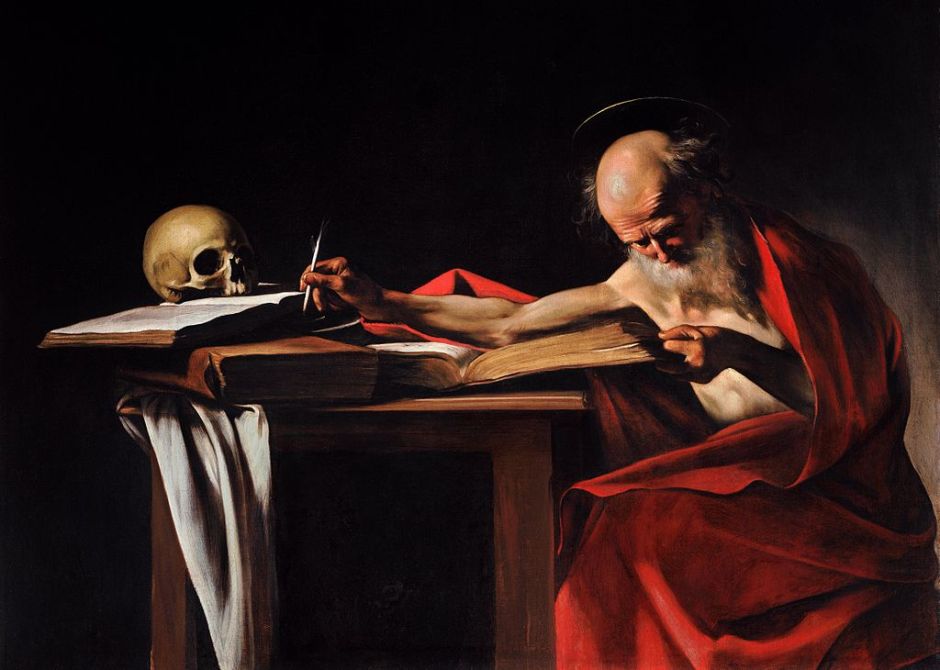
Prescriptions from the Doctors of the Church: Saint Jerome (c. 347-419/20)

Saint Jerome is one of the thirty-six saints who are Doctors of the Church. The Doctors of the Church are renowned for their holiness and also for their important teachings. Using the doctor metaphor, we can say that in a sense each Doctor of the Church gives us a “prescription” for spiritual growth. Saint Jerome’s particular prescription for holiness can help us in our daily fidelity in doing God’s will.

Jerome was born in Dalmatia and later went to Rome for studies. He converted to Christianity at about the age of eighteen and was baptized by Pope Liberius. Attracted by the ascetical life, Jerome traveled widely and was ordained to the priesthood in Antioch. He also studied for about two years under Saint Gregory Nazianzen in Constantinople. Back in Rome, Jerome became a secretary to Pope Damasus. The pope supported him despite Jerome being an unpopular ascetic who stirred up opposition with his acerbic wit and criticisms of lax clergy. When the pope died, Jerome decided to travel to the Holy Land.

Eventually, around 386, Jerome took up residence in a cave in Bethlehem. There he focused on his writing and on Scripture studies. An expert linguist, he translated the Bible from the original Hebrew and Greek into Latin. This translation, known as the Vulgate, became standard in the Church for many centuries. Jerome wrote extensive commentaries on the Bible and answered biblical questions from the entire Catholic world. He also directed a group of women ascetics and helped those in need. But for the most part, this brilliant man lived out his last years in quiet solitude, meditating on and translating the word of God.

Jerome’s Prescription: Read the Bible!

While Jerome wrote widely on many topics, he is outstanding for his work on the Bible, which is where we learn what God has revealed to us over many centuries. Jerome taught that the Bible is the Word of God and was written under the inspiration of the Holy Spirit. The human authors wrote according to their natural talents, but were inspired by the Holy Spirit, so that what they wrote is truly the Word of God. Through this Word we come to know the saving truth that leads us to salvation.

No matter what you think is wrong with the world today, the Bible is the answer because it gives us the basic, foundational truth about humanity and God. If people read the Bible and put what they read into practice, many problems would disappear. Just think of the Ten Commandments, for instance. Take merely one commandment, “You shall not steal.” Imagine what the world would be like if we could feel assured that no one was going to steal what we own. No fraud, no stealing, no forgeries, etc. Not only would society be a much safer place, but people would also be able to trust each other more.

On a personal level, reading the Bible brings us into relationship with God and in particular with Jesus. Jerome famously wrote that “Ignorance of Scripture is ignorance of Christ.” (From the Prologue of a commentary on Isaiah). (See Alba House book p. 121)

 If we want to know Jesus better, we need to soak ourselves in Scripture, especially the four Gospels.

How to read the Bible

Get a good Catholic study Bible and start to read it. It may be easier to start with the New Testament, which is already somewhat familiar to Catholics who listen carefully to the Mass readings each Sunday. If you read three chapters a day and five on Sundays, you can finish the whole Bible in about a year.

If your parish has a Bible study group, join it! It’s always easier to learn something together with others. Catholic online resources can also help you learn to read and understand the Bible better. For example, check out the Saint Paul Center online: https://stpaulcenter.com/ It’s best to stick with Catholic resources so you can be sure that what you are learning is according to Catholic teaching.

Some practical things to do:

  • Learn about lectio divina, a time-honored way of praying with Scripture.
  • Buy a Bible if you don’t have one. Read it!
  • Read one Gospel in one month.

Prayer

Saint Jerome, you devoted many years to studying the Bible and giving the fruits of your study to others. Pray for us that like you we may have a deep devotion to the holy Scriptures and let them illumine our path through life.

Feast: September 30

Patron: archaeologists, librarians, students, translators, Bible scholars

Selection from Saint Jerome:

On the benefits of reading Sacred Scripture:

Tell me whether you know of anything more sacred than this sacred mystery, anything more delightful than the pleasure found herein? What food, what honey could be sweeter than to learn of God’s Providence, to enter into his shrine and look into the mind of the Creator, to listen to the Lord’s words at which the wise of this world laugh, but which really are full of spiritual teaching? Others may have their wealth, may drink out of jeweled cups, be clad in silks, enjoy popular applause, find it impossible to exhaust their wealth by dissipating it in pleasures of all kinds; but our delight is to meditate on the Law of the Lord day and night, to knock at his door when shut, to receive our food from the Trinity of Persons, and, under the guidance of the Lord, trample underfoot the swelling tumults of this world.

Letter to Paula, 30, 13 as quoted in Pope Benedict XV: On Saint Jerome (Spiritus Paraclitus), no. 59. https://www.catholicculture.org/culture/library/view.cfm?recnum=3865

by Sr Lorraine Trouvé, FSP

Image Credit: Caravaggio, Public domain, via Wikimedia Commons

Guest Post: Finding Our Way Back

Yesterday, for the first time in many months, I spent some time in my garden.

You have to understand: I’m not a gardener. I have a garden. There’s a difference. I cannot talk knowledgeably about this plant or that; I don’t have an instinctive feel for what seedlings will work best together. But last year the coronavirus challenged me to plant my very first vegetables—tomatoes and cucumbers and lettuce—and so I started taking my garden more seriously.

Yesterday I began cautiously (one might even say humbly) clearing out some of the winter’s debris and assessing what’s needed for the spring. And immediately some scenes from this past year sprang to my mind. The pandemic may have inspired me to become more self-sufficient, yet as a beginner, I had—for example—no idea how many tomato plants one needs, and so I planted… well, let’s just say, quite a few! I ended up spending much of the summer delivering tomatoes and cucumbers and herbs and flowers to other people—masked, with a furtive knock on their door followed by a quick exit so we wouldn’t be within six feet of each other.

I learned a lot about growing things in this pandemic year. About how to tend to living things. About the need for water; my area experienced a drought last summer on top of everything else. About others’ needs for fresh food when scarcities happen at grocery stores.

I also saw the joy something small and living can bring to lives starved for beauty. The smile on someone’s face when I dropped off some seeds or a small plant. I’m remembering that as I consider next month—May—marks the end of Pope Francis’ Laudato Si’ anniversary year, declared in the hope that this year and the ensuing decade would be a time of grace—for humanity, and for all God’s creatures. It feels in some ways as if the pandemic put everything else on the back burner for a while.

And so perhaps this season is one of finding our way back.

The pandemic didn’t eliminate our need for connection. Connection to each other. Connection to nature. And as we approach Earth Day 2021, I’m remembering everything is truly all related. The pandemic taught us we don’t need to clog our highways with fuel-burning vehicles to get the best out of life. My gardening experience taught me that we can start small, with just a few plants, just an offering that’s easily shared with others.

We don’t have to join Greenpeace or live entirely off the grid to make the world better. We can start with the very title of Pope Francis’ encyclical—Laudato si’: “Praise be to you!”

How can we praise God? What energizes me is knowing we can do it in the smallest ways as well as the sweeping ones. By planting one tree. By growing one garden. By visiting an elderly neighbor. By sharing whatever we have with others. By volunteering. By praying for God’s beautiful and fragile creation. By acknowledging the economic, climactic, and health inequities of the world, and finding ways we can take steps—even small ones—toward alleviating them.

As I stood in my garden, picking up paper and plastic the wind had blown in, I felt in a small way that I was, indeed, finding my way back. What about you? How can you find your way back, in this moment, in this day?

Pope Francis’ challenge remains relevant to us all today. Do we “dare to turn what is happening to the world into our own personal suffering and thus to discover what each of us can do about it”?

We can. By finding our way back… right now.

by Jeannette de Beauvoir