What is your favorite book of the Bible? (Guest Post)

Every once in a while people will ask me, “Sister, what is your favorite book of the Bible?” I actually smile as I think to myself, “Well, if you had asked me this question a few years ago, I would have absolutely responded: ‘Isaiah, because he is like a fifth Evangelist for me.’” In fact, some of the early Fathers regarded the book of Isaiah as ‘a Fifth Gospel,” because Isaiah’s poetry and prophecy speak so powerfully to a coming King, a royal figure who would be the Suffering Servant for his people, and the victory of the Anointed One over all the dark forces in the world. (1)

Recently, however, when I am asked about my favorite book of the Bible, I have to be honest. It is still Isaiah, but now there is Matthew and Genesis. Of course, there is also the book of Psalms which we pray daily at morning and evening prayer. And I absolutely can’t forget my other favorite prophets, Daniel, Ezekiel and Jeremiah. In fact, I talk to them as I reflect on their prophecies, their lives, and the prophetic call they received from God. They really are friends to me, so I call them by nicknames: Dan (Daniel), Ezy (Ezekiel) and Jerry (Jeremiah). (Let me explain: as an extrovert I’m famous for talking aloud to the people in the seats next to me at movies, the actors on the screen, or even to the characters in the Bible, as well as anyone else within earshot! It’s my way of connecting.)

Actually, when it comes down to it, I love the whole Bible. Truly every word is of the Holy Spirit!

The Holy Spirit is our guarantor to understanding Holy Scripture. He enlightens our souls with just a word from Holy Scripture, and allows us to walk with our Creator who humbly resides within our souls. “My Father and I will come to you,” Jesus said, “and make our home with you” (cf. John 14:23). There is no greater joy or peace than to have God in our hearts, in our minds, and in our wills.  And this prayerful union exhilarates our souls and allows us to bathe in God’s grace and love, filling us with healing and peace.

“You have made us for yourself, O Lord, and our hearts are restless until they rest in You.”

Saint Augustine

By giving us a mind, will, and heart, God made us in his own image and likeness. Saint Augustine writes in his Confessions the famous prayer, “You have made us for yourself, O Lord, and our hearts are restless until they rest in You.” How we need this rest every day!

With the Holy Spirit, we can take even just a word or phrase from Holy Scripture and do a “deep dive,” finding the God who loves us immutably. In this way, we discover how the story of Salvation continues even in our own lives.

So what is your favorite book of the Bible? Which book gives you the springboard to make a “deep dive” into God’s love so that you can journey with him for another day? Let me know in the comments below.

By Sr. Irene Wright, FSP

Image credit: Photo by Tara Winstead

Do not be afraid, I will fight for you: a meditation for calming anxiety

As Pharaoh drew near, the Israelites looked back, and there were the Egyptians advancing on them. In great fear the Israelites cried out to the LORD. They said to Moses, “Was it because there were no graves in Egypt that you have taken us away to die in the wilderness?” But Moses said to the people, “Do not be afraid, stand firm, and see the deliverance that the LORD will accomplish for you today.”
Then the LORD said to Moses, “Why do you cry out to me? Tell the Israelites to go forward. But you lift up your staff, and stretch out your hand over the sea and divide it, that the Israelites may go into the sea on dry ground.”
Exodus 14:10-11, 13-16

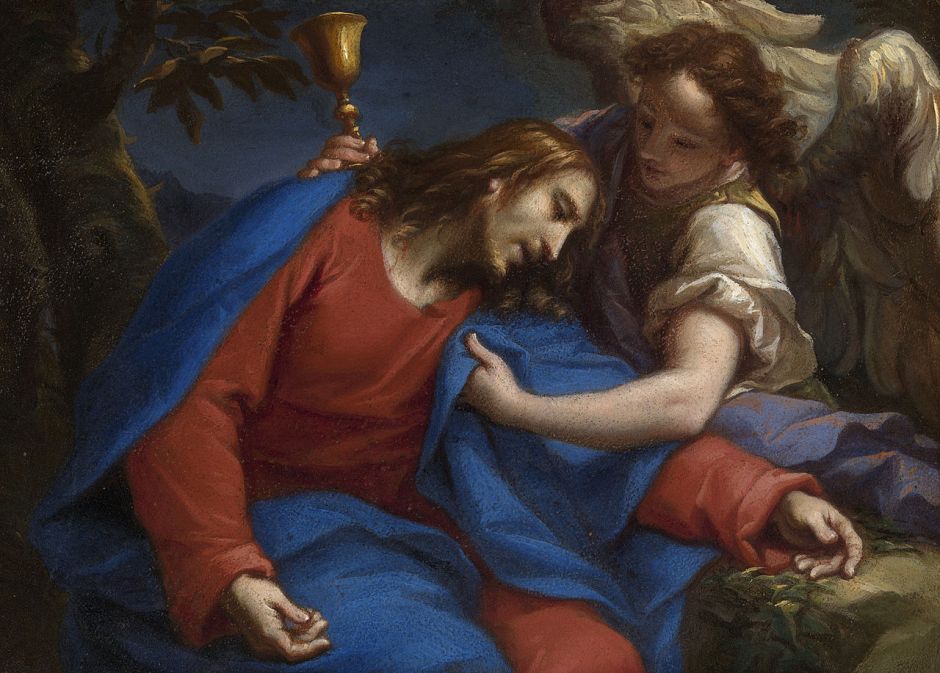
Jesus went with them to a place called Gethsemane; and he said to his disciples, “Sit here while I go over there and pray.” And going a little farther, he threw himself on the ground and prayed, “My Father, if it is possible, let this cup pass from me; yet not what I want but what you want.”
Matthew 26:36, 39


We live in a broken world in which bad things really do happen, and when they do, we feel trapped. We feel everything is beyond our control. There seems to be no way to save ourselves or provide for our loved ones. Think of the level of panic, the sleepless nights, the tears that are shed when there is not one dollar more to pay for groceries, or rent, or daycare.

Both the Israelites and Jesus in the garden of Gethsemane on the night before he died cried out in fear. It isn’t wrong to feel fearful and overwhelmed, especially in distressing circumstances. Feeling anxious is not wrong. The experience of being uncertain or anxious and stressed forces us to realize we aren’t in control. And thus we “cry out.”

Even though the Israelites cried out to Moses in anger that he had put them in this predicament, God stood firm in his promise to free them from Egypt. “The LORD will fight for you, and you have only to keep still.” And he did. When we are afraid, angry, and ready to blame someone for the predicament we are in. God is still faithful.

Jesus in Gethsemane shows us how to face our fear, to name it. He spoke directly to his Father about what he was most afraid of, and how he wanted out of the situation. But he also declared fear a liar when he said his Father would care for him, no matter what happened. Ultimately the Father didn’t save Jesus from crucifixion and death, but through it, Jesus killed death’s power, defeating it by dying himself, and then rising as victor over it. He conquered that which we most deeply fear: losing our lives. He did so to “deliver all those who through fear or death were subject to lifelong slavery”—you and me.

Jesus Lord, help me to face my fears, to name my fears, to bring you my fears. Just as you conquered death, help me to conquer all the things that keep me separated from you and your love. I hold to your promise of deliverance and know that even in my darkest moments you are there with me. Amen.

A reflective pause

Write or tell the story of a time in which you faced a distressing situation with anxiety and discovered that you became stronger or blessed through what you suffered.

To tuck in with you tonight

I am at peace, knowing your love is faithful.

by Sr Kathryn J. Hermes, FSP

Image: Francesco Trevisani, Public domain, via Wikimedia Commons

Even in the dark you know me: a meditation for calming anxiety

Even the darkness is not dark to you;
the night is as bright as the day,
for darkness is as light to you.
Psalm 139,12

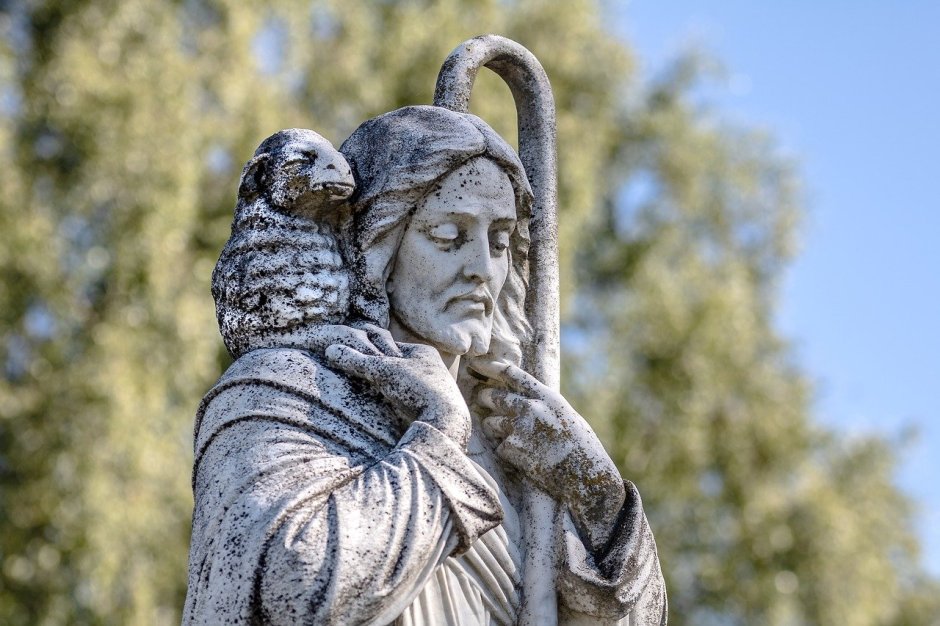
I am the good shepherd. I know my own and my own know me, just as the Father knows me and I know the Father. And I lay down my life for the sheep.
Jn 10,14-15


There is an anxiety that stems from not naming our fears. That comes when we don’t stop and ask ourselves why we suddenly feel so tired or why strangely the space that our heart occupies seems to have become tighter.

When this happens to me, I realize it is my body telling me it is time to stop and ask myself what it is I am afraid of. It is my own body telling me to go to the chapel and face my fears with Jesus!

It may seem surprising, but a shepherd counts his sheep several times a day, knows them all by name, and more, is able to identify each of the sheep in the dark by touch, so deeply he knows them. Our fears can disfigure our image of ourselves. That is why it is important to stop to face them, not as a nameless amalgamation of problems, but identifying each of the things that concern us. Only then can we surrender our fears one by one to Jesus.

Lord, help me remember that nothing we fear is unknown to Jesus. He is the Good Shepherd; he knows our name and is able to recognize us even in the middle of our darkness. Help me give Jesus my fears, one by one, and therefore liberate a space within me that is free to trust, a space that belongs to Jesus and where I can hear him say once again: “I give my life for my sheep.” Amen.

A reflective pause

  • Find a quiet place where you can pray, and take a cross with you
  • Breathe deeply
  • Bring to mind all that worries you right now.
  • Take a few moments to look at the cross and fix your gaze on the open arms of Jesus, who embraces all of humanity from the cross.
  • Welcome the embrace of Jesus who knows you by name.
  • One by one, tell Jesus all your fears.
  • Remain a few moments in interior silence and let Jesus open a space in you to trust.
  • With a free heart pray Psalm 23.
  • End with a word of gratitude to God.


To tuck in with you tonight

I trust, Lord, that even in the dark you know me.

by Sr Helena Marta Infante Gaspar, FSP

I will turn your mourning to dancing: A meditation for calming anxiety

You have turned my mourning into dancing;
you have taken off my sackcloth
and clothed me with joy.
Psalm 30:11

Now there was a royal official whose son lay ill in Capernaum. When he heard that Jesus had come from Judea to Galilee, he went and begged him to come down and heal his son, for he was at the point of death.
John 4:46b,47


Anytime I’m feeling anxious, I turn to Scripture and always find words of encouragement. These readings, above, are brimming over with hope and the promise of healing. And as the royal official in the story told by St. John experienced, God’s promise is always true. The official insisted that Jesus come with him to his house and cure his son, but Jesus does not comply with the official’s conditions; he doesn’t follow his directions, though he does cure the boy: “You may go; your son will live.” And the official believed Jesus and went home to find his son healed. Imagine how he first felt anxious because Jesus wasn’t following him home; and then imagine how that anxiety turned to joy!

There are times when I, too, tell the Lord not only what I need, but exactly how he should do it! I probably do that more than I realize. Even in my own worst days, as I experienced my own helplessness and vulnerability so acutely, I found myself praying, “Lord Jesus, what do you want of me? What is it you want me to do?” The answer that echoed in my heart was, “I don’t want you to do anything. I simply want you to remain in me and trust me.”

I know that in doing what he asks, I will experience his promise of “new heavens and a new earth.” He will most certainly change “my mourning into dancing.” In the meantime, while I wait in confidence, I am seeking to slow down, to accept the added limitations and spend some time in contemplative hobbies (I like to make rosaries); and become always more aware of God’s presence and his gifts – rejoicing and happy in what he creates.

Help me remember, God, before I lose myself in whatever it is that is frightening me, I can be still and remember these promises. You have promised my mourning will someday turn to dancing. You have promised my sadness will turn to joy. Help me to be patient, because everything happens in your time. You love me and you are with me, no matter how I feel, no matter what is going on in my life. You are always here. Amen

A reflective pause

  • Go to a place where you can be alone for a few minutes, where you can find silence. Find a posture or position that is relaxed and comfortable.
  • Breathe deeply. Inhale, exhale. Do it again.
  • If you feel sorrow creeping into your heart, tell it that it has no power. Sorrow and pain have no power over you. They have no power over God. God is stronger than all your grief, stronger than all your hurts.
  • Imagine Jesus speaking to you, and saying, “You do not have to do anything. All I want is for you to simply be. Be with me in this moment.”
  • Invite your heart to be still. Offer a word of gratitude to God.

To tuck in with you tonight

I trust, my God, that you know my sorrow and my pain.

by Sr. Mary Leonora Wilson, FSP

I have your best interests at heart: meditation for calming anxiety

He says, “Be still, and know that I am God;
I will be exalted among the nations,
I will be exalted in the earth.”
Psalm 46:10

We know that all things work together for good
for those who love God,
who are called according to his purpose.
Romans 8:28

In my more anxious moments I am far from being still. The word “frantic” would be more accurate. Mentally I try to take back control from a situation, person or event that I perceive has threatened me or my happiness or my success. Frantic thoughts stir up feelings of desperation. Anxious thoughts bring on more anxious thoughts.

I remember describing to a counselor a situation I was deeply concerned about—actually, frantic over. After ten minutes she broke into my monologue and said one word, “Stop!” I was shocked into a moment of silence. “Has any of that happened to you yet?”

“No,” I had to admit. The mental storm was over, and I felt more peaceful.

God tells us, “Be still!”

“Be still before you get all worked up. Be still because I have your best interests at heart. Be still because you are my most treasured possession. Be still because I am God and can make all things—no matter how they appear to you—work out for your benefit.”

Lord, far too often my anxious thoughts hijack my peace of mind. Help me to hear you–and to still them. The future is in your hands and I can rest in that knowledge. Help me to trust you and to let go of my fears. Amen.

A reflective pause

  • Go to a place where you can spend some time either paging through letters or photo albums or scrolling through photo galleries, emails, texts, or phone messages.
  • Breathe deeply.
  • Inhale and exhale. Notice any frantic thoughts of worries.
  • Quietly bless them with Psalm 46: “Be still.”
  • Imagine God placing his hand on your head and blessing you. “Be still.”
  • Spend a little time looking through photos, letters, texts, emails, or listening to some voice messages, whatever you have. Look for evidence of how God has your best interests at heart. Something that surprised you unexpectedly. Someone who reached out when you needed it. A colleague or family member who sent a message that lifted your spirits. An offer that saved the day.
  • Invite your heart to be still. Offer a word of gratitude to God.

To tuck in with you tonight

I trust, my God, that you have my best interests at heart.

by Sr Kathryn J. Hermes, FSP

Heartbreak in Kamloops

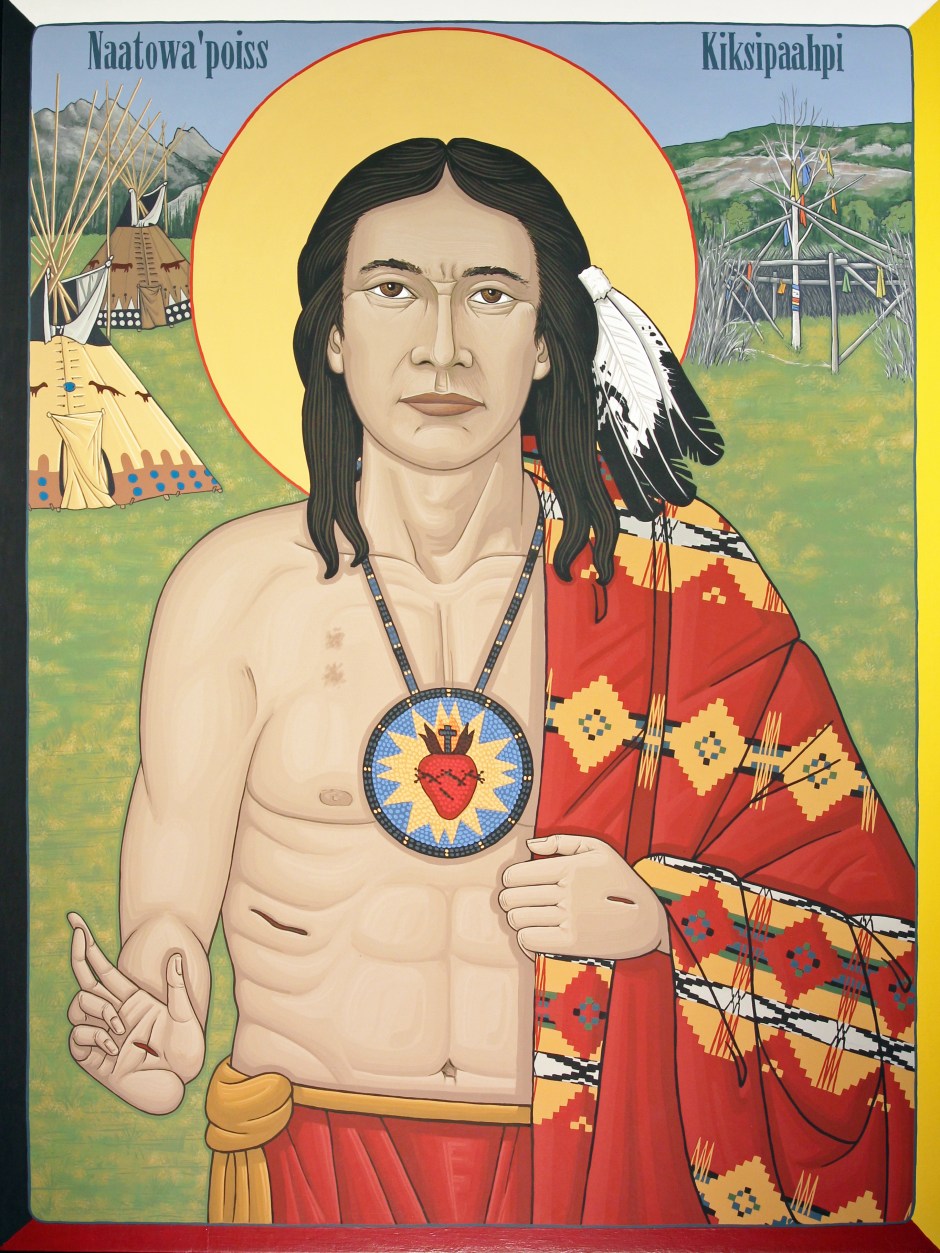
 Indigenous Catholic Icon of the Sacred Heart of Jesus, BC artist André Prévost

Heart of Jesus, broken for our sins, have mercy on us.

By now you may have heard the shattering news of the mass grave of 215 children at Kamloops Residential School, a government school operated by Catholic religious in British Columbia, Canada. For many of our American readers, this may be the first time you have heard of the residential school system. But for our Canadian readers, this is the latest in a decades-long string of tragic revelations of the legacy of an educational system designed to rid Indigenous children of their culture. It was a government program founded on racist ideology, enabled by various churches that ran the schools in accordance with the government mandate.

Heart of Jesus, victim of our sins, have mercy on us.

Unfortunately, to identify the sin of racism as present solely in members of the government or churches of that era would not be accurate. The sin of racism was harbored in the hearts of many across Canadian society. It was systemic, as evidenced by the residential school system. With the last residential school closing in 1996, the wounds of this racism are still very fresh, and the sin of racism is far from eradicated.

Heart of Jesus, source of all consolation, have mercy on us.

In a recent video released by the Archdiocese of Edmonton with Chief Littlechild and Archbishop Smith, Chief Littlechild encouraged viewers not to let this news break us, not to let it rob us of our hope. As Catholics, Indigenous and non-Indigenous alike, this is a difficult history to face, accept, and take responsibility for. Where is our hope? Where is our comfort? Where is our transformation?

We find all these things in the Sacred Heart of Jesus.

Heart of Jesus, our peace and reconciliation, have mercy on us.

Christ’s heart suffered, bled, and died for us while we were yet sinners (Romans 5:8). Christ’s heart broke for each and every child taken from their families to be put in a residential school, and for every family and community that lost them. Christ’s heart broke for the sins of those perpetrating wounds in Indigenous children, families, and communities. Christ’s heart broke for every time the dignity of his beloved Indigenous people is attacked in the streets and workplaces of today.

I was born in Winnipeg, the city with the highest Indigenous population in Canada. As of the last census, nearly 93 000 people identified as First Nations, Métis, or Inuit. In the climate of a richly Indigenous city, I witnessed many attacks on the dignity of my Indigenous brothers and sisters from people I knew and loved. It was heart-breaking. Yet I have also witnessed the conversion of racist attitudes in some of these same people. I have seen their conversion happen in Christ and know firsthand it is possible.

It is possible to face these dark realities together, honestly, as a Church, in the light of Jesus Truth. It is possible to open ourselves up to vulnerably examine our own hearts to find where we need conversion, in the light of Jesus Way. And it is possible to enact healing and reconciliation in the light of Jesus Life.

It is possible to face these dark realities together, honestly, as a Church, in the light of Jesus Truth. It is possible to open ourselves up to vulnerably examine our own hearts to find where we need conversion, in the light of Jesus Way.

Heart of Jesus, our life and resurrection, have mercy on us.

As we turn to the Sacred Heart of Jesus this week, let us pause to search our own hearts. Are there attitudes of resentment, self-righteousness, labeling, judgement, blanket annoyance, or impatience we hold toward another group of people? Do we look at people who are different from us and wish they were the same as us? Do we get defensive when mistakes or sins are pointed out to us instead of openly allowing the Lord to use people’s comments to convert us?

Let us make the final request of the Litany of the Sacred Heart of Jesus our own: “Jesus, touch my heart and make it like your own.” In him we find the humility and the gentleness we need to allow ourselves to be changed, converted, and enflamed with a zealous love for him and his people. May he form his heart in us, so that we may love with his love–a love that can transform the world. And may we learn from the Indigenous wisdom of listening to others for as long it takes, so that we may truly understand, honour and love others with this gift of Christ.

Lamb of God, you take away the sins of the world, have mercy on us.

Lamb of God, you take away the sins of the world, have mercy on us.

Lamb of God, you take away the sins of the world, have mercy on us.

Jesus, gentle and humble of heart, touch our hearts and make them like your own. Amen.

by Sr. Orianne Dyck

We are grateful to André Prévost for the use of the icon above.

To pray with this Indigenous Catholic Icon of the Sacred Heart of Jesus, you can visit BC artist André Prévost’s webpage here: https://www.andreprevost.com/siksika-nation.html

Helpful Resources:

To learn more about Catholic efforts to seek truth and healing, you can read about “Our Lady of Guadalupe Circles” here: https://ourladyofguadalupecircle.ca/

To pray with an Indigenous Catholic Icon of the Sacred Heart of Jesus, you can visit BC artist André Prévost’s webpage here: https://www.andreprevost.com/siksika-nation.html

To pray the full Litany of the Sacred Heart of Jesus (excerpts of the Litany appear in this article in bold), visit: https://www.usccb.org/prayer-and-worship/prayers-and-devotions/litanies/litany-of-the-sacred-heart-of-jesus

To watch the joint statement and interview with Chief Littlechild and Archbishop Smith referenced in this article, visit: https://www.youtube.com/watch?v=9OXW395L2dU and https://www.youtube.com/watch?v=fPtpgvlsPAw

To read Pope Francis’ statements regarding the Kamloops discovery after Sunday’s Angelus, visit: https://www.vaticannews.va/en/pope/news/2021-06/pope-appeal-canada-residential-school-discovery-healing-reconcil.html