The image that has drawn me in my ministry is Touching the Sunrise. I believe each person, no matter where they are and what they have lived, is a temple of the Trinity and can, indeed, taste the presence of God within. You can find resources for healing and prayer and follow me at touchingthesunrise.com.
There are times when we have to deal with big questions. And then there are times when big questions sear deeply into our identity, shake our consciousness, tear our hearts with guilt. They toss us about with fear, doubt, and loneliness. The big questions seem to be dealing with us. We might stay up at night wondering where we fit in God’s plan. Questions haunt us: Who am I? What is the purpose of my life? How will I go on from here?
When we’re haunted by these big questions, we are like the apostles after Calvary’s sorrow and the collapse of their hope, when rumors suddenly swirled around that some of them had seen Jesus alive. How they must have longed to see once again the face of their Beloved Master, and yet also perhaps felt their hearts shrink in the uncertainty of what his eyes would say to them.
The forty days of Easter before the Ascension are like an educative process. After the resurrection, Jesus doesn’t engage the apostles on the level of emotion. He becomes their guide through the complexities of their hearts and the events that left them fearing what God’s plan might be. To them, Jesus asserts the authority and gentle power of his presence: Do not be afraid. It is I.
For many people, 2020 was a lost year. Many of us stayed in our homes, didn’t see our families, found new ways to work and attend school and keep our wheels turning, learned all there is to know about Zoom. Still more of us lost our jobs, suffered grave illness, grieved the death of family and friends, could not pay our rent or mortgage, succumbed to addiction, even became homeless.
2020 was also the year of Laudato Si’, and it’s easy to dismiss care and concern for the earth when so many other worries and events have taken over our lives. It’s been easy to lose sight of something that didn’t feel all that immediate.
And yet, as we approach the end of the Laudato Si’ year, if we look at all these things together, we can see there’s a connection running through them that is very real and very immediate indeed. “Nothing in this world,” writes Pope Francis, “is indifferent to us.” The connection between our care for the earth and our care for other people, as well as our care for our spiritual lives, is profound and irrefutable.
It is Pope Francis who draws our attention to the model of our sense of connectiveness:
I believe that Saint Francis is the example par excellence of care for the vulnerable and of an integral ecology lived out joyfully and authentically. He was particularly concerned for God’s creation and for the poor and outcast. He loved, and was deeply loved for his joy, his generous self-giving, his openheartedness. He was a mystic and a pilgrim who lived in simplicity and in wonderful harmony with God, with others, with nature and with himself. He shows us just how inseparable the bond is between concern for nature, justice for the poor, commitment to society, and interior peace.
Pope Francis has never lost sight of the interwovenness of God’s creation, and he calls us to remember where we came from and where we’re going. His is not a plea from on high, a homily of instruction and advice; this is someone who has lived precisely what he’s urging us to consider living.
And in a sense, one of the words that really leaps out is…friendship.
Before he was elected pope, Francis lived in a modest apartment in Buenos Aires, rather than in the archbishop’s mansion; he took public transportation rather than using a church limousine; he cooked his own food. Yes, these were symbolic gestures. But symbolism matters.
And it was more than symbolism that drove him to befriend the people he met on the streets, to listen to them, to touch them, emphasizing that the Gospel teaches charity, not hypocrisy, as he himself said, “giving to someone who cannot pay you back, serving without seeking a reward or something in exchange.” In order to truly find that peace, the pope said, each Christian must have at least one friend who is poor.
Think about that for a moment. We should all have at least one friend who is poor. Not someone we fling coins at in the street, not someone we serve at our soup kitchens… someone who is a friend. A person we consult, listen to, value.
“The poor are precious in the eyes of God,” Pope Francis says. “They remind us that that’s how you live the Gospel, like beggars before God.”
“So,” the pope continues, “instead of being annoyed when they knock on our doors, we can welcome their cry for help as a call to go out of ourselves, to welcome them with the same loving gaze God has for them. How beautiful it would be if the poor occupied the same place in our hearts that they have in God’s heart.”
How can we make that beauty reality? It begins with friendship, with doing what Sr. Thea Bowman used to describe as simply crossing to the other side of the room and engaging in the conversation there.
Once we see other people as friends, then we can start to see how all our decisions affect them, and we can start finding our way back to friendship and communion. We can start thinking of including others rather than excluding them.
It needs to be said that, generally speaking, there is little in the way of clear awareness of problems which especially affect the excluded. Yet they are the majority of the planet’s population, billions of people. These days, they are mentioned in international political and economic discussions, but one often has the impression that their problems are brought up as an afterthought, a question which gets added almost out of duty or in a tangential way, if not treated merely as collateral damage. Indeed, when all is said and done, they frequently remain at the bottom of the pile. This is due partly to the fact that many professionals, opinion makers, communications media and centres of power, being located in affluent urban areas, are far removed from the poor, with little direct contact with their problems. They live and reason from the comfortable position of a high level of development and a quality of life well beyond the reach of the majority of the world’s population.
The isolation we’ve experienced as part of the pandemic has allowed us to focus inward, to our own experiences, and not have to think about others who have less and are suffering more. Human beings can never be an afterthought. Everyone on earth was made in the image of God and is beloved by God. When we pollute other areas of the world, we’re telling God that the people who live in those regions are, in our opinion, of less value than we are. By saying we don’t care, we consign them to invisible lives filled with misery.
The most vulnerable around us are the ones most affected by a changing environment, cautions the pope:
Many of the poor live in areas particularly affected by phenomena related to warming, and their means of subsistence are largely dependent on natural reserves and ecosystemic services such as agriculture, fishing and forestry. They have no other financial activities or resources which can enable them to adapt to climate change or to face natural disasters, and their access to social services and protection is very limited.
Our world has a grave social debt towards the poor who lack access to drinking water, because they are denied the right to a life consistent with their inalienable dignity.
The warming caused by huge consumption on the part of some rich countries has repercussions on the poorest areas of the world, especially Africa, where a rise in temperature, together with drought, has proved devastating for farming.
It is clearly inconsistent to combat trafficking in endangered species while remaining completely indifferent to human trafficking, unconcerned about the poor, or undertaking to destroy another human being deemed unwanted.
Throughout his life, Pope Francis has extended a hand of friendship to everyone, from the most powerful to the most vulnerable. In finding our way back to friendship, we’re finding our way back to the Gospel, to the shores of Galilee when Jesus extended his own hand of friendship to all. In finding our way back to friendship, we’re claiming our inheritance as children of God, beloved of our Father, whose brothers and sisters encompass the world.
“Everything is connected,” writes Pope Francis. “Concern for the environment thus needs to be joined to a sincere love for our fellow human beings and an unwavering commitment to resolving the problems of society.”
We had to deal with the pandemic. We had to change our lives, grieve and bury our dead, and find a way out of it. But it is time now to once again hear “the cry of the earth and the cry of the poor.” We need to find our way back to what matters.
We need to find our way back to friendship.
by Jeannette de Beauvoir
Prayer for the People of the Earth
Blessed Lord, it seems that most often we encounter you in a church. which is good; we know you’re there. But… We sometimes forget you’re everywhere else, too. In the beauty of the earth you gave us (a gift we often have not taken care of) In the fragility of a flower In the song of a bird. You created the cosmos and the earth and gave us each a small part of the stars in our bodies and in our hearts.
And yet…
We have left a life sustained by interdependence. We now live in the era of the self.
We have created systems that foster innovation but promote competition and materialism. We see ourselves as separate beings, experiencing our human condition individually, separate from everyone else. Disasters that take place far away hold no meaning. We forget people who don’t have enough to eat when we plan our own healthy meals.
Lord, you know this well: when we feel disconnected, we lose our compassion and empathy for things not directly concerned with our advancement. We lose touch with the divine.
We all share the same human journey, we experience the same universal emotions, joy and grief, pain and surprise. We all call earth home. We breathe the same air, eat food grown in the same soil, drink water from the same oceans.
Some of us live well in solid homes with solid incomes go on vacations, buy anything we need. More of us live not so well in homes that can be devastated by storms by illnesses by poverty We don’t go on vacations. We don’t make purchases. Our children go to sleep hungry.
From your hand, our planet sustains us gives us a place to live and prosper. We treat it as though there were several other planets we could use when we’re done with this one.
Help us reconnect, O Lord. Help us rediscover our first loves love of the soil love of each other love of your creation in all its forms.
There are times when we have to deal with big questions. And then there are times when big questions sear deeply into our identity, shake our consciousness, tear our hearts with guilt. They toss us about with fear, doubt, and loneliness. The big questions seem to be dealing with us. We might stay up at night wondering where we fit in God’s plan. Questions haunt us: Who am I? What is the purpose of my life? How will I go on from here?
When we’re haunted by these big questions, we are like the apostles after Calvary’s sorrow and the collapse of their hope, when rumors suddenly swirled around that some of them had seen Jesus alive. How they must have longed to see once again the face of their Beloved Master, and yet also perhaps felt their hearts shrink in the uncertainty of what his eyes would say to them.
The forty days of Easter before the Ascension are like an educative process. After the resurrection, Jesus doesn’t engage the apostles on the level of emotion. He becomes their guide through the complexities of their hearts and the events that left them fearing what God’s plan might be. To them, Jesus asserts the authority and gentle power of his presence: Do not be afraid. It is I.
For forty days, Jesus engages his apostles and disciples who are astonished at God’s way of acting in Christ now risen. For forty days, Jesus leads them on an educative process in which they learn to mistrust themselves, their interpretation of events, and their own evaluation of who they are before God. Instead they become convinced of the reasons for their faith, a faith so strong they would give their every moment and their very lives, witnessing to others, telling them who this Jesus is and what he’s done for them.
The Easter season teaches us anew that, in our hearts, we also have already risen with Christ and experience something even now of the heavenly Kingdom. In Baptism we have died with Christ and have received an initial grace, which is the point of departure, of gradually intensifying experiences of grace through prayer and sacramental encounters with the risen Lord. Each time we receive the Eucharist we are fed at the heavenly banquet. It is true that this interior glory, which is still mostly hidden within us, will burst forth only in the eschaton.
These days, may we learn the Easter lesson to not rely on our own experience, to trust God as our guide, and to let our souls continue in communion with God—no matter what inner storms toss our hearts.
A long year has sputtered out during the holy season of Lent. Conflicting messages about the end or the resurgence of the pandemic… Life-changes and unexpected transitions… Worries over my parents’ health…
I have found myself feeling exhausted, listless, desolate.
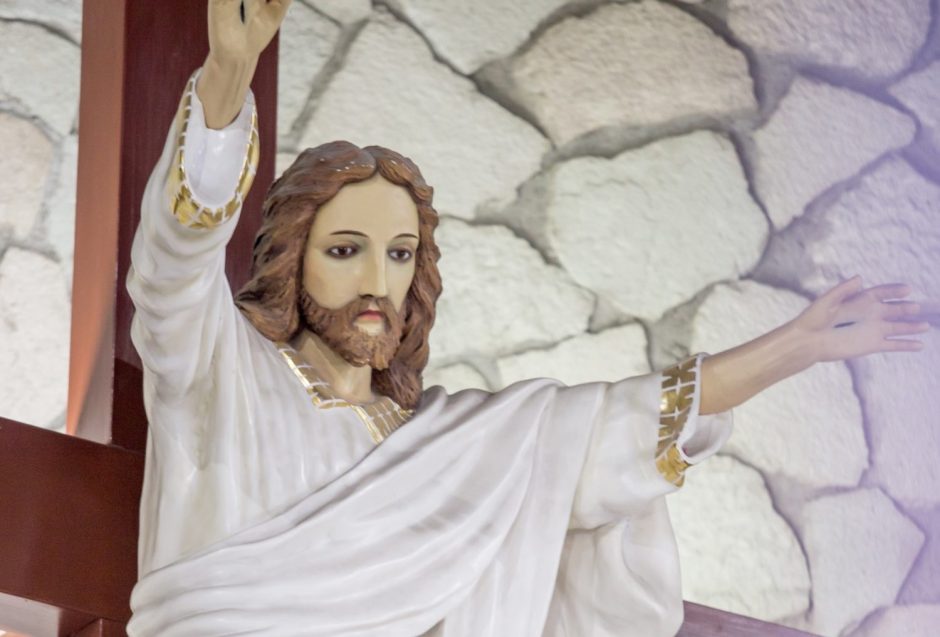
This Easter, Jesus has come and stood in my immediate presence and I have stood in his.
“Peace be with you,” Jesus has whispered to me, proclaimed to me.
“I have been here all along. I rose from the dead. I live, the Risen One. Why are you troubled about the events in your life? Why do you wonder if I am here? If I can do anything?”
What troubles us…what troubles you…these 2000 years since Jesus burst the bars of death? Why does Jesus have to ask the same question of us as he asked of his disciples in today’s Gospel just days after his Resurrection?
I believe we sometimes don’t even realize we are troubled, we question, we doubt, we worry… Did the Apostles, after all, really get the depth of their confusion, insecurity, guilt, fear?
I believe that an inner suspicion gnaws at our heart today even as we recite the Credo… After all, we breathe the same air as the rest of humanity.
I believe there is this subtle desperation, so subtle we don’t even suspect it is there…
Why?
Even more than a year into the pandemic, we remain surrounded by questions, haunted by emptiness, suspicious about whether our life has real meaning. We have touched the small daily nothingness that often threatens to dominate our days. How much time people admit to scrolling through an endless social media feed without the will power to stop until they are exhausted? We live in a time where nothing is very strong as we are half-aware of the “dreary flickering of the mind over it knows not what and knows not why,” as C. S. Lewis said in The Screwtape Letters.
We suffer the absence of something—of Someone—that fascinates us, captivates us, bowls us over, seizes us…. “We are all of us limp” (Leo Tolstoy, The Idiot).
And then there is the Risen One who appears in our midst. There is something that happens right in front of our eyes. Someone who creates something new again and again, in heart after heart that will gaze upon him.
Jesus, in each encounter with another as recorded in the Gospels, asks only one question, “Will you love me?”
He doesn’t ask, “Did you get it right?” “Have you really learned how to pray yet?” “Have you converted completely this time?” “Have you succeeded?”
No. Instead, “Look at me. Love me. I am your brother, your Savior, your Shepherd, the One who is risen and at your side.”
I realized this Lent that my heart has been torn apart with this existential nothingness for quite some time. Call it nihilism. Call it skepticism. I believed. I trusted. But how I suffered because something had been taken from me as I breathed in the scary information and the ideology that has passed for the news which has bombarded us for over a year.
Then this Easter Vigil, Jesus said to me, “I am here, you can touch me, my hands my feet. I am real. My word is a promise. I guarantee it with my life. You can hold onto it and it will truly satisfy all your desire for affection, ultimate meaning, eternal desire and infinite happiness. It will not let you down. Breathe it in. Drink it. Read it not as inspiration. Read it as something that God has done and is doing and will do. They are not words. They are events that cannot be undone.”
Jesus opened my mind to “understand the scriptures,” to understand that he is acting in his Word for me. Now I am a witness to these things. I believe in this man, Jesus, the Risen Son of God and Savior, the Lamb of God. He has all my heart.
God so gently and only gradually is building up his story within my history and within world history. I trust him. No matter what happens to me, I shall live because he lives. I. Shall. Live.
“Peace be with you,” Jesus whispers to you, proclaims to you.
“I have been here all along. I rose from the dead. I live, the Risen One. Why are you troubled about the events in your life? Why do you wonder if I am here? If I can do anything?”
Take your troubles to the Risen One. Doubt no longer, but believe.
Image: Robert Wilhelm Ekman, Public domain, via Wikimedia Commons
The joy of Easter is the joy of the Gospel, the Good News that breaks open our lives with the possibility of mercy and hope.
That life could be more than we could ever have dreamed, that our days could be other than what we believe we’ve deserved.
Resurrection joy this year has been a time of real grace for me.
I like to imagine the apostles after the Resurrection. The Gospel stories leave us with a sense of breathless wonder and excited disbelief. Slowly, though, ever so slowly do our minds change and our hearts reshape their hopes. There must have been such gentleness about the gradual realization that Someone had changed everything about what they thought would be their future. Even Jesus thoughtfully came again and again in different places, in different ways, to help his incredulous followers take in sips the ultimate Reality of his Resurrection and continuous presence in and among them.
Slowly is the perfect word to describe this Easter for me. Slowly has my heart warmed to the fact that I am different than who I thought I was. Broken then, still broken now, but loved forever.
Slowly have I taken in my poverty as Jesus stands by me to tell me it is going to be okay. That he is the one that does things. He is the one responsible for making things happen. I will mess things up, again and again, the woman in bedraggled gown crying in the corner, so aptly described by Jessica Powers in her poetry. I must let Jesus be the One who bears the sign of victory.
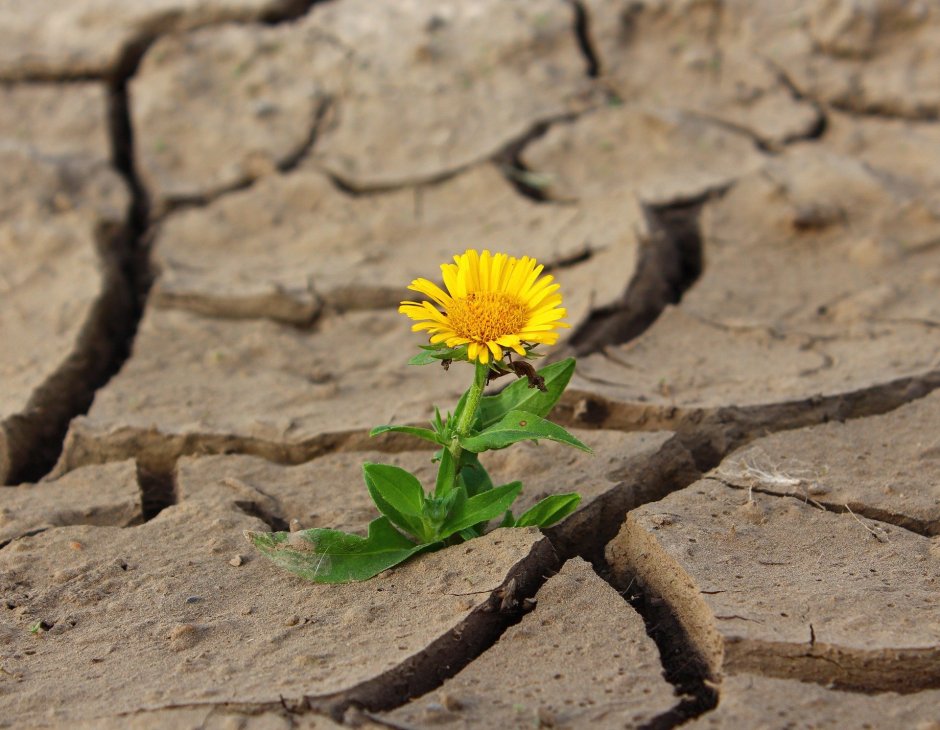
Slowly have I let the slightly warming spring weather creep into my wintry heart and open the fragile flowers of my dreams once again.
Has your Easter been more like a trumpet blast from the Hallelujah Chorus or like an uncertain breeze announcing something unknown but unmistakably true?



 Touching the Sunrise