Heartbreak in Kamloops

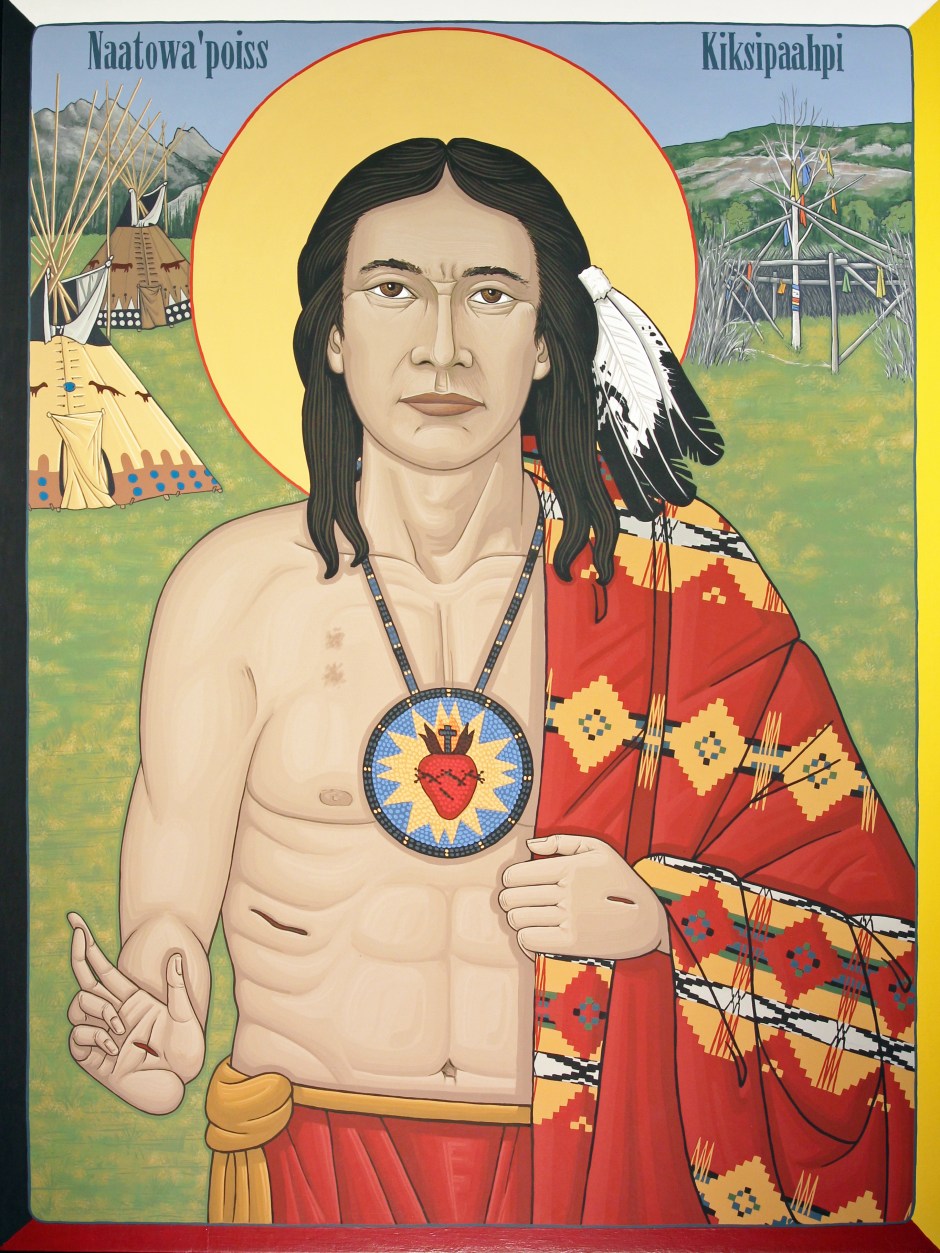
 Indigenous Catholic Icon of the Sacred Heart of Jesus, BC artist André Prévost

Heart of Jesus, broken for our sins, have mercy on us.

By now you may have heard the shattering news of the mass grave of 215 children at Kamloops Residential School, a government school operated by Catholic religious in British Columbia, Canada. For many of our American readers, this may be the first time you have heard of the residential school system. But for our Canadian readers, this is the latest in a decades-long string of tragic revelations of the legacy of an educational system designed to rid Indigenous children of their culture. It was a government program founded on racist ideology, enabled by various churches that ran the schools in accordance with the government mandate.

Heart of Jesus, victim of our sins, have mercy on us.

Unfortunately, to identify the sin of racism as present solely in members of the government or churches of that era would not be accurate. The sin of racism was harbored in the hearts of many across Canadian society. It was systemic, as evidenced by the residential school system. With the last residential school closing in 1996, the wounds of this racism are still very fresh, and the sin of racism is far from eradicated.

Heart of Jesus, source of all consolation, have mercy on us.

In a recent video released by the Archdiocese of Edmonton with Chief Littlechild and Archbishop Smith, Chief Littlechild encouraged viewers not to let this news break us, not to let it rob us of our hope. As Catholics, Indigenous and non-Indigenous alike, this is a difficult history to face, accept, and take responsibility for. Where is our hope? Where is our comfort? Where is our transformation?

We find all these things in the Sacred Heart of Jesus.

Heart of Jesus, our peace and reconciliation, have mercy on us.

Christ’s heart suffered, bled, and died for us while we were yet sinners (Romans 5:8). Christ’s heart broke for each and every child taken from their families to be put in a residential school, and for every family and community that lost them. Christ’s heart broke for the sins of those perpetrating wounds in Indigenous children, families, and communities. Christ’s heart broke for every time the dignity of his beloved Indigenous people is attacked in the streets and workplaces of today.

I was born in Winnipeg, the city with the highest Indigenous population in Canada. As of the last census, nearly 93 000 people identified as First Nations, Métis, or Inuit. In the climate of a richly Indigenous city, I witnessed many attacks on the dignity of my Indigenous brothers and sisters from people I knew and loved. It was heart-breaking. Yet I have also witnessed the conversion of racist attitudes in some of these same people. I have seen their conversion happen in Christ and know firsthand it is possible.

It is possible to face these dark realities together, honestly, as a Church, in the light of Jesus Truth. It is possible to open ourselves up to vulnerably examine our own hearts to find where we need conversion, in the light of Jesus Way. And it is possible to enact healing and reconciliation in the light of Jesus Life.

It is possible to face these dark realities together, honestly, as a Church, in the light of Jesus Truth. It is possible to open ourselves up to vulnerably examine our own hearts to find where we need conversion, in the light of Jesus Way.

Heart of Jesus, our life and resurrection, have mercy on us.

As we turn to the Sacred Heart of Jesus this week, let us pause to search our own hearts. Are there attitudes of resentment, self-righteousness, labeling, judgement, blanket annoyance, or impatience we hold toward another group of people? Do we look at people who are different from us and wish they were the same as us? Do we get defensive when mistakes or sins are pointed out to us instead of openly allowing the Lord to use people’s comments to convert us?

Let us make the final request of the Litany of the Sacred Heart of Jesus our own: “Jesus, touch my heart and make it like your own.” In him we find the humility and the gentleness we need to allow ourselves to be changed, converted, and enflamed with a zealous love for him and his people. May he form his heart in us, so that we may love with his love–a love that can transform the world. And may we learn from the Indigenous wisdom of listening to others for as long it takes, so that we may truly understand, honour and love others with this gift of Christ.

Lamb of God, you take away the sins of the world, have mercy on us.

Lamb of God, you take away the sins of the world, have mercy on us.

Lamb of God, you take away the sins of the world, have mercy on us.

Jesus, gentle and humble of heart, touch our hearts and make them like your own. Amen.

by Sr. Orianne Dyck

We are grateful to André Prévost for the use of the icon above.

To pray with this Indigenous Catholic Icon of the Sacred Heart of Jesus, you can visit BC artist André Prévost’s webpage here: https://www.andreprevost.com/siksika-nation.html

Helpful Resources:

To learn more about Catholic efforts to seek truth and healing, you can read about “Our Lady of Guadalupe Circles” here: https://ourladyofguadalupecircle.ca/

To pray with an Indigenous Catholic Icon of the Sacred Heart of Jesus, you can visit BC artist André Prévost’s webpage here: https://www.andreprevost.com/siksika-nation.html

To pray the full Litany of the Sacred Heart of Jesus (excerpts of the Litany appear in this article in bold), visit: https://www.usccb.org/prayer-and-worship/prayers-and-devotions/litanies/litany-of-the-sacred-heart-of-jesus

To watch the joint statement and interview with Chief Littlechild and Archbishop Smith referenced in this article, visit: https://www.youtube.com/watch?v=9OXW395L2dU and https://www.youtube.com/watch?v=fPtpgvlsPAw

To read Pope Francis’ statements regarding the Kamloops discovery after Sunday’s Angelus, visit: https://www.vaticannews.va/en/pope/news/2021-06/pope-appeal-canada-residential-school-discovery-healing-reconcil.html
Guest Post: The Hearts of Jesus and Mary

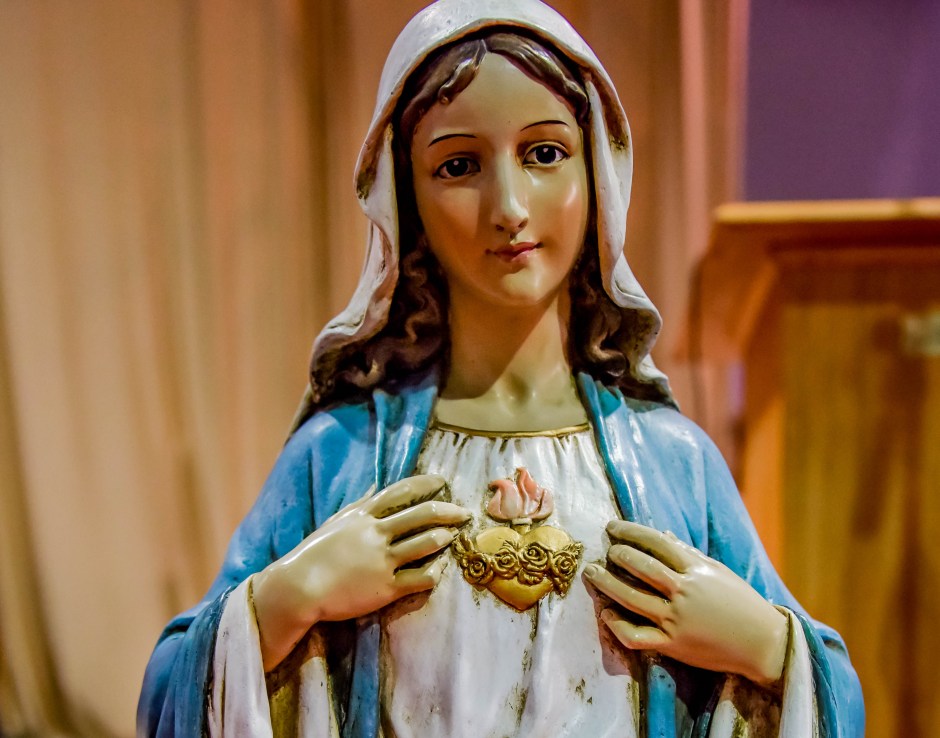
June is the month of the Sacred Heart, and this year the feast of the Sacred Heart falls on Friday, June 11. In this feast Jesus pours out the love of his heart on us. But Jesus always comes with Mary. The next day, June 12, is the feast of the Immaculate Heart of Mary. In the union of these two hearts we are completely enveloped in divine and human love.

The heart is the symbol of love, one that’s even used widely in our secular culture (as in Saint Valentine’s Day). It’s a universal symbol most people can relate to easily. From his heart, Jesus pours forth the ocean of his love, and Mary does the same from her own tender maternal heart. They both have an unconditional love for us. That doesn’t mean they don’t care if we sin, but rather that they still love us despite our sins. Jesus in his Sacred Heart and Mary in her Immaculate Heart want to pour out their love on us. If we stray, they call us back.

Mary can transform hearts. In Paris in 1836, a holy priest, Monsignor Charles Desgenettes, was assigned to Our Lady of Victories parish. Spiritually the parish was dying. Only a faithful few old people still went to Mass. Determined to bring about a spiritual revival, the priest consecrated himself and the parish to Mary’s Immaculate Heart. He announced that he was going to call a meeting about being consecrated to Mary. To his astonishment, the church was packed for the meeting! In time a complete spiritual revival took place—and devotion to Mary’s Immaculate Heart was the driving force.

If we need renewal in our life, whether as a church or as an individual, devotion to Mary is a great place to start. She will draw us closer to her son, Jesus, and together the two hearts of Jesus and Mary will help our own hearts burn with love of God and neighbor.

By Sr Marianne Lorraine Trouvé, FSP

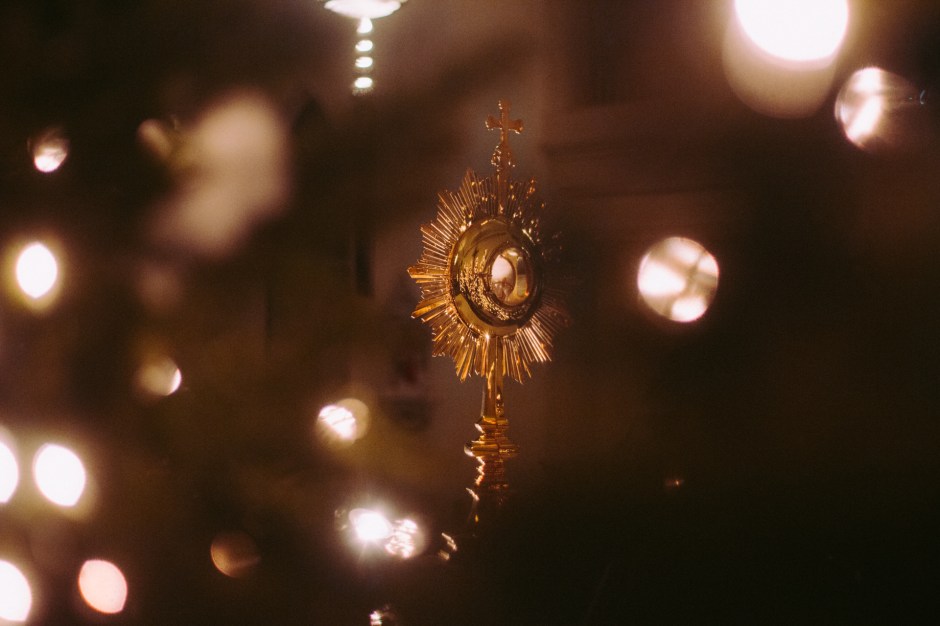
Image Credit: Tacho Dimas via Cathopic

The Heart of a World in Pain: Meditation for Corpus Christi

I spent a couple of hours this morning before Mass meditating on Alexander Schmemann’s profound articulation of the mystery of the Eucharist…. a gift to myself on this most beautiful of liturgical feast days. The vast horizons of this Orthodox priest and writer’s soul seem to peer into eternity as he contemplates the liturgy of the Eucharist:

The Liturgy is the journey of the Church into the dimension of the Kingdom…. Our sacramental entrance into the risen life of Christ. The liturgy of the Eucharist is where individuals of every culture, socio-economic bracket, and way of life come together in one place to bring their lives with them in order to be more than what they were: a new community with a new life. In the liturgy we are immersed in the new life of the Kingdom… (cf. Alexander Schmemann, For the Life of the World, page 28-32).

This morning my heart is also shadowed by conflicting emotions, sorrow, a desire to make things right if I could, to erase wrongs, to supply for what is now lacking, to heal the ones who are broken…. On this day I am mindful of very difficult stories that have been in the news and are on all of our minds and hearts lately: the discovery of the mass grave with the bodies of 215 children at the site of the former Kamloops Residential School in British Colombia, Canada; the 100th anniversary of the Tulsa Race Massacre; the one year anniversary of the death of George Floyd; the ongoing violence on our streets and in our homes.

The inexcusable and horrific stories of how we creatures of the same God and Father of us all can harm each other, taking from each other life, hope, future overwhelm our hearts. They are so incomprehensible that our minds and hearts recoil from even learning about them, facing them, putting things right. Let’s take a step back, again letting Schmemann be our guide, as we ask ourselves from where this evil among us comes, this evil we first encounter in the story of Cain turning on his brother Abel, these two sons of Adam and Eve who had chosen to eat from the Tree of the Knowledge of Good and Evil in the Garden of Eden at the serpent’s suggestion:

Man ate the forbidden fruit. The fruit of that one tree, whatever else it may signify, was unlike every other fruit in the Garden: it was not offered as a gift to man. Not given, not blessed by God, it was food whose eating was condemned to be communion with itself alone, and not with God. It is the image of the world loved for itself, and eating it is the image of life understood as an end in itself.

To love is not easy, and mankind has chosen not to return God’s love. Man has loved the world, but as an end in itself and not as transparent to God. He has done it so consistently that it has become something that is “in the air.”

It seems natural for man to experience the world as opaque, and not shot through with the presence of God. It seems natural not to live a life of thanksgiving for God’s gift of a world. It seems natural not to be eucharistic.

The world is a fallen world because it has fallen away from the awareness that God is all in all. The accumulation of this disregard for God is the original sin that blights the world.

On this Feast of Corpus Christi I’ve been thinking about how all of life is meant to be eucharistic, a life of thanksgiving to the God on whom we depend for everything. Life lived in a eucharistic key is a journey of love and adoration toward God. We lost this eucharistic life in Adam and Eve. In Christ, the new Adam, this eucharistic life is restored to us. Contrary to the first Adam, Christ offered himself to the Father in perfect obedience, love and thanksgiving. Christ did not reach for his own glory, did not consider equality with God something to be used to his own advantage. Christ’s life was a symphony in the key of Gift and Gratitude. He made himself nothing by taking the very nature of a servant for our salvation, becoming obedient to death, even death on a cross! As Gift he received from God the highest place, and to him every knee must bow to the glory of God the Father (cf. Phil. 2:5ff).

For “the wages of sin is death.” The life man chose was only the appearance of life. God showed him that he himself had decided to eat bread in a way that would simply return him to the ground from which both he and the bread had been taken: “For dust thou art and into dust shalt thou return.” Man lost the eucharistic life, he lost the life of life itself, the power to transform it into Life. He ceased to be the priest of the world and became its slave.

In the story of the Garden this took place in the cool of the day: that is, at night. And Adam, when he left the Garden where life was to have been eucharistic—an offering of the world in thanksgiving to God—Adam led the whole world, as it were, into darkness. In one of the beautiful pieces of Byzantine hymnology Adam is pictured sitting outside, facing Paradise, weeping. It is the figure of man himself (Alexander Schmemann, For the Life of the World, page 17-18).

In the Mass Christ himself takes all of us and the totality of our life to God. “I am the true vine, and my Father is the vinedresser. Every branch in me that does not bear fruit, he takes away: and every branch that bears fruit, he prunes, that it may bear more fruit. Already you are clean because of the word I have spoken unto you. Remain in me, and I in you. As the branch cannot bear fruit of itself, unless it remains in the vine; so neither can you, unless you remain in me. I am the vine, you are the branches: He who remains in me, and I in him, the same bears much fruit: for away from me you can do nothing. If a man does not remain in me, he is thrown away as a branch, and is withered; and they gather them, and throw them into the fire, and they are burned. If you remain in me, and my words remain in you, ask whatsoever you will, and it shall be done unto you” (John 15:1-7).

In the light of the Eucharist we see that Christ is indeed the life and light of all that exists, and the glory that fills heaven and earth….

He became man and lived in this world. He ate and drank, and this means that the world of which he partook, the very food of our world became His body, His life. But His life was totally, absolutely eucharistic—all of it was transformed into communion with God and all of it ascended into heaven. And now He shares this glorified life with us. “What I have done alone—give it now to you: take, eat. … (page 43).

Each time we celebrate the Eucharist we experience the very joy of the Kingdom because we realize that even as the joys of earth will one day come to an end, there is now through Christ a seed of eternal joy planted in our world that will grow into the Kingdom. And so we pray for the world, we beg God that we might love the world as Jesus loves the world. That we might love the world with the very love of Christ. That we might see the world in Christ, as it really is, and not from our own limited points of view. We intercede for those who are victims, for those who perpetrators, for our are brothers and sisters.

I’ve been wrestling with these shadows of sorrow even as I stand at the messianic banquet and receive into my heart the Life of the world. It is this way with all of us. It will always be this way in this world.

I’ve decided today that what matters for me is where I stand. In what dimension I live. With whose gaze I look upon the world. With whose heart I feel.

I am, we are, one in Jesus, the Vine, our Life, the one who holds us all together as one and brings us with him into the Kingdom of his Father. The image of the Vine and the Branches offers me a way to live through these sad and disconcerting times:

  1. Jesus said that the branches must bear fruit. He commands it actually eight times in John chapter 15. The present tense here points to bearing more than one fruit or one season of fruitfulness. It indicates a sustained productivity. Yet I know by myself I cannot bear fruit. I cannot reach up and grasp for fruitfulness. I need to remain attached to the Vine through the Eucharist in order to be fruitful. I am mindful of the too many branches that have been weakened and have even given up on the Vine because of the activity of some of those who are Christians and Catholics, themselves branches on the Vine. I remember those who have chosen to behave toward others in ways that have separated themselves in some way from the full Life of Christ the Vine. I remember all those who have suffered grievously at the hands of other branches on the one Vine. In every Eucharist I can pray with the heart of Jesus for all those for whom Christ died for he is now the only one who makes things right, who brings shalom, that is, wholeness, completeness, soundness, health, safety and peace with God and reconciliation.
  2. Every branch that does not bear fruit will be taken away by the Gardener. The prayer often on my lips in times like these is: “Thy kingdom come! Thy kingdom come! Thy will be done on earth as it is in heaven.” God is at work clearing away what needs to be cleared away so that the voices of his children who have been marginalized and suffered devastating losses can be heard. We need to have the courage to enter into the stories of those who have suffered at the hands of others. I must admit, about some of these situations I knew nothing until I started reading, inquiring, listening. Even a 30 minute tour around the internet can help us hear their voices. Thy kingdom come means that we stand up to hear all these voices and allow the kingdom which is beyond the smallness of our hearts to break open the hold that evil has on us.
  3. We are invited to remain in Jesus as he desires to remain in us. To abide, to be joined to him. To have a sustained union, a steadfast and enduring communion with the Vine. For those who abide in Christ as branches on the Vine there is the promise that they can ask what they will and it will be done for them. I believe this is because the branches that are receiving nourishment from the Vine are of one heart and mind with Jesus. What they ask for the world comes from the heart and interests and desires of Jesus that all be saved, that all be healed, that all be made whole, that all be one.

Through the Liturgy the broken life of this world is brought, in Christ and by Christ, into the dimension of the Kingdom of God. The Mass is the Heart of a world in pain, the seed of Joy, the manifestation of the mystery of God’s presence and action. It is in the offering of the Eucharistic sacrifice that the world as it isdivided, torn, broken apart with anger and shadowed in fearis brought to God. For it was for this world that God’s Son, his only Son, gave his life. And so will I.

Image Credit: Dulce Maria via Cathopic

Meditation for Corpus Christi

https://www.podbean.com/media/share/pb-7sfkw-1056753

O Eucharistic heart of Jesus,

In you I find hope and freedom, truth and belonging, forgiveness and healing, friendship and mercy and life!

In your Eucharistic heart, O Jesus Christ, I experience the greatest love. You make me worthy of love, you make me capable of loving others as you have loved me.

O Jesus, in the Eucharist you rescue me from despair by attaching me to yourself, the Source of all Life. Without you I can do nothing (John 15:5).

Blessed are you who believed!

Promises! Elizabeth said to Mary, “Blessed are you for believing that what was promised to you would be fulfilled.”

Those words could be repeated to Mary at the foot of the cross as her son was dying, “Blessed are you, O Mary, for believing that what was promised to you would even now be fulfilled.”

They could be proclaimed at Pentecost, “Blessed are you who believed what was promised! It shall be fulfilled!”

They were sung at the moment of her assumption into heaven, “Blessed, most blessed among all earth’s women, are you, Mary, for you believed, you never wavered, even in suffering you were steadfast in the certainty that God would keep his promises to you.”

Life is hard enough at times, and I think too often we forget the promises God has made to us, words of power that will keep any storm from overwhelming our fragile boats.

Elizabeth and Mary were two women—one too old to bear a child and the other barely a child herself—who became the channel of God’s mercy poured out through his Son in the redemption of the world: Jesus Christ, fulfillment of the Promise.

Both Elizabeth and Mary may have felt that this vocation was beyond their personal capacity…but they believed that what God had begun in them he would bring to completion in his own way, in his own time, through his grace. They knew there were no guarantees, there was no way to control or manipulate the future. What was left to them was praise and joyful wonder at what God was doing in and through them.

In the Responsorial Psalm we hear their quiet joy and firm and solid hope:

God indeed is my savior;
    I am confident and unafraid.
My strength and my courage is the LORD,
    and he has been my savior….

Shout with exultation, O city of Zion,
    for great in your midst 
    is the Holy One of Israel.

What is God doing in you? Like Elizabeth and Mary take some time today to notice, to sing, to rejoice, to believe, to trust. “God indeed is my Savior, I am confident and unafraid.”

Image Credit: Fra Angelico, public domain, via Wikimedia Commons