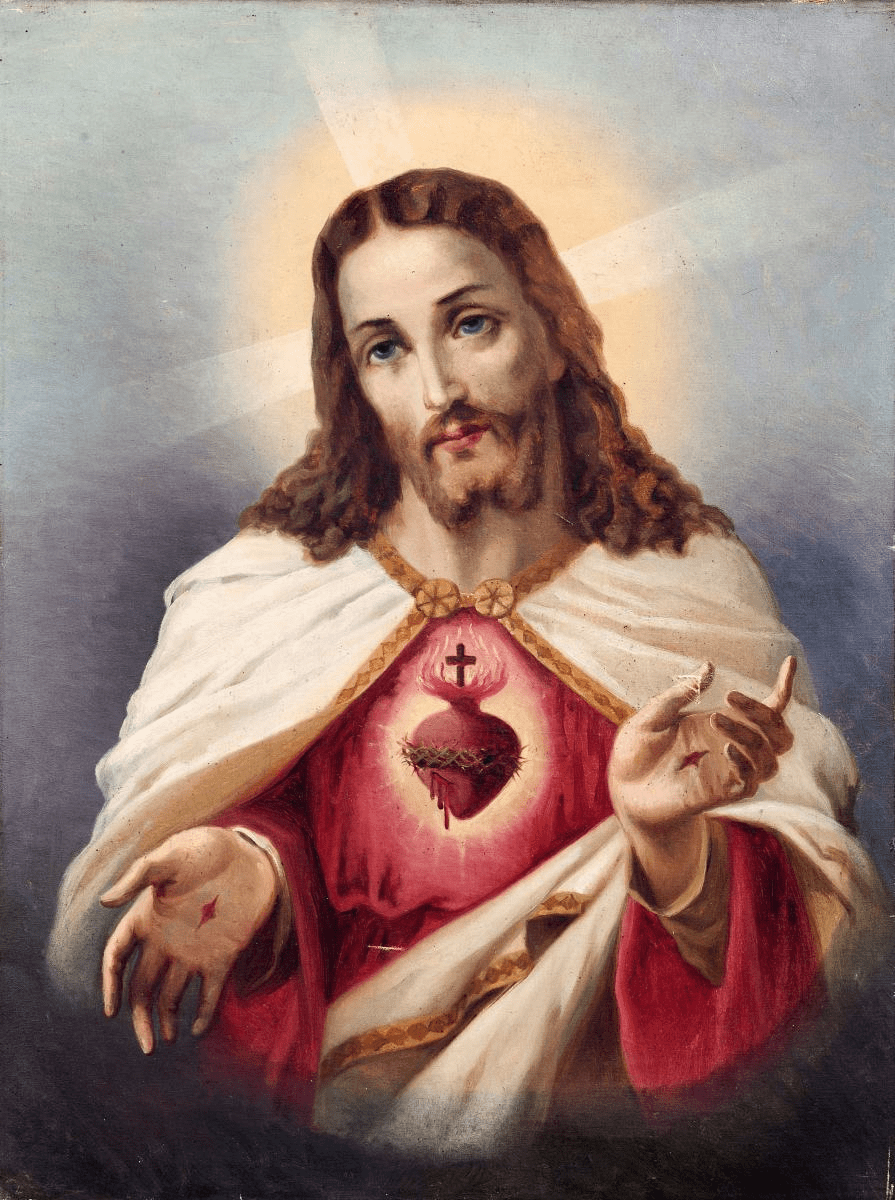
We the Sheep Still Hear Jesus’ Voice Today (John 10:27-30)

My sheep hear my voice. I know them, and they follow me. I give them eternal life, and they will never perish. No one will snatch them out of my hand. What my Father has given me is greater than all else, and no one can snatch it out of the Father’s hand. The Father and I are one.”

John 10:27-30

“My sheep hear my voice. I know them, and they follow me.”

I have to admit for many years I had a certain idea of what Jesus’ voice sounded like. My assumptions came from the first verse of this Gospel. Sheep are pretty dumb animals and need a shepherd to protect them, make sure they are fed and healthy, and lead them to safe pasture. When I “heard” Jesus’ voice in my heart, it was always gentle, meek, caring, a “what can I do for you” type of voice.

When I made my thirty-day Ignatian retreat I heard another type of voice when Jesus spoke to my heart: it was clear, firm, and understanding. It was the voice of authority that wanted the very best, and only the best for me. Sometimes that meant I had to confront areas of my life that needed repentance and healing. Other times I needed to know that I was loved even in my poverty and weakness. Still other times Jesus needed me to realize that he was the one who does things, not me. It was the voice of the One who died that I might live forever in communion with God. It was a voice of urgency and patience.

Jesus’ voice in the Gospels has many of these characteristics. Think of his words to Mary Magdalen in the garden of the resurrection. Once I would have expected him to reach out to her, tell her that everything was going to be okay, express his sympathy with what she had suffered. Instead, he calls her by name, tells her not to cling to him, and to go and tell his brothers that he had risen. Clear, strong, real, amazing, urgent, the voice of authority, the voice of love.

Think of Zacchaeus, the Sermon on the Mount, his words to Peter at various times during the three years of the public ministry. Remember how Jesus spoke to the Syrian Phoenician Gentile woman, words that almost scandalize us as we read them today. His commanding words to the spirit that possessed the boy who was deaf and mute. What about the 5000 people scattered across the fields listening to Jesus’ preaching. “You feed them yourselves,” he said to his disciples. And his words to his apostles at the Last Supper, “This is my body. This is my blood.” And in his appearance to his apostles after the resurrection, “Peace be with you.”

There are a thousand different variations of tone and intent and desire and command and mercy in the voice of the Good Shepherd.

We, the sheep, still hear Jesus’ voice today. “I absolve you from your sins.” “Behold the Lamb of God who takes away the sins of the world.” We hear his voice as we read the Scriptures. Our soul may be illumined by a gesture that moves us deeply or by an unexpected kindness.

I remember on my Ignatian retreat being early one day for my meeting with my director. I walked over and started to look at the display of the writings and effects of Thérèse Couderc. I had been so engrossed in what I was learning about this sister’s life that I didn’t notice my director coming up behind me. She began to share experiences of suffering that Sister Couderc had endured throughout her religious life, experiences that she knew to a certain extent matched my own. As I listened to her, a fire was lit within my heart, a fire of meaning and hope and love for Jesus, a fire that transformed the depressing weight that had burdened my heart into a burst of generosity. How little it takes for Jesus to manifest himself with attractiveness and joy! How sweet and strong and true is the voice of the Shepherd!

Image Credit: Image by AstralEmber from Pixabay

Praying with this Passage of Scripture

Lectio Divina is a way of listening to God as he speaks in his Word. It is a practice of communicating with God through Scripture and attending to God’s presence and what he wishes to tell us. In this slow and prayerful reading of the Word of God, we allow ourselves to be transformed by the Spirit who forms us into the image of Christ. There are four movements in Lectio Divina: Read (lectio), Meditate (meditation), Pray (oratio), Contemplate (contemplation).

Begin by finding a still space to pray. Breathe deeply and become quieter within. Abandon any agenda, worries or thoughts you bring to this prayer and entrust these things to the merciful care of God. Ask for the grace to be receptive to what God will speak to you through this Scripture reading. Grant me, Jesus Divine Master, to be able to know the mysteries of the kingdom of God and your unfathomable riches. Grant that your word penetrate my soul; guide my steps, and brighten my way till the day dawns and darkness dissipates, you who live and reign forever and ever Amen.

Read (lectio)
Begin by slowly and meditatively reading your Scripture passage out loud. Listen for a particular word or phrase that speaks to you at this moment and sit with it for a time.

Pray (oratio)
Read the text a third time. Listen for what God is saying to you. Speak heart to heart with God. Notice the feelings that this conversation with God raises up within you. Share with God what you notice about your response to this conversation. You may wish to return to repeating the phrase quietly and gently, allowing it to permeate you more and more deeply.

Contemplate (contemplatio)
Read the text a final time. Now be still and rest in God’s embrace. Ask God to give you a gift to take with you from this prayer. You might ask God if he is inviting you to do some action, for instance, make some change in your thoughts, attitudes or reactions, in the way you speak or how you treat others. Thank God for this gift and invitation as you conclude your prayer.

Image: Myriams-Fotos; pixabay.com

Erik Varden: Conversation on the Conclave

The pope has a wonderful and joyful mission: to proclaim Christ to the world! But the head we await will be crowned with thorns in a variety of ways. Soberly, then, we can recite the prayer designated as a collect in Masses ‘For the Pope to Be Elected’ — and it is wonderful that we pray for him personally before we have the least idea of who he is:

God, as eternal Pastor you govern your flock with assiduous protection: grant your Church in your boundless kindness that pastor who will [best] please you by his holiness and be of [most] benefit to us through unsleeping solicitude.

Friends, this is from a superb interview from a Bishop that I always turn to for sage advice and profound insight when the news cycle and gossip chain are full of “experts” and their endless commentary.

Read the entire interview here. You can find the online version of this interview here And live in peace during these next few days.

Holy Saturday: From an Ancient Homily

The day I most cherish in this most holy of weeks is Saturday–Holy Saturday. It is a hinge between Good Friday and Easter, a sigh in the “great silence because the King sleeps,” a day of triumph because God “goes to seek out our first parent like a lost sheep; he wishes to visit those who sit in darkness and in the shadow of death. He goes to free the prisoner Adam and his fellow-prisoner Eve from their pains, he who is God, and Adam’s son.”

These quotations are from an ancient homily read every Holy Saturday in the Office of Readings titled “The Lord’s Descent Into the Realm of the Dead.” In this homily, Jesus calls out to those who slept in darkness:

‘Rise. I command you: Awake, sleeper, I have not made you to be held a prisoner in the underworld. Arise from the dead; I am the life of the dead. Arise, O man, work of my hands, arise, you who were fashioned in my image. Rise, let us go hence; for you in me and I in you, together we are one undivided person.’”

The Love of God Is More Powerful than Darkness

I received this today in my email, a 3 minute Easter video message of the Latin Patriarchate of Jerusalem, Cardinal Pierbattista Pizzaballa. I always love to listen to him and read his reflections, for they are the voice of courage and faith in the midst of darkness. Since we all share in the confusion and fear of the present turmoil, I thought to share with you his Easter message and his faith:

“We need to celebrate Easter because we need to announce with our life and our gestures that we belong to the powerful love of God in Jesus. Despite everything we need to keep testifying our our life, with what we are doing, what we are, how beautiful it is to live with Jesus, our Risen Land, here in our land. Don’t be afraid. The Love of God is more powerful than any sign of darkness.”

Turn Your Gaze to Jesus as You Enter Holy Week (John 12:1-11)

Six days before the Passover Jesus came to Bethany, the home of Lazarus, whom he had raised from the dead. There they gave a dinner for him. Martha served, and Lazarus was one of those at the table with him. Mary took a pound of costly perfume made of pure nard, anointed Jesus’ feet, and wiped them with her hair. The house was filled with the fragrance of the perfume. But Judas Iscariot, one of his disciples (the one who was about to betray him), said, “Why was this perfume not sold for three hundred denarii and the money given to the poor?” (He said this not because he cared about the poor, but because he was a thief; he kept the common purse and used to steal what was put into it.) Jesus said, “Leave her alone. She bought it so that she might keep it for the day of my burial. You always have the poor with you, but you do not always have me.”

John 121-11

For 40 days of the sacred season of Lent, we have been renewing and purifying our hearts, practicing self-denial and imitating God in his kindness by sharing with those who are in need, practicing virtue and fasting, overturning what the Preface for the First Sunday of Lent calls, “all the snares of the ancient serpent.”

Today, as we step over the threshold into the holiest of weeks, we encounter Mary of Bethany, her sister Martha, and their brother Lazarus. The Church puts the breaks on our preparation so that we may turn our gaze to Jesus, so that we may learn to serve him, and love him, and console him, and surrender to him.

There is a silence and calm inside this little home of Martha, Mary, and Lazarus. Outside the crowds are milling about and the rumbling of trouble is growing louder because of the raising of Lazarus. Around the family table, instead, there is an emotional connection only found among friends. Step into Holy Week by stopping in the house of Bethany.

Martha is quietly providing for Jesus and his band of apostles. Unruffled by the demands placed on her as hostess, and also quietly confident in Jesus as the Resurrection and the Life, she finds a prayerful peace within her loving service of the Friend who has meant so much to her.

Mary breaks a jar of costly nard and anoints the feet of Jesus. She had purchased the perfume with all the resources she had. Drying her Lord’s feet, not with a towel, but with her hair, she gave to him all she was. Nard is a powerful fragrance used in preparation for burial. When applied to the skin or hair, its scent would fill an entire house and the aroma would remain for weeks. In a few days time, Jesus would be arrested, brought before the Sanhedrin, mocked and scourged and crowned with thorns, condemned by Pilate and crucified on Calvary. With every breath Jesus took, the fragrance of Mary’s anointing reminded him of her love for him. When he was alone in prison, when he sat on a mock throne and received the jeering of the guards who robed him in purple as they pressed thorns into his head, as he struggled and stumbled to Calvary, the scent of Mary’s loving gift of pure nard remained with him as a comfort. He knew he was not alone. Even as he died, he knew that she loved him, and that countless souls through history would, like Mary, seek to love and console him.  

Lazarus, called out from the tomb four days after his death, sat beside Jesus. He knew that many were believing in Jesus now because of this miracle, and he realized that others wanted Jesus dead because of him. Perhaps he felt confused about what he should feel. Nevertheless, Lazarus remained at table with Jesus, staying near him, supporting him in any way he could.

So as you begin this Holy Week and you turn your gaze to Jesus, take a moment of peaceful prayer. Are you like Martha with her quiet service? Like Mary with her extravagant love? Like Lazarus, remaining near him? Or is there another way in which you are with Jesus this year as you enter Holy Week?

Photo by David Trinks on Unsplash

Praying with this Passage of Scripture

Lectio Divina is a way of listening to God as he speaks in his Word. It is a practice of communicating with God through Scripture and attending to God’s presence and what he wishes to tell us. In this slow and prayerful reading of the Word of God, we allow ourselves to be transformed by the Spirit who forms us into the image of Christ. There are four movements in Lectio Divina: Read (lectio), Meditate (meditation), Pray (oratio), Contemplate (contemplation).

Begin by finding a still space to pray. Breathe deeply and become quieter within. Abandon any agenda, worries or thoughts you bring to this prayer and entrust these things to the merciful care of God. Ask for the grace to be receptive to what God will speak to you through this Scripture reading. Grant me, Jesus Divine Master, to be able to know the mysteries of the kingdom of God and your unfathomable riches. Grant that your word penetrate my soul; guide my steps, and brighten my way till the day dawns and darkness dissipates, you who live and reign forever and ever Amen.

Read (lectio)
Begin by slowly and meditatively reading your Scripture passage out loud. Listen for a particular word or phrase that speaks to you at this moment and sit with it for a time.

Pray (oratio)
Read the text a third time. Listen for what God is saying to you. Speak heart to heart with God. Notice the feelings that this conversation with God raises up within you. Share with God what you notice about your response to this conversation. You may wish to return to repeating the phrase quietly and gently, allowing it to permeate you more and more deeply.

Contemplate (contemplatio)
Read the text a final time. Now be still and rest in God’s embrace. Ask God to give you a gift to take with you from this prayer. You might ask God if he is inviting you to do some action, for instance, make some change in your thoughts, attitudes or reactions, in the way you speak or how you treat others. Thank God for this gift and invitation as you conclude your prayer.

Image: Myriams-Fotos; pixabay.com

Being the Child God Made You: Receiving the Spirit

“What marvelous love the Father has extended to us! Just look at it—we’re called children of God! That’s who we really are. But that’s also why the world doesn’t recognize us or take us seriously, because it has no idea who he is or what he’s up to. But friends, that’s exactly who we are: children of God” (1 John 3 MSG).

I want you to read again this translation of these verses in the First Letter of John. Read them slowly.

It is as if John the Evangelist, John who had laid his head on the heart of Christ at the last supper and listened to the love that beat in his Lord’s most sacred and divine Heart, was trying to find the words to convince us that we are God’s children. Certainly, we’ve heard that a billion times before: with baptism we become God’s children. Do we consider how BIG A DEAL this is? My niece and nephew often played fondly with children of their friends. But now that they have their own child, it is a different story altogether. This is THEIR CHILD.

You can’t help but notice the delight in their eyes when THEIR CHILD tries to smile. It is impossible not to see the concern over every wail from their five-week-old bundle of joy that is THEIR CHILD. The sacrifices of sleep, time, and freedom are acknowledged but willingly made for THEIR CHILD. My nephew said to me, “She’s just perfect!”

“Accept being loved”

I think it is interesting in this quote from John’s First Letter, “That’s who we really are. But that’s also why the world doesn’t recognize us or take us seriously, because it has no idea who he is or what he’s up to.”

Try reading this verse to yourself, but substitute “my mind” for “the world.” “My mind doesn’t recognize me as being a child of God or take this seriously, because it has no idea who God is or what God’s up to.”

As we grow into our toddler years and beyond, if not before, our interpretation of what is happening around us or to us begins to crowd out the reality of what is in its most given and true state. Mom is slightly late to answer me when I cry out and my mind begins to interpret the world as not safe, a place where my needs may not be met. Or maybe the one watching me at the playground is on the phone and doesn’t show interest when I call out to show them the new things I learned, and I interpret the world as a lonely place, where I may not be seen or important. Maybe my brothers or fellow schoolmates laugh at me, and I interpret this to mean that I have no worth….

Gradually as we enter our childhood and then adult years, it is our mind’s interpretation of who we think we are and what we can become that takes the drivers seat. We begin to “have no idea of who God is or what God’s up to” in our life. We forget that we are HIS CHILD WHO FILLS HIM WITH JOY.

One thing that will help you become the Child you are…

Ask the Holy Spirit to help you slow down enough to catch the thoughts you say to yourself about what things mean and who you are. Notice which type of thoughts make you feel happy, rested, trusting. And which thoughts depress, sadden, and frustrate you.

Make a list of each. At the beginning of the day visualize two or three things you know will happen that day and watch yourself internalizing the thoughts of a CHILD OF GOD. At the end of the day you can look briefly back at these same situations and notice where the other type of thoughts snuck in. Relive the situation in your mind at that point internalizing the attitudes and beliefs of a CHILD OF GOD.

“When Israel was only a child, I loved him.
    I called out, ‘My son!’—called him out of Egypt.
I lifted him, like a baby, to my cheek,
    I bent down to feed him. (cf. Hosea 11:1, 4)