Soften your heart: How to keep love alive in violent times

“O Lord, remember not only men and women of good will, but also those of ill will. But do not remember all the suffering they inflicted on us. Remember the fruits we have borne thanks to this suffering: our comradeship, our humility, our courage, our generosity, the greatness of heart which has grown out of this; and when they come to judgment let all the fruits that we have borne be their forgiveness.”

~ Written on a piece of wrapping paper found near the body of a dead child in Ravensbruck, the second largest concentration camp for women in the German Reich, where 92,000 women and children died in the Holocaust.

How, O my God, could a woman in this death camp write these words?

How did she find the courage to keep her heart open? To care about the eternal salvation of those at whose hands she suffered and very likely died?

Friends, today we also are living through turbulent and violent times. As we watch the social fabric of our nation disintegrate with mass shootings and watch with horrified anger at what Russia is inflicting on the Ukrainian people and the world, we may find our hearts closing. It could be that our hearts are hardening in fear or anger without our even realizing it. Whatever we are feeling, it is okay. We might feel overwhelmed at the prospect of the future for our children and grandchildren. It is okay. We might feel lost in the midst of everything that is going on around us. It is all okay.

How difficult are you finding it to love and believe in the power of love in these days?

The news cycle overwhelms and incites the fires of anger and fear and hatred in our minds and hearts. It all can feel so righteous, so right. After all, there is a clear bad guy in these incidents, and our hearts immediately take the side of the innocent victims. Today only the bravest can keep lit in their hearts the flame of charity. 

Pema Chodron in Practicing Peace in Times of War counsels us, “We have to take responsibility when our own hearts and minds harden and close. We have to be brave enough to soften what is rigid, to find the soft spot and play with it. We have to have that kind of courage and take that kind of responsibility.”

The tiny snippet of paper found alongside the body of a child who had died in Ravensbruck, this one prayer that testifies to a love greater than death, could so easily have been lost to history. It is a testament to someone who courageously took responsibility, in the most atrocious suffering, to soften her heart. How many others there must have been in these concentration camps who lived and died with soft hearts! We’ll never know the hidden and silent acts of heroism among those who perished as well as those who survived.
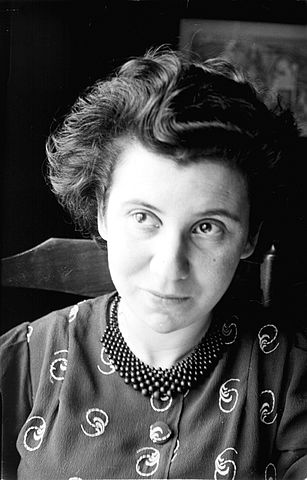
I think of Etty Hillesum who at the age of twenty-eight was murdered in Auschwitz. She became known to the world when her diaries were published under the title An Interrupted Life. The diaries reveal a heart that could not be sullied even by the evil she saw.Israeli author Aharon Appelfeld honored her in his preface to the Hebrew translation of the diaries saying she was one of those who “on the edge of the abyss, rise to become saint-like.” He compared her to Janusz Korczak, the director of a Jewish orphanage in Warsaw, who in 1942 declined an offer of sanctuary and accompanied the children to the Treblinka extermination camp.

We too stand on the edge of an abyss. We are in the midst of turbulent changes that will transform Europe and the world as we know it. Just as Etty and Janusz and the woman who wrote the note in Ravensbruck  couldn’t see into the future to understand the full horror of World War II and what lay beyond it, neither can we from the vantage point we have now comprehend the transformations in society the world is undergoing or where it will lead us as a human family.

3 ways to keep love alive in violent times

I want to offer three ways to open our hearts, soften our hearts, live with hearts set on fire with the love only God can give us. These three suggestions I have culled from the diaries of Fr. Christophe Libreton, the youngest of the seven Trappist monks assassinated in Algeria by terrorists in 1996. Their story has been dramatized in the film Of Gods and Men, and Christophe’s journals have been published in the book Born from the Gaze of God.

1. In each Eucharist we celebrate the victory of the Living One over against those who kill.

When his two friends Henri and Paule-Hélène were killed by the Islamic terrorists in Algiers a year before his own assassination, Christophe wrote these words in his journal on May 29, 1995: “After the murders of Henri and Paule-Hélène, our Christian community is marked, just like the people at large, by this shed blood—shed unjustly by the assassins and quite often courageously offered by their innocent victims. And then there is the blood of Christ, which gives life and offers us communion in eternal life…. In each Eucharist we celebrate LIFE: the victory of the Living One over against those who kill. This celebration overflows into a service of charity, exercised by each one according to the measure of his gift of faith: ‘caring for all life, and for the life of all’” (page 158).

The heart’s capacity to open outward in love flows from the victory of Jesus Christ over sin and death.

A way to keep your heart open:

At Mass we live already what the world will become when the Kingdom of God arrives and the will of God is done on earth as it is in heaven. Give as much time or more to prayer, the Mass, and Eucharistic adoration as you give to following and discussing the news.

By sharing life, giving life, sacrificing ourselves for the life of all, in whatever way you can, you overcome the power of death at work in the world with the power of love.

2. Open your heart for we belong to each other

In his meditation on March 11, 1995, Christophe reflected on the Gospel reading of the day: “I say to you, love your enemies and pray for those who persecute you, so that you may be sons of your Father who is in heaven; for he causes His sun to rise on the evil and the good, and sends rain on the righteous and the unrighteous” (Mt 5:44-46).

Christophe recorded his thoughts in his journal: “What’s at stake is love: non-exclusive, unlimited. Excessive love. Prayer for those who kill people (they haven’t threatened us explicitly yet, despite the arms they undoubtedly were ready to use against us) sustains our relationship with them. It also disposes us interiorly and identifies us as sons of the Father with regard to brothers who are also his beloved sons” (page 144).

These are hard words to hear, even more difficult to live. My heart wants to scream out No, I will not love a murderer, I will not love a perpetrator of war.

I, however, will only be truly human when I can love with an unlimited love that can embrace even the bad guy. It goes against all logic to call a murderer brother. We humans so want to charge the guilty, to dismiss them to the shadows of punishment where we no longer have to think of them again.

Fr. Christophe’s words are reminiscent of Mother Theresa’s admonition: “If we have no peace, it is because we have forgotten that we belong to each other.”

A way to keep your heart open:

Every snippet of news is a call to enter into the lives of our brothers and sisters. Whenever you see the headlines of news on the internet, television, or social media, whisper a prayer for everyone involved. Be honest with Jesus about what you are experiencing and feeling in the face of the tragic event, and plead with him for all of those who are affected. You could use words such as these: “Jesus, I am angry about this. What is happening makes me nervous about the future of society and the world. I worry about my own family. About the future. But right now, I beg you to send your angels to comfort the victims, to hold in your powerful care all those who are suffering from this. And yes, Jesus, this is hard for me, but I ask you to have mercy on the one who did this. Stop him. I pray that peace may be restored. Through your divine mercy change his heart. Help us all. May your Kingdom come. And, Jesus, I pray that this person who has created this tragedy may be with me in heaven. Father, we both are your children. Have mercy.”

You could pray the rosary, or favorite novenas or litanies for particular individuals or groups suffering in the world today.

3. Rest your head on the heart of Christ

Christophe looked out onto a world where there seemed to be no future in sight, where everything possible for peace was blocked, where there seemed to be nothing and no one that could stem the tide of violence. The monks at Tibhirine were becoming increasingly aware that this violence would also one day snuff out their own lives.

Yet as Christophe struggled with the thought of his own death, as he grew in trust of God’s providential care even in the midst of the evil all around them, his began to undergo a transformation of heart, almost a transplantation of heart, so that Christ’s own heart on the cross replaced his human and faltering heart. In time he no longer feared for his own life. He wrote at the end of 1994, “Ah, if dying could stop and prevent the death of so many others, then I would gladly say: Yes, I volunteer” (page 128).

Just today I read the account of drivers who are going into the war zones in Ukraine to bring humanitarian aid and to ferry out civilians who are stuck in cities now demolished by constant missile attacks and artillery fire. These individuals run into the danger because they know there are women and children who can’t save themselves and who need someone to bring them out. Many of those left are the elderly who need to be carried from their homes. It is in times of trial that we discover truly who we are becoming.

In his journals, Christophe includes quotes from various sources he was reading in those days. I have been greatly moved by this selection from Father Lev Gillet, speaking about the Apostle John who alone remained on Calvary with Mary Jesus’ mother:

… “ ‘The only one who remained standing in the hour of affliction was the one who, the night before, had bent his head to rest it on your breast’ (Father Lev Gillet, Un moine de l’Église d’Orient [“A Monk of the Eastern Church”], by Élisabeth Behr-Sigel, Éditions du Cerf, p. 311). I want to rest my head on you….”

What did the apostle John hear as he rested his head on Jesus’ chest? He heard the beating of a Heart overwhelmed with love, a great love, greater than any love ever known on earth. It was the beating of the Sacred Heart of the Savior of the world who would shortly give his life for this youngest Apostle and for all of us. Because the beating of that heart remained in the apostle John’s memory, because he had, in a certain sense, synched the beating of his own heart with that of the Sacred Heart, John could stand beneath the cross, where his Lord and Master died in an act of atrocious violence. John could stand there still loving, remaining in love, abiding in love, in that love that flowed from the Heart of Jesus. He saw how Jesus loved through it all.

A way to keep your heart open:

Give your life to others in an ever-growing divine love. No doubt, in some way, you are already giving your life, putting yourself on the line for others. It may be for your family, those you care for in ministry or career, elderly parents…. We can serve others for many reasons: it’s a good job, it’s what is expected of me as parent or daughter, it makes me feel like my life has meaning, it puts the dinner on the table, it’s what I always wanted to do in life…. None of these are bad reasons for giving of ourselves to another. However, this moment in history calls us to something more, to a love that is greater. At this moment raise your intentions to the supernatural level. Resolve to serve because you love. Resolve to serve because you care about the others. Resolve to serve even at the cost of your life. Resolve to love with the very love of Jesus who gave his life for us.

Greatness begins with the heart

Friends, we are living in times that call for greatness, and greatness begins with the heart. We can all begin right here, wherever we are, right now, to become giants in the love that beats in the heart of Christ.

Brother Luc, the medical doctor who served in the community where Fr. Christophe lived in Algiers prayed at the prayer of the faithful on December 31, 1993: “Lord, give us the grace to die without hatred in our heart” (page 25).

In the spirit and vision of Israeli author Aharon Appelfeld, may we “on the edge of the abyss, rise to become saint-like.”

O Lord, remember not only men and women of good will, but also those of ill will. But do not remember all the suffering they inflicted on us. Remember the fruits we have borne thanks to this suffering: our comradeship, our humility, our courage, our generosity, the greatness of heart which has grown out of this; and when they come to judgment let all the fruits that we have borne be their forgiveness.

Image Credit: Christian R. Rodríguez via Cathopic

How to know for sure God loves you (Horizons of the Heart 3)

https://www.podbean.com/media/share/pb-meymm-1246469

The grace we are asking of God: A deep confidence and a consistent trust in God’s care for us and his nearness to us in every moment, even in the events of our life that are our undoing.

Horizons of the Heart: Horizons of the Heart is a weekly retreat-in-life inspired by the Spiritual Exercises of St Ignatius, Donec Formetur by Blessed James Alberione, and my own notes from my thirty-day Ignatian retreat in 2022.

I love to pray Psalm 103, particularly with the translation of the New Jerusalem Bible:

Bless Yahweh, my soul,
from the depths of my being, his holy name;
bless Yahweh, my soul,
never forget all his acts of kindness.
….Yahweh is tenderness and pity,
slow to anger and rich in faithful love;
his indignation does not last for ever,
nor his resentment remain for all time;
he does not treat us as our sins deserve,
nor repay us as befits our offences.
As the height of heaven above earth,
so strong is his faithful love for those who fear him.
…As tenderly as a father treats his children,
so Yahweh treats those who fear him;
he knows of what we are made,
he remembers that we are dust” (vv. 1-2, 6-11, 13-14).

The day I meditated on this passage of Scripture at the beginning of my retreat, my soul was bleeding to know, truly know, that God cared for me, loved me, was near to me.

Did you ever ask yourself: What would it look like if God were caring for me? How can I know for sure?

God’s Love is forever (Horizons of the Heart 3)

The grace we are asking of God: A deep confidence and a consistent trust in God’s care for us and his nearness to us in every moment, even in the events of our life that are our undoing.

Horizons of the Heart: Horizons of the Heart is a weekly retreat-in-life inspired by the Spiritual Exercises of St Ignatius from my thirty-day Ignatian retreat in 2022. See an index for the whole series.

I love to pray Psalm 103, particularly with the translation of the New Jerusalem Bible:

Bless Yahweh, my soul,
from the depths of my being, his holy name;
bless Yahweh, my soul,
never forget all his acts of kindness.
….Yahweh is tenderness and pity,
slow to anger and rich in faithful love;
his indignation does not last for ever,
nor his resentment remain for all time;
he does not treat us as our sins deserve,
nor repay us as befits our offences.
As the height of heaven above earth,
so strong is his faithful love for those who fear him.
…As tenderly as a father treats his children,
so Yahweh treats those who fear him;
he knows of what we are made,
he remembers that we are dust” (vv. 1-2, 6-11, 13-14).

The day I meditated on this passage of Scripture at the beginning of my retreat, my soul was bleeding to know, truly know, that God cared for me, loved me, was near to me.

Did you ever ask yourself: What would it look like if God were caring for me? How can I know for sure?

It is a mystery for sure, but even more than that, it is mystical. The Lord then led me to another passage: Isaiah 49.

Sing for joy, O heavens!
    Rejoice, O earth!
    Burst into song, O mountains!
For the Lord has comforted his people
    and will have compassion on them in their suffering.

Yet Jerusalem says, “The Lord has deserted us;
    the Lord has forgotten us.”

Pause: have you ever thought that the Lord had deserted you? That he had forgotten you? What was happening? What was the final straw that brought you to this conclusion? What does being “deserted” and “forgotten” feel like? What does it make you think about yourself? About God?

God responds to Jerusalem:

Never! Can a mother forget her nursing child?
    Can she feel no love for the child she has borne?
But even if that were possible,
    I would not forget you!
See, I have written your name on the palms of my hands (vv.13-16).

Photo by Kyle Nieber on Unsplash

“See, Kathryn,” the Lord helped me to understand. “I carry you in the womb as does a mother.” A baby in the womb receives everything from its mother: life, form, food, growth, blood, development. Receives is the key word here. A pre-born baby is wholly receptive. To be held in the “womb of God,” is to receive from God, to become and come-to-be through the nurturance, love, and fidelity of the God who creates, sustains, and keep us in existence at every moment of our life.  

Inherent in motherhood is the desire to protect her children. A couple of weeks ago I listened to an interview of a mother who was first at the scene when an active shooter was reported at Robbs Elementary in Uvalde and ran immediately into the school to find her two children. Nothing could stop that mother from running toward danger to rescue her children. To save their child, a parent will race into a fire, risk their life in gunfire, throw a child to safety at the cost of their own life….

It is the same with God. His love is forever, surrounding us with walls of care. He sent his beloved Son Jesus to offer himself for our salvation, at the cost of his life. God, in a sense, ran toward us in our sin to save us, not considering the loss he would himself incur. The image of the father of the prodigal son in the Gospel of Luke is also an image of our heavenly Father. He ran toward his returning and repentant son who was returning after having squandered his inheritance, probably nearly half his father’s estate. Yet how his father loved him with that forever love that is the hallmark of God’s heart.

To be honest, however, we each suffer at the hands of others, some in lesser ways, others in greater. God’s love for us doesn’t necessarily magically preserve us from all pain, suffering and sorrow.

A mother and father who have truly grown wise through the sufferings of their own life, know that the moments of suffering, injustice, and challenge that their child faces may also be their most defining moments.

Anyone who saw the 2012 film For Greater Glory will recall the story of the teenager José Luis Sánchez del Río, the 14-year-old martyr who died defending the Faith when the Catholic Church in Mexico was being bitterly persecuted in the early 1900s.  He was canonized on October16, 2016 in Rome.

The Vatican website has this for Blessed José’s biography: 

José Sánchez del Río was born on March 28, 1913, in Sahuayo, Michoacán, Mexico. Wanting to defend the faith and rights of Catholics, he followed in the footsteps of his two older brothers and asked his mother for permission to join the Cristeros. She objected, telling him he was too young. “Mama,” he replied, “do not let me lose the opportunity to gain heaven so easily and so soon.”

On February 5, 1928, the young boy was captured during a battle and imprisoned in the church sacristy.

In order to terrorize him, soldiers made him watch the hanging of one of the other captured Cristeros. But José encouraged the man, saying, “You will be in heaven before me. Prepare a place for me. Tell Christ the King I shall be with him soon.”

In prison, he prayed the Rosary and sang songs of faith. He wrote a beautiful letter to his mother, telling her that he was resigned to doing God’s will. José’s father attempted to ransom his son but was unable to raise the money in time.

On February 10, 1928, the teenager was brutally tortured and the skin of the soles of his feet was sheered off; he was then forced to walk on salt, followed by walking through the town to the cemetery. The young boy screamed in pain but would not give in.

At times the soldiers stopped him and said, “If you shout, ‘Death to Christ the King,’ we will spare your life.” But he answered: “Long live Christ the King! Long live Our Lady of Guadalupe!”

Once he arrived at the cemetery, José was asked once more if he would deny his faith. The 14-year-old shouted out: “Long live Christ the King!” and was summarily shot.

Photo by Tom Barrett on Unsplash

Again and again, in the Scriptures, it is in the darkest and most dreaded moments that glory shines. Think of Israel on the banks of the Red Sea with the Egyptian army barreling down behind them. The parting of the Red Sea in the Exodus became the image for all time of how God himself saves his people not from their difficulties but through them. It is through death that we come to life.

Think of Judith and Esther and Peter in his betrayal of the Lord. Consider the persecution of the early Church, the martyrs, and the countless women and men who in every walk of life have bravely been carried by the power of God through the midst of the flames and have not been burnt. They have walked through the floods and not drowned. Their most painful moments became their glory through God’s power.

We may not be in a situation where we fear for our lives or are called to stand up for our Faith at the cost of martyrdom. At least not yet! What most brings us into the darkness and dreaded loss that threatens to break us apart are situations where we are “undone.”

We call these moments, the “carrying of the cross.” Jesus told us that to follow him we would need to take up our cross and follow him. To live with him in glory, we will need to die with him on the cross. How much we may want to avoid the cross: the consequences of failure, mistakes, being helpless before the injustice of others, having our plans or dreams unraveled by unexpected illness, job loss, financial burden…or pandemic, chain supply issues, or war in some other part of the globe.

Jesus says to us, “If you want to follow me disown your life, surrender to my ways.” I have been quite taken by the simple prayer of the humble Canadian religious Blessed Dina Bélanger: “Jesus, I love you. Have your way with my life.”

Photo by Christopher Sardegna on Unsplash

In the face of the myriad paths I could take in life, it is God who decides which alternative is of value to me and my life in the world. “Jesus, I love you, have your way with my life.” God is the one who knows whether a possible choice will make me more selfish or more selfless. “Jesus, I love you, have your way with my life.” God knows what things will lead me more to him and to become my authentic self. “Jesus, I love you, have your way with my life.”

I have to admit I have often bemoaned the losses of my life. Despite praying the Our Father countless times, it has taken me a long time to whisper to God, “Thy Kingdom come. My kingdom go.” I have focused on the clouds, on the cross, on the tears…surviving them, understanding them, growing from them. So patiently has the Lord waited for me to turn my eyes and heart to him. “Your Kingdom is all I want.”

I pray in trust to the One who knows and loves me more than I could ever know or love myself:

“…I have not immersed myself deeply in your glory. Forgive me. I have stayed on the surface where it is safe, where I can protect myself and manage my future. Now, my Father, I plunge myself into all your glory.

Take me in.
Take me deeper.
Assume me into you.”

“Thy Kingdom come. Thy will be done on earth as it is in heaven.”

Featured image: Photo by frank mckenna on Unsplash

The amazing promise of new beginnings (Horizons of the Heart 2)

The grace we are asking of God: A deep confidence and a consistent trust in God’s care for us and his nearness to us in every moment, even in the events of our life that are our undoing.

Horizons of the Heart: Horizons of the Heart is a weekly retreat-in-life inspired by the Spiritual Exercises of St Ignatius, Donec Formetus by Blessed James Alberione, and my own notes from my thirty-day Ignatian retreat in 2022. See an index for the whole series.

Beginnings are more important than endings. In fact, beginnings are already woven into every ending. The ending of the life the caterpillar has always known is already integrated into the process of the butterfly’s new beginning. The seeming ending of the Master’s life on Calvary was mysteriously taken up, and gently, in the Father’s hands, it became the stage for the mystery of resurrection beginnings that would be lived again and again and again in Jesus’ disciples’ lives.

“Why would you look for the living One in a tomb?” said the angels in white, angels of the resurrection whose radiance washed away the black sorrow of the ending of the Lord’s life on Calvary (Luke 24:5 TPT). The women who had come to seek the Lord buried in the tomb, locked behind a giant stone, dead, whom they feared they would see no more, these women faced the darkness of the sepulcher now lit with almost blinding brilliance. “He is not here. He is risen.”

“There’s no reason to be afraid” (Mt. 28:5). Pause a moment and think of an ending in your life that was particularly sudden, seemingly absolute. Or an ending you are living through now: termination, loss, failure. Any ending. One as great as the breaking of a relationship or losing a pet, or moving, or retiring. Or one as beautiful as the wedding of a child or the turning of a new leaf in life. Any ending.

Don’t endings bring on feelings of fear?

“There’s no reason to be afraid,” said the angel to the women. I’m not so sure that the command to not be afraid actually shifted their fear into trust. Nevertheless, it is helpful to remember that amid all our dread, struggle, the anticipation of an uncertain future, the uncertainty about what is happening, there is something permanent that is the reason why we needn’t fear…needn’t fear deep down, needn’t believe the absolute worst, needn’t believe that the ending is, well, an absolute and final and irrevocable end.

“I know you’re here looking for Jesus, who was crucified. He isn’t here—he has risen victoriously, just as he said! Come inside the tomb and see the place where our Lord was lying” (Matthew 28:5-6 TPT).

Proof! That’s what we need to really believe the end is not the final ending. Come inside and see where the Lord was lying and that he is not here anymore.

Come inside. We interiorly flee our endings. We can’t take the shame. The sorrow. The worry about the future. It is all too much. The apostles fled and they didn’t turn back. They forgot that the Master at whose side they had lived had words of eternal life. They couldn’t remember that just three days earlier he had said it was good that he goes and that he would come back. It escaped their memories entirely that he had prophesied that he would die on the cross and three days after rise again. The women, on the other hand, sorrowing and loving and deeply yearning for the touch of their Lord’s presence and the sight of his face once more did return. They returned to the tomb. To the place of what they believed to be the utter ending.

We need to return to the places of our endings if we are to discover the brilliant process and amazing promise of new beginning.

There is, however, the message of a different type of beginning that the women are entrusted with. They are given the mission to run to their devastated and hiding brethren and tell them this message: “I am going ahead of you in Galilee and you will see me there” (Mt 28:7). Galilee… The place where it all began. By the sea of Galilee, he had called Peter and Andrew, James and John to leave their boats and follow him. The sea of Galilee had been his first pulpit, and had seen his first conversion. (“Leave me Lord,” Peter had said, “I am a sinful man.”) Galilee was the place of the beginning of their relationship with him. A relationship now grown old and sagging from the sorrow of betrayal and the worn thin by the confusion of the last days. The ending.

Everything of those three years and the colossal failure of the arrest and death of Jesus was still there…
for them
for him.

…return to Galilee
to the beginning
to the call
to the promise

…return to the beginning to learn afresh to be LOVED and to LOVE.

I distinctly heard his voice in my heart on the first day of my retreat, “Come back with me, Kathryn, to the beginning.

To your call
To the promises I made to you at your baptism, at your profession

I am faithful to promises through endings and into new beginnings. You can’t see the new beginning as you bend and peer into what appears to be the tomb of your life. Just as the women at the tomb had to believe the angels of promise who proclaimed that the world had been made new by something that had never happened before, that someone had risen from the dead, you too must believe without seeing that I have a new beginning for you. Come back with me to the early days, the first love, the first profession of trust in me as I called you, the first experiences of my love for you, Kathryn. That love still stands, always stands, will forever stand unshaken.”

He is not there. You may not know where he is right now. You may not know what he has in store for your life. You may not know if you believe in new beginnings or even want any new beginning that you can’t see and be certain of and in control of so that you won’t be hurt anew. Because let’s be real….endings hurt.

The paradigm of Jesus, however, holds true in us. Whatever it is that robs us of what we had is not greater than the Father who has us in his hands. And our Father is the God of life who brings victory out of failure and life out of death. In our very endings, or what to us seems to be an ending, is already the beginning of the new life. All is shrouded in mystery except for the very clear promise: “I will meet you in Galilee.”

We will not see Jesus where we expect to find him, if we are certain that our relationship with God stands in shambles because of the endings that have left our lives so torn… If we are certain that Jesus looks at our lives the way we look at them…. Lives of endings and tombs and hopelessly no beginnings.

What is your ending?

Where do you see the beginning of something possibly, tentatively new living already within you?

Where is your Galilee? Where did you experience the Lord’s love for you? His call? His promise? His trust? Where did you see his eyes looking on you and hear his voice calling you his beloved? Return to that place. Return with him. Patiently. The Lord is unravelling the endings of your life and with the very colors and threads of the past will weave the new that will be your unending joy.

He promises that to you. So weep if you must. Tears heal and are so good for us to shed. But then bend down to look into the tomb, hear the promise, and follow Jesus back to the beginning where you will meet the Weaver of the indescribable beauty of all that is new.

The Amazing Promise of New Beginnings (Horizons of the Heart 2)

https://www.podbean.com/media/share/pb-cr4yq-123da78

Horizons of the Heart: Horizons of the Heart is a weekly retreat-in-life inspired by the Spiritual Exercises of St Ignatius, Donec Formetus by Blessed James Alberione, and my own notes from my thirty-day Ignatian retreat in 2022.

Beginnings are more important than endings. In fact, beginnings are already woven into every ending. The ending of the life the caterpillar has always known is already integrated into the process of the butterfly’s new beginning. The seeming ending of the Master’s life on Calvary was mysteriously taken up, and gently, in the Father’s hands, it became the stage for the mystery of resurrection beginnings that would be lived again and again and again in Jesus’ disciples’ lives.

“Why would you look for the living One in a tomb?” said the angels in white, angels of the resurrection whose radiance washed away the black sorrow of the ending of the Lord’s life on Calvary (Luke 24:5 TPT). The women who had come to seek the Lord buried in the tomb, locked behind a giant stone, dead, whom they feared they would see no more, these women faced the darkness of the sepulcher now lit with almost blinding brilliance. “He is not here. He is risen.”

“There’s no reason to be afraid” (Mt. 28:5). Pause a moment and think of an ending in your life that was particularly sudden, seemingly absolute. Or an ending you are living through now: termination, loss, failure. Any ending. One as great as the breaking of a relationship or losing a pet, or moving, or retiring. Or one as beautiful as the wedding of a child or the turning of a new leaf in life. Any ending.

Don’t endings bring on feelings of fear?

“There’s no reason to be afraid,” said the angel to the women. I’m not so sure that the command to not be afraid actually shifted their fear into trust. Nevertheless, it is helpful to remember that amid all our dread, struggle, the anticipation of an uncertain future, the uncertainty about what is happening, there is something permanent that is the reason why we needn’t fear…needn’t fear deep down, needn’t believe the absolute worst, needn’t believe that the ending is, well, an absolute and final and irrevocable end.

“I know you’re here looking for Jesus, who was crucified. He isn’t here—he has risen victoriously, just as he said! Come inside the tomb and see the place where our Lord was lying” (Matthew 28:5-6 TPT).

Say a Strong YES to Your Existence (Horizons of the Heart 1)

https://www.podbean.com/media/share/pb-zihmy-1237cc9

he most difficult thing about being a follower of Jesus Christ is not climbing mountains of virtue or even walking through the valleys of incomprehensible sorrow. No. As difficult as these things may be, there is one thing more difficult still. Strangely, it is something even a child can do. Something we were created to do. Yet we, caught in the complex web of adulthood, we, more sophisticated Christians so far from the simple childlike faith that pleases so much the heart of God, we find this one thing, I dare say, almost impossible. We can talk about it, pray about it, preach about it, encourage others to do it. However, to totally and completely do this ourselves is the most difficult. Though it is the deepest desire of the most Sacred Heart of Jesus to see this in us, we’d rather do everything else but this.

The first thing to which we are invited—nay rather pushed to risk everything we have in order to do—is this: to trust.

To trust that God knows my name. That God cares about me. That Jesus is speaking the truth when he says, “I love a single soul as much as I love all souls together.” To trust that God reveals himself to me daily, even in each moment, in every situation without exception. That I am loved as I am. This love that flows to us from God’s heart is the most basic and secure fact of my life….