

There are four lines—we could call them “words”—that are on the walls of every Pauline chapel in the world. They surround the Tabernacle. They are, for me, the roadmap to contentment no matter what life throws our way.
By the time I was 28 years old, I had read them, while I was in the chapel to pray, at least…let me get out a calculator…at a minimum 10,000 times. Every day, at least twice a day, for the thirteen years I had been in the community of the Daughters of St Paul….
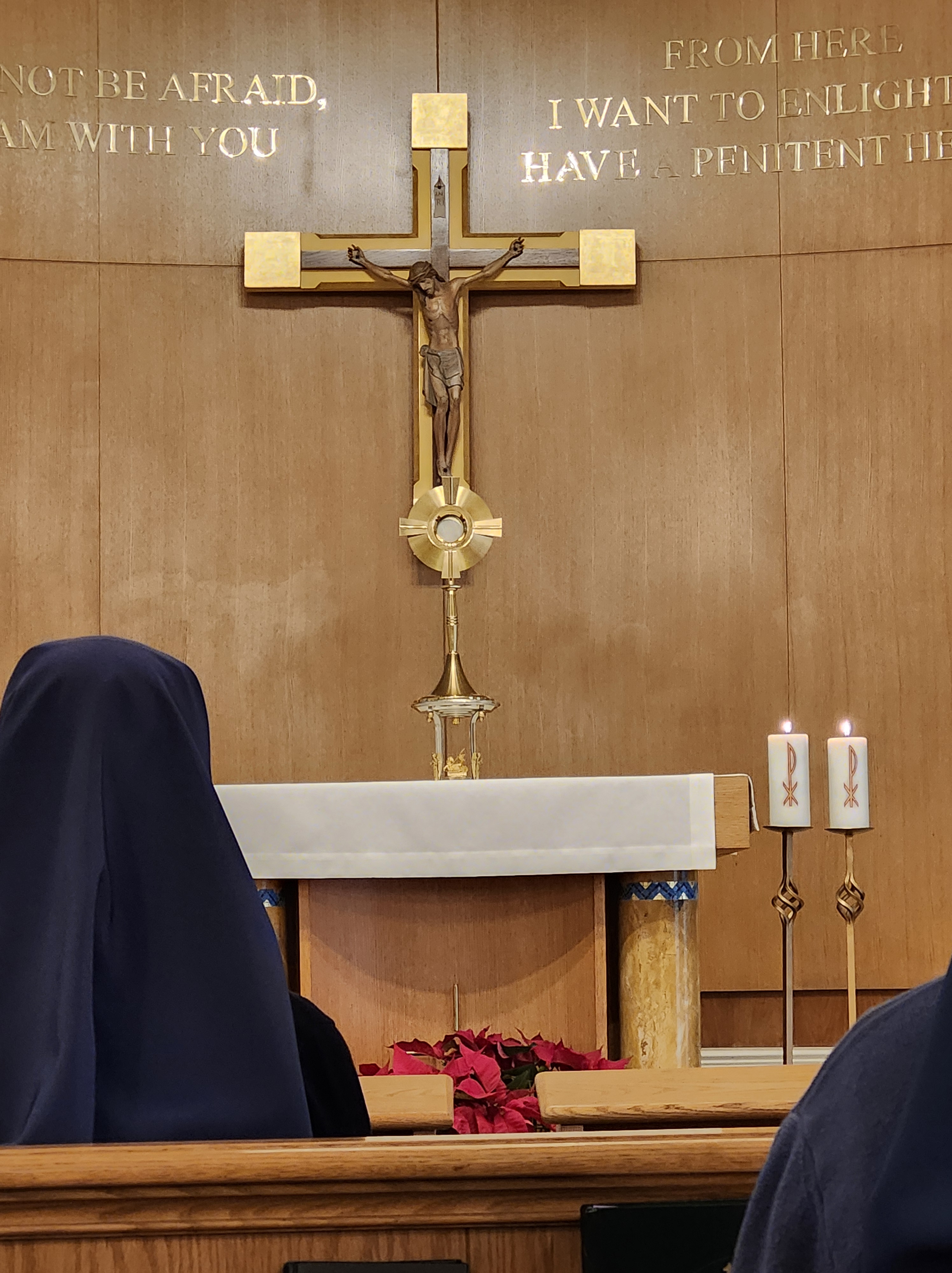
These words are one of the first things you see after you enter the Daughters of St Paul. They become a path into the charism as you learn more about the heart of James Alberione to whom Jesus spoke these words in a moment of crisis. They become, over the years, a key to understanding your own life as it unfolds.
Do not fear.
I am with you.
From here I will cast light.
Be sorry for sin (this phrase is also translated: Live in continual conversion).
Breaking these down into “words”:
- Fear
- I AM
- Here
- Continual
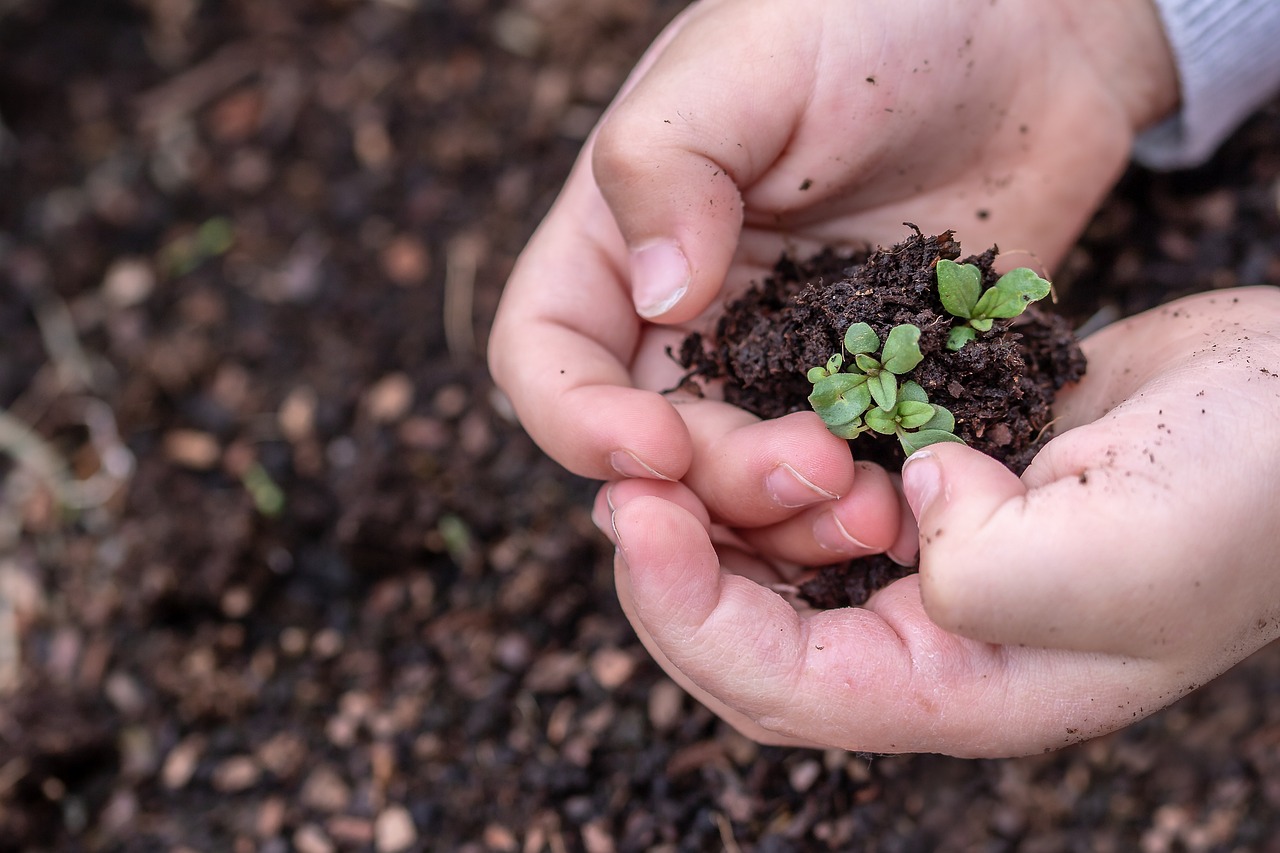
A seed is planted
It was just a few short years after my perpetual profession. I was driving to the hospital a sister, an elder sister of the Carini family, who had been a Salesian all her life. This woman religious had been a Salesian provincial superior simultaneously with Sr. Mary Celeste Carini, who had been the provincial superior of the Daughters of St. Paul (and, actually, the first vocation from the United States).
I remember at that time my heart was fragile as it tried to make sense of community dynamics I felt unprepared to navigate. As we crossed Route 9 in Brookline on the way to St. Elizabeth’s Hospital to visit Sr. Mary Celeste, she said words I’ll never forget: “Every day of my life has been more beautiful than the one before.”
I almost choked.
I was silent.
What? I wanted to cry out! How can you say that, after 60 years of religious life!
Unfortunately for me, I said nothing, and missed the opportunity to learn something more of her story and wisdom. I am grateful, however, that I tucked that piece of wisdom from one of my older sisters into my heart, planted it there, so to speak, where it worked its way deep into the soil, sprouting roots. I returned again and again over the years to sit beside the tiny seedling as it offered new shoots and abundant blossoms.
I was on a quest
You see, I was, in my late twenties, on a quest. I borrowed Butler’s 4 Volume Lives of the Saints from the library, and at night read through the story of every saint who had been a religious. It took me several years.
What did I learn? Every one of them suffered something in their community at the hands of some member—every one without exception.
We can think of John of the Cross, imprisoned by his brothers and yet the writer of Dark Night of the Soul and Ascent to Mount Carmel, and for centuries now the premier guide to contemplative prayer and the journey to holiness.
Or Saint Thérèse Couderc, foundress of the Cenacle Sisters, who was removed from her position as Foundress and Superior, falsely accused of mismanaging funds, sent far away from the motherhouse, and set to doing, basically, yard work and taking care of other hidden responsibilities. What prompted this? A priest decided he was in charge and put a newly received novice as responsible for the community (since she had money-connections). Thérèse Couderc had an understanding of life with God, which she sums up in a phrase: “the surrendered soul has found paradise on earth since she enjoys that sweet peace which is part of the happiness of the elect. …To surrender oneself is to die to everything and to self, to be no longer concerned with self except to keep it continually turned toward God.” This story is not that different from that of Saint Jeanne Jugan, foundress of the Little Sisters of the Poor, and Blessed Marie Ann Blondin, foundress of the Sisters of Saint Anne….and others.
Actually, we could say, in religious life there seems to be quite a lot to “fear.” Religious communities are not immune to the misunderstandings, agendas, jealousies, and injustices that can plague individuals in any relationship or group. After all, we too are still very much on the way, as yet unable to see with the eyes of Christ and to live with the open-hearted love of Christ that gives itself away without expectation of return. We are also very much trying to live, as Saint Paul teaches us, in continual conversion.
So, when Jesus is saying to me as a Daughter of St. Paul, “Do not fear,” is he saying, “Don’t feel afraid?” “Have no fear?” “Be strong!”
I think Jesus is saying that no matter what happens, nothing and no one can separate me from his love for me and his plan for me to be part of his mission for the salvation of the world.
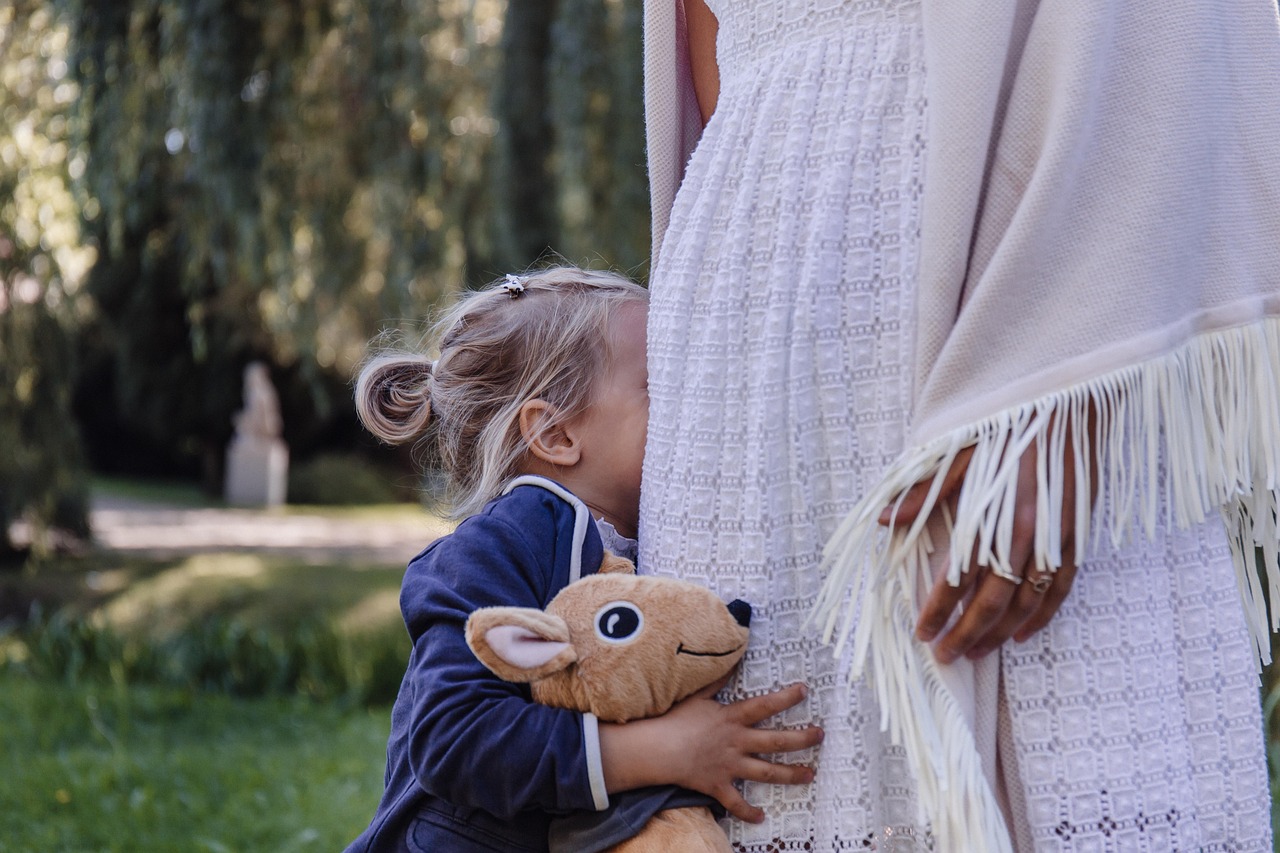
After watching moms in our Alexandria Pauline Book Center, I like to think of this word “fear” in the context of a little child. When a child is frightened by something, it runs to its mother, stretches her little arms around her mother’s leg and buries her face, hiding herself, she naively believes, from all that frightens her. And the mother doesn’t say, “Be strong. Why are you afraid? I’m so ashamed of you!” Instead, her heart melts that her child trusts her mother to protect and guide her through the scary moments that are a part of growing up. She reaches down to be with her child. She permits her those frightened feelings while at the same letting her experience security and comfort in her presence.
“Sacrifice was never a matter of surprise”
Thinking of “childhood,” I am reminded of these words of Saint Thérèse of Lisieux, who describes her early months and years in Carmel in this way:
I found the religious life just what I expected, and sacrifice was never a matter of surprise. Yet you know well that from the beginning my way was strewn with thorns rather than with roses.
In the first place, my soul had for its daily food the bread of spiritual dryness. Then, too, dear Mother, Our Lord allowed you, unconsciously, to treat me very severely. You found fault with me whenever you met me. …
On the rare occasions when I spent an hour with you for spiritual direction, you seemed to be scolding me nearly all the time, and what pained me most of all was that I did not see how to correct my faults: for instance, my slow ways and want of thoroughness in my duties, faults which you were careful to point out.
One day it occurred to me that you would certainly prefer me to spend my free time in work instead of in prayer, as was my custom; so I plied my needle industriously without even raising my eyes. No one ever knew of this, as I wished to be faithful to Our Lord and do things solely for Him to see.
… And yet, dear Mother, how grateful I am to you for giving me such a sound and valuable training. It was an inestimable grace. What should I have become, if, as the world outside believed, I had been but the pet of the Community? Perhaps, instead of seeing Our Lord in the person of my superiors, I should only have considered the creature, and my heart, which had been so carefully guarded in the world, would have been ensnared by human affection in the cloister. Happily, your motherly prudence saved me from such a disaster.
And not only in this matter, but in other and more bitter trials, I can truly say that Suffering opened her arms to me from the first, and I took her to my heart” (Story of a Soul, Chapter VII)
Today I am in my early sixties, and much to my surprise, my heart resonates with the contentment of those words shared with me so many years ago by a woman religious faithful to her vocation: “Every day my life has become more beautiful!” What I couldn’t understand, or hardly believe, forty years ago, I know now, so gratefully, to be true.
I’m no John of the Cross, Marie Anne Blondel, or Saint Thérèse. But my heart has quaked many times as I’ve navigated, while living among my sisters, what it is to entrust myself to them and to God, even in moments of fear, loss, and pain. And I haven’t always done it well. Maybe it is because Saint Paul himself was no stranger to these circumstances—he paints them in broad strokes across his letters in the New Testament—that we his Daughters still seek together to live in reconciliation, even as the earth below us seems sometimes to quake, returning again and again to mercy and to love.
All Sinners Welcome!
It is true that Saint Paul defined charity as patient and kind and not puffed up. It isn’t ambitious and doesn’t seek its own benefit. Perhaps these words brought forward a memory of his own, the days when he violently attacked the followers of the Way—without patience or kindness, in arrogance and ambition and for his own benefit. He continues, then, sharing what deeply had come to fill his life as both giver of charity and recipient of the charity of others: Charity keeps no record of wrongs. Charity bears all things. It believes all things. It hopes all things. It endures all things… (1 Corinthians 13:4-7).
I am reminded of the confessional in the old Cistercian monastery founded in Otterburg in the early 1160s which proclaims in a metal sign above the door: “All Sinners Welcome!” That is, if you’re a sinner, “You’re one of us – you belong!”
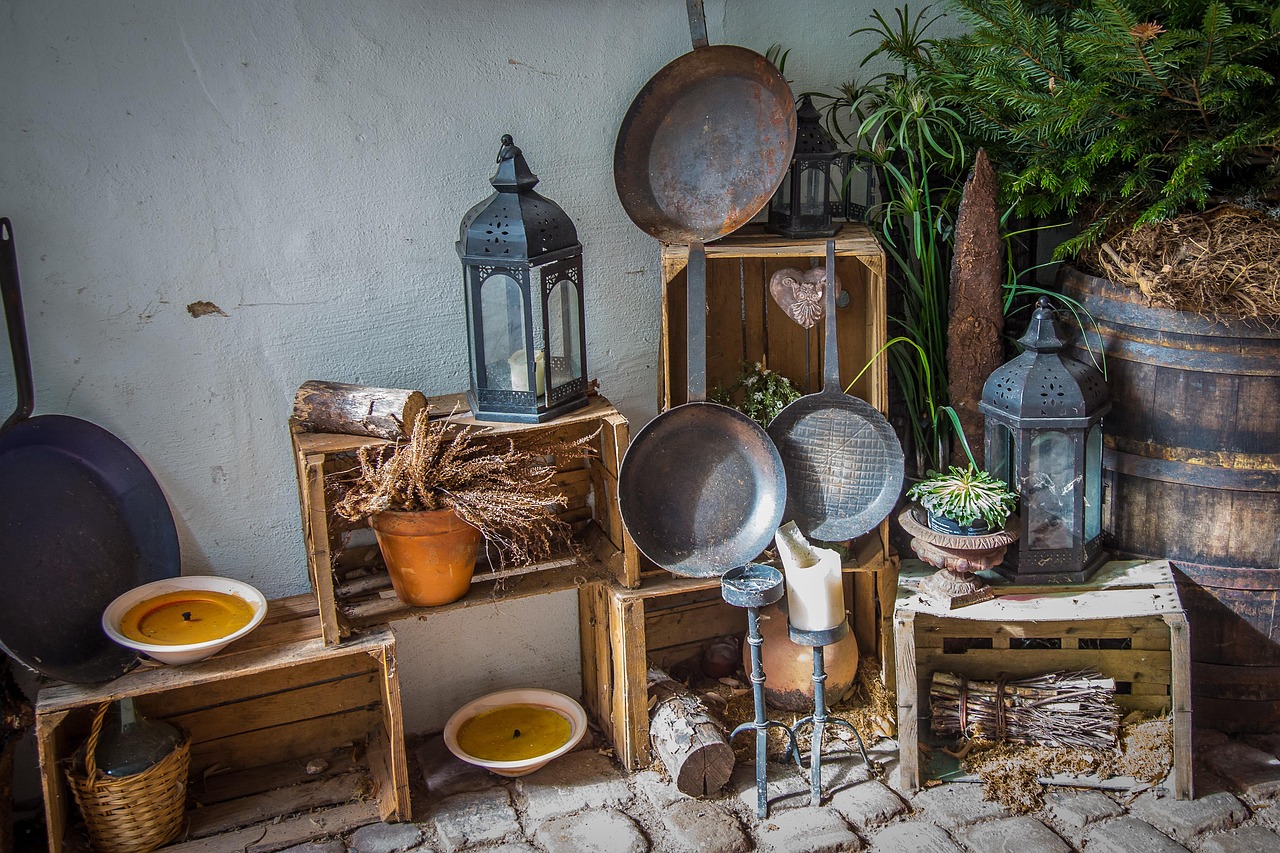
Sinners: we could define sinners as masterpieces that aren’t yet finished. Saints still in the making. Those who fall and rise and fall and rise. Those still unaware, weak of will, tepid in love. That is, all of us in one way or another. John of the Cross used to say that we act as sandpaper upon each other. We receive a spiritual refinement through what annoys us in others. Or Mother Thecla Merlo, our co-foundress, who reminded us that we are like pots and pans on a wagon. As the cart moves along we bump and bruise, scrape and, every now and then, break one another. I have been bumped and bruised and have bumped and bruised others. And I have forgiven and been forgiven, and tasted the honey of reconciliation (Colossians 3:13).
I didn’t enter religious life expecting a playground, although I was most certainly naïve about what life in a convent would be like. Even those who are engaged, discover after a few years (or months) of married life it isn’t always fair. It isn’t always what you dreamed of. It certainly isn’t easy. That the only way to make it work is for each to give 100%. And those who set out to do something valuable for the world in a chosen field or career path know that perseverance takes blood, sweat, and tears, amid lots of work, setbacks, and occasional breakthroughs.
But, as a person perseveres, they discover it is beautiful.
I promise you, as the years go by and you reap the fruits of the harvest, it will be very beautiful.
This is the first of what will be four articles on the words that are Jesus’ roadmap to contentment.
Prompts to take to prayer and share with others:
- How do you react when you hear the words: “In my experience, life has been more beautiful every day.” When you hold these words, what memories and images and feelings emerge? Can you bring these to Jesus with gentle compassion? What does this part of your life need from you right now?
- Have you ever experienced a time of crisis that ended up being an unexpected gift?
- Are you still suffering the burden of loss and pain in relationships or life circumstances? In what ways can you see yourself in the stories in this article?
- Talk to the Lord about what you most desire.

 Touching the Sunrise