The image that has drawn me in my ministry is Touching the Sunrise. I believe each person, no matter where they are and what they have lived, is a temple of the Trinity and can, indeed, taste the presence of God within. You can find resources for healing and prayer and follow me at touchingthesunrise.com.
The grace we are asking of God: a deeply felt awareness of how God draws us into the unfolding of the mystery of the Word made flesh and how in doing this we enter into a process of healing that we might love Jesus and follow him more intentionally.
Horizons of the Heart is inspired by the Spiritual Exercises of St Ignatius and my own notes from my thirty-day Ignatian retreat in 2022.See an index for the whole series.
If you could live your deepest vision for yourself, if you could take up the dream you have for your life, what would that look like?
This is a question we are often asked in a secular forum. If you want to plan your life, your day, your career, you need to know who you are and what you want. Otherwise, there is no planning, there is no starting, there is no arriving. However, when we ask these questions in the context of gospel contemplation and the spiritual horizon of our life the purpose and process are somewhat different.
If you could live your deepest vision for yourself, if you could take up the dream you have for your life, what would that look like?
Other questions you might begin to reflect on in a space of deeper prayer or simple being in the presence of the goodness of God could be:
What images give you life?
What pictures, stories, events of the past have remained with you like a mysterious clarion call to something different? Perhaps these arouse your curiosity. They might might strengthen your willingness and your love, or you could realize that they seem to trigger inner resistances of which you were not previously aware.
What are the values, goals, ideas you have had about the good life that have sustained you to this point? Are these shifting? If so, why do you think this is happening now and not at some other time?
What are situations of abandonment, failure, manipulation that may have influenced who you have become to this point in your life? Do you desire something to be different? Why?
You may wish to take some time with these questions, reflecting and journalling about them over several days. Ask the Holy Spirit to guide you, to sanctify your memory, to open your heart, to fortify and sustain your will.
Notice: What surprises you? What challenges you? What frees you?
Horizons of the Heart is inspired by the Spiritual Exercises of St Ignatius and my own notes from my thirty-day Ignatian retreat in 2022.See an index for the whole series.
The grace we are asking of God: a deeply felt sense of trust in how God draws us into the unfolding of the mystery of the Word made flesh.
Entering Prayer
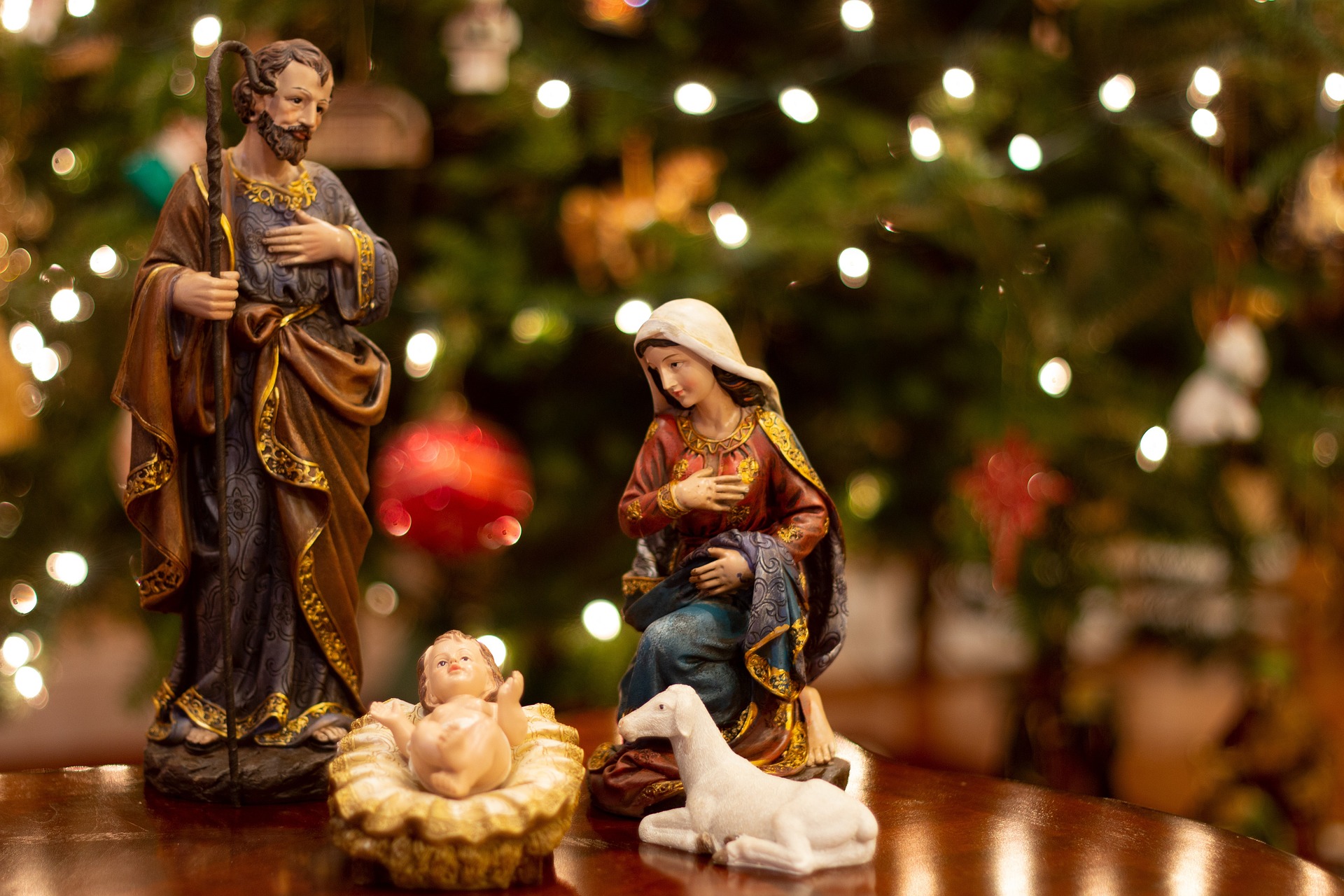
“O Holy Night!” It is one of the most beloved of Christmas hymns, immortalizing the “night” of the birth of the Savior. I must admit that for all my life my favorite hymns for the season of Christmas are the ones that talk about the night, the moment, in which the Son of God appears in the lowly and poor space where animals are kept in the city of Bethlehem. Like the manger scenes so typically depict, there is Mary and Joseph gazing with love on the Child. A snapshot in time reminding us of the most miraculous and momentous moment of history. “O Holy Night!”
“He whom God manifold to prophets hath foretold Lies there a Child. Lies there a Child” (from the hymn Holiest Night).
“Wonder of wonders, Myst’ry of mysteries, Upon the heart of the young Virgin Mother Rests the Maker of all the world” (from the Italian hymn Sleep on, Little King, Ninna Nanna).
This Christmas, however, something was different. Some welcome days of vacation meant I had extra time to pray, to ponder, to read, to wonder, and even to wander. My heart came to rest at last as I gazed on the crêche a few feet from the first pew in our chapel in our Motherhouse.
The figures of Mary, Joseph, Jesus, the Shepherds, and the Magi were no longer frozen in time, appearing for one holy night’s event that would be remembered and recalled year after year. They were suddenly for me real people with real lives who made real journeys in response to this most sacred event in the history of the world.
Sit next to Mary as she rests in the stable while Joseph takes his turn to watch their Child who is the Son of God. So young is she, and yet so suddenly mature, responsible, surrendering to the Provident care of God, yet cherishing her firstborn son with the evident concern of any new mother. Feel the prickly straw that provides the only place to lie, where the blessed Mother and Son in poverty rest. Notice the fatigue. Peer into the darkness outside and wonder when you will be able to travel home with such a young child? Feel her loneliness as she rested so far away from her mother and neighbors on this most important holy night of her life. Let your heart feel compassion for Mary. Perhaps bring her some water or a bit of food. Tell her that she can sleep a little while you and Joseph watch over her newborn baby.
Before this night, before the moment when the Archangel Gabriel had visited her, Mary had been but a child herself. Her life had been unfolding in one direction as a “virgin betrothed to a man named Joseph.” Things had been easy in those days before “The angel Gabriel from heaven came, / his wings as drifted snow, his eyes as flame; / “All hail,” said he to meek and lowly Mary, / “most highly favored maiden” (from the hymn The Angel Gabriel from Heaven Came). And yet her answer: “To me be as it pleases God,” not only set her life in a new direction. The intervention of heaven into her life made it possible for Mary to become who she was meant to be: God’s Mother and ours, the Queen of the Universe and Gate of Heaven.
There is no photographed moment of Christmas joy from that first holy night, only lives transformed by unexpected vocations and challenging manifestations of God that directed people onto new paths for which there was little preparation. Mary and Joseph both had to prepare themselves for a life they had not anticipated, but a life lived in response to the angel’s message from the Throne of God: “Do not be afraid. This is what will happen. And this is what you will do….”
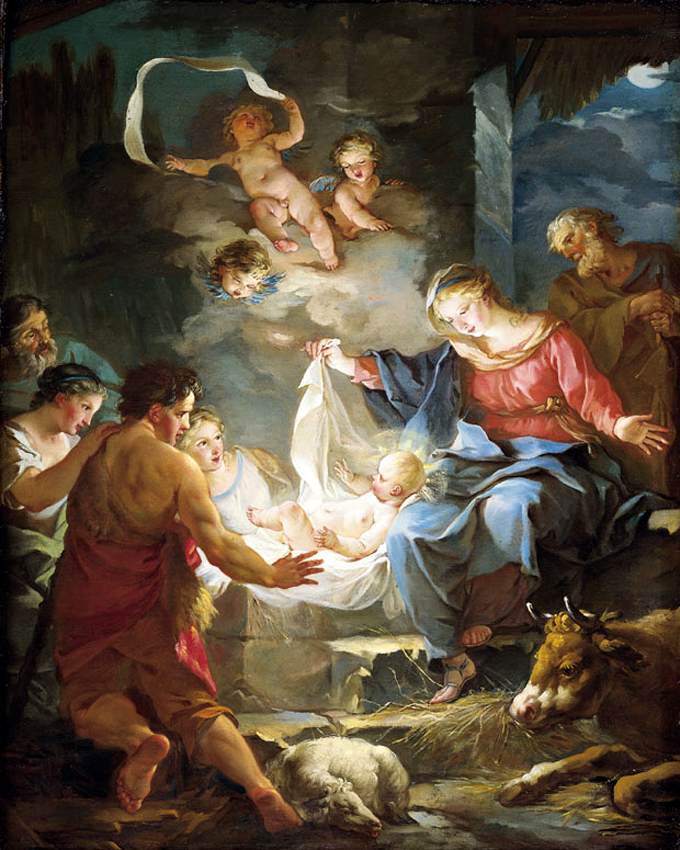
Jean-Baptiste Marie Pierre, Public domain, via Wikimedia Commons
Even the sleepy shepherds found their slumber and night watch interrupted by angels. In an instant they were no longer the lowest outcasts of Bethlehem, but had become the first messengers and apostles of the good news of the birth of the King of Kings. The Wise Men in their rich robes suddenly realized that their destiny was to take a very long journey in search of an unknown King who had been born somewhere in the land of Israel.
Take some time to reflect on what even one of these persons is going through as their life is upended by the Almighty and they are precipitated into unknown futures where all they have is their trust.
Imagining the Gospel Events in the Present
The quiet days of reflection that were woven into my Christmas season were welcome days of unwinding and interior relief. As I reflected on the ways my life has recently been upended and redirected into unexpected directions, I resonated with the attitudes and feelings and interior heart-spaces each of the people in the crêche before me.
And you? Have your middling years seen a surprising transformation of life form? Does it resemble the Christmas journey of Mary or Joseph, with the clarity of heaven’s clarion call? Or the wonder and simplicity of the shepherd’s search for what the angels had announced? Or is it long and convoluted and messy like the Wise Men from the East who unwittingly got caught up in the machinations of a jealous Herod?
Observe Attractions and Resistances
Enter again, as you are drawn in prayer, with quiet rest and sensitive attention into the inner world of one of the figures that make up the Christmas story.
Observe their actions, words, emotions, sensitivities, attitudes. To which of them you feel more attracted. Which of them arouse more negative feelings or resistance? Return to aspects of these meditations that seem more personally meaningful.
Entering the Mystery of the story
As you begin to enter the mystery of the story more deeply, you will begin to see or hear or touch. You will enter into the event and interact more deeply. Little by little you will become more present to the mystery and the mystery will be present to you.
Moving through deepening levels of stillness
As your contemplative prayer deepens, you will be open to being affected deeply by Jesus’ Spirit at both conscious and less-than-conscious levels of your being.
It may move you gradually through deepening levels to stillness. You may find yourself just there, totally involved—seeing, hearing, touching, smelling, tasting. It is almost as if the experience has gone into slow motion, and time passes as one is present to the Beloved and the Beloved to oneself. One is there; Jesus is there. The mystery is there. No words are necessary and no great thoughts need to surface. This is the experience of “O taste and see the goodness of the Lord.”
Desiring to follow Jesus
As I become more and more involved in the event of Jesus’ mystery that I am contemplating, my life and my choices are affected. I find myself changing and desiring to change. I begin to follow Jesus in a particular way.
As you contemplate more deeply, as you soak in these mysteries of Mary’s motherhood, where do you observe emotions or reactions like fear, guilt, resistance? Do any memories become more present to your awareness? How do you feel drawn toward something new? Speak to Mary, Joseph and Jesus about what you observe and experience. What do you begin to learn about your following of Jesus?
Conversing as with a friend
Continue in quiet—or even silent—intimate conversation with Mary, Joseph and Jesus. Ask them what is the grace that you should be praying for. Beg this grace of the Father. Then beg this grace of the Son, your Savior and Shepherd. Finally, beg for this grace from the Holy Spirit who is the source of all holiness.
If you wholly lived this grace that you are begging for, what would your life look like? Your relationships? Your prayer? The way you work? The way you love? The way you serve? What about you would make you the most happy?
Ask Mary, Joseph and Jesus to show you one specific gift they wish to give you. Receive it and remain in stillness and quietly relaxed presence under the influence of the Holy Spirit.
Reviewing the graces of prayer
When you finish praying, write down the main gifts and discoveries from this time of intimate contemplation. What is one concrete thing you can do to solidify these gifts in your life.
But to those who did accept him he gave power to become children of God.
We are on the threshold of a new year yet still in the midst of the celebration of the birth of Our Lord, the Word made Flesh, God-with-us, Jesus, Prince of Peace and King of Kings.
These days around Christmas and New Years are often punctuated with more than the usual religious observance. Those who never come to Church except at Christmas have been flooded with the light of the Star and the radiance of the Child’s face, perhaps without even being aware that what they so deeply long for has been bestowed on them as a gift. Those of us who celebrate the Eucharist more often, or even weekly, have somehow had our hearts moved by the telling anew of the story that God so loved us that he chose to reach into our lives, to intervene in the history of humanity, in order to claim us as his children, to lift us to his very throne. At Mass we have lifted up our hands as beggars to receive the Bread of Life by which Jesus makes us “parkers of the divine nature.” It is Peter who says, “His divine power has granted to us all things that pertain to life and godliness, through the knowledge of him who called us to his own glory and excellence,by which he has granted to us his precious and very great promises, so that through them you may become partakers of the divine nature, having escaped from the corruption that is in the world because of sinful desire” (1 Pet. 1:3-4).
But to those who did accept him he gave power to become children of God.
To “accept him” implies that someone else has given us something—or Someone—and we have the choice of receiving this gift. Every Advent-Christmas Season we take time to ponder and wonder at how God has chosen us before we have chosen him. How foolish are we who act as though we possessed the higher authority to tell God whether he was acceptable to us or not! No. We who were completely unacceptable were received by God by a free act of his mercy. We would have no place in the house of God without the decision of God in our favor, a decision that was made without any merit of our own. St. Ignatius of Loyola in the Spiritual Exercises instructs the retreatant to imagine the Trinity looking out over the world and seeing the rampant corruption, sinfulness, vice, and rejection of the God on whom they depend for their very life. I imagine the Father speaking to the Son the pity in his heart: What can we do? What shall we do? How can we help them? And thus the Son comes willingly to this earth so that he might lift us up on his shoulders from the mire of our death-creating choices to be seated in glory on God’s throne.
But to those who did accept him he gave power to become children of God.
St. Paul says so wisely: “So then, if anyone is in Christ, he is a new creation; what is old has passed away—look, what is new has come!” (2 Cor 5:17 NET).
Christmas reminds us, as does the Prologue of John read at Mass today, that God’s love to us is completely unmerited, often unsought, sometimes not accepted. Yet God year after year reminds us of his free choice for us, his marvelous gift, his magnanimous generosity to shower upon us grace upon grace.
I like to think of Christmas as a rehearsal for our performance in the upcoming new year. At Christmas we rehearse in a sacred season what we shall live out in the more profane spaces of our life.
God chooses us and we learn to choose for others in love and self-sacrifice in the world.
God comes to us in the vulnerability and humility of a Babe, and we find the courage to proclaim and to live the beauty of virtues that have been rejected by the society around us.
God lifts us up and we find ourselves seeking ways to lift the world around us, the people, nature, media, so that others might one day receive, might accept, what we have been so extravagantly given, we who do not deserve such generosity.
And finally, with our eyes shining with the radiance of the Star and the beauty of the Child’s Face we proclaim that there is more to life than what we see around us, what impinges on our wellbeing, what threatens our futures. God cares. God is here. God gives himself to us that we might be saved even from our very selves. And that is why today we say both Blessed Christmas! and Happy New Year!
“Which is the more awesome mystery, that God gave Himself to earth, or that He gives you to heaven; that he Himself enters into the society of carnal beings, or that He admits you into the fellowship of divinity; that He takes death upon Himself, or that He rescues you from death; that He Himself is born into your state of bondage, or that He begets you as His children; that He accepts your poverty, or that He makes you His heirs, and coheirs with Himself alone? Surely the more impressive mystery is that earth is transferred to heaven, that man is altered by divinity, that the bondsman acquires the rights of dominion.” (St Peter Chrysologos)
Immediately following the birth of the Word made flesh, we begin to hear of the clouds of rejection and death that will surround Jesus his entire life: the death of the Holy Innocents, the rejection of his own people at Nazareth, and in the liturgy the feast of St Stephen, the first martyr. Jesus came to us to pass from a visible life to an invisible one, from walking at our side to abiding within us, from preaching in Israel to whispering secretly in the souls of everyone throughout the world always and for all time. Our humanity has been taken up in his divinity. It is in the Eucharist, that gift given to us on the night before he died, that Jesus continues his life on this earth, in us, through us, for us, for the world.
“Surely the more impressive mystery is that earth is transferred to heaven, that man is altered by divinity, that the bondsman acquires the rights of dominion.” (St Peter Chrysologos)
This is the life that Jesus gives those who receive him in the Eucharist, for it is he himself that we receive. He becomes our Life in the Eucharist, causing us to live by him as he lives by the Father. Indeed, in our receiving Communion Christ, takes possession of us, consumes our misery in himself, and imparts his divine dignity to us.
Pierre de Bérulle, one of the most important mystics of the seventeenth century in France, wrote in a letter of direction: “Since He was created Head of human nature, we have a relationship with Him, a proportion with Him, an aptitude for Him; we wait to be actuated by Him and to be filled by Him…. We are a capacity, a pure capacity for Him; none can actuate and fill it but He…. We must not suffer ourselves to be in ourselves, except to see to it that Jesus Christ be living in us, and that He may use and enjoy possession of all that is within us.” Then echoing the words of St Cyril of Alexandria he explains that Jesus’ possession of us is by means of the Eucharist. Through this sarament, “we are joined to this divine substance in a real and substatial union, which approaches very nearly to the unity of the divine Persons, and which is a perfect imitation of that unity.”
What do these words awaken in your heart? Remain in what God is bringing about in you by making specific acts that strengthen and deepen what God is making you experience.
What has struck you about Jesus’ giving himself to you in the Eucharist?
Write a pray after Communion based on what has most deeply affected you.
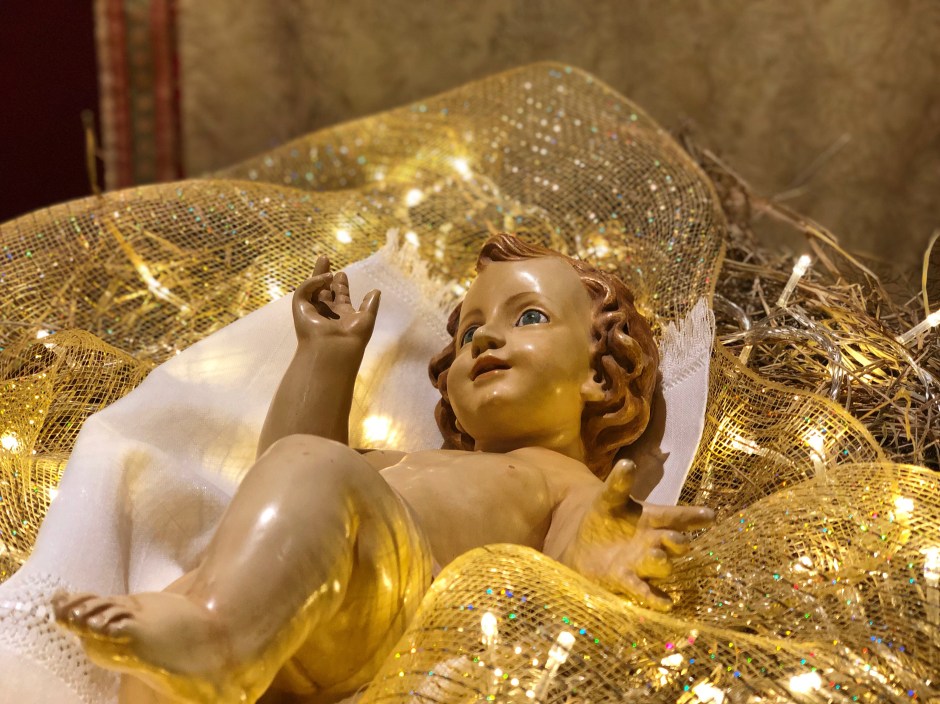
Image Credit: Francisco Xavier Franco Espinoza via Cathopic






 Touching the Sunrise