Jesus meets us at our “charcoal fires”

When it comes to St Peter, those last days of Jesus’ life and his death on Calvary became pretty intense. “You will never wash my feet!” Peter told the Master kneeling with basin and towel before him.

“I will never betray you!” Peter attested before his brother apostles when Jesus revealed that someone was going to betray him, someone in the room, someone he had known and trusted, someone he didn’t name. What a surge of terror may have passed through Peter as he imagined what that meant, what that might mean if it was him, what that would mean for their future. No. I will never betray you! the burly fisherman asserted if only to keep the potential terrors at bay.

“I do not know the man!” Before a wimpy servant-girl, the self-proclaimed immovable column of fidelity and strength collapsed. Three times. I don’t know this Jesus.

The witness of this intense shame was the charcoal fire around which everyone was warming themselves on that chilly and fateful night.

All of us have our own charcoal fires.

Back in the shadowy cobwebs of memories we wish were not our own, there are plenty of charcoal fires where we have chosen safety, pleasure, conceit over this Jesus whom we proclaim to love with all our hearts. The embers of these charcoal fires still may be warm, the ashes not yet blown away on the winds of mercy.

The charcoal fire appears again in Peter’s story shortly after the resurrection. He was out fishing, unsuccessfully, when a man called across the lake to lower their nets on the starboard side. Immediately the nets were filled to the breaking point. “It is the Lord!” John whispered to Peter.

What emotion must have gone through Peter’s heart at that moment. Without a fear, without a worry, without a memory of the ashes that still smoldered from the charcoal fire that witnessed his betrayal of the Lord, Peter leapt into the water and ran ashore.

And there Jesus stood.

Next to the visual symbol of his betrayal, of his weakness, of his shame.

And it was at that charcoal fire that Jesus asked him one question, three times: Do you love me? In the Passion Translation of the Bible the footnote for John 21:15 sheds some light on this question: The Aramaic word for “love” is hooba, and is taken from a root word that means “to set on fire.” This was the word Jesus would have used to ask Peter, “Do you burn with love for me?”

This time there were from Peter no blustering assertions and self-important declarations. Peter had touched the very roots of his weakness. Those weaknesses and mistakes and even sins that have been witnessed by our charcoal fires become the bridges to truth, to humility, to the trust that children have because they are not able to do anything for themselves.

The footnote continues: It was Peter’s boast that he loved Jesus more than the others, and though everyone else would leave him, Peter never would. That boast proved empty, as within hours of making the claim, Peter denied he even knew Jesus three times. So Jesus asked Peter three times if he loved him. In essence, Jesus knew how to bring healing to Peter and remove the pain of his denial. Three times Peter denied Jesus, but three times he made his confession of his deep love for Christ. By the third time, the “crowing rooster” inside Peter had been silenced, and now he was ready to be a shepherd for Jesus’ flock.

Here are five things always to remember when you think about the wounds the charcoal fires in your life have witnessed:

  1. Jesus resets the relationship we have with him. After three denials he invited Peter to express his love for him. No shame or guilt or failure or regret. It is about love. It is one hundred percent about love. No matter what you have done in your life, Jesus wants to know only one thing: Do you love me? Right now, here Jesus calling you by name and asking you that question.
  2. Peter and several other apostles went fishing, spending a futile night on the lake. He who had been made to be a “fisher of men,” returned to what he had been before he met the Lord Jesus at the lake’s shore three years earlier. Perhaps Peter thought that was all he was good for after having failed so miserably. But Jesus knew Peter. Jesus knew Peter loved him. Sometimes we are ashamed and we also reduce ourselves to a small life, letting go of dreams, relinquishing hope, sometimes even the hope of eternal life. It seems that there could be no way that God could not be disappointed in us. At the charcoal fire, however, Peter realized that God was not surprised, angry, vindictive or disappointed. When we stumble God is there to meet our failure with grace, a limitless love for all of us limping saints.
  3. Charcoal fires have a distinct smell. When Peter swam to shore and smelled the fire, the memory of the other, so recent and still stinging experience at a charcoal fire still seared his conscience. Jesus invited Peter to follow him into the memory of his failure and betrayal. Instead of leaving Peter to sink in the shame of these memories, Jesus invited Peter to let him into those memories. They could face them together. We all have memories of sins committed, as well as sins committed against us. Shame and guilt surround these memories. Memories that wound, that we want to hide, that we pretend never happened. But Jesus helped Peter confront the memory of his betraying the Master he loved. It is an invitation to not fear the healing process when Jesus stands on the shores of our heart, asking us to let him in, to let go of the past, to allow him to heal and transform our wounds with his glorious mercy. Jesus will often take us into memories where we do not wish to go, but he knows that we are more than we think we’ve become by our mistakes and weakness. By standing in our memories with Jesus, things change.
  4. Peter was hurt when Jesus asked him a third time, Do you love me? God’s love for us doesn’t gloss over our pain, the wounds that need healing in our life. Jesus specifically drew Peter to himself in order to reset the broken places of his denial with mercy. But just as a doctor carefully resets a broken bone (he doesn’t just say, “Oh, you’ll be all right. Everything is just fine.”), Jesus re-sets what is broken within us through the medicine of mercy. Even if the “brokenness” in our life has hardened and our hearts are “deformed” because they’ve never been taken under the Divine Physician’s care, love can make us pliable and whole once more. This is what Jesus does. In some mysterious way he is right now arranging your renewal through mercy and the willingness to love.
  5. When Peter denied Jesus, he also denied himself. He denied his love for the Master, the three years of growth and transformation as he walked by the Master’s side. Peter denied who he had become as the follower of Jesus and his apostle. On the shore that post-Resurrection morn, after a futile night fishing on the lake, Peter had again come up with nothing after relying on the one thing he felt he should be able to do–fish. He was a fisherman, after all. Jesus needed Peter to understand that he could not continue relying on himself. Again and again, with every boastful or desperate attempt to prove himself or provide for himself, he realized the nothingness from which he came and the nothingness of which he, of himself, was capable. “Throw your nets off the starboard side and you will catch something.” “Simon, do you love me? Feed my lambs.” Jesus has a plan for Peter who is to lead the Church as Rock. However, Peter needed to lead as sinner, not savior. Only Jesus saves. All of us, everyone of us, needs saving, yet participates in the mystery of the salvation of others. Always, it is miracle. Forever, it is mercy.

This Easter Jesus wants to bring you healing. He wants to turn the charcoal fire of your shame to the place that witnesses your humble love for him, your answer to Jesus’ heart that you will be his friend, that you will let him lead you, forgive you, heal you, and shape anew your life.

Suffering and Forgiveness: Lessons from Corrie Ten Boom

“Forgiveness is the Christlike suffering which it is the Christian’s duty to bear” (Deitrick Bonhoeffer).

That stings.

No one likes bearing suffering. The idea that Jesus has made suffering a part of Christian life that we can’t escape doesn’t make it easier. In fact, I’ve seen this idea lead to anger at Jesus.

Corrie ten Boom, born on April 15, 1892 in Haarlem, Netherlands, also didn’t find it easy, even as she preached the Gospel message of love and forgiveness. You may recognize her name as she was the author of the very popular book The Hiding Place. The Ten Boom family had decided to hide Jews in their home during the Occupation when a woman in May 1942 knocked on their door asking for refuge. The father readily took her in although the police headquarters was only half a block away. The whole family worked in the Resistance until on February 28, 1944, a Dutch informant, Jan Vogel, told the Nazis about the Ten Booms’ work. A little after noon that day, the Nazis arrested the entire Ten Boom family.

In September 1944, the Nazis deported Corrie and Betsie ten Boom to the Ravensbrück concentration camp for women in Germany. Life at Ravensbrück was almost unbearable, but Betsie and Corrie spent their time sharing Jesus’ love with their fellow prisoners. There, they held worship services after the hard days at work by using a Bible that they had managed to smuggle into the camp. Through the two sisters’ teachings and examples of unfailing charity, many of the prisoners there converted to Christianity. While they were imprisoned at Ravensbrück, Betsie and her sister began to discuss plans for founding a place of healing after the war. Betsie’s health continued to deteriorate, and she died on 16 December 1944 at the age of 59. Before she died, she told Corrie, “There is no pit so deep that He [God] is not deeper still.” Twelve days later, Corrie was released because of a clerical error. Corrie Ten Boom returned home amid the “hunger winter.” She still opened her doors to people with disabilities who were in hiding for fear of execution.

After the war, ten Boom advocated reconciliation as a means for overcoming the psychological scars left by the Nazi occupation. In her presentations after World War II when she sought to be a voice of healing, Corrie used to say to people who came up to her with their own stories of bitterness and non-forgiveness, “Can you forgive this person?”

When they said they couldn’t, or that they didn’t know how they could ever forgive the person who had hurt them, she would reply, “No? I can’t either. But God can.”

Sounds kind of pollyannish doesn’t it? I remember, though, one time in confession telling the priest that I couldn’t forgive someone under whom I had suffered for many years. And I had tried, seriously tried, to forgive for many years. Again and again. His words broke the cycle of my struggles that seemed to be getting me nowhere. “Yes you can,” he said to me. “You can forgive because Jesus makes that possible, Jesus who died on the cross for you and for them.”

They were words backed up with grace and rooted in the ground of truth.

Maybe instead of talking about whether or not we have forgiven, we should instead acknowledge in our whole life we are simply learning how to forgive, learning how to love enough to bear this responsibility of being the forgiving and merciful Jesus in the world today.

After the war, Ten Boom returned to the Netherlands to set up a rehabilitation center in Bloemendaal. The refuge housed concentration-camp survivors and until 1950 exclusively sheltered jobless Dutch who had collaborated with the Germans during the Occupation, after which it accepted anyone in need of care. She returned to Germany in 1946 and met with and forgave two Germans who had been employed at Ravensbrück, one of whom had been particularly cruel to Betsie. Ten Boom went on to travel the world as a public speaker, appearing in more than 60 countries. She wrote many books during this period.

In a story run in Guideposts in the year 1972, Corrie Ten Boom narrates how she came to realize that she herself was still learning to forgive.

She had just finished speaking in a church in Munich. It was 1947 and she had come from Holland to defeated Germany with the message that God forgives. As people filed out of the basement, a heavy-set balding man clutching a felt hat between his hands approached the front of the room where she stood.

As soon as she saw him, it came back with a rush. This man had been a guard in the large room at Ravensbrück where the newly arrived women had to undress and leave their clothes and shoes in a pile. In shame they had been forced to walk naked past this man. Now he stood there, pathetic himself, humbled.

“You mentioned Ravensbrück in your talk,” he said. “I was a guard in there. But since that time I have become a Christian. I know that God has forgiven me for the cruel things I did there, but I would like to hear it from your lips as well. Fraulein, …” his hand came out, … “will you forgive me?”

Corrie stood there, frozen, ice clutching at her heart. Her sister had died at Ravensbrück. Did this man think that he could erase her slow terrible death simply by asking for forgiveness. She wrestled in her heart with the most difficult thing she had ever had to do.

Finally, after what had seemed hours but which were probably just seconds, she remembered that forgiveness is an act of the will not the emotions. She prayed silently to Jesus for help. She told him, “I can lift my hand, I can do that much. You, Jesus, must supply the feeling.”

In her own words recorded in the story in Guideposts, Corrie said, “And so woodenly, mechanically, I thrust my hand into the one stretched out to me. And as I did, an incredible thing took place. The current started in my shoulder, raced down my arm, sprang into our joined hands. And then this healing warmth seemed to flood my whole being, bringing tears to my eyes. ‘I forgive you, brother!’ I cried. ‘With all my heart!’ For a long moment we grasped each other’s hands, the former guard and the former prisoner. I had never known God’s love so intensely as I did then.”

What forgiveness is not

Forgiveness is not easy. We can only forgive because God has forgiven us. It is only by experiencing forgiveness ourselves, that we can understand how precious it is to give this gift to another. We all have received the mercy of God. He has forgiven our sins, washed them away—even though we don’t deserve it. This is why St Paul can say in the letter to the Ephesians: “Let all  bitterness and wrath and anger and clamor and slander be put away from you, with all malice, and be kind to one another, tenderhearted, forgiving one another, as God in Christ has forgiven you” (Eph 4:31-32).

Forgiveness is not an emotion, it is an act of the will. As Corrie faced the gentleman who had been a guard when she had been at Ravensbrück, her heart’s thermometer was cold, small, frightened. Even though she preached forgiveness with her actions and her words, even though she knew that she had been forgiven by God and needed to respond to this person before her asking for her forgiveness, her heart’s reactions didn’t correspond to what her mind knew. She simply asked Jesus’ help and, by an act of the will, stuck out her arm and asked God to do the rest. What she experienced—“I had never known God’s love so intensely as I did then”—was God’s action within her. It was gift. She received in her own spirit the divine love and mercy that characterized the heart of God.

Forgiveness doesn’t mean forgetting. The expectation that we will forget the person and actions through which we have been hurt is called denial. I’m sure Corrie was haunted all her life by what she had experienced in the concentration camp and by the slow death of her beloved sister Betsie. Her prayers, her encouragement to others, her preaching, her actions to provide places of healing for those who had suffered as she had in the concentration camps, as heroic as they may have been, were softened and sifted and saturated by her own struggles with memories, heart-movements of loss and grief, flashbacks and psychological struggles, as well as her desire and determination to be a person of reconciliation.

Forgiveness doesn’t excuse the wrong. Forgiveness doesn’t say that what was done doesn’t matter. If it didn’t matter, then there would be no need of forgiveness. Instead, forgiveness respects and reverences what has happened and the deep wound it has caused. Forgiveness says: “I know what you did. It hurt. It damaged me. It wounded me in ways that I may bear for the rest of my life. But I won’t hold it against you.”

Forgiveness is not reconciliation. In any number of ways, Corrie had forgiven those who had destroyed her family and her Jewish brothers and sisters. She encouraged others to forgive them. She had run a rehabilitation for concentration-camp survivors which until 1950 exclusively sheltered jobless Dutch who had collaborated with the Germans during the Occupation. She travelled to Germany to meet with and forgive two Germans who had been employed at Ravensbrück. That night, however, in the basement of the church in Munich, God asked her to go a step further. Reconciliation requires repentance. In this case, the former guard who approached her had repented and had even become a Christian. He extended a hand and asked her directly for forgiveness. There are many times that we may forgive, but reconciliation at that point is not a question. There is no repentance. It would be dangerous or unhealthy to reconcile with an individual who could continue to hurt us. There are other times, however, when we can offer this reconciliation. In Corrie’s case, she probably never saw this man again. When we take that next step of reconciliation, it doesn’t mean that we are required to resume friendships or move back in with the offending individual. We can reconcile without putting ourselves in the position of being hurt again, particularly when we ourselves haven’t healed sufficiently to create and enforce clear and healthy boundaries.

What forgiveness is

For us, forgiveness is a matter of becoming capable, of being given the power, to disrupt the cycle of continued wrath and suffering we experience as inevitable. Forgiveness is always going to be demanding, costly, and a freely chosen effort. Others cannot tell us when and how we must forgive. No one but we ourselves can require us to forgive.

As we wrestle with forgiving, here are three things that will help us open to God’s grace:

  1. Pay attention to how thoughts about the person make it more difficult to forgive. Take your mind off of the person. Don’t give yourself the luxury of grumbling. Don’t justify yourself or feel sorry for yourself. Don’t imagine ways you could get even. When you see those thoughts coming in for a landing just tell them that there is no place for them in your heart.
  2. Remember that you yourself have been forgiven any number of times. Recall a time when God has shown you his love and let you start again. Remember a time when someone else has shown you mercy. Ask God to help you call to mind times when you have needed forgiveness just as any other sinner. Practice being grateful for the mercy you have shown by the Lord.
  3. Whenever the person who has hurt you comes to mind say the words “I forgive you” whether you feel it or not. Remember that forgiveness is an act of the will, and our emotions often deceive us. Just because we feel anger and hatred for another, our will can still choose to forgive, to at least say the words “I forgive you.” Ask the Holy Spirit to pour God’s love into your heart. When you are ready, you can take the next step of asking God to bless this person.

We can only offer ourselves to God’s action—to “seek, suffer (that is, allow), and trust.” And in that effort, God will supply for all that we fall short.

This article is the second in a series on forgiveness. Read Saint Rita: How to Choose Forgiveness.

Image: Luis Ángel Espinosa, LC via Cathopic

Do not be afraid (Luke 1:26-38)

“Do not be afraid, Mary.”

Through the centuries, the Annunciation has inspired many artists who have sought to capture in their paintings this most sacred and pivotal moment in the history of the world. My favorite is The Annunciation, painted in 1898 by the American artist Henry Ossawa Tanner. The artist seems to capture the intensity and fire of the angel Gabriel’s appearance to the young Mary. I can’t decide if Tanner is depicting Mary’s first startled awareness at what God was asking of her or her sinking under the weight of what this message would mean for her life. Her hands folded, she is already pondering, storing away in her heart what God was doing.

So many masterpieces of the Annunciation portray the young virgin Mary in a religious setting where all seems peaceful and simple. But Tanner, I believe, captures the words of the angel, “Do not be afraid, Mary.”

We cannot imagine that this girl barely a teenager would not have been concerned or apprehensive about the role that she was to carry out in salvation history. There were many unknowns that the angel didn’t clear up for her. Gabriel didn’t point out a way forward or explain to her how Joseph was going to find out about the child. What would her parents think? Her friends? Would she be able to share this with anyone? Would anyone be able to walk this way with her and show her the next steps she should take? The Messiah. The Son of the Most High. The one who would sit upon the throne of David and rule over the house of Jacob forever. The one whose kingdom would have no end.

It is hard to think that this young girl walked with ease and security into the rest of that Annunciation day with total confidence about what was happening to her. Throughout every day of her life, I can imagine her recalling the words as she heard them from the angel, “Do not be afraid, Mary.”

When she and Joseph realized Jesus was lost, “Do not be afraid, Mary.”

When Jesus left home to begin his public life, “Do not be afraid, Mary.”

When she saw the growing discontent and disapproval directed at Jesus by the religious leaders, “Do not be afraid, Mary.”

When she stood beneath the cross, “Do not be afraid, Mary.”

This beautiful account of what happened at the Annunciation, probably told to Luke by Mary herself, concludes with her yes, “Behold, I am the handmaid of the Lord. May it be done to me according to your word.” Then the passage transitions back into ordinary life with the almost ominous sentence, “Then the angel departed from her.” She was left alone.

We are told of no angel leading her back into Jerusalem to find her son. We read of no angels providing for her needs after Joseph had died and Jesus had left home to pursue his public ministry. The Gospel does not assure us that Mary had special revelations from further angels that everything was going to be okay as the religious leaders sought to put her son to death. We see no angels supporting her beneath the cross. Only John who stood in for you and me as Jesus gave his mother to be our mother. No. The angel departed from her.

There must have been not a few moments of wondering, worry, anxiety, sorrow alongside the strong faith, the determined surrender, and the rejoicing with which she continued to magnify the Lord. Somehow Mary was able to hold in her heart, to ponder and pray and believe and hope even as she wondered and worried in the uncertainty of all that was happening. As I look at Tanner’s Annunciation, this is the message I tuck away in my own heart. When I worry and wonder and doubt and fear I usually forget to ponder and pray and believe and hope. Mary was able to hold together the whole picture: the whole picture of what was happening in her own life, in the life of her Son, of her people, of history, of God’s work of salvation. She didn’t have a selective memory. She remembered everything and trusted everything and entrusted herself entirely into the unknown of the radical newness of what God was accomplishing in her for the sake of the world. I struggle to do this, and perhaps so do you. In whatever strained circumstances or difficult situations that cause you anxiety and doubt today, remember the angel’s words, “Do not be afraid.”

Praying with this passage of Scripture

Lectio Divina is a way of listening to God as he speaks in his Word. It is a practice of communicating with God through Scripture and attending to God’s presence and what he wishes to tell us. In this slow and prayerful reading of the Word of God, we allow ourselves to be transformed by the Spirit who forms us into the image of Christ.
There are four movement in Lectio Divina: Read (lectio), Meditate (meditation), Pray (oratio), Contemplate (contemplation).

Begin by finding a still space to pray. Breathe deeply and become quieter within. Abandon any agenda, worries or thoughts you bring to this prayer and entrust these things to the merciful care of God. Ask for the grace to be receptive to what God will speak to you through this Scripture reading. Grant me, Jesus Divine Master, to be able to know the mysteries of the kingdom of God and your unfathomable riches. Grant that your word penetrate my soul; guide my steps, and brighten my way till the day dawns and darkness dissipates, you who live and reign forever and ever Amen.

Read (lectio)
Begin by slowly and meditatively reading your Scripture passage out loud. Listen for a particular word or phrase that speaks to you at this moment and sit with it for a time.

In the sixth month of Elizabeth’s pregnancy, God sent the angel Gabriel to Nazareth, a town in Galilee, to a virgin pledged to be married to a man named Joseph, a descendant of David. The virgin’s name was Mary. The angel went to her and said, “Greetings, you who are highly favored! The Lord is with you.”

Mary was greatly troubled at his words and wondered what kind of greeting this might be. But the angel said to her, “Do not be afraid, Mary; you have found favor with God. You will conceive and give birth to a son, and you are to call him Jesus. He will be great and will be called the Son of the Most High. The Lord God will give him the throne of his father David, and he will reign over Jacob’s descendants forever; his kingdom will never end.”

“How will this be,” Mary asked the angel, “since I am a virgin?”

The angel answered, “The Holy Spirit will come on you, and the power of the Most High will overshadow you. So the holy one to be born will be called the Son of God. Even Elizabeth your relative is going to have a child in her old age, and she who was said to be unable to conceive is in her sixth month. For no word from God will ever fail.”

“I am the Lord’s servant,” Mary answered. “May your word to me be fulfilled.” Then the angel left her.


Meditate (meditatio) – Read the same passage a second time. As you re-engage the text, let the word or phrase that stood out become your invitation to speak from your heart with God who wishes to share his heart with you. Allow this word or phrase to wash over you and permeate your thoughts and feelings. You may wish to repeat this phrase quietly and gently for a period of time.

Pray (oratio) – Read the text a third time. Listen for what God is saying to you. Speak heart to heart with God. Notice the feelings that this conversation with God raises up within you. Share with God what you notice about your response to this conversation. You may wish to return to repeating the phrase quietly and gently, allowing it to permeate you more and more deeply.

Contemplate (contemplatio)
Read the text a final time. Now be still and rest in God’s embrace. Ask God to give you a gift to take with you from this prayer. You might ask God if he is inviting you to do some action, for instance, make some change in your thoughts, attitudes or reactions, in the way you speak or how you treat others. Thank God for this gift and invitation as you conclude your prayer.

Credit information: Henry Ossawa Tanner, Public domain, via Wikimedia Commons

Celebrating the unmerited Love that has saved us: Paschal Triduum

Friends,

Today we are entering into the final two weeks before Easter. In fact, in just ten days we will find ourselves in the most sacred days of the liturgical year, indeed, the most holy days of the year for a Christian: the Paschal Triduum. In these three days punctuated with powerful liturgical moments, we focus as a Church on what is truly essential, on what is, in the words of Pope Francis, “most beautiful, most grand, most appealing and at the same time most necessary” (Evangelii Gaudium, no. 35).

What is this most necessary thing?

The Paschal Mystery is the divine love revealed and made present, efficaciously present, in the life, death, and resurrection of Jesus Christ. The efficacy and benefits of the death and resurrection of Jesus were so important to Paul that he wrote to the Corinthians, “For I resolved to know nothing while I was with you except Jesus Christ, and him crucified” (1 Cor. 2:2). And to his beloved Philippians he stated that the one  “who died for me” occupied him so completely that desired only this: “That I may know him, and the power of his resurrection” (Phil 3:10).

Our presence, in person or at least in spirit, at the liturgical celebrations of the Triduum reminds us that being Catholic is not about being club of like-minded people gathering around shared core ideas, people who happen to like each other like good neighbors, or a group come together to make a difference in the world. Our gathering as Christians is made possible solely because of the salvation offered by Christ, the crucified and risen Bridegroom who has brought the Church into existence.

We delight in salvation

In the Paschal Triduum we celebrate this unmerited Love that has saved us. Saint Paul often retold the story of the way Jesus sought him out personally on his way to Damascus and through the gift of Baptism refashioned the direction of his life through the blood of the Lamb once slain and now risen. “For God, who said, ‘Let light shine out of darkness,’ made his light shine in our hearts to give us the light of the knowledge of God’s glory displayed in the face of Christ” (2 Cor 4:6).

We too should treasure and share the story of how we encountered the God of all salvation in Jesus Christ. The days of the Triduum should open out in awe and gratitude.

In the Triduum we turn our eyes to salvation, carrying in our hearts the whole world, this whole and entire messy and suffering world of 2023, a world that God loves.

During the Paschal Triduum we delight in the salvation provided us by the Savior. Looking about our world, our neighborhoods, our families, and even our own hearts we see the overwhelming burden of the very darkness that Christ came to dispel. As worries crowd our hearts, we yet cast ourselves at the feet of the crucified and risen Lord.

Jesus washing the feet of his disciples (Albert Edelfelt) Nationalmuseum

Holy Thursday: Total, selfless giving

On Holy Thursday we receive again the love of Christ in the Eucharist that is the very origin of the Church, the reason for its very existence. We learn again from him how to pour ourselves out in total selfless giving and presence, how to see in others those who have become through the blood of the Lamb once slain our brothers and sisters. We immerse ourselves in the Savior’s own courage as he walked into the darkness with his apostles, knowing that the actions of the darkness itself contribute to bringing about the triumph of Life and of the Day.

Cathopic

Good Friday: Trophy of salvation

On Good Friday we venerate the cross which was the instrument of Jesus’ death and the very source of our salvation. The refrain of the Reproaches cries out, “My people, what have I done to you? / Or how have I grieved you? Answer me!” Timothy O’Malley reflects on the suffering of Jesus on the cross:

“The God-man, Jesus Christ, was born to suffer. At his birth, he was wrapped in swaddling bands, an image of the burial clothes he would wear in the tomb. Christ was born for this moment, for this suffering on the wood of the tree. He hungered and thirsted in the desert, he cried at the tomb of Lazarus, because he came to take on the fullness of the human condition.

“Furthermore, the human condition, in all its violence, is on display in the crucifixion. The body of our Lord bleeds and oozes, is perforated by the nails and the spear. The blood and water that comes forth does so not in a gentle manner but in a torrent. The world itself is renewed through this washing, through this river of love flowing from the side of Christ” (“A Guide through the Poetic Theology of the Triduum,” April 10, 2020).

The cross becomes for a hungering and struggling, indeed for a wandering world, the trophy of salvation, the sign of victory, the promise of unending Life. Together we gaze on the cross of Christ that we might cast ourselves into the arms of the Bridegroom, and uniting our sufferings to his we become the instruments of salvation our world today so desperately needs.

Cathopic

Easter Vigil: Night so blessed

At the Easter Vigil, the crowning jewel of the evening of Holy Saturday and the beginning of the celebration of the resurrection, we are led by the Easter candle into the darkness of the Church, a sign of how the Light of the World leads the people lost in darkness into the wondrous light of salvation. We are meant to follow the Light and to be the light for people who still wander in darkness. We proclaim that all creation, like this candle, has been transformed by the resurrection of Jesus Christ.

This is the night, is sung again and again during the Easter Vigil. It is the night of all nights. It is a night of dazzling glory. It is a night full of gladness. For on this night, Israel was rescued in Egypt from slavery, escaping with their very lives through the power of the Lord. On this night, they wandered through the desert led by the pillar of light—forty years of learning that God is the one who fulfills his promise on his own terms and through his own power according to the mystery of his providential timing. On this night, Christ rose from the dead. In all nights, we learn that we receive salvation. We learn a posture of prayer and ministry that transfigures us into instruments of God’s love, the hands and feet and voice and heart of Christ today.

Night, usually a time for terror, is now blessed. The tragedy carried forward in the garden on the night before Jesus’ death through the kiss and betrayal of Judas now gives way to the resurrection of the Light and Life of the World. The stingy selfishness of those who live in the self-preservation and self-promotion of the night is transformed by the pure generosity of Jesus’ excessive love, a love beyond measure, a love that gave itself for us even when we were at enmity with God. As the final verse of the Exsultet proclaims: May the Easter Candle “shine continually to drive away all darkness. May Christ, the Morning Star who knows no setting, find it ever burning—he who gives his light to all creation.”

There is a beautiful Hymn of Light found in the 1995 edition of the Lenten Triodion that would make a beautiful prayer as we end the Lenten season and enter into the Triduum.

Hymn of Light

O Christ, who make the light arise, purify my heart from all sin and save me.
Send forth your eternal light, O Christ our God, illuminate my eyes and my heart and save me.
Send forth your light, O Christ our God, and illuminate my heart and save me.
You make the light shine upon the whole world; enlighten my soul by purifying it of every sin and save me.
O Lord, the source of light, send forth your brightness to illuminate my heart and save me.
Send forth your everlasting light upon our souls, O Lord, and save me.
Enlighten my heart, O Lord, that I may sing to you: teach me to do your will and save me.
O Christ, the everlasting Light, enlighten me completely, and save me. (page 675)

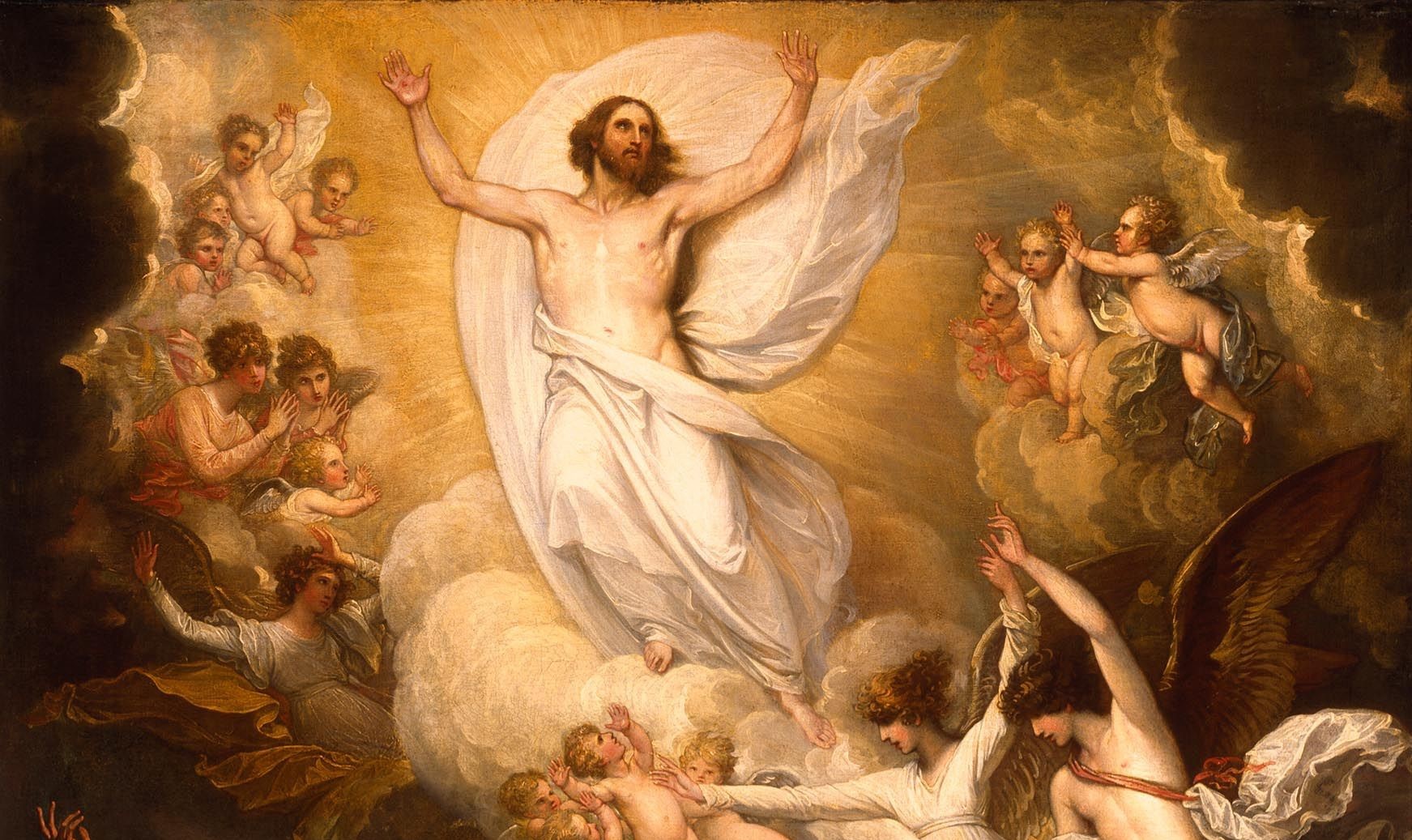
The_Ascension)_by_Benjamin_West,_PRA

Hymn of the Resurrection

Having beheld the Resurrection of Christ, let us adore the holy Lord Jesus who alone is sinless. We bow to your Cross, O Christ, and we praise and glory your holy Resurrection. You are our God and besides you we recognize no other, and we invoke your name. Come all you faithful, and let us bow to the holy Resurrection of Christ, since, through the Cross, joy has come to all the world. Ever praising the Lord, let us extoll his Resurrection, since he, having endured the crucifixion, has destroyed death by his Death. (page 749)

Image Credit: Cathopic

How to want what truly matters (Horizons of the Heart 18)

The grace we are asking of God: a deeply felt awareness of how God draws us into the unfolding of the mystery of the Word made flesh and how in doing this we enter into a process of healing that we might love Jesus and follow him more intentionally, completely, and wholeheartedly.

Horizons of the Heart is inspired by the Spiritual Exercises of St Ignatius and my own notes from my thirty-day Ignatian retreat in 2022. See an index for the whole series.

The grace we are asking for in the Spiritual Exercises is the grace to love rightly and the grace to love well.

If we have a deeply felt awareness of how another human being loves us and wants us near them, our response is wonder, gratitude, love, and wanting to be both physically and spiritually close to them. We no longer feel alone. We have a sense of belonging to someone who desires our presence. We feel safe and happy.

Similarly, God’s drawing us awakens in us a desire to return love for love, to offer ourselves in love, to leave ourselves in order to draw near to God in grateful praise. St. Ignatius is having us beg for the grace to deeply feel this in our very bones. We are loved! And love for God is rising like the sun in our hearts. This love overflows with joy.

This love for God, however, needs to be trained. This divine love, just like any love, needs strengthening through focus and practice. Our hearts and desires have become sluggish by loving material things, by being satisfied with what is of the earth and what brings pleasure to our senses. We are bombarded daily by stimulations, memories aroused by sights and sounds, emotional responses to whatever is going on around us. As David Fagerburg, author of Liturgical Mysticism, said, “In both body and soul, the human person is the matrix of a thousand bits of data input.”

St. Paul encourages us to direct our attention upwards:

Since, then, you have been raised with Christ, set your hearts on things above, where Christ is, seated at the right hand of God. Set your minds on things above, not on earthly things. For you died, and your life is now hidden with Christ in God. When Christ, who is your life, appears, then you also will appear with him in glory. (Colossians 3:1-4 NIV).

As a good father, St. Paul is instructing us to direct our desires toward what will truly bring us ultimate and eternal satisfaction and glory. This is the telos or end for which we were created: the beatific life.

Cathopic: lulitobal

“The beatific life requires a sort of integrity from us…. Integrity means being a person who wants, instead of a person who is a collection of wants” (Liturgical Mysticism, page 102). This kind of response to the drawing of God, this kind of wanting demands a true attentiveness, a spiritual and steady awareness sustained over time. We need to train our wants to discover how insipid are the things that simply give passing pleasure, episodic and trivial desires, and how beautiful is the taste for worthwhile things, consequential things that order the mass of sensations that harass us daily toward “the things above.”

In the Spiritual Exercises we learn to want steadily what truly matters. They train us to keep our eye on the target, so to speak. We become sensitive to those behaviors in which we engage that contribute to our desires dissipating, losing their fragrance. And we feel a greater attraction to what contributes to a deeply felt knowledge of that to which God is drawing us in his immense and illimitable love.

You may wish to reflect on what is drawing your heart right now.

What are behaviors that dissipate your spiritual strength?

What are the desires that give you peace? That make you feel closer to God? How can you train those desires?

Image Credit: Rawpixel, public domain.