Going with Jesus to the Jordan (Horizons of the Heart 29)

The grace we are asking of God: to discover Jesus in my own personal story so that my personal myth may be transformed in Jesus, as was that of Ignatius, that I will be disposed to hear God’s call and follow it wholeheartedly.

Horizons of the Heart is inspired by the Spiritual Exercises of St Ignatius and my own notes from my thirty-day Ignatian retreat in 2022. See an index for the whole series.

It is through our senses that we feel the ‘touch’ within the heart (Exx 335), and then the heart expands in feelings of happiness, peace and serenity, and in a renewal of spiritual strength, along with desires to ‘move forward’ (Exx 315, 329) (Imitating Christ our Lord with the Senses: Sensing and Feeling in the Exercises: Antonio Guillen (The Way, 47/1-2 (Jan/April 2008), 225-241). St. Ignatius mentors retreatants in this form of prayer in his Spiritual Exercises.

Preparing for Prayer

Begin by relaxing. Take a deep breath, hold it, and then let it out with a sigh. As you do this several more times, intentionally relax the muscles in your face, your shoulders, your arms, your legs. Offer a quiet prayer of gratitude. Rest in your Father’s arms. 

Settling into Prayer

Ask Jesus that every aspect of this prayer will please him and will give glory to God.

Then Jesus came from Galilee to the Jordan to be baptized by John (Matthew 3:13).

Slowly read the passage for your meditation once. Leave some moments of silence and then read it again with the intention of entering into the story, of observing the details of what is happening. Take some time to set the stage and picture the environment in which the story takes place. I will share my own reflections simply as a prompt for your to enter into the contemplation more deeply yourself.

When praying with this passage from the Gospel of Matthew I imagined what it must have been like in the house of Nazareth as Jesus prepared to leave his mother and enter his public ministry. I had a sense of Mary looking out the window, remembering each part of the incredible life that had been hers since the Annunciation, the birth of Jesus in Bethlehem, the Flight into Egypt, the days when Jesus was lost in Jerusalem, the death of Joseph, the beautiful years Jesus and she had spent together in their home at Nazareth.

How did she feel knowing that this was all about to change?

The previous years had had a rootedness about them, and now as Jesus gathered his belongings and prepared to leave her, she was uncertain about how the future would unfold…uncertain, knowing she would be alone, but also trusting.
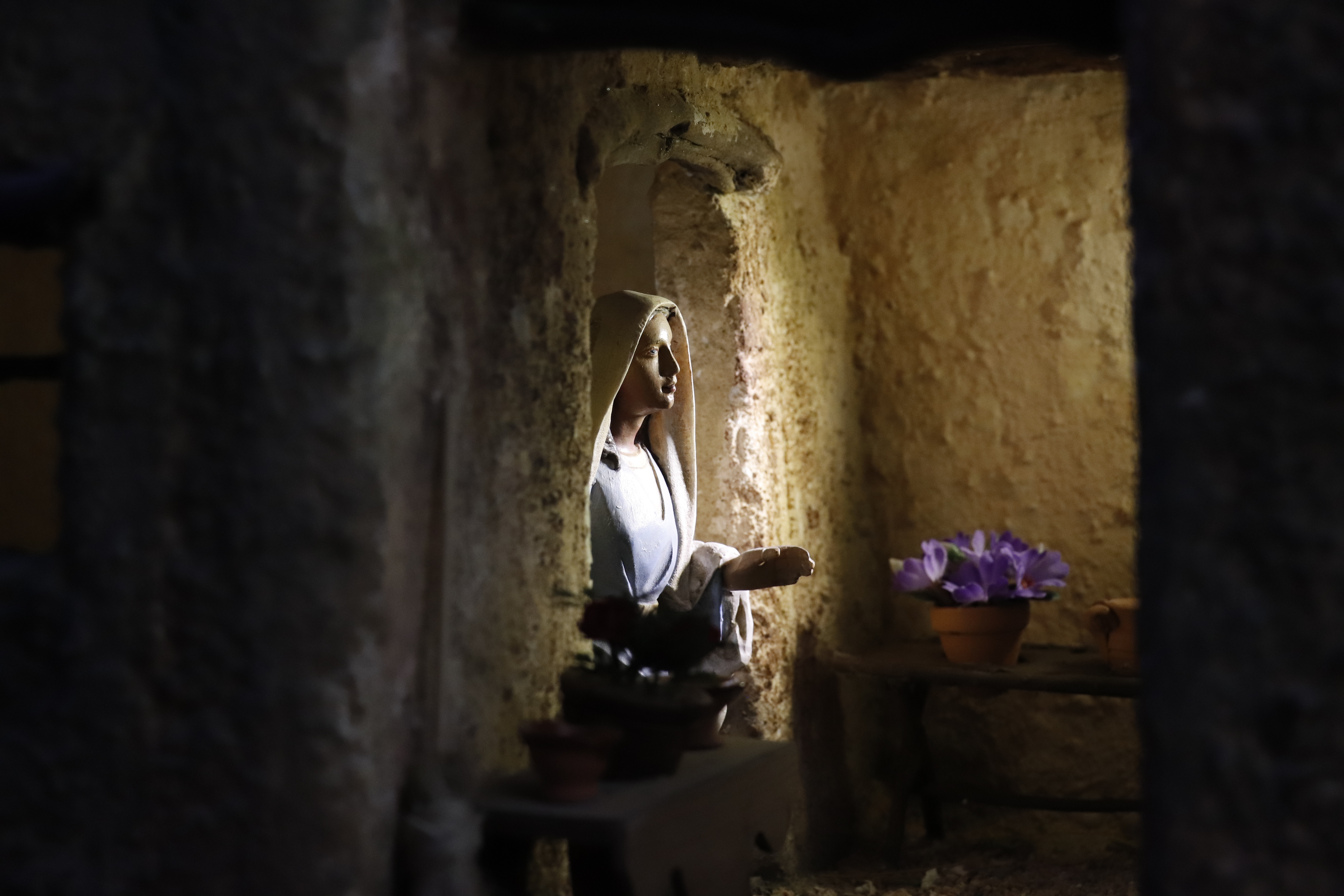
Fotografía de Belén en Córdoba, España from Cathopic

I watched as Jesus gave Mary his special attention in these last few days they had together in Nazareth, the last few moments. With such kindness he must have listened to her reflect on her memories. With such love and compassion he helped her to see that he truly did need to be about his Father’s business.

Let the story expand from the few verses that are recounted in Scripture to what that would have been like for Jesus or Mary, what they would have experienced or needed or felt, how they lived these events interiorly, how they expressed themselves. With your senses immerse yourself into the event. Is there any way you can be of help to them. If so, imagine yourself entering the story through these actions. Look around for a particular moment that seems to be of greater importance to you, to catch your attention.

The “particular moment” that attracted my attention was Jesus sitting under a tree eating the lunch prepared for him by his mother. He was on his way to the Jordan. He had remained in Nazareth and he had left Nazareth at the bidding of his Father. There was no guilt for having stayed hidden in the village of Nazareth for thirty years and there was no guilt now as he left.

There was only Freedom.

Flourishing under the Father’s providential care.

Fire in his heart for the mission he was embracing. The intention and the purpose of Jesus going to the Jordan.

Ask for the grace “to know Jesus intimately, to love him more intensely, and so to follow him more closely.”

Entering into the Mystery

This deeper contemplation of Jesus in the Gospels is an apprenticeship of our feelings and senses in which we are formed in such a way that we feel with Jesus, that our feelings becomes those of Jesus, and our spontaneous reactions of personal promotion and self-protection are gradually curbed and re-invented so that we spontaneously react as Jesus does.

Entering into the mystery of what we contemplate, we humbly allow Jesus to be our Master, to educate our senses and feelings according to the pattern of his own life and teachings. It is a matter of becoming saturated with Jesus’ own way of being and feeling. It is learning how to resonate with everything Jesus resonates with, as we gain this felt understanding through our contemplation, and of rejecting whatever Jesus rejects.

I asked Jesus, “How are you living this moment, Jesus?” He responded to me, “Like a child.” I sensed to the very depths of my being what Jesus is experiencing in this mystery of his life.

Entering still deeper into the mystery of Christ, allow your heart to taste, to smell, to touch the infinite gentleness and sweetness of Jesus. Allow your spirit to soak up what has been felt and known in this contemplative prayer.

As you do this your mind’s activity will fade into the background, and the mystery you are intuitively contemplating will begin to take over and engulf you, planting within your spirit an inner knowledge of the Lord.

You will at some point begin to intuitively sense the difference between the way Jesus spontaneously feels, speaks, and acts in a situation and the way you yourself feel, speak, and act in similar situations in your own life.

As I sat beside Jesus I felt his “childlike spirit”: there was a happiness about him. He enjoyed the moment, not needing to look ahead in fear, totally trusting the Father, without agenda or plan. His eyes were on the Father, waiting, receiving everything, following his direction. There was no negativity, curiosity, ugliness, inner pollution. As Child he is completely at God’s disposition.

I compare the way I often feel with the way I sense Jesus feeling in that simple act of eating his lunch before making his way to the Jordan. So far from being a child at heart, my heart can be led by fear down other paths. Yet as I sit beside Jesus, as he welcomes me to his humble repast, I sense him urging me to a willingness to lose all this…the “self” that is not completely at God’s disposition.
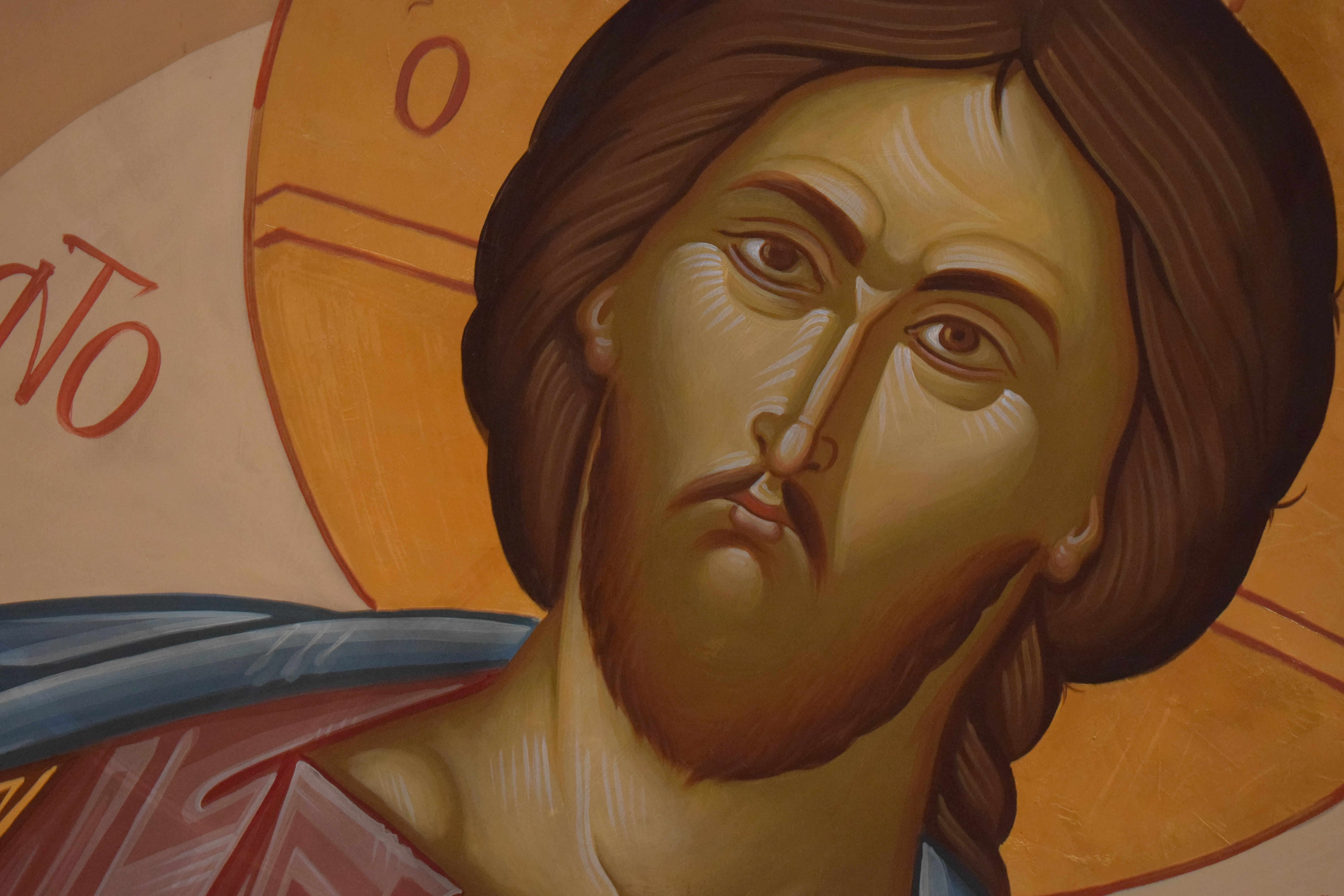
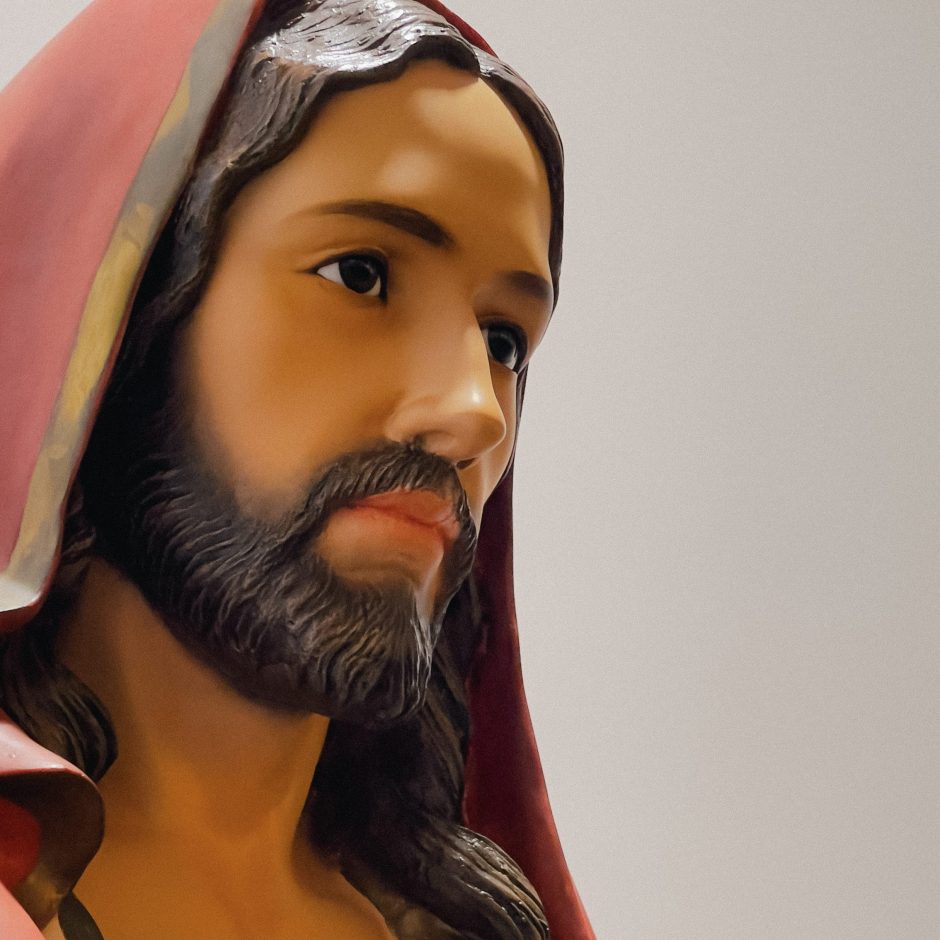
Image by José Héctor González from Cathopic.

Rest in that awareness as Jesus helps you to resonate with what he resonates with. As you enter into his feelings and the way he uses his senses, you will gradually lose interest in your own spontaneous reactions, defenses, and self-promotions. Jesus will bring you to his way by attraction, sweetness, and beauty. He will make you feel safety, belonging, and hope.

Image by José Héctor González from Pixabay

Colloquy

Allow an image or object that encapsulates all these experiences to form in your mind. Take some time to speak with God about the meaning or significance of this object.

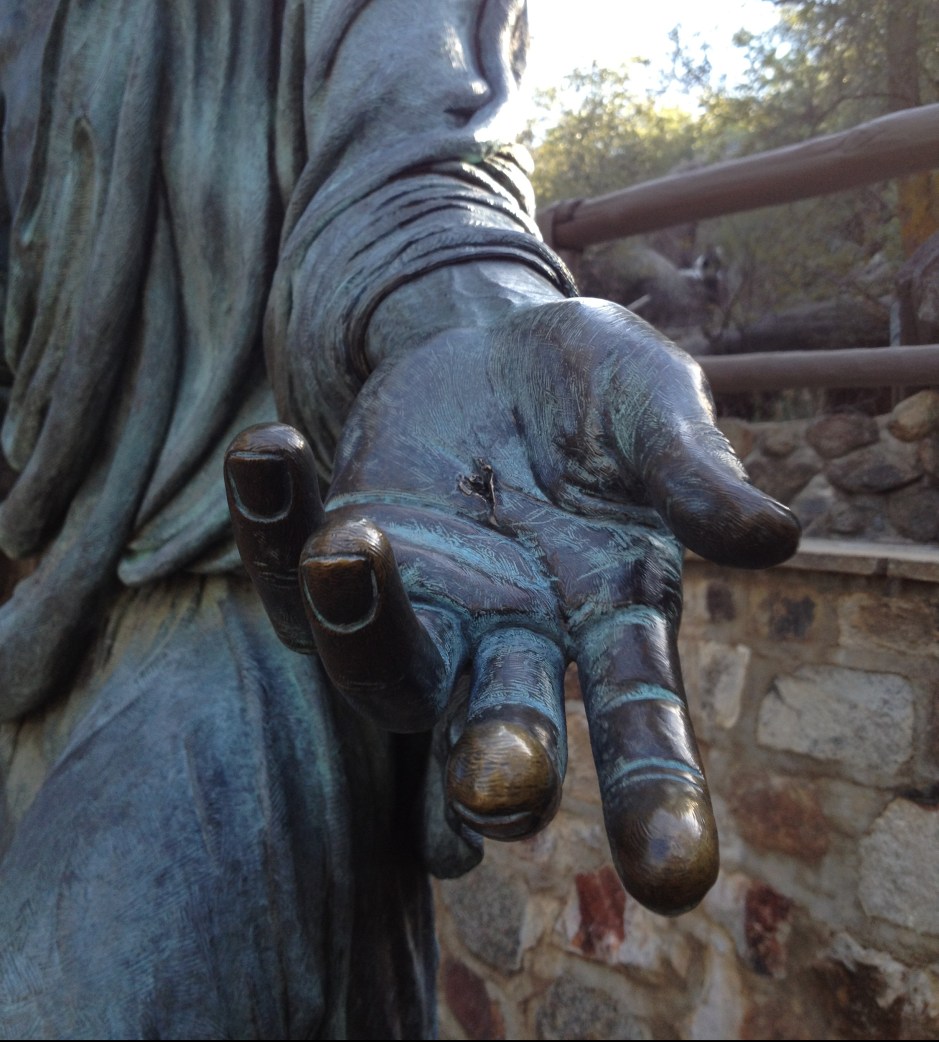
As I allowed the experiences of this meditation to soak into me, washing away my own spontaneous reactions with the attractive childlikeness of the heart of Jesus, the image that encapsulated them all was that of hands, friendship, freedom, the comfort of being held close in the hands of Jesus. The beauty of him wanting for me all that the Father has desired for me.

I spoke with Jesus about the meaning of this image given to me in prayer. What would be different if I took on the childlike joy of the way Jesus went about his Father’s will? If I realized that I was journeying through life hand in hand with Jesus, that as he was free and at peace so could I breathe in this freedom and peace.

Ask Jesus to show you one specific gift he wishes to give you. Receive it and remain in stillness and quietly relaxed presence under the influence of the Holy Spirit.

Reviewing the Graces of Prayer

When you finish praying, write down the main gifts and discoveries from this time of intimate contemplation. What is one concrete thing you can do to solidify these gifts in your life.

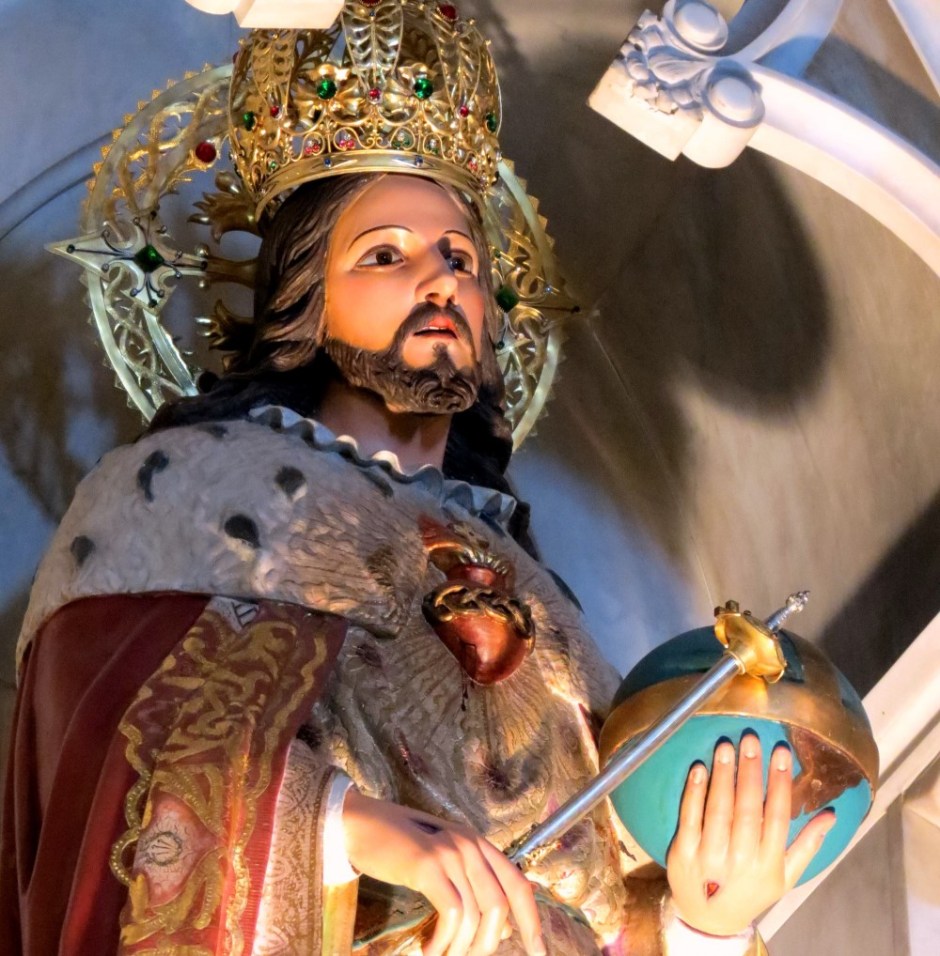
One Last Glance at Christ the King

One last glance at Christ the King before Advent. I was so taken by this verse of Crown Him with Many Crowns that we sang on Sunday:

Crown him the Lord of peace.
Whose power a scepter sways
From Pole to pole, that wars may cease,
Absorbed by prayer and praise.
His reign shall know no end,
And round his pierc-ed feet
Fair flow-rs of paradise extend
Their fragrance ever sweet.

How our world needs His crucified and merciful love and the firmness of his authority!

Image credit: Alvaro Jose Jimenez

Advent Reflection: You left one heaven for another

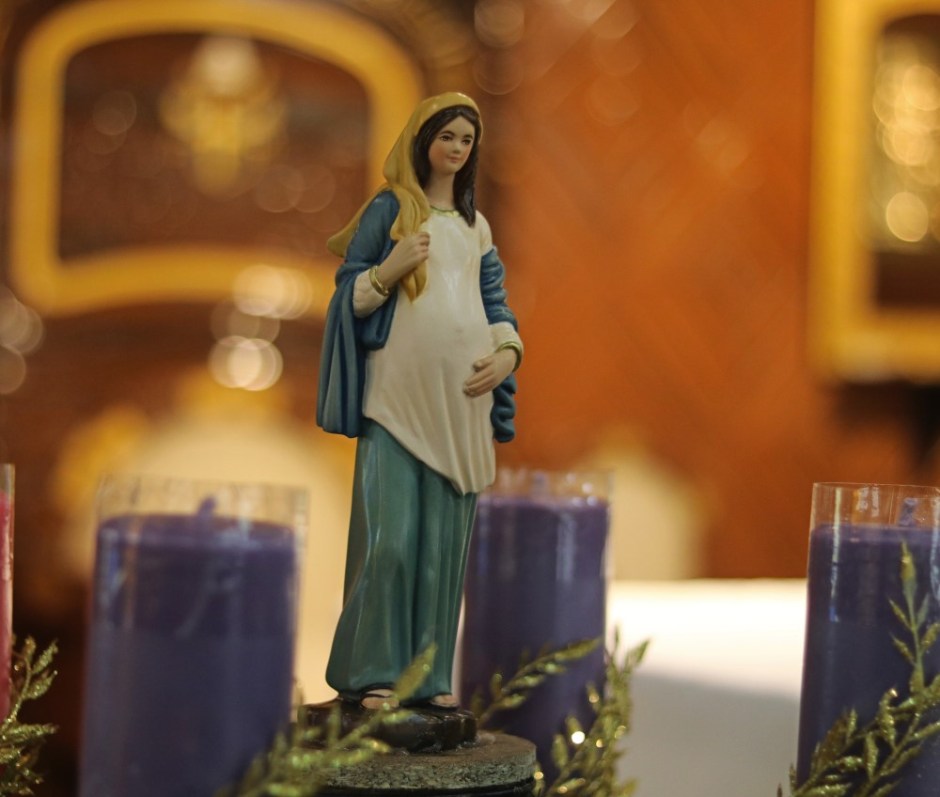
Advent is fast approaching. Though I love Advent, I have always struggled with the traditional style of Advent reflections. I’m turning this year instead to The Liturgical Year by Prosper Guéranger: Mary’s immense happiness upon holding in her arms the Word who was made Flesh, her Son and the Son of God, on the sacred night of his birth surpassed even the immense joy when she had been overshadowed by the Holy Spirit and received from Him the divine fruit of her womb. During the nine months when Jesus was undividedly hers, what must have been her preparation?

Christians! Your Communions during Advent prepare you for your Christmas joy, by giving you something of the delight which Mary felt before the birth of Jesus. Yes, Jesus, you are coming to me, you who entered into Mary’s virginal womb, making it the sanctuary of your Majesty. You had prepared her, from her conception, with every grace, so that you had but to leave one heaven for another. Alas, my soul is weak in faith. I bow down my whole being before you, using your Mother’s blessed words: ‘May it be done to me according to your word. (see The Liturgical Year 94-95)

Image credit: Sebastián Ycaza

Face into the headwinds of reality with courage

I have to admit that I definitely prefer the gospel passage where Jesus proclaims himself the Good Shepherd to this one read in today’s Mass which promises persecution and betrayal. The Good Shepherd who looks after his flock, keeping them safe from predators, rescuing them when they are lost, guiding them home, sleeping at the entrance to the sheepfold.

How could the same Jesus who promised me security and safety also tell me that I would be betrayed, persecuted, handed over, hated, and possibly lose my life?

For many years I pushed this passage to the back of my mind. There is certainly no bookmark in my Bible so that I could locate it quickly for meditation.  

Today’s Gospel passage is one that makes us cringe. Is what Jesus says going to happen to us? To me? Or was Jesus just talking about the Twelve?

A few short verses after this passage, Judas betrays Jesus, Jesus gives us his body and blood at the Last Supper, and he walks the road to Calvary, a condemned prisoner betrayed by one of his own followers, hated, persecuted, handed over. Then he was put to death on a cross between two thieves.

“You will be hated by all because of my name,
but not a hair on your head will be destroyed.”

While we may not be persecuted and put to death for the sake of Christ, every day comes with its own share of suffering. It is the courageous embracing of life’s struggles today that prepares us to embrace the cross in larger ways tomorrow that, yes, could even cost us our life.

The words of a therapist many years ago have stuck with me. In fact, they are the only words of his I remember: “Everything is okay. And even when they are not okay, they are still okay.” With time and the wisdom of years, I have learned that he was so right. No matter what has happened to me “not a hair on my head has been destroyed.” Yes, it is true that I have suffered loss of health, humiliation, pain, marginalization. Even as the tears cleansed and purged and healed, even as sadness ripped through my heart, I knew that somehow in God I was okay.

Jesus handed himself over to death because he was operating in the larger reality of divine and never-ending Love, and so it all had meaning. It all made sense. It was all okay. “Not a hair of his head was destroyed.”

When we pursue pleasure and fear pain, when we try to avoid death, when we are paralyzed by the idea of change that will cost us the perks and privileges of our lifestyle, the walls of human and spiritual destiny close in on us. Instead, when we face into the headwinds of reality with the courage that comes only through trust that we are indeed loved, when we choose to stand by the side of Jesus who alone is Truth, when we live by the beatitudes, when we bow before the Lord who calls us to walk the way to Calvary with him, our spirit expands and our soul is gradually overtaken by a supernatural joy beyond description.

On most days I probably would prefer to read the gospel of the Good Shepherd, but in reality, this is the gospel passage I most need to hear. To live in the world today with all its tempests and troubles one needs to be strong enough to trust in the always-greater reality of Love so that no matter what happens we can go forward knowing that “not a hair of our head will be destroyed.”

Praying with this Passage of Scripture

Lectio Divina is a way of listening to God as he speaks in his Word. It is a practice of communicating with God through Scripture and attending to God’s presence and what he wishes to tell us. In this slow and prayerful reading of the Word of God, we allow ourselves to be transformed by the Spirit who forms us into the image of Christ. There are four movements in Lectio Divina: Read (lectio), Meditate (meditation), Pray (oratio), Contemplate (contemplation).

Begin by finding a still space to pray. Breathe deeply and become quieter within. Abandon any agenda, worries or thoughts you bring to this prayer and entrust these things to the merciful care of God. Ask for the grace to be receptive to what God will speak to you through this Scripture reading. Grant me, Jesus Divine Master, to be able to know the mysteries of the kingdom of God and your unfathomable riches. Grant that your word penetrate my soul; guide my steps, and brighten my way till the day dawns and darkness dissipates, you who live and reign forever and ever Ame

Read (lectio)
Begin by slowly and meditatively reading your Scripture passage out loud. Listen for a particular word or phrase that speaks to you at this moment and sit with it for a time.

“But before all this, they will seize you and persecute you. They will hand you over to synagogues and put you in prison, and you will be brought before kings and governors, and all on account of my name. And so you will bear testimony to me. But make up your mind not to worry beforehand how you will defend yourselves. For I will give you words and wisdom that none of your adversaries will be able to resist or contradict. You will be betrayed even by parents, brothers and sisters, relatives and friends, and they will put some of you to death. Everyone will hate you because of me. But not a hair of your head will perish. Stand firm, and you will win life.

Meditate (meditatio)
Read the same passage a second time. As you re-engage the text, let the word or phrase that stood out become your invitation to speak from your heart with God who wishes to share his heart with you. Allow this word or phrase to wash over you and permeate your thoughts and feelings. You may wish to repeat this phrase quietly and gently for a period of time

Pray (oratio)
Read the text a third time. Listen for what God is saying to you. Speak heart to heart with God. Notice the feelings that this conversation with God raises up within you. Share with God what you notice about your response to this conversation. You may wish to return to repeating the phrase quietly and gently, allowing it to permeate you more and more deeply.

Contemplate (contemplatio)
Read the text a final time. Now be still and rest in God’s embrace. Ask God to give you a gift to take with you from this prayer. You might ask God if he is inviting you to do some action, for instance, make some change in your thoughts, attitudes or reactions, in the way you speak or how you treat others. Thank God for this gift and invitation as you conclude your prayer.

Image: Angie Menes via Cathopic

Advent: A Perfect Time to Reflect on Broken Things

“Well, I broke a piece off of the Rocking Santa while I was pulling it out of storage,” Dad said when I called him the other day. I caught my breath in the moment of awkward sadness. One more thing broken. One more memory chipped away. One more thing my mom loved that she would never be able to enjoy now that she is in Memory Care. One more piece of our life with her that wouldn’t be the same.

Since selling the house four years ago, Dad has one by one broken items that belonged to his family or Mom’s. He had held on to these fence posts that marked out the territory of his family identity, history, and memory. They were strategically placed around the apartment as if to say, “Everything is still the same.” They were physical connections to people and places that lived with him and within him all along. They were signposts to something important, but not important enough.

As each object is mended or boxed up and put away, Dad is assuming the role of becoming himself the memory keeper. The value of the things he has held on to is giving way to memories that are living with a depth he wasn’t capable of before this part of his journey to ultimate meaning.

The truth is that change is the essence of life. That existential crises are our greatest moments, passages in which we become more soulful, more transcendent, more thoughtful.

I must admit that there are things that I don’t want to break. Memories I don’t want to lose. I still create ways to convince myself that “everything is the same.”

I don’t know why I hang on to structures and routines and things for comfort and security. I don’t understand why even when I see its futility, I cling to the familiar and try to control things in order to reduce my anxiety.

The truth is that change is the essence of life. That existential crises are our greatest moments, passages in which we become more soulful, more transcendent, more thoughtful.

My experience with brokenness began with a stroke when I was just twenty-one. During the next forty years, Jesus visited me regularly with events that chipped away at what I thought was mine forever. Holding these things too tightly I had lived too close to the surface.   

Just what does it mean to plunge deep into the capacity of the human soul to feel, to suffer, to glory, to remember, to cry, to laugh, to dream? Does it perhaps happen only when the things that we thought constituted memories are chipped and broken and quietly laid away?

We have no way of knowing the tender way in which God will open us to our own inner worlds. But we can be certain of this: God will turn us inside out and upside down through losses and sorrows probably many times in our life to accomplish in us what we so desire in ourselves.

Advent is a perfect time to reflect on the way the Lord is coming with song and jubilation to reconnect you to things deep and abiding in your life. For everything that chips and breaks, every memory you need to tuck away, every tear of nostalgia that is shed, God is kneading your heart, opening it to deeper presence, a greater nobility, and relaxed openness to the movement of love and grace.

Zion, herald of good news, go up on a high mountain. Jerusalem, herald of good news, raise your voice loudly. Raise it, do not be afraid! Say to the cities of Judah, “Here is your God!” See, the Lord God comes with strength, and his power establishes his rule. His wages are with him, and his reward accompanies him. He protects his flock like a shepherd; he gathers the lambs in his arms and carries them in the fold of his garment. He gently leads those that are nursing (Isaiah 40:9-11).

Image by 12138562 from Pixabay