A Marian Feast You Might Be Missing

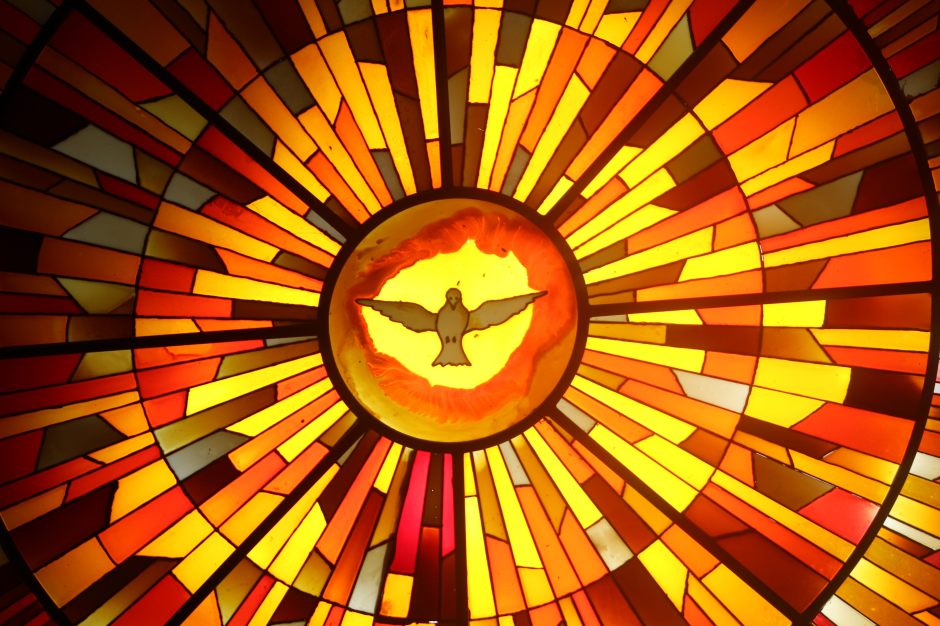
There is a lovely, little-known Memorial of the Blessed Virgin Mary under the title of Mary, Mother of the Church. It was established by Pope Francis in 2018 and is celebrated on the Monday after Pentecost.

On this Memorial, I find myself praying with the way that the Holy Spirit descended upon Mary, overshadowing her at the Annunciation. The Gospel says clearly that the Word becomes incarnate by the work of the Holy Spirit in the virginal womb of Mary (see Mt 1:18, Lk 1:35). I marvel at the way the Holy Spirit permeated Mary’s life for the rest of her life, giving life and hope to those who were around her. When she greeted Elizabeth, for instance, her elderly cousin who was shortly to give birth to John the Baptist, this humble woman exclaimed at Mary’s arrival, and was “filled with the Holy Spirit” (Lk 1:41). The Spirit brought Simeon to the Temple to hold in his arms, to see with his very eyes, the infant Jesus who had been brought in Mary’s arms to be presented in that holy place (see Lk 2:25-27).

Finally, the apostles had gathered around the Mother of Jesus after he had ascended into heaven, waiting with her for the outpouring of the Holy Spirit. Mary knew well the presence, almost the “feel”—spiritually speaking—of being inhabited, of being a Temple, of the Spirit of Jesus. She had profound spiritual sensitivity and was no stranger to the movement of the Spirit, through whom the Son of God took flesh within her.

At the Annunciation she became the Mother of Jesus, the Mother of the Son of God, and at that moment, in some mysterious way, the Mother of us, all of us who are the Mystical Body of Jesus Christ.

In the Cenacle, as the Spirit was poured out on all Jesus’ disciples praying there, Mary is manifested as a type of the Church who, as a mother herself, will give birth to children of God at the baptismal fonts of every country and every time through the grace poured out by the Spirit. This grace is a gift given on the initiative of God, purifying and elevating our nature without suppressing or changing it in its very being.

At the Annunciation Mary became the Mother of Jesus, the Mother of the Son of God, and at that moment, in some mysterious way, the Mother of us, all of us who are the Mystical Body of Jesus Christ.

Mary, Mother of the Church—our Mother, yes. But we, as a member of the Church, participate in this Motherhood by bringing others to the Church, to baptism, to the sacraments, to grace, to prayer, to communion with the other members of the Body of Christ. Mary shows us how to be a mother, solicitous and simple in the way we care about the salvation of those with whom we journey on the road of life.

The apostles went forth from the Cenacle, now powerfully sensitive to the movement of the Spirit who was sending them into the world with the mission of Jesus:

“Go into all the world and preach the gospel to the whole creation. He who believes and is baptized will be saved.” ( Mk 16:15-16)

They preached and then they baptized that day over 5000 persons. From that humble Cenacle where the disciples of Jesus received the divine gift of the Spirit, the Church has spread out, lifting people up to Jesus, as new citizens of the kingdom of glory.  

Mary, Mother of the Church, teach me how to be a mother to people who have fallen away from the Church. Inspire me how to enter into the troubled moments of others’ lives with a quiet invitation to accompany me to the Eucharist or adoration, there to meet your Son. Encourage me to say a gentle word of faith at a time when their heart is ready to receive it. Mary, Mother of the Church, pray for me.

Jesus Preaches in Nazareth – Making Space for the Word (Horizons of the Heart 35)

The grace we are asking of God: to discover Jesus in my own personal story so that my personal myth may be transformed in Jesus, as was that of Ignatius, that I will be disposed to hear God’s call and follow it wholeheartedly

Horizons of the Heart is inspired by the Spiritual Exercises of St Ignatius and my own notes from my thirty-day Ignatian retreat in 2022. See an index for the whole series.

Begin by relaxing your body, your mind, letting go of anxieties and ambitions and expectations and plans… Lay all that you notice and all that you are bare and exposed before the Father who welcomes you with a gaze that is gently loving. Settle into the silence that runs deeper than emotional turbulence… Move beyond imagination where you wait upon the stirring of the soul and the movement of the heart. Return to Jesus to find the Rest he offers…to welcome the gift…to become a child held in safe arms….

Making Space for the Word

Ask Jesus that every aspect of this prayer will please him and will give glory to God.

Jesus returned to Galilee in the power of the Spirit, and news about him spread through the whole countryside. He was teaching in their synagogues, and everyone praised him.

He went to Nazareth, where he had been brought up, and on the Sabbath day he went into the synagogue, as was his custom. He stood up to read, and the scroll of the prophet Isaiah was handed to him. Unrolling it, he found the place where it is written:

“The Spirit of the Lord is on me,
    because he has anointed me
    to proclaim good news to the poor.
He has sent me to proclaim freedom for the prisoners
    and recovery of sight for the blind,
to set the oppressed free,
    to proclaim the year of the Lord’s favor.”

Then he rolled up the scroll, gave it back to the attendant and sat down. The eyes of everyone in the synagogue were fastened on him. He began by saying to them, “Today this scripture is fulfilled in your hearing.” (Luke 4:14-21 NIV)

Slowly read the passage for your meditation once. Leave some moments of silence and then read it again with the intention of entering into the story, of observing the details of what is happening. Take some time to set the stage and picture the environment in which the story takes place.Use one of your five senses that is most helpful in entering into an experience. For some it is sight—visualizing what is happening, for others it is hearing—noticing sounds like the swoosh of a robe, a voice, the people sitting down, the sounds of nature or feet as they walk…

I invite you to zoom out and see this event within the larger arc of Jesus’ life and mission. This passage, which we’ve heard so many times, is really the beginning of a love story. It is the entrance of the lover who has come to woo his bride Israel and all humanity. You may wish to read through the passage a third time looking for hints of this story of love.

The way this passage is set up is similar to another biblical account of the entrance of a Lover. This one is found in the Old Testament book Song of Songs:

Listen! I hear my lover’s voice.
I know it’s him coming to me—
leaping with joy over mountains,
skipping in love over the hills that separate us,
to come to me (Song of Songs 2:8).

Notice your response to this passage. What occurs to you? What surprises you? What moves within you? What is your emotional response: hope? Excitement? Relief? Uncertainty? Fear? Joy?

Entering more deeply into the Love-Story of the Word Made Flesh

The Lover comes. He chooses his bride.

Jesus returned to Galilee in the power of the Spirit, and news about him spread through the whole countryside. He was teaching in their synagogues, and everyone praised him. He went to Nazareth, where he had been brought up…

Listen! I hear my lover’s voice.
I know it’s him coming to me— (Sg 2:8)

The Lover enters…

…and on the Sabbath day he went into the synagogue, as was his custom.

leaping with joy over mountains,
skipping in love over the hills that separate us… (v. 8)

The Lover stands…

He stood up to read, and the scroll of the prophet Isaiah was handed to him.

Now he comes closer,
even to the places where I hide.
He gazes into my soul,
peering through the portal
as he blossoms within my heart. (v. 9)

The Lover speaks…

Unrolling it, he found the place where it is written:

“The Spirit of the Lord is on me,
    because he has anointed me
    to proclaim good news to the poor.
He has sent me to proclaim freedom for the prisoners
    and recovery of sight for the blind,
to set the oppressed free,
    to proclaim the year of the Lord’s favor.”

Then he rolled up the scroll, gave it back to the attendant and sat down. The eyes of everyone in the synagogue were fastened on him. He began by saying to them, “Today this scripture is fulfilled in your hearing.” (Luke 4:14-21 NIV)

The one I love calls to me:
Arise, my dearest. Hurry, my darling.
Come away with me!
I have come as you have asked
to draw you to my heart and lead you out.
For now is the time, my beautiful one.
The season has changed,
the bondage of your barren winter has ended,
and the season of hiding is over and gone.
The rains have soaked the earth
and left it bright with blossoming flowers.
The season for singing and pruning the vines has arrived.
I hear the cooing of doves in our land,
filling the air with songs to awaken you
and guide you forth.
Can you not discern this new day of destiny
breaking forth around you? (v. 10-13)

Ask for the grace “to know Jesus intimately, to love him more intensely, and so to follow him more closely.”

Here you are entering into the Mystery

This deeper contemplation of Jesus is an apprenticeship of your feelings and senses in which you are formed in such a way that you feel with Jesus, that your feelings become those of Jesus.

Entering into the mystery you humbly allow Jesus to be your Master, to educate your senses and feelings according to the pattern of his own life and teachings. It is a matter of becoming saturated with Jesus’ own way of being and feeling.

As you re-read the passage from Luke one more time, allow yourself to enter into the feelings of Jesus. In the thought of Ignatius, to sense what Jesus is experiencing includes mental, intuitive, emotional feelings, and bodily responses. Enter into the sense of a Lover who experienced such love for the people in Nazareth, seeing them with the eyes of God their Creator, with the heart of a Father who had been following his people for thousands of years, preparing them for the arrival of his Son who would convey to them in word and deed the treasures of his heart.

Jesus hadn’t arrived at the village of Nazareth just before the synagogue service (since walking for any great distance was forbidden on the Sabbath), so he would have walked through the city, greeted neighbors and friends, picked up the children who came to see him as he approached Mary’s house, listened to stories and sorrows, and spent at least a couple nights with Mary in the home in which he had grown up in. With your inspired imagination enter into Jesus’ arrival in Nazareth and the morning of the Sabbath where he joined the men in the synagogue. Allow these sense images to surface in your consciousness without trying to control or interpret them. Experience in Jesus and yourself any sense responses on the level of thoughts, affectivity, physical sensations, intuition and emotions. Allow yourself to gradually be overtaken by the was Jesus experienced loving, being a Lover—both for the people of Nazareth… and for you… Gently soak in these meaningful impressions.

What is the grace or spiritual gift you desire….

A gift to take with you

Allow an image or object that encapsulates all these experiences to form in your mind. Take some time to speak with God about the meaning or significance of this object.

Ask Mary, Joseph and Jesus to show you one specific gift they wish to give you. Receive it and remain in stillness and quietly relaxed presence under the influence of the Holy Spirit.

Reviewing the Graces of Prayer

When you finish praying, write down the main gifts and discoveries from this time of intimate contemplation. What is one concrete thing you can do to solidify these gifts in your life.

Image Credit: Mouse23 via Pixabay.

The Power of Love (John 15:9-17)

“I have told you this so that my joy may be in you
and your joy might be complete.
This is my commandment: love one another as I love you.
No one has greater love than this,
to lay down one’s life for one’s friends.
You are my friends if you do what I command you.”

John 15:9-17

Why is it that we are “commanded” to love? Wouldn’t it be better if we were invited to love others? Isn’t it true that no one can make us love another person? And if we love out of duty are we really loving at all?

There have been any number of people in my life that I personally have not liked to be around. Over the years, however, I have discovered that my life is about more than getting along, or obtaining what I want, or experiencing pleasant circumstances.

As a Christian, my life is no longer my own. I have been given the grace to experience the absolute love of God poured out on me in the sacrament of baptism and the only response to that overwhelming and limitless gift of God’s love and grace is to return love for love in as complete a manner as possible. As I put on the Lord Jesus, and I actualize his utter selfless loving here and now in whatever situation I find myself in through my own faltering attempts to love another, I keep the one command I have been given by Jesus at the Last Supper: “This is my commandment: love one another as I love you.” No, it is not a suggestion, if I feel like it, if it works out, or if it is to my benefit. That is not the way Jesus loved us and is not the way he commands that we love one another.

I will love you, I can say even as I wrestle within a relationship, but I may not agree with you.

I will love you, even though I don’t really prefer being around you.

I will love you, even though I will take steps to protect myself from your behaviors.

I will love you because Jesus has loved me and because Jesus loves you.

Love gives meaning to all the other commandments.

Love gives meaning to every suffering.

The power of love alone can give ultimate direction even to the hard realism of economics and politics and social strife and issues of social injustice and disparity. Love alone can break these open so they serve the world in charity.

Just before his death, Jesus talked about love, unity, friendship, glory, and joy, that the love the Father has for Jesus may be in us and that Jesus may be in us. If we focus on love, all else will follow. Love will lead us to unity and glory and joy, as Jesus is in us and we in him so that we may be brought to complete unity.

This love is the bedrock of our Christian life. If we miss this we have missed everything. The “command” should make it really stand out to us so that we keep this front and center in our journey to becoming and loving like Christ.

Image: Christian R. Rodríguez via Cathopic

Praying with this Passage of Scripture

Lectio Divina is a way of listening to God as he speaks in his Word. It is a practice of communicating with God through Scripture and attending to God’s presence and what he wishes to tell us. In this slow and prayerful reading of the Word of God, we allow ourselves to be transformed by the Spirit who forms us into the image of Christ. There are four movements in Lectio Divina: Read (lectio), Meditate (meditation), Pray (oratio), Contemplate (contemplation).

Begin by finding a still space to pray. Breathe deeply and become quieter within. Abandon any agenda, worries or thoughts you bring to this prayer and entrust these things to the merciful care of God. Ask for the grace to be receptive to what God will speak to you through this Scripture reading. Grant me, Jesus Divine Master, to be able to know the mysteries of the kingdom of God and your unfathomable riches. Grant that your word penetrate my soul; guide my steps, and brighten my way till the day dawns and darkness dissipates, you who live and reign forever and ever Amen.

Read (lectio)
Begin by slowly and meditatively reading your Scripture passage out loud. Listen for a particular word or phrase that speaks to you at this moment and sit with it for a time.

Pray (oratio)
Read the text a third time. Listen for what God is saying to you. Speak heart to heart with God. Notice the feelings that this conversation with God raises up within you. Share with God what you notice about your response to this conversation. You may wish to return to repeating the phrase quietly and gently, allowing it to permeate you more and more deeply.

Contemplate (contemplatio)
Read the text a final time. Now be still and rest in God’s embrace. Ask God to give you a gift to take with you from this prayer. You might ask God if he is inviting you to do some action, for instance, make some change in your thoughts, attitudes or reactions, in the way you speak or how you treat others. Thank God for this gift and invitation as you conclude your prayer.

Image: Myriams-Fotos; pixabay.com
Do you recognize Jesus when he calls your name? (John 10:22-30)

“My sheep hear my voice;
I know them, and they follow me.
I give them eternal life, and they shall never perish.
No one can take them out of my hand.
My Father, who has given them to me, is greater than all,
and no one can take them out of the Father’s hand.
The Father and I are one.”

John 10:22-30

My sheep hear my voice; I know them, and they follow me. I give them eternal life, and they shall never perish.

In the time of Jesus, the families of a village often kept their herds of sheep together in a common pen. In the morning the shepherds would come and call their own sheep by name. The shepherd had such an intimate knowledge of his sheep and a genuine love for them, that he would call them individually to follow him to green pastures and streams of running water.

Following the shepherd, then, is a matter of love and being cared for. It is a relationship of trust and belonging. When Jesus speaks of his followers he refers often to shepherding, because he wants us to know how much he longs for us to willingly adhere to him with all our being and to trust him to provide for us. Sheep know they belong to a shepherd. They are named, known, and counted at the end of every single day before being settled down for the night.

There are two ways a shepherd would lead his flock. Most often we see the shepherd walking in front of the sheep. There the shepherd can recognize danger and lead the sheep in the safest path. The shepherds lead by showing the sheep the best path to take.

At other times, the shepherd leads his flock from behind. In this case the shepherd is driving the sheep toward the destination and making sure that they don’t dilly-dally along the way, wandering off after some distraction or other.

In what area of your life is Jesus desiring to shepherd you more closely? Is there a destination or goal on the horizon to which he is drawing your heart? Have you found patterns of distraction in your life which keep you dilly-dallying along the way? Can you hear your Shepherd’s voice? Do you recognize when he calls your name?

Image: Gerd Altmann; Pixabay.

Praying with this Passage of Scripture

Lectio Divina is a way of listening to God as he speaks in his Word. It is a practice of communicating with God through Scripture and attending to God’s presence and what he wishes to tell us. In this slow and prayerful reading of the Word of God, we allow ourselves to be transformed by the Spirit who forms us into the image of Christ. There are four movements in Lectio Divina: Read (lectio), Meditate (meditation), Pray (oratio), Contemplate (contemplation).

Begin by finding a still space to pray. Breathe deeply and become quieter within. Abandon any agenda, worries or thoughts you bring to this prayer and entrust these things to the merciful care of God. Ask for the grace to be receptive to what God will speak to you through this Scripture reading. Grant me, Jesus Divine Master, to be able to know the mysteries of the kingdom of God and your unfathomable riches. Grant that your word penetrate my soul; guide my steps, and brighten my way till the day dawns and darkness dissipates, you who live and reign forever and ever Amen.

Read (lectio)
Begin by slowly and meditatively reading your Scripture passage out loud. Listen for a particular word or phrase that speaks to you at this moment and sit with it for a time.

Pray (oratio)
Read the text a third time. Listen for what God is saying to you. Speak heart to heart with God. Notice the feelings that this conversation with God raises up within you. Share with God what you notice about your response to this conversation. You may wish to return to repeating the phrase quietly and gently, allowing it to permeate you more and more deeply.

Contemplate (contemplatio)
Read the text a final time. Now be still and rest in God’s embrace. Ask God to give you a gift to take with you from this prayer. You might ask God if he is inviting you to do some action, for instance, make some change in your thoughts, attitudes or reactions, in the way you speak or how you treat others. Thank God for this gift and invitation as you conclude your prayer.

Image: Myriams-Fotos; pixabay.com

More than to be heard, we need to be Loved (Luke 24:13-35)

That very day, the first day of the week,
two of Jesus’ disciples were going
to a village seven miles from Jerusalem called Emmaus,
and they were conversing about all the things that had occurred.
And it happened that while they were conversing and debating,
Jesus himself drew near and walked with them,
but their eyes were prevented from recognizing him….
As they approached the village to which they were going,
he gave the impression that he was going on farther.
But they urged him, “Stay with us,
for it is nearly evening and the day is almost over.”
So he went in to stay with them.
And it happened that, while he was with them at table,
he took bread, said the blessing,
broke it, and gave it to them.
With that their eyes were opened and they recognized him….

Luke 24:13-35

“‘Stay with us, for it is nearly evening and the day is almost over.’ So [Jesus] went in to stay with them. And it happened that, while he was with them at table, he took bread, said the blessing, broke it, and gave it to them.”

I wonder what Jesus felt when he was invited to stay with these two disciples making their away from all that had transpired in Jerusalem to the village of Emmaus. Certainly, Jesus had met these two disciples on the road. He had listened to their discouragement and disillusionment. He had even spent quite a bit of time teaching them, “Then beginning with Moses and all the prophets, he interpreted to them what referred to him in all the scriptures.” With all of that, however, Jesus was hoping for more. We need more than to be heard and understood and have our minds and hearts refreshed with an encounter with Truth. Deep down, the human heart yearns for intimacy and so does the heart of Jesus.

I can imagine Jesus, as he was clearly “giving the impression” that he was intending to go on his way, feeling overwhelmed with joy when the disciples invited him into the intimacy of their home. Jesus never forces his presence and his love on anyone. We can imagine them scouring about making sure there was a bed prepared and thinking about their evening meal.

When we invite Jesus into our hearts with this great hope of satisfying the longing for intimacy that both Jesus and we have, we often scurry about preparing things for his stay, telling him things, saying prayers, asking for what we need, tidying up our hearts as best we can. Jesus enters where he is invited in order to give himself entirely to us. And so when they sat down for their evening meal there is no mention of what the disciples had prepared. Instead, there is recounted the meal Jesus provided them. “And it happened that, while he was with them at table, he took bread, said the blessing, broke it, and gave it to them. With that their eyes were opened and they recognized him.”

Today, Jesus is “hanging around,” to use a somewhat colloquial phrase, hoping that you will invite him to stay with you. Invite Jesus in. Don’t be too worried about what your heart looks like or how you will make him feel welcome. Instead, for this time, just watch him. Experience his joy at being invited to your house, to your heart. Let him be the giver and you the receiver. Allow him to share his joy with you.

Image: Giovanni Battista Piazzetta, Public domain, via Wikimedia Commons

Praying with this Passage of Scripture

Lectio Divina is a way of listening to God as he speaks in his Word. It is a practice of communicating with God through Scripture and attending to God’s presence and what he wishes to tell us. In this slow and prayerful reading of the Word of God, we allow ourselves to be transformed by the Spirit who forms us into the image of Christ. There are four movements in Lectio Divina: Read (lectio), Meditate (meditation), Pray (oratio), Contemplate (contemplation).

Begin by finding a still space to pray. Breathe deeply and become quieter within. Abandon any agenda, worries or thoughts you bring to this prayer and entrust these things to the merciful care of God. Ask for the grace to be receptive to what God will speak to you through this Scripture reading. Grant me, Jesus Divine Master, to be able to know the mysteries of the kingdom of God and your unfathomable riches. Grant that your word penetrate my soul; guide my steps, and brighten my way till the day dawns and darkness dissipates, you who live and reign forever and ever Amen.

Read (lectio)
Begin by slowly and meditatively reading your Scripture passage out loud. Listen for a particular word or phrase that speaks to you at this moment and sit with it for a time.

Pray (oratio)
Read the text a third time. Listen for what God is saying to you. Speak heart to heart with God. Notice the feelings that this conversation with God raises up within you. Share with God what you notice about your response to this conversation. You may wish to return to repeating the phrase quietly and gently, allowing it to permeate you more and more deeply.

Contemplate (contemplatio)
Read the text a final time. Now be still and rest in God’s embrace. Ask God to give you a gift to take with you from this prayer. You might ask God if he is inviting you to do some action, for instance, make some change in your thoughts, attitudes or reactions, in the way you speak or how you treat others. Thank God for this gift and invitation as you conclude your prayer.

Image: Myriams-Fotos; pixabay.com