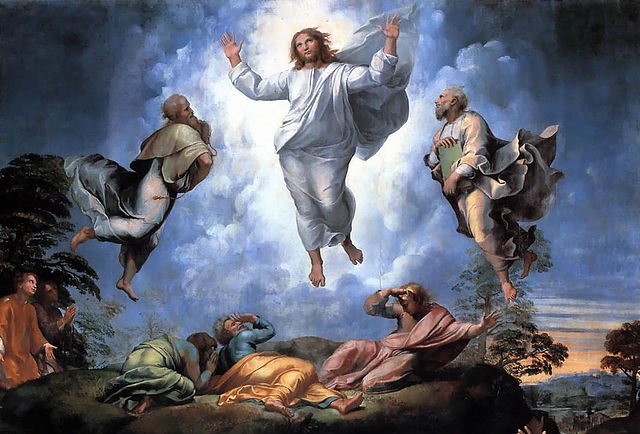
Jesus Preaches in Nazareth – Being in Jesus (Horizons of the Heart 38)

The grace we are asking of God: to discover Jesus in my own personal story so that my personal myth may be transformed in Jesus, as was that of Ignatius, that I will be disposed to hear God’s call and follow it wholeheartedly

Horizons of the Heart is inspired by the Spiritual Exercises of St Ignatius and my own notes from my thirty-day Ignatian retreat in 2022. See an index for the whole series.

Begin by relaxing your body, your mind, letting go of anxieties and ambitions and expectations and plans… Lay all that you notice and all that you are bare and exposed before the Father who welcomes you with a gaze that is gently loving. Settle into the silence that runs deeper than emotional turbulence… Move beyond imagination where you wait upon the stirring of the soul and the movement of the heart. Return to Jesus to find the Rest he offers…to welcome the gift…to become a child held in safe arms….

Making Space for the Word

Ask Jesus that every aspect of this prayer will please him and will give glory to God.

All the people in the synagogue were furious when they heard this. They got up, drove him out of the town, and took him to the brow of the hill on which the town was built, in order to throw him off the cliff. But he walked right through the crowd and went on his way. (Luke 4: 28-30) NIV).

We reach more perfect understanding when we take quality time to feel with Jesus, as he reveals himself, looking and hearing, touching and tasting, in the Gospel Word. Contemplation of Jesus becomes the path to imitate Jesus.

Imagine yourself in the crowd of curious men, pushing, pulling, yelling, gathering momentum as they moved Jesus out of the town and to the edge of the cliff.

Now enter into Jesus, into his heart, into his experience of all this…his experience of being the object of anger, resistance, rejection…his experience of being pushed around, ganged up on….

What is Jesus seeing? How does he gaze on each of these men? What does he see deep within them? What does he feel as he sees in them his Father’s creative beauty and goodness?

Ask Jesus to show you his desires for each of them….

In Jesus, has love cast out all fear?

This prayer changes the way we perceive and experience reality. We learn how to be in Jesus and to imitate him in the way he experienced every aspect of human need and desire…

Rest in that awareness as Jesus helps you to resonate with what he resonates with. As you enter into his feelings and the way he uses his senses, you will gradually lose interest in your own spontaneous reactions, defenses, and self-promotions. Jesus will bring you to his way by attraction, sweetness, and beauty. He will make you feel safety, belonging, and hope.

As Joseph Ratzinger wrote:

From the point of view of the Christian faith, man comes in the most profound sense to himself, not through what he does, but through what he accepts. He must wait for the gift of love, and love can only be received as a gift. It cannot be “made” on one’s own, without anyone else; one must wait for it, let it be given to one. And one cannot become wholly man in any other way than by being loved, by letting oneself be loved.

That love represents simultaneously both man’s highest possibility and his deepest need and that this most necessary thing is at the same time the freest and the most unenforceable means precisely that for his “salvation” man is meant to rely on receiving.

If he declines to let himself be presented with the gift, then he destroys himself.

Activity that makes itself into an absolute, that aims at achieving human by its own efforts alone, is in contradiction with man’s being.

Joseph Ratzinger once quoted Louis Evely:  

The whole history of mankind was led astray, suffered a break, because of Adam’s false idea of God. He wanted to be like God. I hope that you never thought that Adam’s sin lay in this … Had God not invited him to nourish this desire? Adam only deluded himself about the model. He thought God was an independent autonomous being sufficient to himself; and in order to become like him he rebelled and showed disobedience.

But when God revealed himself, when God wished to show who he was, he appeared as love, tenderness, as outpouring of himself, infinite pleasure in another. Inclination, dependence. God showed himself obedient, obedient unto death. In the belief that he was becoming like God, Adam turned right away from him. He withdrew into loneliness, and God was fellowship. (Introduction to Christianity, trans J.R. Foster, 267-268.

“To educate our senses and feelings, to become imbued with his way of being and feeling, of resonating with everything that made him resonate, of abhorring everything that he abhorred, of reacting to things and to people as he sed to react, to spontaneously (the goal) feel with Jesus—to be more like him [than ourselves]…” (Imitating Christ our Lord with the Senses: Sensing and Feeling in the Exercises: Antonio Guillen (The Way, 47/1-2, Jan/April 2008), 225-241).

A gift to take with you

Allow an image or object that encapsulates all these experiences to form in your mind. Take some time to speak with God about the meaning or significance of this object.

Ask Mary, Joseph and Jesus to show you one specific gift they wish to give you. Receive it and remain in stillness and quietly relaxed presence under the influence of the Holy Spirit.

Reviewing the Graces of Prayer

When you finish praying, write down the main gifts and discoveries from this time of intimate contemplation. What is one concrete thing you can do to solidify these gifts in your life.

Image Credit: ChrisG via Pixabay

We belong to each other (Matthew 18:15-20)

“Again, amen, I say to you, if two of you agree on earth
about anything for which they are to pray,
it shall be granted to them by my heavenly Father.
For where two or three are gathered together in my name,
there am I in the midst of them.”

Matthew 18:15-20

Every time I watch the altar server carrying the cross and leading the procession to the altar while the entrance hymn is sung, I feel slightly overwhelmed. We are being gathered together by Christ himself. It is something that is happening to us, given to us, being done through us. We are entering into the presence of Christ as into a new “dimension” which allows us to see the ultimate reality of life.

We are not gathering together like we gather at a meeting or a club house or a restaurant.

We are doing something more than going to this or that Mass in one parish or other at a time most convenient to us.

We are answering a call to do what is most natural to the human creature: to adore. We are answering an invitation to keep our hearts lifted high. We are plunging in liturgy and sacrament into the new life of the Kingdom. We are approaching the altar which is a sign that we have been given access to the heavenly sanctuary.

“Where two or three are gathered together in my name,
there am I in the midst of them.”

In the Mass celebrated Sunday after Sunday, day after day, Jesus brings our personal reality into harmony with his own heart, his own truth, his own will. In the assembly, our voices and even our lives are more and more harmoniously united, as we become more and more like Jesus himself. That is why Jesus makes clear that we are responsible for each other, that we are “brother and sister” to each other. If one member of the communion gathered in Christ is having difficulty, or straying, or offending in some significant way, indifference or tolerance is not an acceptable response, since Jesus himself outlines in this passage a process for winning back our brother or sister to live more deeply their new life in Christ.

In the end, we do not belong to ourselves. We belong to Christ. We belong to each other. When we have answered to the initiative of Christ who gathers us together, we grow more completely into one harmonious voice with him and with each other as we offer praise to the Father and intercede for the world.

Image: Felipe Balduino via Pexels

Praying with this Passage of Scripture

Lectio Divina is a way of listening to God as he speaks in his Word. It is a practice of communicating with God through Scripture and attending to God’s presence and what he wishes to tell us. In this slow and prayerful reading of the Word of God, we allow ourselves to be transformed by the Spirit who forms us into the image of Christ. There are four movements in Lectio Divina: Read (lectio), Meditate (meditation), Pray (oratio), Contemplate (contemplation).

Begin by finding a still space to pray. Breathe deeply and become quieter within. Abandon any agenda, worries or thoughts you bring to this prayer and entrust these things to the merciful care of God. Ask for the grace to be receptive to what God will speak to you through this Scripture reading. Grant me, Jesus Divine Master, to be able to know the mysteries of the kingdom of God and your unfathomable riches. Grant that your word penetrate my soul; guide my steps, and brighten my way till the day dawns and darkness dissipates, you who live and reign forever and ever Amen.

Read (lectio)
Begin by slowly and meditatively reading your Scripture passage out loud. Listen for a particular word or phrase that speaks to you at this moment and sit with it for a time.

Pray (oratio)
Read the text a third time. Listen for what God is saying to you. Speak heart to heart with God. Notice the feelings that this conversation with God raises up within you. Share with God what you notice about your response to this conversation. You may wish to return to repeating the phrase quietly and gently, allowing it to permeate you more and more deeply.

Contemplate (contemplatio)
Read the text a final time. Now be still and rest in God’s embrace. Ask God to give you a gift to take with you from this prayer. You might ask God if he is inviting you to do some action, for instance, make some change in your thoughts, attitudes or reactions, in the way you speak or how you treat others. Thank God for this gift and invitation as you conclude your prayer.

Image: Myriams-Fotos; pixabay.com
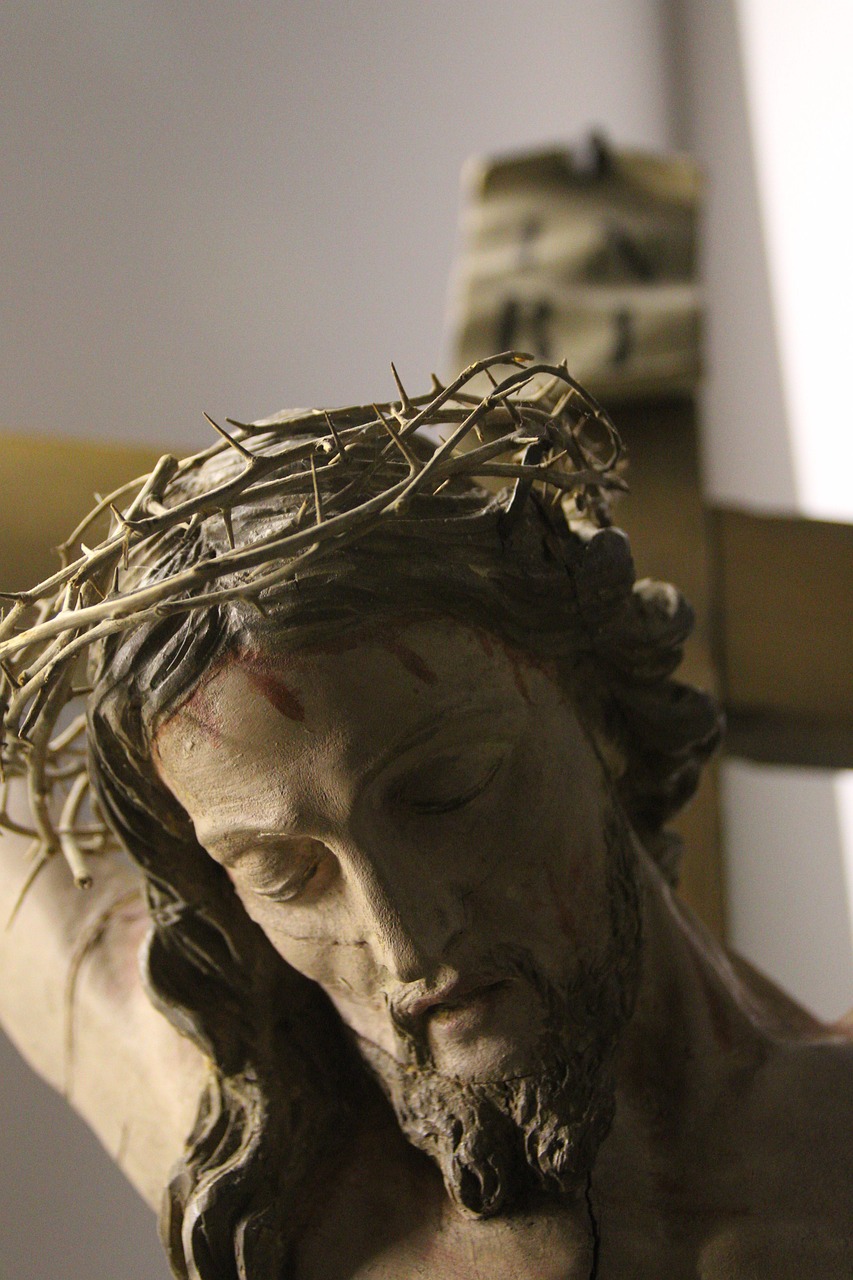
Being the Child God Made You: Receiving God’s Love

https://www.podbean.com/media/share/pb-s4y27-1695f95

Welcome to the first in the series: Being the Child God Made You where we’re exploring how to be the child that Jesus asks us to be. Today we’ll be talking about how to accept our own neediness and also how to receive God’s love, especially when we find it difficult.

Excerpts:

I heard these words in my heart: “You are just as helpless, and lovely, and loved as this tiny baby. She isn’t doing a single thing to ingratiate herself to anyone, other than to just be. Yet she is so endearing as she expresses what she needs and her parents jump to be there at her side, providing what she can’t provide for herself.”…

It takes a huge act of courage to tell someone we need something. We might be refused. We might be rejected. We might be ridiculed for what we can’t do ourselves. This dynamic, familiar to us all, looks one way as kids and another way when we are in the height of our adult years, and still another when we are in our senior years. To admit we can’t do something that is essential to a job we hold is risky. To admit we can no longer accomplish what is required for basic daily living may feel humiliating. To surrender what we really want to happen for ourselves or for another could feel like failure. Only the courageous are willing to be as honest as a baby about what they are undergoing, feeling, and needing….

To connect to more resources for spiritual formation: www.touchingthesunrise.com

It Is Good for Us To Be Here

Dear Friends,

This morning while I was praying the Office of Readings, I was deeply moved, once again, by the liturgical praying of the psalms and readings, finding in them a response my heart so needs to the more difficult signs of the times we are living together. I wanted to simply share a few of these things with you.

As you read these snippets from the Office of Readings, bring before Jesus whatever worries or angers or frightens you about the world we are living in. Allow your heart to be fragile in his hands, turn your eyes toward his glory, as he invites you to know his love for the world he made…

Psalm 84

How delightful is your dwelling-place, Lord of hosts!
  My soul is weak with longing for the courts of your palace.
  My heart and my body rejoice in the living God.
Even the sparrow finds itself a home,
  the swallow a nest to raise her young –
  in your altars, O Lord,
  Lord of strength, my king and my God.
Blessed are they who dwell in your house:
  they will praise you for ever.

Know that the Lord has made this world and all that is in it. He is the potter who has fashioned each and every person in their mother’s womb. He guards us in the midst of all the events of history.

Psalm 97

You who love the Lord, hate evil!
The Lord protects the lives of his consecrated ones:
  he will free them from the hands of sinners.
A light has arisen for the just,
  and gladness for the upright in heart.
Rejoice, you just, in the Lord
  and proclaim his holiness.

The Lord reigns! The Lord is great! The laws of the Lord are just! May the world one day worship God and serve him, for he is holy!

Psalm 99

The Lord reigns! let the peoples tremble.
  He is enthroned on the cherubim: let the earth shake.
The Lord is great in Zion,
  he is high above all the peoples.
Let them proclaim his name – great and terrible it is,
  let them proclaim his holy name,
  the powerful king, who loves justice.
The laws you establish are just:
  you have given Jacob uprightness and right judgement.
Praise the Lord, our God,
  worship at his footstool,
  for he is holy.

Second Reading

We do not have the grace of Peter, James, and John to see our Lord transfigured before our very eyes. As Bishop Anastasius of Sinai teaches us, however, Jesus still focuses our eyes on this heavenly vision. With our eyes we take into our souls images that disturb and disrupt and dismay. Instead, renew daily this vision that is more true than whatever else is impinging on our senses as we journey through the road to Life.

From a sermon on the transfiguration of the Lord by Anastasius of Sinai, bishop

…Jesus goes before us to show us the way, both up the mountain and into heaven, and – I speak boldly – it is for us now to follow him with all speed, yearning for the heavenly vision that will give us a share in his radiance, renew our spiritual nature and transform us into his own likeness, making us for ever sharers in his Godhead and raising us to heights as yet undreamed of.

…It is indeed good to be here, as you have said, Peter. It is good to be with Jesus and to remain here for ever. What greater happiness or higher honour could we have than to be with God, to be made like him and to live in his light?

 Therefore, since each of us possesses God in his heart and is being transformed into his divine image, we also should cry out with joy: It is good for us to be here – here where all things shine with divine radiance, where there is joy and gladness and exultation; where there is nothing in our hearts but peace, serenity and stillness; where God is seen. For here, in our hearts, Christ takes up his abode together with the Father, saying as he enters: Today salvation has come to this house. With Christ, our hearts receive all the wealth of his eternal blessings, and there where they are stored up for us in him, we see reflected as in a mirror both the first fruits and the whole of the world to come.

Jesus Son of Mary Is the Glory of the Human Race (Matthew 13:54-58)

Jesus came to his native place and taught the people in their synagogue.
They were astonished and said,
“Where did this man get such wisdom and mighty deeds?
Is he not the carpenter’s son?
Is not his mother named Mary
and his brothers James, Joseph, Simon, and Judas?
Are not his sisters all with us?
Where did this man get all this?”
And they took offense at him.
But Jesus said to them,
“A prophet is not without honor except in his native place
and in his own house.”
And he did not work many mighty deeds there
because of their lack of faith.

Matthew 13:54-58

When you reach a certain age you worry about things like your legacy, what you have done with your life and what would have happened if you had made different choices. There is something in us that even unconsciously compares the outcomes of our life achievements with those of others. Physically, financially, spiritually we wonder why we are deficient. Why our life hasn’t been marked with “more”: more beauty, more strength, more wealth, more success, more holiness…. Always more.

Hollywood and social media tickle this very human desire to be and to have more. It’s difficult to settle for being ordinary, unknown, insignificant, not a major player around whom everything revolves and on whom everything depends. As the years pass and we reach our senior years, this begins to feel a little desperate. We know instinctively that we are running out of time and opportunities to make “more” happen.

The people in Nazareth, the neighbors of Jesus’ mother who still remembered Joseph the carpenter every time they used something he had made for them, wanted more stardom in a prophet. Who does he think he is? We rub elbows with his mother at the village well. We know his family. They are just our  neighbors. Just like us. They are no better than us. Who does this Jesus think he is?

Unknowingly, however, they were proclaiming the glory of the human race. God’s Son was born of a virgin, protected and raised by a foster-father who had a normal, everyday job. The Son of God is Emmanuel, God-with-us, God-in-our-midst, God who took flesh from a member of the human race, Mary, and who became a familiar presence as he grew up around the town of Nazareth. God who is our brother and who would one day call his followers his friends, God rooted in our human reality, God who would feed us with his own Body and Blood.

This Gospel passage proclaims the humble origins of the Messiah and the way in which he has “woven” himself, if we could say it that way, into our very humble human reality. We can be sure that as Jesus stands before his Father in heaven, interceding for us, he knows. He knows from the inside out our reality. He understands every bit of our sorrows and the full extent of our joys. He lifts us up into communion with God where we make our forever-home in the Trinity, where we will be eternally “of God” and “in God.” This is what Jesus was inviting his neighbors to join him in, but they wanted more they wanted something else.

Jesus will seem to stumble into your very humble days. In ways that are far from magnificent, he will take up his home in you. As he does this, every day, listen to what he has to say. Let him tease your heart away from the earthly importance you seek, whatever it is, so that he can incorporate you into the glory of the divine life he wishes to share with you for all eternity.

Image: jlmajano via Cathopic

Praying with this Passage of Scripture

Lectio Divina is a way of listening to God as he speaks in his Word. It is a practice of communicating with God through Scripture and attending to God’s presence and what he wishes to tell us. In this slow and prayerful reading of the Word of God, we allow ourselves to be transformed by the Spirit who forms us into the image of Christ. There are four movements in Lectio Divina: Read (lectio), Meditate (meditation), Pray (oratio), Contemplate (contemplation).

Begin by finding a still space to pray. Breathe deeply and become quieter within. Abandon any agenda, worries or thoughts you bring to this prayer and entrust these things to the merciful care of God. Ask for the grace to be receptive to what God will speak to you through this Scripture reading. Grant me, Jesus Divine Master, to be able to know the mysteries of the kingdom of God and your unfathomable riches. Grant that your word penetrate my soul; guide my steps, and brighten my way till the day dawns and darkness dissipates, you who live and reign forever and ever Amen.

Read (lectio)
Begin by slowly and meditatively reading your Scripture passage out loud. Listen for a particular word or phrase that speaks to you at this moment and sit with it for a time.

Pray (oratio)
Read the text a third time. Listen for what God is saying to you. Speak heart to heart with God. Notice the feelings that this conversation with God raises up within you. Share with God what you notice about your response to this conversation. You may wish to return to repeating the phrase quietly and gently, allowing it to permeate you more and more deeply.

Contemplate (contemplatio)
Read the text a final time. Now be still and rest in God’s embrace. Ask God to give you a gift to take with you from this prayer. You might ask God if he is inviting you to do some action, for instance, make some change in your thoughts, attitudes or reactions, in the way you speak or how you treat others. Thank God for this gift and invitation as you conclude your prayer.

Image: Myriams-Fotos; pixabay.com
Gifts from the Eucharistic Congress

Friends,

I wanted to share just a bit of my experience of the Eucharistic Congress held in Indianapolis.

It has been two weeks since I have returned with my sisters from the Eucharistic Congress. Since then I have found myself often on my knees before the Tabernacle in our tiny chapel here in Alexandria, VA. I was one of almost 60,000 adorers in the evening Revival Sessions at the Congress. Here I am one of six, as my sisters and I pray before Jesus in the Eucharist,  the Master who teaches us, heals us, and transforms us by his life-giving love. I think I’m still contemplating how all the magnificence of the liturgies at the Congress is no more amazing than the liturgy and prayer in our little chapel or nearby parish.

Fr. Boniface Hicks in the evening for Reconciliation and Healing.

One of the speakers asked us to think of a song that speaks to the deepest moment of our relationship with Jesus. I immediately thought of Twila Paris’ “How Beautiful.”

How beautiful the hands that served
The wine and the bread and the sons of the earth
How beautiful the feet that walked
The long dusty roads and the hill to the cross
How beautiful, how beautiful, how beautiful
Is the body of Christ…

Looked around Lucas Oil Stadium filled with priests, religious, moms and dads, kids, grandparents, teens…
all truly falling in love with Jesus again…
all worshiping the Lord of Glory and the King of the Universe…

How this revival sessions and liturgies renewed my love for the Bride of Christ. Jesus is beautiful, and his bride the Church is truly beautiful…

The first Revival Evening Session, where all 50,000 of us silently adored Jesus, giving him the first word…

I’m discovering a new appreciation for our Eucharistic spirit. Blessed James Alberione said that our role before the tabernacle is to be:

“living lamps before Jesus in the Eucharist…
handmaids of honor of the tabernacle and of its Divine Dweller;
angels of the Eucharist who receive and who give;
souls who hunger and thirst for the bread of the Eucharist and the water of his grace;
hearts that share with their Spouse in the Eucharist his desires, his goals, his self-sacrifice for all;
the intimate confidants of Jesus in the Host, listening to every word of life and meditating on it in your heart, as did Mary.”

And in another place Alberione helped us grasp the disappointment of Jesus who so often  waits for someone to be with him in empty churches: “If Jesus is continually present in the Holy Tabernacle, it means we have the duty to visit him. He awaits us. But our God has to always wait in vain for people who are busy with a thousand things and forget the One who is the Supreme Good, the One who said: ‘I will be with you.’ Jesus waits for us.”

I left renewed, refreshed, and with something very deep that had shifted in the way I now look at the world. Jesus is the Lord of history and nothing that happens really is outside of his love and his mercy.

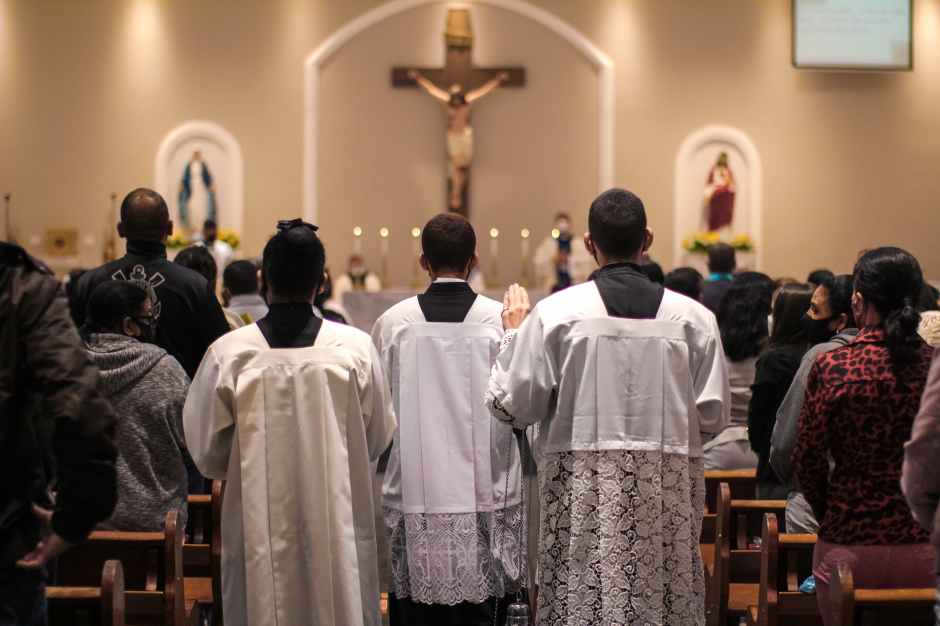
This is the entrance procession of the final liturgy. It took 40 minutes for 2000 deacons, priests and bishops to process in. I was overwhelmed by the sheer magnitude of the goodness of the Bride of Christ all around me and prayed for each person there.

Some beautiful things:

Our Founder Blessed James Alberione told us that only in heaven would we know the good we had done, since our apostolate mainly is about scattering the seed, broadcasting the Word as far as we can. We really don’t know who is on the other side reading, listening, watching…being touched and transformed by God’s grace.

Our exhibit.

Well, in this one instance he was wrong. People were constantly coming up to our tables in the exhibit hall or approaching us in the hallways to thank us for the way in which their experience of God’s grace through the Pauline mission had made them who they are today. I met a woman who had read My Friend magazine (I had been the managing editor of the magazine for kids many moons ago). Proudly she introduced her kids to us. A sister had known Sr Augustine while she was in Kenya and at that time still an Anglican. She wanted a selfie just to show Sr Augustine where she was now. Another sister had attended our Baby Jesus parties in Culver City, California until she was twelve and now serves the homeless as a religious sister.

Chris Stefanick gave an inspiring presentation on the last day. He reminded us that we pray too small. God created the universe so ask BIG THINGS from the Almighty!

There were epiphanies all throughout the five days of the Encounter, moments when God was opening up something deeper in me. For example, I was struck by Chris Stefanick who said about sharing the Gospel of Jesus Christ: “If God opens a door, you open your mouth, that’s it, you’ll figure it out as you start talking.” They were words I needed to hear, and God gave me an opportunity on the plane heading home to practice by sharing Jesus with a seven-year-old girl. (I’m a writer and not comfortable with thinking and speaking on me feet.) But there were other “epiphanies,” as I call them: how God is changing my prayer and my selfishness. By holding on to these experiences in prayer, the graces of the Congress are being planted deeply within.

Sisters made sure that Jesus was accompanied 24/7 during the entire Congress in the Church across the street from the convention center. All day it was filled with people quietly praying before Jesus.

At the Congress we were immersed in what was most real and most true. As I watched the almost 2000 priests, deacons, and bishops process into the Stadium at the opening of the Concluding Mass, a full 40 minutes, I was deeply moved by goodness and hope, and I prayed for each of them and for the whole church in the US. Sometimes I get weighed down by what is broken and difficult and tragic in our church community, so much so that I can forget what is true, and good, and beautiful. We can hold on to what Bishop Cozzens prayed in the first evening’s Revival Session: “We know that we are broken, and our world is broken, but we know that you have conquered sin and death and have given us yourself as a foretaste of heaven. We know, God, that you are able to accomplish far more than we ask or imagine by the power of the Eucharist.” As you reinsert yourself into “real” life, keep the eyes of your heart on Jesus who “sacrificed himself in order to give us life, who loved us to the end.”

The Revival was meant to be a new Pentecost for the Church in the U.S. We certainly felt that in Indy.

As we were sent out from the Congress in the final liturgy, we were told to GO! GO! GO! “Go” is two-thirds of God’s name. We were sent like the first Christians just to tell our story, and to walk with someone back to Jesus.

There is someone in your life right now whom Jesus longs to call to himself. He wants to spark a relationship with them and bless them with his sacraments. In this Year of Mission, Catholics across the U.S. are saying “yes” to a special form of heart-to-heart accompaniment called the Walk With One initiative. You too can share in this by telling your story to someone who still needs to hear Jesus’ love for them. Take some time to download and understand the simple process for Spirit-led accompaniment.

Here I am wearing the hat of Saint Manuel Gonzalez Garcia, the bishop of the abandoned tabernacle. It is a second-class relic. After praying for the grace to love Jesus as Saint Manuel did, someone was kind enough to take my picture.

These first days and weeks after the Congress are the beginning of the rest of my life and yours as a disciple of Jesus Christ. For all of us, something profound has shifted whether we were there or praying from afar, whether we are aware of the transformation that Jesus is bringing about or waiting to see what will emerge in our life. Now is the time to intentionally listen to how God will now be loving you and sending you to others, for the life of the world.