Mary’s Heart: The Ladder God Descended into Our Human Frailty – A Prayer Guide

An Advent Meditation on the Way God Steps into Our Unfinished Places

Advent is a season of both hurry and stillness. We long to give the right gift, and our spirits yearn for the gift of grace that the season celebrates in the Incarnation of the Son of God.

This Advent Meditation opens up the heart of Christmas, the promise of participating in God’s life through the life, death, and resurrection of Jesus, and the way in which this hope offers new horizons for living in difficult times.

Letting Jesus Reach Down

The moment when God chose a quiet heart as His dwelling place

Mary: Scala Caelestis, the “ladder of heaven”

Run to the Eucharist

Christmas: Unconditional Love. Period.

It was a moment that I knew He saw me. He knew me. He loved me.

It wasn’t in a chapel.

It wasn’t when I was praying.

It wasn’t when I was reading a spiritual book.

It was an unexpected moment that He found me and showed me His unconditional love in a way I could receive it and consciously make it mine.

Homework filled my days as I pursued graduate theological studies and I had volunteered to take care of the switchboard on a quiet Saturday afternoon. I was immersed in reading Augustine’s commentary on the Gospel of John.

This great disciple of Jesus, convert, and Doctor of the Church described his weakness. I suddenly knew mine. It was honest. It was raw. It was such a relief to finally name it and own it.

In a flash, I felt like there was someone else in the room. Looking up, I saw no one.

My eyes returned to the page and I continued reading. Once more the piercing sense of being seen with a gentle and compassionate gaze overwhelmed me. This time I knew the eyes, the presence, was deeply established within me, pouring out over my inner landscape.

And the words…

The voice…

“I don’t care if you ever beat this temptation. If you look at me and let me keep looking at you, that’s all I care about. I love you.”

Decades later I inserted this spiritually disruptive event—disruptive in a sacred and healing way—into a book I was writing. My editor still in her twenties or early thirties flagged it as “impossible” and “against Church teaching.” “We need to repent before we hear those words….”

Maybe so, I thought, but I can’t doubt—nothing could make me ever question—that I had heard His voice.

The Full Extent of Our Misery

Today I found a similar story in a book I’m reading for Advent, Do Not Judge Anyone: Desert Wisdom for a Polarized World: Desert Wisdom for a Polarized World, by Isaac Slater, OCSO. In his chapter on Mercy he recounts how the Japanese poet Ryokan had been asked by his sister to give advice to his nephew who was squandering the family’s money. Ryokan went to his sister’s home and stayed three days and said nothing. On the day he left he stood on the porch, called for his nephew, and asked him to tie the strings of his straw sandals. His sister, standing behind the screen, thought that finally he was going to give her son some stern advice. But there were no words. No reproaches. No pleading. Instead, as his nephew bent to tie his sandals he felt something wet on his neck. Surprised, he looked up and saw Ryokan’s eyes full of tears. “At that moment he felt repentance for his wrongdoings. Ryokan stood up and left without a word” (page 13-14).

Slater reflects on the interplay between repentance and mercy:

“Sin can only be known in the moment it’s forgiven. Otherwise we could never bear to face it squarely. It’s the awareness of the full extent of our misery in the same moment that we realize we are loved, unconditionally, just as we are. Knowing we are loved just as we are, while seeing keenly and with fresh eyes the nature of our fault, is what prompts us to want to change, from within and freely. Only when we know that we don’t need to change in order to be loved do we want to change…not to earn what’s already been freely given but from gratitude” (Slater, page 14).

The other day I witnessed a conversation. As a woman told a humorous story, she made a side comment to a priest sitting next to her. It was something about confession or an excuse around the event she was relaying. The priest didn’t miss a beat. He shrugged and said simply,

“There is nothing that we can do to make God love us more. There is nothing we can do to make God love us less.”

Love Reached Down to Us

At Christmas we remember and ponder how Love reached down to us, leaping down, reaching down into the deep waters to draw us out and set us free. In the Resurrection we learn that this divine Love is stronger than death and that nothing in the humble obscurity of our existence can put out the fire in the heart of the Trinity. Nothing we could do, even crucify the Lord of Glory, could overpower what stands as the meaning of the world: relationship. We were created by God in relationship with him, we were pursued, even after we rejected this communion, by the God who wanted us still as his own. The purpose of Jesus’ life and of his death and resurrection was to reveal the unswervability of God being for us and pitching his tent among us in order to fulfill God’s ultimate desire to bring us and the whole creation into God’s communion of forever and unending love.

The Christmas story is about much more than a memory or a re-telling. Once grasped it becomes our story, the history of a Love that forms our identity, establishes our purpose, points us to our destiny, and fills us with joy.

This unconditional love Is the only reason for our existence. Period.

Be Not Weighed Down by the Worries of Life (Luke 21:34-36)

“Be on guard so that your hearts are not weighed down with dissipation and drunkenness and the worries of this life, and that day does not catch you unexpectedly, like a trap. For it will come upon all who live on the face of the whole earth. Be alert at all times, praying that you may have the strength to escape all these things that will take place, and to stand before the Son of Man.”

Luke 21:34-36

A tender reading for the day before Advent. Be on guard. Don’t be lulled into sleep. Let not  dissipation and worry take you captive. Hold carefully and warmly those places in your heart that break—the disappointments, the losses, the depressing burdens. Be alert. The Son of Man, the Child of Bethlehem comes. Cling to the light that Advent promises, to the stars that brighten the darkened skies.  

It’s the eve of the glorious season of Advent.

The Gospel reminds us today to look around and take note of the need for Light, for Hope, for Mercy. A mother tells me her teenage daughter still hasn’t recovered from the isolation imposed in the Covid-19 lockdown. The tears almost capsize her. A grandpa worries his granddaughter will lose her way at college. A friend texts that her cousin has set a date for an abortion.

Be not weighed down by the worries of life, because God has entered into this life to be here with us as our very Life. Be not blinded by the darkness, because we begin from today to prepare for the birth of the Light of the world and the ultimate end of the night. Be not feeble of heart because Jesus conquers every death and restores joy.

Advent is about renewing the fires of joy and the eagerness of hope. It is for the child in us that needs innocence restored by the Child of Bethlehem.

Advent is about walking through the dark that surrounds us with eyes translucent with eagerness for the Kingdom.

Advent is about knowing that the victory of Christ is our victory, that God holds the power in love, and that nothing can wrest us out of his hand.

Image credit: Photo by Rebecca Peterson-Hall on Unsplash

Praying with this Passage of Scripture

Lectio Divina is a way of listening to God as he speaks in his Word. It is a practice of communicating with God through Scripture and attending to God’s presence and what he wishes to tell us. In this slow and prayerful reading of the Word of God, we allow ourselves to be transformed by the Spirit who forms us into the image of Christ. There are four movements in Lectio Divina: Read (lectio), Meditate (meditation), Pray (oratio), Contemplate (contemplation).

Begin by finding a still space to pray. Breathe deeply and become quieter within. Abandon any agenda, worries or thoughts you bring to this prayer and entrust these things to the merciful care of God. Ask for the grace to be receptive to what God will speak to you through this Scripture reading. Grant me, Jesus Divine Master, to be able to know the mysteries of the kingdom of God and your unfathomable riches. Grant that your word penetrate my soul; guide my steps, and brighten my way till the day dawns and darkness dissipates, you who live and reign forever and ever Amen.

Read (lectio)
Begin by slowly and meditatively reading your Scripture passage out loud. Listen for a particular word or phrase that speaks to you at this moment and sit with it for a time.

Pray (oratio)
Read the text a third time. Listen for what God is saying to you. Speak heart to heart with God. Notice the feelings that this conversation with God raises up within you. Share with God what you notice about your response to this conversation. You may wish to return to repeating the phrase quietly and gently, allowing it to permeate you more and more deeply.

Contemplate (contemplatio)
Read the text a final time. Now be still and rest in God’s embrace. Ask God to give you a gift to take with you from this prayer. You might ask God if he is inviting you to do some action, for instance, make some change in your thoughts, attitudes or reactions, in the way you speak or how you treat others. Thank God for this gift and invitation as you conclude your prayer.
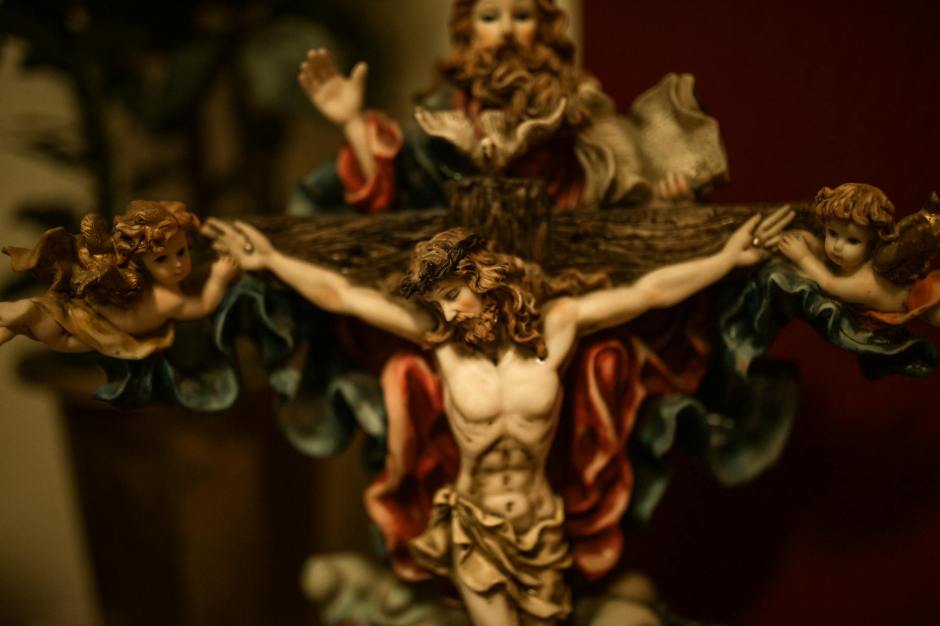
Image: Myriams-Fotos; pixabay.com

Roadmap to Contentment: Don’t Measure Your Life by What You See Today

In a dream or vision, Jesus assured our Founder, Blessed James Alberione, in a time of crisis,

Do not be afraid
I am with you.
From here I will cast light.
Be sorry for sin (or as this is sometimes translated: Live in continual conversion).

In this article, I reflect on the third line of this message, in the context of life, rooted in the heart of God and his love for his people: “From here I will cast light.”

It was clear to Alberione that Jesus was pointing to the Tabernacle to illustrate where FROM HERE was referring to.

From here I will cast light.
From the Eucharist.
From the seed buried in darkness, from which sprouts new life.
From the Eucharist, seed of immortality, where we are assured that death has no more power over us!
From the quiet Center from whom love and light radiate out to the world.
From the silent Word before whom every other word is silenced by this Truth that doesn’t need military might or marketing plans to be effective.
From the Word, the Son hidden in the Father’s embrace, the Child who relies for everything on the providence of his Abba, and present ever on our altars as God-with-us, Emmanuel.

From the One who entrusted himself at the Last Supper to a string of untrustworthy followers until the end of the world…because he knows we need him and our hearts long for him.

From the Bread broken for the life of the world, where the idea of a Utopia is not entertained, but the humble, firm, feet-on-the-ground confidence in the reliability of reality.

From the Eucharistic Heart of Jesus who assures us that the way we are loved and cared for is more beautiful, more amazing, than we could ever imagine.

In the presence of the One who remains with us, among the weeds and the wheat, patient, waiting, loving, responding if and when we turn our gaze on him.

In the presence of the most pure heart of Jesus, who identified himself with his creatures who were mired in mud so thick we could not raise ourselves.

In the presence of the One who did not run away from his Father’s will, and who calls his friends those of us who so often flee this Love.

In the presence of the Lover who still begs for someone to love him wholly, even unto death.

In the school of the One who took up his cross, knowing that most of us would run from ours.

From this place, Jesus, the Lover of us all, casts light into the shadows of our souls and the confusion and darkness in the world.

Scrolling through Substack, I came across this prayer: “Shatter me, Lord. For that’s where I know you best.” (W. Tyler Allen) That’s where I know you as Love, triumphant Love. When I am in a moment of crisis, confusion, or chaos, I cry out from the bottom of my heart, that it is here that I find you, in broken dreams and shattered expectations, that let me climb Calvary and shelter there in the wound in your side.

As St. Claude de Colombiere preached:

Yes, Christians, everything that happens to us in this life happens by the order or permission of a God who always has loved us, and who loves us still more than we love ourselves. He regards us as his creatures, as his children, as his heirs, as his reflections. The benefits that we have received from him have surpassed all our desires; they surpass even our imaginings, and those [benefits] that we receive from him every day are without measure and without number. He has drawn us out of the void, and he is constantly dedicated to save our being and life. He has washed us in the blood of his own Son, and he feeds us today with the flesh of his only Son. Could a heart so tender and so loving resolve to do us the slightest evil; could it even allow that it be done to us, being able to stop it, as he can?

The light I need is this: to know that I am loved by the Father with the same love he has for his own Son.

The light I need is this: to know that even in the confusing bits of my life, of which there are many, Jesus Master is still loving and living and saving and teaching and remolding and remaking and renewing and resurrecting me. I may resist and run from his hands, but I can never escape his Heart.

The light I need is this: to know that taking up the cross is not loss, but gain.

The light I need is this: to know that when I cannot see the way forward, he grabs my hand and carries me into the future.

The light I need is this: to know that I don’t need to have it all figured out and fixed and analyzed. That unknowing and being undone is the way he remakes the one he loves.

The light I need is this: to trust in the glory of the sunset years, making myself both eucharist and lover in Jesus’ hands, for the sake of the world.

We need the light of Jesus in the Eucharist because we get caught in what we see today, as if that is all there is. The present moment can, like a hurricane, whip into fury our thoughts and feelings and imagination. Jesus is the calm in the storm who urges us: Come. From HERE I will cast light.

These days I have been sitting in front of the Blessed Sacrament before Mass, listening to the Surrender Novena, soaking in the words of Jesus to another holy person, Fr. Dolindo.

“Why do you confuse yourselves by worrying? Leave the care of your affairs to me and everything will be peaceful. I say to you in truth that every act of true, blind, complete surrender to me produces the effect that you desire and resolves all difficult situations.

…Pray as I taught you in the Our Father: “Hallowed be thy Name,” that is, be glorified in my need. “Thy kingdom come,” that is, let all that is in us and in the world be in accord with your kingdom. “Thy will be done on Earth as it is in Heaven,” that is, in our need, decide as you see fit for our temporal and eternal life. If you say to me truly: “Thy will be done,” which is the same as saying: “You take care of it,” I will intervene with all my omnipotence, and I will resolve the most difficult situations.

…And when I must lead you on a path different from the one you see, I will prepare you; I will carry you in my arms; I will let you find yourself, like children who have fallen asleep in their mother’s arms, on the other bank of the river. What troubles you and hurts you immensely are your reason, your thoughts and worry, and your desire at all costs to deal with what afflicts you.

…Close your eyes and let yourself be carried away on the flowing current of my grace; close your eyes and do not think of the present, turning your thoughts away from the future just as you would from temptation. Repose in me, believing in my goodness, and I promise you by my love that if you say, “You take care of it,” I will take care of it all; I will console you, liberate you and guide you.”

What new insights into the Eucharist has this article introduced you to?

Is there a place in your life where you need to experience God’s love and compassion? Do you treat yourself with love and compassion in that area of your life?

What would be different if you prayed the Surrender Novena?

Roadmap to Contentment: Do Not Be Afraid!

There are four lines—we could call them “words”—that are on the walls of every Pauline chapel in the world. They surround the Tabernacle. They are, for me, the roadmap to contentment no matter what life throws our way.

By the time I was 28 years old, I had read them, while I was in the chapel to pray, at least…let me get out a calculator…at a minimum 10,000 times. Every day, at least twice a day, for the thirteen years I had been in the community of the Daughters of St Paul….

These words are one of the first things you see after you enter the Daughters of St Paul. They become a path into the charism as you learn more about the heart of James Alberione to whom Jesus spoke these words in a moment of crisis. They become, over the years, a key to understanding your own life as it unfolds.

Do not fear.
I am with you.
From here I will cast light.
Be sorry for sin (this phrase is also translated: Live in continual conversion).

Breaking these down into “words”:

  • Fear
  • I AM
  • Here
  • Continual

A seed is planted

It was just a few short years after my perpetual profession. I was driving to the hospital a sister, an elder sister of the Carini family, who had been a Salesian all her life. This woman religious had been a Salesian provincial superior simultaneously with Sr. Mary Celeste Carini, who had been the provincial superior of the Daughters of St. Paul (and, actually, the first vocation from the United States).

I remember at that time my heart was fragile as it tried to make sense of community dynamics I felt unprepared to navigate. As we crossed Route 9 in Brookline on the way to St. Elizabeth’s Hospital to visit Sr. Mary Celeste, she said words I’ll never forget: “Every day of my life has been more beautiful than the one before.”

I almost choked.

I was silent.

What?  I wanted to cry out! How can you say that, after 60 years of religious life!

Unfortunately for me, I said nothing, and missed the opportunity to learn something more of her story and wisdom. I am grateful, however, that I tucked that piece of wisdom from one of my older sisters into my heart, planted it there, so to speak, where it worked its way deep into the soil, sprouting roots. I returned again and again over the years to sit beside the tiny seedling as it offered new shoots and abundant blossoms.

I was on a quest

You see, I was, in my late twenties, on a quest. I borrowed Butler’s 4 Volume Lives of the Saints from the library, and at night read through the story of every saint who had been a religious. It took me several years.

What did I learn? Every one of them suffered something in their community at the hands of some member—every one without exception.

We can think of John of the Cross, imprisoned by his brothers and yet the writer of Dark Night of the Soul and Ascent to Mount Carmel, and for centuries now the premier guide to contemplative prayer and the journey to holiness.

Or Saint Thérèse Couderc, foundress of the Cenacle Sisters, who was removed from her position as Foundress and Superior, falsely accused of mismanaging funds, sent far away from the motherhouse, and set to doing, basically, yard work and taking care of other hidden responsibilities. What prompted this? A priest decided he was in charge and put a newly received novice as responsible for the community (since she had money-connections). Thérèse Couderc had an understanding of life with God, which she sums up in a phrase: “the surrendered soul has found paradise on earth since she enjoys that sweet peace which is part of the happiness of the elect. …To surrender oneself is to die to everything and to self, to be no longer concerned with self except to keep it continually turned toward God.” This story is not that different from that of Saint Jeanne Jugan, foundress of the Little Sisters of the Poor, and Blessed Marie Ann Blondin, foundress of the Sisters of Saint Anne….and others.

Actually, we could say, in religious life there seems to be quite a lot to “fear.” Religious communities are not immune to the misunderstandings, agendas, jealousies, and injustices that can plague individuals in any relationship or group. After all, we too are still very much on the way, as yet unable to see with the eyes of Christ and to live with the open-hearted love of Christ that gives itself away without expectation of return. We are also very much trying to live, as Saint Paul teaches us, in continual conversion.

So, when Jesus is saying to me as a Daughter of St. Paul, “Do not fear,” is he saying, “Don’t feel afraid?” “Have no fear?” “Be strong!”

I think Jesus is saying that no matter what happens, nothing and no one can separate me from his love for me and his plan for me to be part of his mission for the salvation of the world.

Image by freestocks-photos from Pixabay

After watching moms in our Alexandria Pauline Book Center, I like to think of this word “fear” in the context of a little child. When a child is frightened by something, it runs to its mother, stretches her little arms around her mother’s leg and buries her face, hiding herself, she naively believes, from all that frightens her. And the mother doesn’t say, “Be strong. Why are you afraid? I’m so ashamed of you!” Instead, her heart melts that her child trusts her mother to protect and guide her through the scary moments that are a part of growing up. She reaches down to be with her child. She permits her those frightened feelings while at the same letting her experience security and comfort in her presence.

“Sacrifice was never a matter of surprise”

Thinking of “childhood,” I am reminded of these words of Saint Thérèse of Lisieux, who describes her early months and years in Carmel in this way:

I found the religious life just what I expected, and sacrifice was never a matter of surprise. Yet you know well that from the beginning my way was strewn with thorns rather than with roses.

In the first place, my soul had for its daily food the bread of spiritual dryness. Then, too, dear Mother, Our Lord allowed you, unconsciously, to treat me very severely. You found fault with me whenever you met me. …

On the rare occasions when I spent an hour with you for spiritual direction, you seemed to be scolding me nearly all the time, and what pained me most of all was that I did not see how to correct my faults: for instance, my slow ways and want of thoroughness in my duties, faults which you were careful to point out.

One day it occurred to me that you would certainly prefer me to spend my free time in work instead of in prayer, as was my custom; so I plied my needle industriously without even raising my eyes. No one ever knew of this, as I wished to be faithful to Our Lord and do things solely for Him to see.

… And yet, dear Mother, how grateful I am to you for giving me such a sound and valuable training. It was an inestimable grace. What should I have become, if, as the world outside believed, I had been but the pet of the Community? Perhaps, instead of seeing Our Lord in the person of my superiors, I should only have considered the creature, and my heart, which had been so carefully guarded in the world, would have been ensnared by human affection in the cloister. Happily, your motherly prudence saved me from such a disaster.

And not only in this matter, but in other and more bitter trials, I can truly say that Suffering opened her arms to me from the first, and I took her to my heart” (Story of a Soul, Chapter VII)

Today I am in my early sixties, and much to my surprise, my heart resonates with the contentment of those words shared with me so many years ago by a woman religious faithful to her vocation: “Every day my life has become more beautiful!” What I couldn’t understand, or hardly believe, forty years ago, I know now, so gratefully, to be true.

I’m no John of the Cross, Marie Anne Blondel, or Saint Thérèse. But my heart has quaked many times as I’ve navigated, while living among my sisters, what it is to entrust myself to them and to God, even in moments of fear, loss, and pain. And I haven’t always done it well. Maybe it is because Saint Paul himself was no stranger to these circumstances—he paints them in broad strokes across his letters in the New Testament—that we his Daughters still seek together to live in reconciliation, even as the earth below us seems sometimes to quake, returning again and again to mercy and to love.

Image by Th G from Pixabay

All Sinners Welcome!

It is true that Saint Paul defined charity as patient and kind and not puffed up. It isn’t ambitious and doesn’t seek its own benefit. Perhaps these words brought forward a memory of his own, the days when he violently attacked the followers of the Way—without patience or kindness, in arrogance and ambition and for his own benefit. He continues, then, sharing what deeply had come to fill his life as both giver of charity and recipient of the charity of others: Charity keeps no record of wrongs. Charity bears all things. It believes all things. It hopes all things. It endures all things… (1 Corinthians 13:4-7).

I am reminded of the confessional in the old Cistercian monastery founded in Otterburg in the early 1160s which proclaims in a metal sign above the door: “All Sinners Welcome!” That is, if you’re a sinner, “You’re one of us – you belong!”

Sinners: we could define sinners as masterpieces that aren’t yet finished. Saints still in the making. Those who fall and rise and fall and rise. Those still unaware, weak of will, tepid in love. That is, all of us in one way or another. John of the Cross used to say that we act as sandpaper upon each other. We receive a spiritual refinement through what annoys us in others. Or Mother Thecla Merlo, our co-foundress, who reminded us that we are like pots and pans on a wagon. As the cart moves along we bump and bruise, scrape and, every now and then, break one another. I have been bumped and bruised and have bumped and bruised others. And I have forgiven and been forgiven, and tasted the honey of reconciliation (Colossians 3:13).

I didn’t enter religious life expecting a playground, although I was most certainly naïve about what life in a convent would be like. Even those who are engaged, discover after a few years (or months) of married life it isn’t always fair. It isn’t always what you dreamed of. It certainly isn’t easy. That the only way to make it work is for each to give 100%. And those who set out to do something valuable for the world in a chosen field or career path know that perseverance takes blood, sweat, and tears, amid lots of work, setbacks, and occasional breakthroughs.

But, as a person perseveres, they discover it is beautiful.

I promise you, as the years go by and you reap the fruits of the harvest, it will be very beautiful.

This is the first of what will be four articles on the words that are Jesus’ roadmap to contentment.

Prompts to take to prayer and share with others:

  • How do you react when you hear the words: “In my experience, life has been more beautiful every day.” When you hold these words, what memories and images and feelings emerge? Can you bring these to Jesus with gentle compassion? What does this part of your life need from you right now?
  • Have you ever experienced a time of crisis that ended up being an unexpected gift?
  • Are you still suffering the burden of loss and pain in relationships or life circumstances? In what ways can you see yourself in the stories in this article?
  • Talk to the Lord about what you most desire.

When Jesus Calls You Out of the Tree (Luke 19:1-9)

Jesus entered Jericho and was passing through it. A man was there named Zacchaeus; he was a chief tax collector and was rich. He was trying to see who Jesus was, but on account of the crowd he could not, because he was short in stature. So he ran ahead and climbed a sycamore tree to see him, because he was going to pass that way. When Jesus came to the place, he looked up and said to him, “Zacchaeus, hurry and come down; for I must stay at your house today.” So he hurried down and was happy to welcome him. All who saw it began to grumble and said, “He has gone to be the guest of one who is a sinner.” Zacchaeus stood there and said to the Lord, “Look, half of my possessions, Lord, I will give to the poor; and if I have defrauded anyone of anything, I will pay back four times as much.” Then Jesus said to him, “Today salvation has come to this house, because he too is a son of Abraham.

Luke 19:1-9

It was, it is true, a simple out-patient procedure: metatarsal surgery. It was simple, that is, until I had a stroke the evening of the surgery. Eleven days later I was still in the hospital—struggling to walk, to eat, to talk. That was forty years ago, and I can say that “most” of my life has been lived post-stroke. The confusion of those first weeks and months opened up into the quiet desperation of years of rehabilitation…, flowing into a mighty struggle to uncover my fear of God’s power over my life…, surrendering into the trust that this was and still is a moment of a grace for me through which God gathered the direction of my life toward himself forever.

With the stroke, God took me from the outside to the inside, from the surface to the deep, from the visible to the invisible, from ambition to powerlessness, from earth to heaven, from complacency to a wrestling with him, from healing to more healing to more brokenness to even deeper healing. It is kind of like Zacchaeus. Let me explain.

The little man we call Zacchaeus had his life all figured out. He knew who he thought he was. He knew what he was about. He knew what he wanted, what he had, what he could get when he needed it. On the surface, in what was visible, he was settled in a complacency that isolated him from the others in the village charged that day with the electric excitement of the arrival of Jesus.

Around the passing of Jesus through their town swirled stories of people freed from demonic possession, the lame and the blind and the mute and the deaf and the lepers suddenly released from the captivity of illness, sinners casting themselves down before him in sorrow and repentance and love only to become one of his traveling companions. There was something more to Jesus than the ordinary roving teacher who passed through their village of Jericho now and then. But Zacchaeus didn’t need any of that. He was fine the way he was. But he was just a little bit, just the tiniest bit, curious. And that curiosity sent him up the tree to stake out a spot as an observer, and an observer only.

That was me. No, I’m not short and I certainly don’t climb trees. But I thought, at twenty-one, I had my life all figured out, the externals of my vocation mastered. I didn’t know that I needed healing, that I needed Jesus to make an intervention so decisive in my life that it would bring me face to face with him, that I needed my expectations and strategies upended and the rug ripped out from under me, as Jesus so mercifully did for Zacchaeus.

“I mean to come to your house for dinner today.”

Friends, when Jesus calls you out of the tree, when he moves you from the efficiency of life-all-planed-out, when he intervenes in your plans with a graced but often painful stroke of mercy, climb out of that tree with Zacchaeus. Stand with your head held high. Commit yourself to this new and deepening relationship that Jesus is initiating, and bring the Master within to the areas of your life that are the most broken, and let him change you forever.

Saint Paul points to the truth of these “Zacchaeus moments” in this way: “So we do not lose heart. Even though our outer nature is wasting away, our inner nature is being renewed day by day. For this slight momentary affliction is preparing us for an eternal weight of glory beyond all measure” (2 Cor 4:16-17 NRSVCE).

Image credit: James Tissot, Public domain, via Wikimedia Commons

Praying with this Passage of Scripture

Lectio Divina is a way of listening to God as he speaks in his Word. It is a practice of communicating with God through Scripture and attending to God’s presence and what he wishes to tell us. In this slow and prayerful reading of the Word of God, we allow ourselves to be transformed by the Spirit who forms us into the image of Christ. There are four movements in Lectio Divina: Read (lectio), Meditate (meditation), Pray (oratio), Contemplate (contemplation).

Begin by finding a still space to pray. Breathe deeply and become quieter within. Abandon any agenda, worries or thoughts you bring to this prayer and entrust these things to the merciful care of God. Ask for the grace to be receptive to what God will speak to you through this Scripture reading. Grant me, Jesus Divine Master, to be able to know the mysteries of the kingdom of God and your unfathomable riches. Grant that your word penetrate my soul; guide my steps, and brighten my way till the day dawns and darkness dissipates, you who live and reign forever and ever Amen.

Read (lectio)
Begin by slowly and meditatively reading your Scripture passage out loud. Listen for a particular word or phrase that speaks to you at this moment and sit with it for a time.

Pray (oratio)
Read the text a third time. Listen for what God is saying to you. Speak heart to heart with God. Notice the feelings that this conversation with God raises up within you. Share with God what you notice about your response to this conversation. You may wish to return to repeating the phrase quietly and gently, allowing it to permeate you more and more deeply.

Contemplate (contemplatio)
Read the text a final time. Now be still and rest in God’s embrace. Ask God to give you a gift to take with you from this prayer. You might ask God if he is inviting you to do some action, for instance, make some change in your thoughts, attitudes or reactions, in the way you speak or how you treat others. Thank God for this gift and invitation as you conclude your prayer.
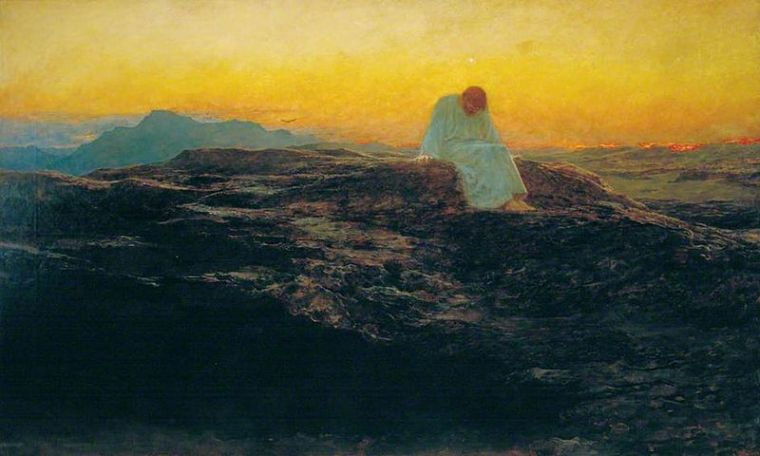
Image: Myriams-Fotos; pixabay.com