
Before we reflect on this passage… Let’s pause for just a moment. Not to get something right, but to arrive.
Wherever you are right now—tired, distracted, open, resistant—just notice.
This is where God is meeting you…. You don’t have to fix or improve it.Scripture doesn’t speak to an ideal version of us. It speaks to us right where we are….
So as you read the Scripture passage, see if you can let the words land not in your mind first, but in your heart… in the place where you actually live.

“Truly I tell you, people will be forgiven for their sins and whatever blasphemies they utter; but whoever blasphemes against the Holy Spirit can never have forgiveness, but is guilty of an eternal sin”— for they had said, “He has an unclean spirit.”
Mark 3:28-30
“I’m afraid I’ve committed blasphemy against the Holy Spirit and I’m going to hell.” With trembling heart, very good Catholics have confided this fear quietly to me. For whatever reason—and there could be many—their minds have zeroed in on this phrase of the Gospel and it has taken over the spiritual horizon of their hearts.
Maybe… Maybe I’ve done it, and I don’t know… I’m afraid there is no place for me in heaven…
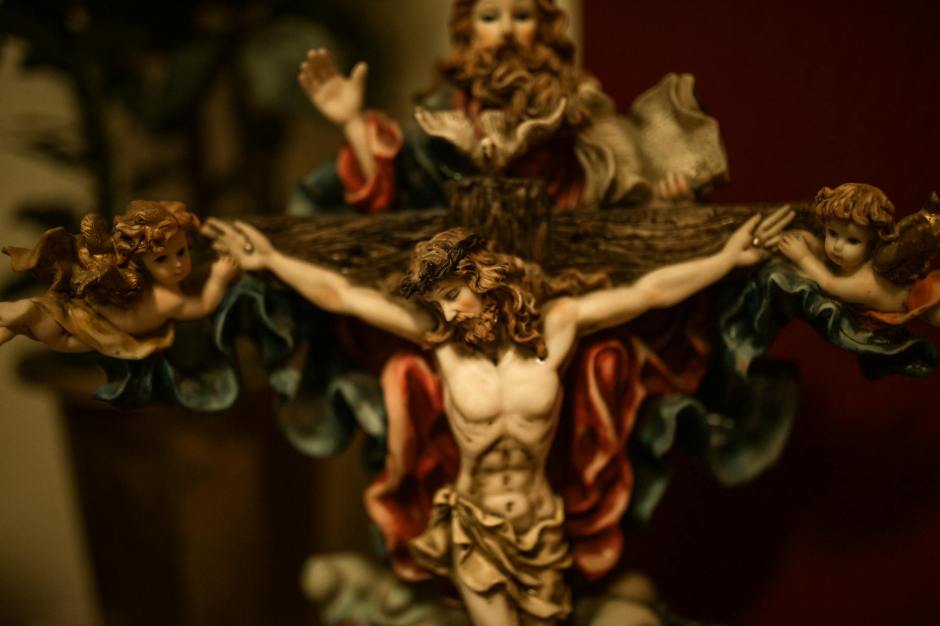
The image accompanying this Gospel reflection is an image of Jesus’ most sacred, most gentle, most loving Heart. We cannot look upon the wounded heart of Jesus without encountering a love that is so completely human and entirely divine.
The fear, though, of accidentally saying something that irredeemably erases the chance of eternal salvation frightens away any confidence of this love.
- So, what do these words of Jesus really mean?
- What is one way you can know for sure you have not committed blasphemy against the Spirit?
- How do you live with the knowledge that you are loved and are a beloved child of God who will never let you go?
I’d suggest that the answer is simple and profound: truth.
First, we must define what is blasphemy against the Holy Spirit. The Catechism states:
“Therefore I tell you, every sin and blasphemy will be forgiven men, but the blasphemy against the Spirit will not be forgiven.” There are no limits to the mercy of God, but anyone who deliberately refuses to accept his mercy by repenting, rejects the forgiveness of his sins and the salvation offered by the Holy Spirit. Such hardness of heart can lead to final impenitence and eternal loss (CCC 1864).
Blasphemy against the Holy Spirit is to refuse God’s mercy. It is a refusal to repent of sin. God does not bring anyone into his kingdom against his/her will.
This would indicate that Jesus was not talking about stray comments that might have been made by accident. He is not talking about speech at all. Blasphemy against the Spirit is a deliberate choice to reject God and to refuse to repent of this.
As St. John Paul II explained in his 1986 encyclical letter Dominum et Vivificantem: “‘Blasphemy’ does not properly consist in offending against the Holy Spirit in words; it consists rather in the refusal to accept the salvation which God offers to man through the Holy Spirit, working through the power of the cross” (no. 46).
It is impossible to do this by accident and without knowing it. In fact, if you are concerned about it, that itself is a sure sign that you haven’t rejected God!
People can feel they haven’t been forgiven by God and their minds can grab on to this statement of Jesus for any number of reasons: emotional, psychological, poor catechetical or spiritual formation being a few of these. These can be causes for not feeling God’s love, but we already know that much of the time our feelings don’t tell us the truth. It could be that speaking with someone who can help us navigate some of these personal realities on a human level can open us to a greater experience of God’s love for us.
We can be absolutely certain that Jesus has forgiven us by the Blood of his cross. In Christ we find the infinite and eternal God who has loved us so much that he offers us a share in his Triune life. He has “loved us to death,” truly, in every sense of that word! Could a love like that be unwilling to forgive us when we are repentant?
We can grow in confidence in this love by encountering Jesus in the sacraments, in prayer and meditation, by nourishing our mind and heart on really good spiritual books, and through helpful and clarifying conversation with others.
Image credit: Photo by RDNE Stock project

I invite you into this space that is very vulnerable. A place in our hearts that is longing for belonging and love, but maybe has learned, somewhere along the way, that belonging and safety had to be secured by getting everything right. Or perhaps was wounded when it encountered a wall instead of an open door of hospitality and acceptance. So it watches, worries, and clings to certainty.
Many of us carry inside a frightened, vigilant part that is always scanning for danger—Have I done something wrong? Have I gone too far? Am I still safe? For some, that part fixates on Jesus’ words about blasphemy against the Holy Spirit and turns them into a looming threat rather than a revelation of mercy.
If you notice this place within you, do not fight it or try to change it. Treat it as you would a frightened child. Compassion. Presence. Mercy.
We can say, I see you how afraid you are. That you’re desperately trying to keep things perfect so that I will be safe.
Now just sit quietly. Tell God: “I need you now. Right here. I don’t understand. I want to trust you with my heart, but I’m afraid of what I’ve done or who I’ve been.” Tell God what you feel: longing, uncertainty, shame, threatened, vulnerable….
Begin to make room for a deeper truth to be heard: you are already being sought, already being held, already being forgiven.
 Touching the Sunrise
Thank you, Sister. I’ve wondered about this many times but never asked about it. You have eased my mind.
LikeLike