
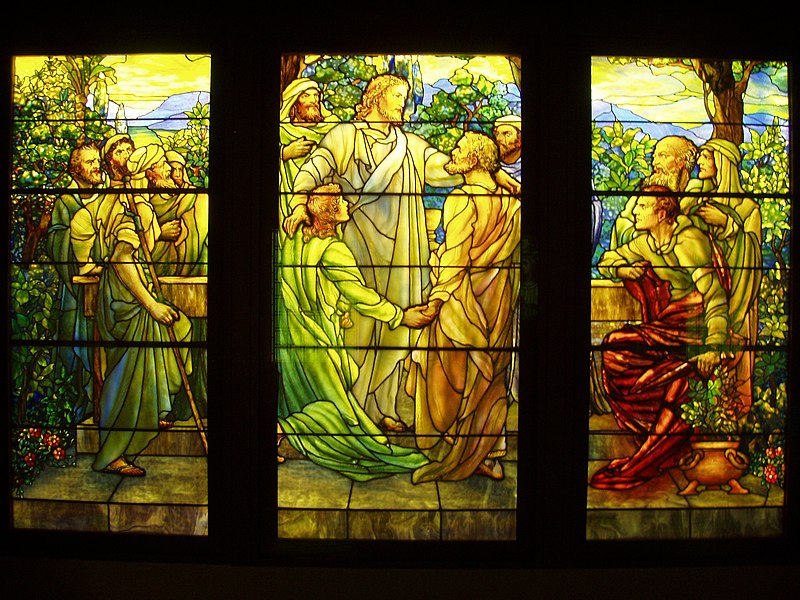
Now Herod the ruler heard about all that had taken place, and he was perplexed, because it was said by some that John had been raised from the dead, by some that Elijah had appeared, and by others that one of the ancient prophets had arisen. Herod said, “John I beheaded; but who is this about whom I hear such things?” And he tried to see him.
Luke 9:7-9
I would love to have been a fly on the wall of the inner rooms of Herod’s palace as he tried to make sense of the coming of the Kingdom and the joy it was bringing to the people whom he ruled. Directly before this passage, Luke describes the apostles being sent by Jesus with power and authority to drive out demons and cure diseases and heal the sick. In the days following this sending out of Jesus’ followers, reports began streaming in from all parts of Herod’s jurisdiction that people are being healed, devils are being driven out, joy is reaching fever-pitch as the people recognize the presence of the Kingdom of God dethroning the powers that held the world in their grasp.
The good news was changing the culture right under Herod’s nose, and he knew nothing about what was going on. “What’s going on? Who are these people?”
This, friends, is what the Church is in today’s society. As the Israel of biblical times, we in these times between the first and the second coming of Christ suffer oppression, marginalization, misunderstanding. Unbelief is in the very air we breathe. We experience the virulence of a non-Christian religious environment that leaves God entirely out of the picture. We carry the weight and the burden of accusations that our beliefs and values are useless at best and destructive at worst.
Jesus did not send his apostles out to overthrow Herod or to start covert operations against the tax collectors oppressing the people or to begin a political movement. Jesus has a different strategy here. He sent his disciples then and he charges us today to go and announce the good news of Christ has come as a light into the darkness of a fallen world.
When we are faithful we, like the disciples, see God at work in our own lives and we know the joy of seeing fellow captives set free. We have the privilege to gather others into the heavenly society of God’s Church through baptism which will open to them the door through the sacraments to the eternal banquet of heaven. As we spiritually accompany people into the Kingdom, one by one, we see on their faces the joy of finally knowing the ecstasy of realizing they are seen and loved by Jesus who has given his life for them and who feeds them in the Eucharist.
The disciples did their “job” so well, that the news made it to Herod’s palace and made him nervous. Someone was satisfying the hearts of the people in his jurisdiction and setting them free, despite his oppressive policies. He no longer had power over them. He had no idea of who it was that was at the bottom of all this truly “subversive” activity, but something about it made him curious to know who it might be.
As we proclaim the good news to others, as we heal the sick of heart and uplift the sorrowful, as we bring people to the Eucharist and help them find the mercy of Jesus, their will be a growing fever-pitch of joy in society. As others see the radiance on the faces of those we have awakened with the good news, they too will want to see who is at the root of this truly “subversive” activity, as the Kingdom of God takes root directly within the darkness of those who, often without knowing it, are still yearning for communion with the God who made them.
Image Credit: Daderot., Public domain, via Wikimedia Commons

Praying with this Passage of Scripture
Lectio Divina is a way of listening to God as he speaks in his Word. It is a practice of communicating with God through Scripture and attending to God’s presence and what he wishes to tell us. In this slow and prayerful reading of the Word of God, we allow ourselves to be transformed by the Spirit who forms us into the image of Christ. There are four movements in Lectio Divina: Read (lectio), Meditate (meditation), Pray (oratio), Contemplate (contemplation).
Begin by finding a still space to pray. Breathe deeply and become quieter within. Abandon any agenda, worries or thoughts you bring to this prayer and entrust these things to the merciful care of God. Ask for the grace to be receptive to what God will speak to you through this Scripture reading. Grant me, Jesus Divine Master, to be able to know the mysteries of the kingdom of God and your unfathomable riches. Grant that your word penetrate my soul; guide my steps, and brighten my way till the day dawns and darkness dissipates, you who live and reign forever and ever Amen.
Read (lectio)
Begin by slowly and meditatively reading your Scripture passage out loud. Listen for a particular word or phrase that speaks to you at this moment and sit with it for a time.
Pray (oratio)
Read the text a third time. Listen for what God is saying to you. Speak heart to heart with God. Notice the feelings that this conversation with God raises up within you. Share with God what you notice about your response to this conversation. You may wish to return to repeating the phrase quietly and gently, allowing it to permeate you more and more deeply.
Contemplate (contemplatio)
Read the text a final time. Now be still and rest in God’s embrace. Ask God to give you a gift to take with you from this prayer. You might ask God if he is inviting you to do some action, for instance, make some change in your thoughts, attitudes or reactions, in the way you speak or how you treat others. Thank God for this gift and invitation as you conclude your prayer.
Image: Myriams-Fotos; pixabay.com
 Touching the Sunrise