
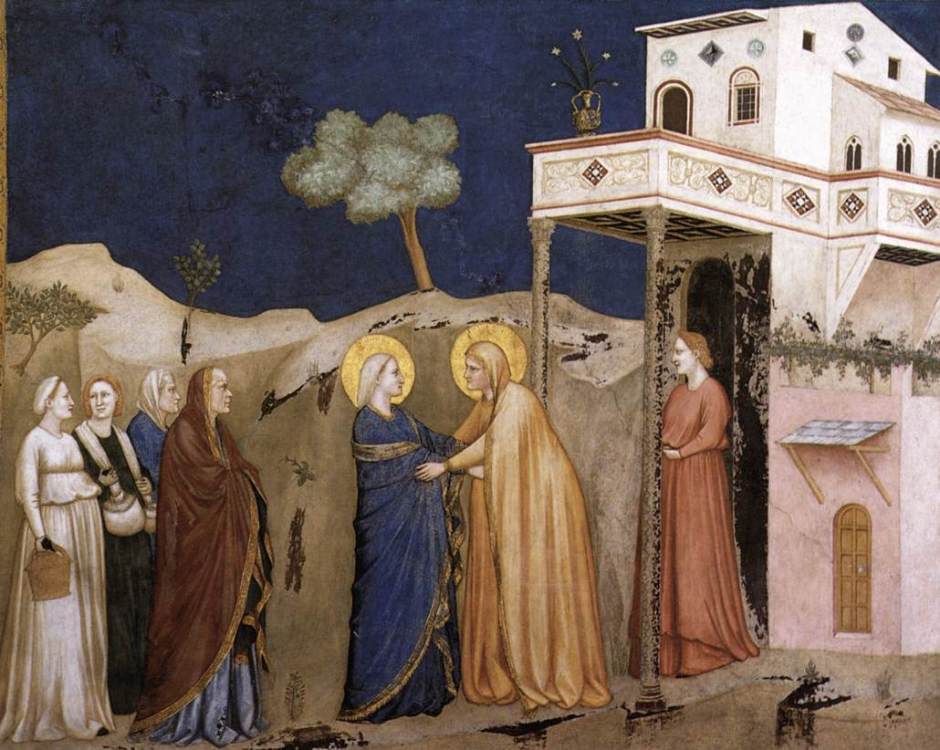
Mary set out
Luke 1:39-45
and traveled to the hill country in haste
to a town of Judah,
where she entered the house of Zechariah
and greeted Elizabeth.
When Elizabeth heard Mary’s greeting,
the infant leaped in her womb,
and Elizabeth, filled with the Holy Spirit,
cried out in a loud voice and said,
“Blessed are you among women,
and blessed is the fruit of your womb.
And how does this happen to me,
that the mother of my Lord should come to me?
For at the moment the sound of your greeting reached my ears,
the infant in my womb leaped for joy.
Blessed are you who believed
that what was spoken to you by the Lord
would be fulfilled.”
Most of us would like it if God would make super clear to us what he wanted us to do. Sometimes when I have been trying to discern what was God’s will for me in a specific situation, I would look with envy at the great biblical figures who received a clear-cut, can’t-be-missed message. Moses and the burning bush comes to mind. Or St Paul on the road to Damascus. Or Gideon. Or Jeremiah.
Even Mary at the Annunciation clearly knew what God was asking of her through the angel Gabriel’s message.
That would sure be nice, I used to think.
When Mary travelled to see her cousin Elizabeth directly after the Annunciation, in the first days of her pregnancy, a fifteen-year-old girl going to assist an elderly cousin and perhaps seek her advice, she went on a hint. The angel Gabriel mentioned that Elizabeth her cousin was pregnant and was in her sixth month. There was nothing about Elizabeth being the mother of the forerunner of the Messiah. There was no clear-cut, can’t-be-missed declaration that it was God’s will that Mary go and visit her. There was just a mention. In the English translation, the mention is just about 20 words out of the 200 words she heard that morning.
Such an announcement would have left most of us wondering and worrying and scurrying about in concern for ourselves. Mary instead went in haste, putting her cousin first. Mary dropped everything and left, not because she was commanded to, but because she got the hint.
There are certain times in our life when we make formal discernments as we seek the will of God in our life. I’ve learned that most of the time, however, we discover God’s call to us by picking up on the hints he is dropping all around us.
Mary “got the hint” when she heard the “mention” of Elizabeth being with child, because she was ever seeking to please the Lord, attuned to the way God works in the world, and because her heart was full of compassion and kindness for others, putting their needs before her own. As we prepare for Christmas we are immersed in all three of these qualities of Mary’s heart: seeking and waiting and loving; being attuned to both God and others; putting others’ needs before our own.
In these remaining days of Advent and through the Christmas season, keep your eyes and ears and heart open to pick up on all the hints God is dropping. These hints are the way he indicates what he desires of you. If you do so, then your Christmas celebration will truly be joyous.
Image: Giotto, Public domain, via Wikimedia Commons

Praying with this Passage of Scripture
Lectio Divina is a way of listening to God as he speaks in his Word. It is a practice of communicating with God through Scripture and attending to God’s presence and what he wishes to tell us. In this slow and prayerful reading of the Word of God, we allow ourselves to be transformed by the Spirit who forms us into the image of Christ. There are four movements in Lectio Divina: Read (lectio), Meditate (meditation), Pray (oratio), Contemplate (contemplation).
Begin by finding a still space to pray. Breathe deeply and become quieter within. Abandon any agenda, worries or thoughts you bring to this prayer and entrust these things to the merciful care of God. Ask for the grace to be receptive to what God will speak to you through this Scripture reading. Grant me, Jesus Divine Master, to be able to know the mysteries of the kingdom of God and your unfathomable riches. Grant that your word penetrate my soul; guide my steps, and brighten my way till the day dawns and darkness dissipates, you who live and reign forever and ever Amen.
Read (lectio)
Begin by slowly and meditatively reading your Scripture passage out loud. Listen for a particular word or phrase that speaks to you at this moment and sit with it for a time.
Pray (oratio)
Read the text a third time. Listen for what God is saying to you. Speak heart to heart with God. Notice the feelings that this conversation with God raises up within you. Share with God what you notice about your response to this conversation. You may wish to return to repeating the phrase quietly and gently, allowing it to permeate you more and more deeply.
Contemplate (contemplatio)
Read the text a final time. Now be still and rest in God’s embrace. Ask God to give you a gift to take with you from this prayer. You might ask God if he is inviting you to do some action, for instance, make some change in your thoughts, attitudes or reactions, in the way you speak or how you treat others. Thank God for this gift and invitation as you conclude your prayer.
Image: Myriams-Fotos; pixabay.com
 Touching the Sunrise