
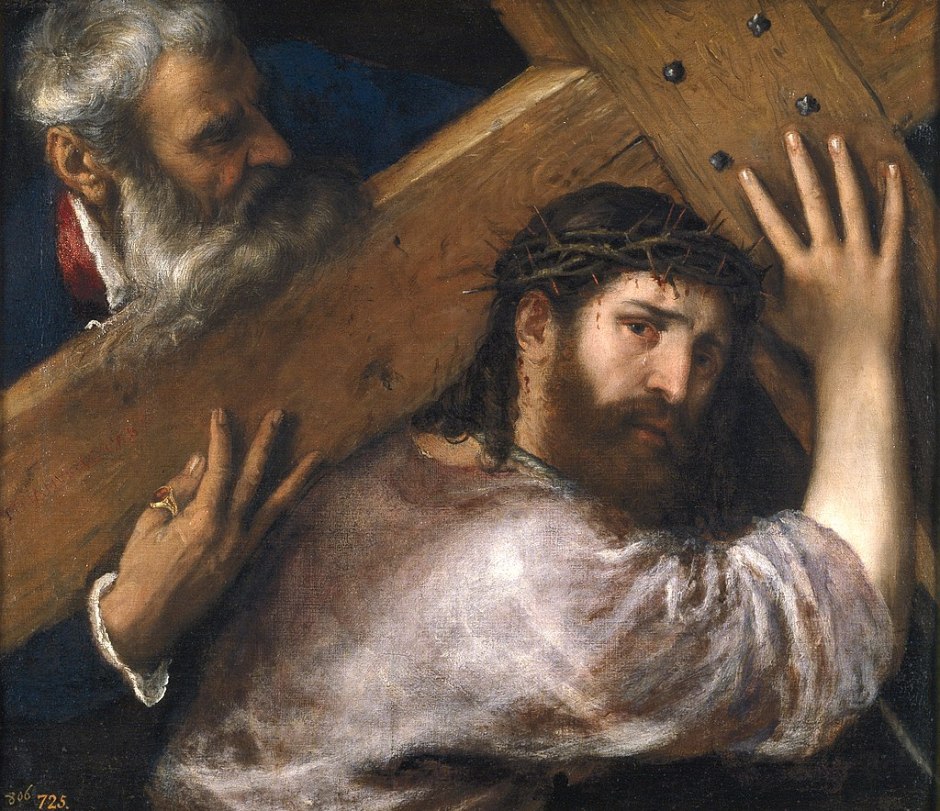
“Whoever does not carry his own cross and come after me
Luke 14:25-33
cannot be my disciple.”
I remember once watching a skit that humorously demonstrated how our crosses were perfectly chosen by God for us. The skit made the point that if our crosses were cut down to a more “acceptable” size that wouldn’t be quite as burdensome to ourselves, they would in the end no longer be able to stretch across the chasm leading into heaven. They wouldn’t be the “bridge” which the crosses in our life are meant to be.
I have to confess that I’ve focused on crosses in my life as those things which irk me, cause me to suffer, or bring me into situations that are unfair and from which I cannot escape (but wish I could!). We all know the situations that we’d personally label “the crosses in my life.”
We learn from an early age to accept the cross and to unite ourselves to Jesus when the cross touches our life. And although some of my crosses have been profoundly hurtful or more difficult to endure than others, I’d have to admit on the scale of world events where the suffering of others is immense, my imagination of how the cross has touched my life can get a little over dramatic.
When the people who followed Jesus heard this invitation to take up their cross, they pictured something very different from the skit that I remember. It wasn’t humorous at all. They knew the person carrying the cross was on a one-way road to a humiliating and painful death. This is how Jesus loved us, and how we are called to love him in return. Jesus tells us that nothing should stand in the way of our love for him. Our love should take us on a one-way road to his heart!
It can be that family relationships support us in our love for Jesus and our walk of discipleship. If we need to make a choice, however, the choice should be clear.
There are times when advancing our careers and our material possessions and our ambitions will be in line with the values of Jesus in the Gospel. When they are not, the choice we need to make should be clear.
To prioritize Jesus is to categorically refuse to live in service of worldly desires so that we can freely choose to love in such a way that we will live eternally in the love that we have been shown by Jesus Christ. Carrying the cross means a living adherence to Christ Jesus.
Today ask yourself: “Jesus, what does this mean for you and for me?”
Image: Titian, Christ Carrying the Cross, Oil on Canvas, Public domain, via Wikimedia Commons

Praying with this Passage of Scripture
Lectio Divina is a way of listening to God as he speaks in his Word. It is a practice of communicating with God through Scripture and attending to God’s presence and what he wishes to tell us. In this slow and prayerful reading of the Word of God, we allow ourselves to be transformed by the Spirit who forms us into the image of Christ. There are four movements in Lectio Divina: Read (lectio), Meditate (meditation), Pray (oratio), Contemplate (contemplation).
Begin by finding a still space to pray. Breathe deeply and become quieter within. Abandon any agenda, worries or thoughts you bring to this prayer and entrust these things to the merciful care of God. Ask for the grace to be receptive to what God will speak to you through this Scripture reading. Grant me, Jesus Divine Master, to be able to know the mysteries of the kingdom of God and your unfathomable riches. Grant that your word penetrate my soul; guide my steps, and brighten my way till the day dawns and darkness dissipates, you who live and reign forever and ever Amen.
Read (lectio)
Begin by slowly and meditatively reading your Scripture passage out loud. Listen for a particular word or phrase that speaks to you at this moment and sit with it for a time.
Pray (oratio)
Read the text a third time. Listen for what God is saying to you. Speak heart to heart with God. Notice the feelings that this conversation with God raises up within you. Share with God what you notice about your response to this conversation. You may wish to return to repeating the phrase quietly and gently, allowing it to permeate you more and more deeply.
Contemplate (contemplatio)
Read the text a final time. Now be still and rest in God’s embrace. Ask God to give you a gift to take with you from this prayer. You might ask God if he is inviting you to do some action, for instance, make some change in your thoughts, attitudes or reactions, in the way you speak or how you treat others. Thank God for this gift and invitation as you conclude your prayer.
Image: Myriams-Fotos; pixabay.com
 Touching the Sunrise
Beautiful! My soul so need this , thank you so much!
LikeLike