The Divine World of Risk (Matthew 9:9-13)

As Jesus passed by,
he saw a man named Matthew sitting at the customs post.
He said to him, “Follow me.”
And he got up and followed him.
While he was at table in his house,
many tax collectors and sinners came
and sat with Jesus and his disciples.
The Pharisees saw this and said to his disciples,
“Why does your teacher eat with tax collectors and sinners?”
He heard this and said,
“Those who are well do not need a physician, but the sick do.
Go and learn the meaning of the words,
I desire mercy, not sacrifice.
I did not come to call the righteous but sinners.”

Matthew 9:9-13

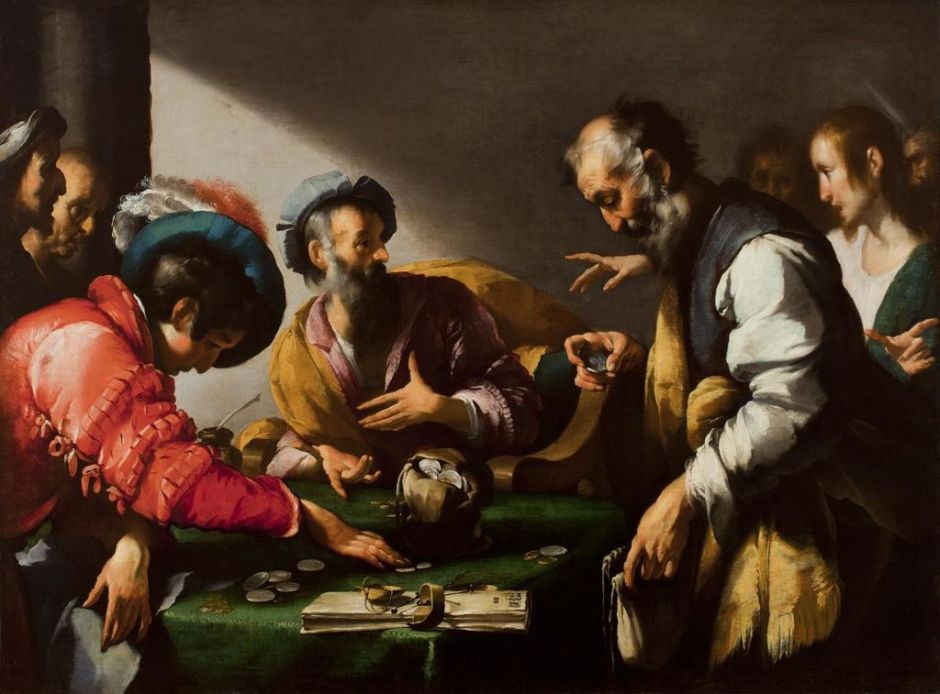
Matthew was a finance guy. Not only did he extort money from his neighbors while collecting taxes, he also wrapped his whole life around the security money can bring.

How many advertisements have you seen lately geared toward people considering retirement: Do you have enough money to survive after you retire? Maybe you need to invest? Buy gold or silver? Take out insurance?

Commercials and posts of this nature lead to a stabbing fear. All the what ifs begin to play on our imagination.

If there is anything we humans cling to it is security. We clutch at anything that seems dependable. We stock up on what promises to sustain us in the crises of our lives. We pour over the stock reports to see how much we have lost. We accumulate what we hope will keep us safe until we die.

How much power do I need to protect my future? What will happen to me if I don’t have extra money to squirrel away? What do I need to ensure my comfort?

Jesus invited Matthew to step out of the security he had been creating for himself into the divine world of risk. He brought him out of the tomb of self-protection into the sunlight of abandonment to divine providence.

Hear these words from the heart of Jesus said to Matthew as said to yourself and do not be afraid: “Leave everything, Matthew, and come. Come follow me. I have no money to offer you. No absolute security to promise for your future. I have nothing but my immense love for you and for the world. I have nothing but my dream for your future in my Kingdom which I have secured for you. I have known you since before the foundation of the world. Matthew [and here say your own name], I will be enough for you. Enough forever. Come. Come follow me.”

Image: Bernardo Strozzi, Public domain, via Wikimedia Commons

Praying with this Passage of Scripture

Lectio Divina is a way of listening to God as he speaks in his Word. It is a practice of communicating with God through Scripture and attending to God’s presence and what he wishes to tell us. In this slow and prayerful reading of the Word of God, we allow ourselves to be transformed by the Spirit who forms us into the image of Christ. There are four movements in Lectio Divina: Read (lectio), Meditate (meditation), Pray (oratio), Contemplate (contemplation).

Begin by finding a still space to pray. Breathe deeply and become quieter within. Abandon any agenda, worries or thoughts you bring to this prayer and entrust these things to the merciful care of God. Ask for the grace to be receptive to what God will speak to you through this Scripture reading. Grant me, Jesus Divine Master, to be able to know the mysteries of the kingdom of God and your unfathomable riches. Grant that your word penetrate my soul; guide my steps, and brighten my way till the day dawns and darkness dissipates, you who live and reign forever and ever Amen.

Read (lectio)
Begin by slowly and meditatively reading your Scripture passage out loud. Listen for a particular word or phrase that speaks to you at this moment and sit with it for a time.

Pray (oratio)
Read the text a third time. Listen for what God is saying to you. Speak heart to heart with God. Notice the feelings that this conversation with God raises up within you. Share with God what you notice about your response to this conversation. You may wish to return to repeating the phrase quietly and gently, allowing it to permeate you more and more deeply.

Contemplate (contemplatio)
Read the text a final time. Now be still and rest in God’s embrace. Ask God to give you a gift to take with you from this prayer. You might ask God if he is inviting you to do some action, for instance, make some change in your thoughts, attitudes or reactions, in the way you speak or how you treat others. Thank God for this gift and invitation as you conclude your prayer.

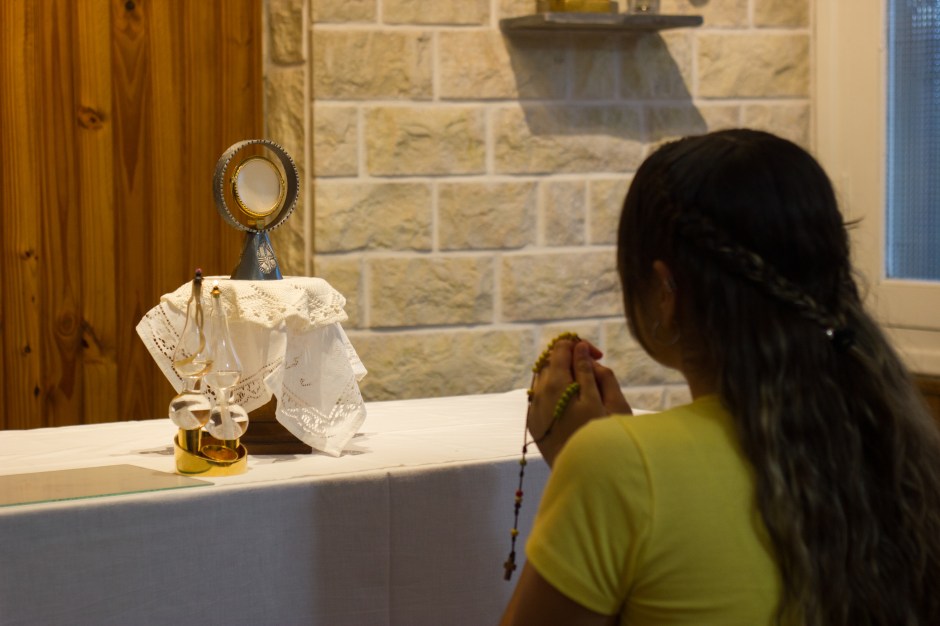
Image: Myriams-Fotos; pixabay.com

Meditation on the Two Standards – Being in Jesus (Horizons of the Heart 39)

The grace we are asking of God: a growing ability to recognize the weeds and the wheat in my own life, that is, the ways in which I am drawn through grace toward living in the Kingdom of Christ and the ways in which I am deceived by the Enemy in the decisions I make. I also ask for the grace to know Jesus deeply, so that I may immerse myself wholly in his standard: his values, his preferences, his loves, his desires, his self-offering, his compassion and mercy.

Horizons of the Heart is inspired by the Spiritual Exercises of St Ignatius and my own notes from my thirty-day Ignatian retreat in 2022. See an index for the whole series.

I started praying with the Two Standards Meditation and realized I would be here quite a while. In a sense, this lens on the way Christ is at work in us is life-changing, and I have recently discovered anew how much change needed to be brought about within me so that my hidden disordered tendencies might be brought into alignment with the values of the Kingdom of Christ.

The traditional image of the Two Standards exercise arose out of the medieval experience of war and it certainly didn’t resonate with me. In fact, it left me striving to “prove” I was good enough for the Kingdom of the good leader: Christ. The meditation is rooted in the method of war during the time of Ignatius: the image of two warring factions of knights in full arms being led onto the battlefield, each clearly serving a different leader and fighting under a large flag or standard. Once the hand-to-hand combat began, however, the two armies would become indistinguishable as the knights were mixed together in mass confusion. It became impossible to tell who was fighting for who as the battle progressed.

The two leaders are Christ and Lucifer. Each of them called to themselves people who were willing to serve in their respective armies under the values of their very different Kingdoms, fighting under their opposing standards: hence the name, Two Standards Meditation.

As I prayed with this, Jesus drew me to the parable of the weeds and the wheat. As I’m entering into this second week of the Exercises, “unfinished business” and inner wounds are surfacing and hitting the fan once again. Jesus reminded me while I was praying that the weeds and the wheat (like the armies of the two kings) will be there until my last breath, and the two sometimes are hard to distinguish. What may be convinced is a virtue might actually be something I’m doing for less than noble reasons. What appears to be a vice might be the best I can do at the moment, even a virtuous struggle as I’m calling out to Jesus to help me be as faithful as I can at this moment to his “standard” or Kingdom.

Jesus brought to my mind the apostles crying out in terror as they bailed water out of their boat capsizing in the winds and rains of an unexpected storm on the Sea of Galilee. Jesus, a number of feet away from them, stood on the water, also wet from the rain with his clothes whipped by the winds, calm and reassuring with his presence.

“It’s okay to cry out,” Jesus helped me see. “That’s all you can do sometimes. These burly fishermen, professionals at what they did, were as terrified as toddlers that day as the storm unexpectedly whipped up the Sea of Galilee. And I loved them in all their vulnerability that lay exposed to me at that moment. They were my Father’s children, my brothers, the ones for whom I would give my life…. As their wounds became evident I showed them immediately that I still delighted in them. Even in the continuous need you have for healing and freedom I want you to look at my face now. I am calling you into my Kingdom: so that the way you are and the way you live and what you choose to do will become part of the Kingdom.”

Jesus wants us to know that every time we expose to him our wounds and believe, nevertheless, that God has made something special when he made us and that Jesus delights in us right then, we also join him as those who are willing to live and serve under his standard, as ambassadors of his Kingdom of Love. He calls those willing to be humble, poor, vulnerable, those willing to surrender in obedience and love while serving beside him as he brings to fulfillment the reign of the Kingdom of heaven in the world today.

Here you are entering into the Mystery

In a moment of quiet and prayer, can you believe these words as you say them to yourself: “God made something wonderful when God made me!”

Notice any confusion or resistance or fear or shame. These feelings indicate the presence of wounds, unfinished business waiting for the healing touch of Jesus as he calls us to enter and to serve the Kingdom of Love. Up to now in the Spiritual Exercises, we have been praying through the lens of personal healing, repentance and conversion, and spiritual transformation. In this short meditation we are taking a step back to consolidate our trust in the love of Jesus for us, even in our wounds, as he invites us to become a part of his saving mission in the world.

Pray again: “You, Lord, made something wonderful when you made me! I believe this. My feelings may not resonate with my faith. I may have old tapes of what others have told me about myself that say differently. The voices of shame may try to smother this trust. The Enemy may be sowing weeds of self-hate, but no matter. Regardless of what I feel, you have made something wonderful when you made me, Lord, because you can only make perfectly wonderful things.”

Ask the Holy Spirit to give you a memory or a symbol of a wound that he is ready to heal.

Pray quietly: “Lord, when I expose to you my most vulnerable places, you will still delight in what you have made. Your kindness is bottomless. Your love is endless. Your delight in me reminds me that I am your child.”

Abide in the silence. Feel the attraction of the Kingdom. Offer gratitude.

Reviewing the Graces of Prayer

When you finish praying, write down the main gifts and discoveries from this time of intimate contemplation. What is one concrete thing you can do to solidify these gifts in your life.

The Bishop of the Abandoned Tabernacle

In this podcast, Sr Emily Beata, Carlos Briceno, and I talk about the amazing gift of loving the Eucharist that we learned from the life of St. Manuel González García.

https://stmaryoldtown.libsyn.com/episode-5-what-are-the-sisters-reading-for-the-month-of-september-1

St. Manuel felt called to the priesthood at the age of 12. After his ordination in 1901, he was sent to preach at a church which he found to be unclean and abandoned. There, praying before a Tabernacle covered in dust and cobwebs, with torn altar cloths and oil dripping onto the floor from the sanctuary lamp, he decided to dedicate his life to providing for Jesus’ needs in the Tabernacle. This poor, abandoned Tabernacle taught the young priest more about the Love of Jesus than his years of theological study. It marked his entire life from that moment. He dedicated himself until his death to spreading devotion to the Eucharist, proclaiming these words which he would go on to choose for his epitaph: “Jesus is here! He is here! Do not abandon Him!” This saintly bishop will help you to receive Holy Communion more fervently and to love Jesus more deeply in Eucharistic Adoration. This book will awaken you to a new experience of Our Lord — that you may see, hear, love, and console “Love who is not loved.”

Blessed are the pure of heart (Mark 7)

Jesus summoned the crowd again and said to them,
“Hear me, all of you, and understand.
Nothing that enters one from outside can defile that person;
but the things that come out from within are what defile.

“From within people, from their hearts,
come evil thoughts, unchastity, theft, murder,
adultery, greed, malice, deceit,
licentiousness, envy, blasphemy, arrogance, folly.
All these evils come from within and they defile.”

Mark 7

In this passage Jesus defines purity of heart by telling us what it is not. A pure heart is not a heart from which come thoughts and actions, attitudes and desires for “unchastity, theft, murder, adultery, greed, malice, deceit, licentiousness, envy, blasphemy, arrogance, and folly.”

The heart according to the Catechism of the Catholic Church is “the depths of one’s being, where the person decides for or against God” (CCC 368).

The human heart is wracked by the distortions of concupiscence making it difficult at times to decide for God. Every one of us can testify to the struggles we undergo to be “pure of heart.” How difficult it is to keep our hearts clean when we are standing knee deep in available options for satisfying our lower instincts. Certainly, we could think of the person struggling with an addiction to pornography or lust, but there is also the uncleanness of anger, of greed, of deceit, of envy, of arrogance. Who among us can boast never to have wrestled with these?

Here are some points of spiritual advice when our hearts struggle to put on the mind and heart of Christ:

  • Refuse to let into your mind ideas, memories, and images that lead you to thoughts and behaviors that are angry, lustful, envious, deceitful, and so on. Fill your mind and heart with what is true, good and beautiful through a careful choice of the media you use, how much time you spend on social media, and what you read and decide to look at.
  • Look for patterns and discover the one or two main ways in which you struggle with temptation. Focus your prayer and watchfulness on these.
  • Become intimately aware of the movements of your heart so you can meet an evil thought with a short prayer, for example, Lord Jesus, I love you… Jesus, mercy… Jesus.
  • Increase your love for Jesus through prayer, spiritual reading, and above all the sacraments.

Once after St. Catherine of Siena had been beset with temptations against purity and had struggled for several days without a sense of Jesus being there to help her, she complained to him, “Lord, where were you when my heart was so tormented?” Jesus responded, “I was in the center of your heart.”

In this gospel passage Jesus rejects the legalistic reduction of the virtue of purity to exterior cleansing and focuses on our heart because it is within us that the Trinity abides. “Whoever loves me will keep my word, and my Father will love him, and we will come to him and make our dwelling with him” (Jn 14:23).

Image: Manuel Darío Fuentes Hernández from Pixabay.

Praying with this Passage of Scripture

Lectio Divina is a way of listening to God as he speaks in his Word. It is a practice of communicating with God through Scripture and attending to God’s presence and what he wishes to tell us. In this slow and prayerful reading of the Word of God, we allow ourselves to be transformed by the Spirit who forms us into the image of Christ. There are four movements in Lectio Divina: Read (lectio), Meditate (meditation), Pray (oratio), Contemplate (contemplation).

Begin by finding a still space to pray. Breathe deeply and become quieter within. Abandon any agenda, worries or thoughts you bring to this prayer and entrust these things to the merciful care of God. Ask for the grace to be receptive to what God will speak to you through this Scripture reading. Grant me, Jesus Divine Master, to be able to know the mysteries of the kingdom of God and your unfathomable riches. Grant that your word penetrate my soul; guide my steps, and brighten my way till the day dawns and darkness dissipates, you who live and reign forever and ever Amen.

Read (lectio)
Begin by slowly and meditatively reading your Scripture passage out loud. Listen for a particular word or phrase that speaks to you at this moment and sit with it for a time.

Pray (oratio)
Read the text a third time. Listen for what God is saying to you. Speak heart to heart with God. Notice the feelings that this conversation with God raises up within you. Share with God what you notice about your response to this conversation. You may wish to return to repeating the phrase quietly and gently, allowing it to permeate you more and more deeply.

Contemplate (contemplatio)
Read the text a final time. Now be still and rest in God’s embrace. Ask God to give you a gift to take with you from this prayer. You might ask God if he is inviting you to do some action, for instance, make some change in your thoughts, attitudes or reactions, in the way you speak or how you treat others. Thank God for this gift and invitation as you conclude your prayer.

Image: Myriams-Fotos; pixabay.com