Do you recognize Jesus when he calls your name? (John 10:22-30)

“My sheep hear my voice;
I know them, and they follow me.
I give them eternal life, and they shall never perish.
No one can take them out of my hand.
My Father, who has given them to me, is greater than all,
and no one can take them out of the Father’s hand.
The Father and I are one.”

John 10:22-30

My sheep hear my voice; I know them, and they follow me. I give them eternal life, and they shall never perish.

In the time of Jesus, the families of a village often kept their herds of sheep together in a common pen. In the morning the shepherds would come and call their own sheep by name. The shepherd had such an intimate knowledge of his sheep and a genuine love for them, that he would call them individually to follow him to green pastures and streams of running water.

Following the shepherd, then, is a matter of love and being cared for. It is a relationship of trust and belonging. When Jesus speaks of his followers he refers often to shepherding, because he wants us to know how much he longs for us to willingly adhere to him with all our being and to trust him to provide for us. Sheep know they belong to a shepherd. They are named, known, and counted at the end of every single day before being settled down for the night.

There are two ways a shepherd would lead his flock. Most often we see the shepherd walking in front of the sheep. There the shepherd can recognize danger and lead the sheep in the safest path. The shepherds lead by showing the sheep the best path to take.

At other times, the shepherd leads his flock from behind. In this case the shepherd is driving the sheep toward the destination and making sure that they don’t dilly-dally along the way, wandering off after some distraction or other.

In what area of your life is Jesus desiring to shepherd you more closely? Is there a destination or goal on the horizon to which he is drawing your heart? Have you found patterns of distraction in your life which keep you dilly-dallying along the way? Can you hear your Shepherd’s voice? Do you recognize when he calls your name?

Image: Gerd Altmann; Pixabay.

Praying with this Passage of Scripture

Lectio Divina is a way of listening to God as he speaks in his Word. It is a practice of communicating with God through Scripture and attending to God’s presence and what he wishes to tell us. In this slow and prayerful reading of the Word of God, we allow ourselves to be transformed by the Spirit who forms us into the image of Christ. There are four movements in Lectio Divina: Read (lectio), Meditate (meditation), Pray (oratio), Contemplate (contemplation).

Begin by finding a still space to pray. Breathe deeply and become quieter within. Abandon any agenda, worries or thoughts you bring to this prayer and entrust these things to the merciful care of God. Ask for the grace to be receptive to what God will speak to you through this Scripture reading. Grant me, Jesus Divine Master, to be able to know the mysteries of the kingdom of God and your unfathomable riches. Grant that your word penetrate my soul; guide my steps, and brighten my way till the day dawns and darkness dissipates, you who live and reign forever and ever Amen.

Read (lectio)
Begin by slowly and meditatively reading your Scripture passage out loud. Listen for a particular word or phrase that speaks to you at this moment and sit with it for a time.

Pray (oratio)
Read the text a third time. Listen for what God is saying to you. Speak heart to heart with God. Notice the feelings that this conversation with God raises up within you. Share with God what you notice about your response to this conversation. You may wish to return to repeating the phrase quietly and gently, allowing it to permeate you more and more deeply.

Contemplate (contemplatio)
Read the text a final time. Now be still and rest in God’s embrace. Ask God to give you a gift to take with you from this prayer. You might ask God if he is inviting you to do some action, for instance, make some change in your thoughts, attitudes or reactions, in the way you speak or how you treat others. Thank God for this gift and invitation as you conclude your prayer.

Image: Myriams-Fotos; pixabay.com
More than to be heard, we need to be Loved (Luke 24:13-35)

That very day, the first day of the week,
two of Jesus’ disciples were going
to a village seven miles from Jerusalem called Emmaus,
and they were conversing about all the things that had occurred.
And it happened that while they were conversing and debating,
Jesus himself drew near and walked with them,
but their eyes were prevented from recognizing him….
As they approached the village to which they were going,
he gave the impression that he was going on farther.
But they urged him, “Stay with us,
for it is nearly evening and the day is almost over.”
So he went in to stay with them.
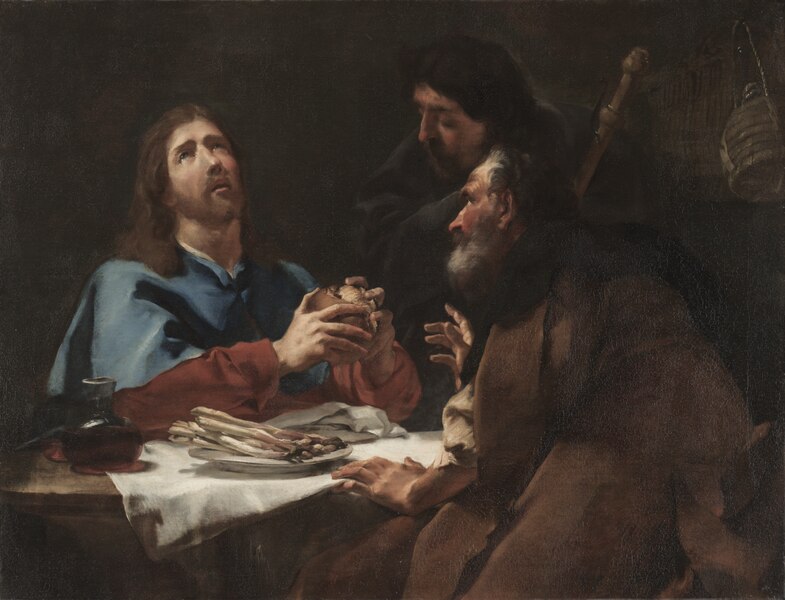
And it happened that, while he was with them at table,
he took bread, said the blessing,
broke it, and gave it to them.
With that their eyes were opened and they recognized him….

Luke 24:13-35

“‘Stay with us, for it is nearly evening and the day is almost over.’ So [Jesus] went in to stay with them. And it happened that, while he was with them at table, he took bread, said the blessing, broke it, and gave it to them.”

I wonder what Jesus felt when he was invited to stay with these two disciples making their away from all that had transpired in Jerusalem to the village of Emmaus. Certainly, Jesus had met these two disciples on the road. He had listened to their discouragement and disillusionment. He had even spent quite a bit of time teaching them, “Then beginning with Moses and all the prophets, he interpreted to them what referred to him in all the scriptures.” With all of that, however, Jesus was hoping for more. We need more than to be heard and understood and have our minds and hearts refreshed with an encounter with Truth. Deep down, the human heart yearns for intimacy and so does the heart of Jesus.

I can imagine Jesus, as he was clearly “giving the impression” that he was intending to go on his way, feeling overwhelmed with joy when the disciples invited him into the intimacy of their home. Jesus never forces his presence and his love on anyone. We can imagine them scouring about making sure there was a bed prepared and thinking about their evening meal.

When we invite Jesus into our hearts with this great hope of satisfying the longing for intimacy that both Jesus and we have, we often scurry about preparing things for his stay, telling him things, saying prayers, asking for what we need, tidying up our hearts as best we can. Jesus enters where he is invited in order to give himself entirely to us. And so when they sat down for their evening meal there is no mention of what the disciples had prepared. Instead, there is recounted the meal Jesus provided them. “And it happened that, while he was with them at table, he took bread, said the blessing, broke it, and gave it to them. With that their eyes were opened and they recognized him.”

Today, Jesus is “hanging around,” to use a somewhat colloquial phrase, hoping that you will invite him to stay with you. Invite Jesus in. Don’t be too worried about what your heart looks like or how you will make him feel welcome. Instead, for this time, just watch him. Experience his joy at being invited to your house, to your heart. Let him be the giver and you the receiver. Allow him to share his joy with you.

Image: Giovanni Battista Piazzetta, Public domain, via Wikimedia Commons

Praying with this Passage of Scripture

Lectio Divina is a way of listening to God as he speaks in his Word. It is a practice of communicating with God through Scripture and attending to God’s presence and what he wishes to tell us. In this slow and prayerful reading of the Word of God, we allow ourselves to be transformed by the Spirit who forms us into the image of Christ. There are four movements in Lectio Divina: Read (lectio), Meditate (meditation), Pray (oratio), Contemplate (contemplation).

Begin by finding a still space to pray. Breathe deeply and become quieter within. Abandon any agenda, worries or thoughts you bring to this prayer and entrust these things to the merciful care of God. Ask for the grace to be receptive to what God will speak to you through this Scripture reading. Grant me, Jesus Divine Master, to be able to know the mysteries of the kingdom of God and your unfathomable riches. Grant that your word penetrate my soul; guide my steps, and brighten my way till the day dawns and darkness dissipates, you who live and reign forever and ever Amen.

Read (lectio)
Begin by slowly and meditatively reading your Scripture passage out loud. Listen for a particular word or phrase that speaks to you at this moment and sit with it for a time.

Pray (oratio)
Read the text a third time. Listen for what God is saying to you. Speak heart to heart with God. Notice the feelings that this conversation with God raises up within you. Share with God what you notice about your response to this conversation. You may wish to return to repeating the phrase quietly and gently, allowing it to permeate you more and more deeply.

Contemplate (contemplatio)
Read the text a final time. Now be still and rest in God’s embrace. Ask God to give you a gift to take with you from this prayer. You might ask God if he is inviting you to do some action, for instance, make some change in your thoughts, attitudes or reactions, in the way you speak or how you treat others. Thank God for this gift and invitation as you conclude your prayer.

Image: Myriams-Fotos; pixabay.com