
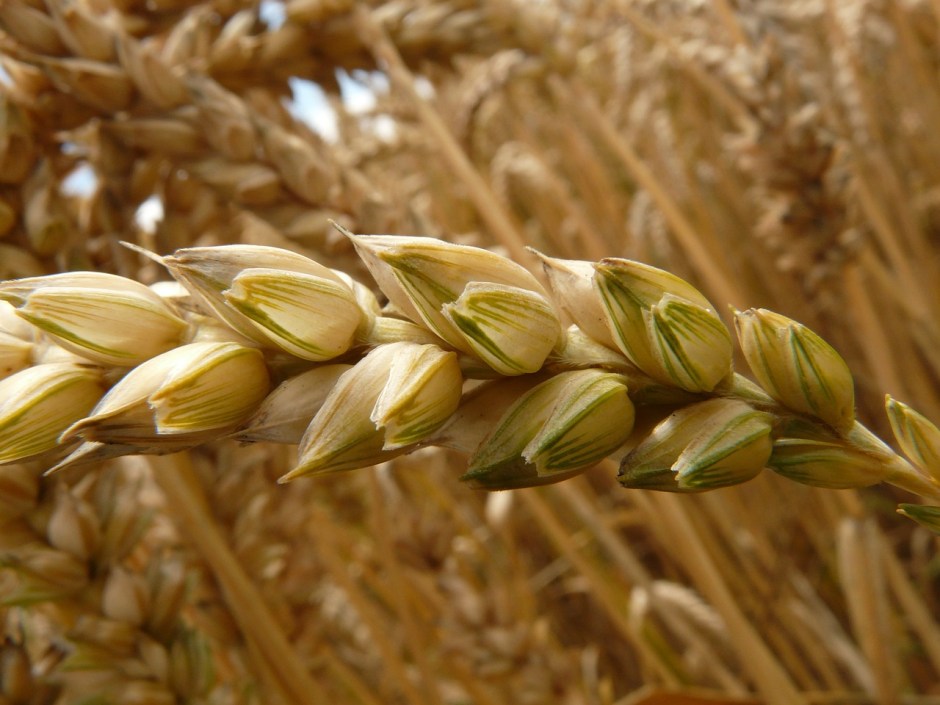
Amen, amen, I say to you,
John 12:20-33
unless a grain of wheat falls to the ground and dies,
it remains just a grain of wheat;
but if it dies, it produces much fruit.
Whoever loves his life loses it,
and whoever hates his life in this world
will preserve it for eternal life.
Have you ever noticed how the Scriptures are filled with people just like ourselves whose lives take unexpected turns and then blossom in ways that can only be described as flourishing in and for the Kingdom of God.
Take Jacob. His “before” was manipulating his father’s blessing from his brother Esau and then serving his uncle Laban for many years, eventually marrying his daughters Leah and Rachel. His “after” was as the patriarch of the twelve tribes of Israel who escaped from Egypt, received the Law, and were chosen by God to be his covenant people. And even to this day, we read in Revelation 21 that on the twelve gates that belong to the New Jerusalem are written the names of the twelve tribes of Israel. The New Jerusalem itself sits on twelve foundations representing the twelve apostles who would reign over the twelve tribes of Israel.
Take Moses. His “before” was the life of Pharoah’s daughter’s adopted son in Egypt. We all know the story. His “after” was the fulfillment of God’s call to be the leader of his people to the Promised Land. And even to this day, the Christian understanding of the Paschal Mystery is rooted in the Exodus narrative.
Between the “before” and the “after” of each of these biblical figures there is a point of struggle and epiphany.
When Jesus says that the grain of wheat must fall to the ground and die if it is to be more than just a single grain, if it is to bear fruit, Jesus is talking about just this dynamic which plays out also in our own lives. Who we think we are, who we discover ourselves to be as we grow up and mature and try to figure out life, all this eventually needs to give way to the fullness of the way God lifts our lives up into his mighty and eternal plan. We each have a role to play in God’s Kingdom. We each have a mission in life. We each were created for a purpose. It is in those “hinge” seasons of our life between the “before” and “after” in which we feel the weight and sorrow of the grain of wheat dying. If you are in one of those “hinge” moments, know that this too is a way in which God raises you up to fulfill more completely the fullness of your life and his glory.

Praying with this Passage of Scripture
Lectio Divina is a way of listening to God as he speaks in his Word. It is a practice of communicating with God through Scripture and attending to God’s presence and what he wishes to tell us. In this slow and prayerful reading of the Word of God, we allow ourselves to be transformed by the Spirit who forms us into the image of Christ. There are four movements in Lectio Divina: Read (lectio), Meditate (meditation), Pray (oratio), Contemplate (contemplation).
Begin by finding a still space to pray. Breathe deeply and become quieter within. Abandon any agenda, worries or thoughts you bring to this prayer and entrust these things to the merciful care of God. Ask for the grace to be receptive to what God will speak to you through this Scripture reading. Grant me, Jesus Divine Master, to be able to know the mysteries of the kingdom of God and your unfathomable riches. Grant that your word penetrate my soul; guide my steps, and brighten my way till the day dawns and darkness dissipates, you who live and reign forever and ever Ame
Read (lectio)
Begin by slowly and meditatively reading your Scripture passage out loud. Listen for a particular word or phrase that speaks to you at this moment and sit with it for a time.
Meditate (meditatio)
Read the same passage a second time. As you re-engage the text, let the word or phrase that stood out become your invitation to speak from your heart with God who wishes to share his heart with you. Allow this word or phrase to wash over you and permeate your thoughts and feelings. You may wish to repeat this phrase quietly and gently for a period of time
Pray (oratio)
Read the text a third time. Listen for what God is saying to you. Speak heart to heart with God. Notice the feelings that this conversation with God raises up within you. Share with God what you notice about your response to this conversation. You may wish to return to repeating the phrase quietly and gently, allowing it to permeate you more and more deeply.
Contemplate (contemplatio)
Read the text a final time. Now be still and rest in God’s embrace. Ask God to give you a gift to take with you from this prayer. You might ask God if he is inviting you to do some action, for instance, make some change in your thoughts, attitudes or reactions, in the way you speak or how you treat others. Thank God for this gift and invitation as you conclude your prayer.
Image by Hans via Pixabay
 Touching the Sunrise