I will never ever forget you

In today’s first reading, the Servant of the Lord is announcing freedom to the Jewish exiles in Babylonia.

In a time of favor I answer you,
            on the day of salvation I help you;
            and I have kept you and given you as a covenant to the people….

There is no way to overstate the crisis the exile in Babylon was for God’s people. They had been deprived of homeland and had been stripped of everything that had given them their identity. There on the banks of the streams of Babylon they must have wondered how God could truly have been God if he had let the Babylonians defeat them, desecrate the temple, and force them to leave the land that had been promised to their ancestors Abraham, Isaac, and Jacob. Were they now forgotten by God? Would he ever remember them? Would he save them? Did God still love them? Could they ever trust the Lord again?

The conversations of the people of God in Babylon are similar to the conversations whispered in the homes where we’ve isolated far from our churches and from everything that had been “normal” about our life. We might have said with Zion: “The Lord has forsaken me, my Lord has forgotten me.”

Isn’t it too late now for God to show up, after loved ones have died, livelihoods lost, children affected by years of education interrupted? After millions across the globe have suffered indescribable loss.

The Jewish people in Babylon must have wondered also at this prophecy spoken by Isaiah:

Thus says the LORD:

In a time of favor I answer you,
            on the day of salvation I help you;
            and I have kept you and given you as a covenant to the people,
To restore the land
            and allot the desolate heritages,
Saying to the prisoners: Come out!
To those in darkness: Show yourselves!
Along the ways they shall find pasture,
            on every bare height shall their pastures be.
They shall not hunger or thirst,
            nor shall the scorching wind or the sun strike them;
For he who pities them leads them
            and guides them beside springs of water.

As we one by one continue to reshape our lives, we might wonder why the Lord didn’t “comfort his people and show mercy to his afflicted” by stopping the pandemic in its tracks before the damage across the globe had been done.

Our lament is as sorrow-filled and pitiful as the songs sung by the exiles who hung up their harps, refusing to sing the songs of Zion in a foreign land.

I hear such kindness in the final words of this first reading. God understands his people’s tears, their loss. He listens to the confusion and hurt of his people who, because of their infidelity to the Lord and their choices to align themselves with other nations instead of trusting in him, had been carried off into exile by these same nations. God doesn’t correct their theology with reminders about how good he is, how faithful, how he is ever present.

Instead, he evokes the image of tender love that is at the very foundation of every human life, an image that means warmth, safety, nourishment, a generous life poured out that a child might live.

But Zion said, “The LORD has forsaken me;
We say with them.
            my Lord has forgotten me.”

Can a mother forget her infant,
            be without tenderness for the child of her womb?
Even should she forget,
            I will never forget you.

Take a deep breath, my friend, and allow yourself to share your true feelings and fears with God. Wail and rail if you must. Be honest with the Lord in every way. And then receive his arms that surround you with a mother’s love, this God who pours out his life and tenderness in absolute fidelity to us forever. Let these words wash over you again and again, “I will never forget you. Never. Ever. My child. I could never be without tenderness for you.”

Image Credit: Pixabay
Even in the dark you know me: a meditation for calming anxiety

Even the darkness is not dark to you;
the night is as bright as the day,
for darkness is as light to you.
Psalm 139,12

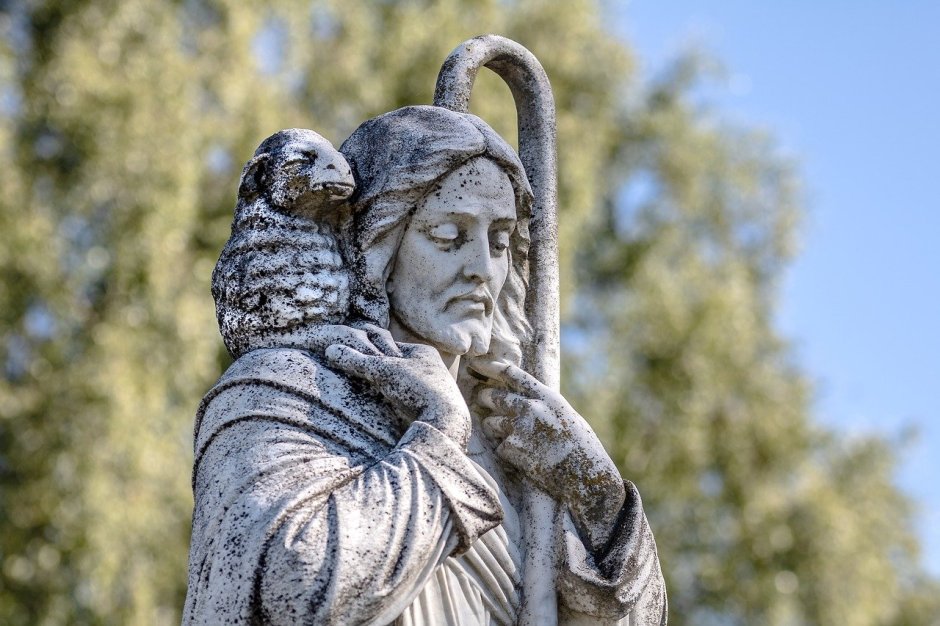
I am the good shepherd. I know my own and my own know me, just as the Father knows me and I know the Father. And I lay down my life for the sheep.
Jn 10,14-15


There is an anxiety that stems from not naming our fears. That comes when we don’t stop and ask ourselves why we suddenly feel so tired or why strangely the space that our heart occupies seems to have become tighter.

When this happens to me, I realize it is my body telling me it is time to stop and ask myself what it is I am afraid of. It is my own body telling me to go to the chapel and face my fears with Jesus!

It may seem surprising, but a shepherd counts his sheep several times a day, knows them all by name, and more, is able to identify each of the sheep in the dark by touch, so deeply he knows them. Our fears can disfigure our image of ourselves. That is why it is important to stop to face them, not as a nameless amalgamation of problems, but identifying each of the things that concern us. Only then can we surrender our fears one by one to Jesus.

Lord, help me remember that nothing we fear is unknown to Jesus. He is the Good Shepherd; he knows our name and is able to recognize us even in the middle of our darkness. Help me give Jesus my fears, one by one, and therefore liberate a space within me that is free to trust, a space that belongs to Jesus and where I can hear him say once again: “I give my life for my sheep.” Amen.

A reflective pause

  • Find a quiet place where you can pray, and take a cross with you
  • Breathe deeply
  • Bring to mind all that worries you right now.
  • Take a few moments to look at the cross and fix your gaze on the open arms of Jesus, who embraces all of humanity from the cross.
  • Welcome the embrace of Jesus who knows you by name.
  • One by one, tell Jesus all your fears.
  • Remain a few moments in interior silence and let Jesus open a space in you to trust.
  • With a free heart pray Psalm 23.
  • End with a word of gratitude to God.


To tuck in with you tonight

I trust, Lord, that even in the dark you know me.

by Sr Helena Marta Infante Gaspar, FSP

In your hands is my destiny

“Command that these two sons of mine sit,
one at your right and the other at your left, in your kingdom.”

A Reflection on today’s Gospel reading: The mother of James and John requests places of honor for her two sons in the Lord’s kingdom.

Possibilities, prestige, power…. As any good mother looking out for the interests of her children, she took the opportunity to ask for places of honor for her two sons.

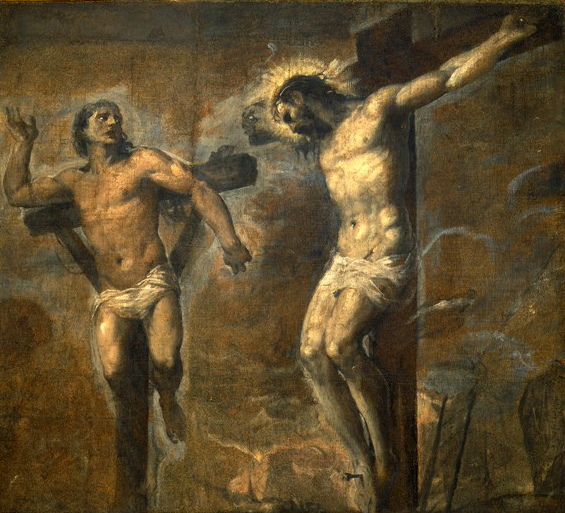
The other request for a place in the kingdom of Jesus that comes to mind is the request made by the repentant thief recorded in the gospel of Luke (23:42-43). 

Then he said, “Jesus, remember me when you come into your kingdom.” He replied to him, “Amen, I say to you, today you will be with me in Paradise.”

What is the difference between these two requests for a place in the kingdom? They clearly received two very different responses from Jesus.

The repentant thief speaks from a place of surrender, of petition, of awareness of his sin and his need. He turns to Jesus with the trust that is available to him at that most desperate moment of his life. He responds to the action of the Holy Spirit in the measure to which he is capable in this first encounter with his Savior. In a sense, we can say that he is more completely in the form of holiness which is Jesus himself, the form of obedient humble surrender:

Mary, the mother who stood beneath her Son as he died on the cross, no doubt heard this plea that broke from the heart of the repentant thief, and in her heart echoed her own words of obedient surrender uttered years earlier at the Annunciation, “Behold, I am the handmaid of the Lord. May it be done to me according to your word” (Luke 1:38), and at the wedding feast of Cana: “They have no wine,” “Do whatever he tells you” (John 2:4-5).

The Kingdom of God is received, it is surrendered to, it is entered into by one’s complete alignment with God’s will for oneself. We can prepare ourselves, but we do this only by fertilizing the soil of our hearts through the living of the Beatitudes.

This is why it makes sense that Jesus asks the sons of Zebedee if they are ready to drink the chalice he was to drink. It was a matter, he was saying, of moving downward and pouring out one’s life for others. Then Jesus stated that he himself didn’t have that power to give away these seats in the Kingdom. This was a decision that was the prerogative of the Father. Jesus himself in his very identity as Son deferred in all things, in all ways, to his Father in complete and obedient surrender.

The request of the mother of the sons of Zebedee, and most probably the desire of the two apostles themselves, did not correspond to the very being of Jesus as Son and so was impossible to grant.

We are called to serve, to be last, to give our lives for others, to trust that the One who holds in his hands our very lives and defines our destiny is faithful and can be trusted.

What places of honor might you be seeking? They may be as world-oriented as the request of the mother of the sons of Zebedee or they might be as spiritual as great holiness or a ministry that stands out and stands above the mundane work of others. In any case, the trap is often very subtle. This Lent come to your Savior with your need and your poverty and see where he himself wishes to lead you.

But my trust is in you, O LORD;
            I say, “You are my God.”
In your hands is my destiny” (from today’s Psalm).

Image credit: Titian, Public domain, via Wikimedia Commons