
Examen on Acceptance

Place yourself in the presence of the Lord and pray for enlightenment. Relax. Breathe deeply. Run quickly over the past few hours or days, allowing your real feelings to surface about the events that have been part of your life, the feelings you’ve buried so that you could make it through the day.

Pay attention to the way in which the Lord has been present to you. Where have you felt drawn to the Lord or moved to acceptance? Where have you met the Lord when you felt afraid … misunderstood … tempted … relieved … happy? Turn to the Lord with gratitude.

Choose one incident or reaction that stands out particularly for you at this time and which is still not settled for you. Recall to mind the details of the incident and its context, the people involved, and how you feel about it.

Read in the Bible Peter and the Risen Jesus (John 21:15-19)

Allow Peter to show you how to accept a challenging reality by trusting in the Lord’s love.

When they had finished breakfast, Jesus said to Simon Peter, ‘Simon son of John, do you love me more than these?’ He said to him, ‘Yes, Lord; you know that I love you.’ Jesus said to him, ‘Feed my lambs.’ A second time he said to him, ‘Simon son of John, do you love me?’ He said to him, ‘Yes, Lord; you know that I love you.’ Jesus said to him, ‘Tend my sheep.’ He said to him the third time, ‘Simon son of John, do you love me?’ Peter felt hurt because he said to him the third time, ‘Do you love me?’ And he said to him, ‘Lord, you know everything; you know that I love you.’ Jesus said to him, ‘Feed my sheep. Very truly, I tell you, when you were younger, you used to fasten your own belt and to go wherever you wished. But when you grow old, you will stretch out your hands, and someone else will fasten a belt around you and take you where you do not wish to go.’(He said this to indicate the kind of death by which he would glorify God.) After this he said to him, ‘Follow me.’ (Jn 21:15-19)

This scene is the first time that the evangelist John shows Peter speaking with Jesus after he denied him three times during the Passion. Surely Peter is nervous; he knows that he has abandoned the mission that God gave him in a very real sense. He does not run away in shame, however. Instead, he draws close to the Lord’s love, knowing that it is exactly where he belongs.

And so, Jesus asks Peter three times if he loves him, giving him an opportunity to make up for each of the three times that he denied him. Peter accepts the reality of his past, but does not allow his past mistakes to prevent him from confidently saying that he loves Jesus. It is this acceptance that allows Peter to fully live the life that God has planned for him to help start the early Church.

As you reflect again upon the incident or reaction you have chosen for your examen, imagine that you are in Peter’s place. Are you willing to tell the Lord everything that happened, not only in the situation but in your own heart? If you feel any resistance to sharing an aspect of the incident with the Lord, why do you think that is? Jesus knows every aspect of the situation and he looks at you with great love. He does not want you to live in a past with regret, but to accept his love in the present. What would it be like to entrust the incident that you chose for your examen to the Lord’s care?

God’s great love for you is made manifest in the experiences of your life. As you make this examen, the Lord is right now moving your heart toward acceptance.

Spend some time talking over with the Lord what you are learning and experiencing. With simplicity express your sorrow for any times that you have been unable to accept the reality of a situation in your life and your gratitude for any movements you sense toward greater acceptance through God’s grace.

Identify one step toward acceptance that you want to take going forward, a step that is actually possible for you. Pray for the grace to accept God’s plan for you.
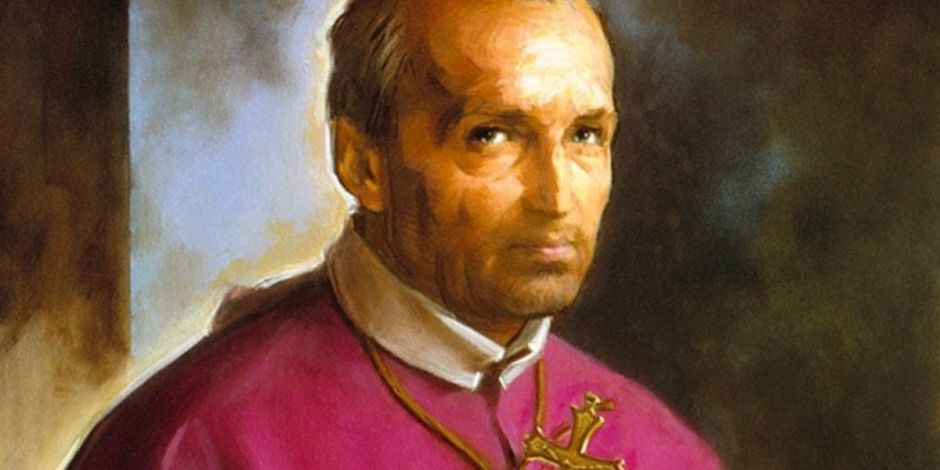
Prescriptions from the Doctors of the Church: Saint Alphonsus (September 27, 1696–August 1, 1787)

Saint Alphonsus is one of the thirty-six saints who are Doctors of the Church. The Doctors of the Church are renowned for their holiness and also for their important teachings. Using the doctor metaphor, we can say that in a sense each Doctor of the Church gives us a “prescription” for spiritual growth. Saint Alphonsus’s particular prescription for holiness can lead us to a greater love for Jesus.

Alphonsus was born near Naples, Italy. His wealthy family provided him with the finest education and by age sixteen he had earned doctorates in both civil and canon law. Two years later, he joined the Confraternity of Our Lady of Mercy and cared for the sick at the hospital for “incurables.” At the same time, he began to practice law. However, after several years, Alphonsus left the bar, disgusted by the unscrupulous machinations of the court system.

Alphonsus entered the seminary and was ordained in 1726. He soon became known for his sermons, which were eloquent and persuasive. His great compassion led him to evangelize everyone, especially the poor, with patience and love. Due to his untiring efforts, groups in which people would pray and reflect on the Word of God began to arise throughout the city. In 1732, Alphonsus founded the Redemptorists, dedicated to evangelizing the materially and spiritually poor the world over. He became an expert in moral theology and was widely sought after as a compassionate confessor. Despite resisting the honor, Alphonsus was made a bishop when he was sixty-six years old. He wrote over one hundred books, including classics such as The Practice of the Love of Jesus Christ and The Glories of Mary. Known for his strong devotion to Mary, Alphonsus died at the age of ninety-one, just as the Angelus bells tolled.

Alphonsus’ prescription:  Live with a penitent heart. Go to confession on a regular basis.

Being an expert in moral theology, Alphonsus did his best to help people to have a spirit of contrition for their sins. He knew that people often sinned from weakness and did not realize the seriousness of their sins. His remedy was to move people to have a deeper love for Jesus, a penitent heart that would help them to want to invite Jesus more and more into their lives. Alphonsus focused on love more than on sin itself. He would preach about the sufferings of Jesus, which he endured out of love for each one of us. This emphasis on love had the power to help people come to a deeper conversion in their lives. Alphonsus moved many hearts when he preached and gave parish missions. It was because Alphonsus himself had a penitent heart that he was able to move people so deeply.

Some practical things to do:

  • Go to confession. If it has been a while since you’ve received this sacrament, prepare for it by focusing on Jesus’ love for you. He is ready to pour out his love and mercy on you and forgive all your sins through the ministry of the Church. After your initial confession put it on your schedule to go regularly. A monthly confession is a good ideal to strive for.
  • Do you have some resentment in your heart against any particular person? If so, pray for the grace to give up the bitterness and reconcile with that person if possible. It may not be possible to have an actual reconciliation. In that case simply forgive in your heart.
  • Practice gratitude. Praise God for the many gifts he has brought into your life. You may wish to pray with the Psalms, which are full of praise prayers.

Prayer

Saint Alphonsus Liguori, pray for me that I might live with a penitent heart just as you did. Inspire me with thoughts and sentiments of love for God and for my neighbor. Help me to see Jesus in each person whom I meet. Amen.

Feast: August 1
Patron: Moral theologians, confessors, and those suffering from arthritis

Excerpt from the writings of Saint Alphonsus:

The Scriptures are clear enough in pointing out how necessary it is to pray, if we would be saved. “We ought always to pray, and not to faint” (Lk 18:1). “Watch and pray, that you enter not into temptation” (Mt 26:41). “Ask, and it shall be given you” (Mt 7:7). The words “we ought,” pray,” “ask,” according to the general consent of theologians, impose the precept, and denote the necessity of prayer. . . .

 Without the assistance of God’s grace we can do no good thing: “Without Me, you can do nothing” (Jn 15:5). Saint Augustine remarks on this passage, that our Lord did not say, “Without Me, you can complete nothing,” but “without Me, you can do nothing;” giving us to understand that without grace we cannot even begin to do a good thing. Even more, Saint Paul writes, that of ourselves we cannot even have the wish to do good. “Not that we are sufficient to think anything of ourselves, but our sufficiency is from God” (2 Cor 3:5). If we cannot even think a good thing, much less can we wish it.

The same thing is taught in many other passages of Scripture: “God works all in all. I will cause you to walk in my commandments, and to keep my judgments, and do them.” (Ezek 37:27). So, as Saint Leo I says, “Man does no good thing, except that which God, by his grace, enables him to do.”. . .  

From these two premises, on the one hand, that we can do nothing without the assistance of grace; and on the other, that this assistance is only given ordinarily by God to the person who prays, who does not see that the consequence follows, that prayer is absolutely necessary to us for salvation? And although the first graces that come to us without any cooperation on our part, such as the call to faith or to penance, are, as Saint Augustine says, granted by God even to those who do not pray; yet the Saint considers it certain that the other graces, and especially the grace of perseverance, are not granted except in answer to prayer: “God gives us some things, as the beginning of faith, even when we do not pray. Other things, such as perseverance, he has only provided for those who pray.”

Hence it is that the generality of theologians, following Saint Basil, Saint Chrysostom, Clement of Alexandria, Saint Augustine, and other Fathers, teach that prayer is necessary to adults, not only because of the obligation of the precept (as they say), but because it is necessary as a means of salvation. That is to say, in the ordinary course of Providence, it is impossible that a Christian should be saved without recommending himself to God, and asking for the graces necessary to salvation. Saint Thomas teaches the same: “After Baptism, continual prayer is necessary to man, in order that he may enter Heaven; for though by Baptism our sins are remitted, there still remains concupiscence to assail us from within, and the world and the devil to assail us from without” (Part 3, q. 39, a. 5).

From The Great Means of Prayer, chapter 1, “The Necessity of Prayer.”

By Sr Marianne Lorraine Trouvé, FSP

Throw Open Your Heart

The road to communion is beautiful. So open your heart to the world. We are meant to be one. We are one. We come forth—each and all of us—from the creative word of the same Father and Creator: “Let us make mankind in Our image, after Our likeness….” (Gn. 1:26).

Throw open the doors and windows of your heart to brothers and sisters looking for someone whose heart is filled with the wind of the Spirit…

Throw out the furniture to make more room, for only a heart that is poor and waiting can receive the other…

Throw down the welcome mat and refuse to no one access to your charity and compassion and care…

Let them come, my friends, these others who are your brothers and sisters. Let them come from wherever they are now, from whatever country, political persuasion, faith, poor or rich, healthy or suffering in any way, and together let us build a new way of living in communion.

What would it look like to live together knowing our total dependence on God for everything?

To wait upon the Lord…

To let gentleness live within us and among us…

To claim nothing as our own, but to share all things as one family…

To be single-hearted and pure of spirit…

To be makers of peace, to wish well-being to all…

To work that no one might suffer…

The road to communion is beautiful. The possibility of living the way of the beatitudes proclaimed by Jesus attracts us. When I was younger, I had great hopes for a heart characterized by this charity. At 57 I realize that I cannot change my own heart in so radical a way, much less transform others and the world. The terrors and pain that wound my brothers and sisters in the world frighten and overwhelm me. Sometimes they seem to steal my voice and paralyze my own hope.

At 57 I realize that the beauty of this path is created by the eagerness of the continued journey, and the willingness to let God wreck my idealism about myself and the world. So know, my friend, that deep inside your heart lies the seed of God’s own power to build communion. The gift of unity and shared respect grows like the mustard seed and in our tentative, gradual and often faltering steps this broken yet gifted world is transformed into the Kingdom. 

So allow others into your life and heart. They are God’s messengers to break you out of your own frozen places and constricted ideas and opinions about what is true, good, and beautiful. Even the ugly can teach you beauty. Even the harsh can call forth your tenderness. Even the proponent of ideologies you do not share can push you to kneel before the One alone who is Truth, Way, and Life.

Ask Jesus for the grace to know who you may need to forgive or where bitterness and resentment are keeping you apart from this oneness for which you are made. May these days be a time of healing, a calling to the center, a uniting into one family, a restoring of what has been lost, a re-membering of what has been forgotten. May these days be filled with graces beyond your wildest dreams.